Best Crossbow Scopes of 2026
Best crossbow scopes of 2026: top picks from budget $45 optics to laser rangefinding scopes, plus how to choose magnification, reticle, and eye relief.
How We Picked These Crossbow Scopes
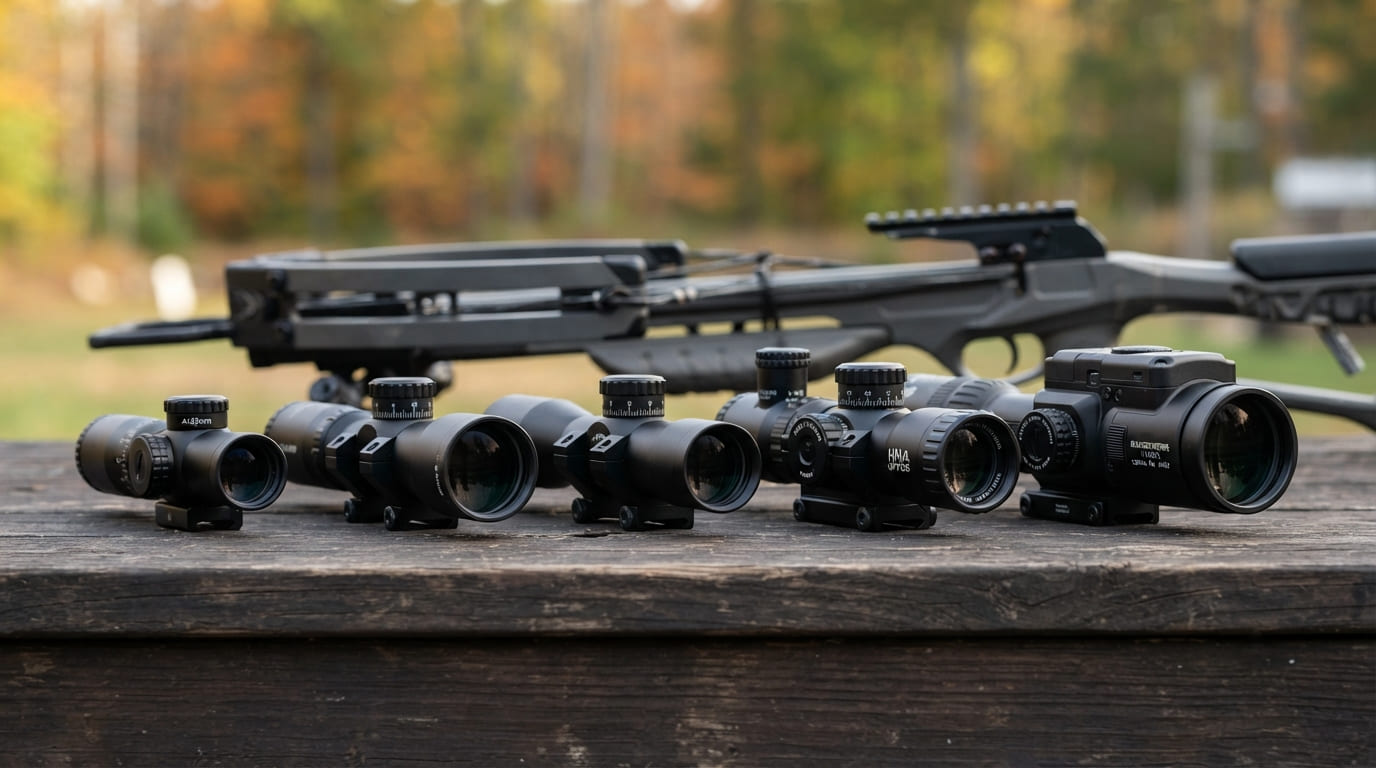
A crossbow scope has one job that a rifle scope doesn't: it has to keep its aiming points honest across a wide range of bolt speeds, because crossbows drop far faster than a bullet does. Every pick on this list comes from a scope we've written up in a full review, and we've organized them by what you actually need the optic to do rather than by a single overall ranking. A $50 fixed-zoom scope and a $989 laser rangefinding scope both earned a spot, but they serve very different buyers.
This guide draws on the findings in our individual scope reviews. If a pick catches your eye, click through to the linked review for the full pros, cons, and testing notes behind it.
Our Picks at a Glance
| Category | Winner | Price | Rating |
|---|---|---|---|
| Best Premium Rangefinding Scope | Burris Oracle X | $989–$999 | 4.8 / 5 |
| Best Digital Scope | TenPoint Vision HD | $889–$899 | 4.7 / 5 |
| Best Value Illuminated Scope | Vortex Crossfire II 2-7x32 | $195–$215 | 4.6 / 5 |
| Best Multi-Speed Reticle | TenPoint RangeMaster 100 | $295–$355 | 4.6 / 5 |
| Best Budget Scope | TruGlo 4x32 Compact | $69–$99 | 4.3 / 5 |
| Best Under $60 | CVLIFE 3-9x40 Compact | $45–$55 | 4.1 / 5 |
Best Premium Rangefinding Scope: Burris Oracle X
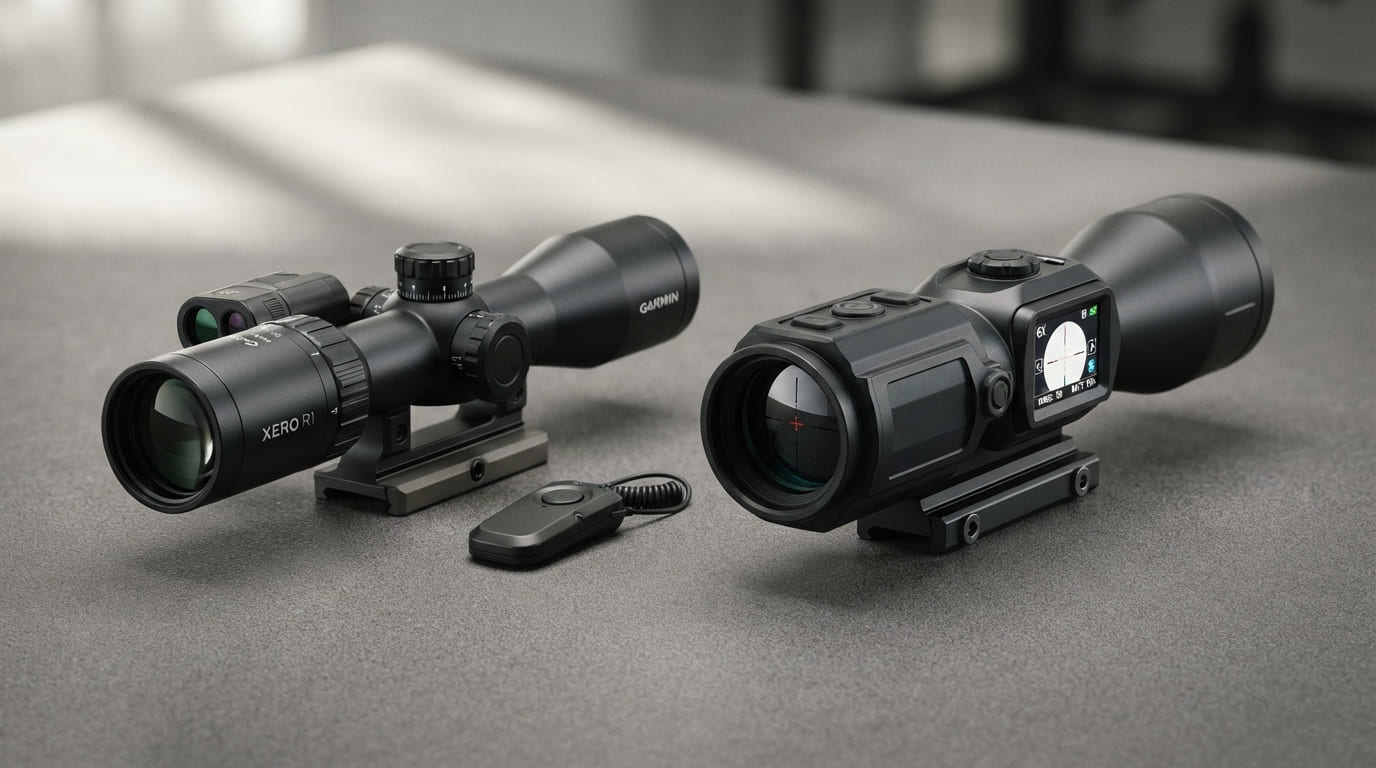
The Burris Oracle X is the most capable crossbow optic we've reviewed. It combines a 2-7x variable scope with an integrated laser rangefinder and inclinometer, so it ranges the target, accounts for shot angle, and shifts the aiming point for you. A wireless remote lets you fire the laser without breaking cheek weld. At $989–$999, it's a genuine premium investment.
The tradeoffs are real. At 30.8 oz it's a heavy optic, the added electronics are more that can fail than a simple mechanical reticle, and its long-range ranging capability is more a scouting tool than a shooting one, since most ethical crossbow shots are far shorter.
Best for: Hunters who want ranging and angle compensation built into the scope and are willing to pay for it.
Price may vary. We earn a commission at no extra cost to you.
Read the full review: Burris Oracle X Review
Best Digital Scope: TenPoint Vision HD
The TenPoint Vision HD takes a different route to the same goal. It's a 3-12x digital rangefinding scope with pre-loaded ballistic profiles that display a drop-compensated aiming point, plus video recording so you can review your shots. At $889–$899 and about 18.4 oz, it's lighter and a little cheaper than the Oracle X.
Because it depends on battery power for the sight picture itself, it's a poor fit if you distrust electronics in the field. Hunters who want a traditional optical view as the base should look at the Oracle X instead.
Best for: Tech-forward hunters who want ranging, ballistic profiles, and video in one optic.
Price may vary. We earn a commission at no extra cost to you.
Read the full review: TenPoint Vision HD Review
Best Value Illuminated Scope: Vortex Crossfire II 2-7x32
For most hunters, the Vortex Crossfire II 2-7x32 is the sweet spot. At $195–$215 it delivers an illuminated reticle, variable 2-7x magnification, and turrets that moved in precise 1/2 MOA increments in our review testing. It ships as a complete kit with mounting rings, flip caps, and a neoprene cover, so you don't need separate accessory purchases. Its XBR-2 reticle carries hold marks calibrated from 20 to 100 yards.
It costs roughly double a basic budget scope, and it doesn't include rangefinding, so you still estimate distance yourself.
Best for: Hunters who want a dependable, illuminated variable scope without paying four-figure prices.
Price may vary. We earn a commission at no extra cost to you.
Read the full review: Vortex Crossfire II 2-7x32 Review
Best Multi-Speed Reticle: TenPoint RangeMaster 100
The TenPoint RangeMaster 100 is an illuminated 2-7x32 scope built around nine aiming points, designed to track accurately across a wide range of bolt speeds. That makes it a strong match if you shoot a faster crossbow and want reliable holds out to 100 yards. At $295–$355 it sits between the Vortex and the premium rangefinding scopes.
It's a sensible choice for TenPoint owners, but if you don't need the extra aiming points, the Vortex covers most hunting distances for less.
Best for: Shooters of faster crossbows who want a multi-point reticle that holds across speeds.
Price may vary. We earn a commission at no extra cost to you.
Read the full review: TenPoint RangeMaster 100 Review
Best Budget Scope: TruGlo 4x32 Compact
The TruGlo 4x32 Compact is our pick when price is the priority. It's a fixed 4x scope with a BDC/rangefinding-style reticle and rings included, priced $69–$99. At 10.4 oz it barely adds weight to your crossbow.
Fixed magnification means no zoom flexibility, and it lacks the refinements of a scope like the Vortex, but it's a complete, no-fuss optic for hunters shooting inside 50 yards.
Best for: Budget-conscious buyers and anyone who wants a lightweight backup optic.
Price may vary. We earn a commission at no extra cost to you.
Read the full review: TruGlo 4x32 Compact Scope Review
Best Under $60: CVLIFE 3-9x40 Compact
If you want variable zoom at the lowest possible cost, the CVLIFE 3-9x40 Compact is priced $45–$55 and includes mounts. The 3-9x zoom range gives you usable magnification from close shots to longer ones on a single scope, which is unusual at this price.
It's the entry-level option, so don't expect the tracking precision or low-light performance of the Vortex. It suits a first crossbow or a spare optic, not a scope you'll trust for a lifetime.
Best for: First-time buyers and anyone who wants variable magnification on the tightest budget.
Price may vary. We earn a commission at no extra cost to you.
Read the full review: CVLIFE 3-9x40 Compact Scope Review
How to Choose a Crossbow Scope
Magnification: Fixed vs. Variable
A fixed scope like a 4x is simple and light, with nothing to adjust. A variable scope such as 2-7x or 3-9x lets you zoom out for close shots and in for distant ones. Most crossbow hunting happens inside 60 yards, so you rarely need high magnification. Very high zoom mostly makes the sight picture shakier and harder to find your target in.
Reticle Type
Crossbow reticles are usually a BDC or multi-aiming-point design. Each dot or hash is calibrated to a distance for a specific bolt speed. That calibration is the key point: a reticle set for a 350 FPS crossbow will not line up on a 450 FPS one. Check the speed range the reticle is built for against your crossbow's chronographed speed. Our how fast does a crossbow bolt travel guide shows the speeds across the crossbows we've reviewed.
Eye Relief and Mounting
Crossbow scopes need generous eye relief and are typically mounted well forward, so you can keep a safe, comfortable distance from the optic. Mounting height and ring quality affect zero retention, so use proper rings and torque them evenly. Once mounted, follow our how to sight in a crossbow scope guide to zero at 20 yards and confirm each aiming point.
Illumination
An illuminated reticle helps a great deal at dawn and dusk, when many deer move. It's worth paying a little more for, especially if you hunt low-light windows.
Rangefinding: Worth It?
A rangefinding scope removes the biggest source of missed shots: misjudged distance. It also adds weight, cost, and electronics that need batteries. If you regularly hunt open fields or shoot across unknown distances, it can be worth the investment. If you hunt close from a stand where you know your ranges, a good mechanical reticle is often enough.
What You Actually Get at Each Price Tier
Under $100: A Working Sight
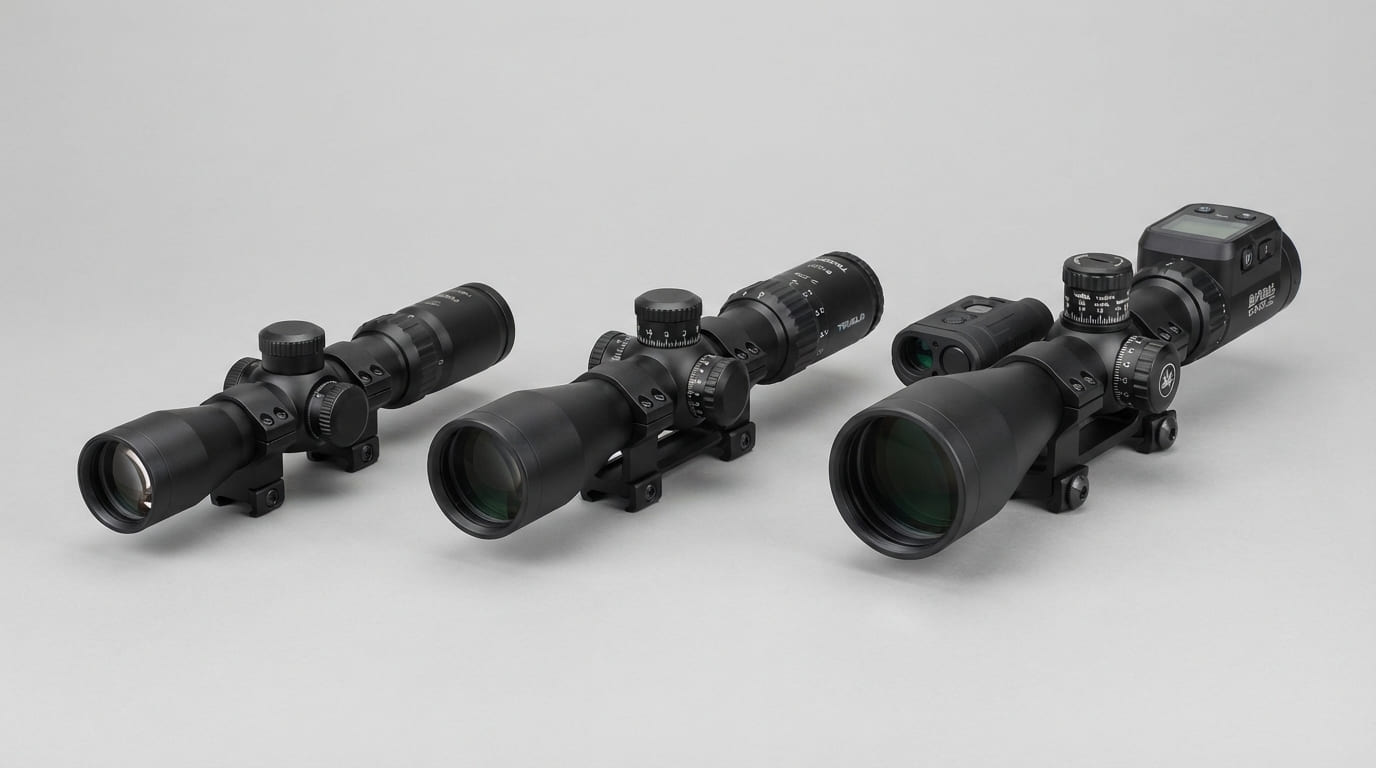
At this level you're buying a functional, lightweight optic that gets a crossbow shooting accurately at typical hunting distances. The TruGlo 4x32 and CVLIFE 3-9x40 both include mounting hardware. What you give up is refinement: expect less precise adjustments, weaker low-light performance, and less confidence that the zero survives hard use across a season.
$200–$350: The Reliability Jump
This is where most hunters should shop. The step up from a budget scope buys precise, repeatable turret adjustments, an illuminated reticle, and glass that holds up better at dawn and dusk. The Vortex Crossfire II and TenPoint RangeMaster 100 live here, and the practical difference over a $50 scope is that you spend less time re-checking your zero.
$900 and Up: Ranging and Electronics
Above roughly $850, you're paying for electronics: laser ranging, inclinometers, ballistic profiles, and in the Vision HD's case, video recording. That's worth it when distance estimation is your main source of misses. It's not worth it if you hunt short, known distances, because the added weight, batteries, and potential failure points bring no benefit there.
Common Crossbow Scope Mistakes
Buying for the Wrong Bolt Speed
The most common problem is a reticle calibrated for a different speed than the crossbow you shoot. A slow-crossbow reticle on a fast crossbow will put your holds off at every distance past your zero. Always match the scope's rated speed range to your crossbow before you buy.
Skipping the Sight-In After Mounting
A scope isn't ready to hunt with just because it's mounted. Zero it at 20 yards, then confirm each aiming point at the distances you'll actually shoot. Check it again at the start of each season and after any hard knock in transport.
Over-Buying Magnification
High magnification feels like an upgrade, but on a crossbow it mostly makes the sight picture harder to hold steady and harder to acquire quickly. A 2-7x scope covers nearly every crossbow hunting situation.
Ignoring Weight and Balance
A heavy optic changes how a crossbow carries and shoulders. The Oracle X at 30.8 oz is substantially heavier than a 10.4 oz TruGlo, which matters on long walks to a stand.
Match the Scope to Your Crossbow
A scope is only as good as its match to your crossbow. High-speed models like the Ravin R29X and TenPoint TRX Ultra push bolts fast enough that a reticle calibrated for slower crossbows can land noticeably off at longer holds, so a multi-speed reticle or a rangefinding scope is the safer choice there. On budget packages like the Barnett Hyper Whitetail 410, the bundled scope is serviceable, and an upgrade to a Vortex-class optic is one of the most worthwhile improvements you can make.
If you're still choosing a crossbow, our best crossbows of 2026 guide is a good place to start.
Frequently Asked Questions
What is the best crossbow scope for the money?
For most hunters, the Vortex Crossfire II 2-7x32 at $195–$215 offers the best balance of illumination, variable magnification, and precise turrets. If your budget is tight, the TruGlo 4x32 Compact is a complete budget option.
Do I need a special scope for a crossbow?
Yes, a crossbow-specific scope is strongly recommended. Crossbow scopes use reticles calibrated for the steep trajectory and lower speed of a bolt and are designed with the eye relief and mounting position a crossbow needs. A rifle scope's reticle won't match a crossbow's drop.
What magnification do I need on a crossbow scope?
Most hunters do well with a fixed 4x or a low-power variable such as 2-7x. Crossbow shots are usually inside 60 yards, so very high magnification adds little.
Are rangefinding crossbow scopes worth it?
They can be if you frequently hunt unknown distances, since they remove range-estimation errors. They cost more, weigh more, and depend on batteries, so hunters who know their stand distances can do fine with a mechanical reticle.
How do I sight in a crossbow scope?
Mount it securely, zero at 20 yards, then confirm each aiming point at longer distances. Our sight-in guide walks through the full process.
Will a scope reticle work for any bolt speed?
Not always. Aiming points are calibrated for a speed range, so a reticle built for slower crossbows may not match a much faster one. Check the manufacturer's rated speed range against your crossbow.
Final Recommendation
For most hunters, the Vortex Crossfire II is the scope to buy. It's the best balance of features and price we've reviewed. Step up to the RangeMaster 100 if you shoot a faster crossbow, and to the Burris Oracle X or TenPoint Vision HD if rangefinding is worth the money to you. If budget rules, the TruGlo 4x32 and CVLIFE 3-9x40 both get a crossbow ready to shoot for well under $100.
Looking to round out your setup? Our crossbow scopes category hub lists every scope we've reviewed, and our best crossbow bolts of 2026 guide covers the ammunition side of your setup.
Ready to compare models? Read our tested crossbow reviews to find your perfect match.