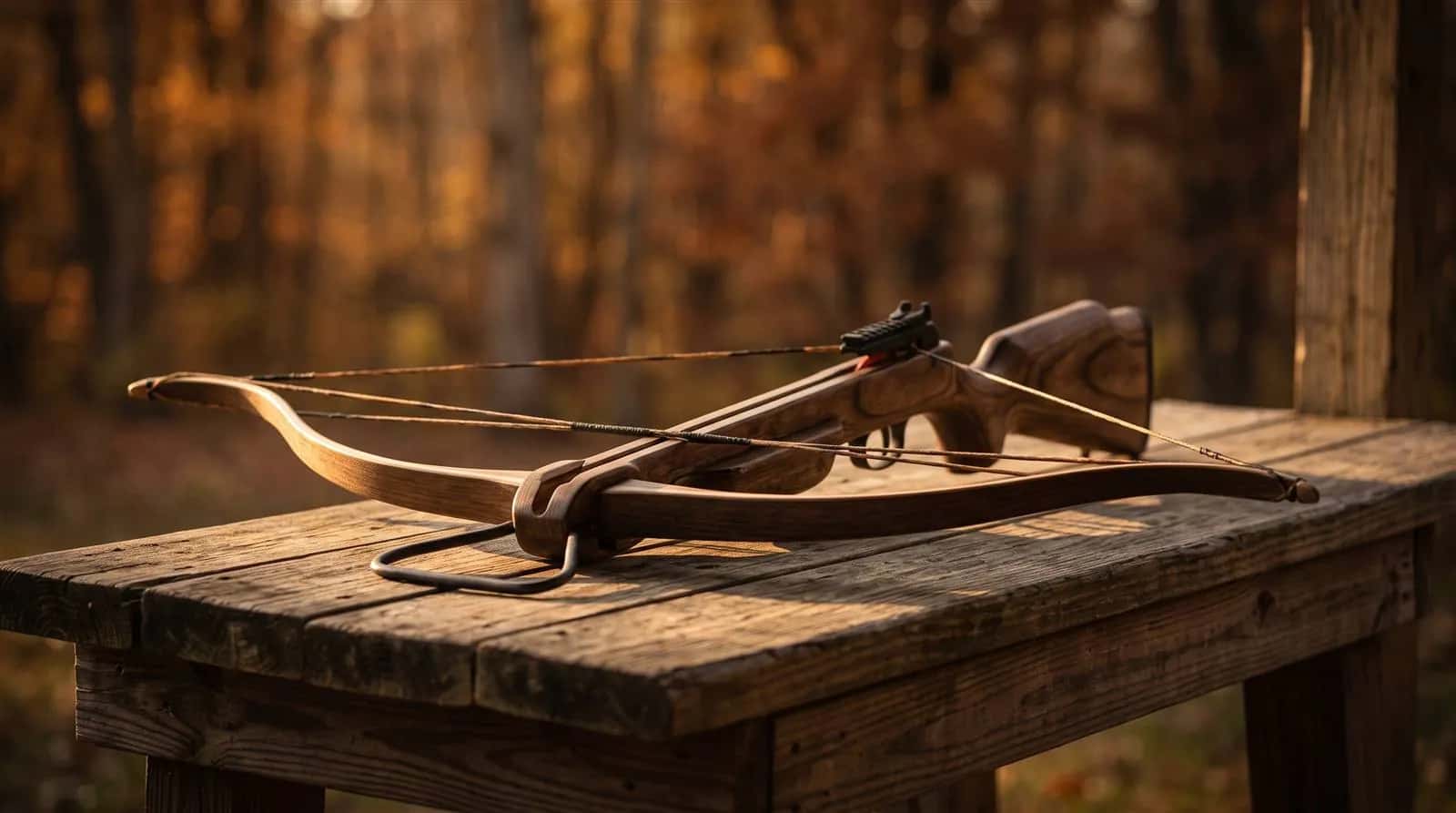
Recurve Crossbows Reviews 2026
Recurve crossbows trade speed and easy cocking for simpler limbs, fewer parts to maintain and lower prices. This hub explains the trade-off, how to read the specifications and what our four recurve reviews found.
- 3.7/5
- Average rating
Pre-purchase checklist
- Confirm local rules on minimum draw weight if you plan to hunt; your wildlife agency has the final word.
- Check that you can cock the crossbow comfortably and repeatably.
- Read the review's accuracy distances and decide whether they match your use.
- List what is included and what you must add.
- Check the warranty terms with the manufacturer; the Mag Air and Wildcat CRX reviews note that terms are not stated.
- Plan for bolts, wax, a target and secure storage.
- Compare once against a lower-priced compound before you decide.
Start here
Ranked and compared
 Buying guideRecurve Crossbow Buying GuideHow to choose a recurve crossbow for hunting: who it suits, which specs to compare, maintenance, common mistakes and a decision checklist.Read the guide
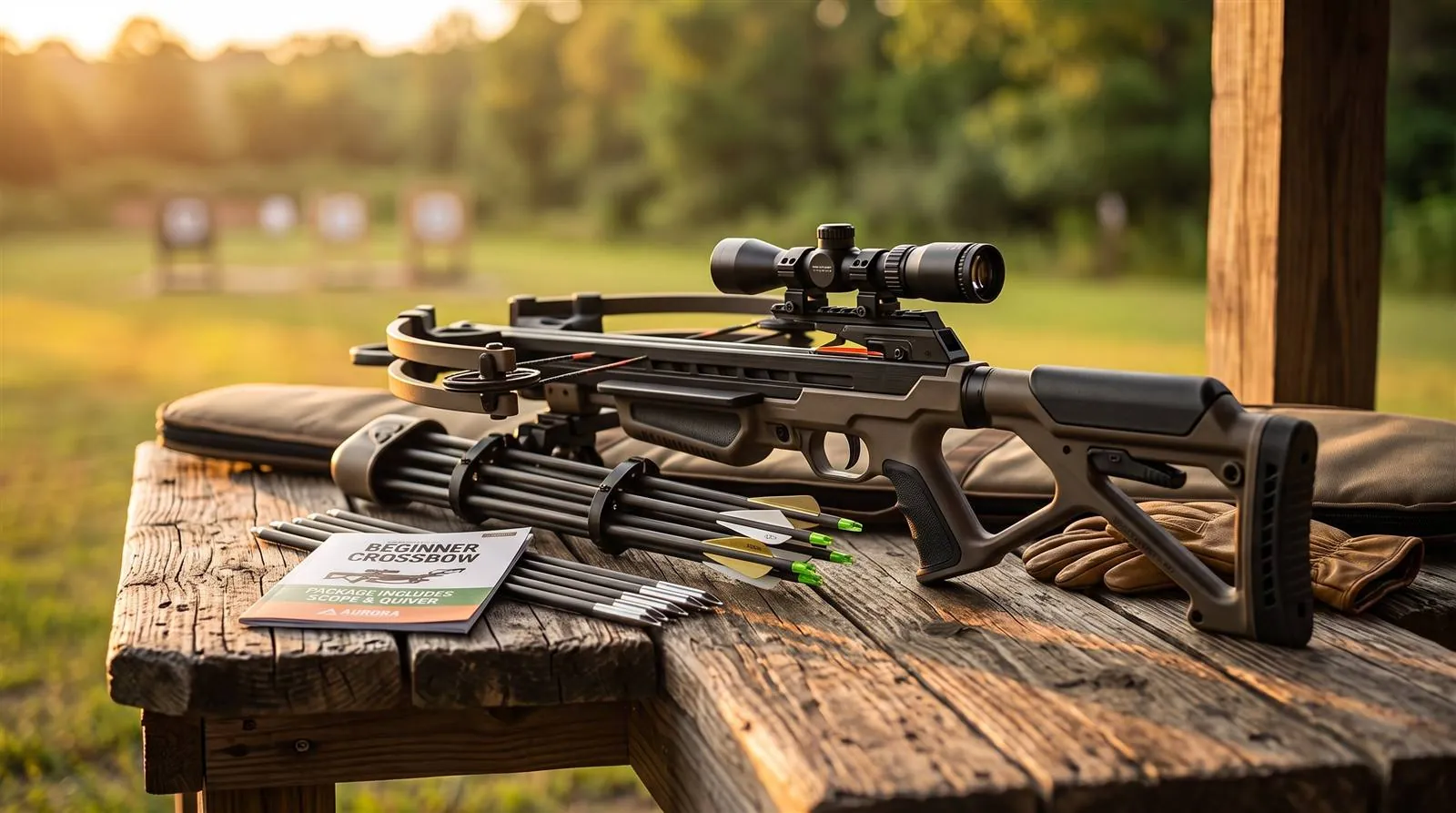 Ranked & comparedBest Crossbows for Beginners 2026Beginner crossbows chosen for easy cocking, safety features and complete kits, from a $219 recurve to an integrated-crank compound.See the rankings
Shortcuts
Match your situation
- 1You want the top-scoring modelAvalanche Anaconda Crossbow4.0/5, $219–$239
- 2You want to spend as little as possibleBarnett Wildcat CRX$199.99–$229.99, rated 3.8/5
- 3You want the best score under $1,000Excalibur Micro 3803.5/5 at $799.99–$866.99
- 4You carry it all dayExcalibur Mag Air4.9 lbs (6.7 lbs with accessories)
Stuck between two?
Compare head to head
Every model, one method
All 4 recurve reviews
Highest rated first. Scores weigh measured results against price and intended use; each review names who should look elsewhere.
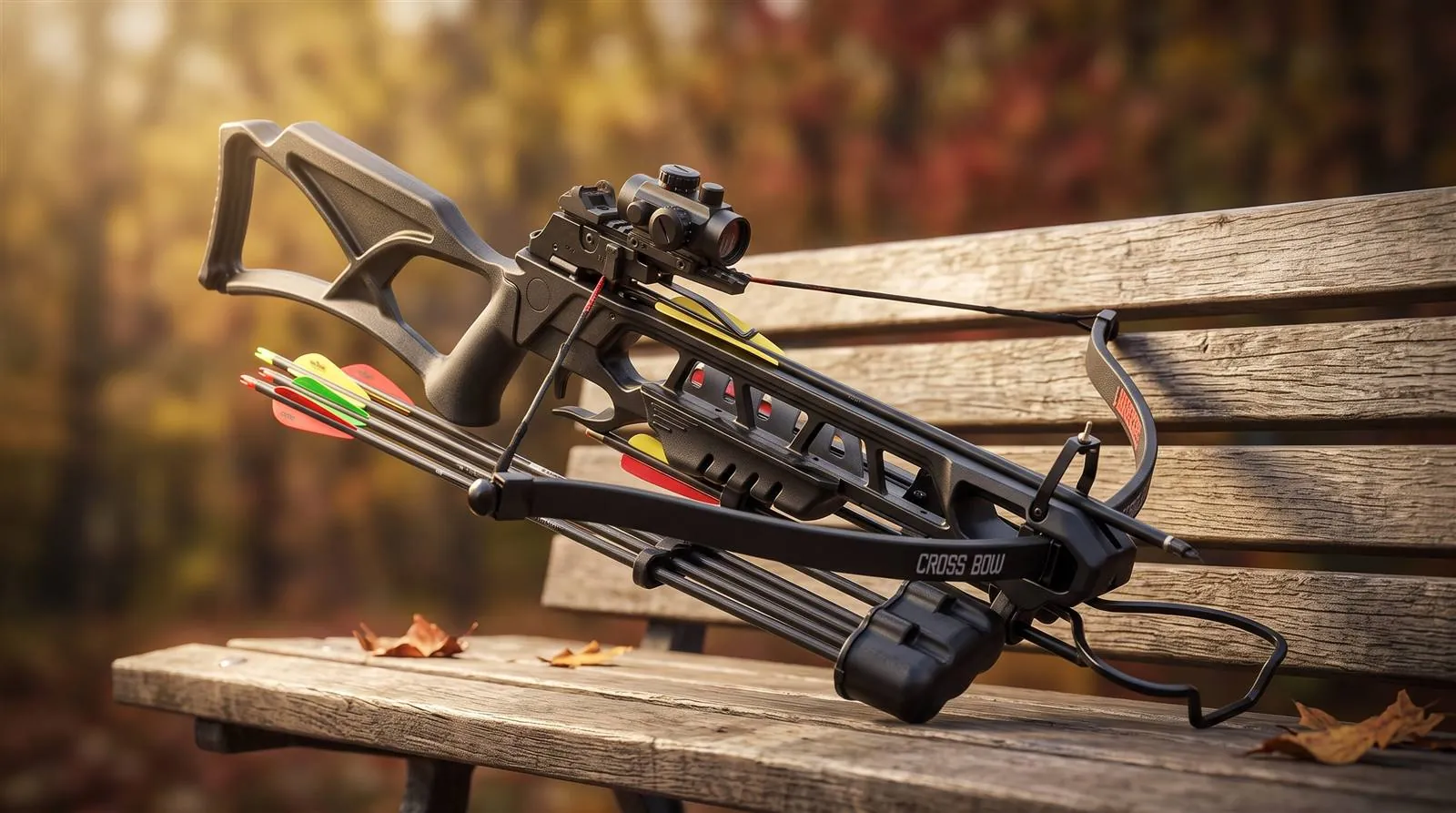
Avalanche Anaconda Crossbow Review
Budget 175 lb recurve crossbow kit with red dot, quiver and cocking rope. Chronographed at 232–241 FPS, about 5 lbs, simple limbs that suit first-time buyers.
Barnett Wildcat CRX Review
Low-cost recurve crossbow kit that lands close to its 280 FPS rating, with strong value but a heavy 195 lb draw that makes a cocking aid essential.
Excalibur Micro 380 Review
Fastest recurve crossbow on this site at 380 FPS, with the fullest accessory kit. Premium pricing, heavy cocking and patchy retail availability.
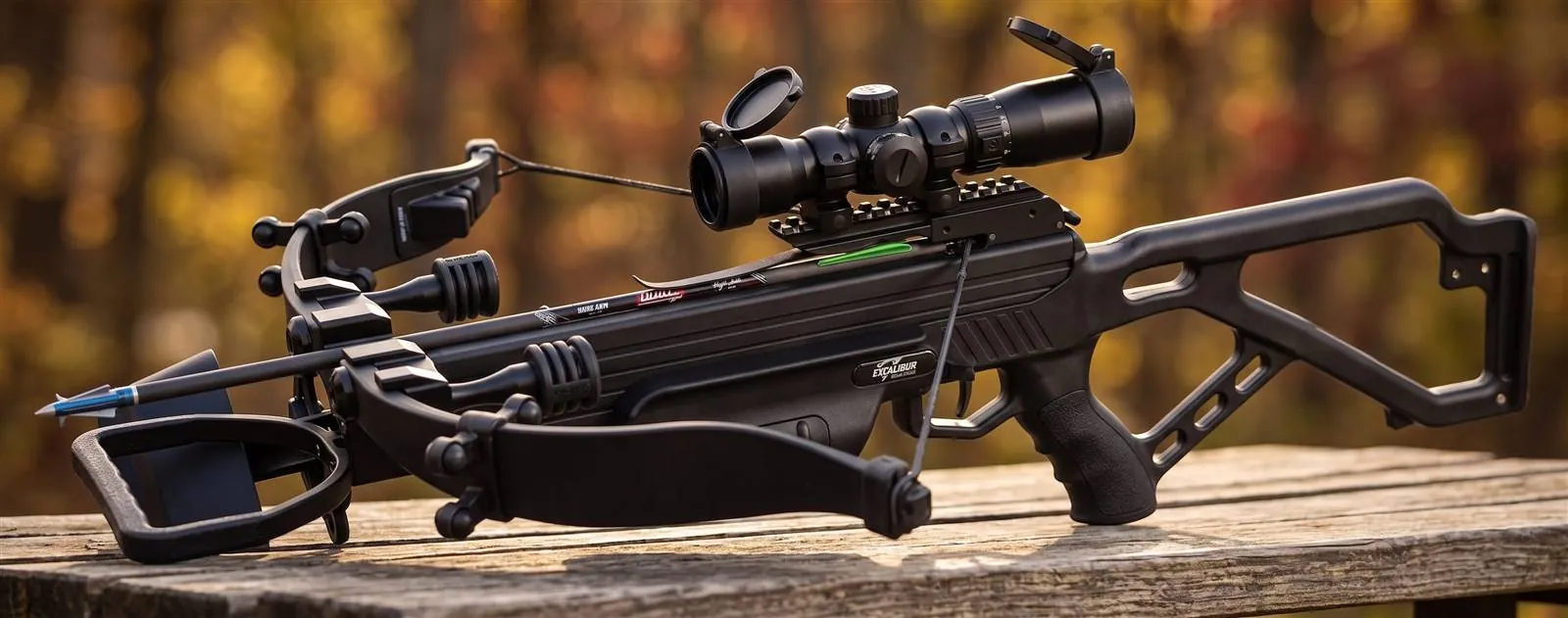
Excalibur Mag Air Review
Light 4.9 lb recurve crossbow with a dependable anti-dry-fire trigger and quiet shot, measured at 299–308 FPS. Recurve simplicity at a premium price.
Recurve crossbows attract two kinds of buyers: people who want the lowest cost of entry, and people who would rather own fewer moving parts. Both are reasonable goals, but a recurve asks for something in return, mainly more effort at the cocking stage and a lower speed ceiling than a compound.
I have reviewed four recurve crossbows so far: two budget packages around $200–$240 and two Excalibur models around $800. This page is therefore less a ranking than a decision framework, with the four reviews as worked examples.
If you are still comparing limb designs, read our compound vs recurve comparison alongside this hub. For a step-by-step look at specifications, cocking effort and warranty, see how to choose a recurve crossbow.
What defines a recurve crossbow
The limbs of a recurve curve away from the shooter at the tips. When the string is drawn, the limbs flex and store energy directly, with no cams or cables between the limb and the string. That is the whole mechanism, and it is why a recurve is easy to understand and inexpensive to build.
The consequence is that the energy you put in during cocking is close to the energy stored. A compound uses cams to change the load curve, so a 300-pound crossbow can be cocked with a fraction of that effort. A recurve cannot, which is why every recurve in our reviews relies on a rope or similar cocking aid.
Recurves also tend to be wider than a compound of similar energy because the limbs need physical length. When you compare models, look at the power stroke as well as overall length, since a longer stroke can help recover speed.
Reading the specifications with real numbers
Cocking effort. The Avalanche Anaconda is rated at 175 pounds and the Excalibur Mag Air at 136 pounds. A rope cocking aid helps, but both reviews describe the cocking as the demanding part of ownership. Compare that with a compound such as the Ravin R26X, which lists 340 pounds true and about 12 pounds felt. The Anaconda has roughly half the true weight and far more felt effort.
Speed and energy. The Anaconda is rated at 245 FPS, and my chronograph tests recorded 232 to 241 FPS. The Mag Air is rated at 305 FPS. Energy scales with the square of speed for a given bolt weight, so (305 / 245) squared is about 1.55: the Mag Air carries around 55 percent more energy than the Anaconda at equal bolt weight, despite a lower draw weight. Against the 410 FPS of the Barnett Hyper Whitetail 410, the Anaconda has about 36 percent of the energy, since (245 / 410) squared is roughly 0.36.
Weight. Both are light: about 5 pounds for the Anaconda, 4.9 pounds for the Mag Air (6.7 with accessories). That is lighter than every compound I reviewed.
Every recurve I have scored, side by side
Highest rating first. A recurve needs more draw weight than a compound for the same speed, so read the draw weight column alongside the cocking aid each review describes.
| Model | My rating | Price | Rated speed | My chronograph | Draw weight | Weight |
|---|---|---|---|---|---|---|
| Avalanche Anaconda Crossbow | 4.0 / 5 | $219–$239 | 245 FPS | 232–241 FPS | 175 lbs | 5 lbs |
| Barnett Wildcat CRX | 3.8 / 5 | $199.99–$229.99 | 280 FPS | Not measured | 195 lbs | 6.1 lbs |
| Excalibur Micro 380 | 3.5 / 5 | $799.99–$866.99 | 380 FPS | Not measured | 140 lbs (listed draw effort) | 6.6 lbs (8.2 lbs with accessories) |
| Excalibur Mag Air | 3.4 / 5 | $785–$815 | 305 FPS | 299–308 FPS | 136 lbs | 4.9 lbs (6.7 lbs with accessories) |
Which recurve for which buyer
| If you want... | Start with | Why |
|---|---|---|
| A complete first kit on a tight budget | Avalanche Anaconda | 5 lbs, long power stroke, everything in the box |
| The most speed for the least money | Barnett Wildcat CRX | 280 FPS rating at a budget price, but a 195 lb draw |
| The lightest carry and easiest cocking | Excalibur Mag Air | 4.9 lbs bare, 136 lb draw, Guardian anti-dry-fire |
| A recurve that keeps up with mid-range compounds | Excalibur Micro 380 | 380 FPS rating and 112 ft-lbs with the fullest kit |
Budget and ownership costs
A recurve's low purchase price carries into ownership, but not everything is cheaper.
- Strings. Fewer strings and cables than a compound, and no cam to re-time. Waxing with string wax still matters.
- Bolts. You still need quality bolts. See how to choose crossbow bolts.
- Cocking aid. Included with all four reviewed models, but check that it is in the box.
- Scope. The Anaconda includes a red dot scope. If you want magnification, a scope upgrade adds cost.
- Repairs. Simpler to diagnose, but replacement limbs or strings should come from the manufacturer.
Our cost guide shows what each price tier typically covers, and our maintenance guide lists the routine.
Compatibility with scopes, bolts and cocking aids
- Bolts. Match the length, weight and nock to the manual. Heavier bolts generally suit lower speeds, but follow the manufacturer's stated minimum.
- Scopes. Slower speeds mean more drop at distance, so a basic reticle is sufficient at short range but limiting at longer range. Sight in following our scope guide.
- Cocking. A rope is the usual aid. Follow how to cock a crossbow and your manual, and keep fingers clear of the string path.
Common mistakes and myths
- Assuming recurve means weak or toy-like. A 175-pound crossbow is a serious tool; handle it as one.
- Underestimating cocking effort. Try a rope cocking aid before you commit, or read the review's cocking notes.
- Expecting compound speeds. The reviewed recurves are rated at 245 to 380 FPS, compared with 390 to 515 FPS for the compounds.
- Skipping maintenance because there are fewer parts. Inspect limbs, string and serving, and keep the string waxed.
- Choosing by price alone. The cheapest kit may be right for you, but only if you accept the cocking effort and accuracy limits described in the review.
Who should skip a recurve crossbow
Look at a compound instead if you want easy, repeatable cocking, long-range accuracy or a compact frame. Our compound crossbow hub covers eighteen models. If your use is casual backyard plinking at very short range, a pistol crossbow is a different and more limited category with its own legal restrictions.
Also reconsider if you have limited hand or shoulder strength. Our guide to draw weight by body size helps you choose a cocking effort you can handle safely.
Because a recurve needs a higher draw weight for the same speed, run any model you are considering through the cocking effort estimator before buying, and compare its energy with a compound of the same speed in the kinetic energy calculator. The bolt drop chart shows how much more drop a 330 FPS recurve has than a 400 FPS compound between aiming marks. Most pistol crossbows are recurve designs too, and the recurve crossbow buying guide goes deeper on choosing one.
Frequently Asked Questions
Is a recurve or compound crossbow better for beginners?
Recurves are often recommended because there is less to maintain, with no cam timing to check. They are harder to cock, though, so a beginner should weigh simplicity against effort. Our compound versus recurve guide compares both options in more detail.
How fast are recurve crossbows?
The four I reviewed are rated at 245 FPS (Avalanche Anaconda), 280 FPS (Barnett Wildcat CRX), 305 FPS (Excalibur Mag Air) and 380 FPS (Excalibur Micro 380). My chronograph testing recorded 232 to 241 FPS for the Anaconda. Compounds in our reviews range from 390 to 515 FPS.
Why is a recurve harder to cock?
There are no cams to multiply your effort, so you work against close to the full draw weight, aided only by a rope or similar aid. That is the main trade-off for the simpler mechanism and the lower price.
Are recurve crossbows less accurate?
Not inherently. Accuracy depends on build quality, scope, bolts and technique. In my Mag Air review, groups at 20 and 40 yards were solid and competitive with mid-tier compounds, and the gap opened at 60 yards. I put that down to the recurve platform's limits against a compound cam system, so your typical shooting distance matters when you choose.
How often should a recurve string be replaced?
It depends on how often you shoot and how well you wax and store it, so follow your manual. Inspect the string and serving regularly, replace it if you see fraying, and do not shoot with a damaged string.
Can I hunt with a recurve crossbow?
Where crossbow hunting is legal and the model meets your jurisdiction's equipment rules, yes. Rules on minimum draw weight and other requirements vary by state and country and change, so verify current regulations with your wildlife agency before you hunt.
How many recurve crossbows have you reviewed?
Four so far: the Avalanche Anaconda, Barnett Wildcat CRX, Excalibur Mag Air and Excalibur Micro 380. The Wildcat CRX and Micro 380 reviews are built from manufacturer and retailer specifications plus published test data where it exists, and each review says which figures are ratings and which are measurements. More will be added over time.
What is included with a recurve crossbow kit?
It varies. The Avalanche Anaconda review lists a red dot scope, quiver, bolts, stringer, sling and cocking rope. The Excalibur Mag Air lists a fixed-power scope, rope cocking aid, quiver and arrows. The Barnett Wildcat CRX lists a 3-dot sight, rope cocking device, quiver, two arrows and wax, and the Excalibur Micro 380 lists a Tact-100 scope with rings, quiver, four arrows with field points, suppressors and a rope cocking aid. Always check the box contents in the review before you compare prices.
Does a recurve crossbow need a lot of maintenance?
Less than a compound, because there are no cams or cables to time. You still wax the string, inspect limbs and serving, lubricate the rail as directed and store the crossbow uncocked. Our maintenance guide gives the general routine.
Why are recurve crossbows so much wider than compounds?
Because the limbs themselves store the energy, so they need physical length, and they stay spread when cocked. The Barnett Wildcat CRX measures about 13 inches axle-to-axle cocked, while compact compounds run roughly 6 to 10 inches. That width matters in a blind window or a tight treestand, less so from an open stand or at a range, so weigh it against where you shoot.
Can I change a recurve crossbow string myself?
Usually, and it is one of the format's practical advantages. Many recurves can be strung with a stringer or a cocking rope and no bow press; the Avalanche Anaconda ships with a stringer and its review covers installing the string during setup. Follow the manual's procedure exactly, use the manufacturer's string, and inspect the limb tips and serving while the old string is off.
Guides that help you decide
- Best Crossbows Under $1,000 (2026)Budget crossbows under $500 and under $1,000 compared on measured speed, included gear and trigger quality, with what extra money actually buys.
- Crossbow Won't Fire: Causes & FixesA diagnosis table for a crossbow that won't fire: safety on, unseated bolt, wrong nock, bolt specs, retention spring and trigger problems, and when to stop.