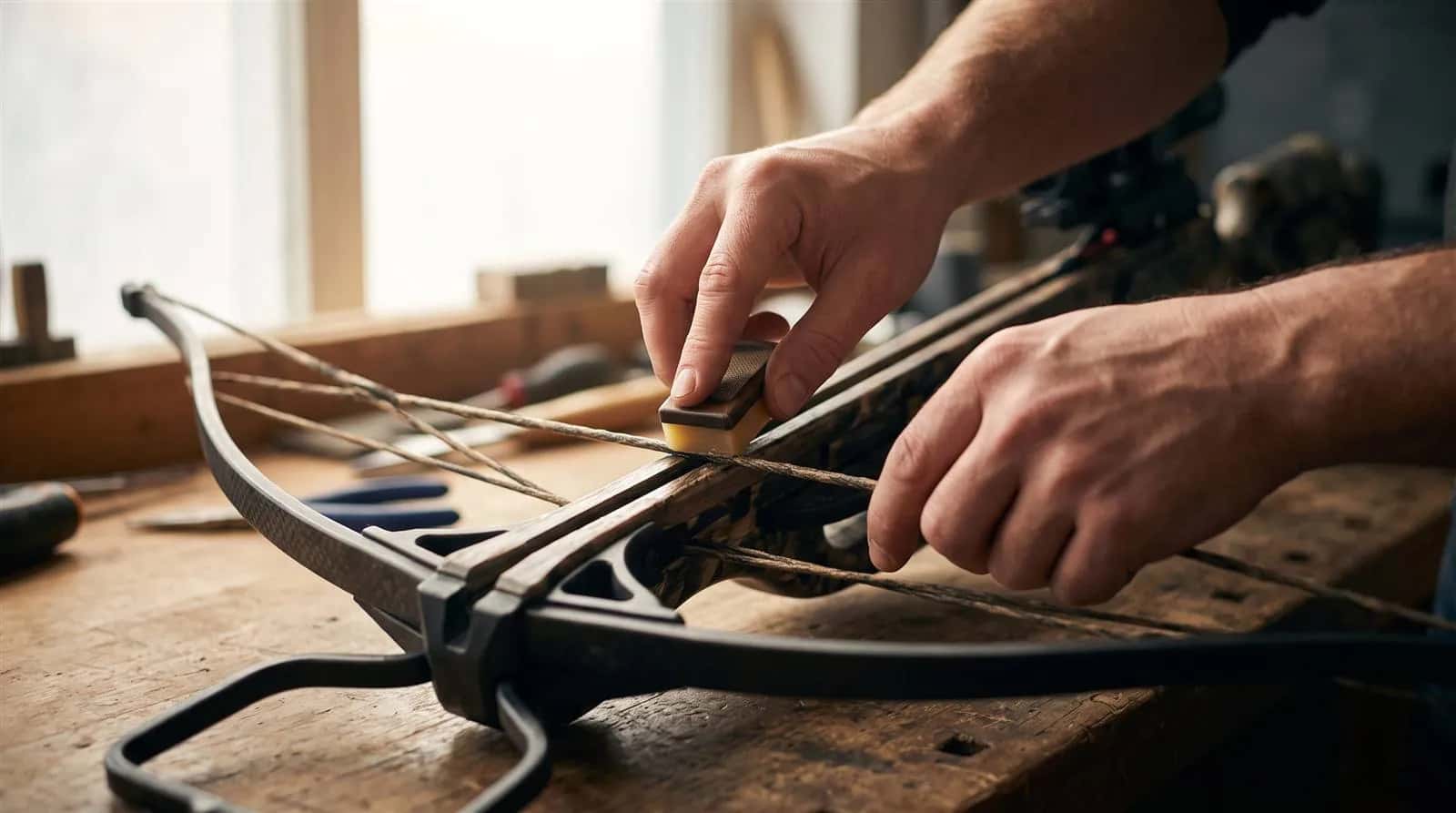
A crossbow that spends its life under heavy load rewards ten minutes of attention far more than most gear. The string rubs a rail on every shot, the limbs flex and recover, and small neglected jobs show up later as fraying, noise or groups that wander for no obvious reason.
This guide gives you a routine you can actually keep: what to check before each session, how to wax a string and lubricate a rail step by step, how to spot problems early, how to store the crossbow between seasons, and when to stop and take it to a qualified technician. It is for new owners, returning hunters and anyone who has never been sure how often to wax.
Why Maintenance Matters More on a Crossbow
A cocked crossbow holds its full load through the string, cables, rail and cam system, and every shot cycles that energy through the same parts. Wear in any of them affects accuracy first and safety eventually. A dry string frays, a dry rail drags and a cracked limb can fail under load.
Maintenance also keeps cocking easy. A dry string and rail add friction, which makes cocking harder and less even. Before you suspect your cocking aid, run through the checks here, and revisit our how to cock a crossbow guide if the draw still feels wrong.
Maintenance Schedule at a Glance
The intervals below are general starting points. Where your manufacturer gives a different number, use theirs.
| Task | Typical interval | Why it matters |
|---|---|---|
| Visual check of string, cables, limbs and rail | Before every session | Catches damage before it fails under load |
| String and cable waxing | Every few sessions, or when the string looks dry or fuzzy | Reduces friction wear and fraying |
| Rail lubrication | As your manual directs, often every few shots on rails that need it | Reduces string and rail wear |
| Bolt, nock and tip inspection | Before every session, and after any impact | Stops a damaged bolt from reaching the rail |
| Moving parts lubrication and fastener check | Monthly in active season, or as the manual directs | Keeps safety, cocking device and hardware working |
| Full inspection | Once before storage and once before the season | Finds wear before a long idle period |
Tools and Supplies
You need less than you might expect. Keep these together with the crossbow case so they are always to hand.
- String wax made for crossbow or compound strings, preferably the product your manufacturer names.
- Rail lubricant made for crossbows, if your rail needs one.
- Clean lint-free cloths for wiping excess and cleaning the rail.
- A soft brush for dust and debris around the rail and trigger area.
- A flashlight to inspect serving, cables and limb surfaces.
- The correct tools from the crossbow's package for any fastener checks the manual allows.
Avoid generic household oils and greases. They can attract dirt or react with synthetic parts, and a rail that is gummed up wears the string faster than a dry one.
Before Every Session: A Five-Minute Check
Do this with the crossbow de-cocked and unloaded, then repeat any visual checks when you shoulder it at the range.
- Confirm the crossbow is de-cocked and unloaded. If it is cocked, follow our how to de-cock a crossbow safely guide before you touch anything.
- Look along the string and cables for broken strands, fuzzy patches and serving that has lifted or separated.
- Check the limbs for cracks, splinters, delamination or unusual marks.
- Look at the rail for scratches, dryness, grit or rough spots where the string travels.
- Check the scope mount, stock screws and other hardware are snug and nothing has shifted. Tighten only as the manual describes.
- Operate the safety and confirm it engages and releases cleanly.
- Check the cocking aid is clean, works smoothly and is in the case.
If any step turns up damage or something that seems wrong, stop. Do not shoot until it has been resolved.
String and Cable Care
Why Waxing Matters
String and cable fibers rub against the rail and each other on every shot. Without wax, that friction dries and abrades the fibers, so strands start to break and the string loses life. Wax acts as a lubricant and a barrier, and it also keeps moisture out.
How Often to Wax
Many owners wax every few sessions, or roughly every couple of weeks during heavy use. Treat that as a starting point and defer to your manual if it gives a different interval. If the string looks dry, light in color or fuzzy, wax it before the next scheduled date.
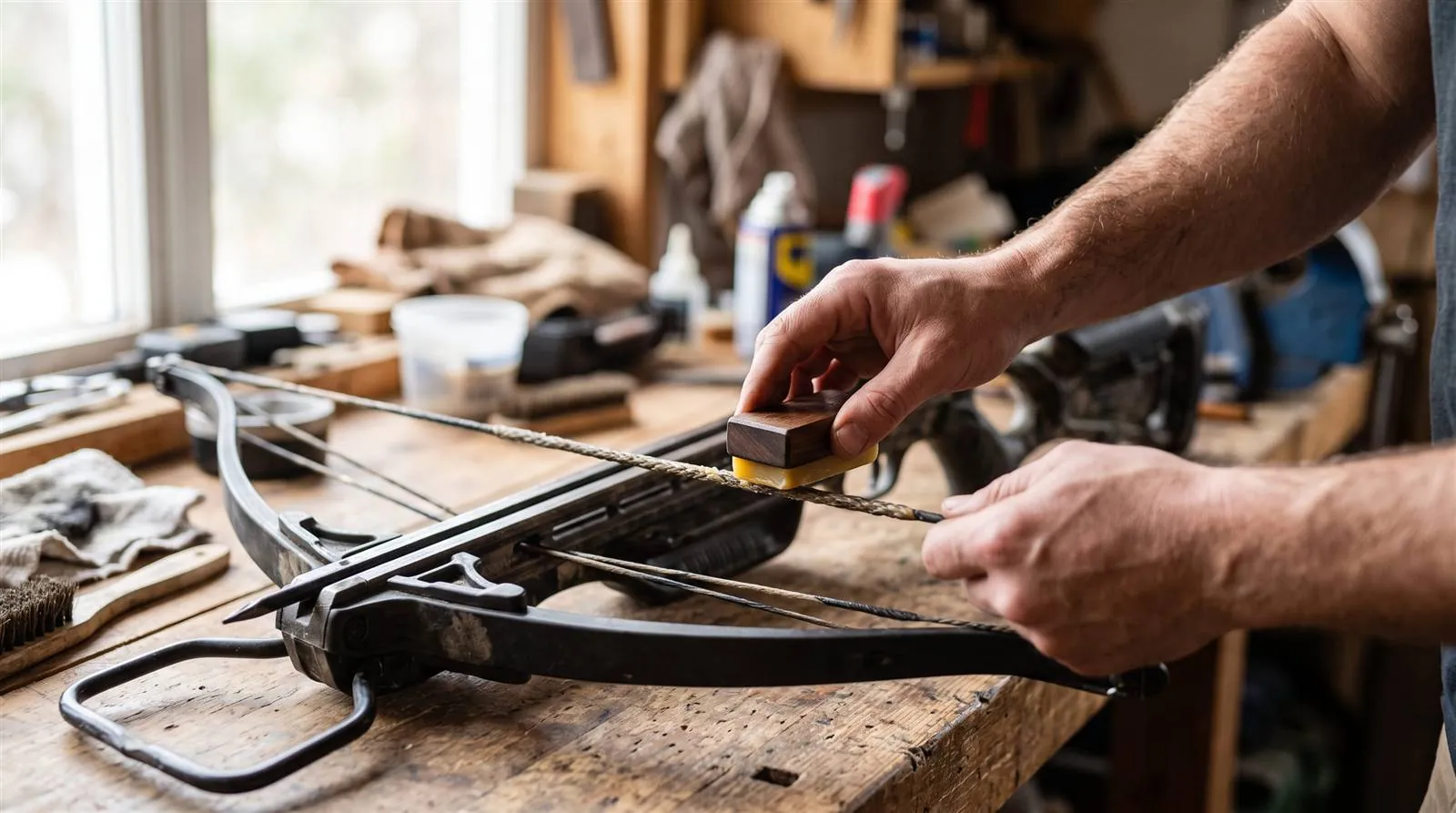
How to Wax a Crossbow String, Step by Step
- Make sure the crossbow is de-cocked and unloaded, then support it so the string and cables are easy to reach.
- Wipe off grit and dust with a clean cloth before you apply anything.
- Apply wax lightly along the string and each cable, rubbing in one direction.
- Work it into the fibers with your fingers for around half a minute to a minute, using friction to help the wax absorb rather than sit on the surface.
- Wipe away excess with a clean cloth, since surplus wax collects dirt and grit.
- Avoid waxing the serving's glue points or areas the manual says to leave dry, and keep wax off the latch and trigger parts.
- Re-inspect the string now that it is clean, and note anything you would not have seen on a dirty string.
Signs the String Needs Replacing, Not Waxing
Exposed individual strands, wide patches of fuzzing and separating serving mean waxing cannot fix the problem. Stop shooting and have the string and cables assessed and replaced by a qualified technician or the manufacturer. Strings and cables on many crossbows are matched sets, and replacing them often involves a press and correct timing, so this is not a driveway job.
Choosing a Wax
Pick a wax formulated for crossbow or compound strings, ideally the one your manufacturer sells or recommends. That removes the guesswork about compatibility with your string material.
Rail Care and Lubrication
What the Rail Does
The rail guides the string on every shot, so friction between the two is constant. Lubrication, where required, reduces the wear on both and helps keep the string travel consistent from shot to shot.
Check Whether Your Rail Needs Lube
Some modern crossbows use synthetic or self-lubricating rail surfaces designed to reduce or remove routine lubrication, while others rely on regular lube. Your manual says which you have. Adding lubricant to a rail that does not need it can attract more debris than it prevents.
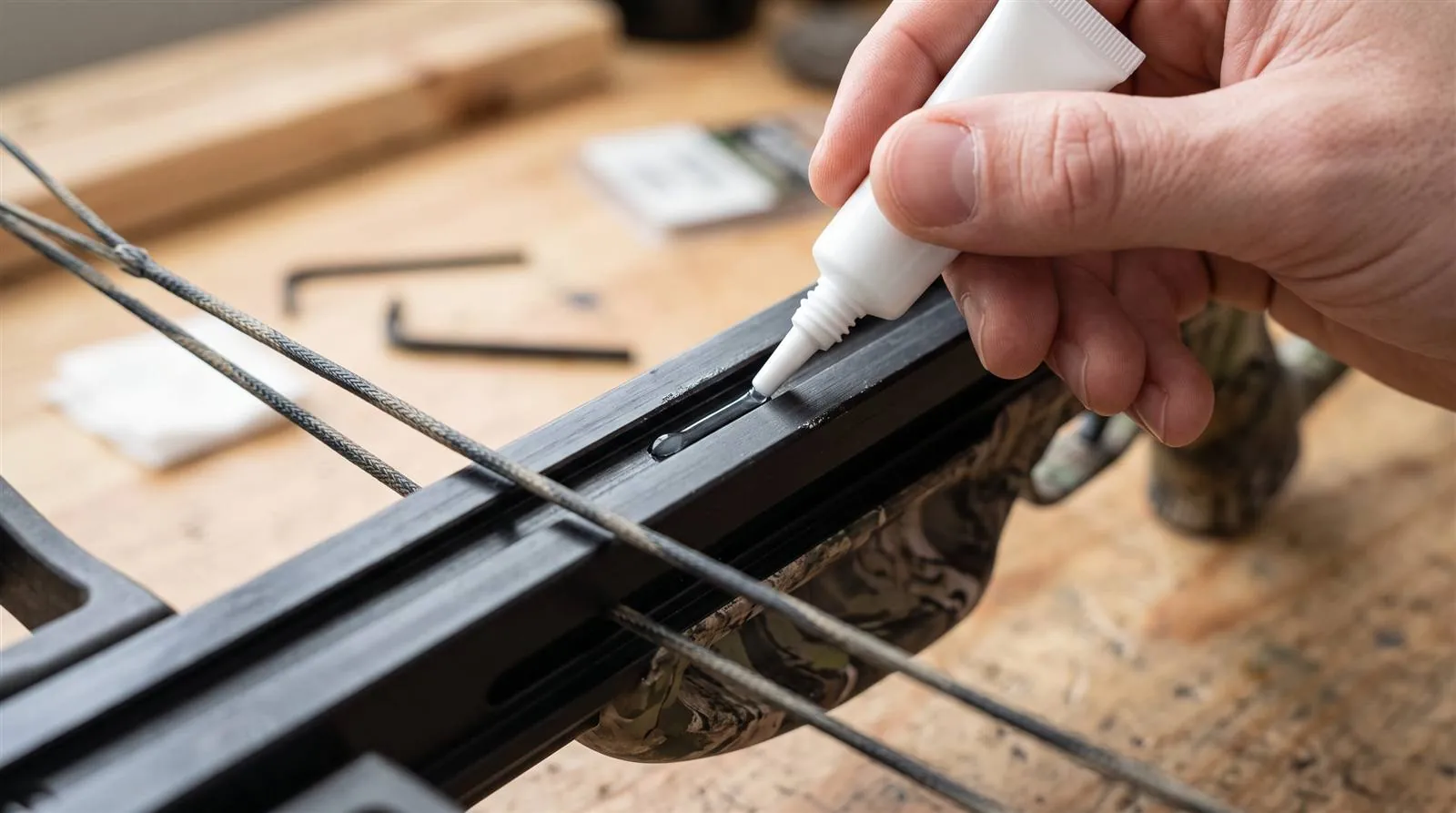
Step-by-Step Rail Lubrication
- Confirm the crossbow is de-cocked and unloaded.
- Brush or wipe the rail clean of dust, old residue and grit.
- Apply a small amount of crossbow rail lubricant along the path the string travels, using the applicator supplied.
- Spread it evenly with a clean cloth so the film is thin.
- Wipe off excess, especially near the latch, trigger and any scope mount.
- Re-check the rail and make sure no lubricant has strayed to the string where the manual says to keep it dry.
How Often
Many manufacturers advise lubricating every few shots on rails that need it, but this varies. Follow your manual's number rather than a generic one.
Limbs, Cams and Cables
Limb Inspection
Look at the full length of each limb, front and back, in good light. You are searching for cracks, splinters, delamination, chips and discoloration. Any of these is a reason to stop shooting and have the crossbow looked at.
Cam Timing on Compound Crossbows
On a compound crossbow the cams and cables must stay synchronized for consistent accuracy. Out-of-sync cams can cause groups to drift, uneven limb stress and in some cases limb damage. You can watch for obvious differences between the two sides when the crossbow is cocked, but adjusting timing is a job for a technician with the right tools.
A Sudden Shift in Accuracy
If groups open up or move to one side without any change in your technique, rule out the simple causes first: scope mount, loose screws, dry string, damaged bolts. If it persists, have a pro shop check cam timing and string condition. Our how to sight in a crossbow scope guide covers re-checking the scope side of the problem.
Bolt and Nock Inspection
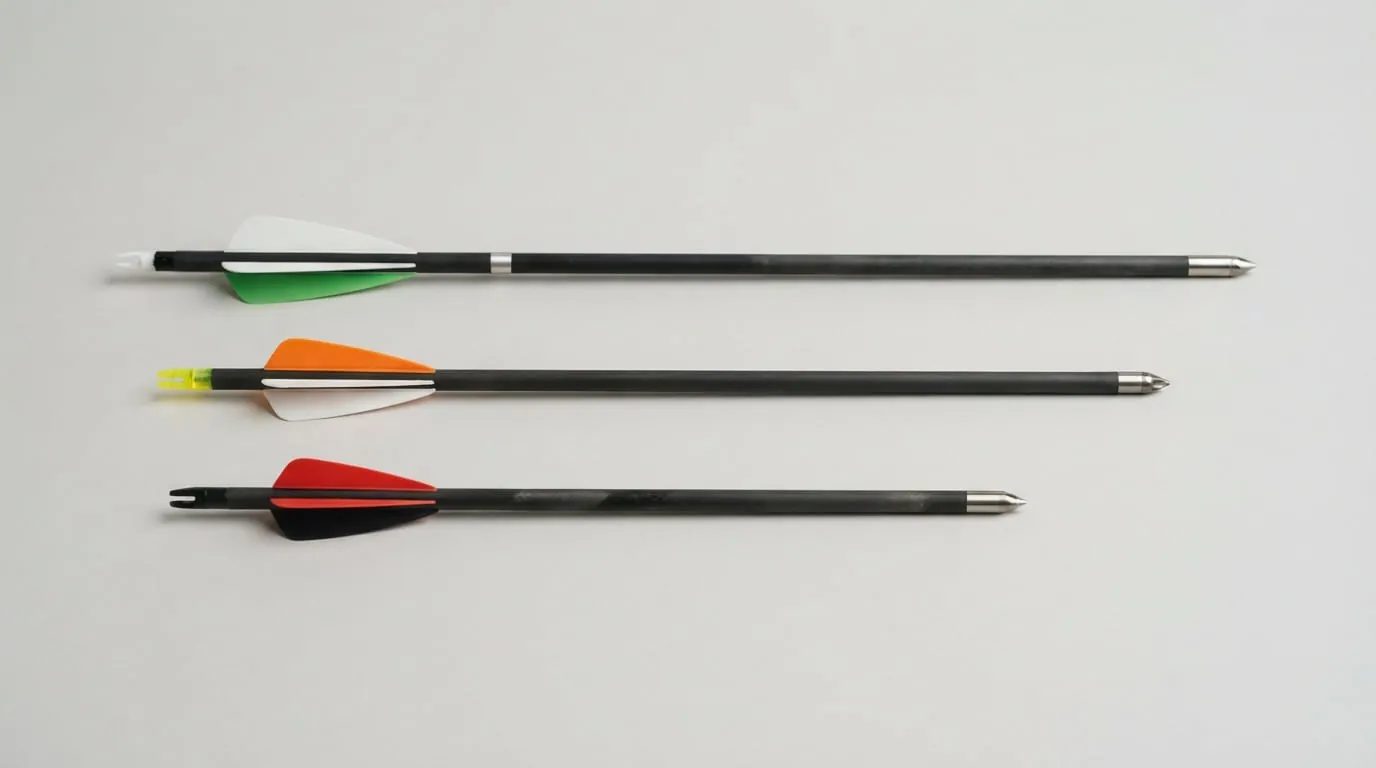
Your bolts are the one component that leaves the crossbow on every shot, so they take the most abuse and are the cheapest part to check. A damaged bolt can fly erratically, and a cracked carbon shaft can fail under the force of the shot. Check each one before it goes on the rail, and again after it hits a hard target, another bolt or the ground.
A Five-Point Bolt Check
- Shaft. Look along the full length for cracks, splinters, dents, crush marks or a rough patch, especially just behind the tip and at the nock end. On carbon, wipe the shaft with a cloth or an old nylon stocking: if it catches, there is a splinter, and the bolt is finished.
- Straightness. Rest the tip and the nock end on a flat surface or on your fingernails and roll the bolt. A visible wobble means a bend. Our what is FOC guide explains why a bolt that is out of true flies differently from the rest of the set.
- Nock. Check for cracks, chips, a loose fit in the shaft and wear in the slot that sits on the string. A damaged nock can let the bolt slip or fly off line, so replace it with the type your crossbow's manual specifies.
- Vanes or fletching. Look for tears, lifted edges and vanes that have been bent flat. A damaged vane changes how the bolt steers in flight.
- Tip, insert and broadhead. Check the tip is tight and the insert has not moved. Loose tips shift where the bolt lands. With broadheads, inspect the blades for chips, rust and dullness, handle them only by the method the maker recommends, and keep them covered when they are not on the rail.
Retire or Keep?
| What you find | Keep shooting it? | What to do |
|---|---|---|
| Hairline crack, splinter or crush mark on the shaft | No | Retire it; do not repair a cracked shaft |
| Visible bend or a wobble in the roll test | No | Retire it, or keep it for non-critical practice only if the maker allows |
| Cracked, chipped or loose nock | No | Replace the nock, or retire the bolt |
| One damaged vane | Not until fixed | Replace the vane or retire the bolt |
| Loose tip or insert | Not until tightened | Tighten as the maker directs, then re-check |
| Dull or rusted broadhead blade | No | Replace the blades or the head |
| Scuffed finish, no structural damage | Yes | Wipe clean and keep an eye on it |
When in doubt, retire it. A bolt costs far less than a bad shot or an injury.
Keep a Matched Set
Number your bolts with a marker near the nock and shoot them as a set. When one has to be retired, you know which one it was, and you can see whether a particular bolt keeps landing away from the rest. If you need replacements, our best crossbow bolts roundup and how to choose crossbow bolts guide cover what to look for.
Trigger, Safety and Latch Care
The trigger group and safety are small mechanisms that collect dust, lint and old lubricant over time. A monthly look in active season, following your manual's cleaning and lubrication guidance, is enough for most owners.
Do not disassemble the trigger system yourself unless the manufacturer specifically provides instructions for doing so. If the trigger pull changes, the safety does not engage reliably, or anything feels inconsistent, stop shooting and have it inspected by a qualified technician or the manufacturer.
Lubricating Moving Parts: What, Where and What to Leave Alone
Waxing and rail lubrication get most of the attention, but a crossbow has other parts that move under load. Keeping them clean and lightly lubricated, where the maker allows it, cuts noise, prevents binding and helps them wear evenly. The rule that matters most is simple: lubricate only what your manual tells you to, with the product it names.
A Lubrication Map
| Part | Lubricate? | What to do |
|---|---|---|
| String and cables | Wax only, never oil | Use string wax as covered in the string section above |
| Rail | Only if your manual says the rail needs it | A thin film of crossbow rail lube, then wipe off the excess |
| Trigger group, sear and latch | Only as the manual directs; many makers want these kept clean and dry or give a specific product | Brush out dust and lint; do not disassemble |
| Safety slide or button | Often a very small amount, if the manual allows | Work it through its positions with the crossbow de-cocked and unloaded |
| Crank handle and gears on a cocking device | As the device's manual directs | Keep clean; a trace of the approved lubricant on moving gears, none on the rope |
| Rope cocking device | No | Check the rope for fraying and the hooks and handles for wear; keep it dry and clean |
| Limbs, cams and axles | Leave to a technician | Inspect visually only |
| Scope mount screws and fasteners | No lubricant unless the manual says so | Check they are snug and not backing out |
How to Lubricate Safely
- De-cock the crossbow, unload it and engage the safety before you touch anything. Never work on a cocked crossbow.
- Clean first. Brush off dust, lint and old residue with a soft brush or a dry cloth. Adding fresh lubricant on top of grit makes it worse.
- Apply a tiny amount with a cotton swab or the applicator that came with the product. One small drop is plenty.
- Work the part through its normal movement so the lubricant spreads, then wipe off everything that is not on the contact surface.
- Keep it off the string and the limbs. If lubricant gets on the string, wipe it off right away; oil weakens the fibers and attracts grit. Solvents can also damage a limb's finish.
- Check the safety by moving it through its positions while the crossbow is de-cocked and unloaded. Do not release a cocked string to test the trigger; the manual may describe a safe check if one exists.
Cold, Wet and Dusty Conditions
Lubricants thicken in the cold, so a safety or latch that felt smooth in September can feel sluggish on a frosty morning. Do not respond by adding more lubricant; clean the part, use only what the manual allows, and let the crossbow come up to temperature slowly. After a wet day, dry the crossbow with a soft cloth and look for early corrosion on exposed steel before it goes back in the case. After a dusty day, brush out the trigger area before you lubricate anything.
Keep a Simple Maintenance Log
A note in your phone is enough: the date, what you waxed, lubricated or replaced, and how many shots since. It tells you at a glance when the string is due, shows you whether a noise or a drifting group started after a change, and gives a technician something useful to work from if you ever need one.
Read nextHow to De-Cock a Crossbow SafelyEvery maintenance job starts with a crossbow that is de-cocked and unloaded.Maintaining Cocking Aids and Accessories
The cocking device is part of the load path, so it deserves the same attention. A rope should be checked for fraying and a crank for grit, binding or play. The Barnett Premium Rope Cocking Device is a small, simple accessory, but a worn rope or a magnet lock that no longer holds is a reason to replace it. Integrated mechanisms such as the ones on the TenPoint ACUdraw should feel the same on every cycle, and any new roughness is a reason to stop and inspect.
Off-Season Storage
Prepare the Crossbow
Before storing it for months, do a full inspection. Wax the string and cables, clean and lubricate the rail if it needs it, and look over the limbs, cams and hardware. If anything concerns you, have a pro shop look at it early, rather than the week before the season.
De-Cocked, Unloaded and Cased
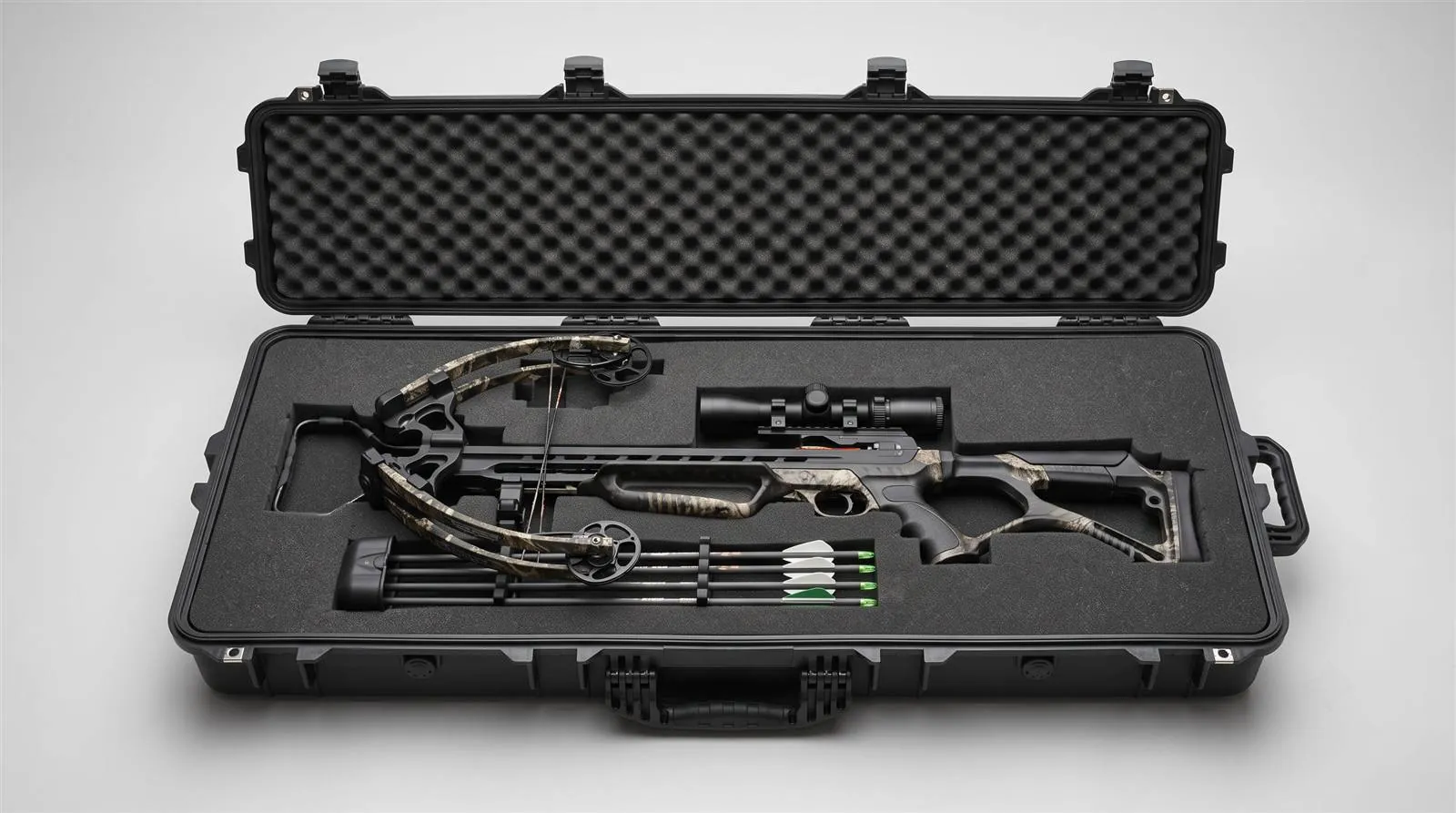
Store the crossbow de-cocked and unloaded. Prolonged storage under tension is not recommended by most manufacturers because it adds avoidable stress to limbs and string. Use the approved method in our de-cocking guide, then put the crossbow in a case that protects the limbs and string.
The Right Environment
Choose a dry, temperature-stable indoor space away from direct sunlight, which can degrade synthetic strings and cables. A garage or shed with big temperature and humidity swings is a poorer choice than an indoor closet. Keep the crossbow where children cannot reach it and where it complies with the rules where you live, which you should verify with your local authority.
Bringing It Out Again
Before the first session of the season, repeat the five-minute check, re-wax the string, re-check the rail, and confirm the trigger and safety work cleanly. Treat the first outing as a function test and not as a hunt.
Troubleshooting and Common Maintenance Mistakes
| Problem | Likely cause | What to do |
|---|---|---|
| String looks fuzzy or light in color | Dry string | Wax per the steps above; if strands are exposed, stop and replace |
| Cocking has become harder or rough | Dry string or rail, dirt | Clean, wax, lubricate if required, then test; see a technician if it persists |
| Noise has increased | Dry rail, loose hardware, worn parts | Inspect hardware, clean and lubricate as the manual allows |
| Groups drifting | Loose scope mount, worn string, cam timing | Check mount, then string; see a pro shop for timing |
| Trigger feels different or safety is unreliable | Dirt, wear or damage | Stop shooting; do not disassemble; technician or manufacturer |
Over-Lubricating
More lube is not better. Too much on the rail or near the latch collects grit and can interfere with function. A thin film is enough.
Using the Wrong Product
Household oils and unsuitable waxes can degrade synthetic parts or attract dirt. Stick with products made for crossbows or the ones your manufacturer names.
Skipping the Visual Check
Most failures give warnings first. A frayed serving or a hairline crack is far easier to deal with before a shot than after one.
Doing Technician Jobs at Home
Do not adjust cam timing, re-serve a string, press limbs or take the trigger group apart unless your manual explicitly instructs you to. The stored energy involved is a real hazard.
Storing Cocked
Never store a crossbow cocked. Beyond the risk to anyone handling it, it is unnecessary stress on the limbs and string.
When to Stop and See a Qualified Technician
Stop shooting and get the crossbow inspected if you see or notice any of the following:
- Exposed string strands, serving separation or damaged cables
- Cracks, splinters or delamination on a limb
- A trigger or safety that behaves inconsistently
- A string that rests in a different position than before
- Cocking that suddenly feels rough, uneven or unsafe
- Groups that will not settle after you have rechecked the simple causes
Our crossbow safety rules for beginners guide lists the broader habits that go with this, and the crossbow accessories hub covers the supplies and devices I have reviewed.
Pre-Season Function Check
Do this a few weeks before opening day, not the night before, so any repair has time to happen. It strings together the earlier checks into one session.
- Full inspection, de-cocked and unloaded. Work through the five-minute check, then look closely at the serving, cable guard, limb surfaces and the stock for any new marks.
- Clean, then wax and lubricate only as the manual directs. Wipe off the excess and recheck the string.
- Check every fastener the manual allows you to touch, including the scope mount, and re-mark ring screws so movement is visible.
- Test the safety and the cocking aid through several full cycles, wearing the gloves you will actually hunt in.
- Inspect every bolt, nock and broadhead with the five-point check, and retire anything doubtful.
- Shoot a short session at a safe range to confirm the zero with your hunting setup. Our how to sight in a crossbow scope guide covers the steps.
- Note anything that changed, such as new noise, a different trigger feel or a shifted group, and book a technician early if needed.
If the crossbow had a long idle period, treat the first outing as a function test, not a hunt.
Wet, Cold and Humid Weather Care
Weather is the common cause of hidden wear. These habits apply to most crossbows, but follow your manual for specifics.
- After rain or snow: dry the crossbow with a soft cloth, wipe the rail and the metal parts, and let it dry fully at room temperature before it goes in a closed case. Trapped moisture is what starts corrosion.
- After a cold morning: let the crossbow warm slowly rather than placing it next to a heater. Check that the safety and latch still work smoothly.
- In humid storage: a case with a small moisture absorber can help, and check exposed steel parts for early surface rust.
- After dust or mud: brush out debris before lubricating anything, because grit is what grinds a rail and a latch.
Stop and ask for advice if you see rust on a spring, latch or trigger part, rather than lubricating over it.
Transporting a Crossbow Between Trips
A crossbow can be damaged in transport as easily as in use.
- Carry it de-cocked and unloaded, in a case that supports the limbs and protects the string and scope.
- Keep bolts and broadheads in their own covered holder, never loose in the case.
- Do not store heavy gear on top of the case or leave it in a hot, closed vehicle for long periods.
- Check the scope zero after any rough journey or knock, because a mount can shift without any visible sign.
Rules for carrying and transporting crossbows vary by region and some require a case or separation of bolts, so verify the current rules with the relevant authority.
Maintenance Checklist You Can Copy
| When | Do this | Done |
|---|---|---|
| Every session | Visual check of string, cables, limbs and rail; safety test; bolt and nock inspection | [ ] |
| Every few sessions | Wax string and cables; wipe the rail; brush out the trigger area | [ ] |
| Monthly in season | Fastener check; moving-parts lubrication as allowed; cocking aid inspection | [ ] |
| After a wet or dusty day | Dry, brush, wipe, and check for early rust | [ ] |
| After a drop or knock | Full inspection, bolt check, and a short zero confirmation | [ ] |
| Before storage and before the season | Full inspection, wax, de-cocked case storage, then pre-season function check | [ ] |
Noise and Vibration: Symptom to Cause
A crossbow that suddenly gets louder is telling you something. Use this table to match the sound to a likely cause before you start changing things.
| What you notice | Likely cause | What to do |
|---|---|---|
| Louder shot with more hand vibration | Loose fastener or worn component | Check what the manual lets you tighten; see a technician if it persists |
| Scraping or squeak as the string travels | Dry or dirty rail, dry string | Clean, then wax and lubricate as directed |
| Rattle when you move with it | Loose scope mount, sling hardware or accessory | Check mounts and accessories; re-confirm your zero afterward |
| Click or grind during cocking | Dirt or wear in the cocking device | Stop and clean; have the device inspected if it continues |
| Different sound at the latch | Latch or trigger wear | Stop shooting and have it inspected |
A worn string or cable costs speed, and the bolt drop chart shows what even a 10 FPS loss does to your aiming marks. When a problem shows up as a misfire or a dry-fire warning, crossbow won't fire: common problems and fixes covers the diagnosis.
Frequently Asked Questions
How often should I wax my crossbow string?
Many owners wax every few sessions, or roughly every two weeks in heavy use, but your manual's interval comes first. Wax sooner if the string looks dry, light in color or fuzzy, whatever the schedule says.
What kind of lubricant should I use on my crossbow rail?
Use a rail lubricant made for crossbows, or the product your manufacturer names, and only if your rail needs lubrication. Household oils and greases can attract dirt or react with synthetic parts and are best avoided.
Can I fix a frayed crossbow string with more wax?
No. Exposed strands, wide fuzzing or serving separation mean the string needs replacing by a qualified technician or the manufacturer. Wax cannot restore broken fibers, and shooting a damaged string risks failure under load.
How do I know if a crossbow bolt is damaged?
Look along the shaft for cracks, splinters and dents, roll the bolt on a flat surface to check it is straight, and check the nock, vanes and tip are intact and tight. On carbon bolts, a cloth that snags on the shaft points to a splinter. If you find structural damage, retire the bolt rather than repairing it.
Can I shoot a bolt with a cracked nock?
No. A cracked or loose nock can let the bolt slip or fly off line. Replace the nock with the type your crossbow's manual specifies, or retire the bolt, and confirm the nock fits your string correctly before you shoot again.
What parts of a crossbow should I lubricate?
Only what your manual names. That is often the rail, if it needs it, and sometimes the safety or the gears of a crank cocking device. Strings and cables take wax, not oil, and the trigger group, cams and axles are best left to the manufacturer or a technician unless the manual says otherwise.
Can I use WD-40 or household oil on my crossbow?
It is best not to. General-purpose sprays and household oils can attract dirt and may harm strings and synthetic rail surfaces. Use the lubricant your crossbow's maker names, and ask the manufacturer if your manual does not say.
Should I store my crossbow cocked or de-cocked?
De-cocked and unloaded, using the manufacturer-approved method. Storing under tension adds avoidable stress to the limbs and string, and a cocked crossbow is a safety risk to anyone who handles it.
Can I service my crossbow's trigger mechanism myself?
No, not unless your manufacturer provides instructions for it. The trigger and safety are safety-critical, so have a qualified technician or the manufacturer inspect and service them.
How do I know if my cam timing is off?
Typical signs are groups drifting without a change in your technique, uneven-looking cams when cocked and unusual noise or limb stress. Do not adjust timing yourself; a pro shop can check and correct it with the right tools.
Where should I store my crossbow in the off-season?
Keep it in a case, indoors, in a dry and temperature-stable space away from direct sun, and secured where children cannot reach it. Check any local storage rules with the relevant authority.
How should I carry a crossbow in my vehicle?
Carry it de-cocked and unloaded, in a case that supports the limbs, with bolts and broadheads separate and covered. Rules differ by location, so check the current transport requirements with your local authority.
What should I do after my crossbow gets wet?
Dry it with a soft cloth, wipe the rail and metal parts, and let it air dry fully before putting it in a closed case. Check for early rust on exposed steel, and do not lubricate over rust.
When should I do a pre-season check on my crossbow?
A few weeks before opening day, so any repair has time to happen. Inspect, wax, check fasteners, test the safety and cocking aid, inspect bolts and confirm your zero at a safe range.
Final Recommendation
A short routine beats an occasional deep clean: look before every session, wax when the string asks for it, lubricate the rail only as the manual says, and store the crossbow de-cocked and cased. Leave cam timing, damaged strings and trigger work to a technician, and stop the moment something looks or feels wrong.
If you have not yet practiced the safe way to relieve tension before storage, read how to de-cock a crossbow safely next.
Read nextDe-cock before you store or serviceEvery maintenance task starts with an unloaded, de-cocked crossbow. Learn the approved options first.Gear mentioned in this guide
Reviews we link to above, highest rated first. Read the full review before you buy.
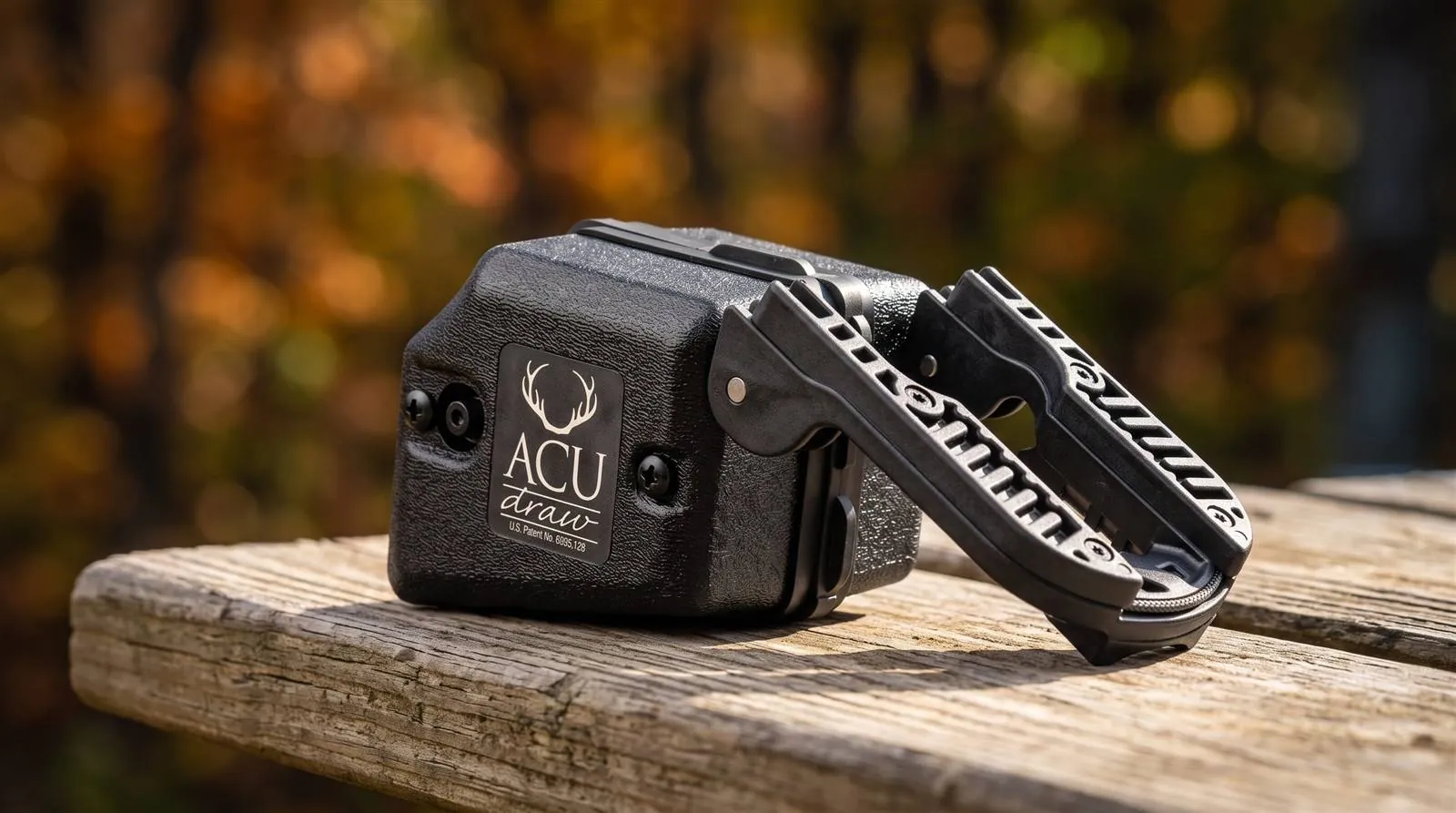
TenPoint ACUdraw Review
TenPoint's integrated cocking system that sharply cuts draw effort and centers the string every time. Fits select TenPoint, Wicked Ridge and Horton models.
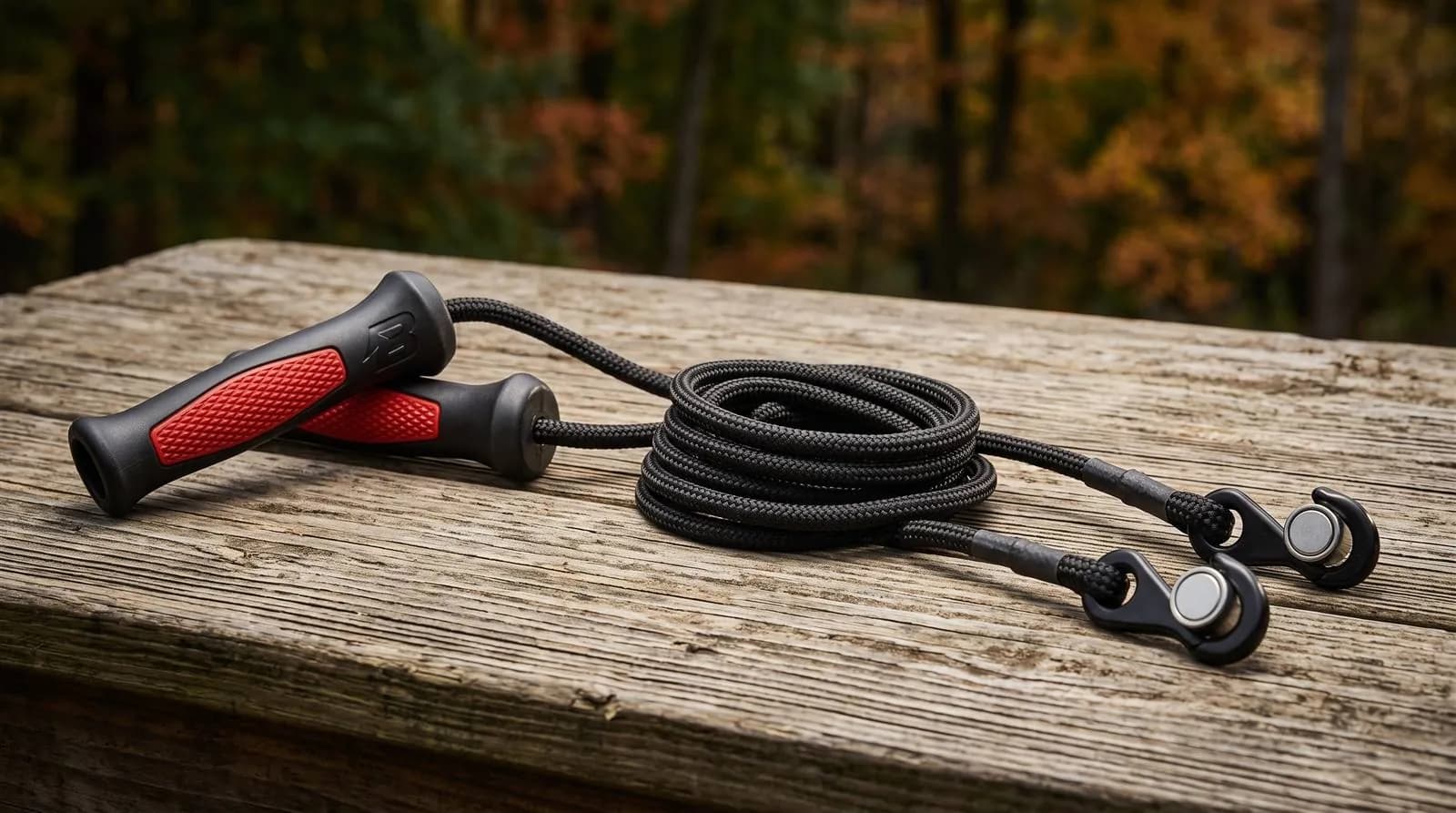
Barnett Rope Cocking Device Review
Padded rope cocking aid that roughly halves draw effort on compatible standard-draw Barnett crossbows. Not for Reverse Draw Cam or Hyper RAPTOR models.
Ready to compare models? Browse our recurve crossbows and crossbow accessories reviews, or see all reviews to see how each one measured up in testing.
More in Maintenance & Troubleshooting, Hunting Laws & Safety
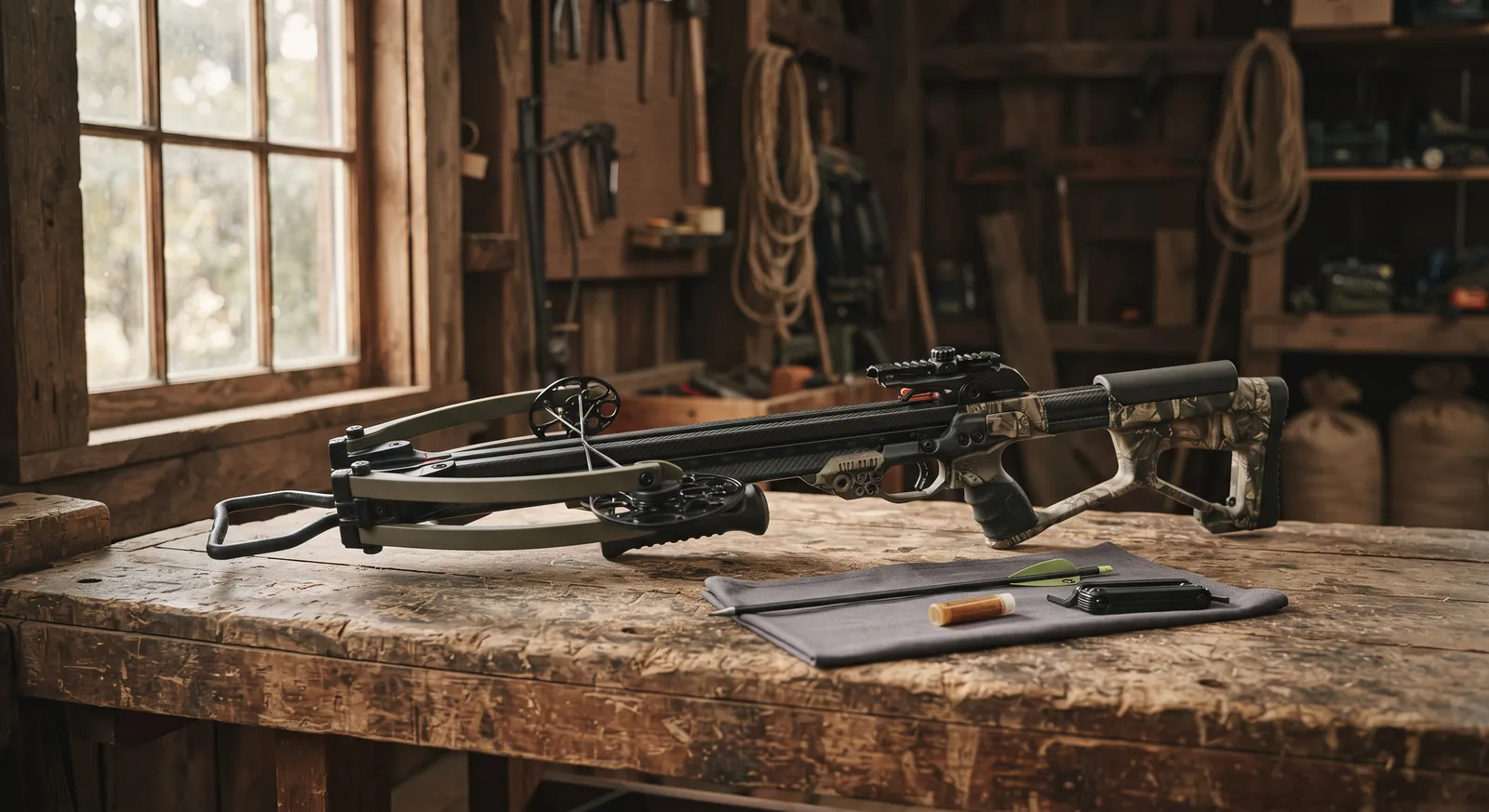
Crossbow Won't Fire: Causes & Fixes
A diagnosis table for a crossbow that won't fire: safety on, unseated bolt, wrong nock, bolt specs, retention spring and trigger problems, and when to stop.
Read guide
How to Decock a Crossbow Safely
How to de-cock a crossbow safely using integrated systems or a discharge bolt into a rated target, plus what never to do and how to fix common mistakes.
Read guide
How to Cock a Crossbow: Rope vs Crank
Hand cocking, rope cocking, crank devices and integrated systems compared, with the steps that keep the string centered and your fingers clear.
Read guide