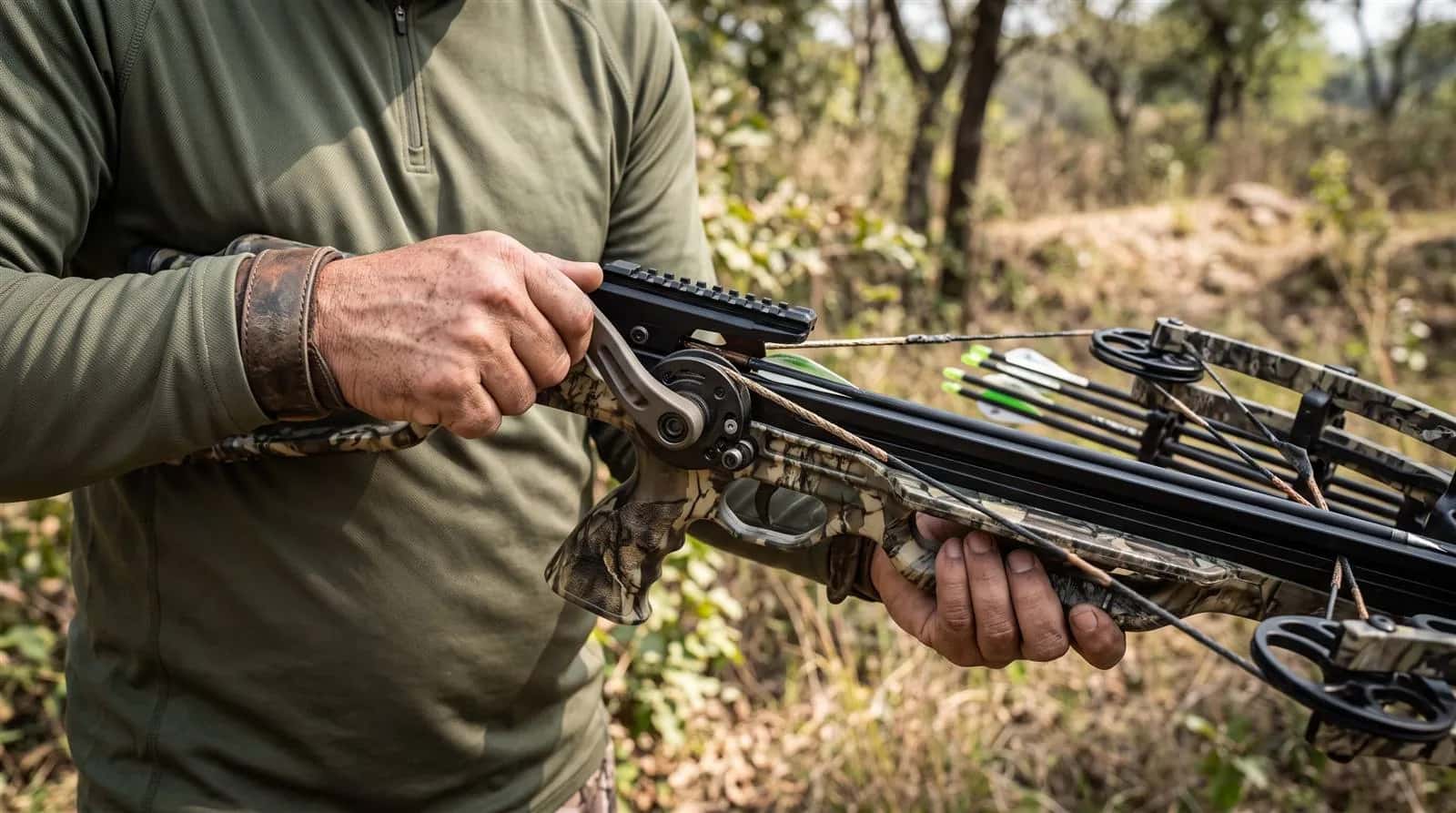
A crossbow's draw weight is printed on the box in big numbers, yet it rarely tells you how hard the crossbow is to cock or how comfortable it is to live with for a full day. A 340 lb crossbow can ask for less effort than a 175 lb one, and the reason is the cocking system, not your arms. This guide helps you read draw weight the way an owner experiences it, so you can match a crossbow to your frame, strength and habits instead of to the biggest number on the spec sheet.
It is written for first-time buyers, smaller-framed shooters, older hunters and anyone choosing between a manual-cock crossbow and an assisted one. Every figure below comes from our own review pages, and where a number is not published we say so.
True Draw Weight vs Felt Draw Weight
True draw weight is the force stored in the limbs when the string is fully drawn. Felt draw weight (also called felt cocking effort) is how much force you actually apply while cocking, after any rope, sled, crank or cam system has done part of the work. The two numbers can be very far apart.
The table shows how wide that gap is in the crossbows I have reviewed.
| Crossbow | True draw weight | Felt cocking effort | Cocking system | Buy |
|---|---|---|---|---|
| TenPoint Titan X De-Cock | 190 lbs | About 5 lbs | ACUdraw De-Cock | Check price on Amazon |
| Ravin R26X | 340 lbs | About 12 lbs | Integrated HeliCoil Silent Cocking | Check price on Amazon |
| Ravin R29X | About 300 lbs | About 12 lbs | Integrated HeliCoil Silent Cocking | Check price on Amazon |
| TenPoint TX Ultra 29.5 | 350 lbs | About 13.3 lbs | ACUslide MAXX | Check price on Amazon |
| Excalibur Hybrid X | 336 lbs | About 14 lbs | ChargerX integrated crank | Check price on Amazon |
| Barnett Hyper Whitetail 410 | 190 lbs | About 95 lbs | Included rope-cocking sled | Check price on Amazon |
| Avalanche Anaconda | 175 lbs | Not published | Manual, included cocking rope | Check price on Amazon |
| Excalibur Mag Air | 136 lbs | Not published | Included rope cocking aid | Check price on Amazon |
The pattern is the point. Two things reduce your effort: a compound cam system that multiplies force, and a mechanical aid that gives you leverage. Recurve designs such as the Anaconda have no cam multiplication, so a rope is the only help. Our compound vs recurve crossbow guide explains why.
Why the true number still matters
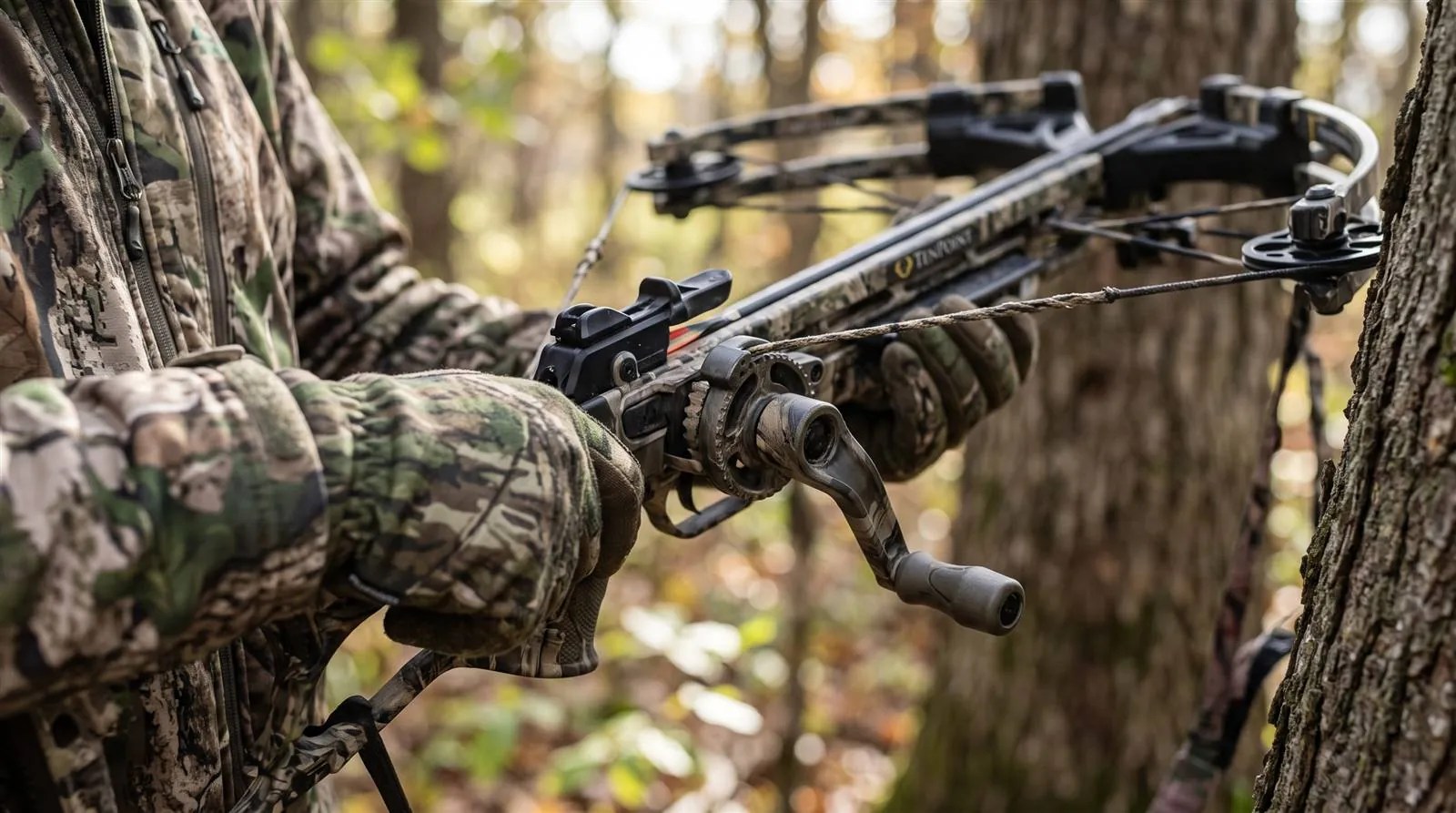
True draw weight is an engineering figure. Combined with the power stroke, which is the distance the string travels from cocked to rest, it governs how much energy the limbs can hand to the bolt. A crossbow with a longer power stroke can often reach a given speed with less draw weight, which is one reason a compact 9.5 inch design needs a very high true weight to keep up.
Power strokes in our reviews run from about 6 inches on the pistol models to 16.25 inches on the TenPoint TRX Ultra. The Ravin R26X lists 9.5 inches and 340 lbs; the R29X lists 12.5 inches and about 300 lbs. That is why we treat draw weight, power stroke and bolt weight as a set rather than ranking by any single one.
Draw Weight by Body Size and Strength
There is no published standard that says a given height or weight needs a given draw weight, and we will not invent one. What we can do is group what I have tested by how much effort the reader will be asked to supply.
| Your situation | What to look for | Reviewed examples |
|---|---|---|
| Smaller frame or limited upper-body strength | Assisted cocking with low felt effort, or a low true draw weight for non-hunting use | Titan X De-Cock, Ravin R10 Pro XK7, Barnett Demun Accu Strike |
| Average build, moderate strength | Rope sled or rope aid on a 130 to 190 lb crossbow, or an integrated system | Hyper Whitetail 410, Avalanche Anaconda, EK Archery Adder |
| Larger frame, strong shoulders and back | Anything above, plus higher true weights; still use an aid for consistency | Venom X, Hyper Raptor T-Rex |
| Any frame, high-speed priority | Integrated cocking that you cannot bypass | TX Ultra 29.5, TRX Ultra |
Smaller frames and lighter builds
Height and weight are poor predictors on their own. What matters is how comfortably you can pull a steady, even load through the full cocking motion, and a rope aid or crank removes most of that. If you want a full-size hunting crossbow, we would start with the integrated systems. The Titan X De-Cock measured about 5 lbs of felt effort in our review, and the Ravin R10 Pro XK7 about 12 lbs. If you prefer a lighter conventional compound, the Barnett Recruit XP is rated at 150 lbs and ships with a rope cocking device that roughly halves the effort.
If you only want a light recreational crossbow, the pistol models are cocked by hand with far lower loads: the Demun Accu Strike is 60 lbs, the Steambow AR-6 Stinger II is 55 lbs with standard limbs, and the SAS Prophecy 80 is 80 lbs. Our reviews rate these as target and small-game tools, not big-game ones.
Average builds
Most adults will find a rope sled or rope aid brings a 190 lb crossbow into a manageable range. The Hyper Whitetail 410 dropped to about 95 lbs of felt effort with its included sled in our review, which is still a real pull. The Barnett Premium Rope Cocking Device is rated to cut cocking tension by up to 50 percent, and my testing confirmed roughly half.
Larger frames
A bigger frame does not remove the case for an aid. Cocking by hand is less repeatable than a mechanical stroke, and uneven cocking can shift the string off center and move your point of impact. Strong shooters often still choose assisted models for that reason, as covered in how to cock a crossbow.
Worked Examples: True vs Felt Weight
Divide the true draw weight by the felt effort to see how much your aid is doing. This is plain arithmetic on the figures in the table above, not a measured quantity.
| Crossbow | True / felt | Ratio | What it means for you |
|---|---|---|---|
| Titan X De-Cock | 190 / 5 lbs | About 38 to 1 | The aid removes nearly all the load, so cocking stays easy when tired |
| Ravin R26X | 340 / 12 lbs | About 28 to 1 | High stored energy, modest effort on every cycle |
| Excalibur Hybrid X | 336 / 14 lbs | About 24 to 1 | A crank trades speed of cocking for low effort |
| Hyper Whitetail 410 | 190 / 95 lbs | 2 to 1 | A rope halves the load, but 95 lbs is still a real pull |
Three conclusions follow:
- A bigger ratio is not automatically better for you. What counts is whether the felt number is one you can repeat.
- The same 190 lb true weight can feel completely different. The Titan X De-Cock and the Hyper Whitetail 410 share it, yet their felt efforts differ by about 90 lbs.
- A high ratio means dependence on the system. If the aid fails, a 300 lb crossbow cannot realistically be cocked by hand.
The Ten-Cycle Self-Test
Spec sheets cannot tell you how a number feels on the tenth cocking. Before buying, if you can handle a demo unit at a shop, run this routine and stop if anything hurts.
- Cock and de-cock under the supervision of a shop employee, using the manufacturer's method.
- Repeat ten times with a short rest between cycles, watching for form breaking down.
- Note whether the string stays centred by looking at the shop's guidance on cocking alignment.
- Compare the third cycle with the tenth. A large drop in comfort means the felt effort is too high for you.
- Ask yourself whether you could do this at dawn in cold weather with gloves on.
If you have a shoulder or back issue, ask a professional before attempting this.
Symptoms and Likely Causes
| What you notice | Likely cause | What to do |
|---|---|---|
| Arms or shoulders tire quickly while cocking | Felt effort is above your comfortable repeatable load | Consider an assisted model or a lower-draw option |
| String seems to sit unevenly after cocking | Uneven manual pull | Use an aid that keeps the pull even, and follow your manual |
| Group opens up late in a session | Fatigue from repeated cocking | Rest more, or move to a lower felt-effort system |
| You avoid shooting because setup feels like a chore | Wrong system for your habits | Revisit the aid type, not only the poundage |
How Cocking Aids Change the Equation
A cocking aid, defined in our cocking aid glossary entry, is any device that reduces the force or awkwardness of drawing the string. There are three families.
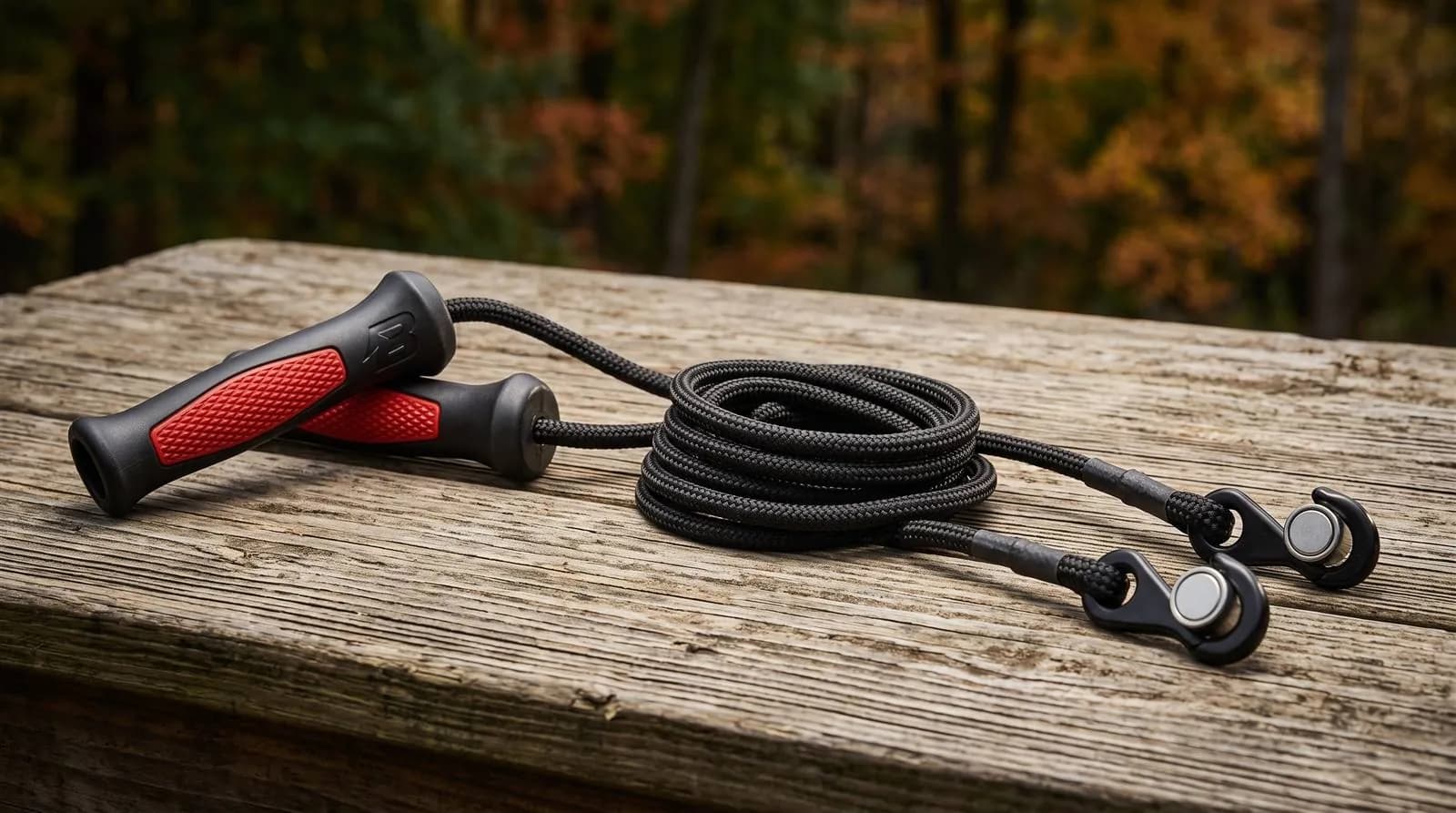
- Rope aids and sleds. Cheap and portable. The Barnett Premium Rope Cocking Device costs $19 to $29 and its review lists it as incompatible with Barnett reverse draw cam models and Hyper Raptor crossbows, so check compatibility first.
- Crank devices. Hand-operated gearing. The TenPoint ACUdraw review lists a built-in device that brings effective draw weight to 5 lbs for $285 to $295; the Excalibur Hybrid X uses an integrated ChargerX crank at about 14 lbs.
- Integrated cam-assisted systems. Ravin's HeliCoil and TenPoint's ACUslide MAXX route the string so that you never fight the full poundage. Our R29X review notes that, at roughly 300 lbs true, the system is mandatory and there is no realistic manual backup if it fails.
Tested for this topic
Barnett Rope Cocking DeviceThe lowest-cost way to cut cocking effort on a compatible crossbow. Confirm your model is on the compatible list first.
Trade-offs you accept
Assisted systems add cost and, sometimes, a dependency. A crank is another mechanism that can wear or need service. A rope is easy to forget at home. None of these is a reason to avoid them, but they do belong in the decision. Our crossbow cost guide shows how much each approach adds.
What Draw Weight Does Not Tell You
Speed and kinetic energy
Draw weight alone does not predict speed. In our reviews, the Barnett Hyper Raptor T-Rex (220 lbs, 16 inch power stroke) lists 163 ft-lbs, the Titan X De-Cock (190 lbs, 12 inch stroke) lists 146 ft-lbs with a 400 grain bolt, and the Ravin R26X (340 lbs, 9.5 inch stroke) lists up to 142 ft-lbs. The most draw weight produced the least energy in that set because the stroke is so short. See how fast does a crossbow bolt travel for speed in more detail.
Kinetic energy also depends on bolt weight, so a heavier bolt can raise it at the same speed. For bolts, read how to choose crossbow bolts.
Accuracy and handling
Weight, balance and trigger quality affect shot comfort more than raw poundage. A lighter crossbow, such as the 6.5 lb R26X, is easier to carry but a heavier frame can feel steadier. These are personal matters worth testing in a shop.
Draw Weight and Hunting Rules
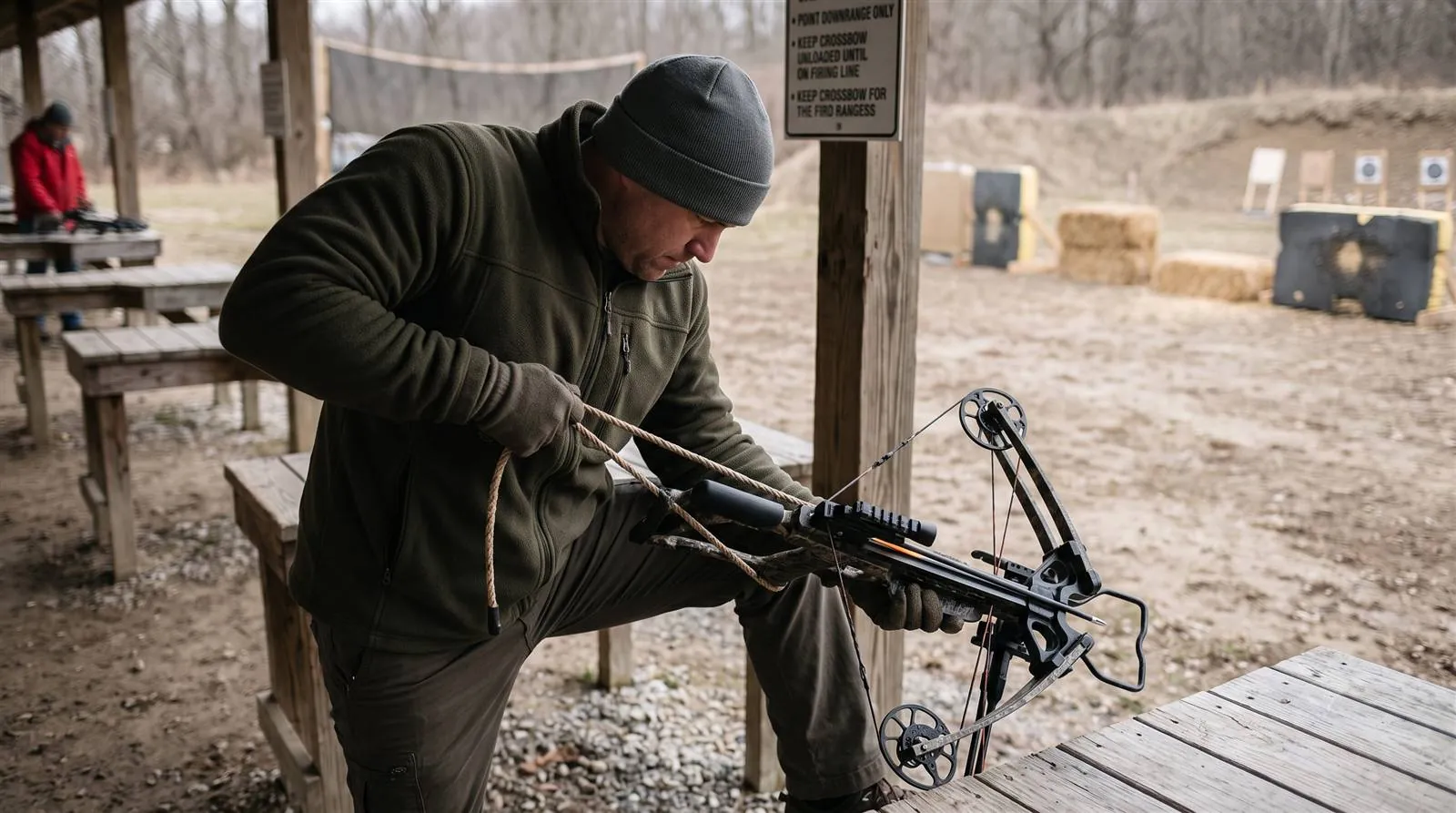
Some jurisdictions set equipment rules such as minimum draw weight for big-game hunting. Where our state law guide (linked below) has a checked figure, minimums run from 75 lb in Ohio to 125 lb in states such as Illinois, Indiana and Pennsylvania, and some states set none; each entry carries a last-checked date, and rules change, so confirm with your agency. Our pistol crossbow reviews rate those models below big-game energy, and the full-size crossbows I reviewed list 130 lbs or more. A listed draw weight does not guarantee your model complies. So if you are asking what draw weight you need for deer, start with your local rules, then choose the heaviest draw weight you can cock comfortably and safely every time. Always verify your local regulations before you hunt.
Read crossbow hunting laws by state for how to find and read your own agency's rules. For a hunting crossbow shortlist, see best crossbows for deer hunting.
Common Mistakes When Choosing Draw Weight
- Buying the highest number. The most true draw weight is not the fastest or the easiest to use.
- Ignoring the cocking aid. A rope in the box and a crank on the stock are different experiences.
- Assuming a heavy crossbow is hard to cock. Felt effort, not true weight, is the experience.
- Skipping a hands-on test. Demo units at a pro shop answer questions no spec sheet can.
- Forgetting de-cocking. If you do not shoot, you must unload safely. Read how to de-cock a crossbow safely.
A Simple Decision Method
Follow these steps in order.
- Decide the use: target, small game, or big game where legal.
- Write down the felt effort you can repeat comfortably 10 times.
- Shortlist crossbows whose felt effort sits at or below that number.
- Compare power stroke, speed and energy among the shortlist.
- Check price and what is included.
- Confirm the rules for your area before purchasing.
The cocking effort estimator shows what a given draw weight feels like by hand, with a rope aid and with a crank.
If the numbers here point you toward a recurve, the recurve crossbow buying guide explains why those designs need more draw weight for the same speed, and compound vs recurve crossbow compares the two directly.
Frequently Asked Questions
What draw weight do I need for a crossbow?
It depends on your use and cocking method. Reviewed full-size crossbows list 130 to 360 lbs true draw weight, while felt effort with an aid is far lower. Check hunting rules locally, and choose the felt effort you can repeat comfortably.
Can a smaller person use a high draw weight crossbow?
Often yes, if the crossbow has an effective cocking system and you follow the manual. Our reviews measured about 5 to 14 lbs of felt effort on assisted models even at 190 to 360 lbs true weight. If you have injuries, ask a professional.
Is a higher draw weight always better for hunting?
No. Kinetic energy depends on speed and bolt weight, and power stroke matters. In our reviews a 220 lb crossbow with a 16 inch stroke listed more energy than a 340 lb crossbow with a 9.5 inch stroke.
Do I need a cocking aid if I can cock by hand?
An aid improves repeatability and reduces fatigue, and uneven manual cocking can move the string off center. For anything above the lighter pistol models, we would use one. Always follow the manufacturer's directions.
What is the difference between draw weight and felt draw weight?
Draw weight is the force stored at full draw. Felt draw weight is the force you apply while cocking after a rope, sled, crank or cam system helps. The second number decides how the crossbow feels in use.
What is a power stroke and why does it matter?
Power stroke is the distance the string travels between cocked and fired. A longer stroke gives the limbs more distance to push the bolt, so it can raise speed without more draw weight. Our reviews range from 6 to 16.25 inches.
Does a heavier crossbow always take more effort to cock?
No. Our reviews show a 340 lb Ravin R26X at about 12 lbs of felt effort and a 190 lb Barnett Hyper Whitetail 410 at about 95 lbs, because the cocking system matters more than the stored weight.
How can I test whether a crossbow's cocking effort suits me?
Try a demo unit at a shop and cock it about ten times with the manufacturer's method, noting how the third cycle compares with the tenth. If you have a shoulder or back issue, ask a professional first.
Final Recommendation
Choose by felt effort first, then by use. If you want a full-size hunting crossbow and have any doubt about repeatable cocking, start with an assisted model such as the TenPoint Titan X De-Cock and compare it against the rope-sled options for budget. Then confirm your local rules before you buy.
Read nextSee what each price tier buysDraw weight and cocking system drive price; this guide shows how.Gear mentioned in this guide
Reviews we link to above, highest rated first. Read the full review before you buy.
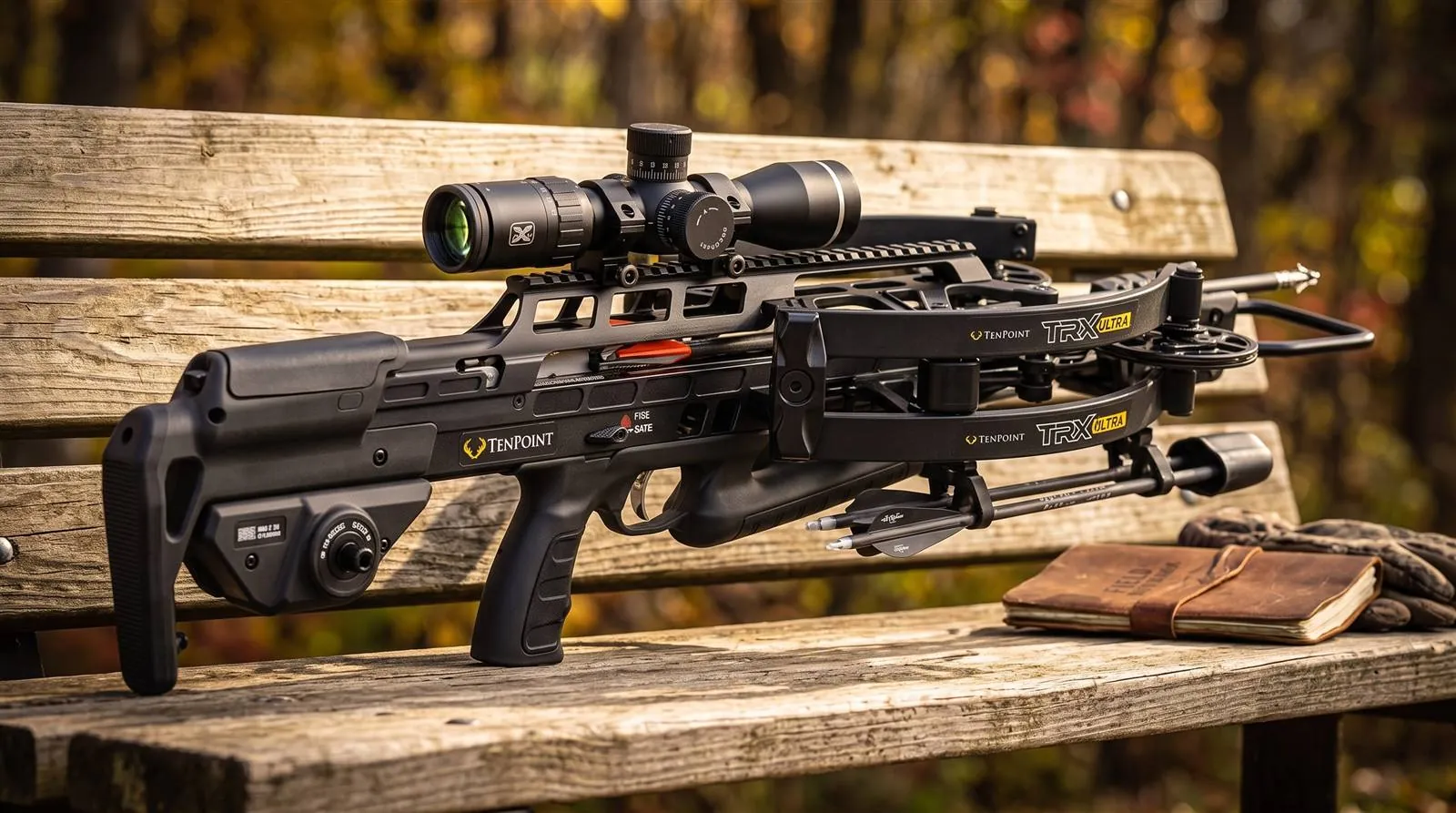
TenPoint TRX Ultra Review
Fastest crossbow in my tests at 511–517 FPS, with the tightest long-range groups near 100 yards. A flagship price that suits a narrow group of buyers.
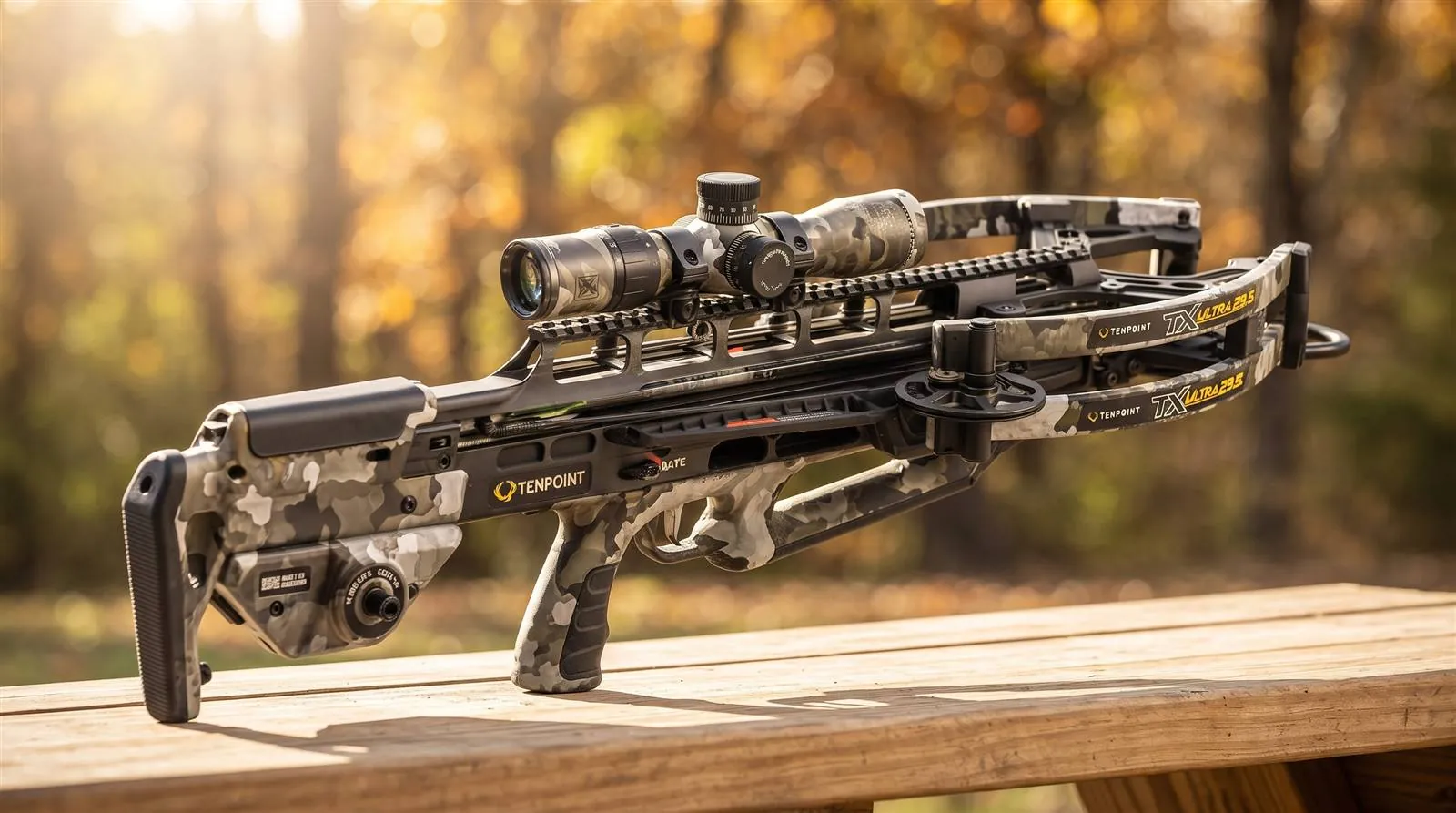
TenPoint TX Ultra 29.5 Review
Forward-draw crossbow measured at 456–463 FPS with tight 100-yard groups and a 6.5-inch cocked width. Speed and range in a narrow frame.
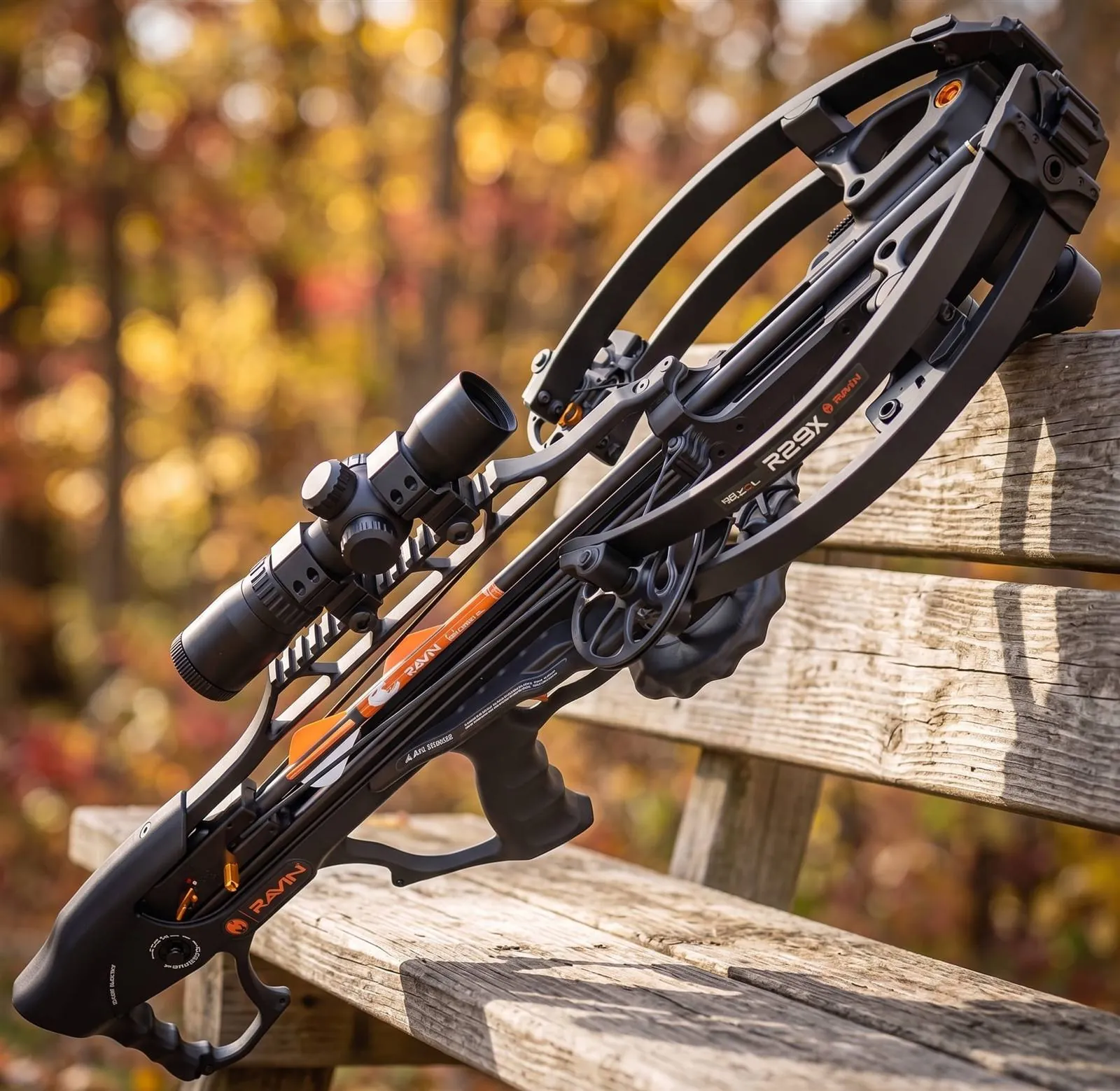
Ravin R29X Review
Compact, stealth-black crossbow producing 444–454 FPS and around 180 ft-lbs of kinetic energy, with an integrated quieter-cocking system.
Ready to compare models? Browse our compound crossbows reviews, or see all reviews to see how each one measured up in testing.
More in Buying & Comparison Guides
Ravin R29X vs R26X
R26X for stands, blinds and shots inside 40 yards at $500 less; R29X for larger game and longer range, with 50 FPS and 38 ft-lbs more. Measured verdict for each hunter.
Read guide
Recurve Crossbow Buying Guide
How to choose a recurve crossbow for hunting: who it suits, which specs to compare, maintenance, common mistakes and a decision checklist.
Read guideTenPoint TX Ultra 26.5 vs 29.5
TX Ultra 26.5 for saddles, blinds and short shots: shorter, lighter, quieter and $400–500 cheaper. TX Ultra 29.5 for 50 FPS more, 193 ft-lbs and reach past 60 yards.
Read guide