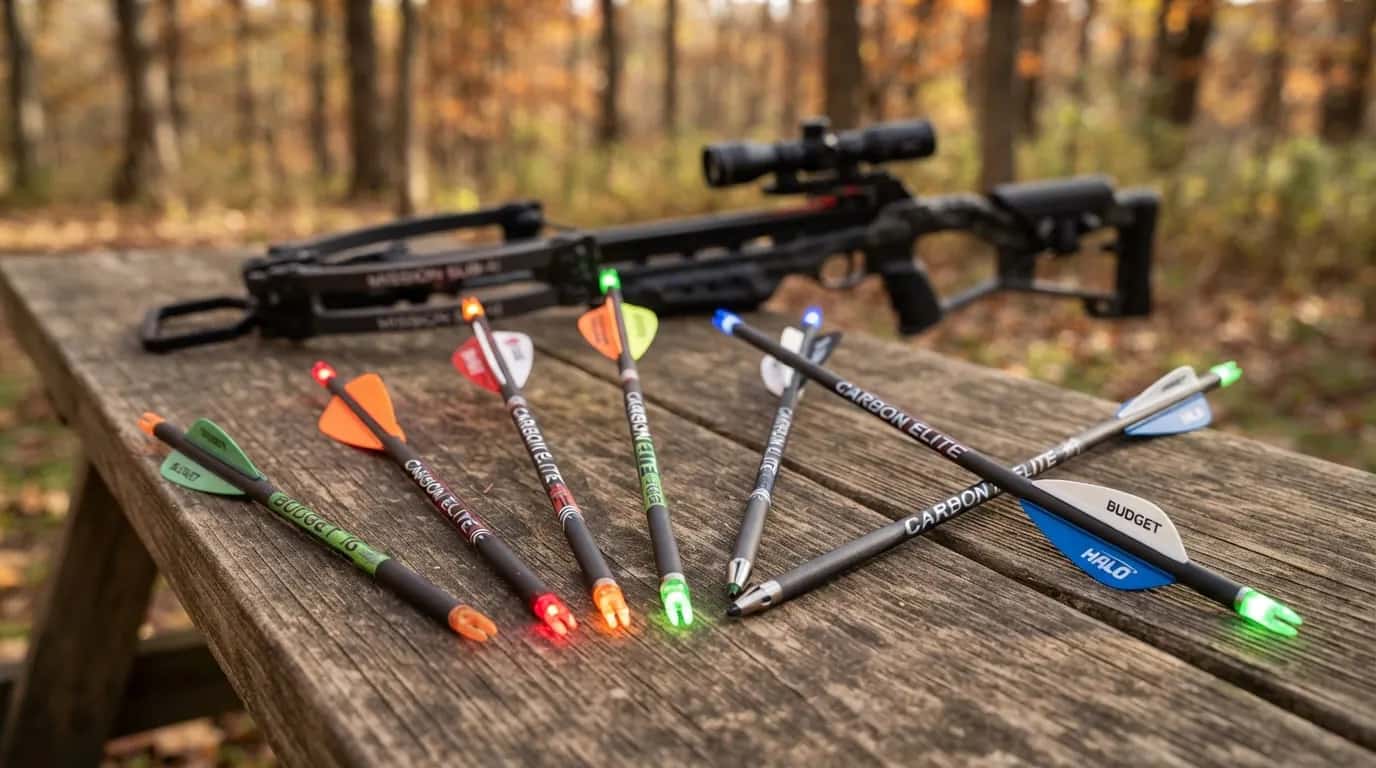
The best crossbow bolts are the ones your crossbow's manual allows, with the tightest weight and straightness tolerances you can justify for how you shoot. That makes the bolt a bigger accuracy decision than its price suggests.
This guide is for anyone choosing bolts for hunting, practice or low-light use. Every pick has its own review on our crossbow bolts page, and they are grouped by job rather than one overall ranking. The same picks cover the best crossbow arrows, since makers use both words for the same thing. The aluminum-jacketed Easton FMJ, which we have not reviewed, is compared in the shafts section below.
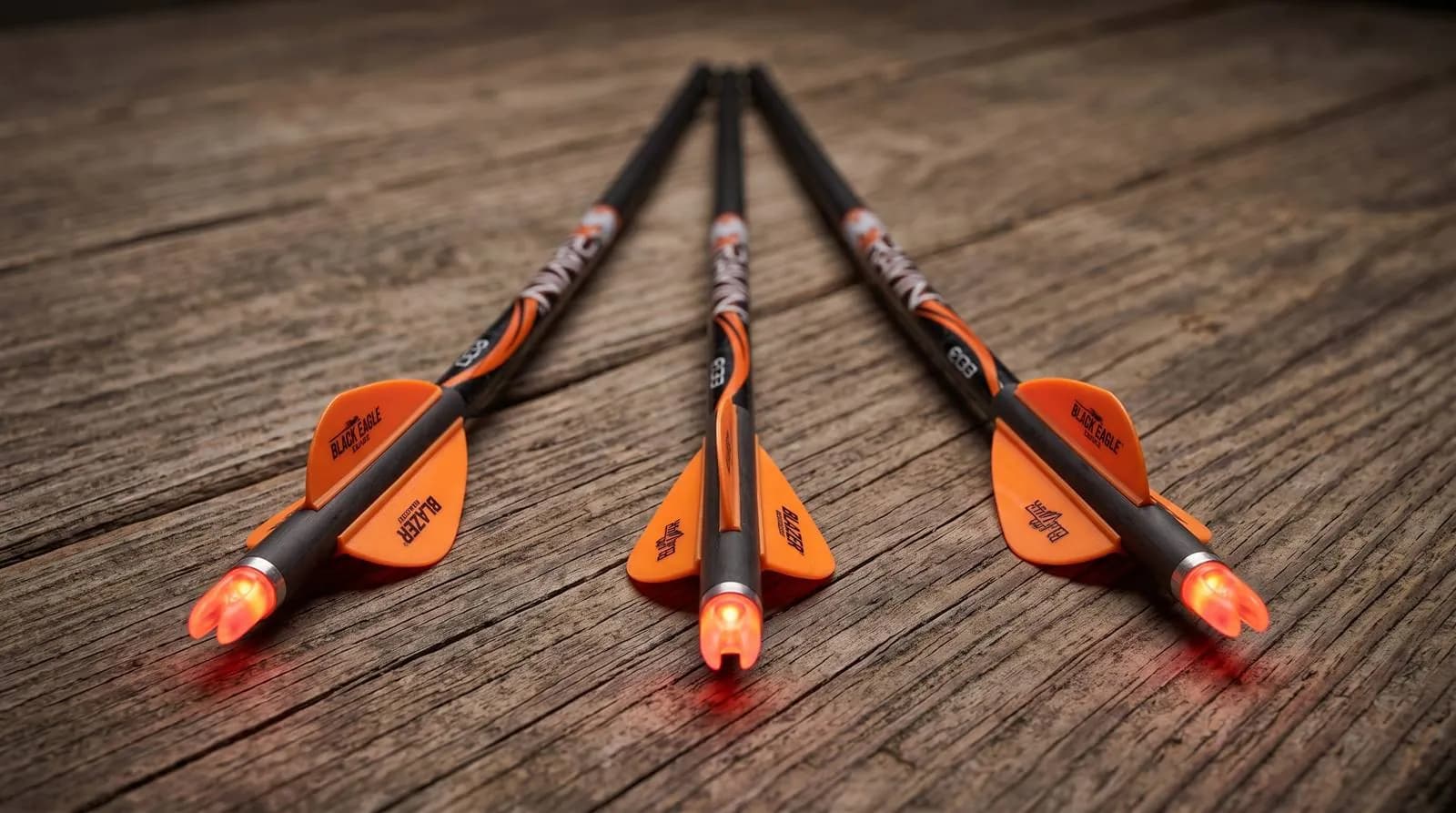
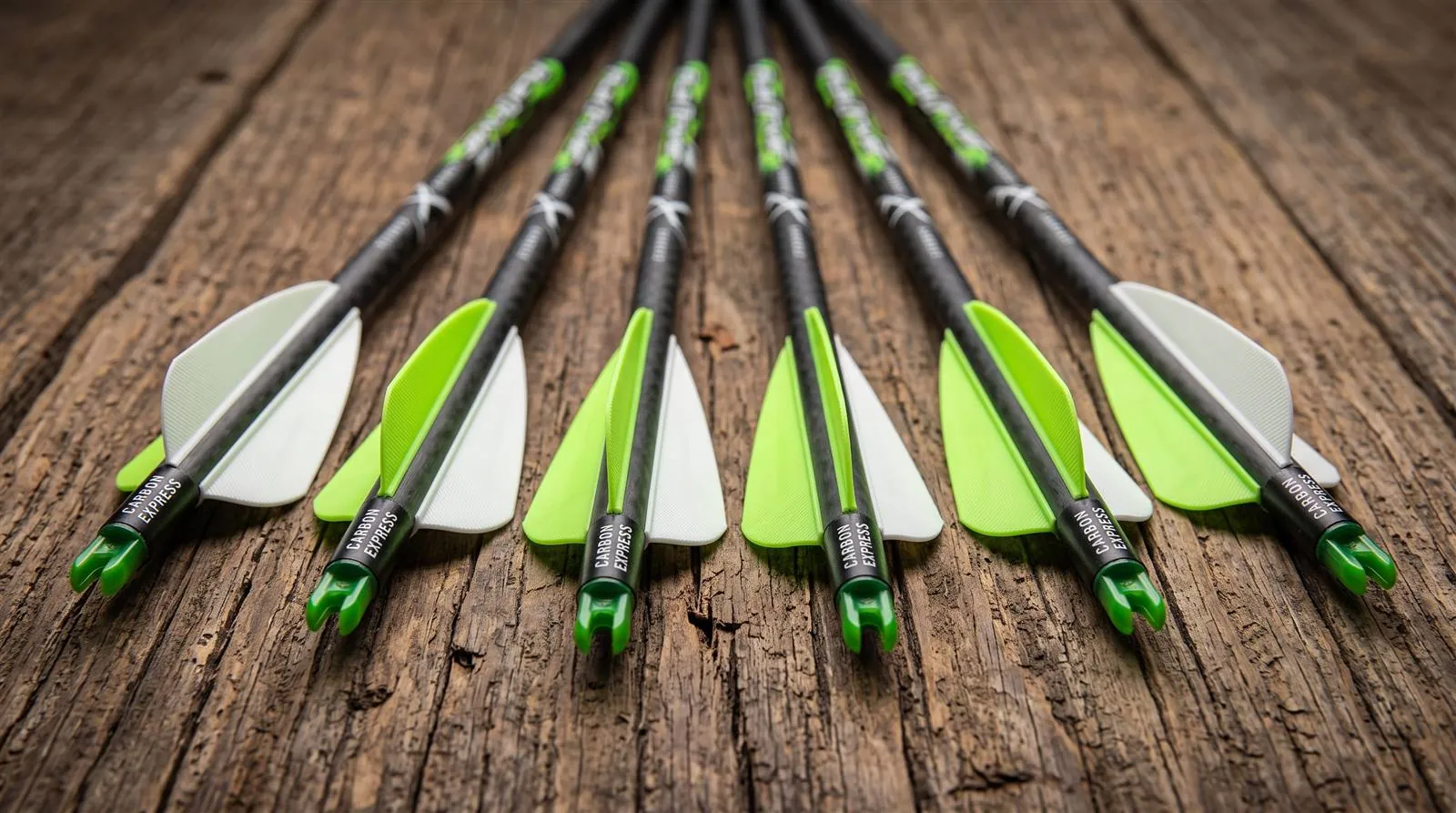
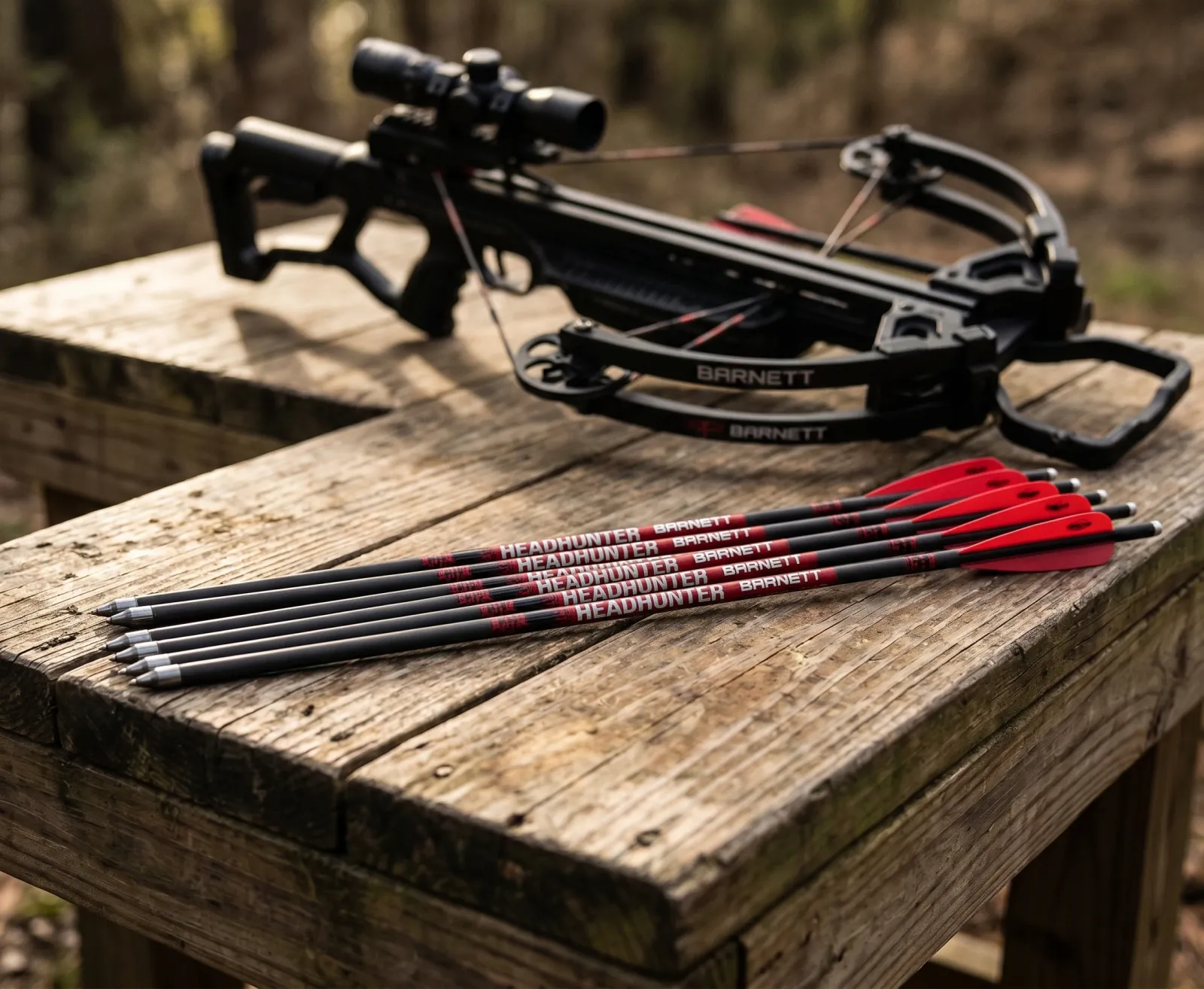
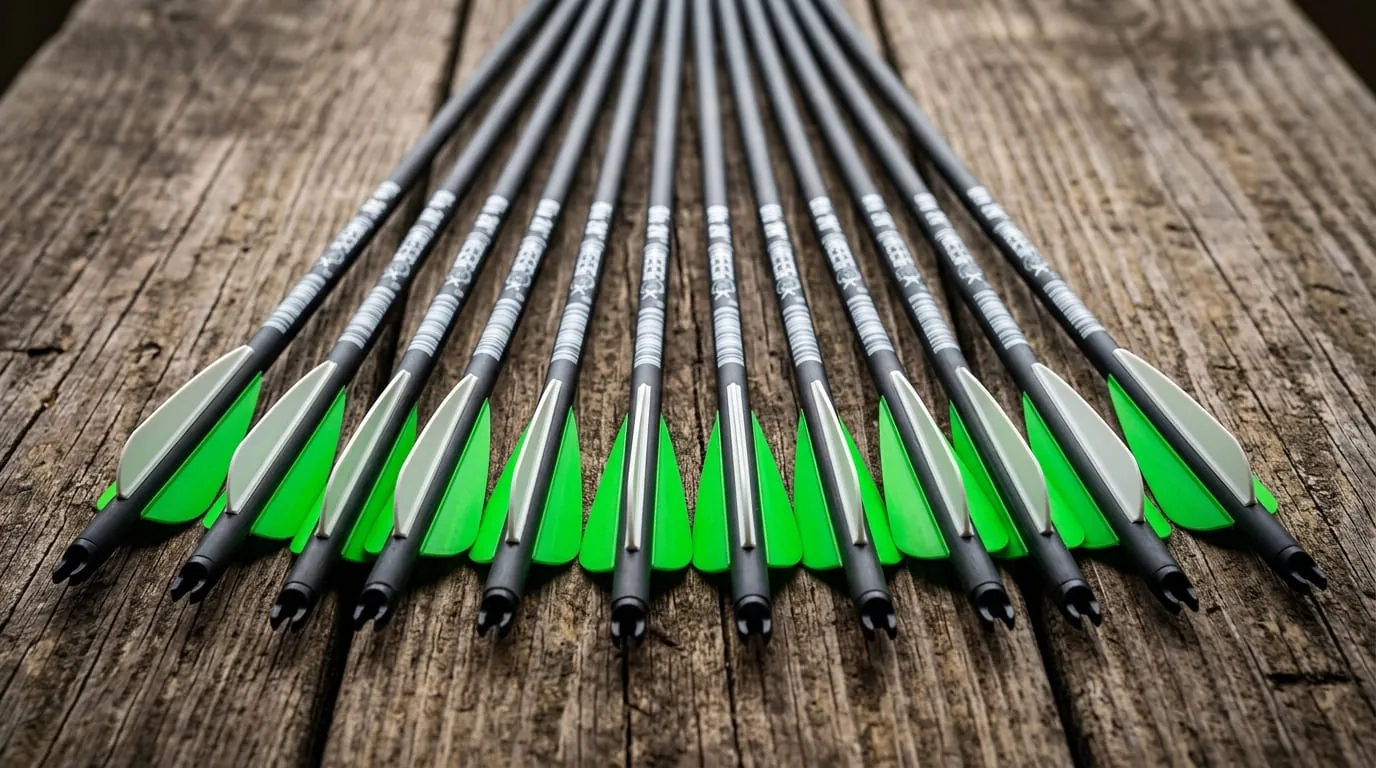
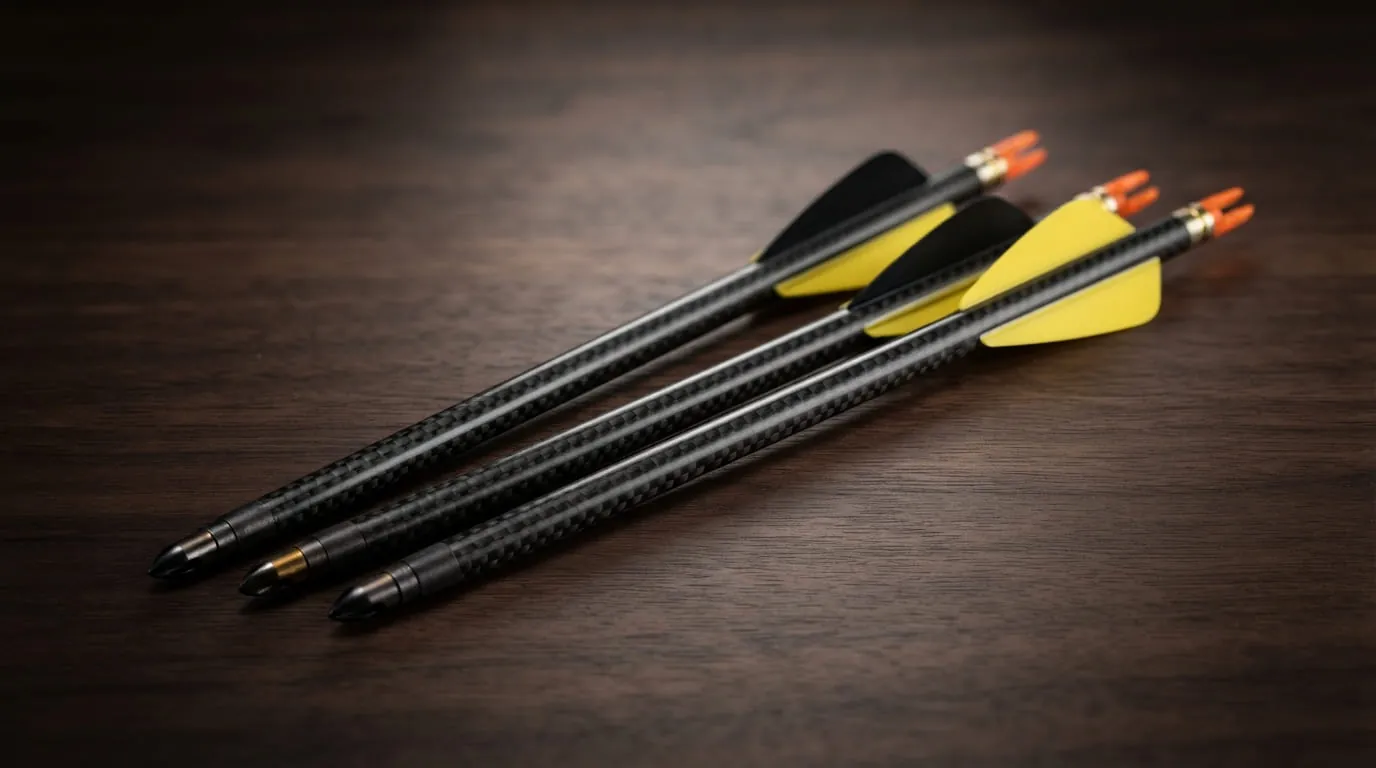
Best Premium Bolt: TenPoint CenterPunch HPX
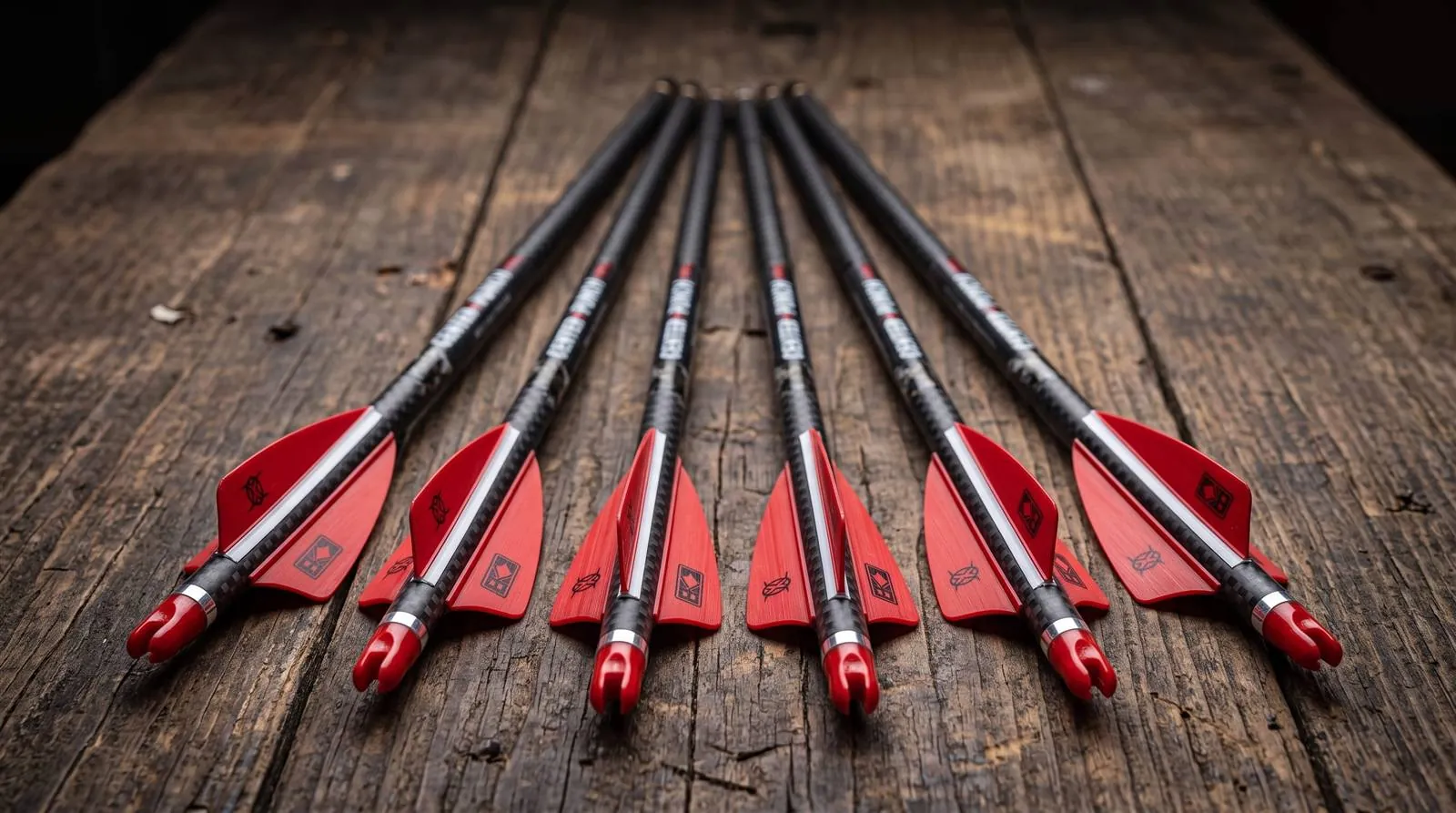
The CenterPunch HPX is a 445-grain, 20-inch bolt with .001-inch straightness, weight matched to within 1 grain per arrow in each pack. An 87-grain brass insert puts its balance at 15.5% front of center, the highest here.
Skip it if you shoot mostly inside 30 yards or on a tight budget: it is the most expensive non-lighted bolt here, and the tolerance gain shows most at distance.
- TenPoint inspects every shaft for straightness to within .001 inches, spine-aligns the bolts and weight-matches each package within 1 grain, the tightest tolerances in this comparison
- The Alpha-Nock HPX's deep bowstring groove, large radius base and elongated ears hold the string to prevent shoot-over or shoot-under, per TenPoint
- A unidirectional carbon inner layer for stiffness sits under a woven carbon outer layer for impact strength
- At $115–$125 for six bolts, this is a premium price point well above generic carbon arrow six-packs
- The fixed 20-inch length and 445-grain weight won't suit every crossbow — buyers should confirm compatibility with their specific platform before purchase
- This is a bolt-only product with no broadheads or field points listed in the pack
Best Value Hunting Bolt: Wicked Ridge Match 400
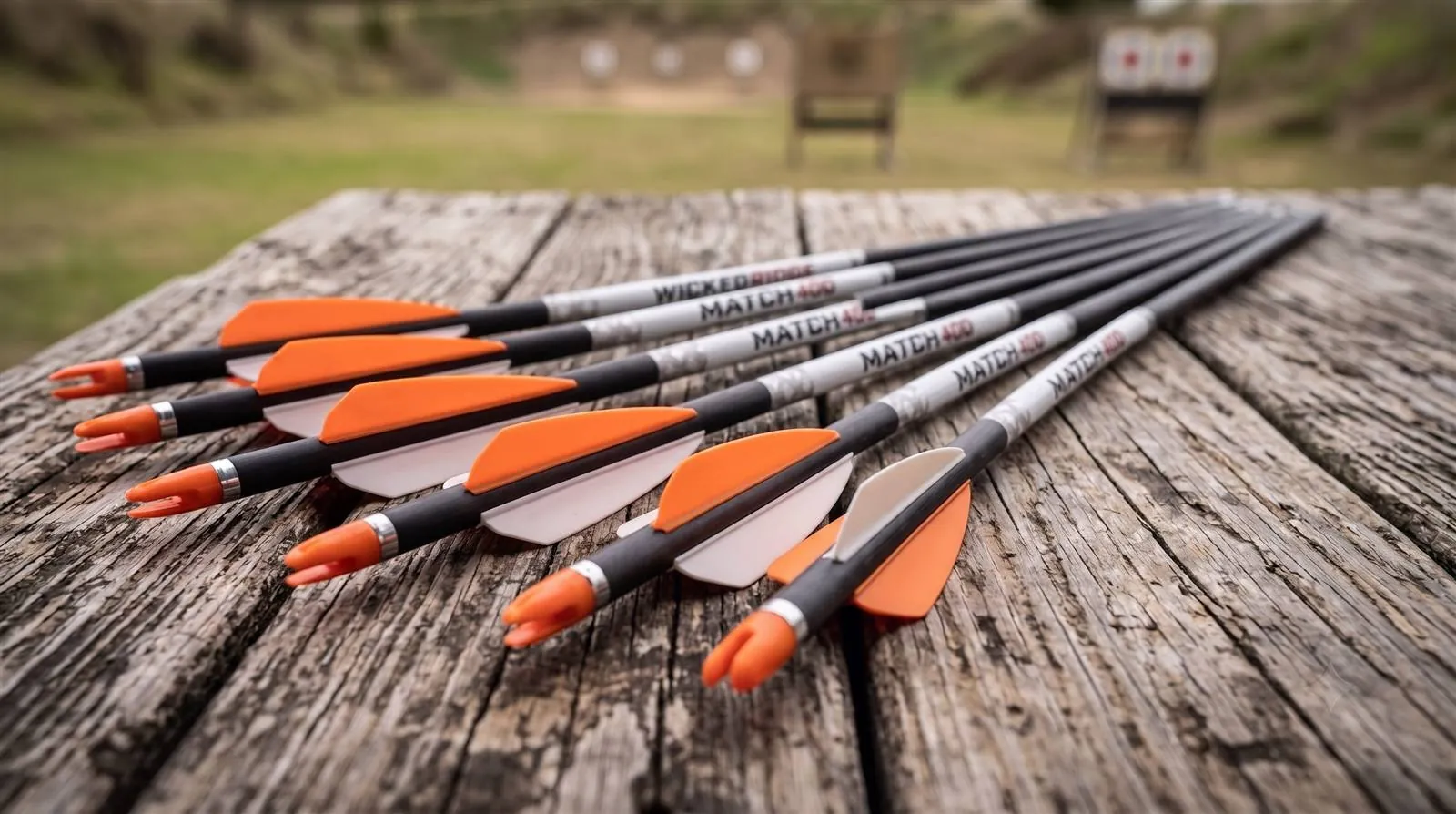
The Match 400 is a 410-grain, 20-inch carbon bolt with a 58-grain aluminum insert, 13% FOC, an Alpha-Nock HP and 3-inch Q2i Fusion X-II vanes. Bolts are hand-sorted to within 2 grains per dozen, so a dozen fly more alike than loosely sorted practice bolts.
Skip it if you want the tightest straightness (.004 inches here) or a lighted nock.
- Shafts are hand-sorted to within 2 grains per dozen, a tight consistency standard for a value-tier bolt
- A 58-grain aluminum insert gives a rated 13% FOC, which favors stable flight with a broadhead up front
- Six bolts per pack at $69.99 gives more shooting volume per purchase, useful for high-round-count practice
- A .004-inch straightness rating is looser than premium bolt lines
- This is a non-lighted bolt, so hunters wanting low-light bolt recovery should look at the Lighted Pro Elite 400 instead
- The fixed 20-inch length and 410-grain weight won't suit every crossbow, so confirm compatibility with your platform before purchase
Best Lighted Bolt: TenPoint Lighted Pro Elite 400
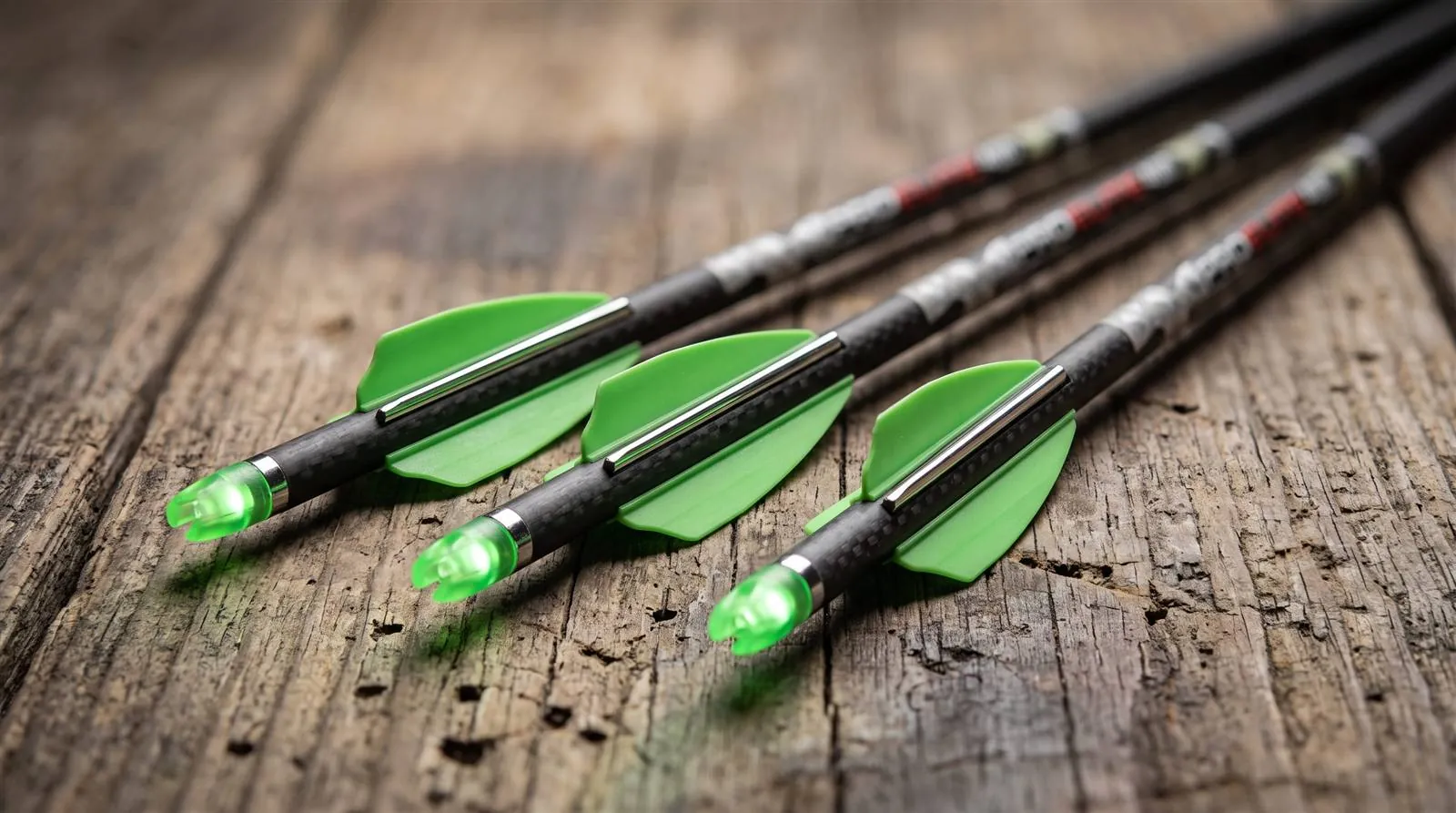
A lighted nock helps you follow the bolt's flight and find it after the shot. This is a 410-grain, 20-inch carbon bolt with .003-inch straightness, 13% FOC and an Alpha-Blaze lighted nock, and TenPoint says the lit nock keeps the same point of impact as its unlighted bolts.
Skip it if you rarely hunt at first or last light: it costs the most per bolt here and adds a battery to track.
- The Alpha-Blaze Lighted Nock lights on the shot, and TenPoint says the LED runs about 24 hours once activated
- TenPoint states the lighted arrow hits the same point of impact as its unlighted arrows
- Each arrow is inspected to a rated .003-inch straightness
- At $84.99 for a three-pack, this costs meaningfully more per arrow than non-lighted six-packs such as the Wicked Ridge Match 400 (TenPoint's sub-brand) or CenterPunch HPX
- The lighted nock is one more electronic part to check before every hunt
- The fixed 20-inch length and 410-grain weight won't suit every crossbow — buyers should confirm compatibility with their specific platform before purchase
Best Lighted Bolt for Ravin: Ravin R133
The R133 is a carbon bolt that weighs 400 grains with a 100-grain field tip or broadhead, with .003-inch straightness, 2-inch offset vanes and a lighted nock that activates on release.
Skip it unless you own a compatible Ravin: Ravin says it is not for the R18, R470 or R500 series.
- Match-Grade weight compensation: the listing says they weigh exactly the same as non-lighted Ravin arrows, for the same point of impact
- Rated to a .003-inch straightness tolerance, a solid standard for a lighted, brand-specific bolt
- Ravin describes the nock as ultra-bright, to help you locate bolts quickly in low light or thick cover
- This bolt is for Ravin crossbows only, and Ravin says it is not for use in the R18, R470 or R500 series, so buyers must confirm their exact model before purchase
- At $79.99 for a three-pack, this is a premium per-arrow price reflecting both the lighted nock and brand-specific engineering
- Field tips are not included, so you need 100-grain tips or broadheads to reach the 400-grain total
Best Universal-Nock Bolt: Carbon Express PileDriver
The PileDriver is a 22-inch bolt with 4-inch Fusion vanes and a Universal Nock System that seats both moon nocks and C-Nocks, which helps if you own more than one crossbow. Listed tolerances are +/- .0025 inches spine, +/- 2.0 grains weight and +/- .004 inches straightness.
Skip this 22-inch version if your crossbow is built for 20-inch bolts (Carbon Express sells the PileDriver in 20 inches too): confirm your bolt length before you buy.
- Carbon Express builds the Universal Nock System around inserted moon nocks that can be swapped, a convenience for shooters who own more than one crossbow (confirm with the seller which nocks your pack includes)
- Carbon Express builds it as a heavy bolt for knock-down power, so it carries more momentum than lighter bolts from the same crossbow; run your own speed and bolt weight through the kinetic energy calculator
- Laser Match Set sorting is rated to +/- 2.0 grains of weight and +/- .0025 in of spine, solid consistency for this price point
- At .004 inches, the rated straightness tolerance is looser than premium bolt lines, so expect it to trail tighter-toleranced bolts at long range
- A heavy bolt reduces speed compared to lighter bolts, a tradeoff hunters should weigh against their crossbow's speed rating and intended game
- The 22-inch pack has no lighted nock; Carbon Express offers lighted nocks only in a 20-inch PileDriver 3-pack
Best for Barnett Owners: Barnett Headhunter
The Headhunter is a 20-inch carbon bolt (22 inches is also sold) that Barnett lists at 300 grains, with a standard moon nock, a 0.347-inch outer diameter and +/- 0.006-inch straightness. It comes five to a pack with field points, ready for range days. At 300 grains it sits below many crossbows' minimum weight, so check your manual before you shoot it from anything but a Barnett that calls for it.
Skip it if you want published weight sorting or a heavier hunting bolt, or if you own a Barnett Hyper model built for HyperFlite arrows. Barnett also bars the lighted strobe version from several of its own crossbows.
- Barnett's own arrow, and the same 20-inch Headhunter that ships with the Barnett Recruit XP and Wildcat CRX packages
- Standard moon nocks, the nock style Barnett lists for the 5-packs
- Field points are included, so the pack is ready for target practice
- Barnett lists straightness at +/- 0.006 in, looser than the other branded bolts we review that publish a figure
- Barnett publishes no weight tolerance, spine, vane or FOC figures
- Barnett says the strobe lighted nocks must not be used in several of its own crossbows
Best Budget Practice Bolt: Reegox Crossbow Bolts
A twelve-pack of carbon bolts in 16, 18 or 20 inches with moon nocks and removable 125-grain target points, priced for volume shooting.
Skip it for hunting: the listing publishes no straightness or weight tolerance, so use these for practice and keep a better bolt for the field.
- Twelve bolts per pack gives useful practice volume for the price, so losing or damaging a few is not expensive
- The removable 125-grain target points use standard 8-32 UNC threading, so standard 8-32 broadheads should thread on
- REEGOX says each pack is sorted for weight, a sensible claim for a practice bolt even without a published tolerance figure
- No published straightness or weight tolerance, so you cannot compare consistency with branded options like TenPoint or Carbon Express on paper
- This is a budget aftermarket brand without the documented manufacturing tolerance specs that premium bolt lines publish and stand behind
- The 4-inch plastic vanes are a large profile, which tends to catch more crosswind than smaller, low-profile vanes on premium bolts
Compare All Seven Bolts
Weights are in grains, the unit used for bolts, inserts and tips. A dash means no figure is published; each pick's rating sits on its card above.
| Bolt | Material | Weight | Weight tolerance | Length | FOC | Straightness | Nock | Pack | Buy |
|---|---|---|---|---|---|---|---|---|---|
| TenPoint CenterPunch HPX | Carbon | 445 gr | Within 1 gr per arrow | 20 in | 15.5% | .001 in | Alpha-Nock HPX | 6 | Check price on Amazon |
| Wicked Ridge Match 400 | Carbon | 410 gr | +/- 5 gr; sorted to 2 gr per dozen | 20 in | 13% | .004 in | Alpha-Nock HP | 6 | Check price on Amazon |
| TenPoint Lighted Pro Elite 400 | Carbon | 410 gr | +/- 5 gr | 20 in | 13% | .003 in | Alpha-Blaze lighted | 3 | Check price on Amazon |
| Ravin R133 | Carbon | 400 gr with 100-gr tip | — | — | — | .003 in | Lighted, Ravin only | 3 | Check price on Amazon |
| Carbon Express PileDriver | Carbon | — | +/- 2.0 gr | 22 in | — | +/- .004 in | Universal (moon or C-Nock) | 6 | Check price on Amazon |
| Reegox Crossbow Bolts | Carbon | 368, 380 or 425 gr by length | — | 16, 18 or 20 in | — | — | Moon | 12 | Check price on Amazon |
| Barnett Headhunter Bolts | Carbon | 300 gr (Barnett listing) | — | 20 or 22 in | — | +/- .006 in | Moon | 5 | Check price on Amazon |
| Easton FMJ Crossbow | Carbon core, aluminum jacket | — | — | 20 or 22 in | — | +/- .003 in | FMJ flatback or half-moon | — |
Pack sizes run from 3 to 12, so divide the pack price by the bolt count before you compare. The Easton FMJ is listed for comparison only, not as a pick, because we have not reviewed it; its figures are from Easton's product page.
Which One Should You Buy?
For deer, start with a weight-matched hunting bolt such as the Match 400 or CenterPunch HPX. The Reegox is a practice bolt, and lighted crossbow bolts earn their price only if you hunt at first and last light.
For hunting:
- Most hunters: the Wicked Ridge Match 400, or the Carbon Express PileDriver if your crossbow takes a 22-inch bolt.
- Tightest tolerances for long-range shooting: the TenPoint CenterPunch HPX.
- Low-light hunting and recovery: the TenPoint Lighted Pro Elite 400, or the Ravin R133 on compatible Ravin models.
For practice:
- Range days and volume: the Reegox.
- Barnett owners: the Barnett Headhunter, if your Barnett shipped with it.
| Your situation | Pick | Why | Watch out for |
|---|---|---|---|
| Hunting bolt on a moderate budget | Wicked Ridge Match 400 bolts | Hand-sorted within 2 grains per dozen | .004 in straightness; not lighted |
| Longest shots, tightest tolerances | TenPoint CenterPunch HPX bolts | .001 in straightness, 1-grain matching | Highest non-lighted cost per bolt |
| Low-light hunting | TenPoint Lighted Pro Elite 400 bolts | Lighted nock, same point of impact as unlighted | Battery; three to a pack |
| Compatible Ravin owner wanting lighted | Ravin R133 bolts | Built for Ravin platforms | Not for R18, R470 or R500 series |
| Crossbow that takes 22-inch bolts | Carbon Express PileDriver bolts | 22-inch length, universal nock | Too long for many crossbows |
| High-volume practice | Reegox Crossbow Bolts | Twelve to a pack | No published tolerances; not for the hunt |
| Spares for a Barnett Recruit XP or Wildcat CRX | Barnett Headhunter Bolts | Same arrow those packages ship with | 300 gr; not for Barnett Hyper models |
How We Choose and What to Look For
We compare these bolts on straightness and weight tolerance, FOC, nock and length compatibility, and price per bolt. Our guide on how to choose crossbow bolts goes deeper on each point; the essentials follow.
Match Length and Compatibility First
Before weight or price, confirm the bolt fits your crossbow. Most crossbows are built for a specific length, commonly 20 inches, while compact models may call for 16 or 18 inches and some take 22. Brand-specific bolts such as the R133 only work on certain models. A bolt that is too short can be unsafe, so the manual decides. Makers specify the bolt length and type their crossbows are built for, and their warranty terms can depend on using them, so read the warranty section of the manual before you switch brands.
Minimum Weight and Finished Weight
Crossbow makers publish a minimum bolt weight, and it is the finished weight that counts: shaft, insert, nock, vanes and tip together. Read the weight on the box carefully, because some makers quote it with a tip fitted (the R133's 400 grains includes a 100-grain field tip) and some without. A bolt under the minimum leaves more energy in the limbs, which raises the risk of damage, much like a partial dry fire.
Bolt Weight, Speed and Energy
Heavier bolts carry more momentum from the same crossbow and tend to be quieter, but they fly slower and drop more. Kinetic energy stays about level or drops slightly: TenPoint rates the TX Ultra 29.5 at 193 ft-lbs with a 410-grain bolt and 189 ft-lbs with a 440-grain bolt. Lighter bolts are faster with a flatter trajectory.
Worked example with the standard formula (grains x FPS squared / 450,240): a 410-grain Match 400 at 400 FPS carries about 146 ft-lbs. A 445-grain CenterPunch HPX needs only about 384 FPS to carry the same energy, so a modest speed loss from the heavier bolt costs you no energy, though it does steepen the trajectory a little. Run your own numbers in our kinetic energy calculator.
Most hunting bolts here fall between 400 and 445 grains, and the speed you actually get depends on your crossbow's FPS rating. Our crossbow bolt speed guide shows how rated speeds compare across crossbows. On a 400 FPS class crossbow, those weights are a natural fit: TenPoint rates its speeds with 410-grain bolts and Ravin with 400-grain bolts.
Front of Center (FOC)
FOC describes how much of the bolt's weight sits toward the tip, calculated from its balance point and length. A higher FOC generally steadies flight, especially with a broadhead.
FOC here runs from 13% on the Match 400 and Lighted Pro Elite 400 to 15.5% on the CenterPunch HPX, mostly because of its heavier brass insert. Our guide on FOC and crossbow accuracy explains the trade-off, and the FOC calculator works out your own bolt's figure from its length and balance point.
Straightness, Spine and Weight Consistency
A straighter bolt with matched weights flies more consistently. Tolerances on this list run from .001 inches on the CenterPunch HPX to .004 inches on the Match 400 and PileDriver. The benefit of a tighter tolerance shows up at 40 yards and beyond far more than at 20.
Spine is a shaft's stiffness. Makers sort or align it so bolts flex alike when the string pushes them: Carbon Express lists a +/- .0025-inch spine sort on the PileDriver. Follow the maker's bolt specification rather than mixing shafts.
Read tolerance figures in the same unit before you compare them. The Match 400 and Lighted Pro Elite 400 are both rated at 410 grains, plus or minus 5, but the Match 400 is also hand-sorted to 2 grains per dozen, and the CenterPunch HPX is matched to 1 grain per arrow in each pack.
Carbon, Aluminum or Hybrid Shafts
Carbon is the default on every bolt here: it is stiff, recovers from the string's push quickly and does not take a permanent bend. A damaged carbon shaft can splinter, so flex and inspect each bolt after a hard impact.
Aluminum-jacketed carbon is the hybrid option. Easton's FMJ Crossbow wraps a 7075 alloy jacket over a high-strength carbon core, lists +/- .003-inch straightness and 40-grain RPS inserts (brass inserts are available), and Easton says the metal skin makes target pulls easier. Pure aluminum shafts cost less and appear in some budget kits, but they bend and stay bent, which hurts accuracy quietly. Wood and fiberglass bolts belong to older, lower-powered crossbows and should not be shot from a modern compound or recurve.
Nocks and Vanes
The main nock families are the moon (half-moon) nock, which cups the string; the flat nock; capture-style nocks that clip onto the string; and brand designs such as TenPoint's Alpha-Nock or the Universal Nock System. Use the nock your crossbow maker specifies, because the nock can also engage the anti-dry-fire mechanism, and the wrong one can cause a misfire or string wear.
Vanes stabilize flight. Shorter high-profile vanes and longer low-profile ones behave differently, so stay with the length your manual recommends: 2 inches on the R133, 3 inches on the Match 400 and 4 inches on the PileDriver.
Shaft diameter matters too. The Headhunter is a standard shaft with a 0.347-inch outer diameter, while Barnett's Hyper models need small-diameter HyperFlite arrows, so a standard bolt is not interchangeable with them.
Lighted Nocks and the Law
A lighted nock makes flight and impact easier to see and can help recovery in low light. The trade-offs are cost, a battery, and the fact that some states restrict lighted bolts or electronics on hunting arrows. Check our guide to crossbow hunting laws by state and your agency's current rules; this is information, not legal advice.
Broadheads on Fast Crossbows
The tip changes everything above, from finished weight to FOC. On fast crossbows, use broadheads made for crossbow speeds; a mechanical broadhead not rated for them can open in flight. Our best crossbow broadheads for deer hunting roundup compares heads that suit these bolts.
Who Should Skip Each Bolt
| Bolt | Skip it if | Buy |
|---|---|---|
| TenPoint CenterPunch HPX | You are on a tight budget, need a length other than 20 inches, or shoot mostly inside 30 yards | Check price on Amazon |
| Wicked Ridge Match 400 | You want the tightest straightness tolerance or low-light recovery | Check price on Amazon |
| TenPoint Lighted Pro Elite 400 | You never hunt in low light, or your state restricts lighted nocks | Check price on Amazon |
| Ravin R133 | You do not own a compatible Ravin, or want a universal bolt | Check price on Amazon |
| Carbon Express PileDriver | Your crossbow needs a 20-inch bolt or a lighted nock (Carbon Express sells those as separate PileDriver packs) | Check price on Amazon |
| Reegox Crossbow Bolts | You want a bolt with published tolerances for hunting | Check price on Amazon |
| Barnett Headhunter Bolts | You want published weight sorting or a heavier hunting bolt, or you own a Barnett Hyper | Check price on Amazon |
Three Checks That Narrow the Shortlist
- What does your manual allow? Length, minimum weight and nock type are set by the crossbow maker. Anything outside them is off the table, whatever its rating.
- How far do you shoot? At 20 to 30 yards, straightness differences are hard to see on target. Past that, tolerance and FOC start to show in group size.
- How much will you shoot? Volume shooters wear out nocks and break bolts on each other, which is why cost per bolt matters more than pack price.
Hunting Bolts Versus Practice Bolts
Keep two sets. Practice bolts take the wear; the hunting set stays in the quiver, gets inspected, and is shot only to confirm your zero before the season. Most hunters end up with at least a dozen in total.
When a Bolt Is Not the Problem
If groups open up, check the string, rail lubrication, scope mounting and your own hold before blaming the shaft. Our guide on how to maintain a crossbow covers the routine checks that fix most inconsistency.
Symptoms and Likely Causes
| What you see | Likely cause | What to do |
|---|---|---|
| Groups open up after switching bolts | Different weight, FOC or tip | Re-zero with the exact bolt and tip |
| One bolt lands away from the others | Damaged shaft, loose insert or worn nock | Inspect it and retire it if damaged |
| Bolt will not seat on the string | Nock style or length mismatch | Confirm your manual's specification |
| Lighted nock stays dark | Dead or poorly seated battery | Replace the battery per the maker's instructions |
| Broadheads hit away from field points | Head not aligned or planing | Spin-check the head and re-tune |
| Wider groups with budget practice bolts | Looser weight and straightness consistency | Keep them for practice |
Pre-Hunt Bolt Checklist
- Confirm length, minimum finished weight and nock type against your manual.
- Inspect every shaft, insert and nock for cracks or splinters.
- Check vanes for damage and that they are not crushed in storage.
- Check lighted nocks and carry a spare battery.
- Shoot your hunting bolt with your hunting tip and confirm your zero.
- Verify local rules on lighted bolts and broadheads.
Common Mistakes
- Mixing bolts without re-checking zero. Two bolts with different weights and FOC will not land in the same place. Re-check your scope at hunting distances after any switch.
- Buying the wrong length. Use the length your crossbow's maker specifies, not what looks close.
- Shooting damaged bolts. A cracked carbon bolt can fail on release. Retire it.
- Ignoring the tip. Sight in with the broadhead you hunt with, not just field points.
Our guide to sighting in a crossbow scope covers re-zeroing after a bolt change.
Read nextPick a broadhead for your boltsMatch the head to your bolt weight and your hunting use.Frequently Asked Questions
What are the best crossbow bolts for deer hunting?
For most hunters, the Wicked Ridge Match 400 offers the best balance of weight sorting, construction and price of the bolts here. If you want the tightest tolerances and will pay for them, the TenPoint CenterPunch HPX is our premium pick.
How long should a crossbow bolt be?
Use the length your crossbow's maker specifies. Many crossbows use 20-inch bolts, compact models may use 16 or 18 inches, and some take 22. A bolt that is too short can be unsafe.
What is the best bolt weight for hunting?
Start at your manual's minimum and go up, not down. Most hunting bolts here weigh 400 to 445 grains finished; heavier bolts trade a little speed for momentum and a quieter shot.
Are cheap crossbow bolts okay?
For practice, yes. Budget bolts like the Reegox are fine for volume shooting. For hunting, a bolt with published straightness and weight tolerances gives more consistent accuracy.
Are lighted nocks worth it?
They help you see the bolt's flight and impact and aid recovery in low light. They cost more and need a battery, and some states restrict them, so check your local rules.
Can I use any bolt on any crossbow?
No. Bolts must match your crossbow's length, minimum weight and nock requirements, and some are made for specific brands. The Ravin R133 is not for the R18, R470 or R500 series.
How many bolts do I need?
Most hunters buy at least a dozen in total: a small matched set reserved for hunting, and a larger pack of budget bolts for practice so the hunting bolts stay undamaged.
What FOC should a crossbow bolt have?
The bolts here run from 13% to 15.5% where a figure is published. Higher FOC generally helps stability, but follow your maker's bolt specification.
Can I use a mechanical broadhead with a fast crossbow?
Only one designed for crossbow speeds. A head not rated for them can open in flight. Check the broadhead maker's speed rating and your state's rules.
Do lighted bolts shoot to the same point as plain bolts?
Not necessarily. TenPoint says its Alpha-Blaze nocks keep the same point of impact as its unlighted bolts, but confirm on your own crossbow.
Are aluminum crossbow bolts okay to use?
They work if your manual approves them. Pure aluminum bends on hard impacts and stays bent, so roll every bolt on a flat surface before shooting it. Aluminum-jacketed carbon, such as the Easton FMJ, puts a metal skin over a carbon core rather than relying on aluminum alone.
Are heavier crossbow bolts more accurate?
Not by weight alone. A heavier bolt is quieter and carries more momentum, but it drops more, so range estimation matters more. Accuracy comes mostly from straightness, matched weights, FOC and a bolt your crossbow is built for.
Can I use regular arrows in a crossbow?
No. Vertical-bow arrows are longer, use different nocks and are not built for a crossbow's power stroke. Use only bolts that meet your crossbow maker's length, weight and nock specification.
How often should I replace nocks and vanes?
There is no fixed interval. Inspect before every session and replace worn nocks or damaged vanes, since small damage changes flight.
Final Recommendation
For most hunters, the Wicked Ridge Match 400 is our default pick. Step up to the CenterPunch HPX for the tightest tolerances, choose a lighted bolt if low-light recovery matters, and buy the Reegox for practice volume, or the Headhunter if you own a Barnett that shipped with it. Whatever you choose, confirm length, minimum weight and nock fit, and re-check your zero any time you change bolts.
Our best crossbow scopes roundup covers the optic side, since bolt weight changes the speed your reticle has to match.
If you are still choosing the crossbow itself, our best crossbows for deer hunting roundup ranks the platforms these bolts suit.
More in Best Crossbows & Gear
Best Crossbows for Deer Hunting in 2026
Deer hunting crossbows ranked on accuracy at real hunting ranges, kinetic energy, noise and de-cocking, with a budget pick and a compact ground-blind pick.
Read guide
Best Crossbow Scopes of 2026 for Every Bolt Speed
Crossbow scopes compared from a budget variable-zoom scope to laser rangefinding and digital models, with reticle, magnification and speed range for each.
Read guide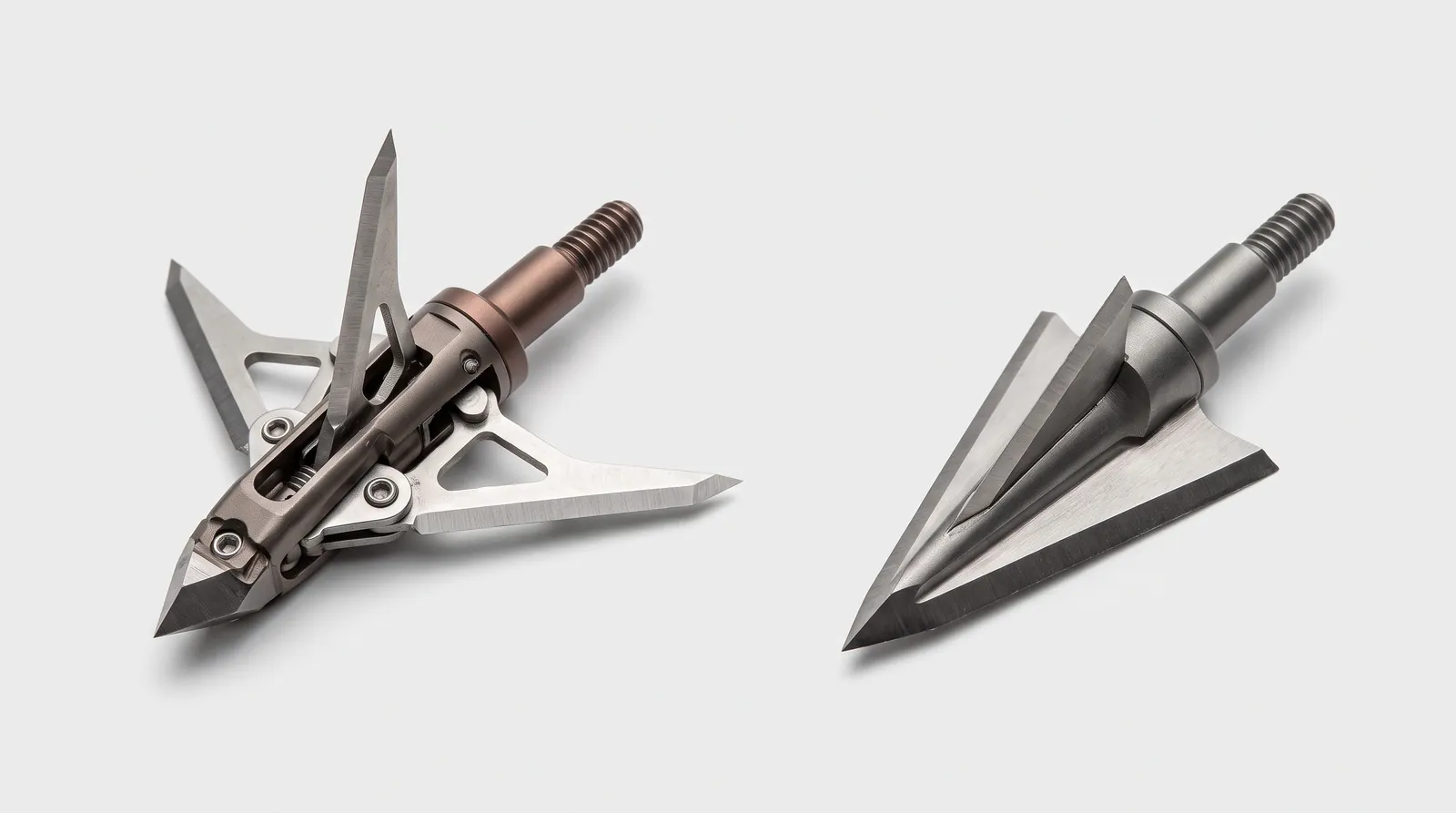
Best Crossbow Broadheads for Deer 2026
Four reviewed deer broadheads compared on total cut, blade design and maker speed rating, with notes on matching each head to your bolts and crossbow.
Read guide