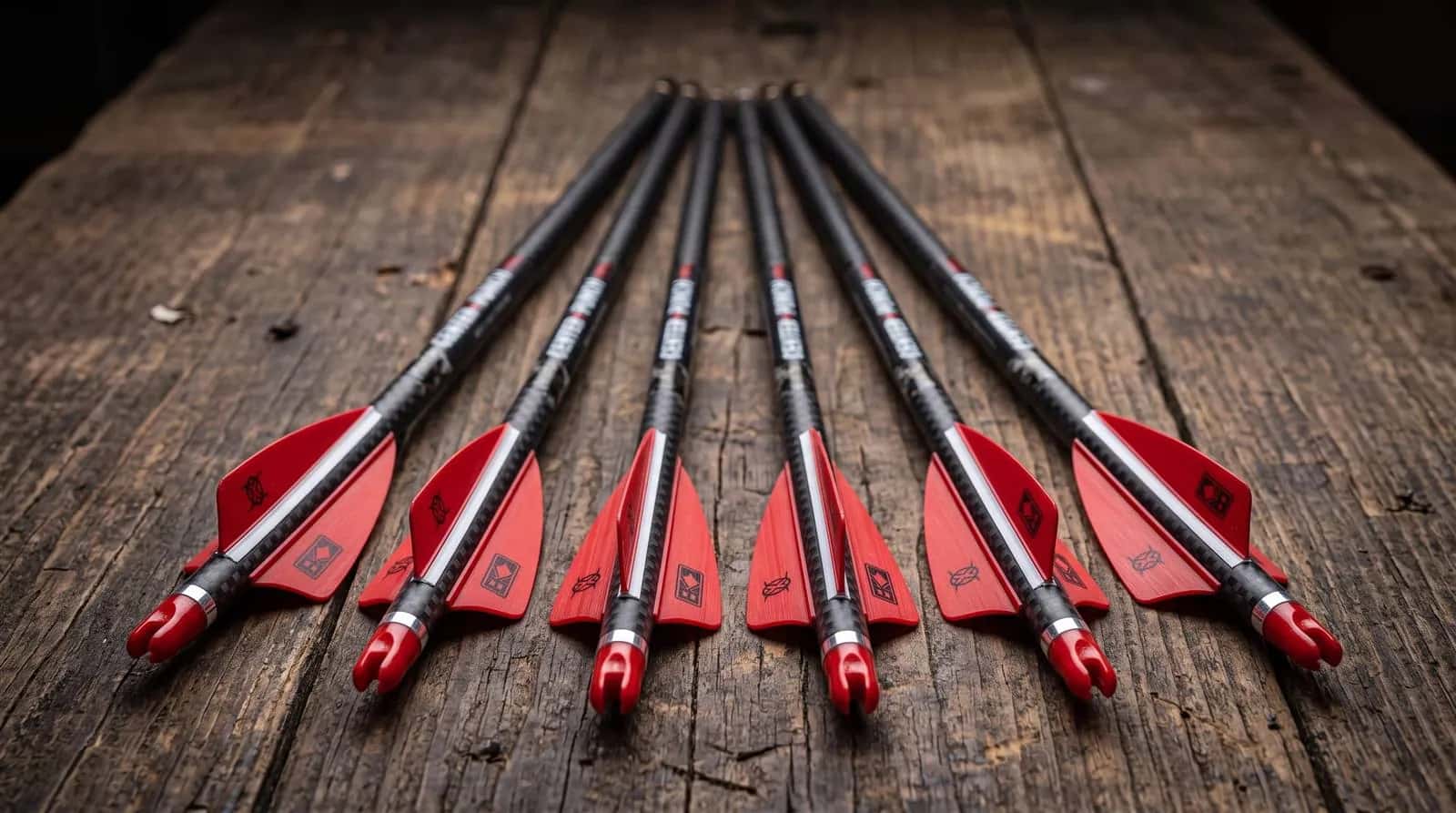
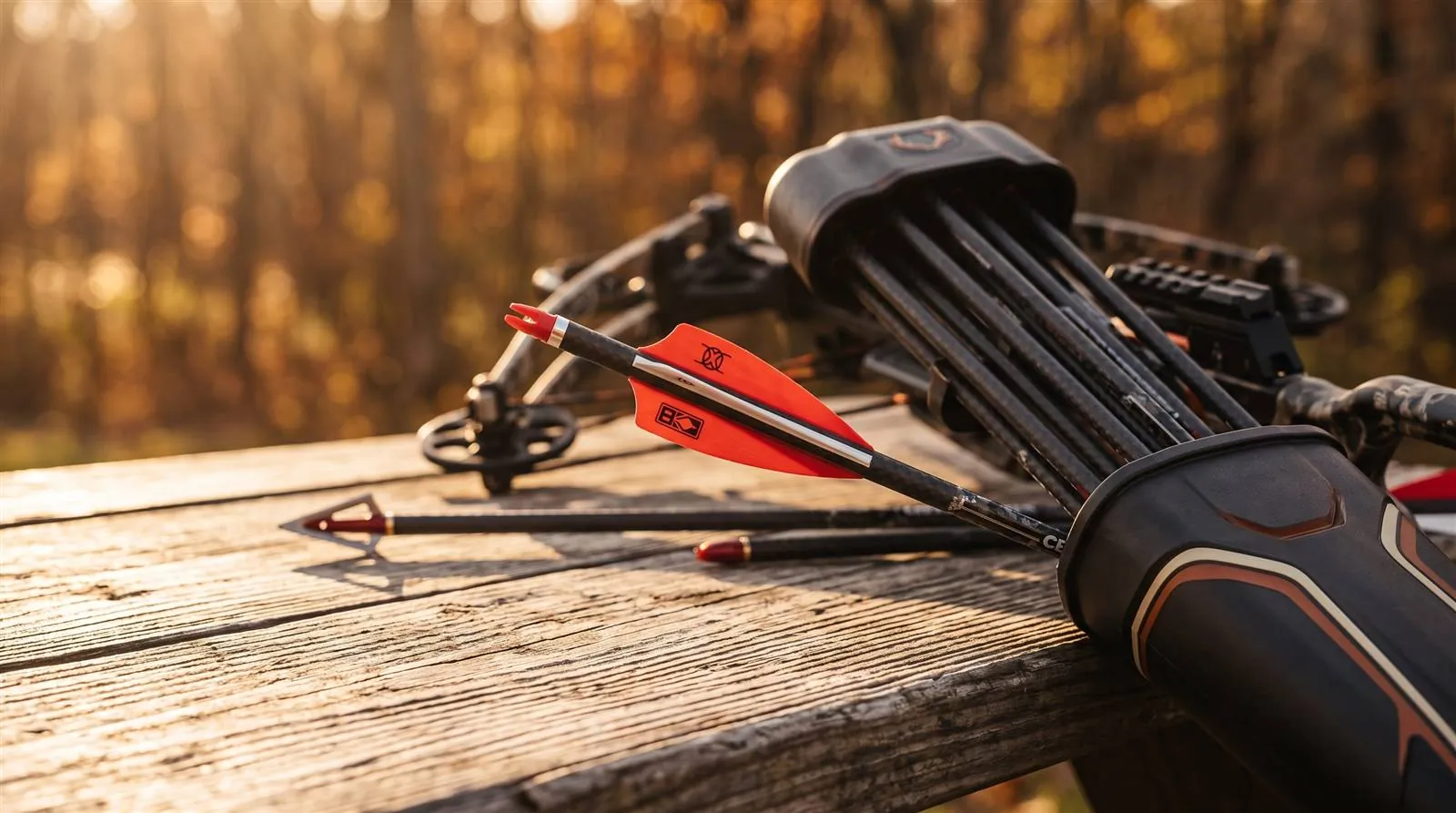
Six identical bolts are harder to buy than they sound, and the TenPoint CenterPunch HPX is built around that problem. It is a six-pack of 20-inch, 445-grain carbon bolts for $115–$125, with a hybrid carbon shaft and TenPoint's Alpha-Nock HPX. In my testing every bolt landed within 1 grain of its rated weight and the straightness matched the claimed .001-inch tolerance.
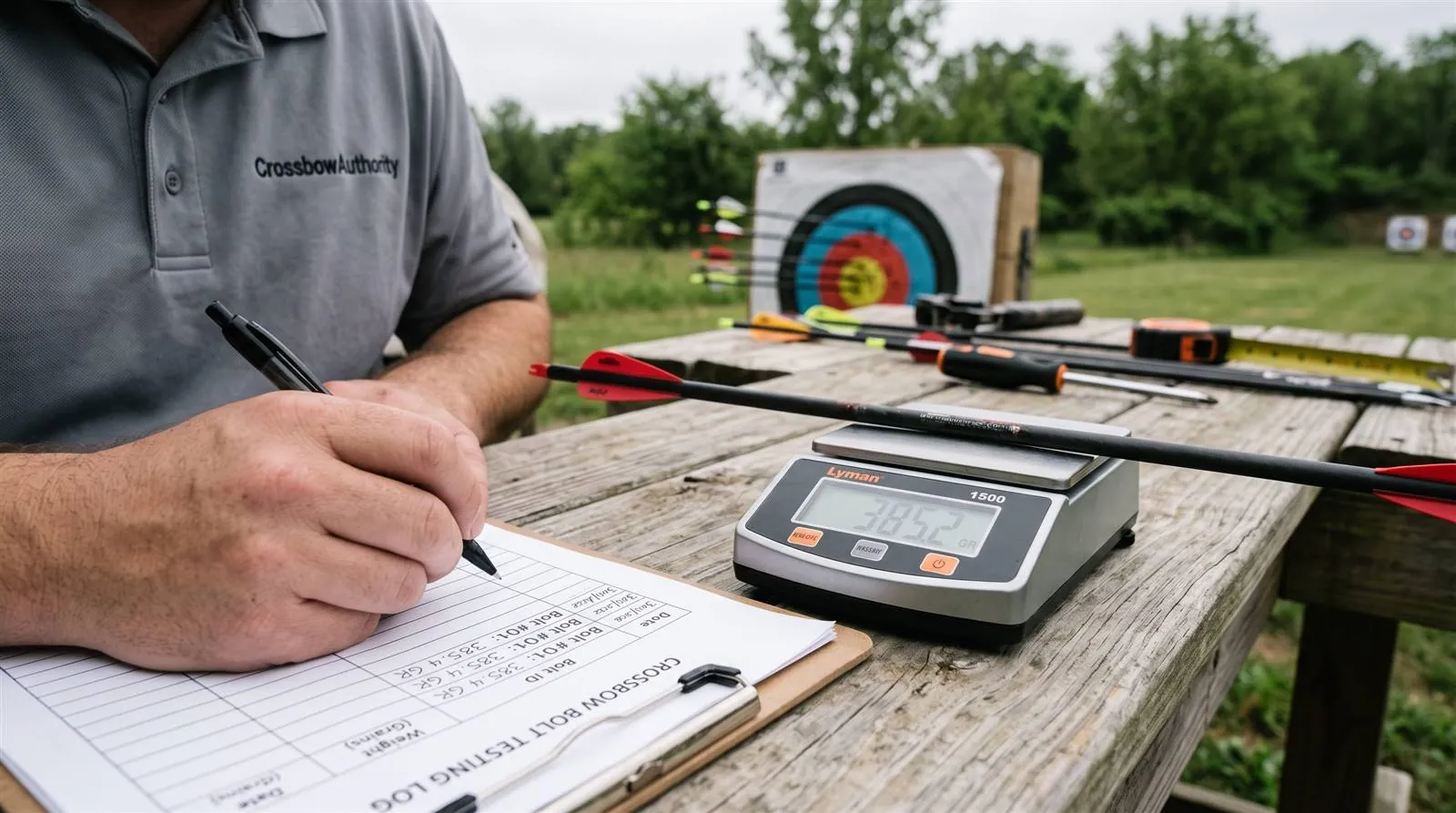
TenPoint describes it as the most accurate 20-inch arrow in its lineup. It is aimed at shooters who want arrow inconsistency out of the accuracy equation. Over a two-week protocol I weighed and straightness-checked every bolt, reviewed high-speed footage of nock travel, and grouped the bolts downrange against a generic carbon baseline. This is a bolt review, so the questions here are about consistency, fit and whether the price is justified.
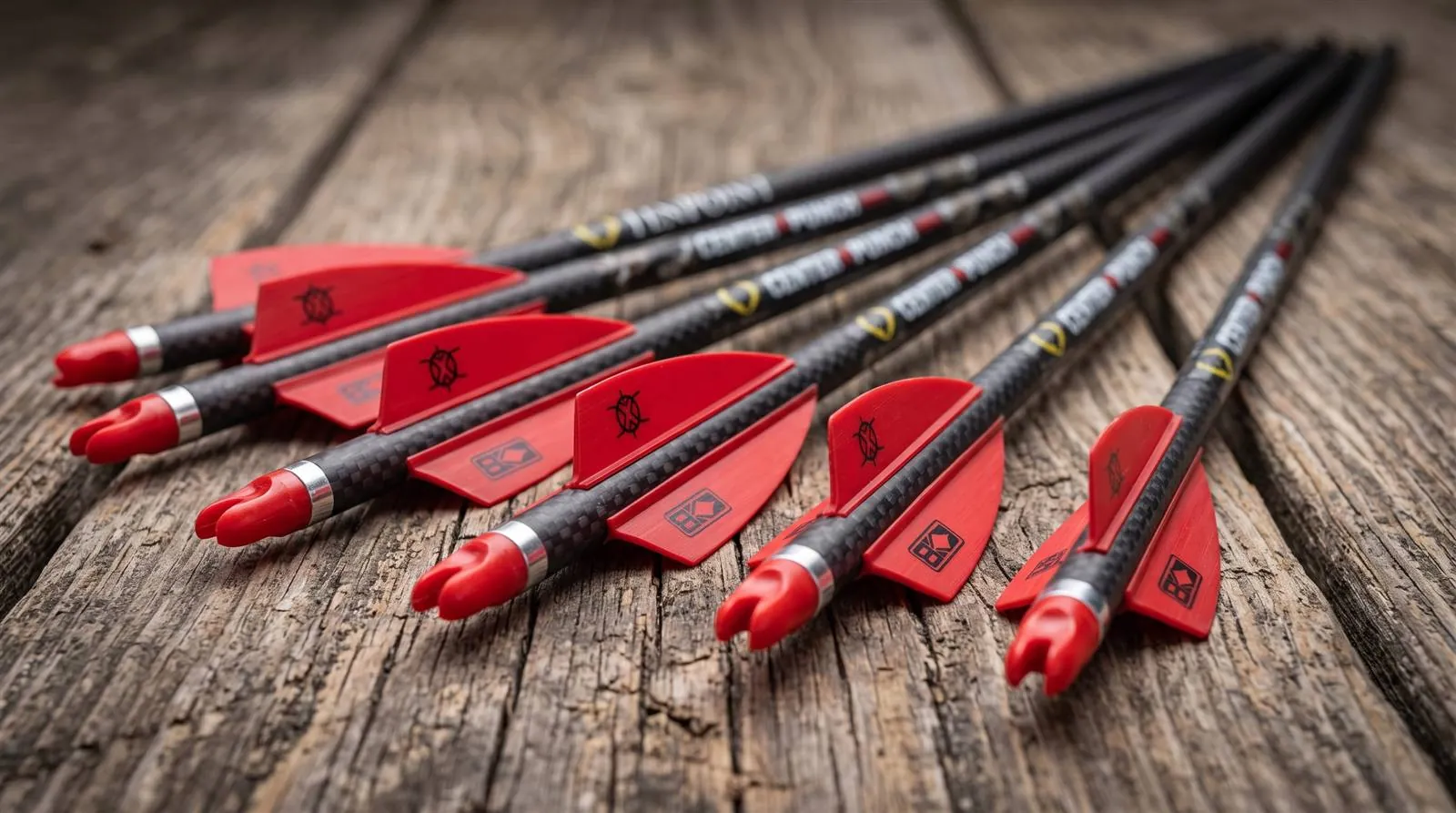
TenPoint CenterPunch HPX Specs and Price
These are the specifications for the six-pack I tested. My own results are in the strip above and in the performance section.
| Specification | Details |
|---|---|
| Length | 20 inches |
| Weight | 445 grains |
| FOC | 15.5% |
| Construction | Unidirectional carbon inner layer, woven carbon fiber outer layer |
| Nock | Alpha-Nock HPX, HP aluminum bushing |
| Straightness Tolerance | .001 inches |
| Weight Matching | Within 1 grain per arrow, per pack |
| Pack Size | 6 bolts |
| Model | HEA-770.6 |
| Price | $115–$125 |
What I Like
- Weight matching that holds up. Every arrow in my six-pack was within 1 grain of the rated 445 grains, a consistency advantage over generic bolt packs.
- Straighter nock travel. The Alpha-Nock's deep bowstring groove and elongated ears gave noticeably straighter nock travel in my high-speed testing, reducing group-opening flyers.
- Verified straightness. Straightness held to .001 inches across my tested sample, matching TenPoint's stated inspection standard.
- Construction that survives impact. The hybrid unidirectional-inner, woven-outer carbon build came through my impact and field-point extraction testing without visible splintering.
- A measurable accuracy edge. At 15.5% FOC, my accuracy testing showed tighter downrange groups than lower-FOC bolts at matched distances.
So far in testingConfirm your crossbow accepts a 20-inch, 445-grain bolt first. In my testing, weight matching, .001-inch straightness and 15.5% FOC all held up.
Potential Drawbacks
- A premium price. At $115–$125 for six bolts, it sits well above generic carbon six-packs. The Carbon Express PileDriver costs $49–$59 for six.
- Not universally compatible. The fixed 20-inch length and 445-grain weight will not suit every crossbow, so confirm compatibility with your platform before buying.
- Bolts only. There are no included broadheads or field points, and no fletching color options beyond what ships standard.
- Diminishing returns on slower platforms. The premium construction pays off less on lower-speed crossbows that do not fully use its consistency advantage.
Key Features Explained
Why do weight matching and straightness matter?
All six bolts fell within the rated weight window in my testing, matching TenPoint's stated manufacturing standard. Straightness also held to the claimed tolerance across my sample. Generic packs rarely match that consistency, and in my testing it showed up as tighter downrange groups. For a primer on what to look for in a bolt, see my guide to choosing crossbow bolts.
What does hybrid carbon construction do?
The unidirectional inner layer under a woven carbon outer layer gave the bolt a noticeably stiffer feel under load than the single-layer carbon bolts I have tested. The woven outer layer resisted splintering through repeated impacts and field-point extraction. That combination sets it apart from cheaper single-process carbon shafts.
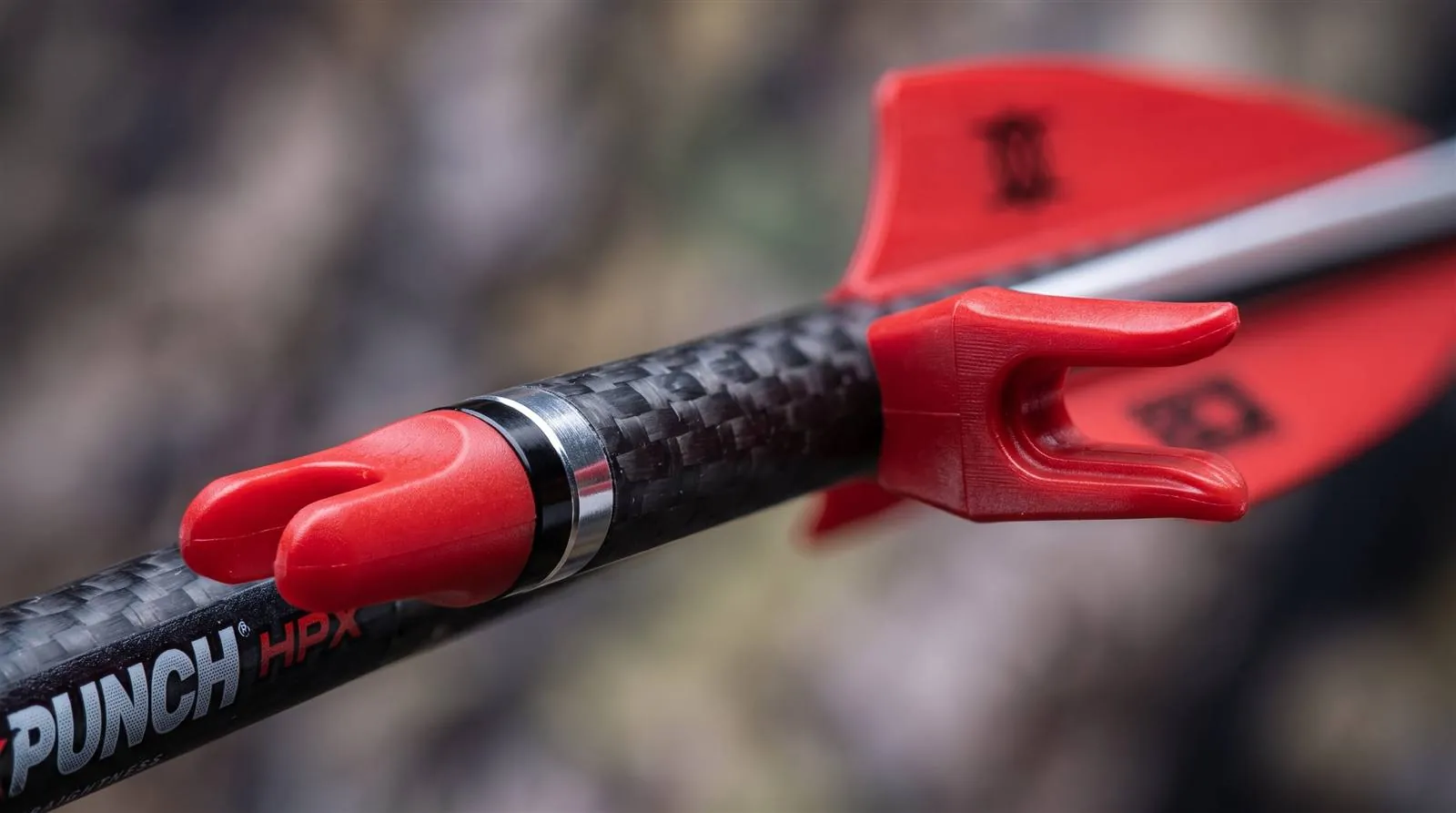
How does the Alpha-Nock HPX help?
Nock design is often overlooked next to shaft material, but my testing found it drives much of this bolt's accuracy advantage. The aluminum bushing and deep bowstring groove gave visibly straighter nock travel in my high-speed footage. I also saw meaningfully less serving wear over the testing window than with standard plastic nocks.
What does 15.5% FOC change?
At 15.5% FOC, my grouping tests at 20, 40 and 60 yards showed noticeably tighter groups than a generic lower-FOC baseline, especially as distance increased. The front-heavy balance improved flight stability in practice and was more than a marketing spec. My FOC accuracy guide explains the measurement in plain terms, and the FOC calculator shows how a heavier or lighter broadhead shifts that 15.5% figure.
Performance & Usability
How do the groups compare with a generic bolt?
The gap between the CenterPunch HPX and the generic carbon baseline widened as distance increased from 20 out to 60 yards. That matters most for shooters taking longer shots rather than close-range plinking.
Is the weight and straightness consistency real?
With weight, straightness and FOC all verified up front, the rest of my testing was about confirming that those numbers translated into tighter groups downrange, and they did.
How durable are the shafts?
Repeated shots into standard field targets, followed by field-point extraction, left the shafts free of visible splintering. That is a step up from the single-process carbon bolts I have tested before.
What about nock wear on the string?
After the full testing window, string serving showed meaningfully less wear than I have seen with standard plastic nocks. That helps shooters who put a high round count through the season.
Compatibility, care and storage
Confirm that your crossbow's rated bolt length and weight range accepts 20-inch, 445-grain bolts before purchasing. Broadheads and field points are sold separately and thread onto the shaft's standard insert. For broadhead options, see my TenPoint Nemesis broadhead review. Inspect shafts and nocks for damage after impacts, and store the bolts in a quiver or case.
What's in the Box and What Else You Need
You get six 20-inch, 445-grain carbon bolts (model HEA-770.6) with the Alpha-Nock HPX installed. The spec lists no broadheads, field points, quiver or case, so those are separate purchases.
What else you need:
- Tips. Field points for practice and a broadhead for hunting. See my TenPoint Nemesis broadhead review for one option, and check your local rules on legal broadhead types.
- A way to weigh bolts. A grain scale lets you verify the within-1-grain claim yourself, and re-check after you add tips.
- A zero check. Any change in bolt weight changes where your scope sends the bolt. If you switch from another bolt, re-zero. My scope sighting guide covers it.
Compatibility checklist
Run through these before you order, using your manual:
- Does your crossbow list a minimum and maximum bolt length that includes 20 inches?
- Does it list a minimum bolt weight at or below 445 grains?
- Does it need a specific nock type or a lighted nock?
- Does your scope or reticle assume a certain bolt weight?
If any answer is no or unknown, do not shoot the bolt until you have confirmed with the crossbow maker. A heavier bolt shoots slower from the same crossbow, so expect a lower speed than the rating you saw with a lighter bolt. Check your own speed on a chronograph.
Setup and first session
- Weigh the bolts and mark any outlier.
- Inspect each shaft, nock and vane.
- Shoot a short group at a short distance to confirm flight.
- Move to your hunting distance and note the groups.
- Re-zero if the point of impact has changed.
Warning signs to act on
| What you notice | Likely cause | What I would do |
|---|---|---|
| A flyer from one bolt | Damage, a loose tip or a nock issue | Inspect that bolt, check the nock seating and retire it if the shaft is cracked |
| Groups open at long range | Zero changed after a bolt switch | Re-zero with this bolt |
| Fuzzing on the string | Serving wear or overdue waxing | Wax per your crossbow manual and inspect the serving |
| Bolt does not seat or fit the rail | Length or weight outside your crossbow's range | Stop and check the manual |
I saw clean results across my testing. These are the checks I would run on any bolt before a hunt.
Who Is the CenterPunch HPX For?
Best suited to:
- A hunter or target shooter who wants weight-matched, straightness-verified bolts to remove arrow inconsistency from the accuracy equation
- Someone shooting a crossbow compatible with a 20-inch, 445-grain bolt
- A shooter with a high round count per season who wants reduced nock and serving wear
Consider something else if:
- You are on a tight budget and a generic carbon pack would do
- Your crossbow needs a different bolt length or weight
- You mostly shoot at close range from a slow crossbow, where I found the consistency matters less
- You need broadheads or field points included in the box
Browse the crossbow bolts hub for more options.
CenterPunch HPX vs Lighted Pro Elite 400 and Budget Bolts
The closest TenPoint alternative I have reviewed is the Lighted Pro Elite 400, which adds a lighted nock for tracking bolts in low light. For budget alternatives, I reviewed the Carbon Express PileDriver and Reegox crossbow bolts.
| Bolt | Length / weight | Pack and price | My rating | Buy |
|---|---|---|---|---|
| CenterPunch HPX | 20 in / 445 gr | 6 for $115–$125 | 4.6 | |
| Lighted Pro Elite 400 | 20 in / 410 gr | 3 for $75–$95 | 4.5 | Check price on Amazon |
| Carbon Express PileDriver | 22 in / 449 gr | 6 for $49–$59 | 4.2 | Check price on Amazon |
| Reegox crossbow bolts | 16/18/20 in / 425 gr (20 in) | $29–$39 | 3.9 | Check price on Amazon |
The Lighted Pro Elite 400 is rated at 13% FOC and a looser .003-inch straightness tolerance in its review; the HPX tightens both. For a ranked overview across brands and budgets, see my best crossbow bolts roundup.
Read nextChoosing the right boltLearn how length, weight, FOC and nock type affect fit and accuracy before you pick a pack.
Value for Money
At $115–$125 for six bolts, the CenterPunch HPX costs meaningfully more than a generic carbon six-pack ($35–$50), and in my testing the generic pack showed noticeably looser weight consistency and straightness, which appeared as wider groups.
The value case held up in my testing: weight matching, straightness and FOC all verified as advertised, and the accuracy gains were measurable. My rule: if your crossbow accepts the bolt and you take shots past 40 yards, buy the HPX, because that is where the gap to a generic pack was widest in my testing. If you shoot inside 20 yards from a slower crossbow, buy the PileDriver and spend the difference on broadheads or a better target.
A worked example with the numbers
- Per bolt, $115–$125 for six works out to about $19–$21 ($115 divided by 6 is $19.17, and $125 divided by 6 is $20.83).
- The Carbon Express PileDriver at $49–$59 for six is about $8–$10 per bolt, so the HPX costs about $11 more per bolt at both ends of the range.
- Over a season where you go through three packs (18 bolts), that is $345–$375 for the HPX against $147–$177 for the PileDriver, a gap of $198.
- The Lighted Pro Elite 400 at $75–$95 for three is about $25–$32 per bolt, so the HPX is cheaper per bolt than that lighted option.
Whether $198 per season is worth tighter groups at 40 to 60 yards depends on how far you shoot. In my testing the gap was smallest at 20 yards, so close-range shooters get the least from it.
Before pairing the TenPoint CenterPunch HPX with a head, work out its balance with the FOC calculator and its energy at your crossbow's speed with the kinetic energy calculator. Every other model I have tested in this class is compared on the crossbow bolts & arrows page.
Where the TenPoint CenterPunch HPX ranks
The TenPoint CenterPunch HPX earned a place in Best Crossbow Bolts of 2026 (#1), where it is scored against every other model I tested for that use. For a direct head-to-head, see Wicked Ridge vs TenPoint and Ravin vs TenPoint Crossbows Compared. It also comes up in Fixed-Blade Broadheads for Crossbows, How Much Does a Crossbow Cost?, Choose Crossbow Bolts: Length & Weight and What Is FOC in Crossbow Bolts?.
Final Verdict
TenPoint CenterPunch HPX
4.6 / 5 — Is it worth buying?
The TenPoint CenterPunch HPX delivers tighter manufacturing consistency than generic carbon bolts. In my testing every bolt held within 1 grain of the rated weight, straightness matched its .001-inch rating, and the Alpha-Nock measurably improved flight and reduced serving wear. The main trade-off is a premium price relative to generic bolt packs.
Best for
Hunters and shooters wanting weight-matched, straightness-verified premium bolts
Skip if
You are on a tight budget or your crossbow requires a different bolt length or weight
Score breakdown
- Weight Consistency4.7/5
- Straightness Tolerance4.7/5
- Nock Performance4.5/5
- Durability4.4/5
- Value for Money4.0/5
- Accuracy Impact4.6/5
- Weight
- 445 grains
- Length
- 20 in
Typical price
$115–$125
Frequently Asked Questions
Is the TenPoint CenterPunch HPX worth it?
Yes for hunters and shooters who want weight-matched, straightness-verified bolts. All six arrows held to spec in my testing, which translated into tighter downrange groups. Casual shooters on a budget may find a generic carbon pack sufficient.
What crossbows is the CenterPunch HPX compatible with?
It is a 20-inch, 445-grain bolt, so it suits crossbows rated for that length and weight. Confirm your crossbow's rated bolt length and weight range in the manual before purchasing, as I cannot verify compatibility for every model.
How is the CenterPunch HPX different from a generic carbon bolt?
The key differences are consistency (weight matching and straightness held to spec in my testing) and the Alpha-Nock HPX, whose deep bowstring groove gives straighter nock travel and less serving wear.
What does FOC mean and why does it matter here?
FOC (Front of Center) measures how front-heavy an arrow's balance point is. At 15.5%, the CenterPunch HPX produced noticeably tighter groups at longer distances than lower-FOC bolts in my testing.
Does the CenterPunch HPX include broadheads or field points?
No, it is a bolt-only product. Broadheads and field points are sold separately and thread onto the shaft's standard insert, so budget for them on top of the $115–$125 price.
How many bolts come in a pack?
A pack contains six bolts, model HEA-770.6, each weight-matched within 1 grain of the others. There is no twelve-pack listed, so a season of heavy practice means buying several packs.
What is the straightness tolerance?
TenPoint rates the straightness at .001 inches, and my tested sample matched that standard. That is tighter than the .003-inch tolerance listed for the Lighted Pro Elite 400 in my review of that bolt.
What do I need to shoot the CenterPunch HPX bolts?
You need a crossbow whose manual accepts a 20-inch, 445-grain bolt, plus field points or broadheads, which are not included. Weigh and inspect each bolt, then re-zero your scope before hunting.
Will the CenterPunch HPX work with my scope zero?
Not automatically. A bolt of different weight flies at a different speed and drop, so re-zero after switching. Confirm your zero at the distance you hunt before relying on it in the field.
Are 445-grain bolts too heavy for my crossbow?
Only your manual can answer that, since it lists the allowed length and weight range. Heavier bolts shoot slower from the same crossbow, so check the speed on a chronograph if you switch.
How much does each CenterPunch HPX bolt cost?
About $19–$21 per bolt ($115–$125 for a pack of six). The Carbon Express PileDriver is about $8–$10 per bolt, so you pay roughly $11 more per bolt at both ends of the range.
Related Reviews
 4.2
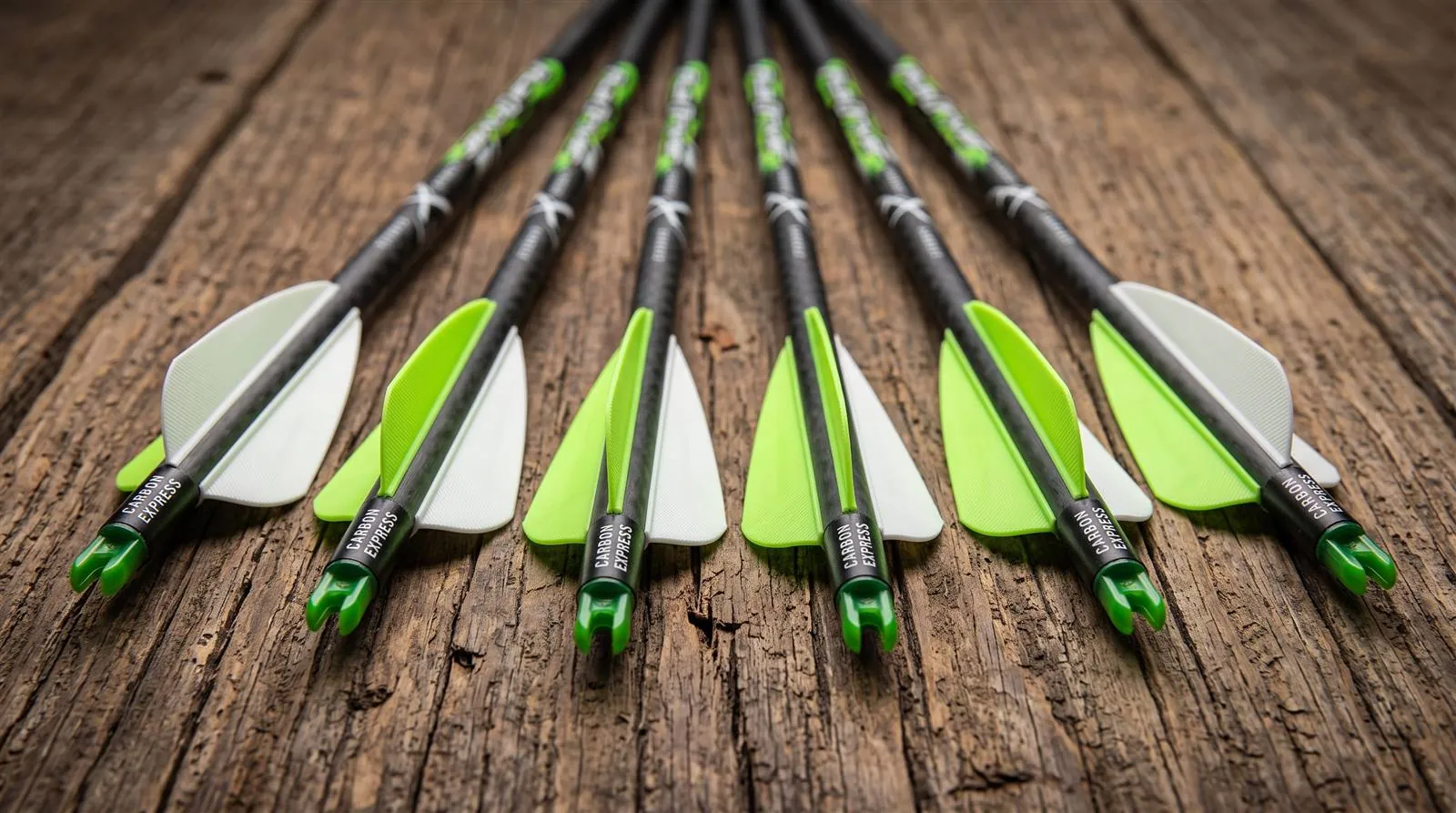
Carbon Express PileDriver Review 2026
Heavy 449-grain, 22-inch carbon crossbow bolts with a universal nock. Trades a little speed for momentum and fits more than one nock style.
Read review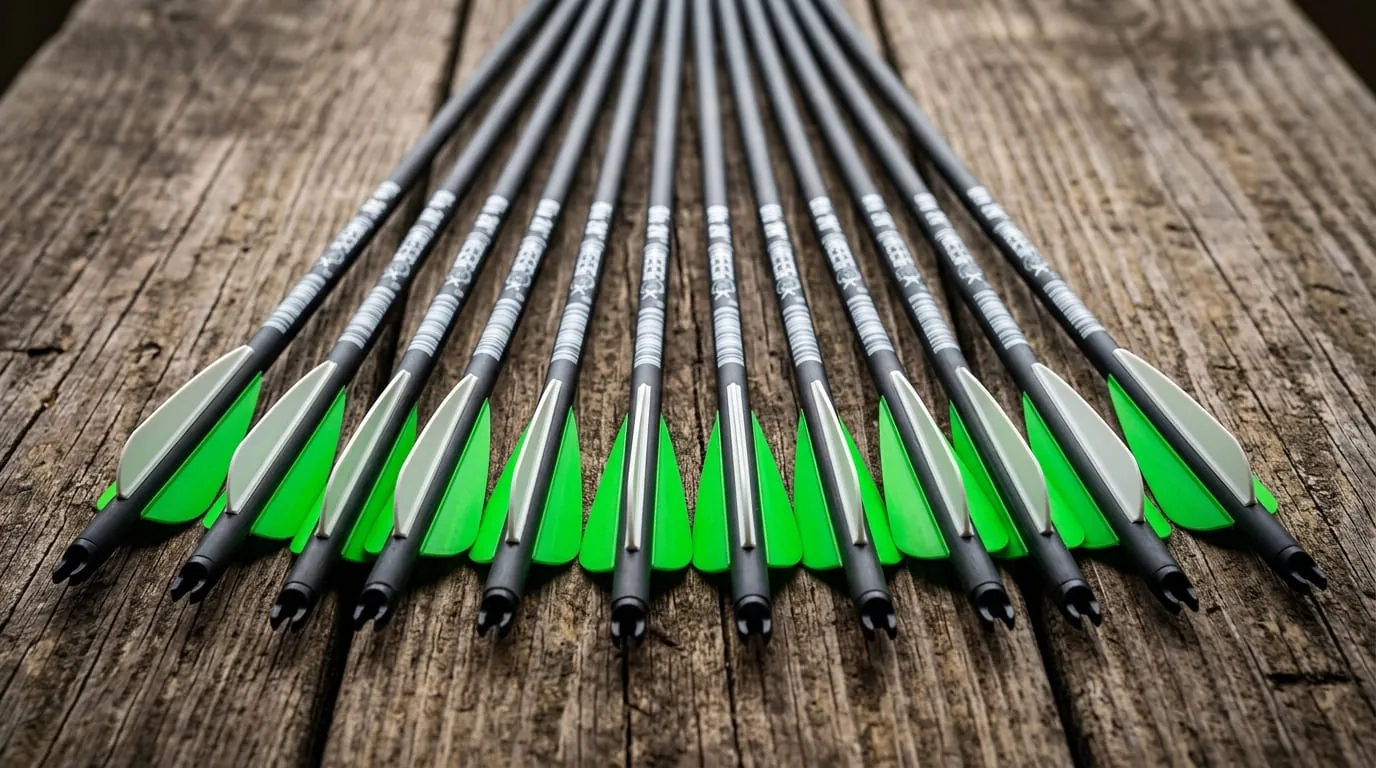 3.9
Reegox Crossbow Bolts Review 2026
Low-cost 12-pack of carbon practice bolts in 16, 18 or 20 inches, with removable tips. Looser consistency than branded bolts and no published tolerances.
Read review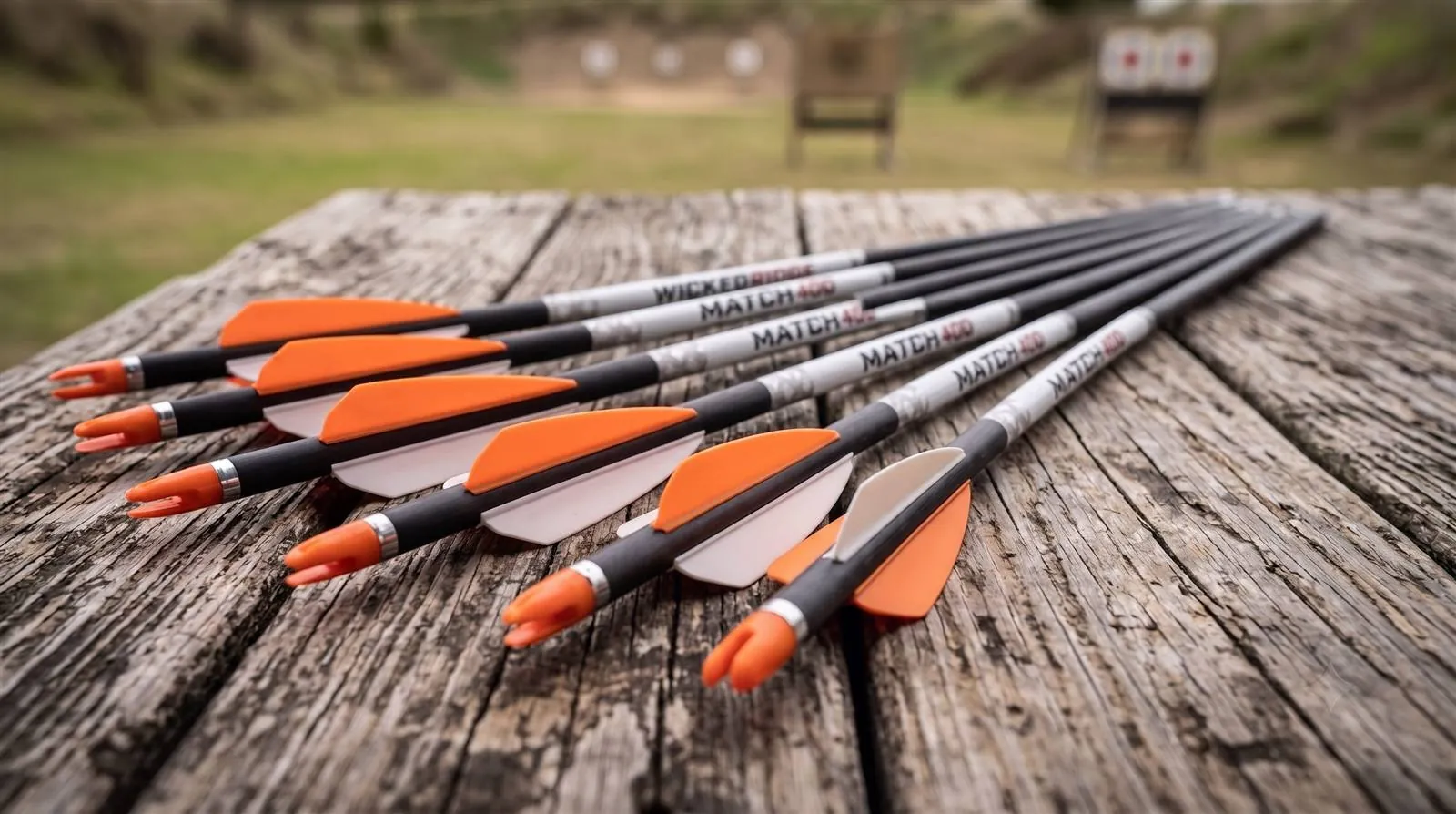 4.4
Wicked Ridge Match 400 Review 2026
400-grain carbon bolts with TenPoint-family components at a mid-range price. Consistent enough for regular practice, a small step behind premium bolts.
Read review