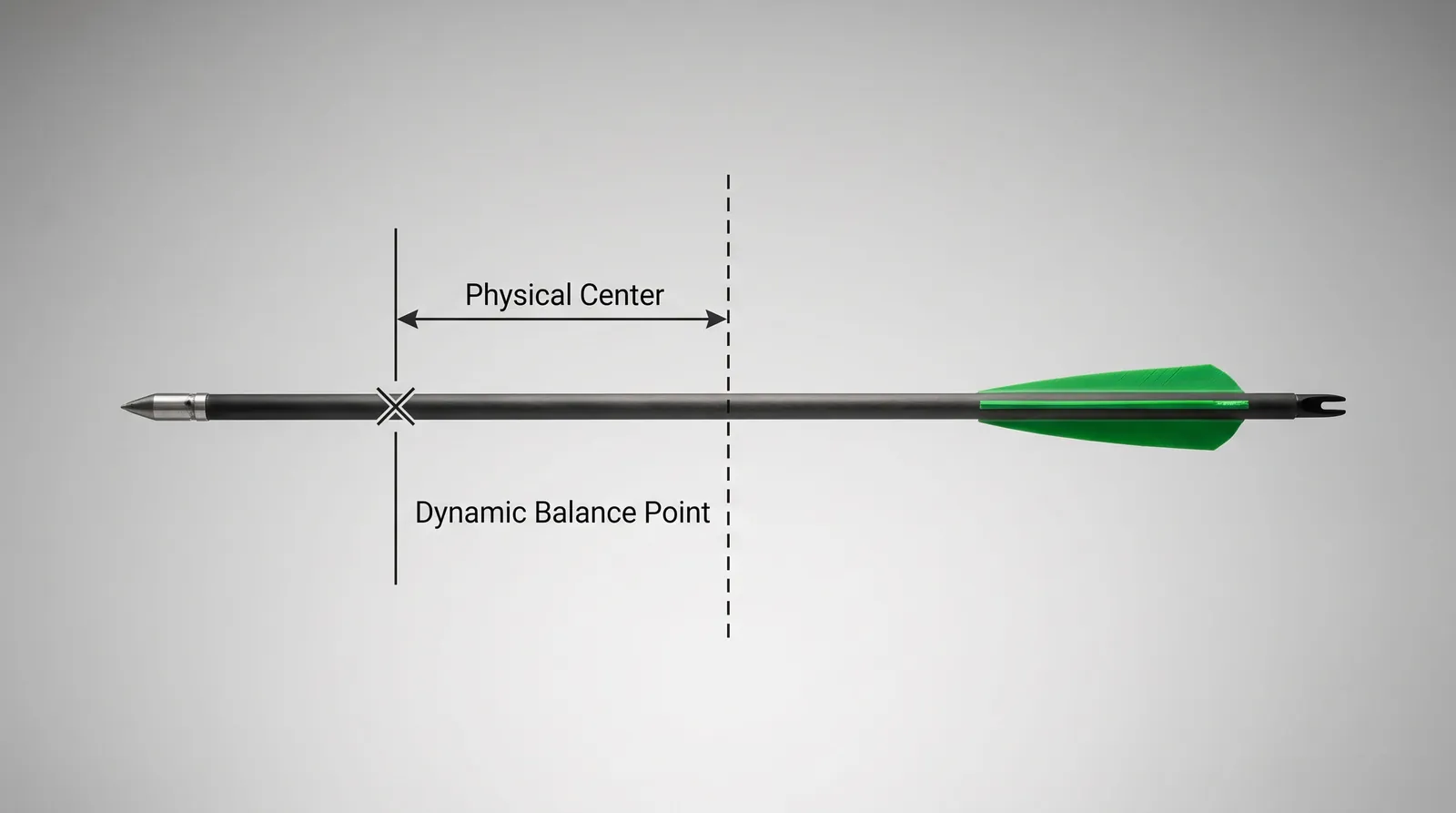
FOC (front of center) is the percentage by which a bolt's balance point sits ahead of its physical middle, so a higher number means a more front-heavy bolt or arrow. Two bolts can weigh exactly the same and still fly differently, and front of center is the main reason. Weight tells you how much mass is in the bolt; FOC tells you where that mass sits along the shaft, and that placement affects how the bolt steadies itself after it leaves the rail.
This guide defines FOC, shows the formula and how to read it, walks through a worked example you can repeat with a ruler at home, and explains what higher FOC does (and does not do) for flight and penetration. It also reports the FOC numbers from the bolts I have reviewed, along with an honest note on what those reviews can and cannot prove. It is written for crossbow owners choosing bolts or changing broadheads.
What FOC Means
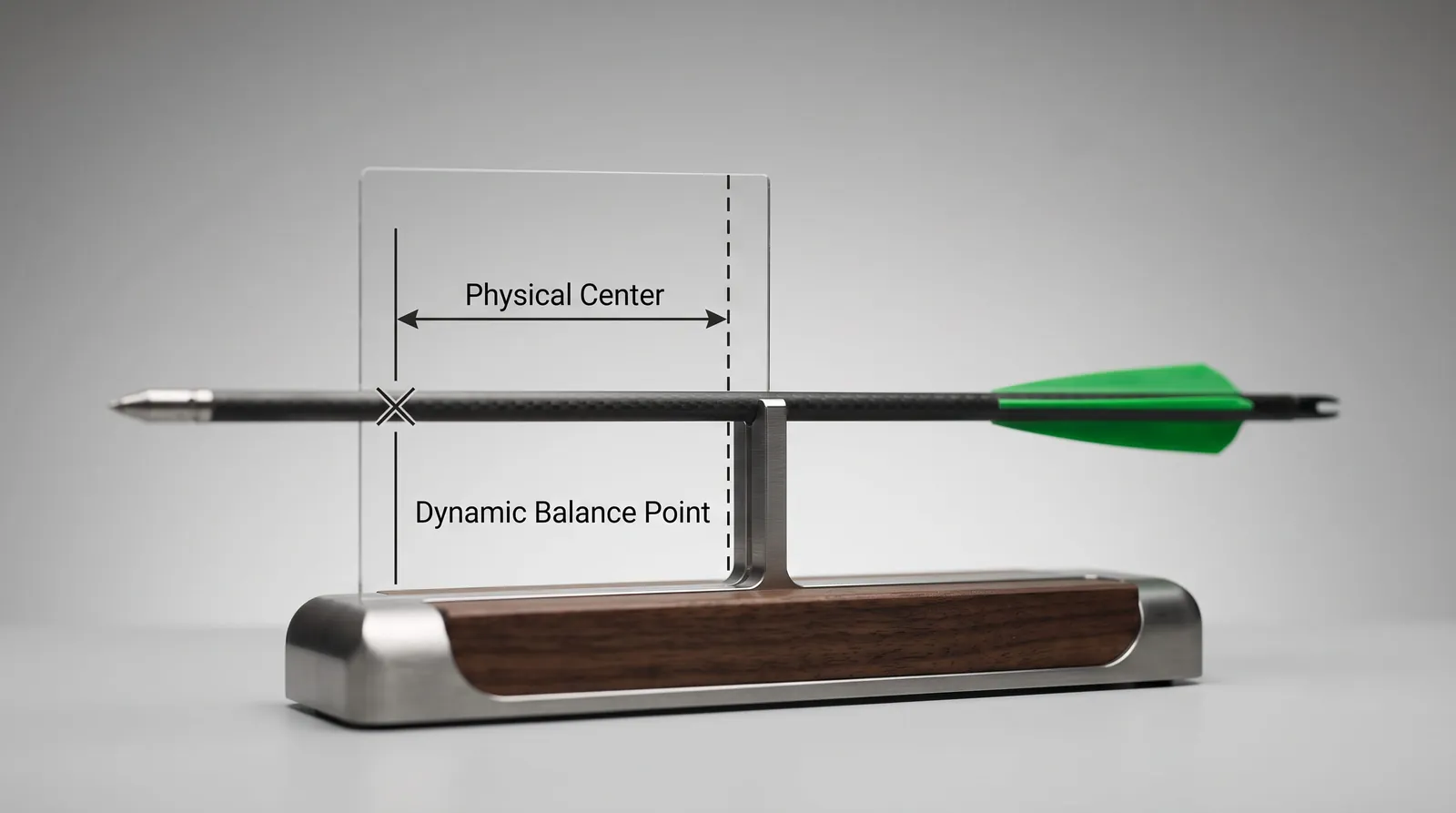
Every bolt has a balance point, the spot where it would sit level on a fingertip. On a perfectly uniform stick, that point is the exact middle, and the FOC is 0 percent. Real bolts have a heavy insert and tip at the front and a light nock at the back, so the balance point sits forward of the middle. The distance it sits ahead of the middle, as a share of the total length, is the FOC.
A bolt with 15 percent FOC has a balance point roughly 15 percent of its length ahead of center. On a 20-inch bolt, that puts the balance point about 3 inches ahead of the midpoint, or 13 inches from the nock end. A dart is a good mental picture: weight at the front makes it fly point-first.
The FOC glossary entry gives the short definition, and this guide gives you the method and the reasoning.
How to Calculate FOC
The standard formula uses two measurements: the overall length of the bolt and the distance from the nock end to the balance point.
FOC % = (balance point distance - length / 2) / length x 100
Measure length the same way every time. Archery references commonly measure from the throat of the nock to the end of the shaft or insert, excluding the tip. Whichever convention you pick, keep it consistent when you compare bolts, because a different length gives a different percentage. Manufacturers do not all state their method, which is one reason published FOC figures from different brands are not always directly comparable.
A Worked Example
This is an arithmetic example to show the method, not a measurement of any product. Suppose a bolt is 20 inches long and balances 12 inches from the nock.
- Half the length is 10 inches.
- The balance point is 2 inches ahead of that: 12 minus 10.
- Divide by the length: 2 divided by 20 is 0.10.
- Multiply by 100: the FOC is 10 percent.
Measuring It at Home
You can test any assembled bolt with a ruler and a steady edge.
- Remove the bolt from the crossbow and make sure it is uncocked and nothing is loaded.
- Fit the field point or broadhead you plan to shoot, with the broadhead's blades covered or sheathed, because the blades are sharp.
- Balance the shaft across a flat edge, such as a ruler on its side or a rounded block, and slide it until it sits level.
- Mark the balance point and measure from the nock throat to the mark.
- Apply the formula and write the result down with the tip you used.
What Changes a Bolt's FOC
FOC is set by where the mass is. Four things move it, in rough order of effect.
| Factor | Effect on FOC | Notes |
|---|---|---|
| Front insert weight | Higher with a heavier insert | The 46-grain insert on the Wicked Ridge Match 400 is cited in its review as pushing FOC to about 14% |
| Tip weight | Higher with a heavier field point or broadhead | Changing from a practice point to a hunting head changes the result |
| Nock and vanes | Slightly lower with heavier rear parts | Lighted nocks add weight at the back |
| Shaft material and wall thickness | Small effect | Modest compared with the front components |
How Tip Weight Changes the Number
Here is a second worked example, again an arithmetic exercise. Take a 20-inch bolt weighing 400 grains that balances 11 inches from the nock, which is 5 percent FOC. Swap a 100-grain tip for a 125-grain tip. The tip sits at the front, about 20 inches from the nock, so you add 25 grains there. The new total is 425 grains. Multiply each mass by its distance from the nock and add them: 400 x 11 plus 25 x 20 is 4,900. Divide by 425 to get a balance point of roughly 11.5 inches. The new FOC is about 7.6 percent.
So in this example, 25 extra grains at the tip raised FOC by about 2.6 points. The exact numbers will differ on your bolt, but the direction is reliable: front weight up, FOC up. It also adds to total weight, which slows the bolt slightly and changes where it hits. That is the reason a change of tip means a new zero, as covered in our guide to sighting in a crossbow scope.
Why FOC Affects Flight
A front-weighted bolt tends to fly point-first. When a bolt leaves the rail it can wobble slightly from string effects and form. A bolt with its mass forward settles into stable flight sooner and recovers from small disturbances, a bit like a dart. The vanes steer the tail, and the forward weight gives the nose something to lead with.
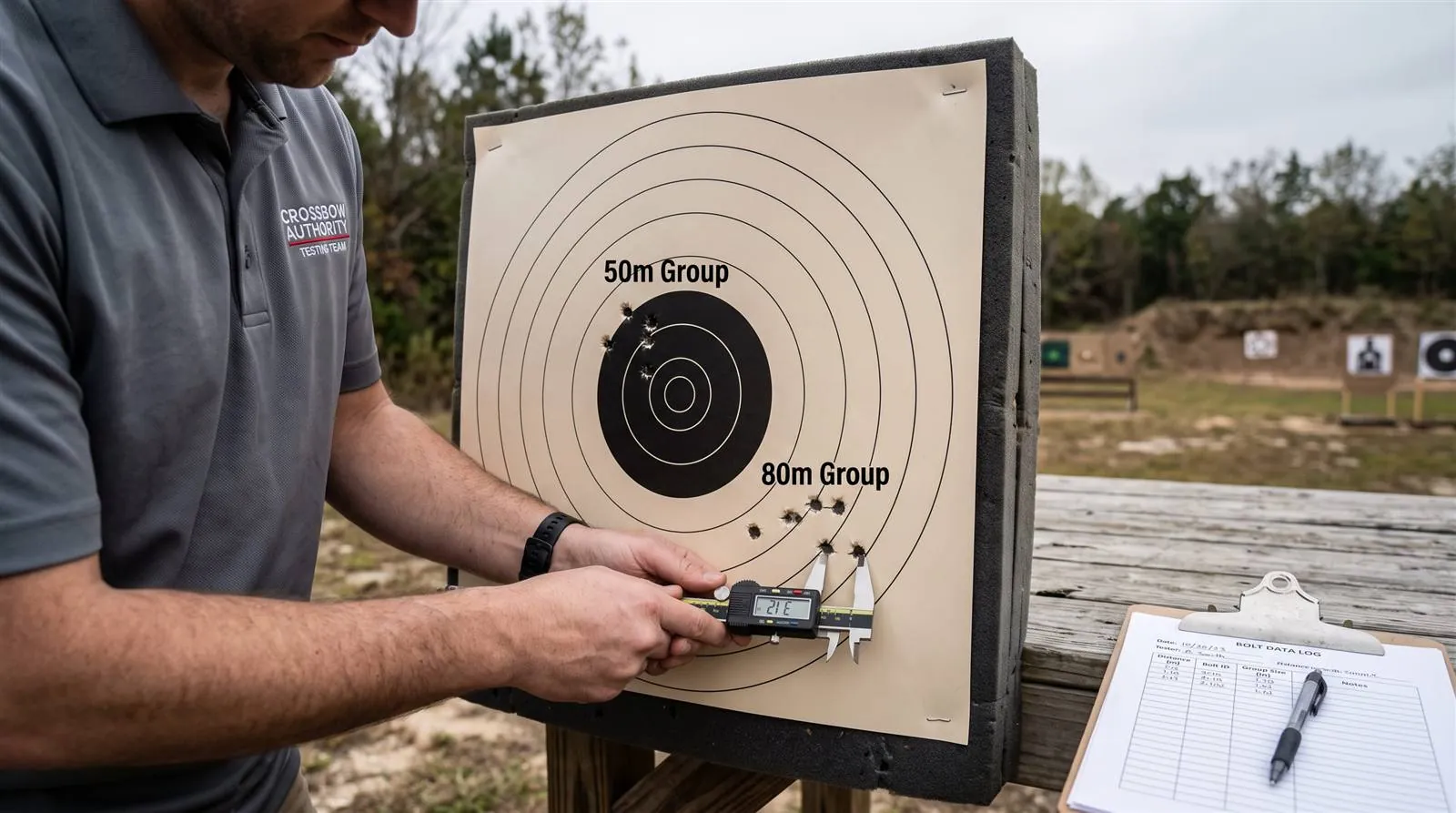
The effect is easiest to see at distance. A small stability advantage has more time to show up as a larger difference in group size the longer the bolt is in the air. At 20 yards a well-made bolt may be steady enough that FOC makes little visible difference; at 60 yards it can matter more. Wind adds another factor: front-heavy bolts are commonly said to resist crosswind drift somewhat better, although vane size matters too. In our reviews, the PileDriver's 4-inch vanes and the REEGOX's 4-inch TPU vanes both showed more wind drift than smaller vanes on premium bolts.
Penetration and Energy
FOC is often discussed alongside penetration. Hunters commonly report that more forward weight helps a broadhead drive in a straight line, and the extra mass up front adds momentum and kinetic energy for a given speed. The honest hedge is that penetration depends on total mass, speed, the broadhead design, shot angle and what the bolt strikes, and no single number predicts it. FOC is one input, not a guarantee. Speed and energy are different from penetration, and our explainer on how fast a crossbow bolt travels separates them out. Whatever you hunt with, check local rules on equipment and energy requirements.
FOC Figures From Our Bolt Reviews
Only some of the bolts I have reviewed publish an FOC figure. Here is what each review says.
| Bolt | Published FOC | Weight | Straightness | What the review found | Buy |
|---|---|---|---|---|---|
| TenPoint CenterPunch HPX | 15.5% | 445 grains | .001 in | Tighter downrange groups than a lower-FOC generic baseline at 20, 40 and 60 yards, most visible with distance | Check price on Amazon |
| Wicked Ridge Match 400 | Up to 14% | 400 grains | .004 in | Tighter groups than lighter-insert bolts at the same price; wider than CenterPunch at 60 yards on the same crossbow | Check price on Amazon |
| TenPoint Lighted Pro Elite 400 | 13% | 410 grains | .003 in | Stable at 20, 40 and 60 yards; less tightening at long range than higher-FOC premium bolts | Check price on Amazon |
| Carbon Express PileDriver | Not listed | 449 grains | .004 in | Wider groups than tighter-toleranced bolts at 60 yards | Check price on Amazon |
| REEGOX Crossbow Bolts | Not listed | 425 grains (20 in) | Looser | Wider groups at 40 and 60 yards | Check price on Amazon |
Among the bolts with a published figure, the CenterPunch HPX has the highest at 15.5 percent. Read the table with care, though. Our reviews compare complete bolts, and those bolts also differ in straightness, weight consistency, vanes and nock design. We did not isolate FOC by changing only the balance point on identical shafts. So the reviews are consistent with FOC helping, especially at 60 yards, but they cannot assign the whole difference to FOC. The Match 400 review, for example, links its wider 60-yard groups to its looser straightness rating, not only to its lower FOC.
Is There a Best FOC Number?
Archery writing commonly cites a range around 10 to 15 percent or somewhat higher, and the premium crossbow bolts I have reviewed with a published figure sit between 13 and 15.5 percent. Treat that as a sensible neighborhood rather than a rule. Past a point, extra front weight means a heavier overall bolt, which slows it, drops it faster and may push total weight above or below your crossbow's allowed range.
Three limits are worth remembering:
- Weight limits come first. Your crossbow has a minimum bolt weight and a recommended range. Adding front weight must keep the total inside those limits.
- Speed and drop. A heavier bolt flies slower, which changes the arc and your scope's aiming points.
- Broadhead speed ratings. Some broadheads have maximum speed ratings, and total bolt weight affects speed. See our broadhead roundup for deer and fixed-blade guide for head choices.
When FOC Matters Most
Use this as a quick decision guide.
| Your situation | How much to prioritize FOC |
|---|---|
| Shooting inside 30 yards at targets | Low. Tolerance and price matter more |
| Hunting at typical distances | Moderate. Choose a bolt whose FOC is published and fits your crossbow |
| Shooting to 50 or 60 yards or more | Higher. Small stability gaps grow with distance |
| Using a slow recurve | Moderate to high. Bolts spend more time in the air for the same distance |
| Shooting a fast flagship | Moderate. Less time in flight, but tolerances still matter |
Slower crossbows spend longer in the air over the same distance, so small stability differences have more time to appear. Our reviews list recurves such as the Avalanche Anaconda at 232 to 241 FPS on the chronograph, compared with 511 to 517 FPS for the TenPoint TRX Ultra, so time of flight differs a lot across platforms.
How to Shop With FOC in Mind
- Start with fit. Length, minimum weight and nock come first, as covered in our guide to choosing crossbow bolts.
- Look for a published FOC number. If it is not listed, treat it as unknown, not as good or bad.
- Check tolerances. Straightness and weight consistency can matter as much as FOC.
- Measure your assembled bolt. Use the method above with your actual tip.
- Re-zero after any change in tip. Your point of impact can move.
Tested for this topic
TenPoint CenterPunch HPXThe highest published FOC (15.5%) among the bolts I reviewed, with a .001-inch straightness tolerance.
Common FOC Mistakes
- Treating a percentage as a quality score. A bolt with 15 percent FOC and poor straightness can group worse than a straighter bolt with a lower figure.
- Comparing numbers measured differently. Check how length was measured before comparing brands.
- Forgetting the tip. FOC with a field point is not FOC with a broadhead.
- Adding weight without checking limits. Heavier tips change total bolt weight and speed.
- Assuming FOC replaces sight-in. It does not. Always confirm your zero with the bolt and tip you will use.
Worked Example: What a Heavier Tail Does to FOC
Everything here is plain arithmetic with labeled numbers, not a measurement of any product. Suppose a 20-inch bolt weighs 420 grains and balances 12.5 inches from the nock.
- Half the length is 10 inches. The balance point is 12.5 minus 10, so 2.5 inches ahead of center.
- FOC is 2.5 divided by 20, times 100, which is 12.5 percent.
- Now add a 10-grain lighted nock at the tail, treated as sitting at 0 inches from the nock. The total is 430 grains.
- New balance point: (420 x 12.5 + 10 x 0) divided by 430 is 5,250 divided by 430, or about 12.2 inches.
- New FOC: (12.2 minus 10) divided by 20, times 100, is about 11 percent.
So 10 grains at the tail cost about 1.5 points of FOC in this example. A useful rule from the same formula: on a 20-inch bolt, every inch the balance point moves forward adds 5 points of FOC, because 1 divided by 20 is 0.05.
Symptoms That Point to a Balance or Bolt Problem
Follow your crossbow manual for any adjustment. These are general patterns, not a diagnosis.
| What you see | Possible balance-related cause | What to try |
|---|---|---|
| Groups open up past 50 yards but are fine at 20 | Low stability, loose tolerances or a light tip | Weigh and spin-test bolts, then measure FOC with your tip |
| Broadhead lands away from field points | Different tip weight and drag | Re-sight with the exact head |
| Bolt tail swings visibly after release | Poor straightness, damaged vane or a weak nock fit | Inspect the shaft, vanes and nock |
| Wind pushes bolts around more than expected | Large vanes or low front weight | Compare vane size and FOC across bolts |
| Speed drops after a heavier tip | Higher total weight | Chronograph and re-zero |
FOC Myths vs. Facts
| Myth | Fact |
|---|---|
| Higher FOC always groups tighter | It helps stability, but straightness, weight tolerance and vanes matter too |
| FOC makes a bolt faster | Extra front weight adds mass, which tends to slow the bolt |
| Every brand measures FOC the same way | Length conventions differ, so published figures are not always comparable |
| FOC replaces sight-in | A new tip changes weight and balance, so re-zero |
| A missing FOC number means a bad bolt | It only means the maker did not publish it; measure it yourself |
Which FOC Question Are You Really Asking?
- "Is my bolt balanced well enough?" Measure it with your hunting tip, then compare groups at your longest realistic distance.
- "Should I swap to a heavier head?" Re-calculate FOC and total weight, then check both against your crossbow's limits.
- "Why do two same-weight bolts group differently?" Compare straightness, weight tolerance and vanes before blaming FOC.
- "Is it worth paying more for higher FOC?" If your shots are inside 30 yards, probably not; read our guide to choosing crossbow bolts before deciding.
Work out your own bolt’s number with the FOC calculator.
Once your FOC is where you want it, the kinetic energy calculator shows what the heavier front end costs in energy at your speed.
Frequently Asked Questions
What is a good FOC for a crossbow bolt?
There is no single correct number, but the premium bolts I have reviewed with a published figure fall between 13 and 15.5 percent. Choose a bolt that fits your crossbow's length and weight limits first, then use FOC as a tie-breaker.
Does higher FOC always mean better accuracy?
No. Higher FOC generally steadies a bolt, and the effect is clearer at longer distances, but straightness, weight consistency and vane design also affect groups. Our reviews compare complete bolts, so they cannot credit FOC alone for any difference.
How do I calculate FOC at home?
Balance the assembled bolt on a flat edge, mark the balance point and measure its distance from the nock throat. Subtract half the bolt length from that distance, divide by the length, and multiply by 100. Use the tip you plan to shoot.
Does changing my broadhead change FOC?
Yes. A heavier or lighter tip moves the balance point, so FOC changes along with total bolt weight. That is also why you should confirm your sight-in with the hunting head rather than relying on a field-point zero.
Does FOC matter if I only shoot at close range?
Less so. Over 20 to 30 yards a small stability difference has little time to show up, so tolerance and price may matter more. If you shoot to 50 or 60 yards, FOC deserves more attention.
Does more FOC increase penetration?
Hunters often report that forward weight helps a broadhead drive straight, but penetration depends on total mass, speed, broadhead design and the shot itself. We have no review data that isolates FOC, so treat it as one possible contributor, not a promise.
Why do some bolts not list an FOC?
Some manufacturers do not publish it. In our reviews, the PileDriver, RAVIN R133 and REEGOX listings do not give a figure. Treat that as missing data, not as proof of poor design, and measure it yourself if it matters to you.
Is FOC the same as bolt balance point?
Related but not identical. The balance point is where the bolt sits level, while FOC expresses how far ahead of the bolt's center that point is, as a percentage of length, so it can be compared across bolts.
How much does one inch of balance shift change FOC?
On a 20-inch bolt, moving the balance point one inch forward raises FOC by 5 percentage points, since one divided by 20 is 0.05. On shorter or longer bolts the effect per inch differs.
Does a lighted nock lower FOC?
Yes, a little. Adding weight at the tail pulls the balance point back, so FOC drops, as the worked example shows. Re-measure and re-check your zero if you add lighted nocks to a bolt you have already tuned.
Final Recommendation
FOC is worth understanding because it is the measurement that explains why bolts of equal weight can behave differently. Learn the formula, measure your own assembled bolt, and use the published figure as one signal beside straightness, weight tolerance and fit.
If you want to compare bolts with those numbers in front of you, see our best crossbow bolts roundup or browse the crossbow bolts hub.
Read nextTurn FOC into a bolt choiceOur selection framework puts length, weight, nock and tolerance in order before FOC.Gear mentioned in this guide
Reviews we link to above, highest rated first. Read the full review before you buy.
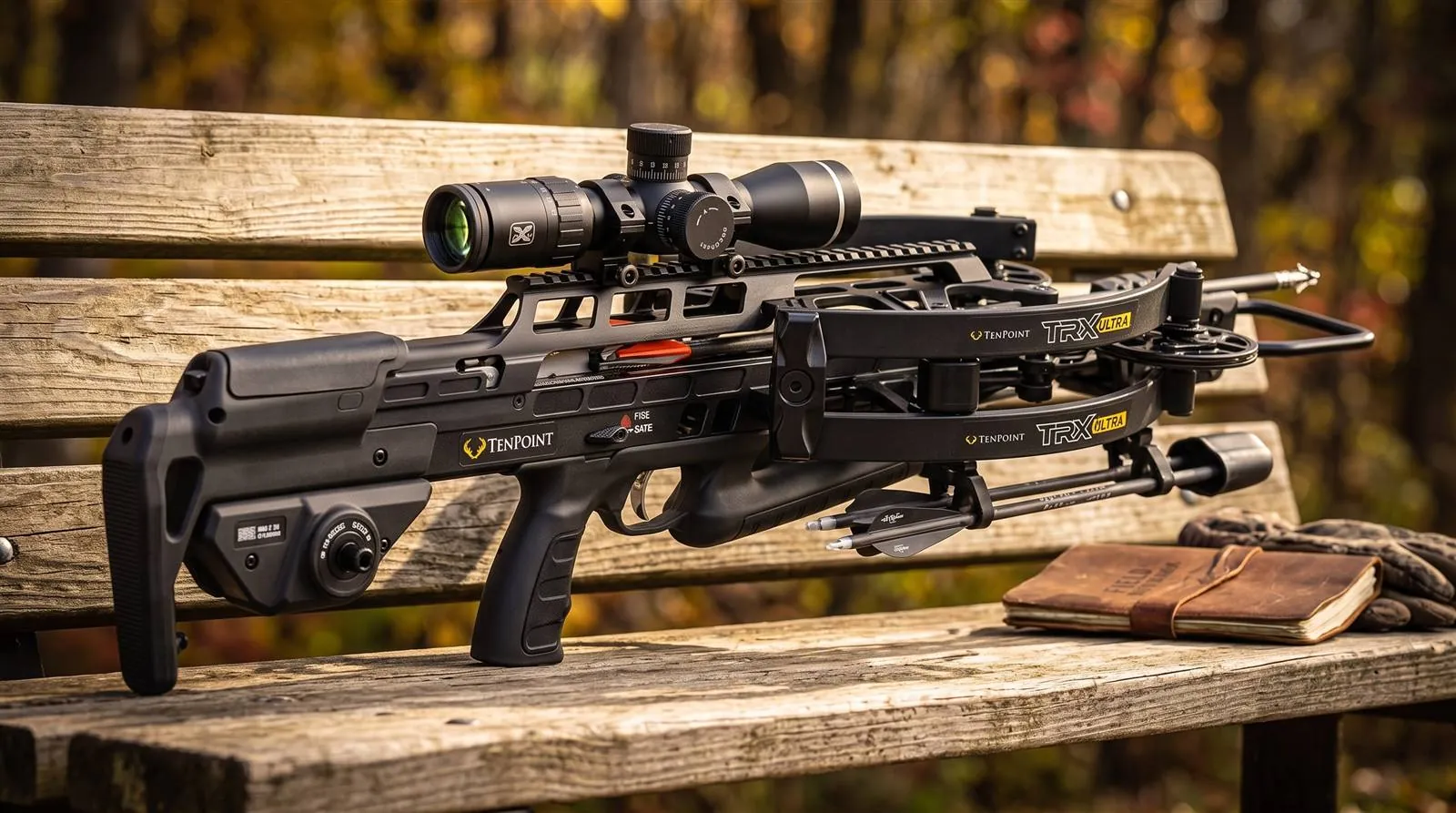
TenPoint TRX Ultra Review
Fastest crossbow in my tests at 511–517 FPS, with the tightest long-range groups near 100 yards. A flagship price that suits a narrow group of buyers.
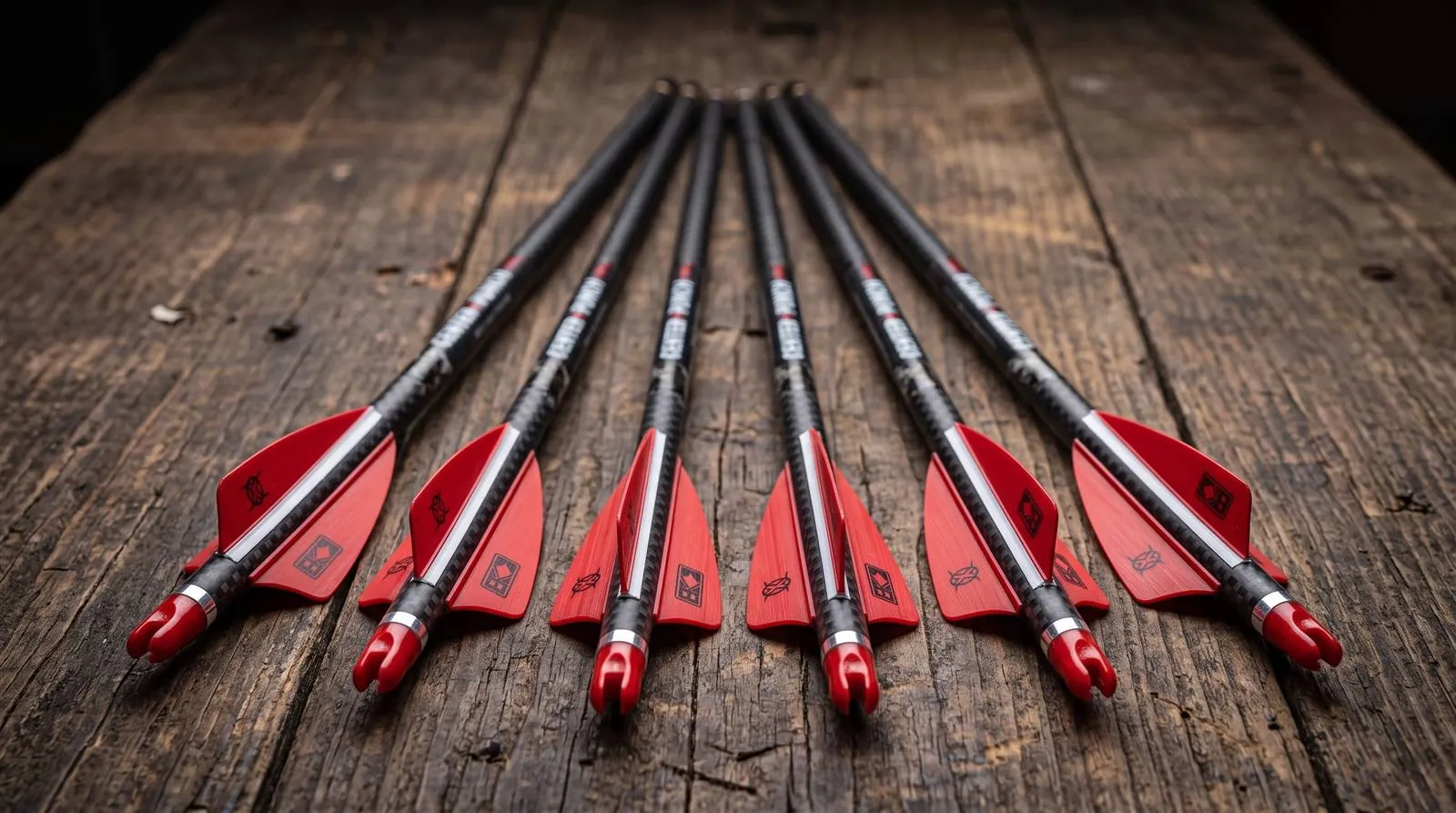
TenPoint CenterPunch HPX Review
Premium 445-grain, 20-inch carbon bolts with tight weight matching. Their consistency showed most past 40 yards, where groups stayed noticeably tighter.
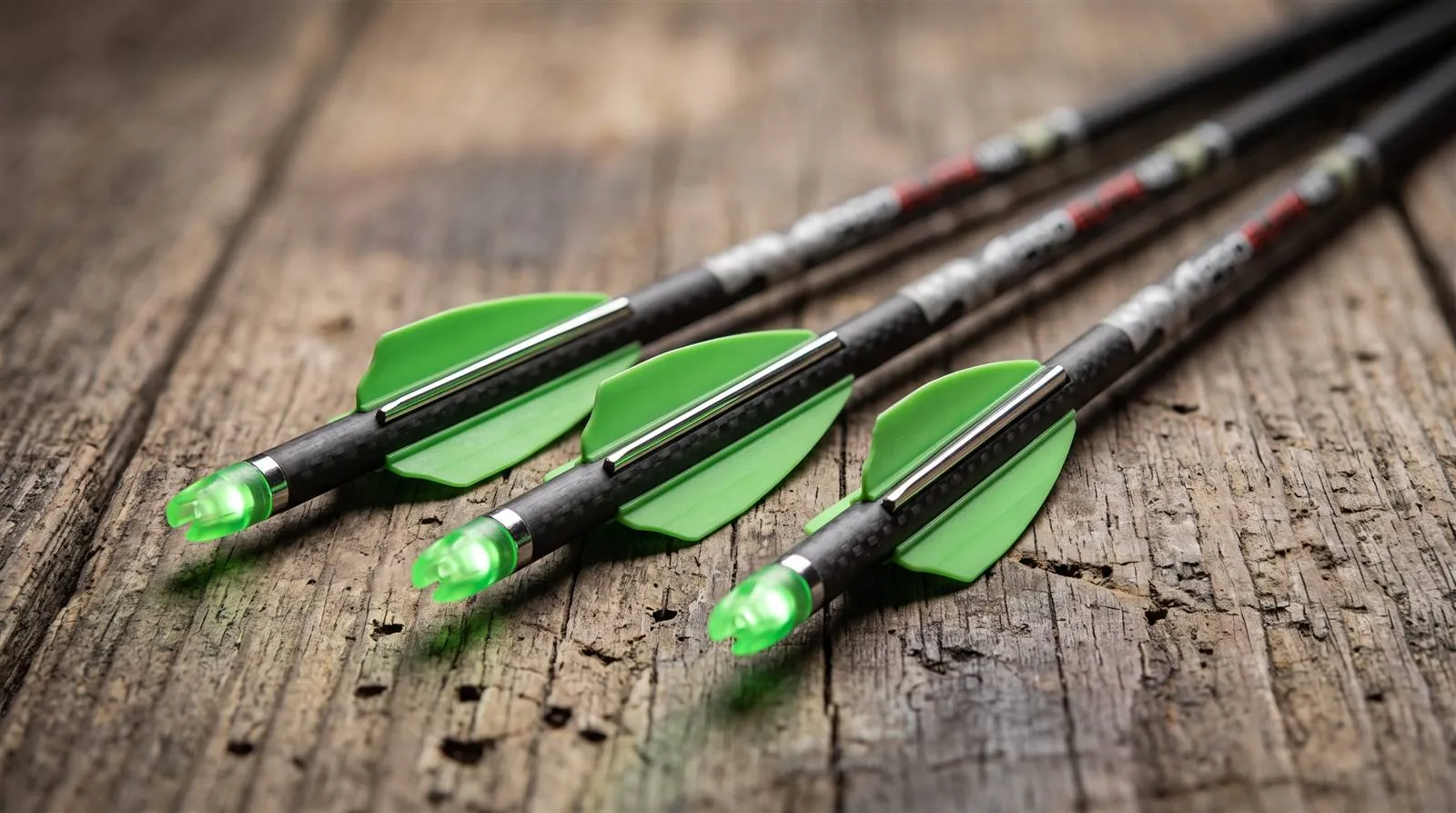
TenPoint Pro Elite 400 Review
410-grain lighted crossbow bolts for dawn, dusk and dense cover. Easier shot tracking and bolt recovery with little loss of consistency.
Ready to compare models? Browse our crossbow bolts & arrows and crossbow scopes & optics reviews, or see all reviews to see how each one measured up in testing.
More Crossbow Guides
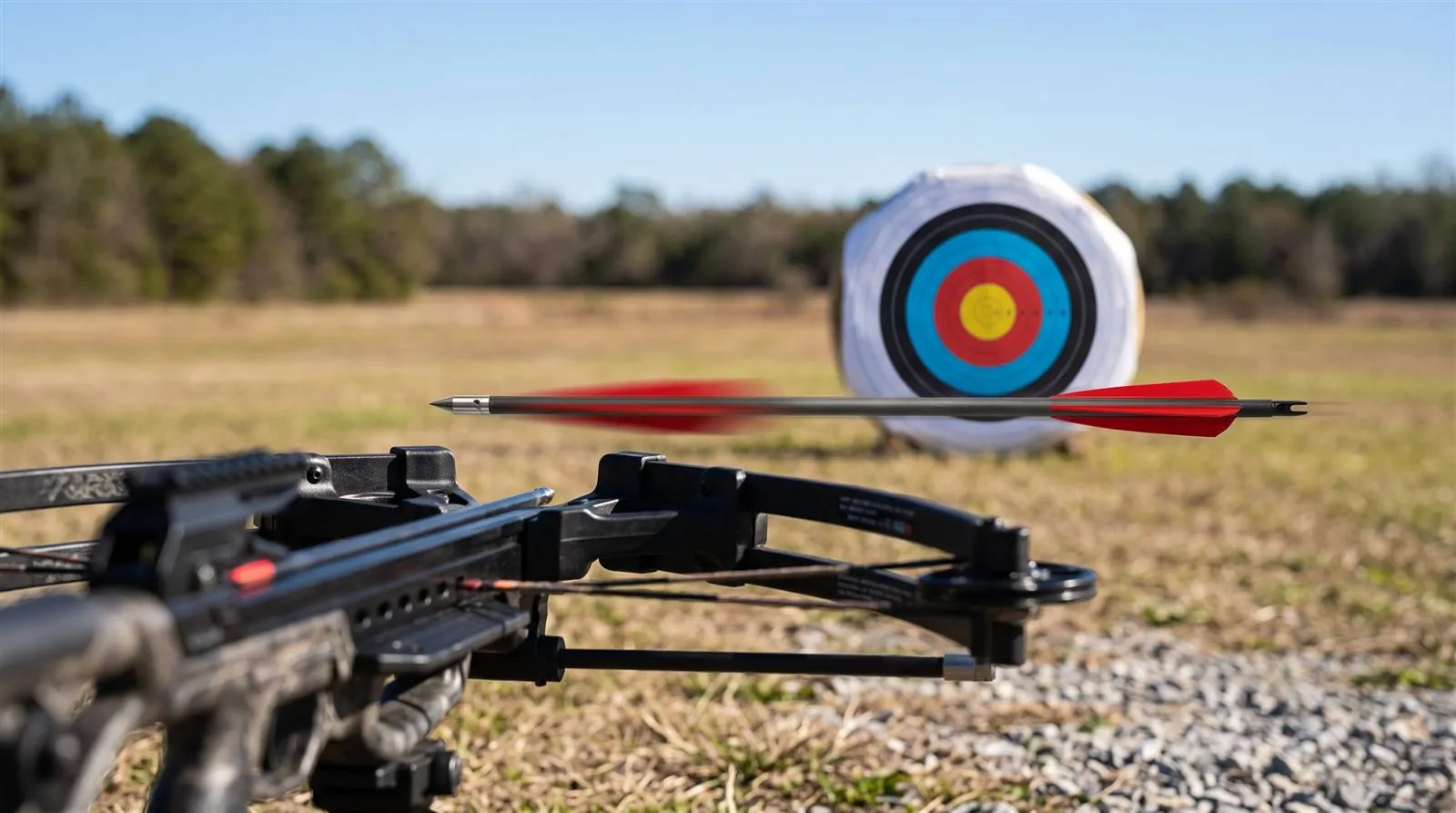
How Fast Does a Crossbow Bolt Travel?
Measured crossbow bolt speeds from my chronograph tests, by type and price tier, with why advertised FPS differs and how speed relates to kinetic energy.
Read guide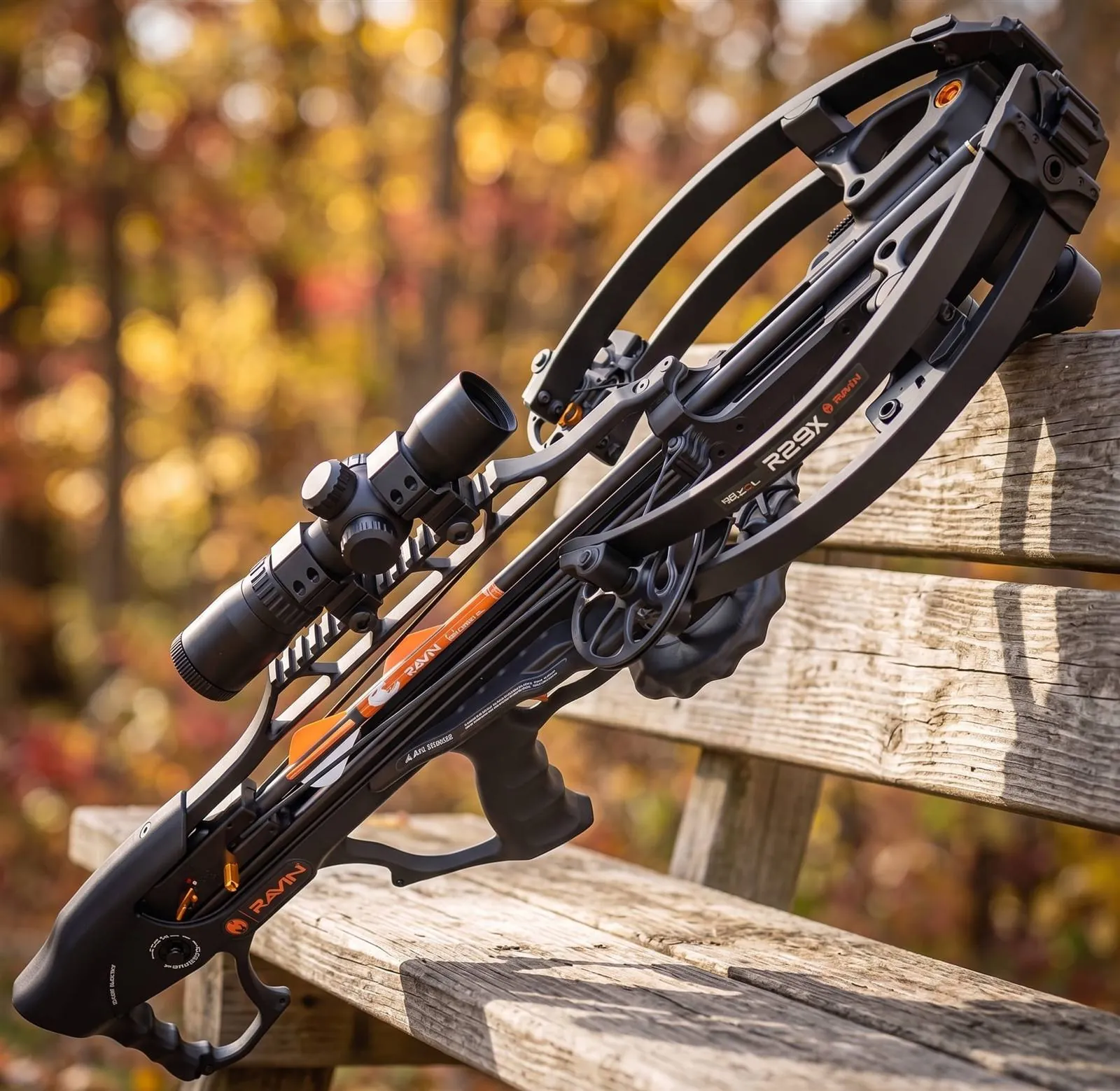
Ravin R29X vs R26X
R26X for stands, blinds and shots inside 40 yards at $500 less; R29X for larger game and longer range, with 50 FPS and 38 ft-lbs more. Measured verdict for each hunter.
Read guide
Recurve Crossbow Buying Guide
How to choose a recurve crossbow for hunting: who it suits, which specs to compare, maintenance, common mistakes and a decision checklist.
Read guide