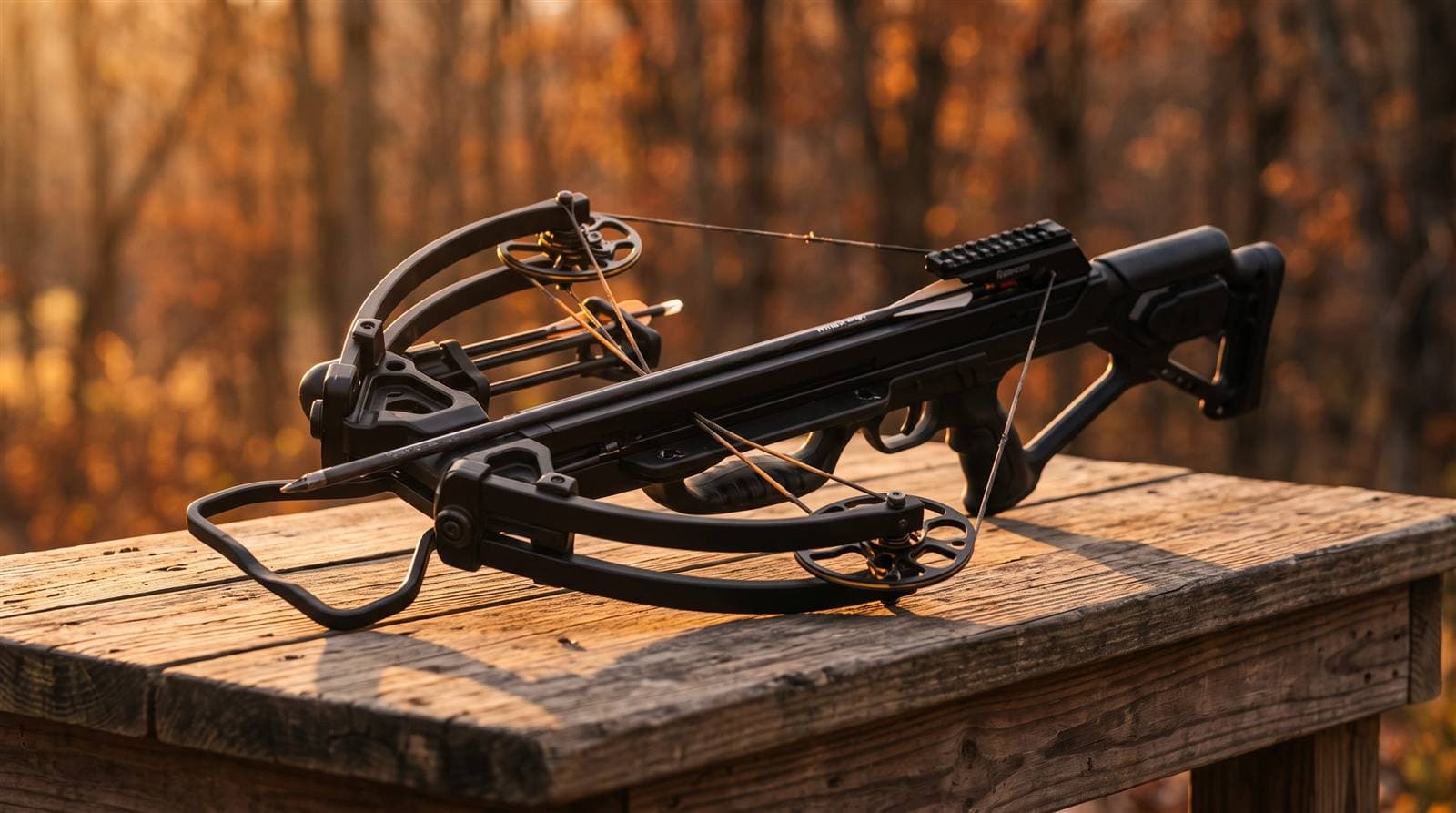
What Is Grain?
The unit used to weigh crossbow bolts and tips, where 7,000 grains equal one pound, so a 400-grain bolt weighs about 0.9 ounce.
Grain: definition
Also called: gr, grains, bolt weight, grain weight
A grain is a very small unit of weight used throughout archery and shooting. There are 7,000 grains in a pound, and 437.5 grains in an ounce. Crossbow bolts, field points, broadheads and inserts are all weighed in grains.
A typical hunting bolt weighs several hundred grains. The Wicked Ridge Match 400, for example, is listed at 400 grains, which is about 0.91 ounce. Tip weights such as a 100-grain broadhead or a 46-grain insert are quoted the same way, and they add up to the finished bolt weight.
Grain weight appears in the speed rating, the kinetic energy formula and the minimum bolt weight your crossbow requires. Reading it correctly is one of the easiest ways to avoid mismatches.
Grain conversions
ounces = grains / 437.5 and pounds = grains / 7,000
A 400-grain bolt is 400 / 437.5, about 0.91 ounce, or 400 / 7,000, about 0.057 pound.
Converting grains to ounces and pounds
| Grains | Ounces | Pounds |
|---|---|---|
| 100 | 0.23 | 0.014 |
| 350 | 0.80 | 0.050 |
| 400 | 0.91 | 0.057 |
| 450 | 1.03 | 0.064 |
| 7,000 | 16 | 1 |
Why Grain matters
Bolt weight changes speed and energy. A heavier bolt usually leaves the string a little slower but carries more momentum, and the effect on FPS depends on the crossbow. Matching the weight to the crossbow's rated range protects the limbs and string.
It also matters for balance. Added tip weight raises front-of-center, so an insert or a broadhead changes the finished bolt. See FOC and the guide on what FOC means for accuracy.
How to read it on a spec sheet
- Check whether the grain figure is for the bare shaft, the shaft with insert and nock, or the finished bolt with tip.
- Look for the crossbow's minimum bolt weight in the manual. Shooting a lighter bolt than specified can be unsafe.
- Compare the same quantity: add tip weight to shaft weight if a page quotes them separately.
- Watch for grains per inch (GPI), a figure for shaft weight per inch, which is a different measure.
- Check weight tolerance. The Wicked Ridge Match 400 lists a 5-grain tolerance per dozen.
Common mistakes
- Confusing grains with grams or grains per inch.
- Quoting speed without the bolt weight.
- Shooting bolts below the minimum weight in your manual.
- Forgetting that an insert, nock and tip add to the total.
- Assuming a heavier bolt is always better. It must stay inside the rated range.
How to weigh a finished bolt
- Assemble the bolt with the nock, insert, vanes and the tip you will shoot.
- Use a scale that reads in grains, and zero it first.
- Record the weight and compare it with the manual's minimum.
- Weigh a few bolts from the same pack to see the spread.
- Use the weight when you calculate kinetic energy.
See it in our reviews
- Wicked Ridge Match 400 — rated 4.4/5
Frequently Asked Questions
How many grains are in an ounce?
There are 437.5 grains in an ounce and 7,000 grains in a pound. A 400-grain bolt weighs about 0.91 ounce, which is a convenient way to picture the weight.
What is a grain in crossbow bolts?
A grain is the unit used to weigh bolts and tips. Hunting bolts typically weigh several hundred grains, and each component, such as the insert or broadhead, is also quoted in grains.
How many grains should a crossbow bolt be?
Follow your crossbow manual. Manufacturers state a minimum and often a recommended range, and shooting a lighter bolt than the minimum can damage the crossbow or be unsafe.
Does bolt grain weight affect speed?
Yes. With the same crossbow, a heavier bolt is generally slower, though it keeps more energy than speed suggests. Compare chronographed results with the same bolt weight.
What is the difference between grains and GPI?
Grains per inch is the weight of a shaft for each inch of length, used to compare shafts. Grains is the total weight of the bolt or component.
How do I weigh my bolts?
Use a scale that reads in grains, weigh the complete bolt with tip, and check several bolts to see consistency. Wicked Ridge rates its Match 400 within 5 grains per dozen.
Are grains the same as grams?
No. One gram is about 15.4 grains, so a 400-grain bolt is about 26 grams. Check which unit a page uses before comparing figures between sources.
Keep learning
Guides that use this term
- GuideHow to Choose Crossbow BoltsChoose crossbow bolts in six steps: match rated length and minimum weight, then compare FOC, nocks, tips and tolerances using a spec table.Read the guide
- GuideWhat Is FOC in Crossbow Bolts?What FOC means on a crossbow bolt: the formula, a worked example, how front balance affects flight and penetration, and FOC figures from our bolt reviews.Read the guide
- GuideBest Crossbow Bolts of 2026Best crossbow bolts of 2026: six reviewed picks from budget 12-packs to premium weight-matched carbon, plus how to choose weight, length, FOC and nocks.Read the guide
Related terms
- BoltThe projectile a crossbow shoots: a short carbon or aluminum shaft with a nock, vanes and a tip, often called an arrow.
- FPS (Feet Per Second)The speed of a bolt as it leaves the crossbow in feet per second, usually rated with one specific bolt weight.
- Kinetic EnergyThe energy a bolt carries, in foot-pounds, calculated from its weight in grains and its speed in feet per second.
- MomentumA bolt's weight multiplied by its speed, expressed in slug-ft/s, which rewards heavier bolts more than kinetic energy does.
- FOC (Front of Center)The percentage of a bolt’s length by which its balance point sits ahead of the geometric midpoint, a measure of front-weighting.
- InsertThe threaded fitting at the front of a bolt shaft that accepts field points and broadheads.
Browse the gear
Definitions are general information. Manufacturer figures vary, so follow your crossbow's manual and verify local laws with the relevant authority.