How to De-Cock a Crossbow Safely
How to de-cock a crossbow safely: using a de-cocking bolt, firing into a target, and integrated De-Cock systems, plus the mistakes that cause injury.
Table of Contents
The Short Answer
Never leave a crossbow cocked and never dry-fire it to empty it. The two safe ways to de-cock a crossbow are firing a proper bolt into a suitable target at a controlled angle, or using a built-in de-cocking mechanism if your crossbow has one. Everything else — setting it aside still cocked, releasing the trigger with no bolt loaded, or improvising your own method — risks either an accidental discharge or serious damage to the limbs and cams.
This guide walks through both safe methods step by step, what a dedicated de-cocking bolt actually is, how integrated De-Cock systems work, and the mistakes that cause most crossbow injuries during this specific step.
Why De-Cocking Even Matters
A Cocked Crossbow Is a Stored-Energy Hazard
Once cocked, a crossbow holds its full draw weight indefinitely, whether or not a bolt is loaded and whether or not the safety is engaged. That's fundamentally different from a compound bow, which only holds tension while a shooter is actively drawing it. A cocked crossbow left leaning in a blind, propped against a truck, or handed to someone else is holding real stored energy the whole time, and it should be handled with the same care as a loaded firearm.
The Scenario Every Hunter Eventually Faces
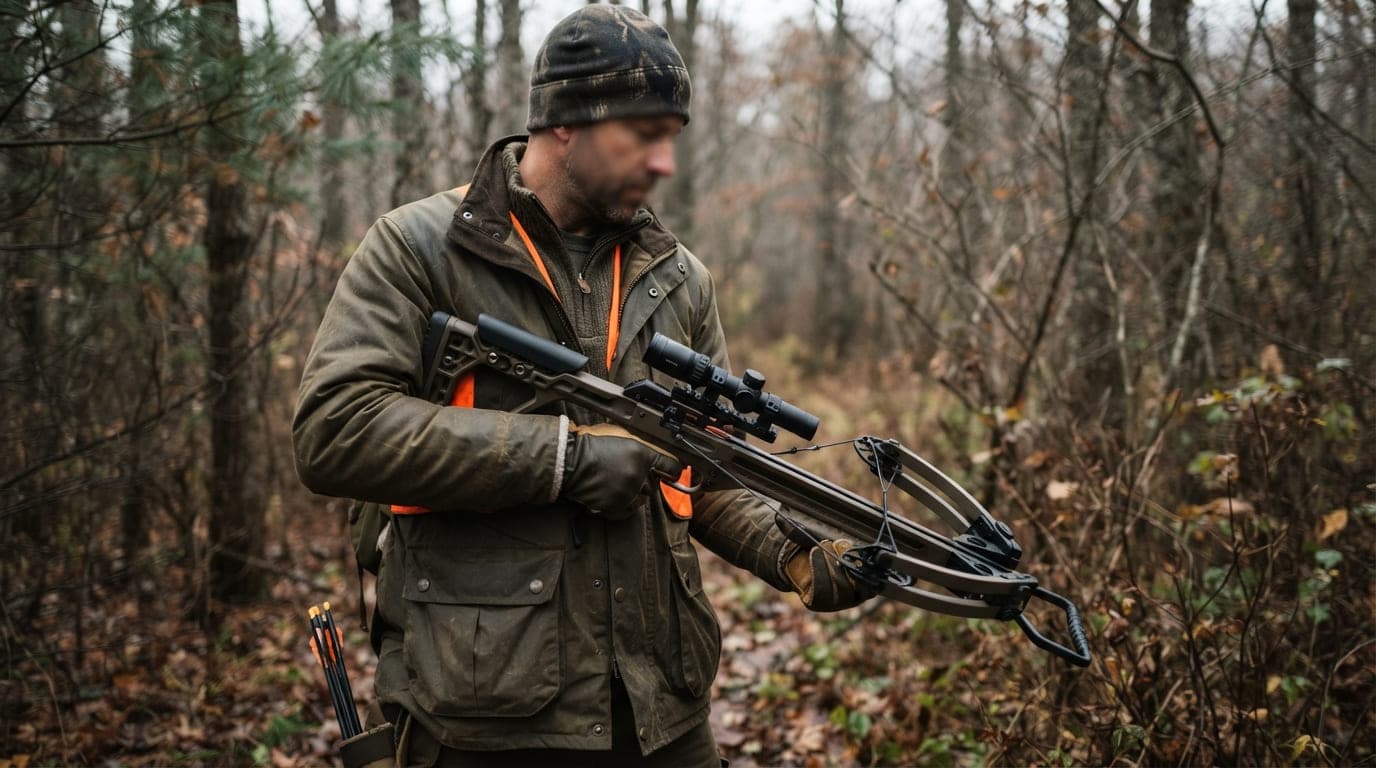
Most hunts end without a shot. An animal moves off, light fades, or the angle never presents itself — and now you're holding a fully cocked crossbow with nowhere to put that energy except straight ahead into something designed to absorb it. Planning for this ahead of time, rather than improvising in the moment, is what separates a safe de-cock from an accident.
Method 1: Fire a Bolt Into a Safe Target
The Most Universal Method
Every crossbow, regardless of brand or price, can be safely de-cocked by firing a proper bolt into a suitable backstop. This works on every platform because it uses the crossbow exactly as designed — there's no special mechanism required.
Step-by-Step
- Confirm your line of fire is clear in every direction, including behind and beyond the target.
- Load a proper bolt, matched to your crossbow's specifications — never dry-fire by releasing the trigger with no bolt seated.
- Choose a target built to stop your crossbow's bolt at close range, such as a rated foam target block, not a casual backstop.
- Aim at a controlled, steep angle into the target, ideally straight down into the ground or into a target block positioned low and close, so the bolt has nowhere to travel if it over-penetrates.
- Fire normally, keeping your hands and any bystanders clear of the muzzle and the target area.
- Retrieve and inspect the bolt before storing or reusing it.
Why a "De-Cocking Bolt" Exists
A dedicated de-cocking bolt is a discharge bolt, sometimes with a blunt or practice tip, kept specifically for this purpose rather than using a hunting bolt with a broadhead attached. Using a blunt-tipped bolt avoids damaging a broadhead's edge and avoids the deeper, harder-to-retrieve penetration a hunting broadhead causes in a target block. If you hunt regularly, keeping one dedicated de-cocking bolt in your pack is a simple habit that saves wear on your actual hunting bolts.
When This Method Doesn't Work
Firing into a target isn't always practical — low light, no safe backstop nearby, or simply not wanting to walk back to retrieve a bolt from a stand. That's exactly the situation a built-in de-cocking mechanism solves.
Method 2: Use an Integrated De-Cocking System
How These Systems Work
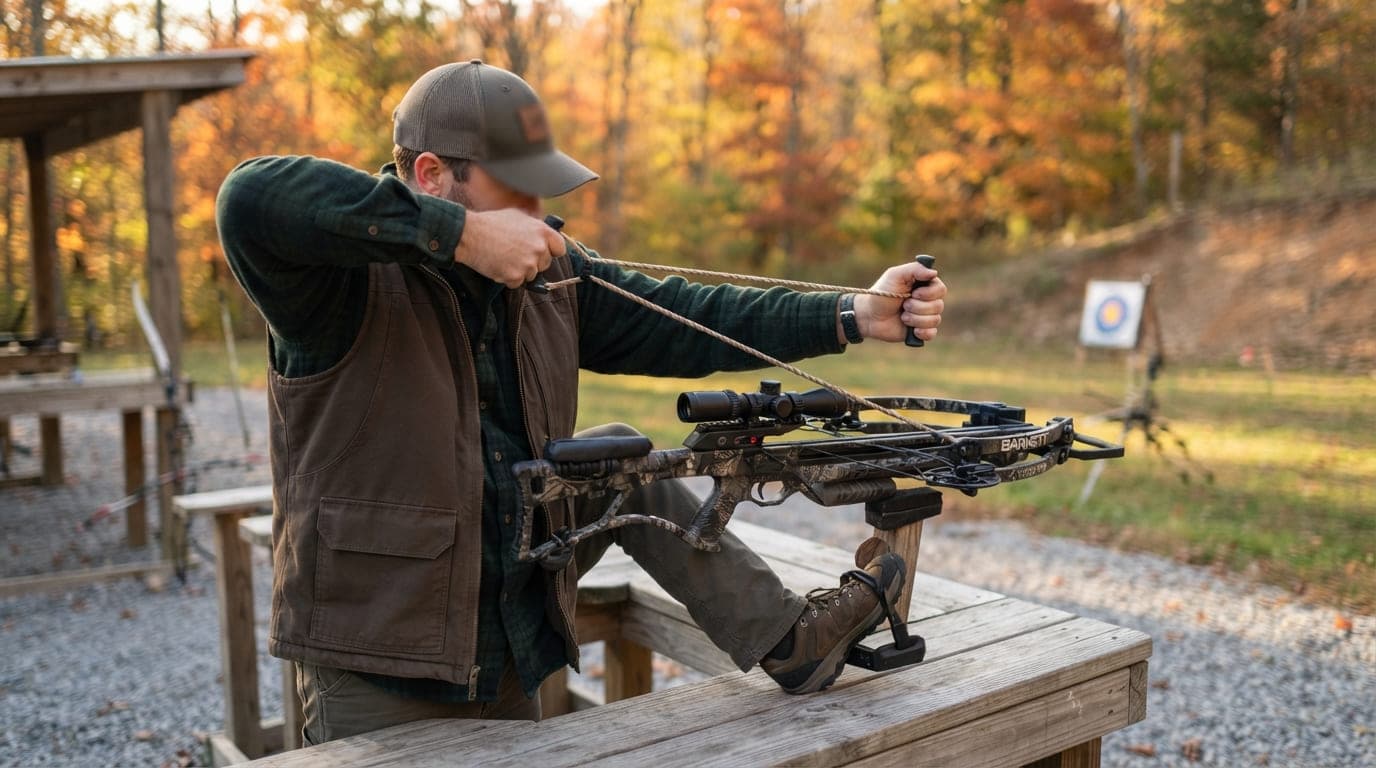
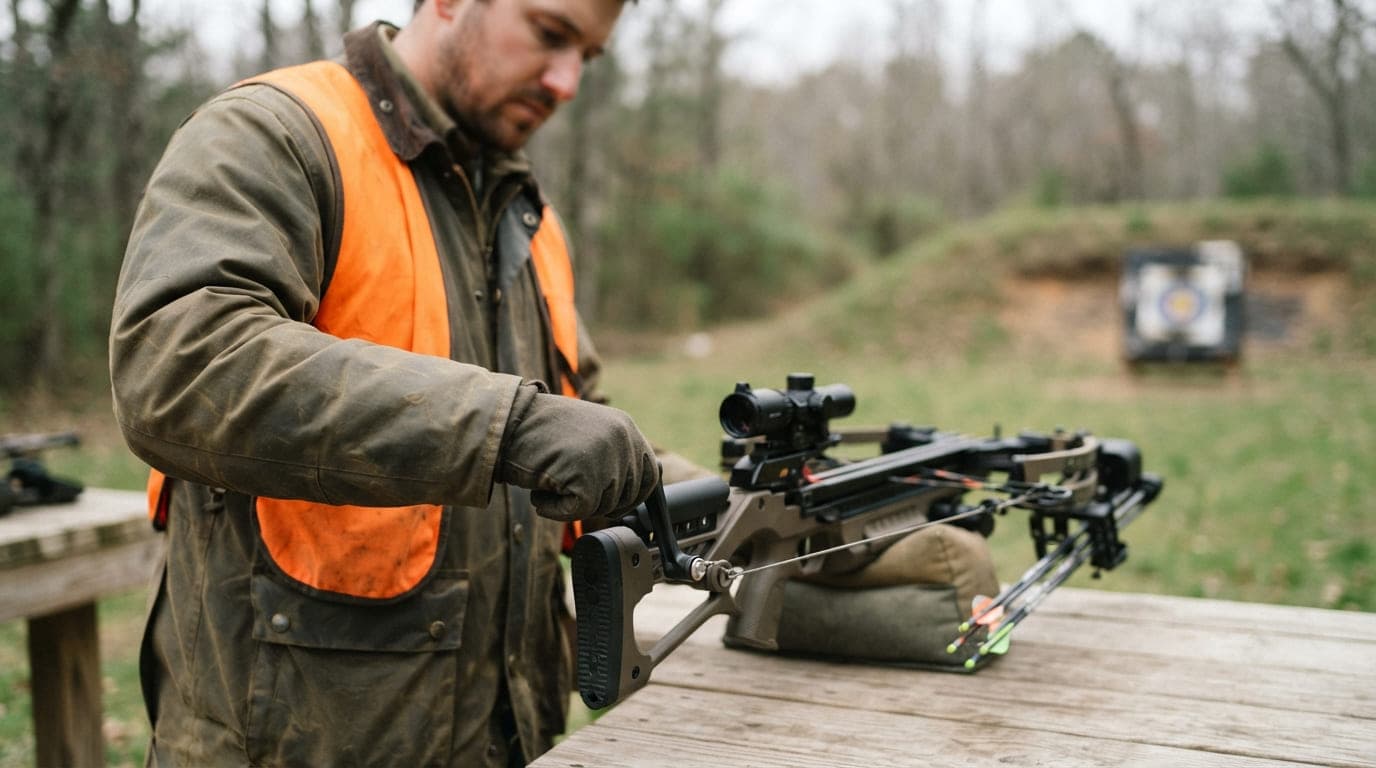
Some crossbows build a de-cocking mechanism directly into their cocking system, letting you gradually lower the string back to its resting position without firing a bolt at all. The TenPoint Titan X De-Cock uses this approach through its ACUdraw De-Cock system, and the Wicked Ridge Invader M1 De-Cock shares the same core architecture. Both let the same mechanism that cocks the crossbow run the process in reverse, controlling the string's release in a slow, managed way rather than letting it snap back.
What Our Reviews Found
Our Titan X De-Cock review tested the ACUdraw De-Cock system across more than 40 full cock-and-decock cycles and found it safely lowered the string every single time, with no failed or inconsistent cycle. Our Invader M1 De-Cock review tested the same architecture on that crossbow and found the same reliability across its own 40+ cycle test. Both crossbows carry a true draw weight in the 175–190 lb range, reduced to roughly 5 lbs felt effort for cocking — the same mechanism handles the de-cocking direction at a similarly low effort level.
Step-by-Step for an Integrated System
- Confirm the crossbow is still cocked and the safety is engaged before starting.
- Engage the de-cocking function exactly as your specific model's manual describes — the sequence varies by manufacturer and getting it wrong can be dangerous.
- Control the handle or crank through the full reverse cycle, resisting the urge to let it spin freely once tension starts releasing.
- Confirm the string has returned fully to its resting, uncocked position.
- Store or transport the crossbow now that it's safely uncocked.
Why This Is Worth Paying For
If you regularly hunt situations where a shot doesn't materialize, an integrated de-cocking system removes the need to find a safe backstop and waste a bolt every time. It's one of the more practical, less marketed advantages of these crossbows — less about the hunt itself and more about what happens afterward.
What Not to Do
Never Dry-Fire to "Empty" a Crossbow
Releasing the trigger with no bolt loaded sends all of that stored energy back into the limbs and cams instead of into a bolt, which can shatter components and send debris flying with real injury risk. Dry-firing is never a valid way to de-cock a crossbow, regardless of how tired or rushed you are.
Never Just Set It Aside Still Cocked
A cocked crossbow left in a truck bed, a blind, or a gun safe overnight is still holding full draw weight the entire time. Beyond the safety risk of anyone else picking it up, manufacturers generally don't recommend leaving a crossbow under tension for extended periods, since it adds unnecessary stress to the limbs and string compared to storing it de-cocked.
Don't Improvise a Release Method
Releasing the string by hand without a bolt, jamming something into the mechanism, or any other improvised method is a serious safety risk. Use one of the two methods above — fire into a proper target, or use your crossbow's built-in de-cocking system exactly as the manual describes.
Don't Skip the Manual for Your Specific Model
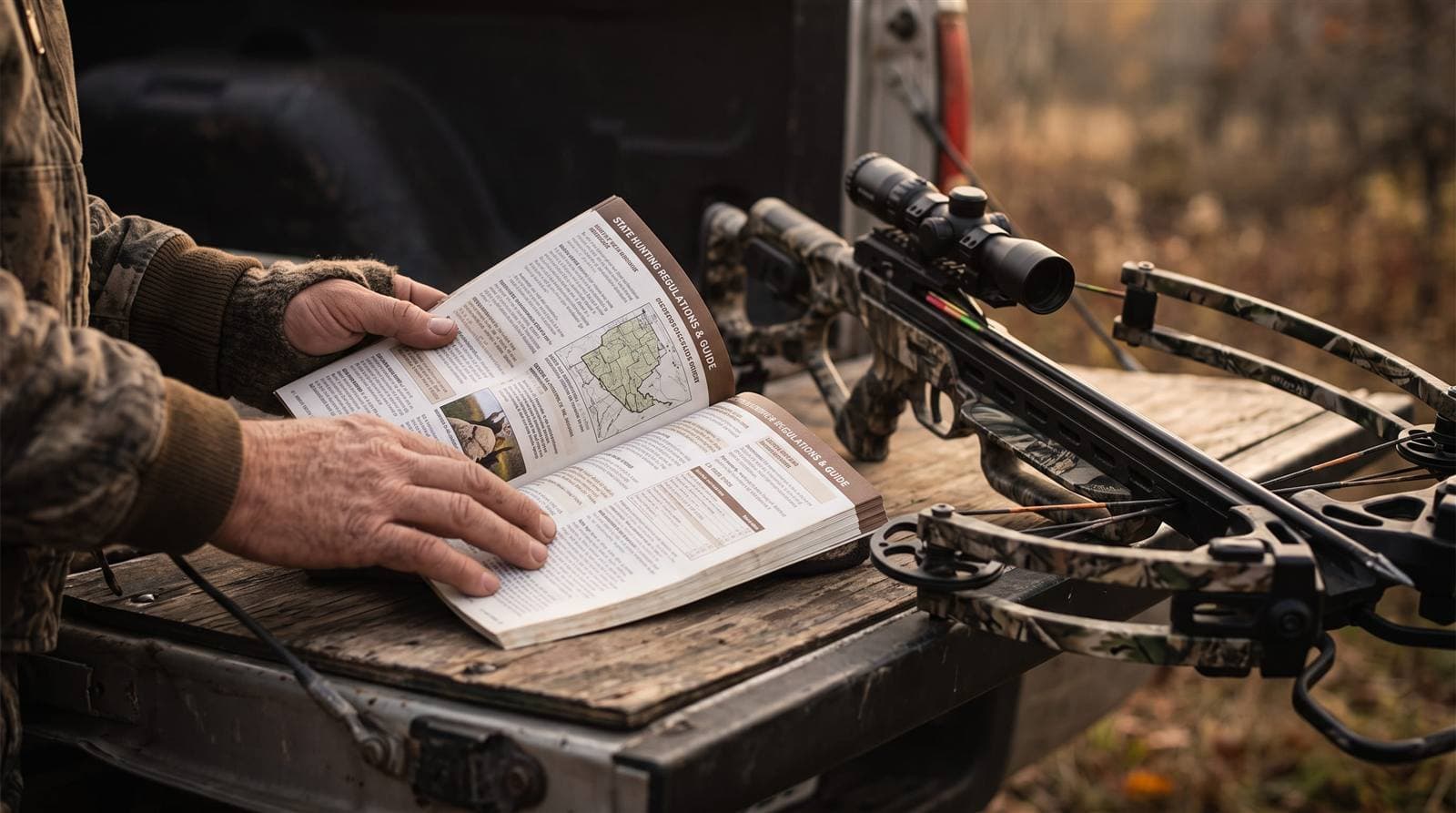
De-cocking procedures differ between manufacturers and even between models from the same brand. A sequence that's correct on one integrated system can be wrong on another. Always confirm the exact steps for your specific crossbow before relying on a general guide like this one.
Cold Weather and Low-Light De-Cocking
Why Conditions Matter More Than You'd Expect
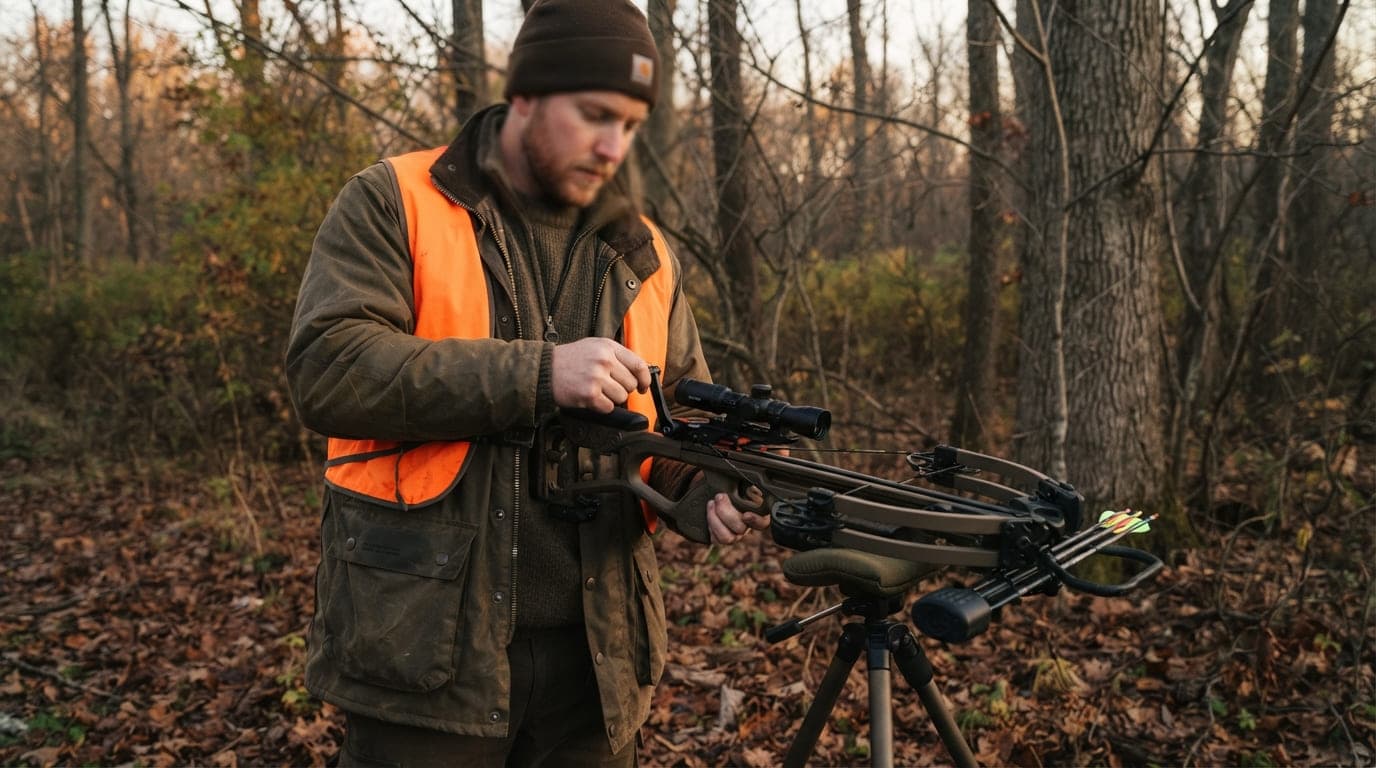
Late-season hunts often end in fading light or near-freezing temperatures, exactly when de-cocking gets rushed. Cold can make string and cable materials stiffer and slightly change how a mechanism feels compared to a warm afternoon at the range, so it's worth practicing your de-cocking routine in similar conditions before you rely on it in the field for the first time.
Low Light Changes the Calculation
If you can't clearly see your backstop, firing a bolt to de-cock isn't a safe option — you need to be as certain of what's downrange as you would be taking an actual shot. This is one of the strongest practical arguments for a crossbow with an integrated de-cocking system: it removes the need for a visible, confirmed-safe backstop entirely.
Gloves and Grip
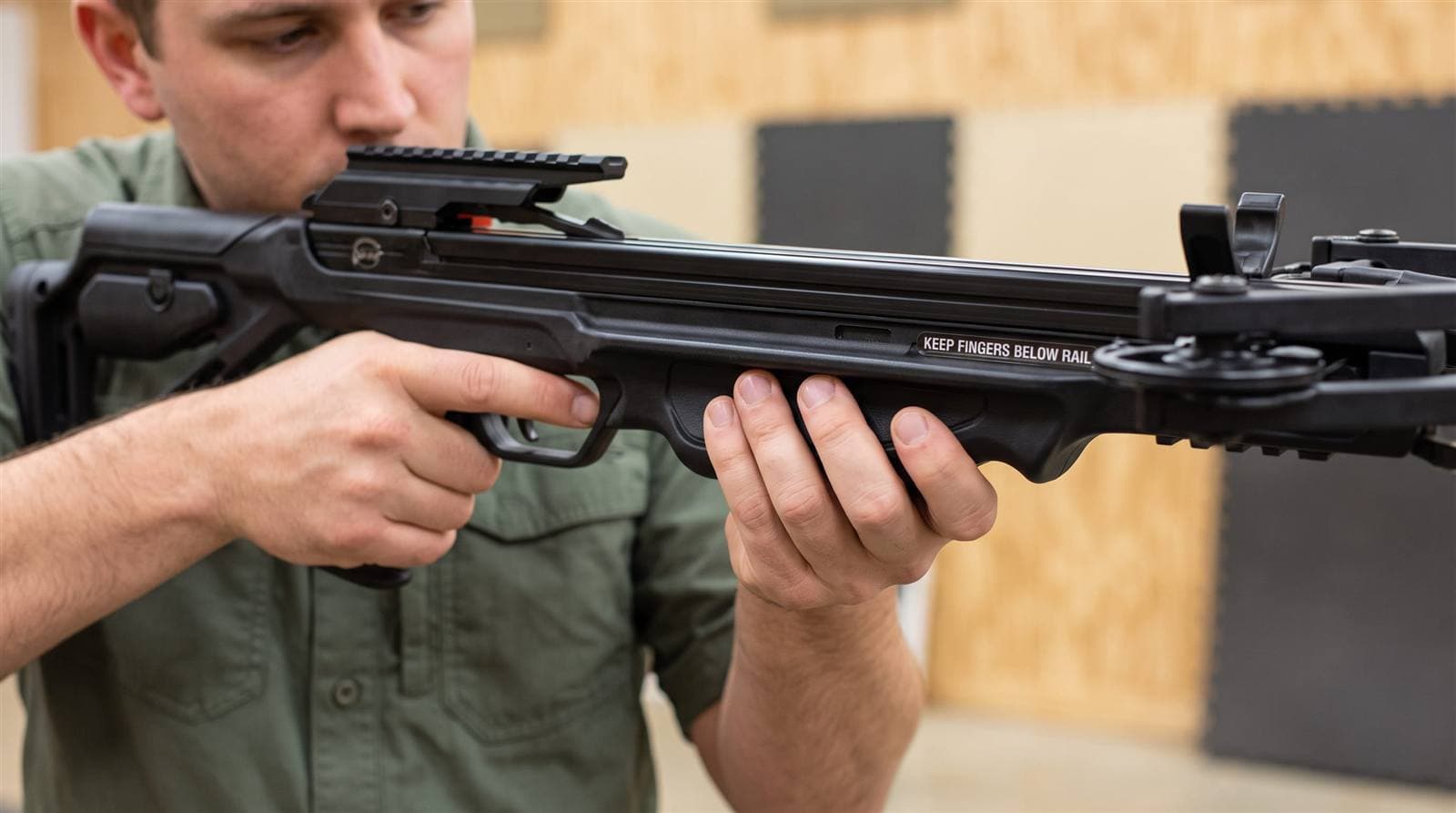
Thick cold-weather gloves can make it harder to feel whether a crank or lever is engaging correctly. If your hands are bulky with gloves, consider removing them for the de-cocking step specifically, keeping your hands clear of the string and rail the entire time.
Signs Your De-Cocking System Needs Attention
Resistance That Feels Different Than Usual
An integrated de-cocking mechanism should feel consistent cycle after cycle. If a crank suddenly feels gritty, catches, or requires noticeably more force than usual partway through, stop and inspect it rather than forcing it through. Continuing to force a mechanism that's binding risks damaging it further or losing control of the release partway through.
A String That Doesn't Return to the Same Resting Position
If you notice the string settling in a visibly different resting position than it used to after de-cocking, that's worth investigating before your next hunt. It can point to wear in the mechanism, a developing string issue, or a cam timing problem, any of which should be checked rather than assumed to be normal.
When to Involve a Dealer
If a de-cocking mechanism fails to complete a cycle, binds significantly, or you're ever unsure whether the string fully returned to rest, don't continue using the crossbow until a qualified dealer or the manufacturer has inspected it. These mechanisms are holding real stored energy during the entire process, and an inspection is far cheaper than an injury.
De-Cocking and Crossbow Storage
Always Store De-Cocked
Between hunts and range sessions, store your crossbow fully de-cocked and unloaded. This is standard guidance across crossbow manufacturers and matches what we recommend in our how to maintain a crossbow guide, which covers the full off-season storage routine alongside string care.
Transporting a Cocked Crossbow
Never transport a crossbow cocked between locations, even for a short drive, regardless of how much time it might save on your next stop. If you arrive at your stand and want to be ready immediately, cock it there rather than during the drive.
Choosing a Crossbow With Easier De-Cocking Built In
If this is a feature you want from day one rather than adding the habit of carrying a dedicated de-cocking bolt, look specifically for a crossbow advertising an integrated De-Cock system. Our how to cock a crossbow guide compares rope, crank, and integrated cocking systems in more depth, and our best crossbows for beginners guide highlights models that pair easy cocking with this kind of safety feature.
Frequently Asked Questions
Is it safe to leave a crossbow cocked overnight?
No. A cocked crossbow holds its full draw weight indefinitely and should always be de-cocked before extended storage. Leaving it cocked is both a safety risk to anyone who handles it and adds unnecessary stress to the limbs and string.
How do you de-cock a crossbow without firing it?
Use a built-in de-cocking mechanism if your crossbow has one, such as the ACUdraw De-Cock system on the TenPoint Titan X De-Cock and Wicked Ridge Invader M1 De-Cock. These let you gradually lower the string to rest without releasing a bolt.
What is a de-cocking bolt?
It's a discharge bolt, often blunt-tipped, kept specifically for safely firing into a target to de-cock a crossbow that doesn't have an integrated de-cocking system, rather than using a hunting bolt with a broadhead attached.
Can dry-firing a crossbow to de-cock it damage it?
Yes, seriously. Releasing the trigger with no bolt loaded sends the stored energy into the limbs and cams instead of a bolt, which can shatter components, cause injury from flying debris, and void the warranty.
Do all crossbows have a de-cocking feature?
No. Only specific models, like the TenPoint Titan X De-Cock and Wicked Ridge Invader M1 De-Cock, build an integrated de-cocking mechanism into their cocking system. Most other crossbows require firing a bolt into a safe target to de-cock.
How many times can an integrated de-cocking system be used safely?
Our reviews tested the ACUdraw De-Cock system on two different crossbows across more than 40 full cock-and-decock cycles each, with no failed or inconsistent cycle in either case. Follow your manufacturer's maintenance schedule for long-term reliability.
Final Recommendation
De-cocking isn't an afterthought — it's the step that determines whether an uneventful end to a hunt stays uneventful. If your crossbow has an integrated de-cocking system, use it exactly as the manual describes. If it doesn't, keep a dedicated de-cocking bolt in your pack and always have a safe target in mind before you cock up for the day. Never dry-fire, and never set a cocked crossbow aside and walk away from it.
Looking to round out your setup? Our crossbow accessories category hub lists the cocking and de-cocking devices we've reviewed, and our crossbow safety rules for beginners guide covers the broader safe-handling habits every new owner should build.
Ready to compare models? Read our tested crossbow reviews to find your perfect match.