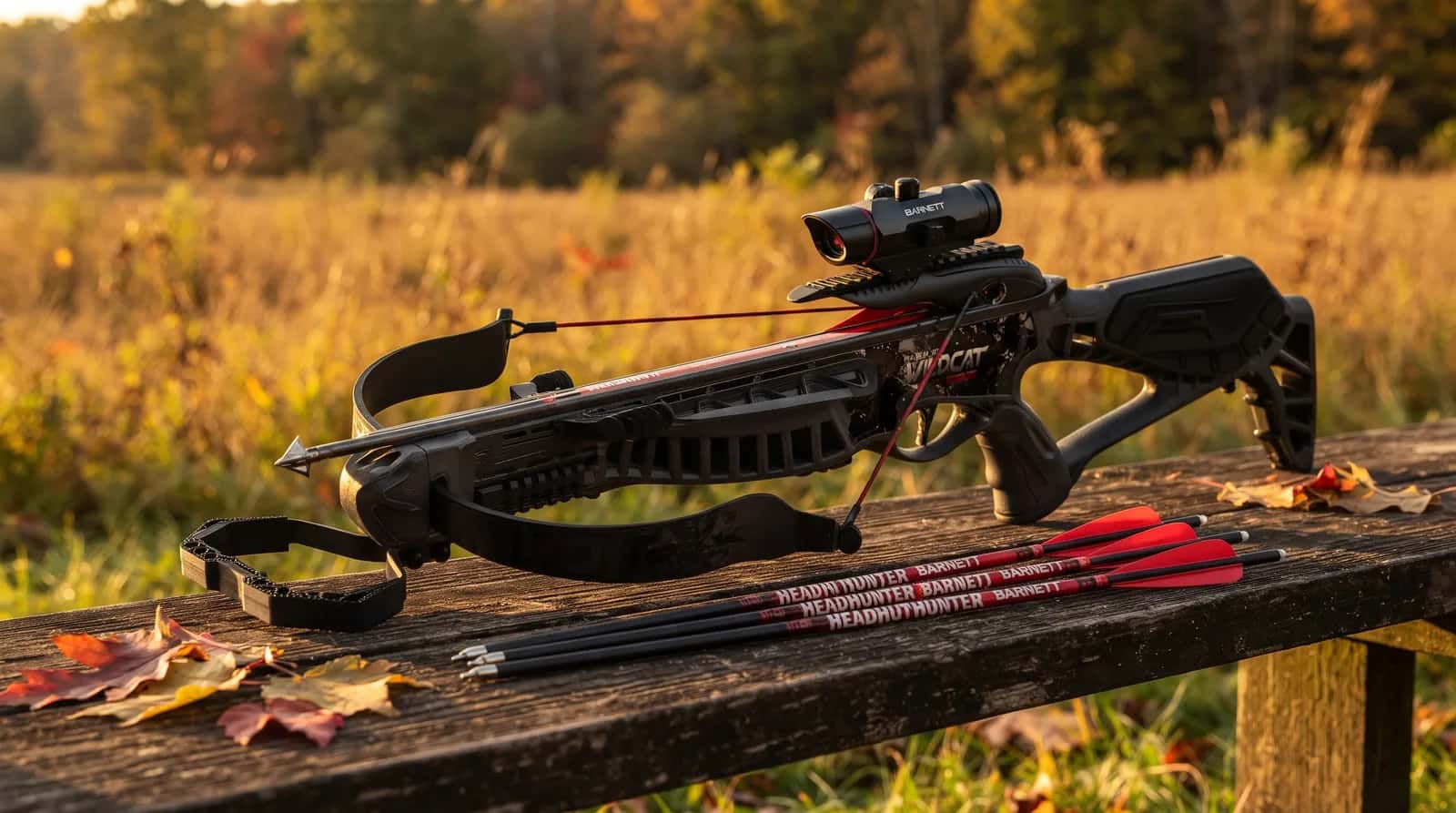
Most Barnett crossbow problems come back to four things: an arrow that is too light or has the wrong nock, a string pulled back off center, a string and cables that dried out between waxings, and an owner who never registered the warranty. Fix those and the majority of complaints you read about Barnett disappear. The few that remain, such as cracked limbs or a trigger that releases when it should not, are reasons to stop shooting and call Barnett, not reasons to start taking parts off.
I have reviewed six Barnett products on this site, from the budget Wildcat CRX recurve to the Hyper Raptor T-Rex, and the same handful of issues shows up across the range. This guide is organized by symptom so you can find yours fast, then explains the cause, the safe fix and the point where you hand the crossbow to Barnett's service department.
If your crossbow is a different brand, or you want the general version of the trigger checks, my brand-neutral guide to why a crossbow won't fire covers every design.
Barnett Crossbow Problems: Symptom Table
Start here. Find the symptom, check the most likely cause first, and only move to the next row if that does not solve it.
| Symptom | Most likely cause | First fix | Stop and call Barnett if |
|---|---|---|---|
| Trigger won't pull | Safety still on, arrow not seated, wrong nock | Push the safety fully to fire, seat the arrow against the string, use moon/half-moon nocks | The trigger still won't move with a correct, seated arrow |
| Safety won't move | Not fully cocked, dirt or ice in the housing | Confirm the string latched on both sides; keep the housing dry and clean | It stays stuck on a fully cocked crossbow |
| Arrows hit left or right | Off-center cocking | Mark the center serving; pull the rope evenly | It persists with even cocking (possible tiller issue) |
| Arrows hit high or low | Sight not set for the arrow/point, mixed arrows | Re-zero with your hunting arrows; use one arrow length and spine | Groups stay erratic with matched arrows |
| String jumps over the arrow | Damaged nock, worn string | Replace the arrow; inspect the serving | The string is worn where it contacts the nock |
| White fuzz on string or cables | Not enough wax | Wax now and shorten your interval | Strands are cut or broken |
| Lost speed, loud "slap" | Light arrow, string stretch, limb damage | Weigh your arrows; inspect limbs and cams | You see a crack, chip or bent cam |
| Fired unexpectedly | Trigger or sensor fault | Stop using the crossbow immediately | Always. Do not shoot it again until Barnett inspects it |
Why Your Barnett Crossbow Won't Fire
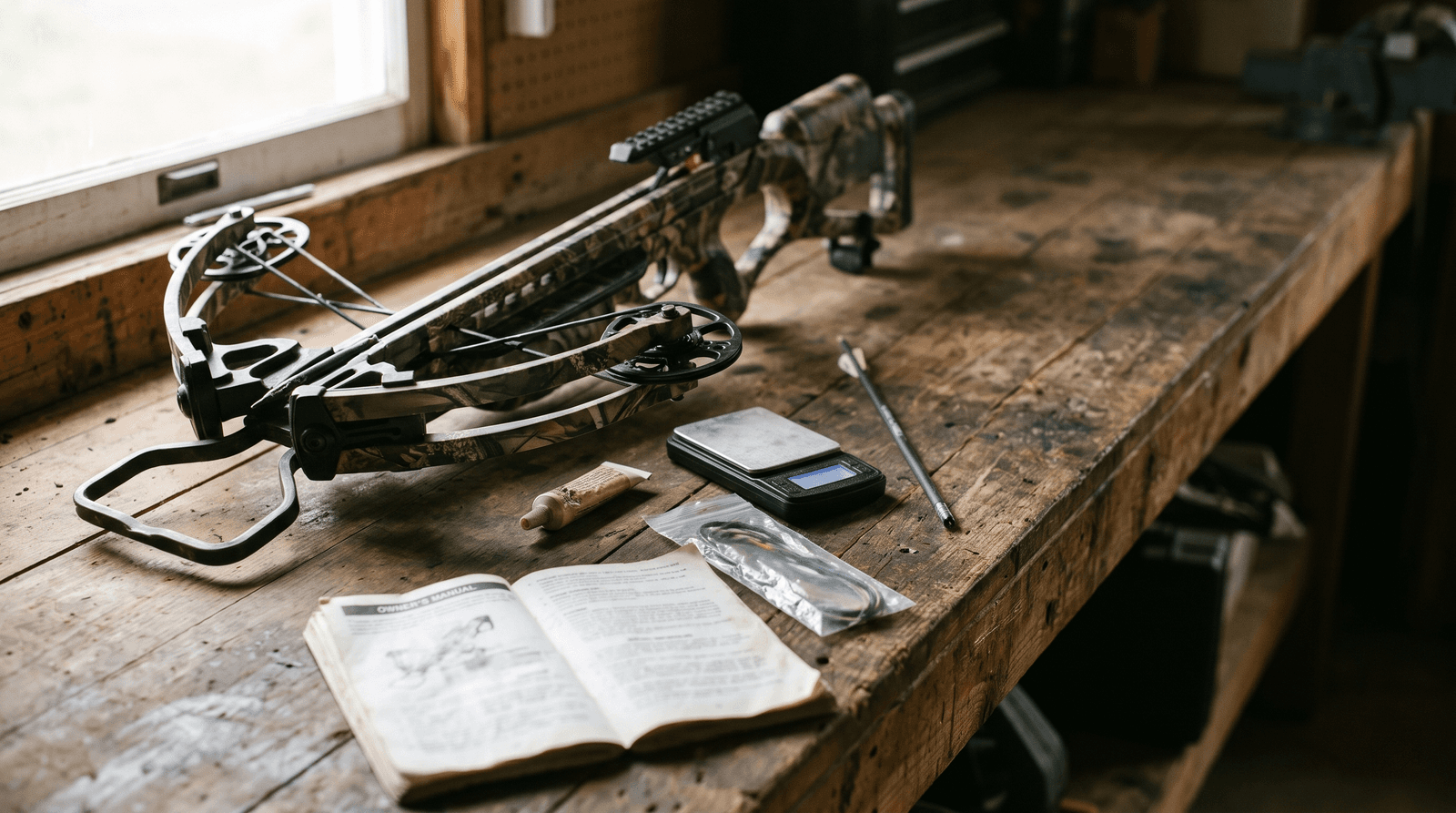
When a Barnett will not release, the crossbow is usually doing its job. Every current Barnett trigger has an automatic safety that sets when you cock it, and most models pair it with an anti-dry-fire system that blocks the trigger until an arrow is seated correctly.
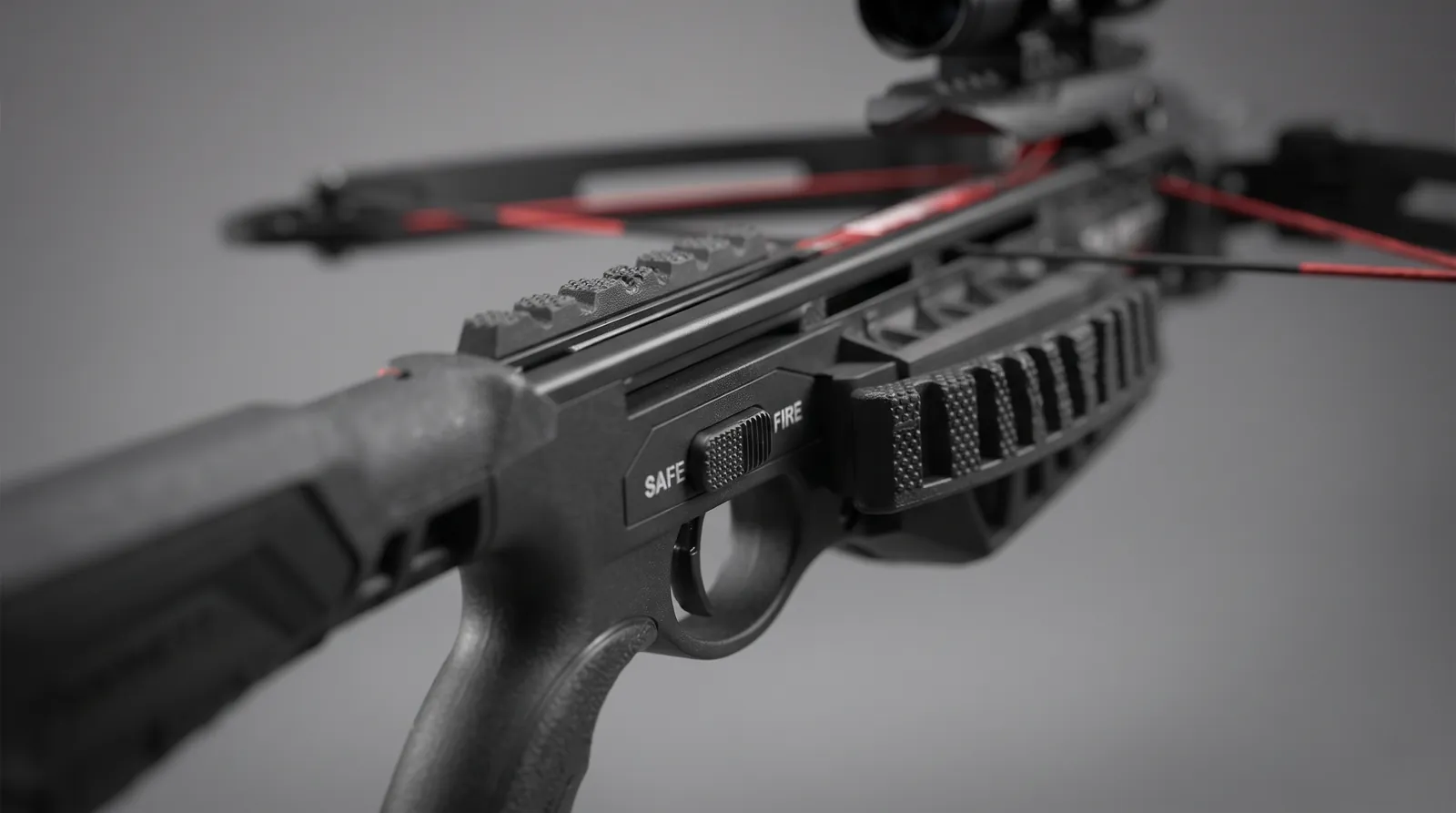
The safety is still engaged
Barnett's safety engages automatically on every cock, so it has to be released before each shot. If the switch feels stiff, it can sit partway between positions. Push it firmly to the fire position and look at the marking rather than going by feel, especially with gloves on.
The arrow is not seated against the string
The ADF mechanism needs the nock pressed fully back against the string. If you loaded quickly, or the arrow slid forward while you walked, the trigger stays blocked. With the muzzle pointed safely downrange, push the arrow firmly back until it stops. The Recruit XP uses this kind of ADF trigger and nock sensing, and seating is the first thing to check on it.
The nock is the wrong type
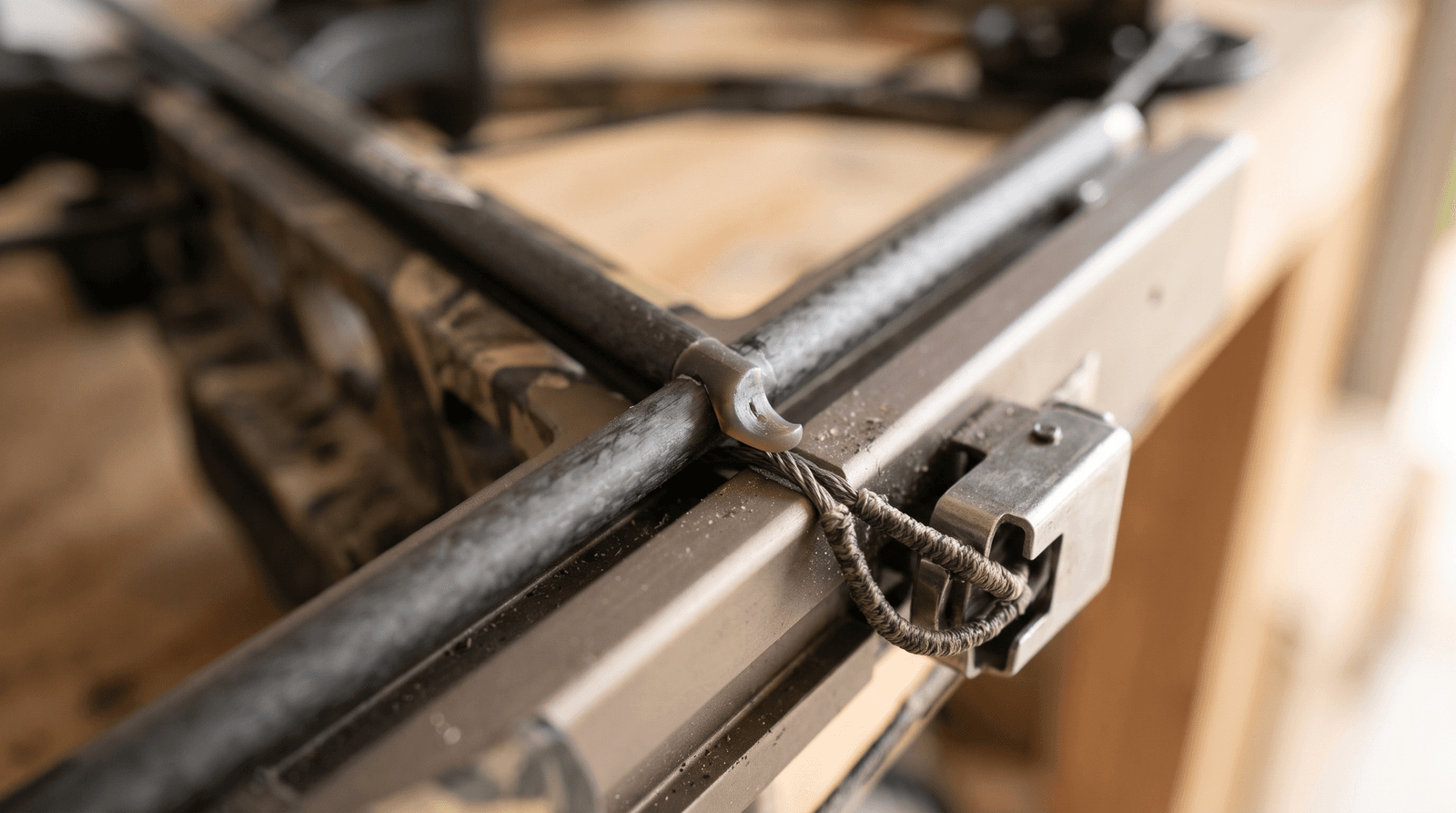
Barnett's safety page specifies arrows with moon or half-moon nocks. A flat nock or the wrong nock profile may not engage the ADF properly, and worse, may not hold the string correctly at release. If you bought aftermarket bolts, check the nock before you look anywhere else.
The crossbow is not fully cocked
If one side of the string did not latch, the trigger and safety may not behave normally. Look at the string from above: it should sit evenly in the latch. If it does not, do not try to fire it or push the string into place with your fingers. Keep the muzzle pointed at a safe backstop and follow your manual's procedure for an incompletely latched string; if the manual does not cover it, contact Barnett before doing anything else.
Arrow Weight and Nock Problems
Barnett's FAQ calls arrows "the biggest factor in accuracy", and they are also the biggest source of damage claims. Its current FAQ sets a 400-grain minimum total arrow weight and says never to shoot anything under 380 grains, including the 100-grain point. Below that, the limbs do not have enough mass to push against, and the shot can act like a dry fire, which Barnett says can damage the crossbow and voids the warranty.
That rule catches people who buy light bolts for speed. A lighter arrow does leave faster, but the energy that does not go into the arrow goes back into the limbs, cams and string. If you want to see how arrow weight trades against FPS, put both weights into the kinetic energy calculator and compare.
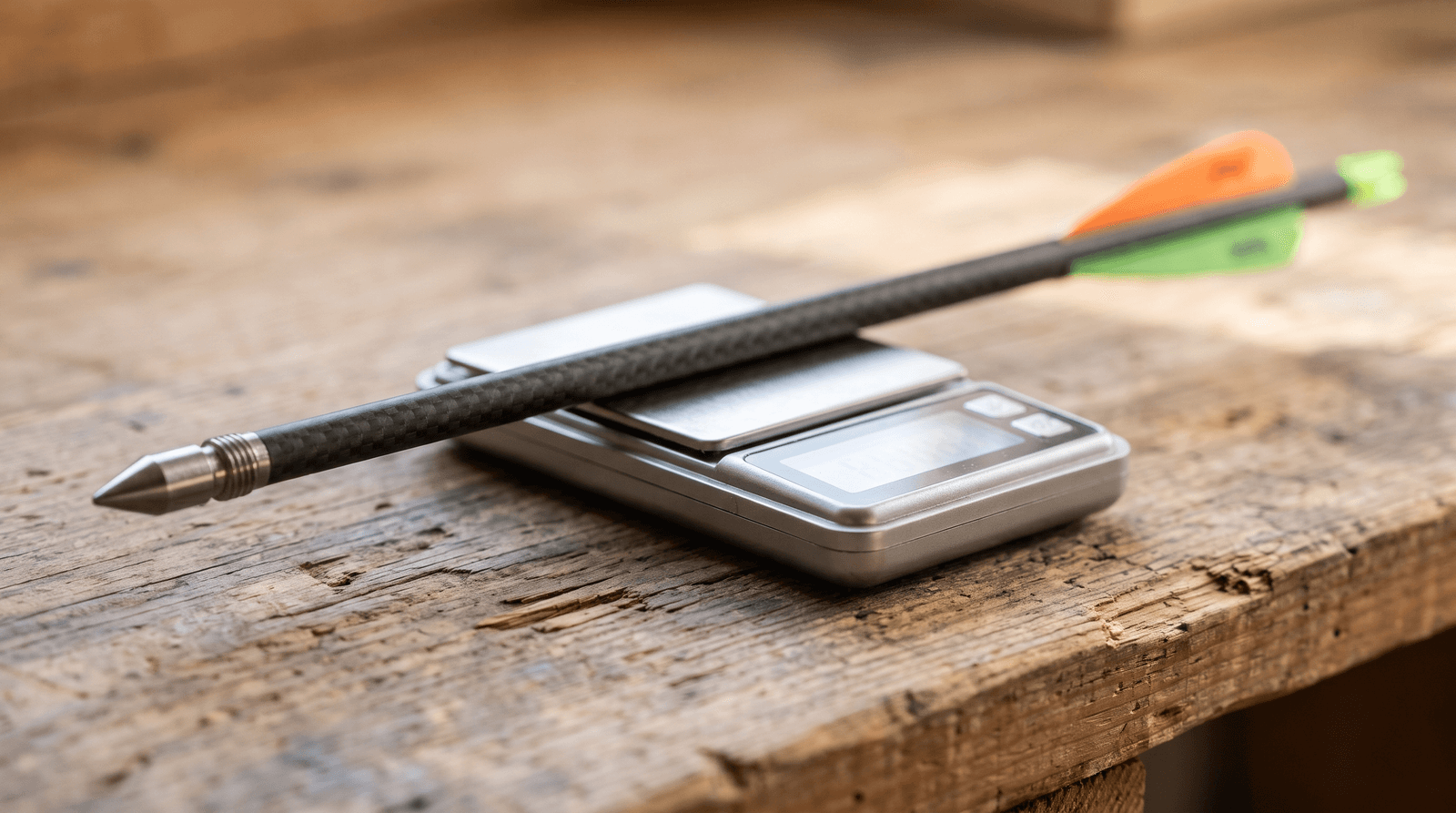
A quick check you can run at home:
- Weigh one complete arrow with the point you hunt with, on a grain scale.
- Confirm the total is at or above your manual's minimum (400 grains in Barnett's current FAQ).
- Check the length matches the manual for your model.
- Confirm the nock is moon or half-moon, undamaged and fully seated in the shaft.
- Make sure every arrow in the quiver is the same length, spine and weight.
For a full walkthrough of shaft spine, weight and nock types, see how to choose crossbow bolts.
Barnett Crossbow Shooting Left or Right
Horizontal misses are the most common Barnett accuracy complaint, and Barnett's own FAQ names the cause: cocking the string off center. It says an offset of just 1/8 inch at the latch can throw the arrow several inches downrange. A string that latches "favoring one side" points to the same problem.
The fix costs nothing:
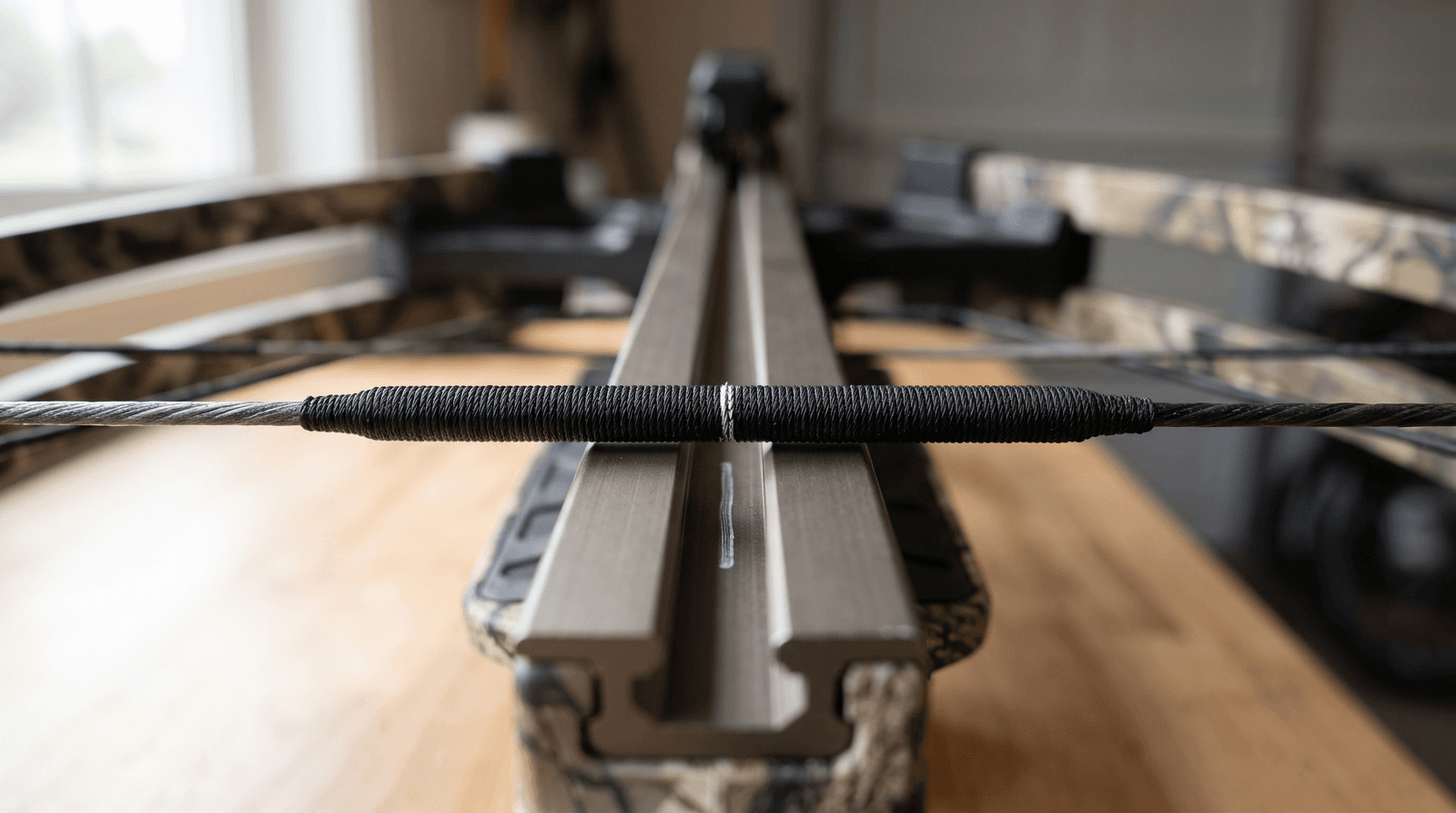
- Find the center of the string's center serving and mark it with a fine permanent marker.
- Each time you cock, check that the mark sits in the middle of the flight track before the string latches.
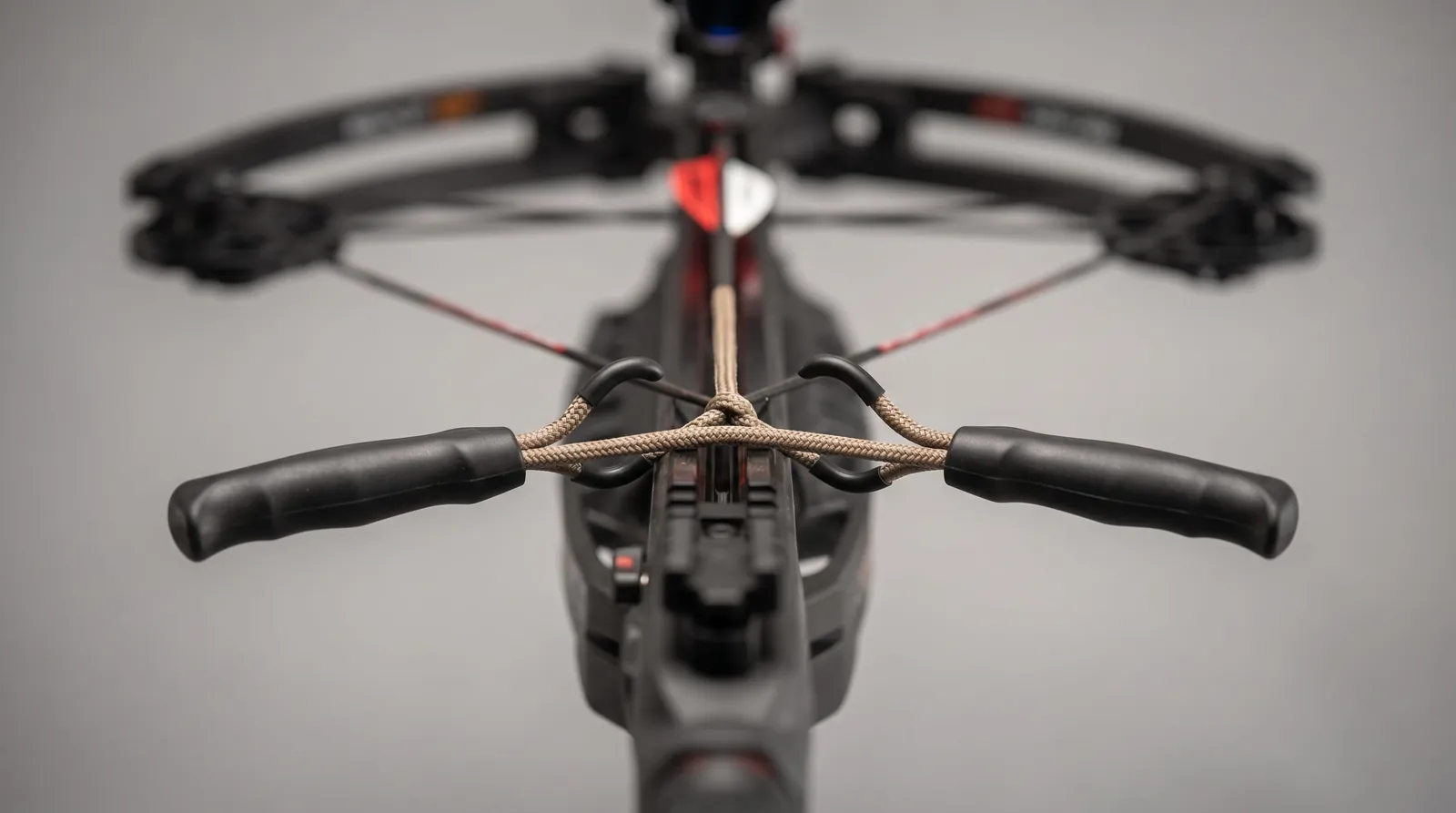
- Pull both rope handles evenly and at the same speed, keeping your hands level.
- Use the rope guide if your model has one. Barnett calls its version Rope-Hold, and on the Wildcat CRX it made my cocking more repeatable.
If the arrows still drift with careful cocking, the limbs may be out of tiller (the limb-to-string distance differs between sides). Barnett says factory tiller is preset and directs owners to a dealer for adjustment. Do not try to correct it yourself. For other causes of sideways misses, see why a crossbow shoots high, low, left or right.
Shooting high or low
Vertical misses are usually a sight question. Zero with the arrows and point weight you actually shoot, and do not mix arrow lengths or shaft sizes in the same quiver. If field points group and broadheads do not, Barnett's FAQ says some broadheads plane (their blades steer the arrow) and the fix is a different broadhead, not a sight change. It also advises against fixed-blade heads wider than 1 3/16 inch. My guide to sighting in a crossbow scope covers the zeroing process, and the bolt drop chart shows how much your arrow falls at each distance.
Cocking Problems and Heavy Draw Weights
Barnett's cheaper models often pair a high draw weight with a rope cocker as the only aid in the box. On the Wildcat CRX I reviewed, that was 195 lbs, and its ease-of-cocking score was its weakest category. The Hyper Whitetail 410 draws 190 lbs, which its included rope-cocking sled brought to about 95 lbs of felt effort in my testing.
The problem is not the rope; it is fatigue. When you tire, you pull unevenly, and that leads straight back to off-center cocking. A few practical rules:
- Run your model's draw weight through the cocking effort estimator before buying, not after.
- Keep the rope in the same pack pocket every time. A loose rope is easy to forget, which was one of my notes on the Barnett rope cocking device.
- Check the compatibility list. Barnett's premium rope cocker is not made for its Reverse Draw Cam or Hyper Raptor models.
- If a rope is too much, Barnett lists a compatible crank for some models, such as the Explorer crank for the Recruit XP. My guide on how to cock a crossbow compares rope, crank and integrated systems.
String and Cable Wear
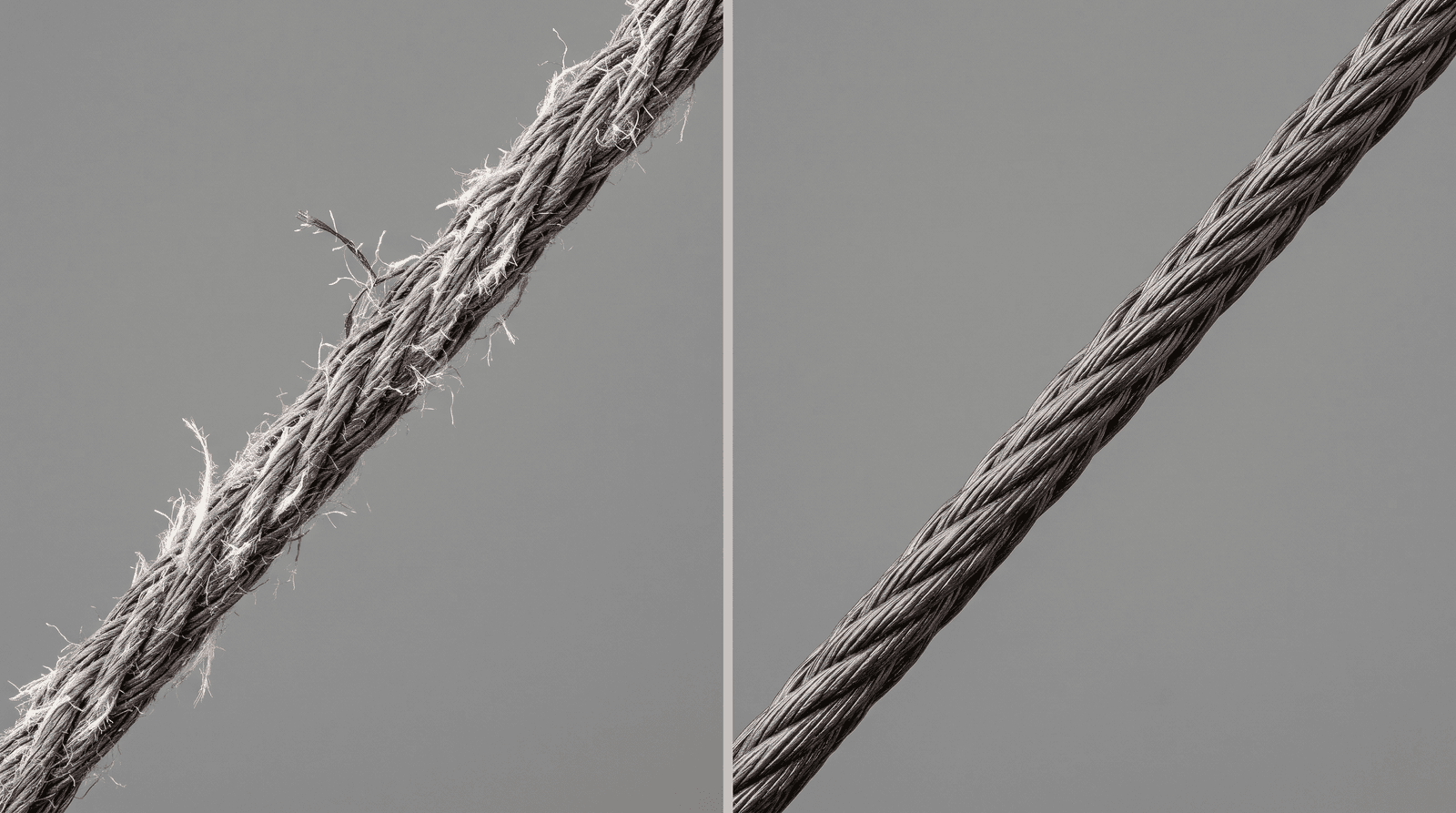
Barnett's strings and cables are wear parts, and they are excluded from the warranty. Most early fraying comes from too little wax or from a burr rubbing the string.
Barnett's waxing intervals
Barnett gives different numbers in different places, so here is what its own pages say:
| Where | What to lubricate | Interval Barnett gives |
|---|---|---|
| Safety page | String and cables | Every 5 to 10 shots, or when white fuzz appears |
| FAQ | Flight track | Every 5 to 10 shots |
| FAQ | Cable slide or Teflon tape | Every 20 to 30 shots |
| FAQ | Non-served cable areas | Every 30 to 50 shots, sooner after moisture or white fuzz |
If you shoot a lot of practice arrows, the short end of each range is the safer habit. Wax after any rain or heavy dew, even if you did not shoot much.
When to replace the string
Barnett does not publish one fixed replacement interval, and its own FAQ documents give different minimum shot counts. The rule that does not change is on its safety page: if you see fraying, replace the string or cable before you shoot again. Also check for a worn spot where the nock contacts the serving, because Barnett lists a worn string as a cause of the string jumping over the arrow.
Recurve strings can be changed at home with a stringer, following the manual. Compound models with synthetic cable systems need a bow press, so that job belongs with a dealer or Barnett. Use a correctly sized string: Barnett links a wrong-size string to a loss of power. The maintenance guide linked below has the general inspection routine.
De-Cocking a Barnett Safely
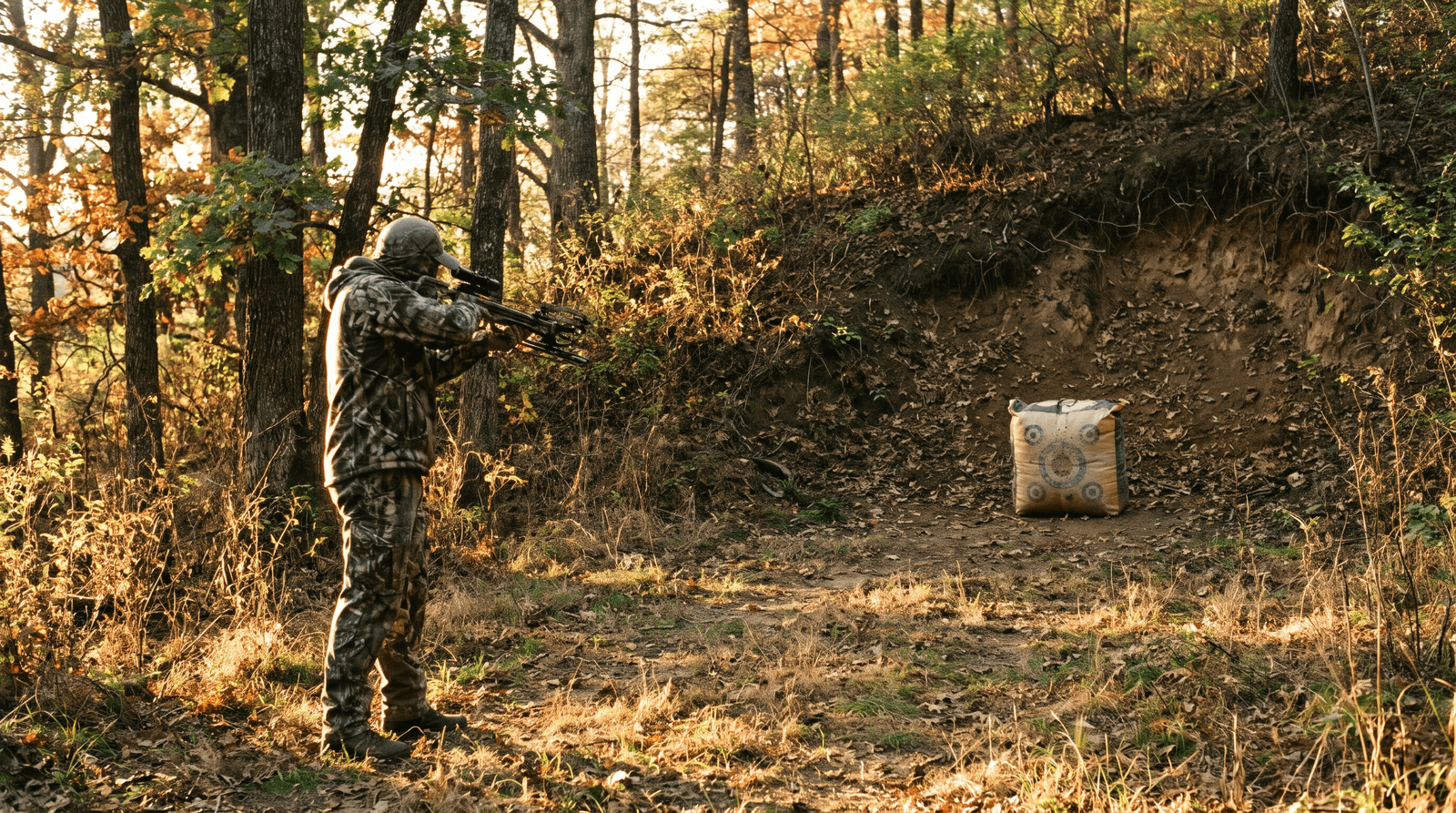
This is where many owners make a dangerous mistake. Barnett's safety page says the only way to de-cock most of its crossbows is to shoot an arrow into a safe target, and it warns never to lower the string by hand or with a rope cocking device.
The exception is a model with an integrated de-cocking system. The Hyper Raptor T-Rex has Barnett's Integrated Planetary De-cocking System, which lowered the string safely in more than 40 cycles during my testing. If your model has one, follow its manual. If it does not, carry a practice arrow with a field point and a target rated to stop your crossbow, with a known safe area behind it, for the end of your hunt. Never dry-fire it, and never shoot into a soft or improvised backstop.
Barnett's FAQ adds two habits worth keeping:
- Do not walk or stalk with the crossbow cocked; uncock before you climb down or move.
- Do not leave it cocked for more than four continuous hours. Let it down and rest it for about half an hour.
Full steps are in my guide to how to de-cock a crossbow safely.
Problems That Need Barnett's Service Department
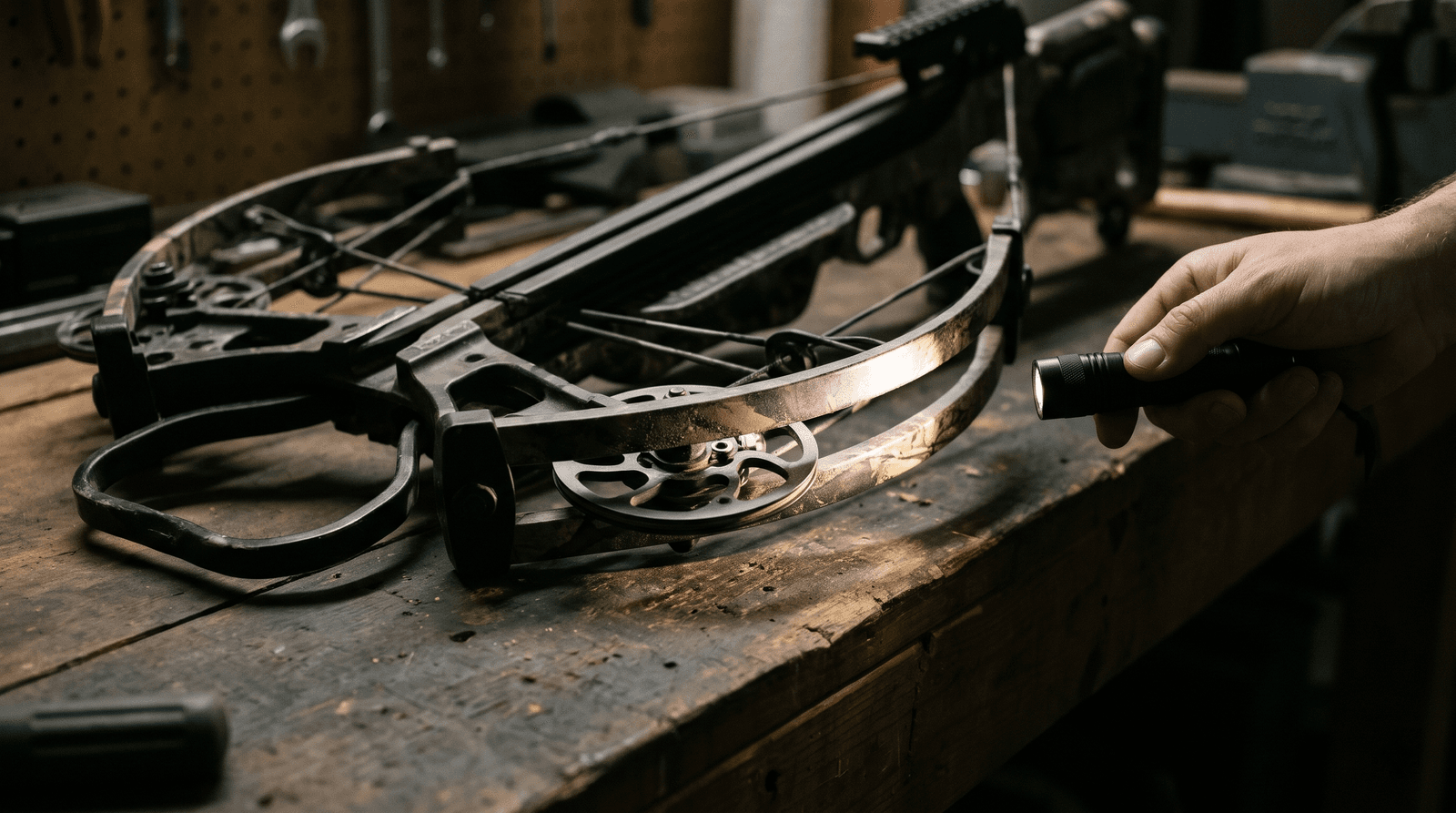
Some problems are not home repairs. Stop shooting and contact Barnett if you see any of these:
- The crossbow fired unexpectedly or released with the safety on.
- A cracked, chipped or delaminating limb, or a bent cam. Barnett says a dry fire can cause both.
- A string or cable that has cut strands or has come off a cam.
- A trigger that stays blocked with a correct arrow, fully seated, on a fully cocked crossbow.
- Any crossbow that has been dry-fired. Barnett says it must be inspected by a qualified Barnett service representative before further use.
Barnett's FAQ asks you to get a return authorization (RA) number from its service department first, and it states that boxes arriving without the RA number on the outside are refused. Shipping both ways is at the owner's cost under the warranty terms.
Is there a Barnett crossbow recall?
There has been at least one. In December 2016 the U.S. Consumer Product Safety Commission announced a recall of about 3,300 crossbows, including the Barnett Ghost 415 (Monochrome and Mossy Oak), Razr and Razr Ice and two Browning-branded models, because the arrow-detection sensor could fail and let the crossbow fire unexpectedly. Barnett received three reports and one hand laceration, and the remedy was a free replacement trigger. If you own an older Barnett, check the model number on the limbs and search the CPSC recall database for it.
Barnett Warranty: What Is and Isn't Covered
Many "Barnett won't honor my warranty" complaints come down to the fine print. Barnett's published warranty covers the stock, trigger mechanism and limbs against defects in materials and workmanship, for the original owner. It excludes strings, cables, arrows, accessories, finish damage and normal wear.
The warranty is void if:
- the crossbow was dry-fired, or shot with arrows or nocks other than those recommended;
- any part was modified, or a safety feature was disabled or removed;
- damage came from misuse, neglect or skipped maintenance;
- the crossbow was not registered in time.
The registration window is the detail to watch. Barnett's warranty document says 60 days, while its online FAQ says 10 days. Register the day you buy it and the difference does not matter. Coverage length varies by model, so check your manual. On the Wildcat CRX, Barnett's product page gave no warranty terms at all, which I noted as a drawback in that review.
Read nextBuild a maintenance routineA short inspection and waxing schedule prevents most of the problems above.Common Mistakes Barnett Owners Make
These are the habits behind most of the problems in this guide:
- Buying light bolts for speed. It can mimic a dry fire and void the warranty.
- Mixing arrow brands and lengths in one quiver, then blaming the sight.
- Cocking fast when tired, so the string latches off center.
- Waxing "when I remember" instead of on a shot count.
- Lowering the string by hand or with the rope cocker.
- Leaving it cocked all day in the stand.
- Not registering the crossbow, then finding out after a limb problem.
- Using a rope cocker on a model it doesn't fit, such as Barnett's Reverse Draw Cam or Hyper Raptor crossbows.
Barnett Pre-Shot Checklist
Run this before each session. It takes about two minutes.
- Inspect the string and cables for fuzz, fraying or cut strands.
- Check the limbs and cams for cracks, chips or bends.
- Wax according to your shot count.
- Confirm every arrow meets the weight, length and nock rules in your manual.
- Check that your center-serving mark is visible.
- Cock evenly, then check the string is centered and latched on both sides.
- Seat the arrow fully against the string.
- Keep the safety on until you are on target.
- Have a rated discharge target ready for de-cocking.
If you are newer to crossbows, my crossbow safety rules for beginners cover the handling side in more depth.
Are Barnett Crossbows Reliable?
In my reviews, the problems I found were mostly compromises of price, not defects. The Hyper Raptor T-Rex chronographed at 435–443 FPS against a 440 FPS rating and its de-cocking system did not fail across 40+ cycles. The Hyper Whitetail 410 measured 404–412 FPS against a 410 rating, though its groups opened up past 40 yards and its stock and rail flexed more than premium crossbows. The Wildcat CRX's main drawbacks were a heavy 195 lb draw and thin warranty paperwork.
That pattern matters when you read complaints online. Many Barnett owners buy the brand's budget packages, and heavy draw weights, rope cocking and basic optics create problems that a more expensive crossbow would hide. If you are deciding whether a Barnett suits you, compare it with other options in the compound crossbows and recurve crossbows hubs.
Frequently Asked Questions
Why won't my Barnett crossbow fire?
Usually the safety is still on, the arrow is not pushed fully back against the string, or the nock is not a moon or half-moon type. Barnett's anti-dry-fire trigger blocks the shot until the arrow is seated correctly. Never force the trigger.
What arrow weight do Barnett crossbows need?
Barnett's current FAQ calls for a total arrow weight of at least 400 grains, including the point, and says never to shoot anything under 380 grains. Lighter arrows can act like a dry fire, damage the crossbow and void the warranty. Always confirm your model's figure in its manual.
Why does my Barnett shoot to the left or right?
The most common cause is cocking the string off center. Barnett says a 1/8-inch offset can move impact several inches downrange. Mark the center serving, pull the rope evenly and check the mark before the string latches. If it persists, a dealer can check the tiller.
How often should I wax a Barnett crossbow string?
Barnett's safety page says to wax the string and cables every 5 to 10 shots, or when white fuzz appears. Its FAQ adds the flight track every 5 to 10 shots, cable slides every 20 to 30 and non-served cable areas every 30 to 50, sooner after moisture.
Can I de-cock a Barnett crossbow without shooting it?
Only if your model has an integrated de-cocking system, such as the Planetary De-cocking System on the Hyper Raptor T-Rex. For other Barnett models, the company says to shoot an arrow into a safe target and never to let the string down by hand or with a rope cocker.
Does the Barnett warranty cover strings and cables?
No. Barnett's warranty excludes strings, cables, arrows, accessories and normal wear. It covers the stock, trigger mechanism and limbs against manufacturing defects for the original owner, and it is void after a dry fire, modification or failure to register.
How long do I have to register a Barnett crossbow?
Barnett's sources disagree: its warranty document says 60 days and its online FAQ says 10 days. Register on the day you buy it and you meet both. Unregistered crossbows can lose warranty coverage entirely.
Has Barnett recalled any crossbows?
Yes. In December 2016 the CPSC announced a recall of about 3,300 crossbows, including Barnett Ghost 415, Razr and Razr Ice models, because the arrow sensor could let them fire unexpectedly. The remedy was a free replacement trigger.
Bottom Line
Most Barnett crossbow problems are preventable. Shoot arrows that meet Barnett's weight and nock rules, cock evenly with a marked center serving, wax on a shot count, de-cock into a target unless your model has a built-in system, and register the crossbow the day you buy it. Treat an unexpected release, a cracked limb or any dry fire as a stop-shooting event and call Barnett.
If your Barnett is new to you, start with its full review on this site for model-specific notes, then keep a maintenance routine going all season.
Gear mentioned in this guide
Reviews we link to above, highest rated first. Read the full review before you buy.
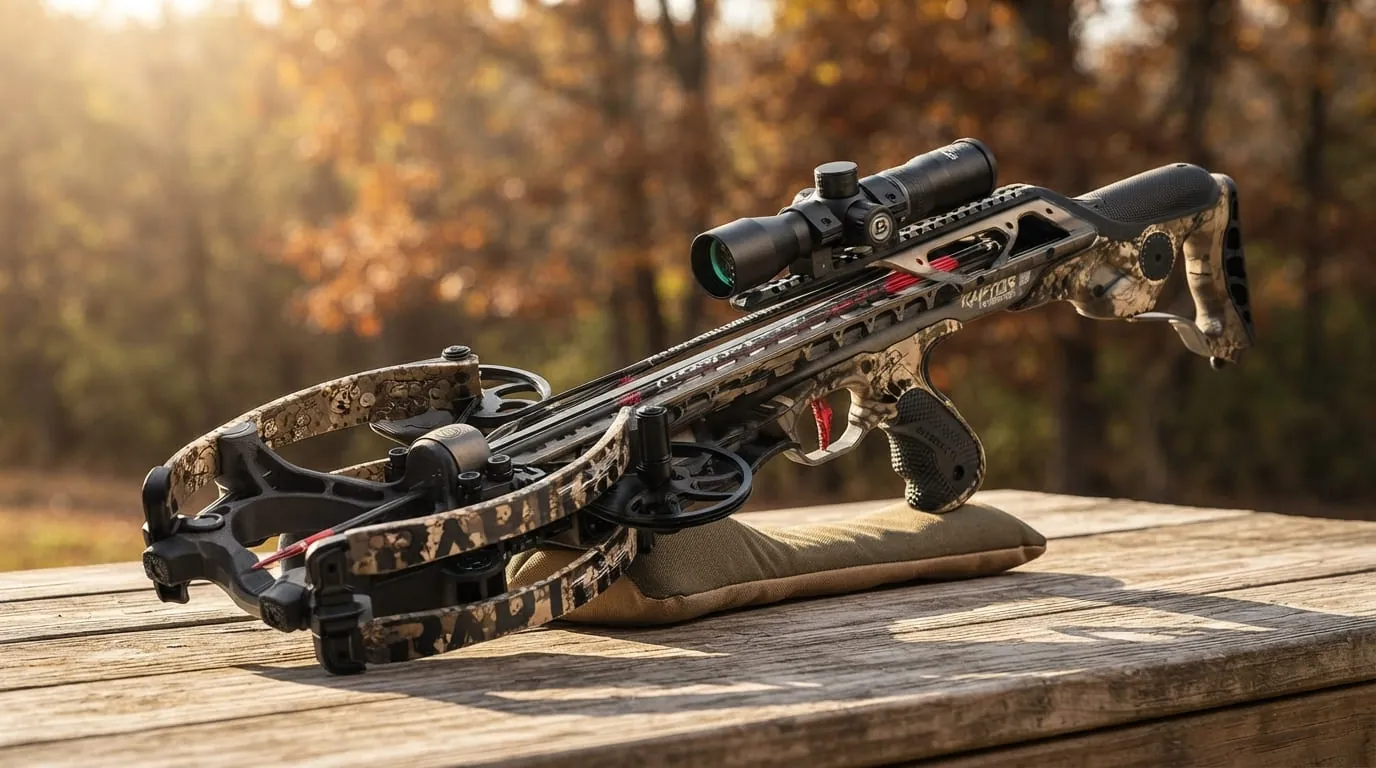
Barnett Hyper Raptor T-Rex Review
High-speed compound crossbow measured at 435–443 FPS, with a crisp premium trigger and reliable de-cocking for well under flagship prices.
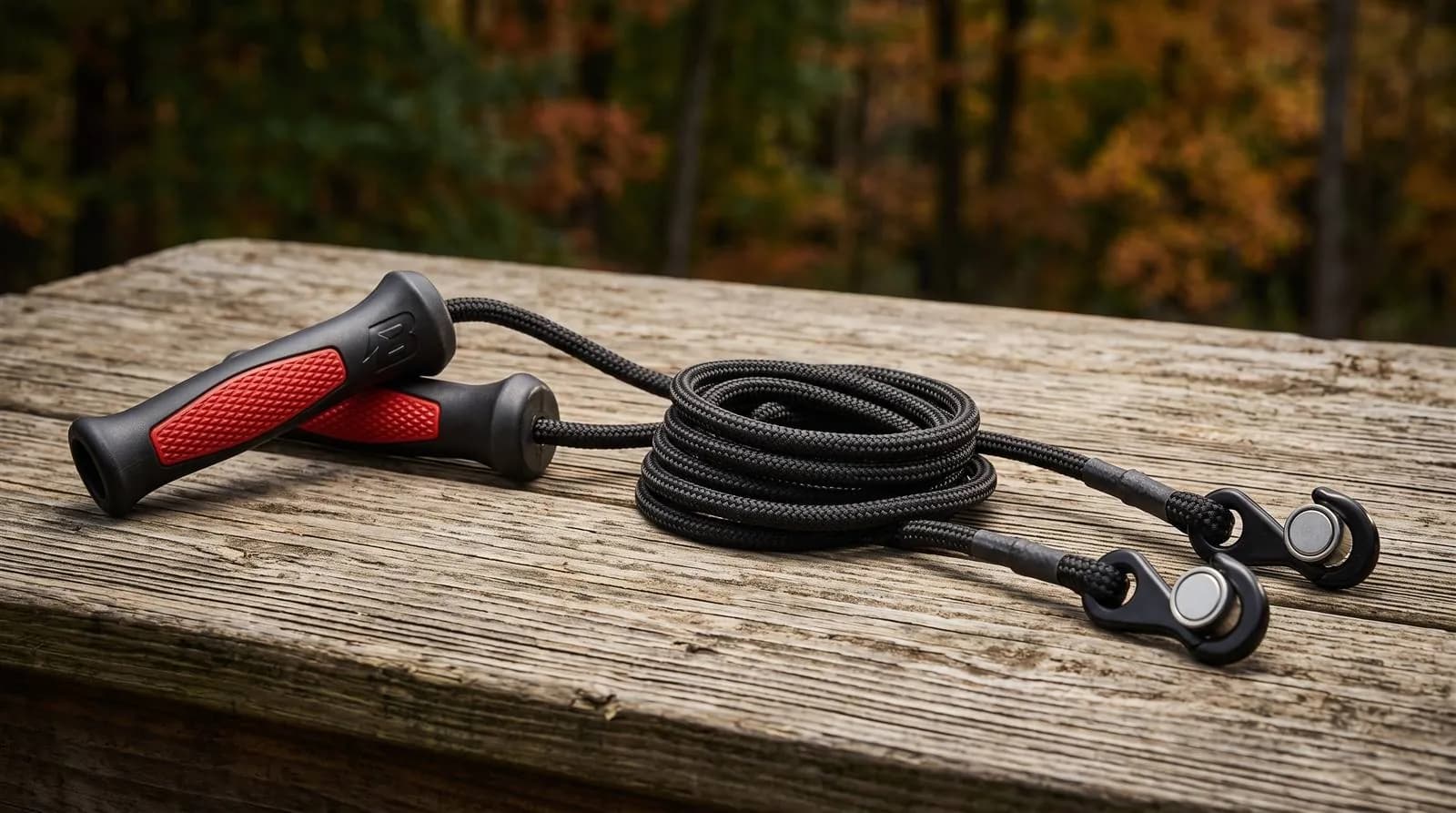
Barnett Rope Cocking Device Review
Padded rope cocking aid that roughly halves draw effort on compatible standard-draw Barnett crossbows. Not for Reverse Draw Cam or Hyper RAPTOR models.
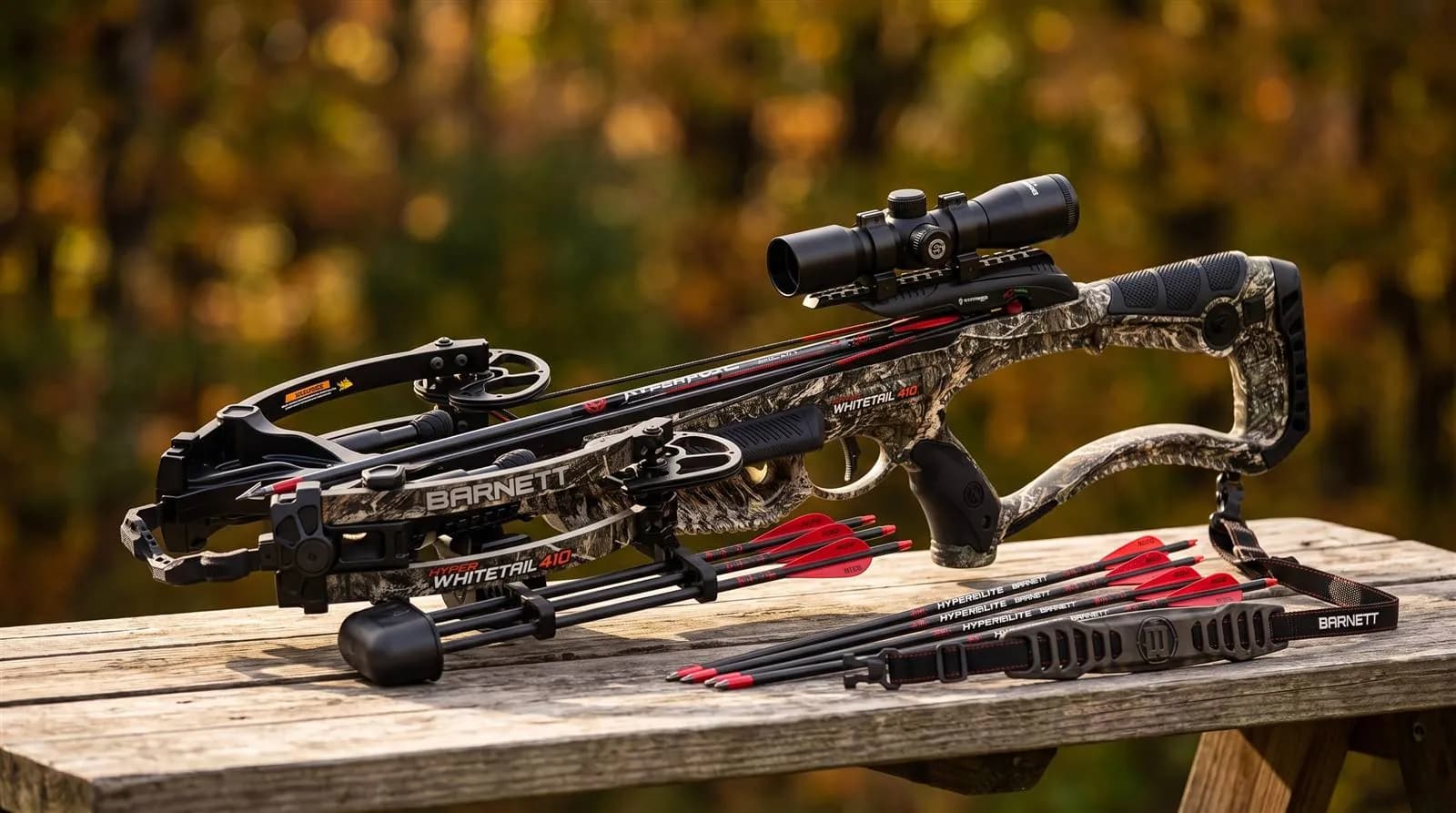
Barnett Hyper Whitetail 410 Review
Hunting-ready compound crossbow package that matched its 410 FPS rating. Scope, bolts and cocking aid included; groups hold up best inside 40 yards.
Ready to compare models? Read our tested crossbow reviews to see how each one measured up in testing.
More in Maintenance & Troubleshooting
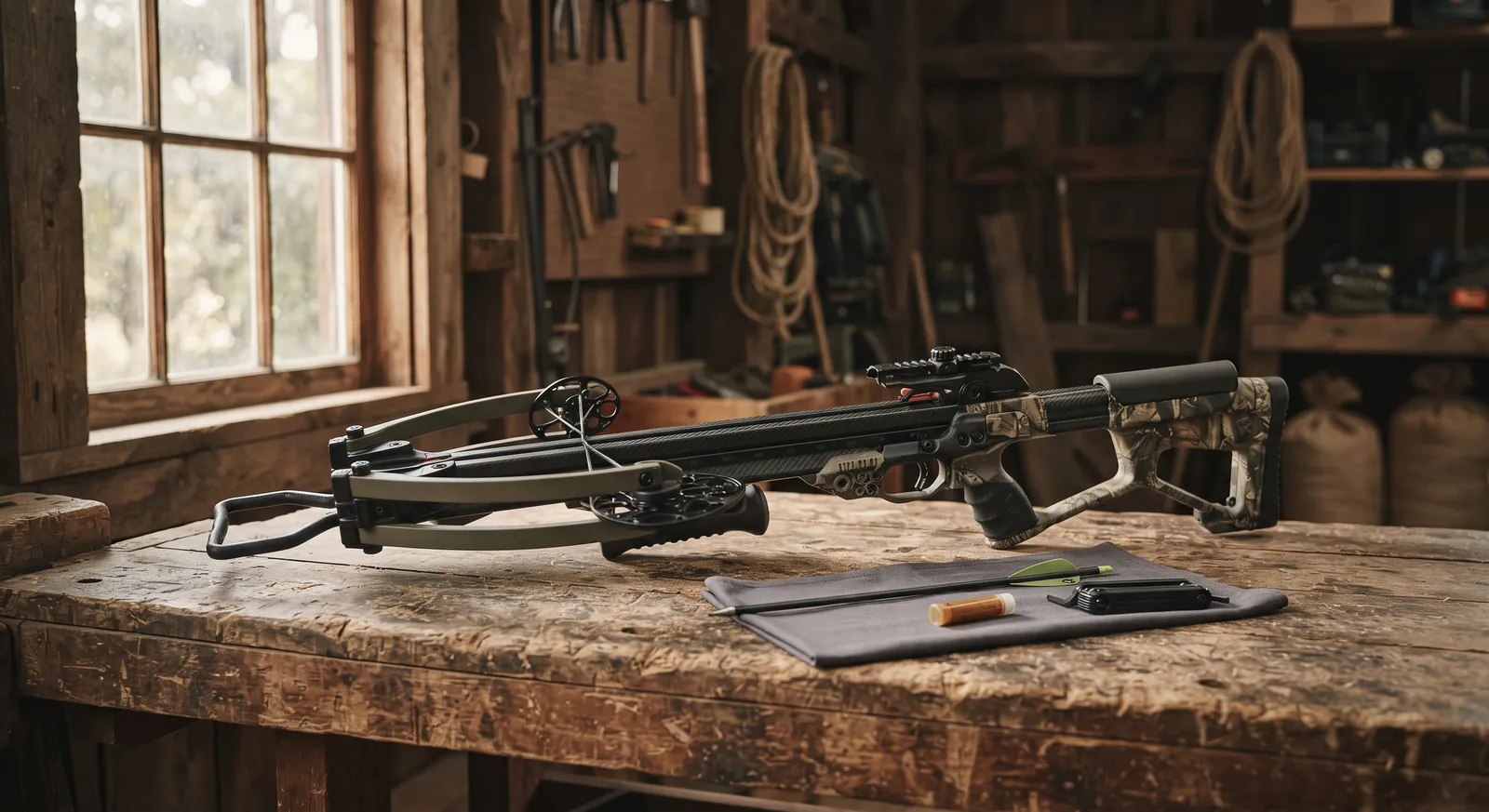
Crossbow Won't Fire? Problems & Fixes
A diagnosis table for a crossbow that won't fire: safety on, unseated bolt, wrong nock, bolt specs, retention spring and trigger problems, and when to stop.
Read guide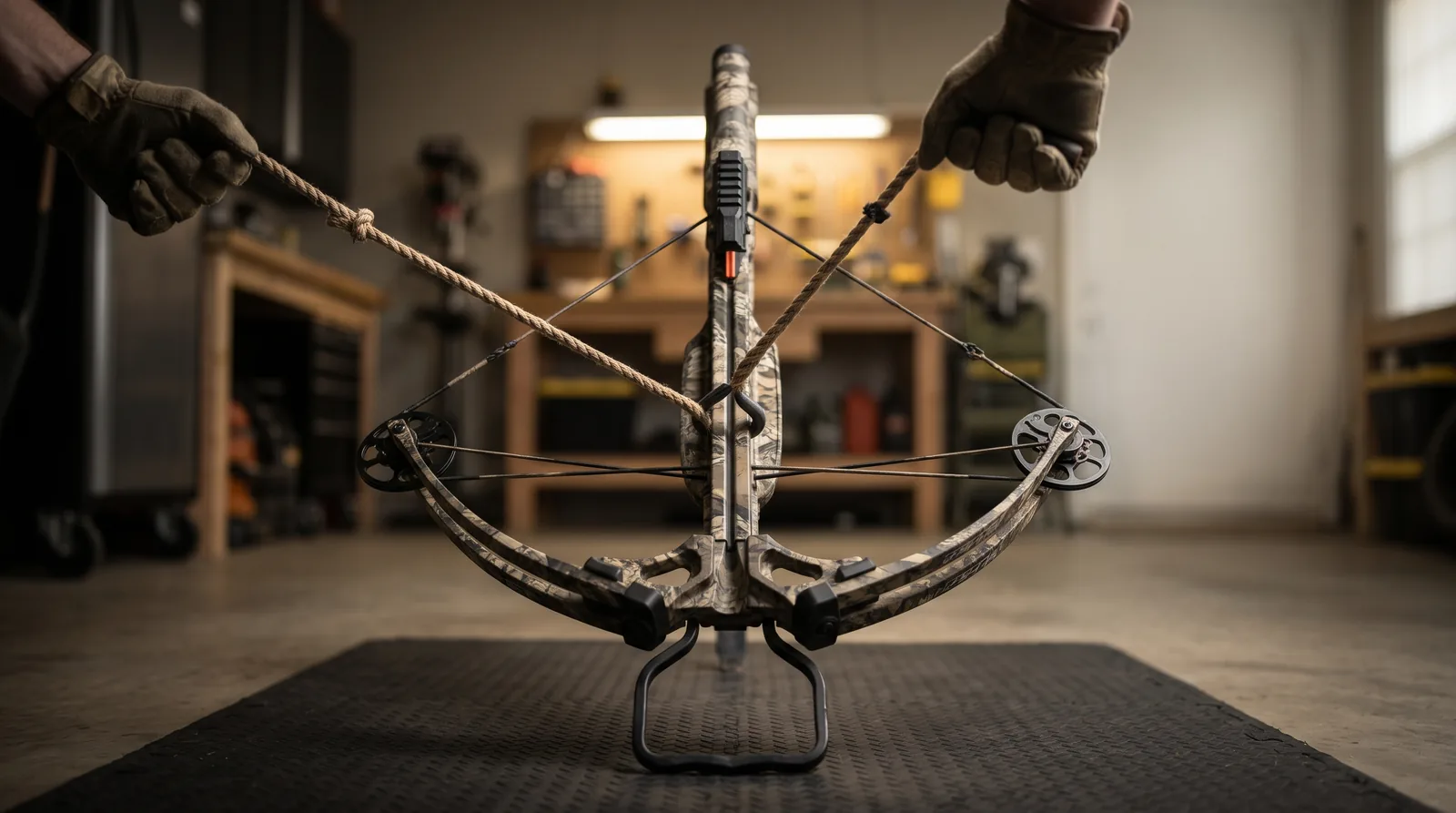
Crossbow Not Cocking? Causes and Safe Fixes
A symptom-first fix guide for a crossbow that won't cock: no click, safety won't set, string stuck on the dry-fire catch, crank or rope trouble, and when to stop.
Read guide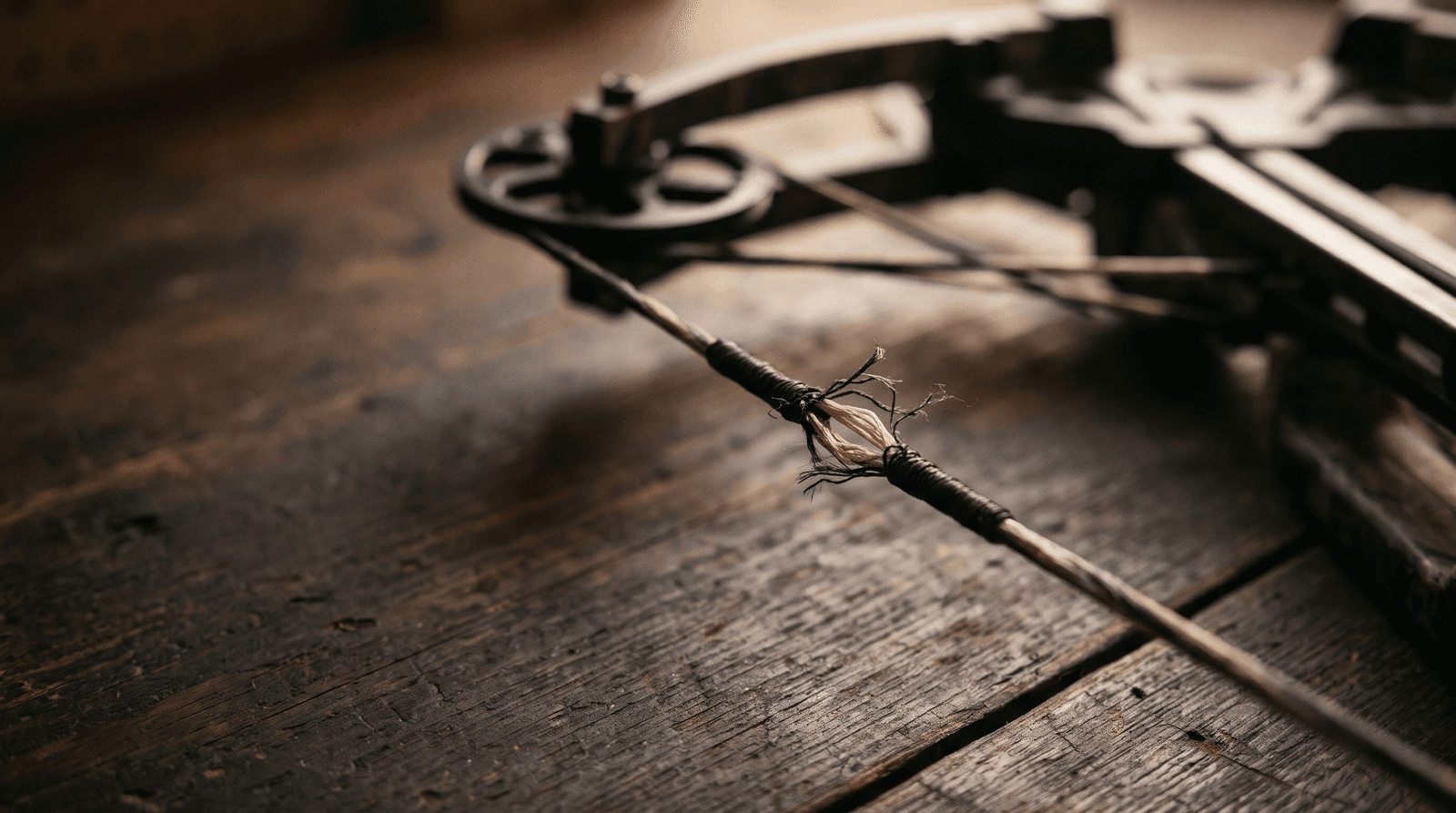
Crossbow Serving Separation & String Damage
A damage-by-damage guide to crossbow strings, servings and cables: what separation, fraying and broken strands mean, the causes, and when to stop shooting.
Read guide