Crossbow Nock in plain terms
Crossbow Nock meaning: A nock is the rear end of a crossbow bolt that engages the string, made in flat, half-moon, capture and lighted styles.
Also called: moon nock, half-moon nock, flat nock, capture nock, crossbow bolt nock
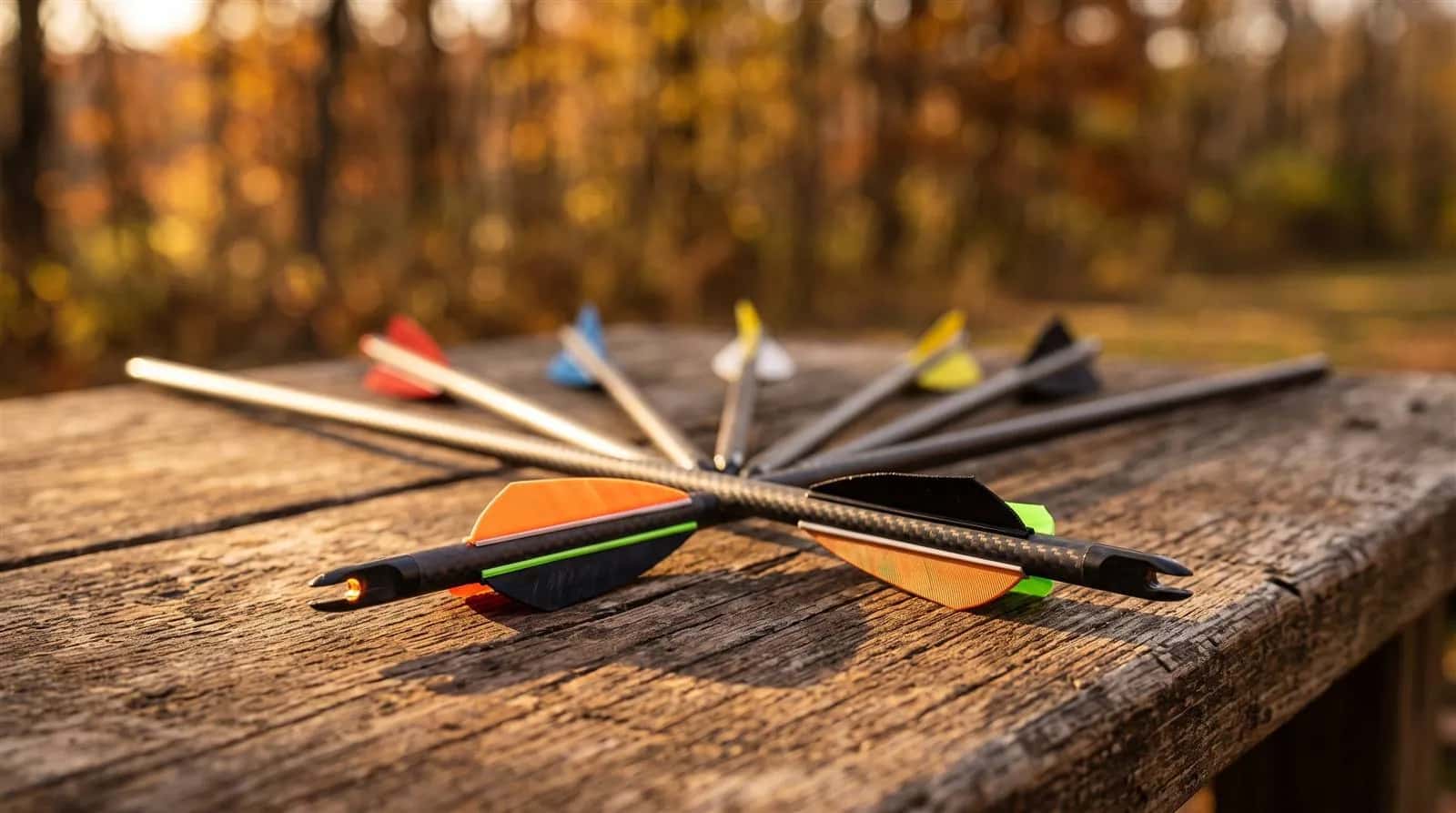
A nock is the piece at the back of a bolt that sits against the string, holds the bolt in position on the rail and transfers the string's push into the shaft. It looks small, but a poor fit is a common source of wide groups and, in the worst cases, an unsafe release.
Common styles are the flat nock, the half-moon (often just "moon nock") and the capture nock, which wraps or clips around the string. A lighted nock is a nock with a built-in LED. Which style your crossbow wants is stated in the manual, and styles are not interchangeable across all crossbows. Many crossbows also use a bolt retention spring or similar feature that works with a particular nock.
Nocks are usually pressed into a nock bushing, which is a small collar (often aluminum) fitted into the carbon shaft. The bushing protects the shaft from the force of the string, and the nock sits inside it.
Crossbow nock types compared: flat, moon, capture and lighted
| Style | How it engages the string | Typically found on | Things to check |
|---|---|---|---|
| Flat nock | Flat face rests against the string | Crossbows designed around a flat-face nock | Orientation of the vane relative to the rail |
| Half-moon (moon) nock | Curved face cradles the string | Many standard crossbows, including the REEGOX bolts | Correct size for the string diameter |
| Capture nock | Clips around the string | Platforms built to hold the bolt on the string | Must match the crossbow design |
| Universal system | Accepts more than one nock style | Carbon Express PileDriver (moon and C-Nock) | Check seating on your specific crossbow |
| Lighted nock | Moon or capture shape with an LED | Ravin R133 and TenPoint lighted bolts | Battery state and platform compatibility |
Why it matters
The nock is the bolt's interface with the string. If it is too tight, the string is slowed or the bolt can leave unevenly. If it is too loose, the bolt can slip or release unevenly. Either way, group size and safety suffer.
Nock fit also decides compatibility. A bolt may match your length and weight limits and still be wrong because the nock does not suit your string or latch. That is why the nock appears next to length and minimum weight in any bolt-selection checklist.
How to read it on a spec sheet
- Find the nock style in the listing (flat, moon, capture, universal, lighted) and match it to the style in your crossbow manual.
- Look for "platform specific" or "not compatible with" wording. The R133 listing, for example, excludes certain Ravin series.
- Check whether the nock is press-fit or glued. Press-fit nocks can be replaced individually, which matters for repair.
- Look for a nock bushing, especially on carbon shafts, because it protects the shaft end.
- Where a listing offers several nock colors, they are cosmetic. Pick one that is easy for you to see.
Common mistakes
- Assuming all nocks fit all strings. A nock that is close but not right can cause erratic release.
- Shooting with a cracked nock. Cracks often appear after a bolt strikes another bolt, so inspect carefully after close groups.
- Forcing a nock on or pulling it off with tools that damage the shaft end. Replace with the part the maker specifies.
- Ignoring the orientation of the nock. If the manual calls for a particular alignment with the rail, follow it.
- Mixing nock styles within one set and then wondering why groups are inconsistent.
Check nock fit at home
- Read the nock style and any alignment instructions in your manual.
- With the crossbow uncocked and unloaded, compare the nock with the string as the manual describes, and check that it seats without force.
- Inspect the nock for cracks, burrs or looseness in the bushing.
- Compare the whole set. Replace any nock that looks different from the others.
- After the first practice session, inspect again for cracks or loosening.
See it in our reviews
- Carbon Express PileDriver — rated 4.2/5
- Reegox Crossbow Bolts — rated 3.9/5
- Ravin R133 — rated 4.4/5
Frequently Asked Questions
What is a nock on a crossbow bolt?
It is the rear component of the bolt that sits against the string. It positions the bolt on the rail and transfers energy from the string. Styles include flat, half-moon, capture and lighted, and you should use the one your manual specifies.
What is the difference between a flat nock and a moon nock?
A flat nock presents a flat face to the string, while a moon nock has a curved face that cradles it. Crossbows are designed around one or the other, so the manual decides which you should use, not preference.
Are crossbow nocks universal?
No. Some products, such as the Carbon Express PileDriver, use a system that accepts both moon nocks and C-Nocks, but most nocks are made for a specific style or platform. Check your manual and the compatibility notes on the bolt listing.
How do I know if a nock is damaged?
Look for cracks, chips, a loose fit in the bushing or a worn face where it touches the string. Any of these can change how the bolt leaves the crossbow. Replace damaged nocks or retire the bolt.
Can I replace just the nock?
Often yes when the nock is press-fit into a bushing, but only with the part specified for your bolt and crossbow. If the bushing or shaft end is damaged, replace the bolt. Follow the bolt maker instructions.
Why does nock orientation matter?
On many crossbows the bolt must sit with one vane or the nock slot aligned in a specific way relative to the rail. Incorrect alignment can cause contact with the rail and poor flight. Your manual states the correct orientation.
Does a lighted nock change bolt weight?
It adds some weight at the rear, which can move the balance backwards. Some makers compensate, as Ravin does with its Match-Grade design on the R133. Compare lighted and plain bolts at matched total weight.
Which nock type does my crossbow use?
The one named in your manual. Manufacturers design the string, latch and rail around a specific nock style, so the manual or the maker's own bolt listing is the only reliable source. If a third-party listing does not name the nock style, ask the seller before you buy.
Related guides
Guides where nock shapes a real choice.
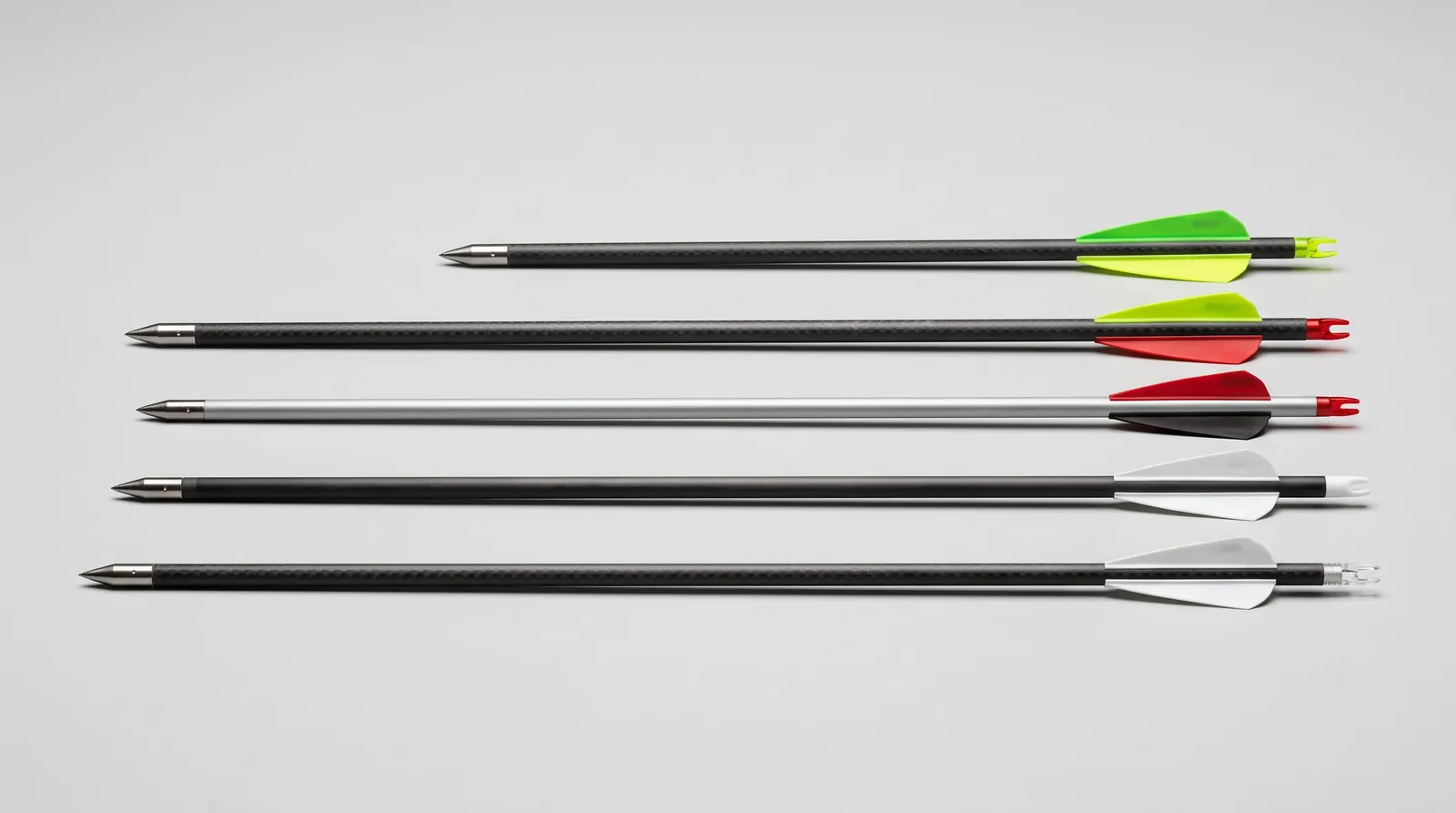 GuideHow to Choose Crossbow Bolts in 2026: Sizing GuideA six-step method for choosing crossbow bolts by length, grain weight, nock and spine, with a size chart and a worked example.Read the guide
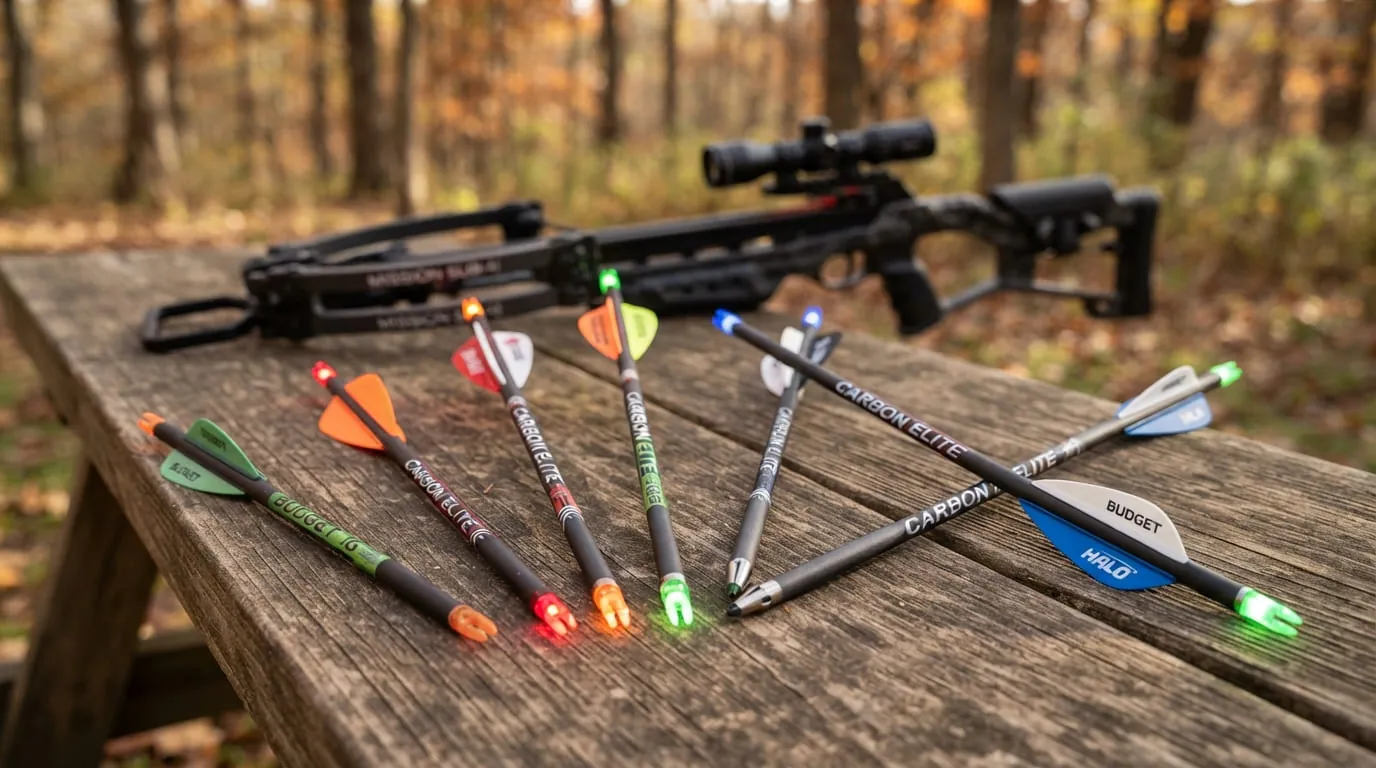 GuideBest Crossbow Bolts in 2026 for Hunting and PracticeCrossbow bolts for hunting and practice compared by grain weight, length, nock and straightness, from 12-pack practice bolts to weight-matched carbon.Read the guide
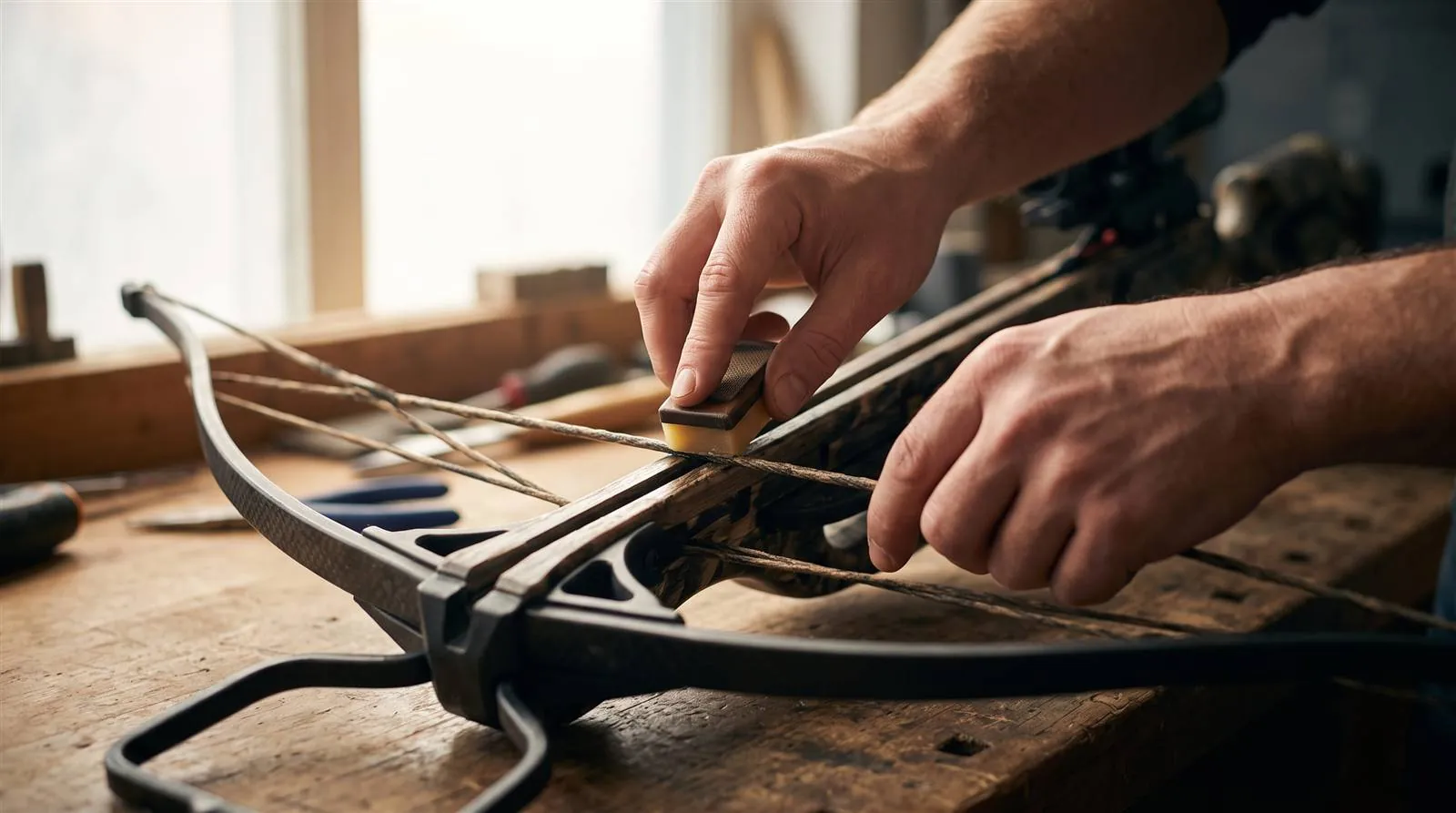 GuideCrossbow Maintenance: Wax, Lube, StoreA crossbow maintenance schedule covering the five-minute pre-shoot check, string waxing, rail lubrication, limb and cam inspection, and storage.Read the guide
Definitions are general information. Manufacturer figures vary, so follow your crossbow's manual and verify local laws with the relevant authority.