Crossbow Accessories Reviews 2026
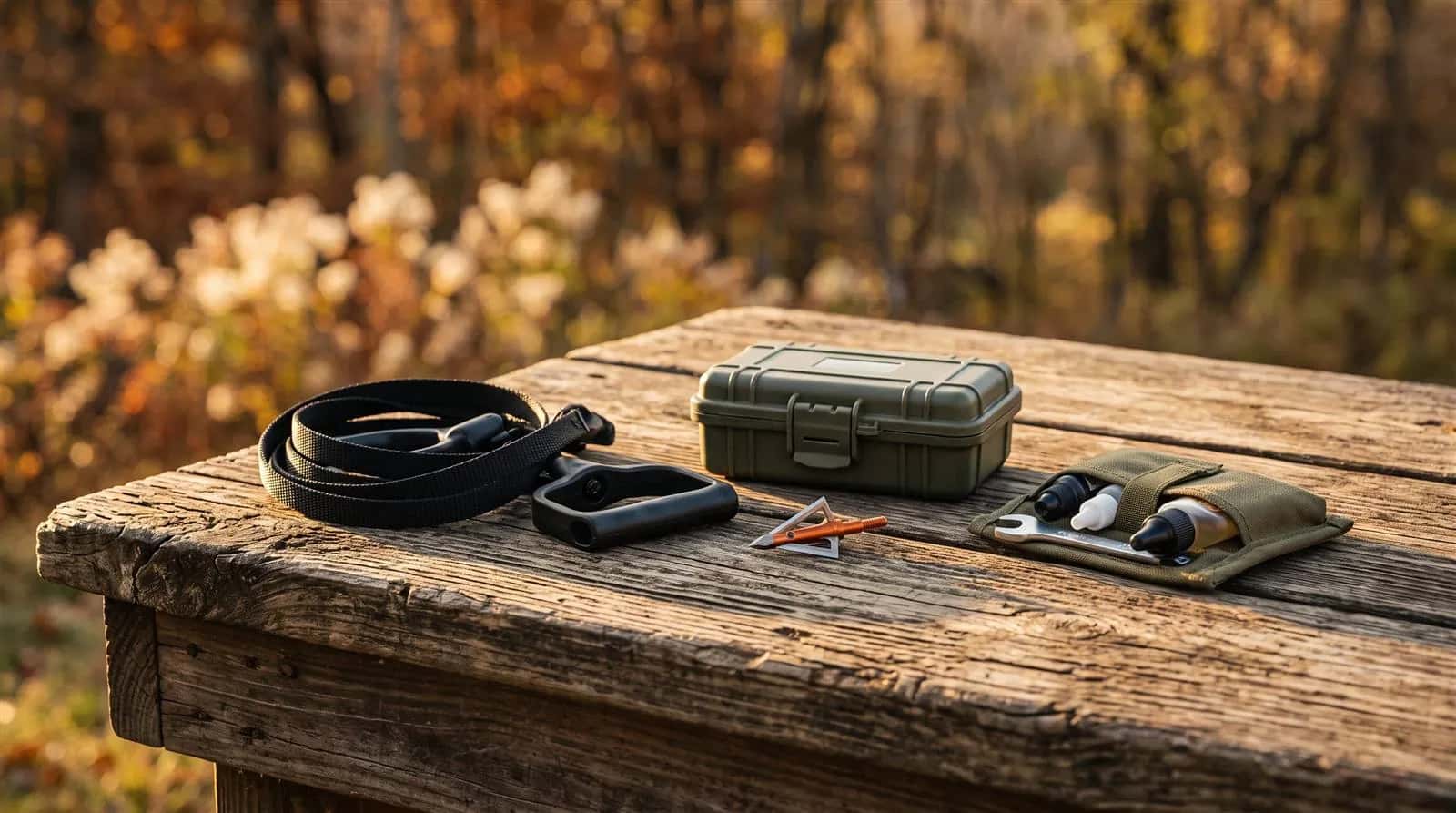
Accessories decide how easy a crossbow is to cock, how consistent each shot is and how long the gear lasts. This hub explains cocking aids and broadheads, compares the four accessories I have reviewed, and flags what to check first.
- 4.4/5
- Average rating
Pre-purchase checklist
- Write down your crossbow's exact model and draw weight.
- Check the cocking aid's excluded-model list against it.
- Decide between a rope (low cost, separate) and a crank (higher cost, built in).
- Check your crossbow's speed against any broadhead rating.
- Match broadhead weight to your field points.
- Buy string wax and rail lubricant.
- Read the safety rules for beginners.
- Verify local hunting equipment rules with your wildlife agency.
Start here
Ranked and compared
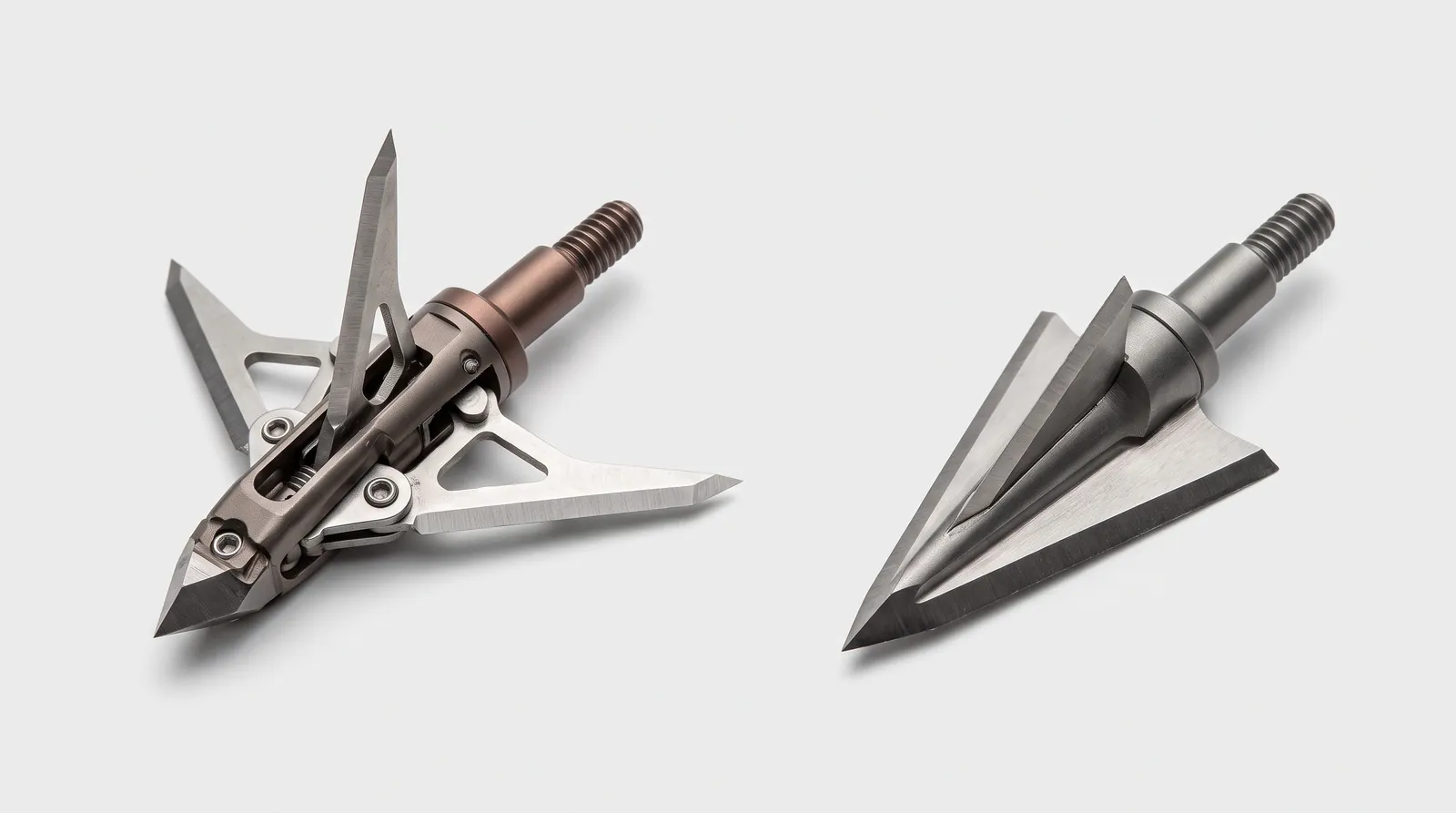 Ranked & comparedBest Crossbow Broadheads for Deer 2026Deer broadheads compared on cutting diameter, blade design and speed rating, with notes on matching each head to your bolts and field points.See the rankings
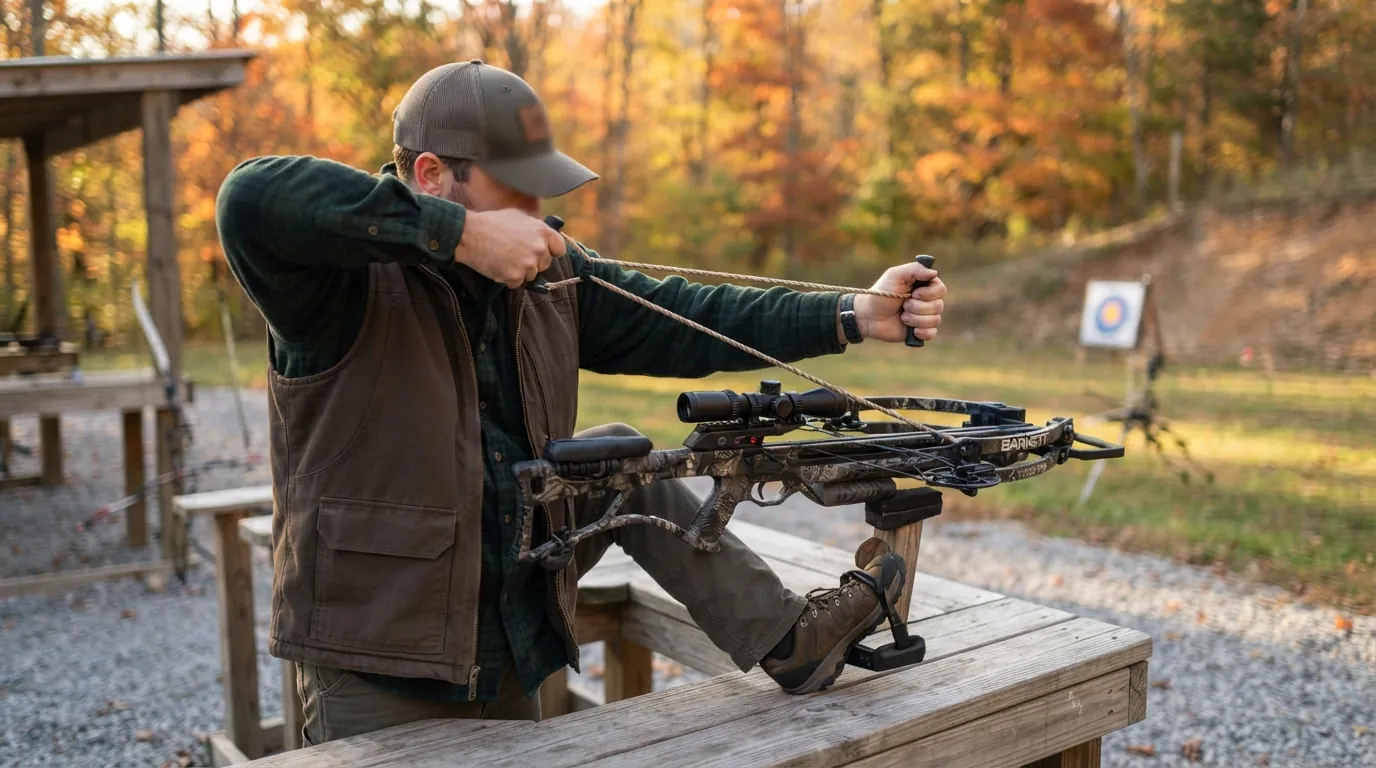 Buying guideHow to Cock a Crossbow: Rope vs CrankHand cocking, rope cocking, crank devices and integrated systems compared, with the steps that keep the string centered and your fingers clear.Read the guide
Shortcuts
Match your situation
Every model, one method
All 4 accessories reviews
Highest rated first. Scores weigh measured results against price and intended use; each review names who should look elsewhere.
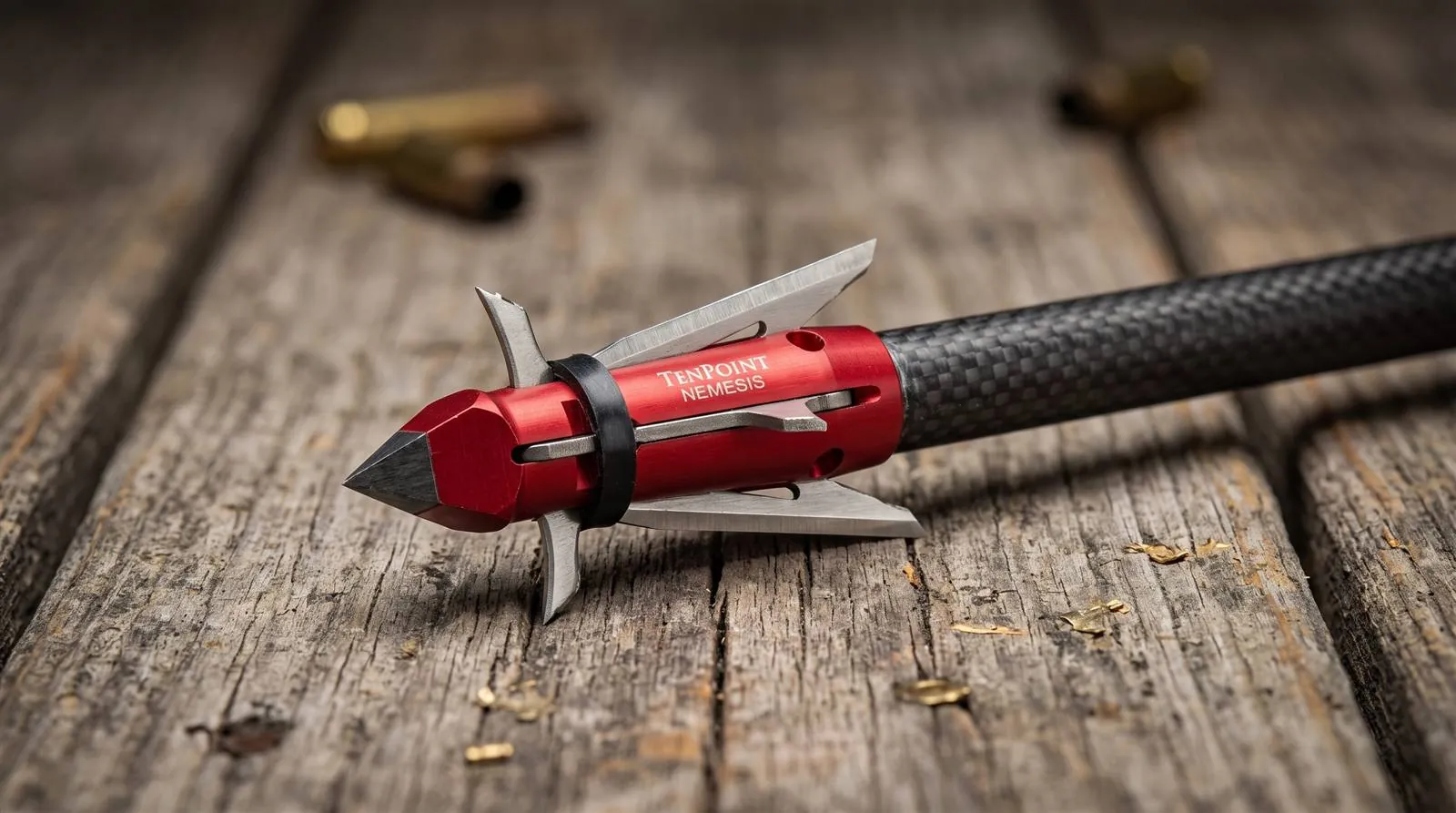
TenPoint Nemesis Broadhead Review
Staged mechanical crossbow broadhead with a large cutting diameter that flew like field points in testing. 100 grains, sold in packs of three.
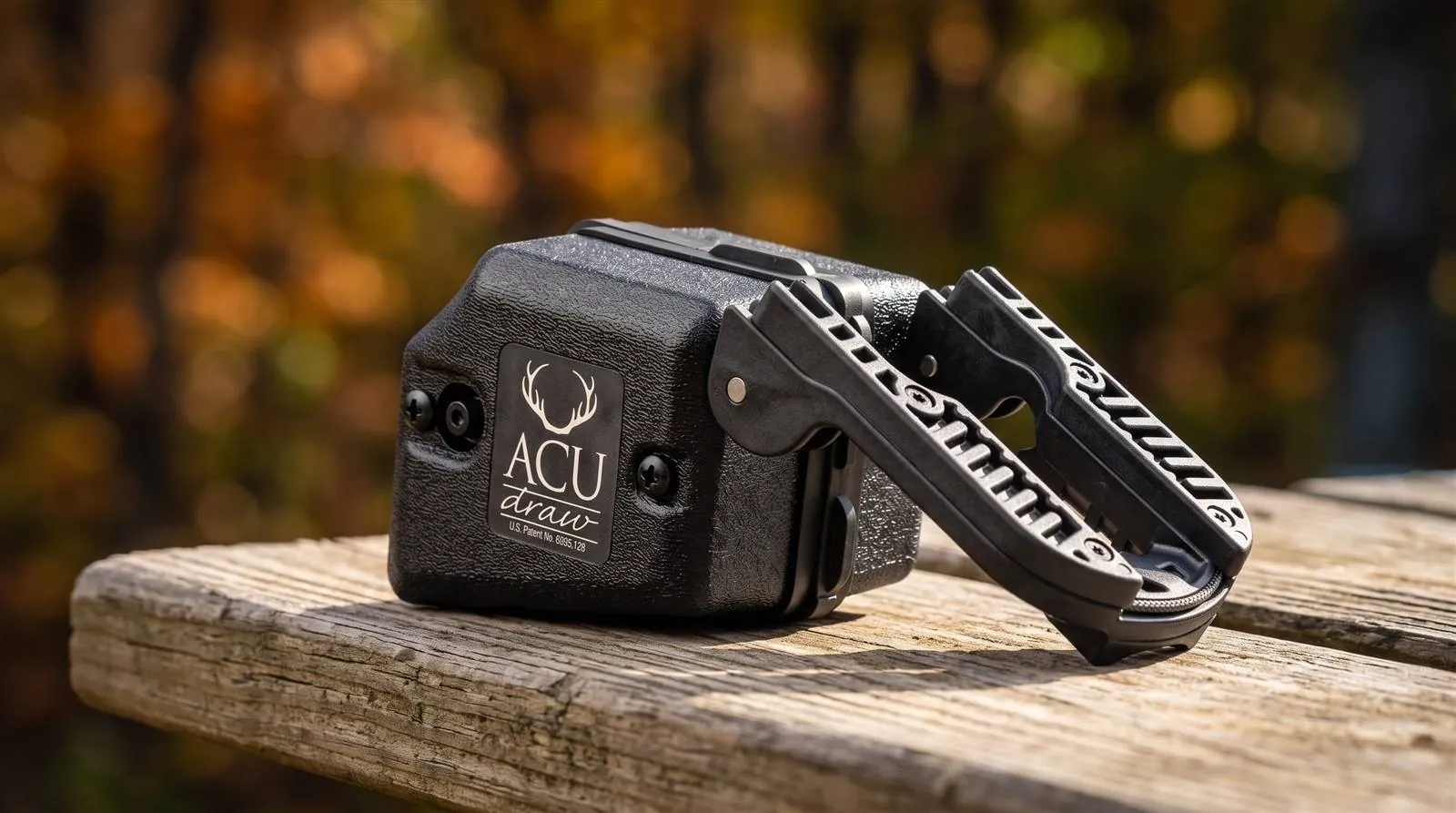
TenPoint ACUdraw Review
TenPoint's integrated cocking system that sharply cuts draw effort and centers the string every time. Fits select TenPoint, Wicked Ridge and Horton models.
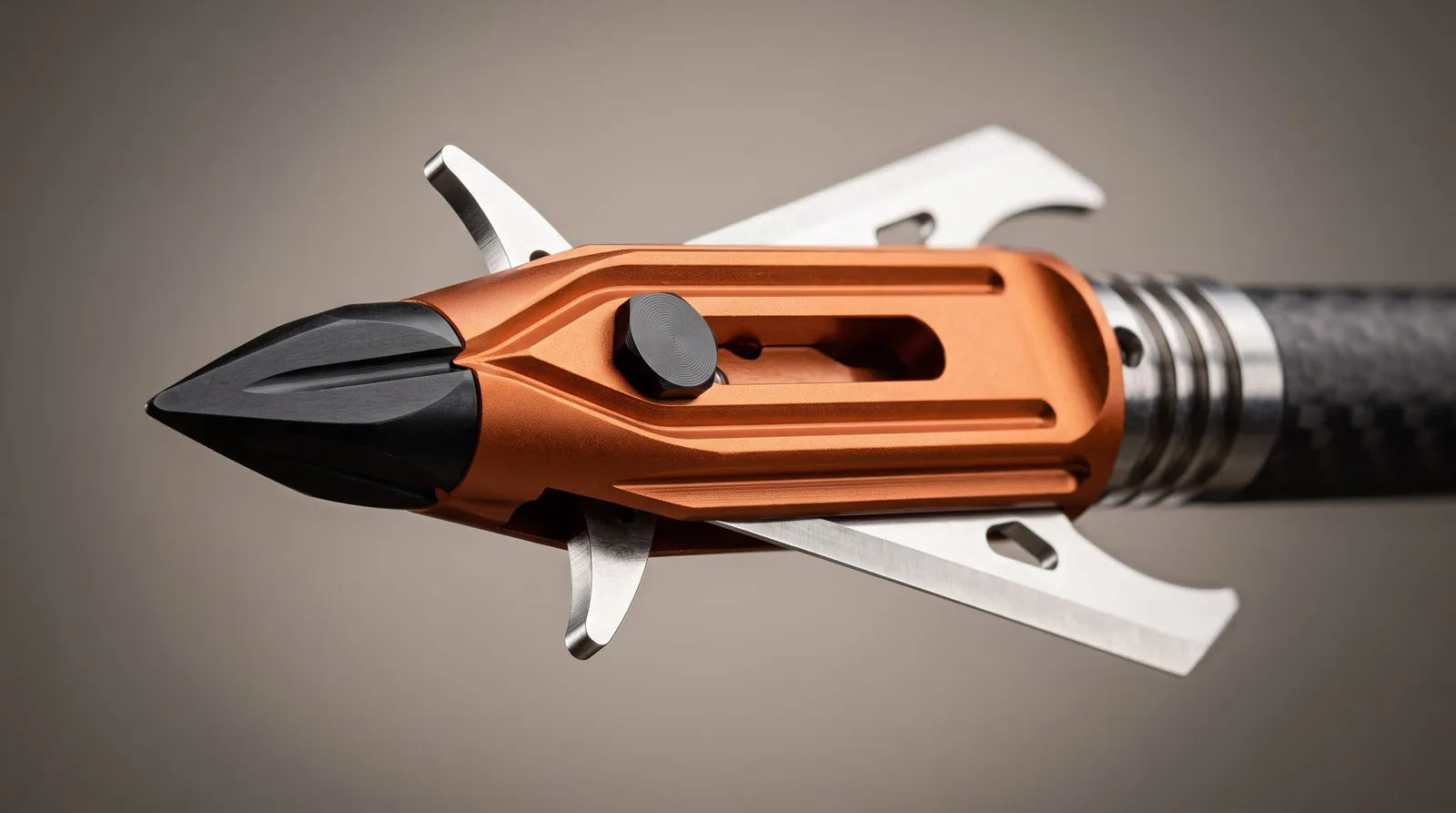
Ravin R102 Broadhead Review
100-grain mechanical crossbow broadhead rated to 450 FPS. Flew with field points in testing, and its spring clip kept the blades closed in flight.
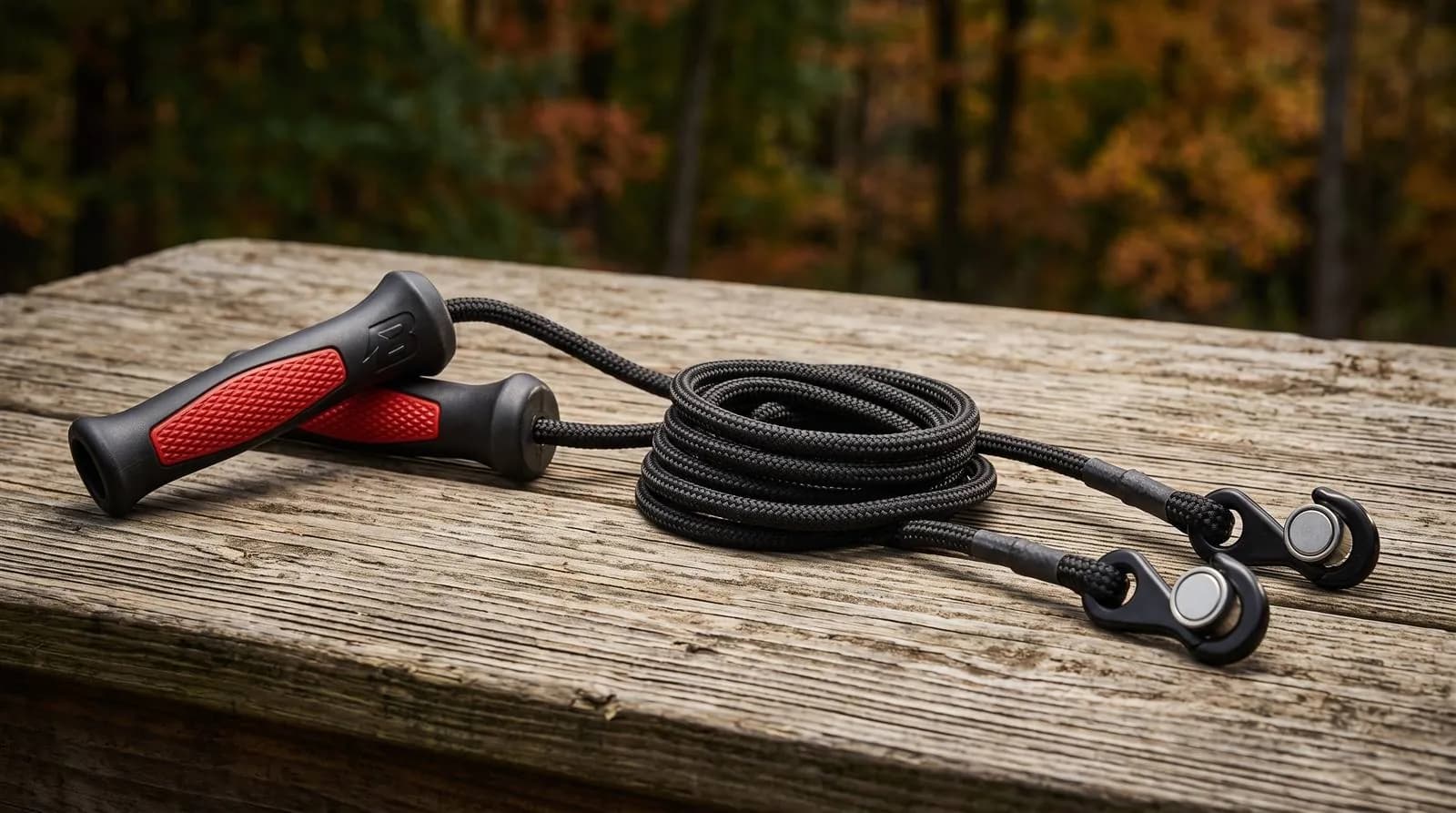
Barnett Rope Cocking Device Review
Padded rope cocking aid that roughly halves draw effort on compatible standard-draw Barnett crossbows. Not for Reverse Draw Cam or Hyper RAPTOR models.
Accessories are where small decisions pay back. A cocking aid makes a heavy crossbow manageable and, just as important, repeatable. A good broadhead choice depends on your crossbow's energy and your bolts. Basic care gear costs little compared with what it protects.
A note on scope first: I have reviewed four accessories so far, two cocking aids and two broadheads. We have not yet reviewed cases, quivers, slings or stands, so this page is deliberately focused on what we can support with testing, and it says plainly where general knowledge takes over.
The sections below cover how to decide, how the numbers work, what the reviewed products cost to own, and the mistakes that cause most compatibility problems.
What counts as a crossbow accessory
For this hub, accessories are the items that sit around the crossbow rather than being part of the bow assembly: cocking aids, broadheads, cases and the basic care kit. Scopes and bolts have their own hubs: see crossbow scopes and crossbow bolts.
| Group | Examples | Reviewed here? |
|---|---|---|
| Cocking aids | Rope cockers, built-in cranks | Yes, two |
| Broadheads | Mechanical, fixed-blade | Yes, two mechanical |
| Cases and transport | Hard cases, soft cases | Not yet |
| Care kit | String wax, rail lubricant, torque wrench | Covered in the maintenance guide |
Which accessory for which buyer
| If you want | Start with | Why, from my reviews |
|---|---|---|
| Half the cocking effort for the least money | Barnett Premium Rope Cocking Device | $19–$29, cut effort by roughly half; check the excluded-model list |
| The lowest effort on a compatible TenPoint, Wicked Ridge or Horton | TenPoint ACUdraw | About 5 lb effective effort, $285–$295, adds 2.1 lbs |
| A mechanical head for a crossbow up to 450 FPS | Ravin R102 | 100 grains, 2-inch cut, $45–$55 |
| The widest cut from a reviewed head | TenPoint Nemesis | 100 grains, 3.75 inches total cut, $49–$79 per three-pack |
Cocking aids in depth
A cocking aid reduces the pull needed to draw the string and, more importantly, draws it evenly. If one side of the string reaches the latch before the other, the crossbow tilts the bolt path and groups open up.
Rope cockers
A cocking rope uses pulleys to halve the effort. The Barnett Premium Rope Cocking Device is a 50-inch ambidextrous rope that Barnett says cuts tension by up to 50 percent; in our review it reduced effective effort by roughly half. As a simple example of the arithmetic, a crossbow with a 150 lb draw weight would feel closer to 75 lb of pull through such a rope, though the stroke is longer.
Built-in cranks
A crank cocking device trades a longer, gentler stroke for far less effort. The TenPoint ACUdraw reduces effective effort to roughly 5 lb in my testing. At the same example of 150 lb, that is a 30-to-1 reduction in felt load.
| Aid | Price | Weight | Effective effort | Rating |
|---|---|---|---|---|
| Barnett Premium Rope Cocking Device | $19-$29 | 0.8 lbs | About half of draw weight | 4.3 |
| TenPoint ACUdraw | $285-$295 | 2.1 lbs (device only) | About 5 lb | 4.5 |
At the low ends of the quoted prices, the ACUdraw costs about $266 more than the rope. What you buy for that is convenience, no separate part to lose and the least effort.
The compatibility catch
Both products exclude certain designs. The Barnett rope is incompatible with Barnett Reverse Draw Cam models, Hyper RAPTOR crossbows and several listed model numbers. TenPoint states the ACUdraw is not for ultra-narrow or reverse-draw crossbows and fits only select TenPoint, Wicked Ridge and Horton models. Read the maker's list before purchase. Related terms: reverse-draw crossbows have different geometry that often rules out generic aids.
Broadheads in depth
A broadhead is the cutting tip used on hunting bolts. The main choice is between a mechanical broadhead, whose blades fold for flight and open on impact, and a fixed-blade broadhead, whose blades never move. Mechanical heads typically fly closer to a field point and need adequate kinetic energy to open; fixed heads are simpler with fewer parts to fail.
| Broadhead | Type | Weight | Cut | Price | Rating |
|---|---|---|---|---|---|
| Ravin R102 | Mechanical, aluminum body, spring clip | 100 grains | 2 inches | $45-$55 | 4.4 |
| TenPoint Nemesis | Hybrid mechanical, O-ring/band lock | 100 grains | 3.75 inches total | $49-$79 per three-pack | 4.6 |
The Nemesis cut works out as a 2-inch entry plus 1.75 inches opened by the rear blades, which sums to 3.75. Per head, its pack price is about $16 to $26 ($49 divided by three, $79 divided by three). The R102 review does not state pack size, so a per-head price is not given here. Compare the choice in more depth in our broadheads guide and our fixed-blade guide.
Care and storage basics
The cheapest accessories are the care kit. String wax keeps the string and cables from fraying, and rail lubricant protects the flight rail and string contact surface. Check fasteners at intervals your manual recommends. The routine is in how to maintain a crossbow. For cases, general principles apply: a rigid case protects scope zero and cams during travel, and rules for transporting a crossbow vary, so verify with the relevant transport authority or wildlife agency rather than assuming.
Crossbow cases and slings
A crossbow case and a crossbow sling solve two different problems. The case protects the crossbow between trips, and the sling frees your hands while you walk in.
- Hard case: the better choice when the crossbow travels in a vehicle or on a plane, or when you want the scope to hold its zero. Look for an interior that fits your crossbow's cocked or uncocked width, a lock point, and room for bolts kept separate from the string.
- Soft case: lighter and cheaper, and fine for short drives and storage at home. It guards against scratches and dust more than impacts.
- Sling: check that your stock has sling studs or mounting points before you buy one. A padded, non-slip strap matters more than looks, because a crossbow carried for an hour sits heavy on one shoulder.
Never carry or store a crossbow cocked in a case or on a sling. Transport rules for crossbows differ by state and province, so check with your wildlife agency before you travel.
Quivers, targets, rests and lighted nocks
These are the accessories readers ask about next, and we have not formally reviewed them yet, so this is general guidance rather than test results.
- Quivers. Most crossbow kits include one; the Hyper Whitetail 410, Anaconda and Mag Air packages all do. A detachable quiver is worth having in a blind, where the mounted quiver adds width and snags. Keep broadheads in a hood that covers the blades fully.
- Targets. Buy a target rated for crossbow speeds, and keep separate faces for field points and broadheads: broadhead blades cut up a field-point bag quickly, and retrieving deployed mechanical blades from dense foam takes care, as the Nemesis review notes. A target that stops a 400-plus FPS bolt will also be heavy to move, so plan where it lives.
- Rests and shooting sticks. Any rest goes under the fore-end or stock, never under or against the limbs, and the cocked limbs need clear space on both sides before the shot. Limbs striking a blind frame or a rail can break them and send parts toward you.
- Lighted nocks. Useful for seeing the hit and finding the bolt at dusk; the TenPoint Lighted Pro Elite 400 and Ravin R133 are reviewed sets. Some jurisdictions restrict lighted nocks or electronic devices on arrows for hunting, so check with your wildlife agency before the season.
Cost of ownership
| Item | Reviewed price | Recurring cost |
|---|---|---|
| Rope cocker | $19-$29 | Rope wear over time |
| ACUdraw | $285-$295 | Extra stock weight (2.1 lbs) |
| Broadheads | $45-$79 | Replacement after use |
| Care kit | Varies | Wax and lube as needed |
For a wider budget view see how much a crossbow costs.
Common mistakes and myths
- Assuming universal fit. Cocking aids are model-specific. Confirm your model number.
- Leaving the rope at home. The Barnett review notes a separate rope is easy to forget; clip it to your pack or sling.
- Believing a cocking aid is only for weak shooters. Even cocking is an accuracy factor; guidance on draw weight by body size helps you choose well.
- Treating mechanical heads as universal. They need enough energy and a matching speed rating.
- Shooting broadheads into the wrong target. Retrieval of deployed blades from dense material takes care, per the Nemesis review; use targets rated for broadheads.
- Skipping care items until something wears. Waxing is far cheaper than a new string.
Who should skip this category (for now)
If your crossbow is low in draw weight and you shoot a few bolts at a time, you may not need a cocking aid yet. If you are practicing only with field points, hold off on broadheads. If you have a reverse-draw or ultra-narrow crossbow, both reviewed cocking aids are likely excluded, so check the manufacturer's own system.
Frequently Asked Questions
Do I need a cocking device for my crossbow?
For high draw weight crossbows, a cocking aid helps with effort and with consistency, since uneven hand cocking can shift your point of impact. Lower draw weight models are sometimes manageable by hand, but an aid is still worth considering for repeated shooting.
Is a rope cocker or a crank better?
A rope is cheaper and portable, at $19-$29 for the Barnett, and cuts effort by about half. A crank like the ACUdraw cuts effort to about 5 lb but costs $285-$295 and fits only select models. The better one is whichever fits your crossbow and budget.
Will the Barnett rope fit my crossbow?
Not necessarily. The review lists exclusions including Barnett Reverse Draw Cam models, Hyper RAPTOR crossbows and several specific model numbers. Compare your exact model to Barnett's compatibility list before buying, and follow your crossbow manual.
Does the ACUdraw work on any brand?
No. TenPoint says it fits select TenPoint, Wicked Ridge and Horton models and is not for ultra-narrow or reverse-draw crossbows. In our review, the included adapter plates fit a Wicked Ridge test crossbow cleanly, but you should still confirm your own model.
Should I choose mechanical or fixed-blade broadheads?
Fixed-blade heads are simpler, with fewer parts to fail, while mechanical heads usually fly closer to field points but need enough energy to open. Check your crossbow's energy against the maker's guidance, and read our broadhead guides before deciding.
What speed is the Ravin R102 rated for?
Ravin rates the R102 for crossbows up to 450 FPS. If your crossbow is faster than that, the review advises confirming compatibility with the maker before use rather than assuming it will perform as rated.
How much does the TenPoint Nemesis cost per head?
The three-pack runs $49-$79, which works out to roughly $16 to $26 per head. Prices change, so check the current listing, and remember the review calls this a premium price compared with basic fixed-blade options.
What care items should I buy first?
String wax and rail lubricant are the basics, and your manual may add a torque check for fasteners. They are inexpensive compared with the string and rail they protect, and the maintenance guide gives a routine you can follow.
Do I need a hard case?
A rigid case protects scope zero and cam timing from knocks better than soft padding, so it is worth considering for travel. We have not reviewed cases yet, and transport rules vary, so check with the relevant authority before you travel.
Are lighted nocks legal for hunting?
In many places yes, but not everywhere, and rules change. Some states and provinces restrict electronic devices attached to the arrow or bolt, which can include lighted nocks, so confirm with your wildlife agency before the season rather than relying on a retailer listing. For target shooting there is no such issue, and the Lighted Pro Elite 400 and Ravin R133 reviews cover how the nocks performed.
What should a crossbow target be rated for?
At least the rated speed of your crossbow, and ideally more, since a target that just stops 400 FPS bolts will wear through fast. Use a broadhead-rated face for broadheads and keep field points on a separate bag or block, and inspect the target for pass-through risk before every session. Never shoot at a target with a wall, vehicle or path behind it that you are not willing to put a bolt into.
Guides that help you decide
Run the numbers