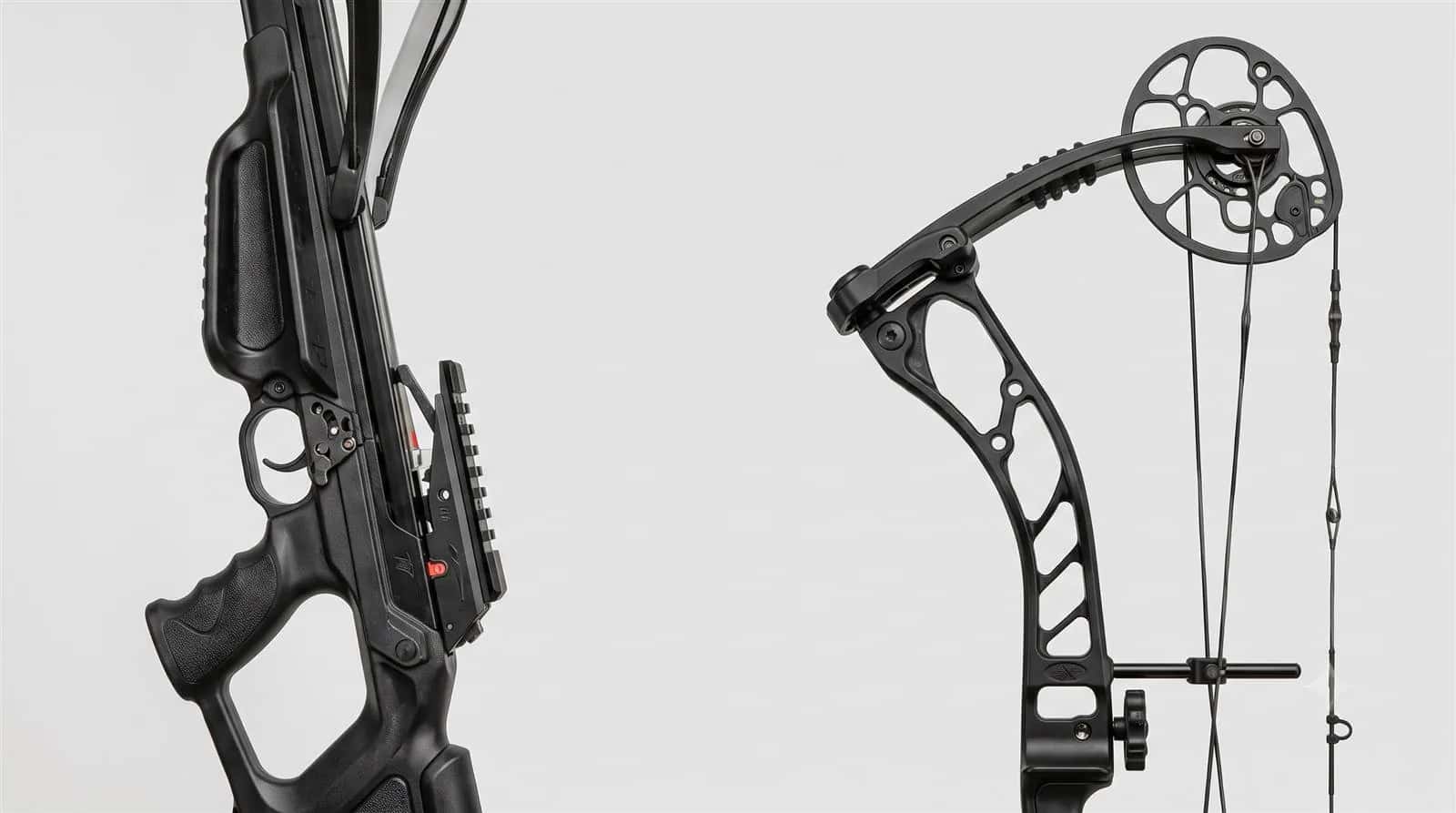
A compound bow asks your body to hold the draw until the shot, and a crossbow asks a latch to do it for you. That one difference, a held string versus a held shooter, shapes how quickly you become consistent, how you carry and store the equipment, and in some places whether you are permitted to use it at all.
Whether you phrase it as crossbow vs compound bow or compound bow vs crossbow, the question is the same: which one fits how you will shoot. This guide compares the two on the criteria that decide real purchases: learning curve, accuracy, speed, noise, physical demands, repeat shots, maintenance and cost. We use the crossbows in our review library for the crossbow side; for compound bows we stick to general mechanics, because we have not reviewed compound bows on this site. If your actual question is about hunting skill, see whether crossbow hunting is easier than bow hunting.
Verdict by Reader Type
| If you are... | Lean toward | Why |
|---|---|---|
| New to archery and want consistent shots soon | Crossbow | Rifle-style aiming and a trigger release shorten the learning curve |
| Limited in upper-body strength | Crossbow with a cocking aid | Felt effort can fall to roughly 5 lbs on integrated systems |
| Wanting fast follow-up shots | Compound bow, or a repeating crossbow | No re-cocking, or a magazine that holds several bolts |
| Wanting the widest season access in your area | Check your rules | Permitted equipment and season dates vary by location |
| Interested in long-term skill building | Compound bow | Form, anchor and release are a craft you can keep refining |
| Shooting for casual target practice on a budget | Either | Entry packages exist on both sides |
None of this tells you what is allowed where you live. Where crossbows are permitted, confirm current local and regional rules with the responsible agency before you buy equipment for hunting.
Side-by-Side Table
| Criterion | Crossbow | Compound bow |
|---|---|---|
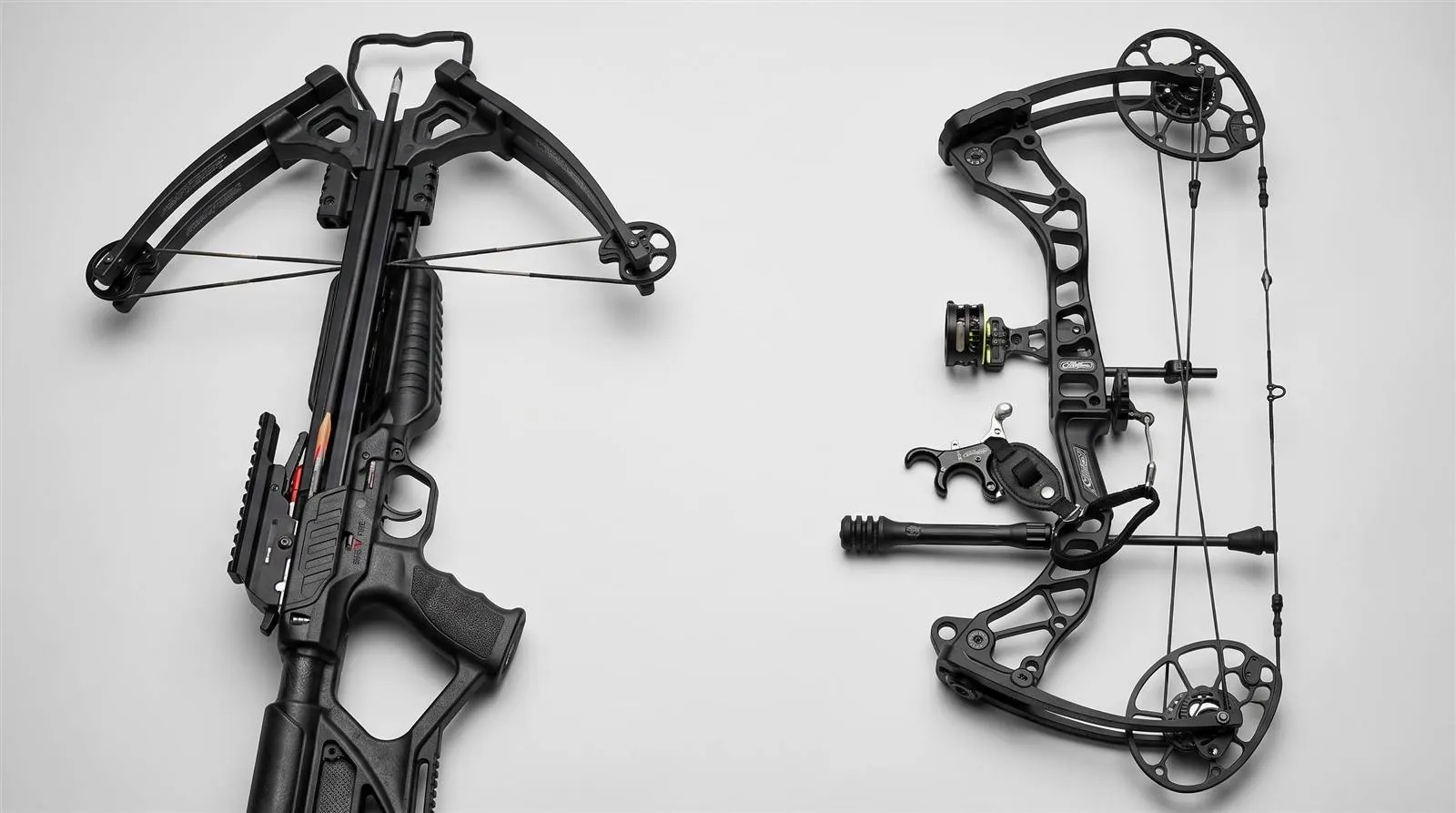
| Aiming and release | Shouldered, scope-aided, trigger release | Handheld, drawn and held, release aid or fingers |
| Learning curve | Shorter for basic accuracy | Longer: draw, anchor, release, form |
| Physical demand | Cocking effort, then none while aiming | Strength and endurance at full draw |
| Repeat shot speed | Slower (re-cock), unless a repeater | Faster, with no re-cocking |
| Carry and handling | Wider, heavier; stock and rail | Narrower; lighter in hand |
| Noise | Varies by model and dampening | Varies by model and setup |
| Maintenance | String and cables, rail lube, no dry-fire | String and cables, cam timing, peep and sight alignment |
| Cost | Often sold as a package with scope | Often needs separate sight, rest, release, arrows |
The Mechanical Difference
A compound bow and a compound crossbow share the cam idea, but a bow is drawn by your arms and a crossbow is cocked once and held by a latch. In a bow, the cams give you let-off: the load drops at full draw, so you hold a fraction of the peak weight. In a crossbow, the string is locked on the sear until you press the trigger.
That is why crossbows behave more like rifles. You shoulder them, look through a scope, and the only variable at the moment of release is your trigger finger. The trigger system and the scope matter as much as the limbs. A bow shooter has more variables to control at that moment: stance, grip, anchor point, release and follow-through.
Learning Curve and Accuracy
A crossbow gets most people to a tight group sooner. The held string removes the draw-anchor-release sequence that causes a beginner's groups to wander. What remains is the same discipline as rifle shooting: steady hold, smooth trigger press and a properly sighted-in scope.
The ceiling is not lower, either. In our reviews the TenPoint TX Ultra 26.5 held a 2.5-inch cluster at 60 yards, and the TRX Ultra produced the tightest 100-yard groups I have recorded. Those are scoped, high-end results and are not typical of every crossbow: the Barnett Hyper Whitetail 410, a low-priced compound crossbow, showed noticeably wider groups at 60 yards than premium crossbows.
A compound bow rewards practice over many months. Consistency comes from repeating the same form every time, and the reward is a skill that transfers across bows. If you value that craft, the longer curve is a feature rather than a drawback. If you want to be on target quickly, a crossbow is the shorter path.
Don't mistake easy accuracy at the range for field skill, though. Judging distance, managing shot angles and knowing your limits are separate skills for both tools.
Speed, Energy and Trajectory
Bolt speed differs widely across the crossbows I have reviewed: about 180 FPS for the Steambow AR-6 Stinger II pistol, 270 FPS for the EK Archery Adder, 400 to 410 FPS for several compound crossbows, and 515 FPS for the TRX Ultra. Compound bows cover a range too, set by draw weight, draw length and arrow weight, and we do not give figures for them here because we have not tested any.
What matters is the match between speed and your task. Casual target practice does not need a flat trajectory. Longer shots do, because a faster bolt reduces the penalty for misjudging distance. Our guide on how fast a crossbow bolt travels explains the ratings, and FPS and kinetic energy are the two glossary terms to understand first.
Physical Demands and Accessibility
This is where crossbows are most different from bows. A compound bow must be drawn by the shooter, and while let-off lightens the hold, endurance and shoulder strength still matter, especially in cold conditions or after a long wait.
A crossbow moves the effort to the cocking step, and the right device can reduce it a great deal:
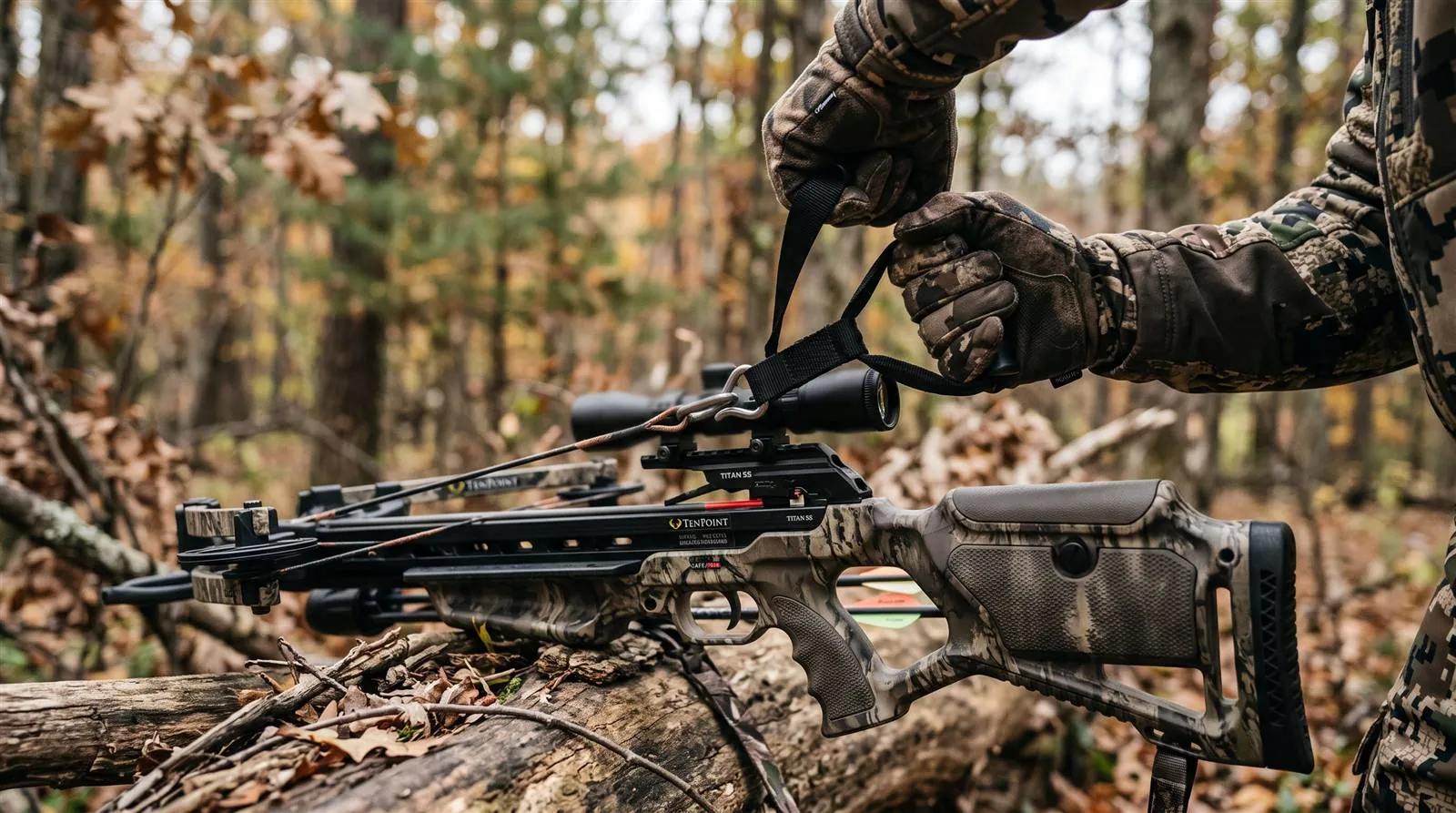
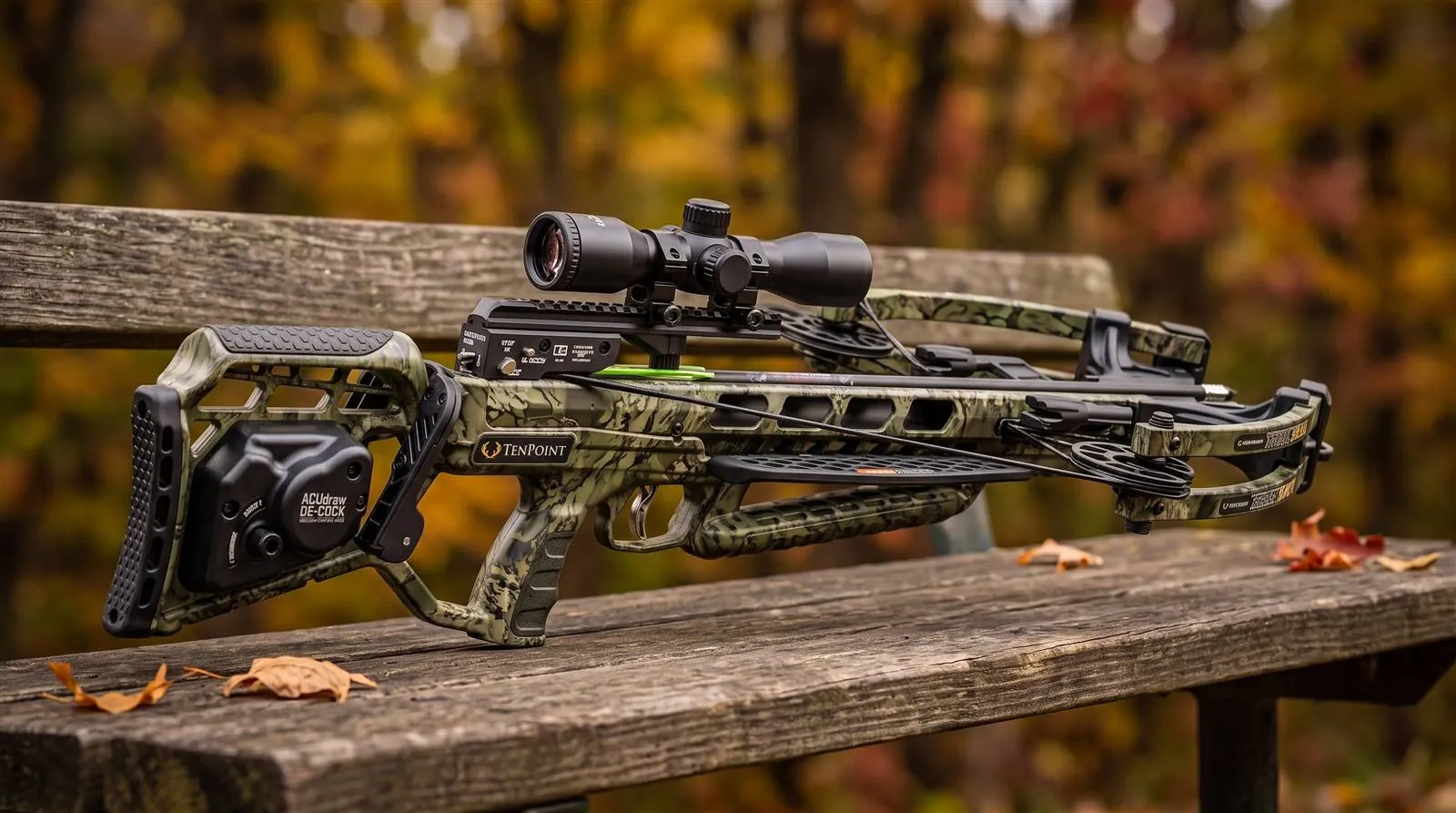
- The TenPoint Titan X De-Cock has 190 lbs of true draw weight, and our review found its integrated ACUdraw De-Cock system reduces felt effort to roughly 5 lbs.
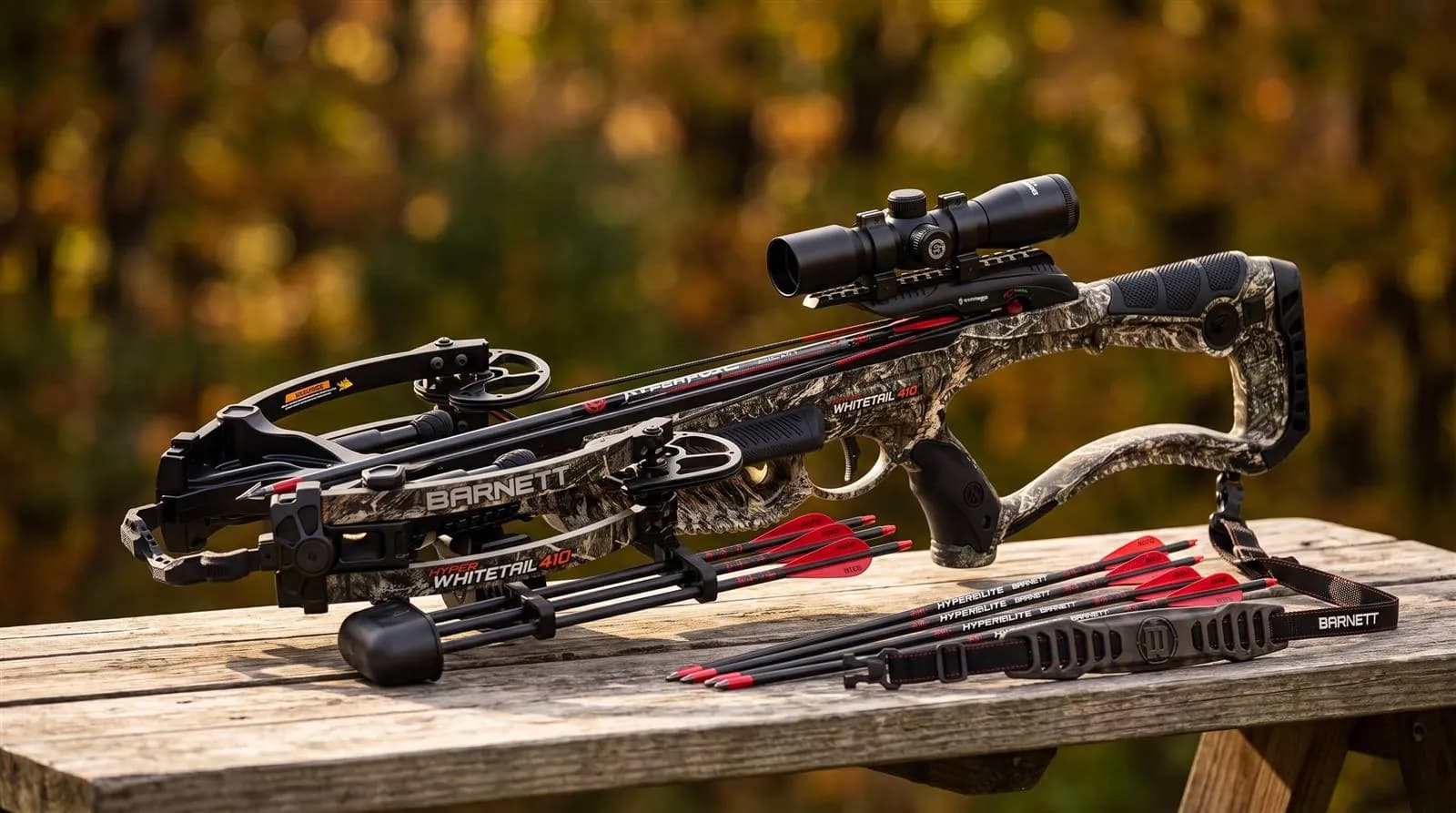
- The Barnett Hyper Whitetail 410 has 190 lbs of true draw weight, and its rope-cocking sled reduced felt effort to roughly 95 lbs. That is manageable for many adults but is not light.
- Recurve crossbows such as the Avalanche Anaconda (175 lbs) and Excalibur Mag Air (136 lbs) use a rope aid and still take noticeable effort.
Read our guide on draw weight by body size before choosing a crossbow for a smaller-framed or older shooter, and see how cocking a crossbow works for each type of aid.
Tested for this topic
TenPoint Titan X De-CockA mid-priced compound crossbow with roughly 5 lbs of felt cocking effort.
Repeat Shots and Reload Speed
A practiced bow shooter can nock and draw a second arrow quickly. A single-shot crossbow must be fully re-cocked, which takes seconds with an aid and longer by hand. If rapid repeat shots matter to you, that is a genuine advantage for the bow.
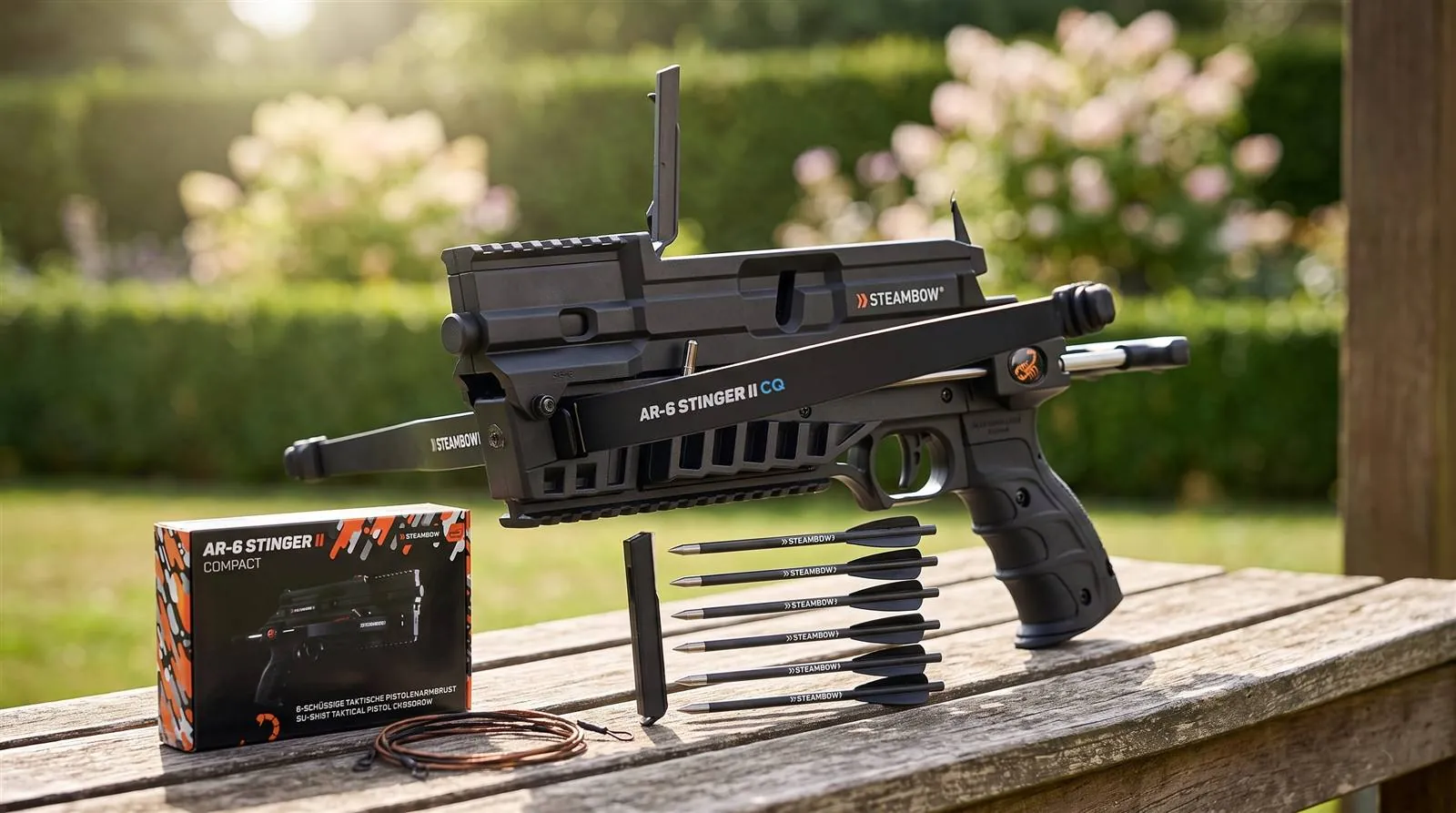
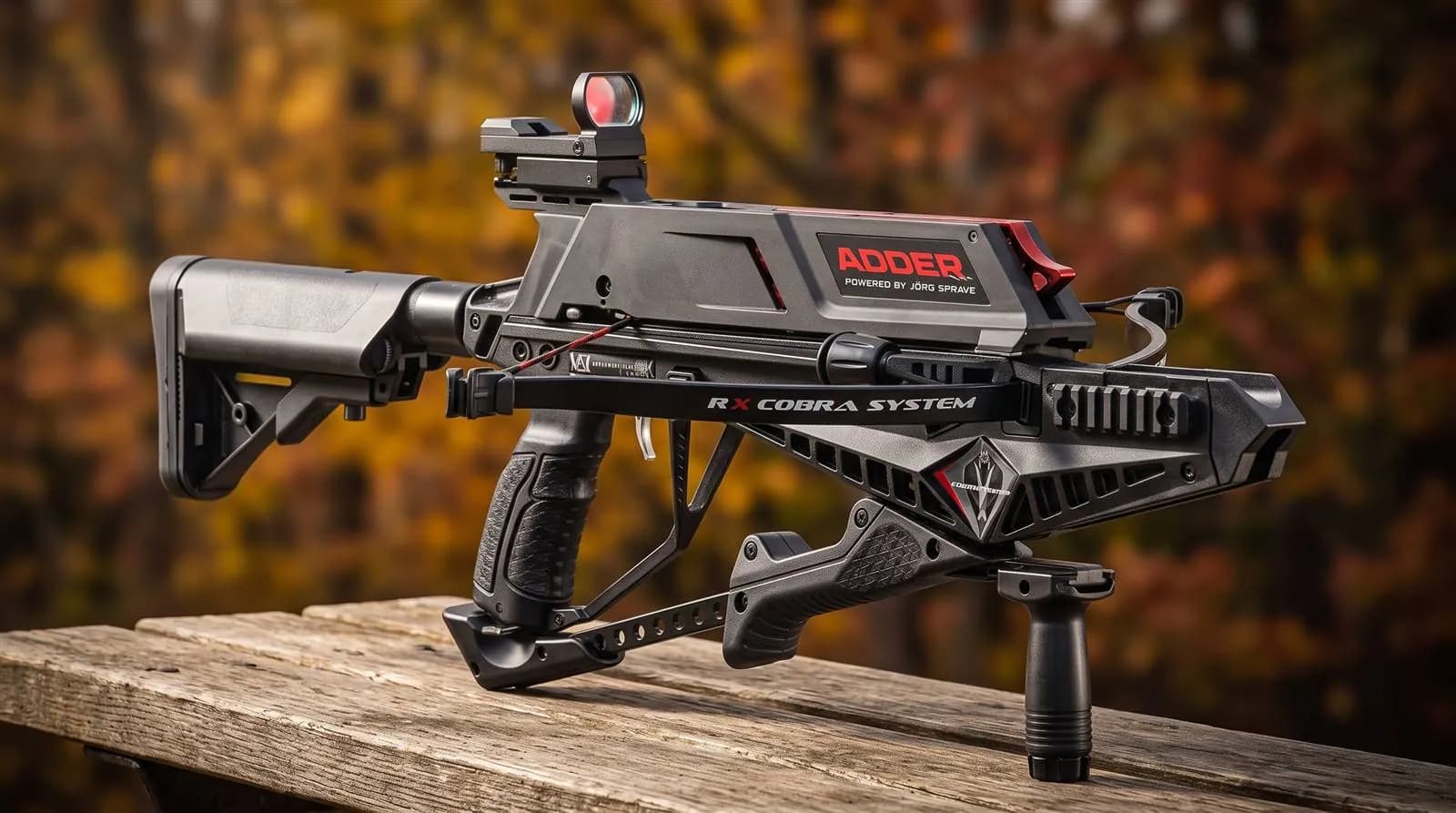
Repeating crossbows narrow the gap in some uses, with limits. The Steambow AR-6 Stinger II has a 6-shot magazine, and our fastest full-magazine string was emptied in under 8 seconds. The EK Archery Adder has a 5-shot magazine. Both are rated for target practice and small-game use rather than big-game hunting: the Steambow's standard 55-lb limbs produce kinetic energy well below big-game minimums, and the Adder's 270 FPS sits below full-size compounds.
Tested for this topic
Steambow AR-6 Stinger IIA lightweight repeating pistol crossbow for target practice and small-game use.
Noise, Size and Carry
Neither tool is silent, and noise depends on the specific model and any dampening. Among crossbows I have reviewed, the TenPoint TX Ultra 26.5 measurably reduced shot noise versus a non-dampened TenPoint model. We have no testing data on compound bows for this site.
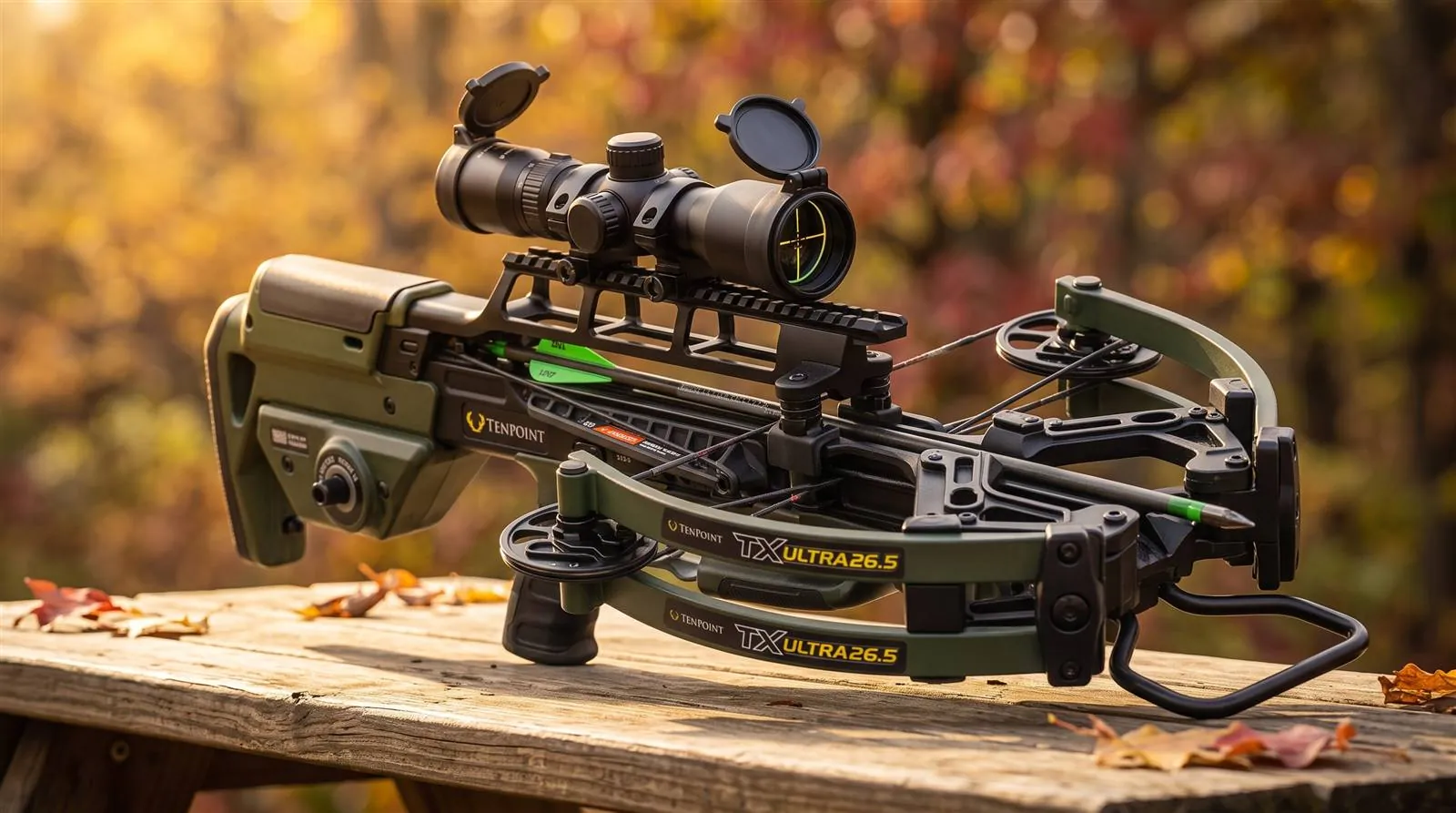
Size is mixed. A cocked crossbow can be compact: the Hyper Whitetail 410 is 9.25 inches axle-to-axle when cocked and the TX Ultra 26.5 is 7 inches, which our ground-blind trial showed clears a narrow window easily. A crossbow is still a longer, heavier object in the hand than a bow, typically 7 to 8 lbs on the compounds I reviewed. A bow is more compact when held but needs room to draw. For tight blinds, check axle-to-axle width; for travel, consider a case.
Maintenance and Safety
Both need string care and regular inspection. On a crossbow, the routine is waxing the string and cables, lubing the rail, inspecting limbs and never dry-firing. Read our maintenance guide for the routine. The Excalibur Mag Air has a Guardian anti-dry-fire system that engaged in every scenario we could safely simulate, and TenPoint advises waxing every 3 to 5 sessions.
Dry-fire, releasing the string with no bolt, is a major cause of serious damage on crossbows without a safeguard. A cocked crossbow also stays loaded, which is why crossbow safety fundamentals emphasize finger placement below the rail and treating it like a firearm.
Cost
Packages favor crossbows at the entry level. The Avalanche Anaconda is a complete recurve kit at $219 to $239, the Barnett Hyper Whitetail 410 includes quiver, arrows, an illuminated scope and a cocking sled at $425 to $485, and the Steambow pistol is $145 to $165. A compound bow often needs a sight, rest, release aid and arrows bought separately, so compare full setups.
At the top, both categories reach into the thousands. The TRX Ultra is $3,495 to $3,515. Price tiers overlap, so compare similar levels rather than assuming one tool is cheaper. Our guide to crossbow cost lists what different budgets buy.
Tested for this topic
Barnett Hyper Whitetail 410A packaged compound crossbow at an entry-level price with a rope-cocking sled.
Myths vs Facts
Search results for this topic repeat several assumptions. Here is what holds up and what does not.
| Claim you will read | Closer to the truth |
|---|---|
| "A crossbow is just a point-and-shoot." | A trigger and scope simplify the release, but trigger control, a sighted-in scope, distance judgement and safe handling still decide results. |
| "Crossbows are always more accurate than bows." | Easier basic accuracy is not the same as a higher ceiling. A skilled bow shooter can group very tightly, and low-priced crossbows in our reviews showed wider groups at 60 yards. |
| "A crossbow needs no strength." | The effort moves to cocking. The Barnett Hyper Whitetail 410 with a rope sled is roughly 95 lbs of felt effort in our review. |
| "A crossbow is always faster to shoot." | Single-shot models need re-cocking, so follow-up shots are slower than with a bow. |
| "Both are legal wherever bows are." | Never assume. Equipment rules differ by place and change. |
What Else You Will Own: A Setup Checklist
Comparing sticker prices hides the real gap. Use this list for each side and count what is missing.
- The shooting platform itself (crossbow or bow).
- A sighting system: scope on the crossbow, sight and possibly a peep on the bow.
- Projectiles that match the platform. For crossbows, see how to choose crossbow bolts.
- A cocking aid for the crossbow, or a release aid and rest for the bow.
- A quiver, case and a safe storage place.
- Wax, lube and basic inspection tools, per our maintenance guide.
- A target rated for your equipment and a backstop you trust.
- Practice time: more for a bow's form, more for a crossbow's scope zero.
Scenarios
- Retiree who wants to enjoy backyard target shooting. A crossbow with an integrated cocking aid keeps effort low. Ask a professional if you have a shoulder or back issue.
- Teenager joining a family hunt, where legal. Check age and licensing rules before equipment. Either tool can suit; training and supervision matter more than the choice.
- Experienced bow hunter curious about crossbows. Expect a different feel: the weight sits forward, and you manage re-cocking noise and time. Read whether crossbow hunting is easier first.
- Traveller who flies with gear. Both need a case and rules for transport differ by carrier and destination, so check them before booking.
Rules, Seasons and Permissions
This is the criterion we cannot summarise for you. Some jurisdictions allow crossbows alongside bows, some restrict them to specific seasons or hunters, and some prohibit them. Rules also change. Look up your jurisdiction's current regulations with the responsible wildlife or firearms authority, and check any age, licensing and equipment requirements.
Our state-by-state crossbow hunting laws guide shows our verified entries with last-checked dates. Treat it as a starting point and confirm with the agency.
Which Should You Choose?
Use these rules in order.
- Check what is permitted where you will shoot. If only one tool is allowed for your purpose, the decision is made.
- Need to be accurate soon, with little practice time? Choose a crossbow.
- Limited upper-body strength? Choose a crossbow with an integrated cocking aid.
- Need quick repeat shots and enjoy refining form? Choose a compound bow, or look at a repeating crossbow for small-game and target use.
- Shooting from tight blinds? Compare cocked widths, and consider a compact crossbow.
- Budget-limited? Compare complete setups, not sticker prices.
To compare the two on energy rather than speed, the kinetic energy calculator accepts any arrow or bolt weight and speed, and the cocking effort estimator shows the force a crossbow asks for at the start of each shot rather than at full draw. Among crossbows, the recurve crossbow buying guide covers the simplest designs.
Frequently Asked Questions
Is a crossbow easier to learn than a compound bow?
For basic accuracy, usually yes. The held string and trigger release remove the draw and anchor consistency that a bow demands. That does not make hunting itself easier, since fieldcraft and shot judgement apply equally.
Which has faster follow-up shots?
A compound bow, because no re-cocking is needed. A single-shot crossbow must be re-cocked, though repeating models like the Steambow AR-6 Stinger II hold several bolts ready, with the limits on power noted in our reviews.
Is a crossbow better for people with less upper-body strength?
Often, yes. Once cocked, a crossbow does not need to be held at draw, and aids can reduce felt effort a great deal, as with roughly 5 lbs on the Titan X De-Cock. Compare the cocking system carefully.
Can I use a crossbow during bow season?
That depends entirely on local rules, which vary by location and can change from year to year. Verify current regulations with the responsible agency before you hunt and do not rely on past seasons.
Are crossbows cheaper than compound bows?
Neither is always cheaper. Entry-level crossbows are often sold as packages with a scope and bolts, while bows often need separate accessories. Premium models on both sides reach the thousands, so compare complete setups.
Which is quieter, a crossbow or a compound bow?
It depends on the model and any dampening. Among crossbows I tested, the TX Ultra 26.5 measurably reduced noise with built-in string dampening. We do not have comparable bow data, so we avoid a general claim.
What extra gear does a crossbow need compared with a compound bow?
A crossbow needs a scope, bolts, a cocking aid if none is included, a quiver and wax and lube. A bow needs a sight, rest, release aid and arrows. Compare complete setups rather than sticker prices.
Does a crossbow take less practice than a compound bow?
For basic accuracy, usually, because the trigger and scope remove the draw and anchor steps. Sighting in, learning your cocking routine and judging distance still take practice, and safe handling must become habit.
Final Recommendation
Choose a crossbow if you want quick consistency and lower sustained effort, and a compound bow if you want fast repeat shots and the craft of drawing and releasing. Before either, confirm what is permitted where you will shoot.
For your next click, compare tested packages in the compound crossbows hub, or read the compound vs recurve crossbow comparison to pick between crossbow types.
Gear mentioned in this guide
Reviews we link to above, highest rated first. Read the full review before you buy.
TenPoint TX Ultra 26.5 Review
Very short forward-draw crossbow measured at 406–413 FPS, quiet to shoot and easy to move in saddles, tight blinds and confined stands.
Steambow AR-6 Stinger II Review
Six-shot repeating pistol crossbow at 176–184 FPS, accurate inside 70 feet and very easy to cock. Optional Pro limbs add speed.
EK Archery Adder Review
Five-shot repeating crossbow at about 270 FPS, with a full accessory kit and basic optic. Built for target shooting and small game, not big game.
Ready to compare models? Browse our compound crossbows reviews, or see all reviews to see how each one measured up in testing.
More in Buying & Comparison Guides
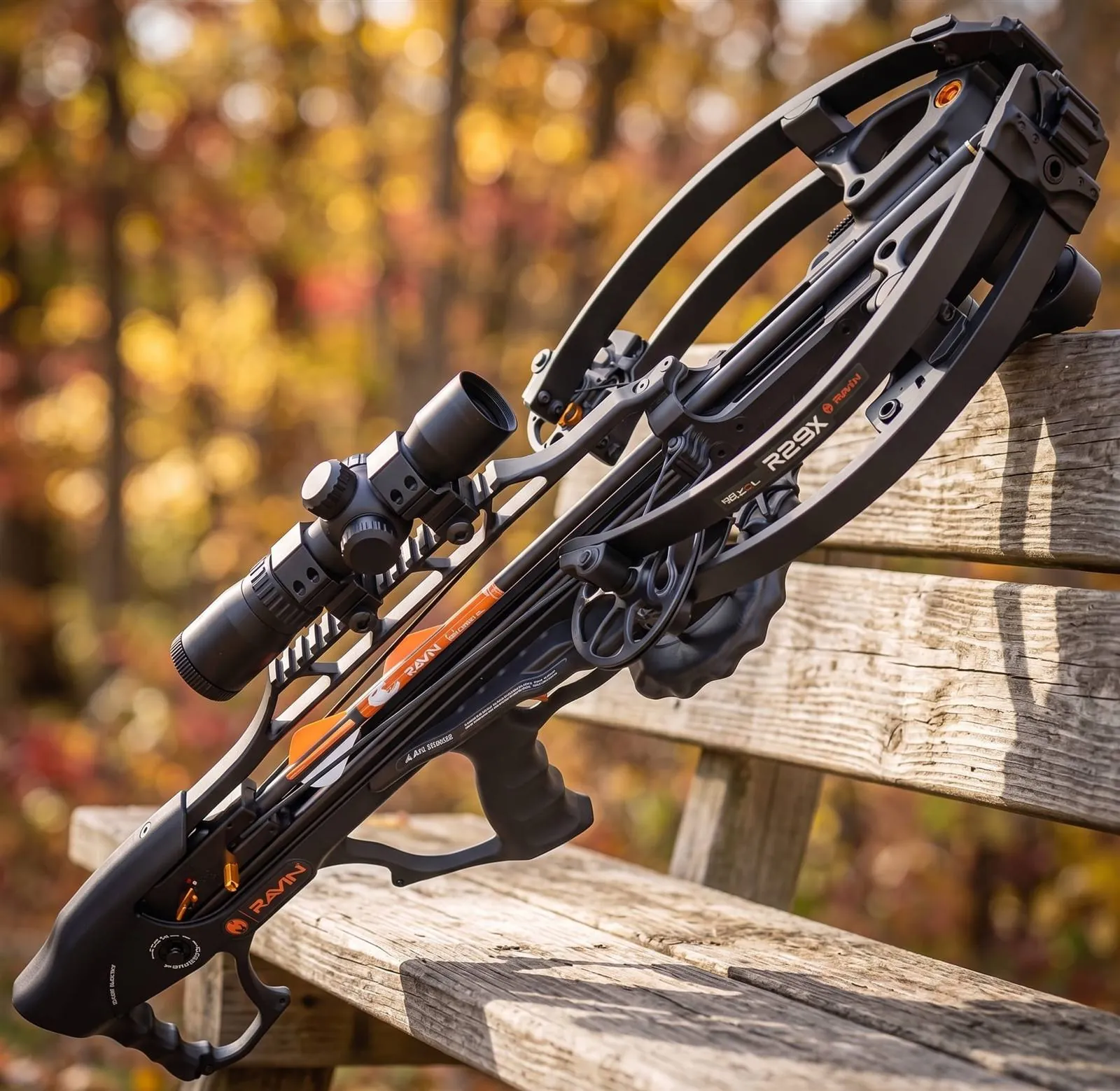
Ravin R29X vs R26X
R26X for stands, blinds and shots inside 40 yards at $500 less; R29X for larger game and longer range, with 50 FPS and 38 ft-lbs more. Measured verdict for each hunter.
Read guide
Recurve Crossbow Buying Guide
How to choose a recurve crossbow for hunting: who it suits, which specs to compare, maintenance, common mistakes and a decision checklist.
Read guide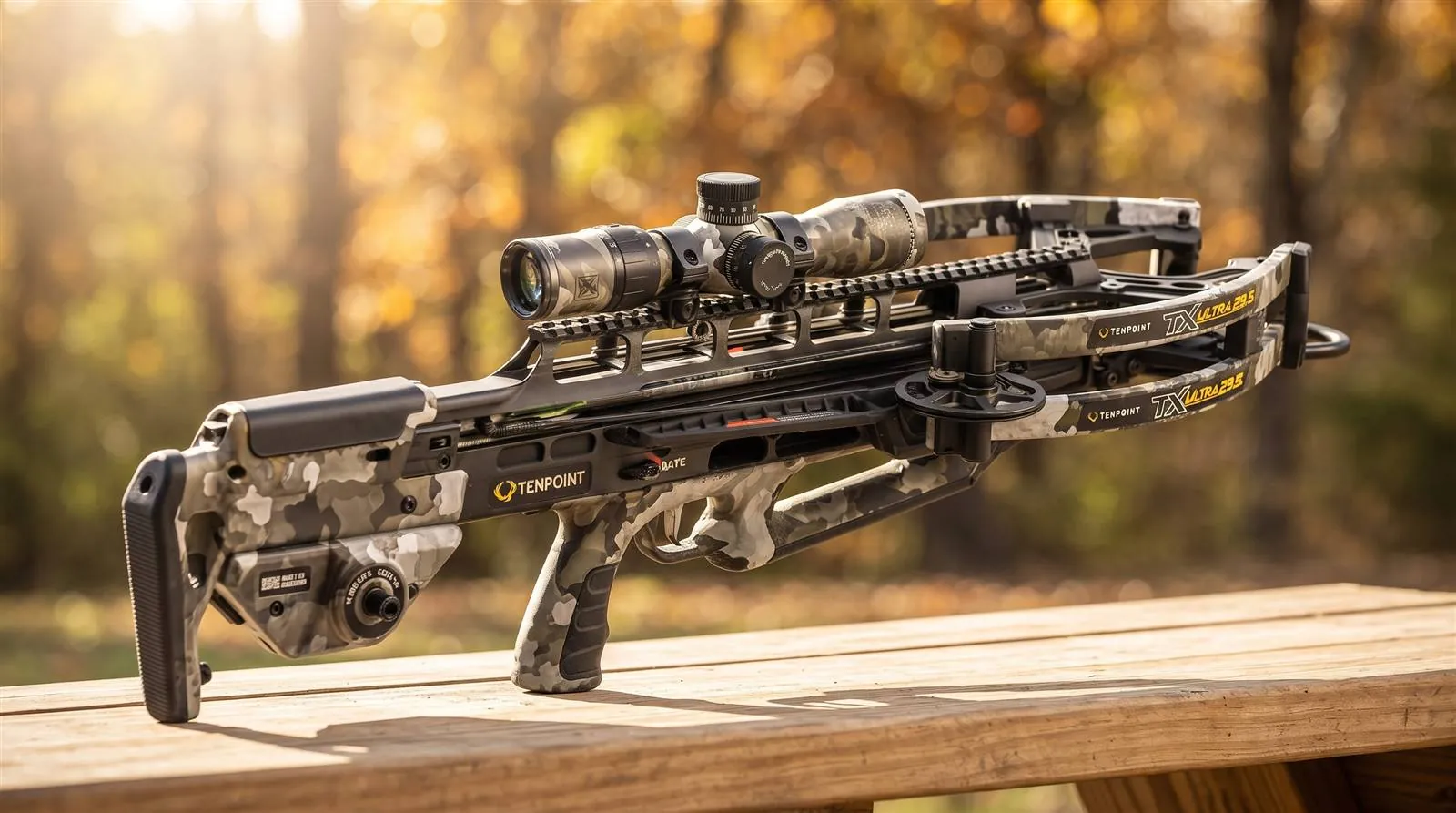
TenPoint TX Ultra 26.5 vs 29.5
TX Ultra 26.5 for saddles, blinds and short shots: shorter, lighter, quieter and $400–500 cheaper. TX Ultra 29.5 for 50 FPS more, 193 ft-lbs and reach past 60 yards.
Read guide