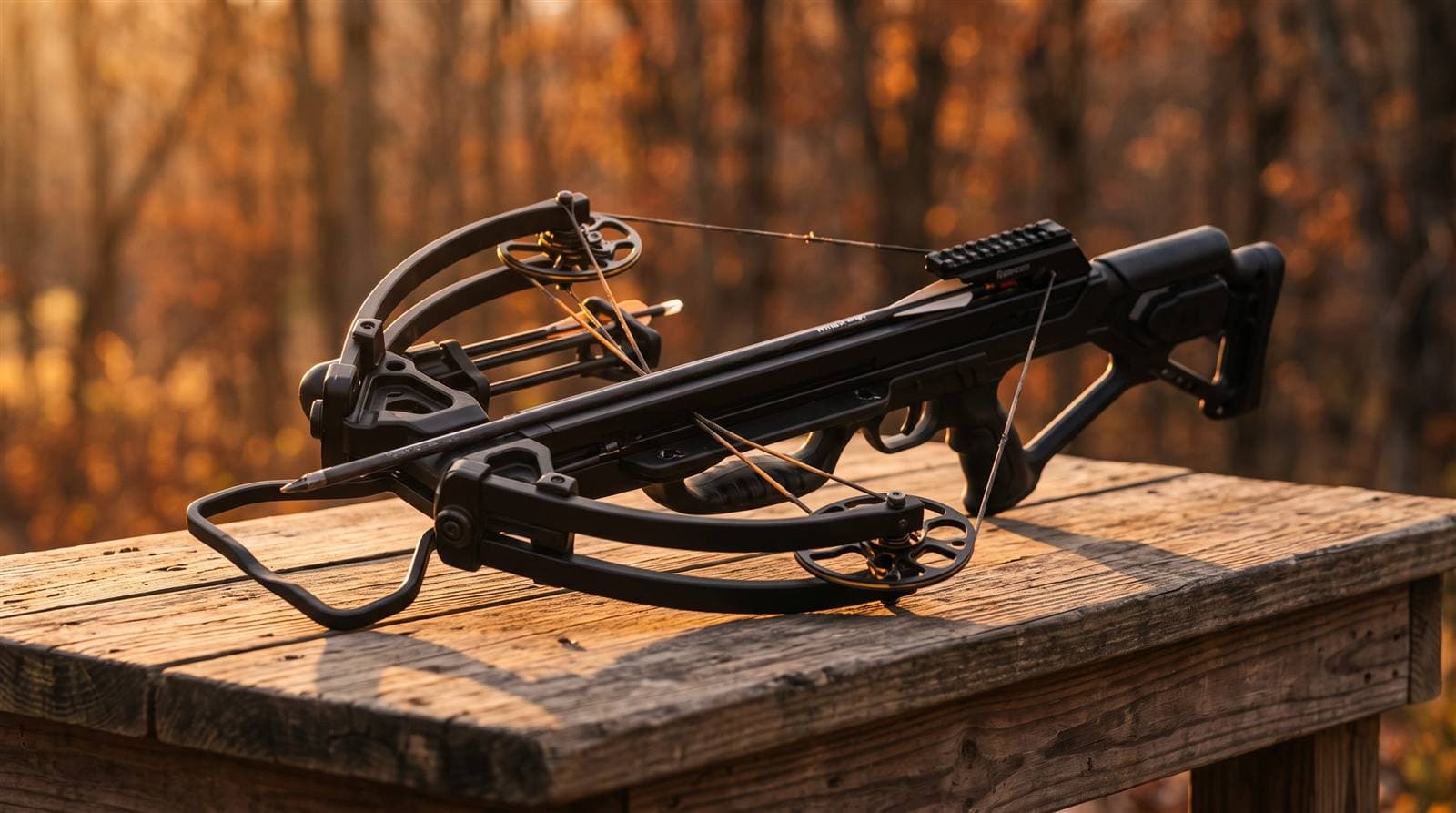
What Is String Latch?
The catch in the rail that holds the drawn string at full draw and releases it when the trigger is pulled, and one of the most safety-critical parts.
String Latch: definition
Also called: latch, string catch, latch assembly, sear latch, claw latch, roller latch
The string latch is the catch located at the rear of the rail that hooks or grips the string when it is cocked. It holds the full draw weight until the trigger releases it. Designs vary: some use a hooked claw, others a roller or rotating latch, and some add a secondary catch.
The latch is part of the wider trigger system. It connects the trigger blade to the string, so its fit, wear and cleanliness influence both safety and the feel of release. Many crossbows have a latch that blocks dry-firing when no bolt is seated. See dry-fire for why this matters.
For the latch to work correctly, the string must be centred on it. Uneven cocking can seat the string off-centre, causing misfires or uneven loading. Cocking aids such as a rope or crank help centre the string, which is covered in cocking-aid.
Latch types in plain language
| Latch style | How it holds the string | Notes |
|---|---|---|
| Claw latch | Hooks around the string | Common, simple |
| Roller latch | Cylinder rotates to release | Smooth release feel |
| Dual or secondary catch | Backup hold | Extra safety layer |
| Anti-dry-fire latch | Blocks release without a bolt | Model-specific behaviour |
Why String Latch matters
The latch holds hundreds of pounds of force in a small mechanism. Wear, dirt or damage can cause misfires or failure to hold, so it is one of the parts you should inspect most carefully.
Consistent string seating also affects accuracy. A string that sits differently each time changes where the bolt leaves the rail, which spreads your groups.
How to read it on a spec sheet
- Look for latch type and any anti-dry-fire feature in the description.
- Check whether the latch is serviceable or sealed.
- Note any mention of string-centring aids or cocking system compatibility.
- Read the care notes for the latch area.
- Check the warranty terms for trigger and latch components.
Common mistakes
- Cocking unevenly so the string seats off-centre.
- Lubricating the latch with the wrong product or too much of it.
- Opening the trigger housing against manual guidance.
- Ignoring a latch that feels gritty or inconsistent.
- Leaving the crossbow cocked unattended.
Latch checks before shooting
- Uncock, unload and check the safety is on.
- Look at the latch for debris, chips, wear and damage.
- Check that the string and serving show no wear where they meet the latch.
- Cock evenly with the method in your manual and confirm the string seats centrally.
- Confirm the safety engages and the latch holds without creeping.
- Do not shoot if anything seems off. Contact the maker.
See it in our reviews
- Excalibur Mag Air — rated 3.4/5
- TenPoint TRX Ultra — rated 4.9/5
Frequently Asked Questions
What does a string latch do?
It holds the cocked string at full draw and releases it when you pull the trigger. It carries the whole draw weight, so its condition is vital for safety and consistent shooting.
What types of crossbow latches exist?
Common styles include claw latches, roller latches and designs with a secondary catch, and some include anti-dry-fire protection. Each maker uses its own design, so check the manual for your model.
Why must the string be centred on the latch?
An off-centre string can load the latch and limbs unevenly, causing misfires, inconsistent release and uneven wear. Using your cocking aid properly helps ensure the string seats centrally.
How do I clean a string latch?
Follow your manual. Many makers advise light cleaning of the visible latch area and sparing lubrication only where specified. Avoid disassembling the trigger housing unless the manual allows it, and have a dealer service it.
Can a latch fail?
Yes, through wear, damage or contamination. Signs include a gritty feel, failure to hold the string or inconsistent release. Stop using the crossbow and seek service if you notice them.
What is the relationship between latch and safety?
The safety blocks the trigger from releasing the latch, but it does not replace safe handling. Treat the crossbow as ready to fire whenever it is cocked.
Does the latch affect accuracy?
It can. A consistent, clean release and a centred string support repeatable shots, while a worn latch can add variation. It works together with the trigger, string and bolt.
Keep learning
Guides that use this term
- GuideHow to Cock a Crossbow: Rope vs CrankHow to cock a crossbow step by step with a rope or crank, why hand cocking rarely works, and the mistakes that cause uneven strings and injuries.Read the guide
- GuideCrossbow Safety Rules for BeginnersCrossbow safety rules for beginners: finger placement, never dry-firing, safe cocking and de-cocking, range etiquette and storage habits that prevent injury.Read the guide
- GuideHow to Maintain a CrossbowHow to maintain a crossbow: string waxing, rail and moving-part lubrication, bolt inspection, storage, and when to see a technician.Read the guide
Related terms
- Trigger SystemThe mechanism that holds the cocked string, releases it when you press the trigger, and includes safeties that help prevent accidental release.
- Safety SwitchA manual control that blocks the trigger from releasing the string, and which many crossbows engage automatically when cocked.
- Dry FireReleasing the string with no bolt on it, which sends the stored energy into the crossbow itself and can cause serious damage.
- Cocking AidA rope or crank device that reduces the effort needed to draw the string and helps it seat evenly in the latch.
- String and CablesThe bowstring that drives the bolt and the cables that link the cams on a compound crossbow, wear parts that need regular inspection, waxing and timely replacement.
- RailThe flight deck on top of a crossbow that guides the bolt from the string to the muzzle and often carries a scope mount for accessories.
Browse the gear
Definitions are general information. Manufacturer figures vary, so follow your crossbow's manual and verify local laws with the relevant authority.