Best Crossbow Scopes of 2026
Best crossbow scopes of 2026: eight reviewed picks from budget optics to laser rangefinding models, plus how to choose magnification, reticle and eye relief.
Our top pick
Burris Oracle X
Typical price
$989–$999
Approx., varies by seller
Bolts drop far faster than bullets, so a crossbow scope has to keep its aiming points honest across a wide range of bolt speeds. This guide is for hunters and target shooters choosing an optic, from a $45 variable-zoom scope to laser rangefinding models near $1,000. We group picks by what you need the scope to do rather than one overall ranking.
Every pick is a scope with a full review, and the ratings, prices and links below come straight from those reviews so they always match.
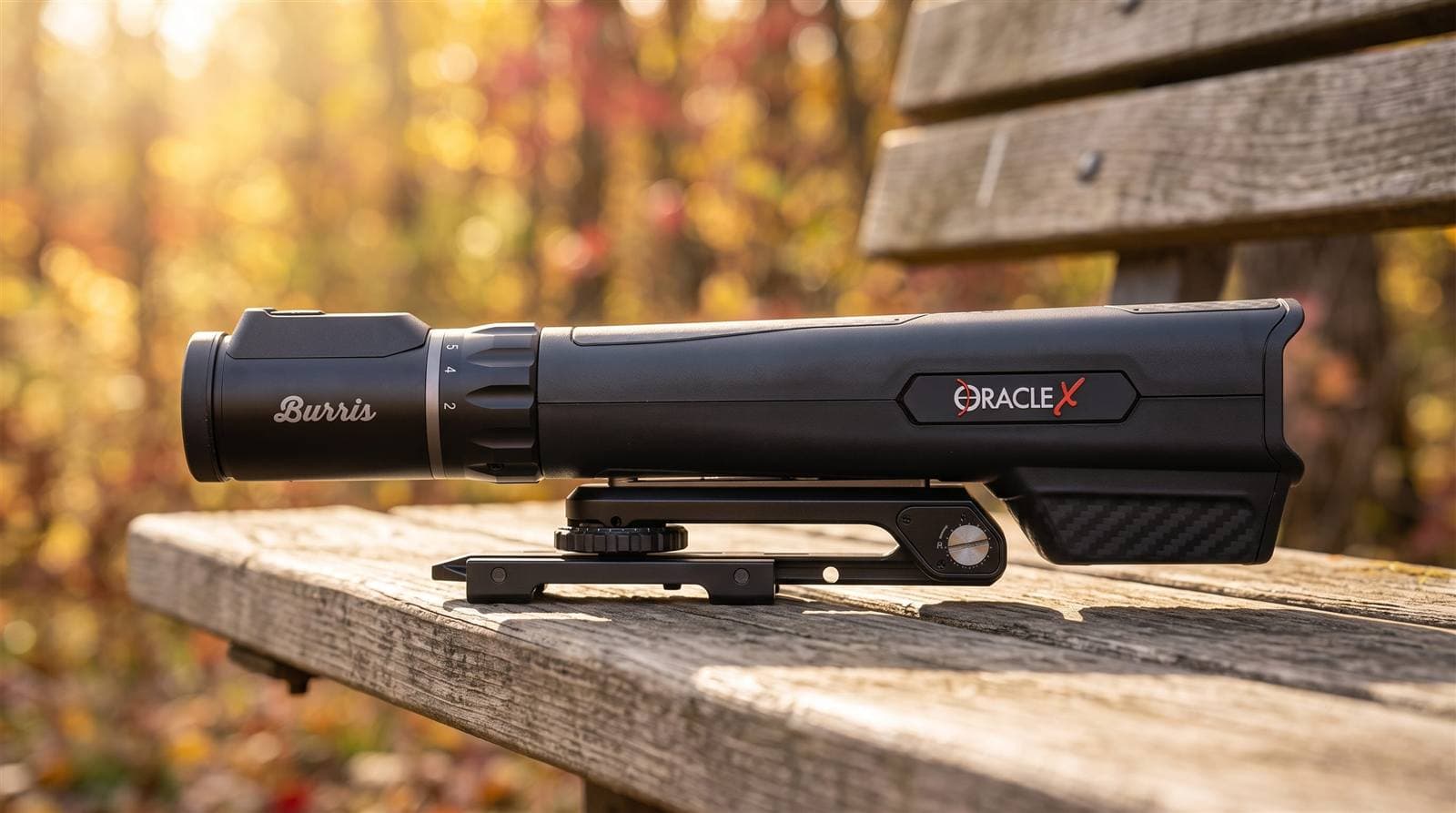
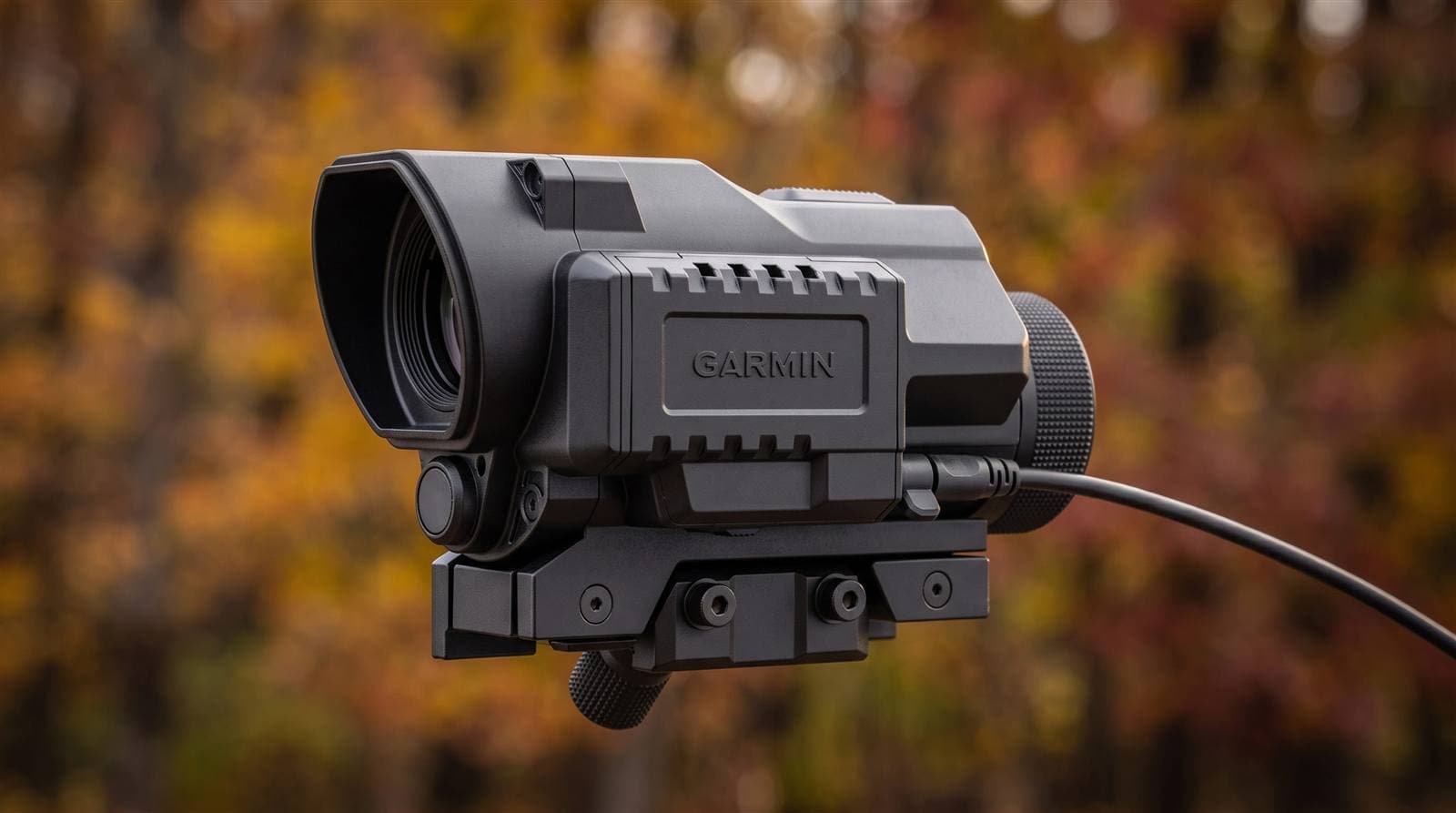
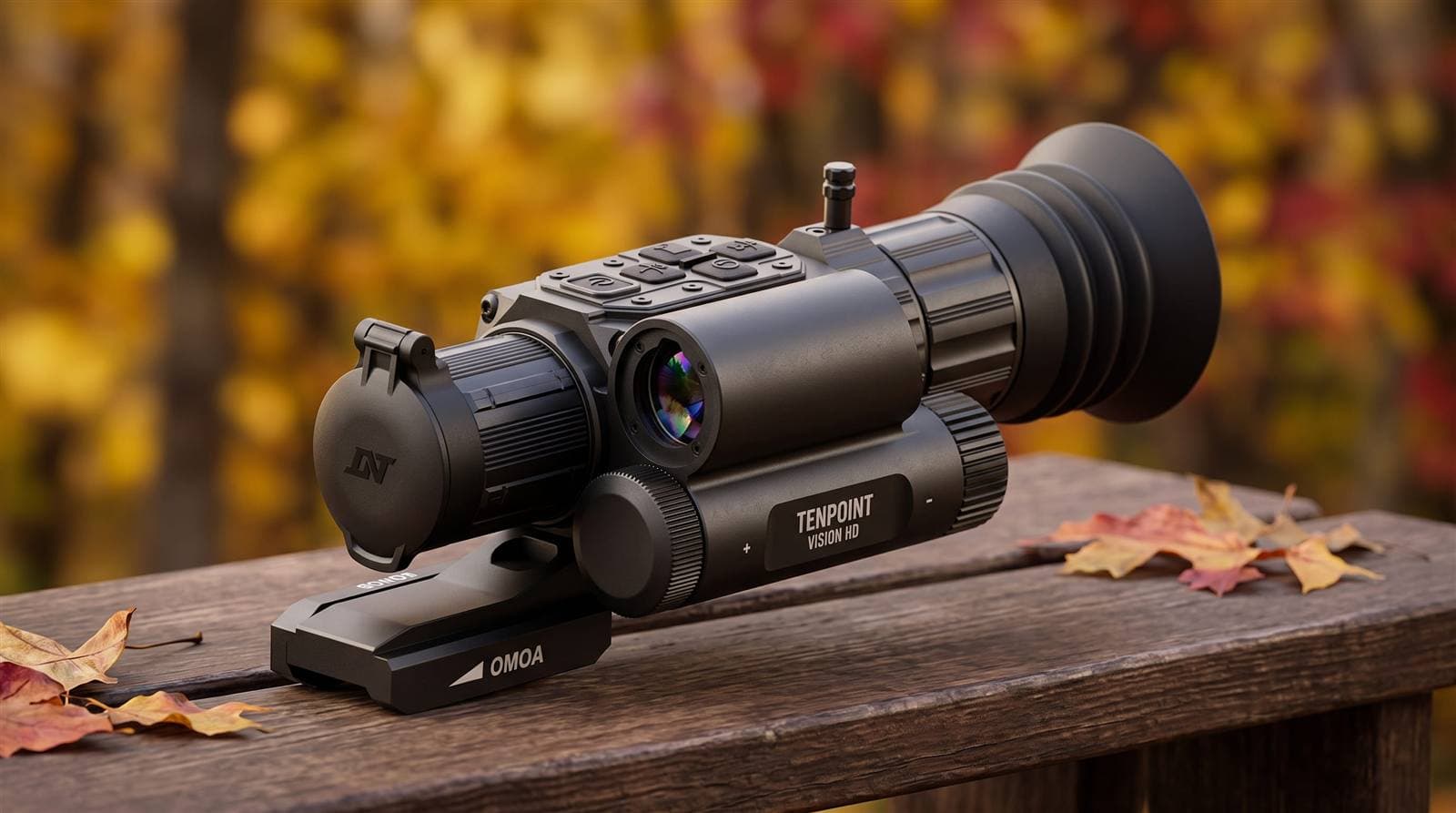
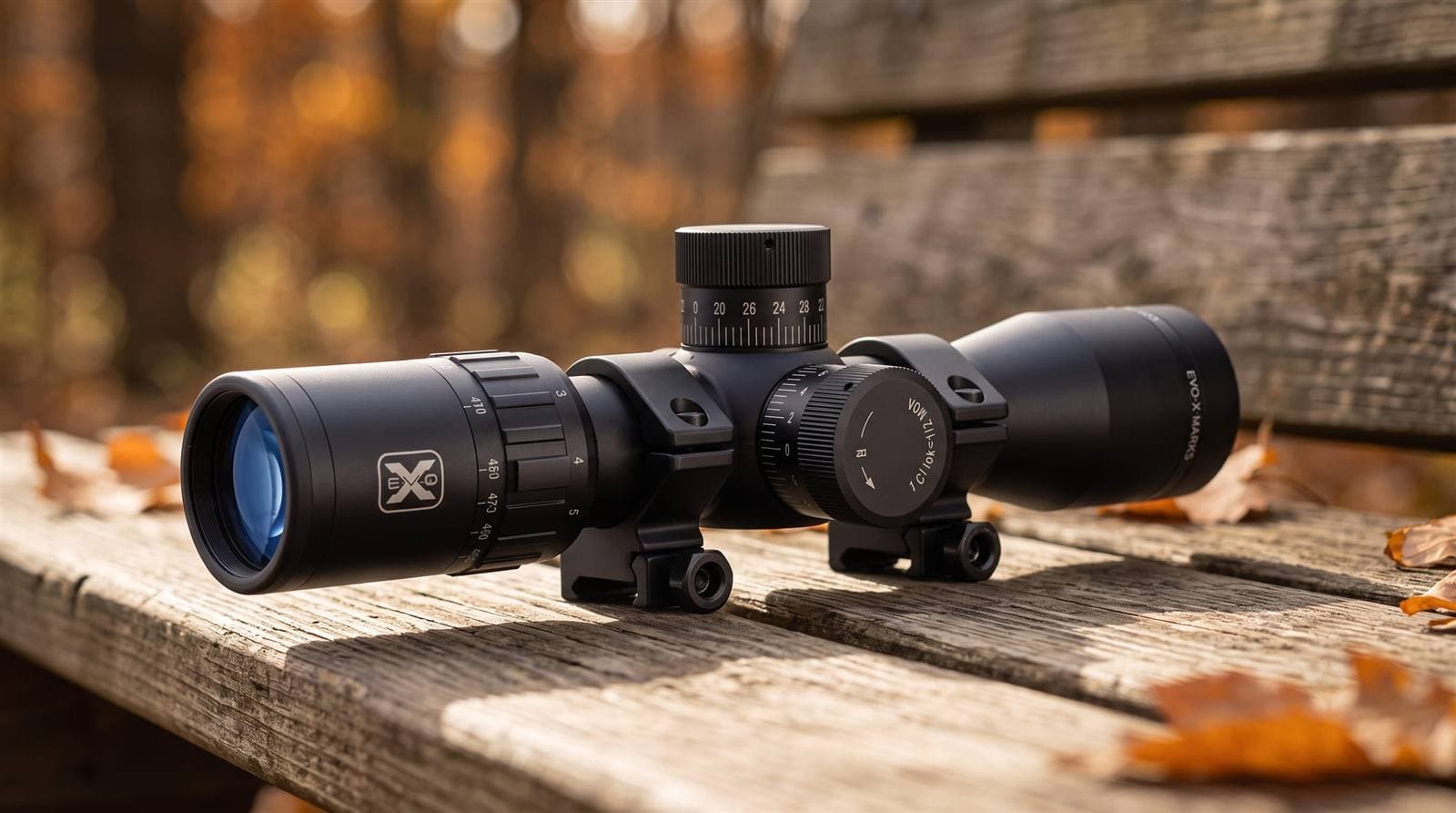
Best Premium Rangefinding Scope: Burris Oracle X
It pairs a 2-7x32 scope with an integrated laser rangefinder and inclinometer, so it ranges the target, accounts for shot angle and shifts the aiming point for you. The aiming point stayed accurate as we zoomed from 2x to 7x, and a wireless remote fires the laser without breaking cheek weld.
Its long-range ranging is more a scouting tool than a shooting one, since most ethical crossbow shots are far shorter.
- My laser rangefinder testing confirmed reliable ranging to a reflective target near Burris's 500-yard claim, and consistent readings on a deer-sized target out to 200 yards
- The integrated inclinometer correctly compensated for shot angle in my simulated treestand testing, adjusting the displayed aiming point rather than requiring manual angle estimation
- Magnification compensation kept the aiming point accurate as I zoomed between 2x and 7x, solving the fixed-magnification limitation I've flagged on simpler SFP crossbow scopes
- At $989–$999, this is a premium investment — several times the cost of a standard non-rangefinding crossbow scope
- At 30.8 oz, this is a substantially heavier optic than a basic scope, adding real weight to a crossbow, especially for hike-in or backcountry hunters
- The additional electronics (rangefinder, inclinometer, remote) mean more that could potentially fail compared to a simple mechanical reticle scope
Best Auto-Ranging Scope: Garmin Xero X1i
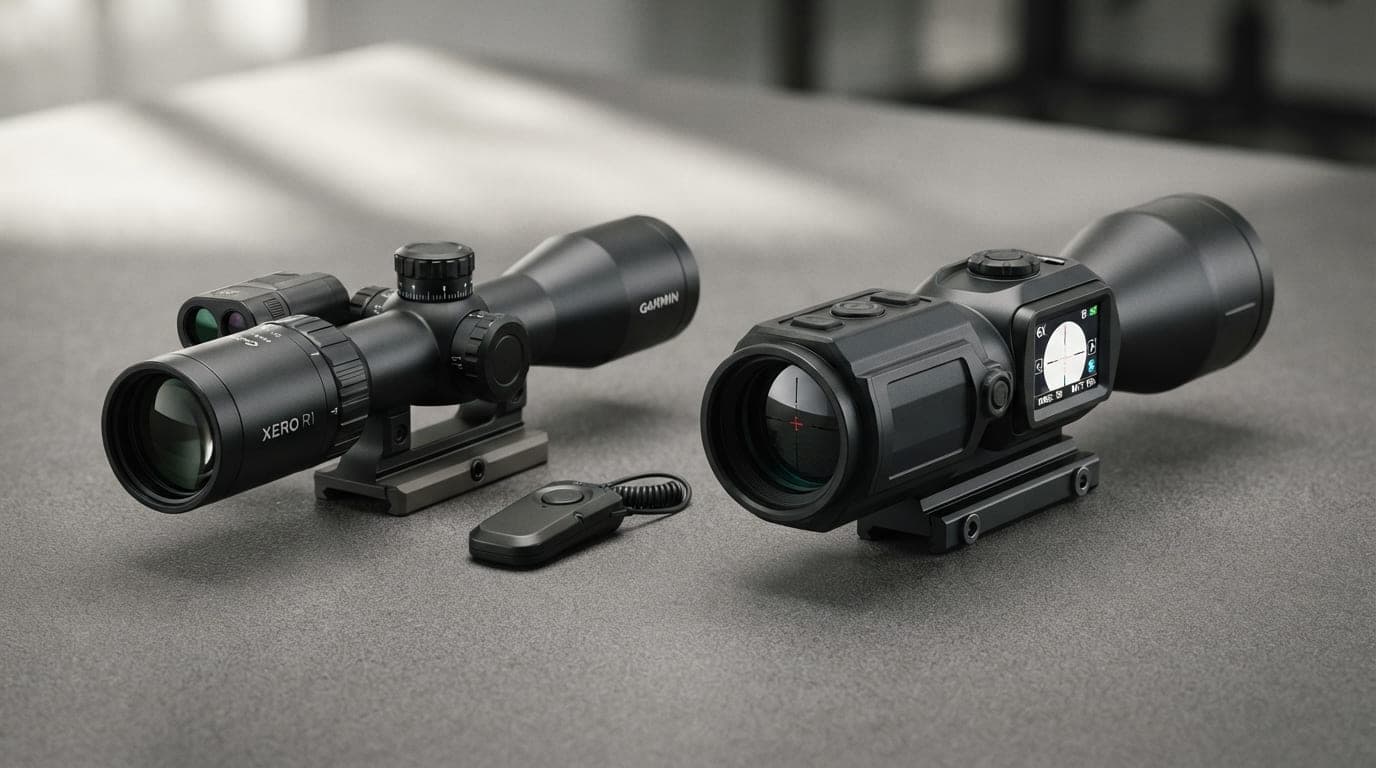
The Xero X1i ranges continuously with no button press, and the illuminated aim point updated on its own as we moved between distances, tracking accurately to 80 yards against our chronographed speeds. Laser Locate GPS marks where you shot from.
It is fixed 3.5x, weighs 1.9 lbs with the integrated mount, and its long feature list has a learning curve. If you want zoom, look at the Oracle X or the Vision HD.
- My testing confirmed the Xero X1i's continuous auto-ranging worked without any button press — the displayed aim point updated automatically as I moved between distances
- Auto-calibrated aim points tracked accurately against my test crossbow's chronographed speed profile at distances out to 80 yards, within Garmin's rated bolt speed compatibility of up to 650 FPS
- The illuminated aim point displayed cleanly without reticle clutter obstructing the target, and auto-brightness adjustment kept it visible across changing light conditions without manual dimming
- At $949–$999, this is priced at the top of the crossbow scope market, competing directly with the most advanced digital and rangefinding optics available
- At 1.9 lbs with the integrated mount, this is a substantially heavy optic, adding real weight to a crossbow setup
- The fixed 3.5x magnification offers no zoom flexibility, unlike variable-power scopes that let shooters adjust field of view
Best Digital Scope: TenPoint Vision HD
This 3-12x digital scope shows a drop-compensated aiming point from pre-loaded ballistic profiles and records 1080p video, with a recoil-triggered mode that starts recording at the shot. At about 18.4 oz it is lighter and a little cheaper than the Oracle X.
The five ballistic profiles suit TenPoint speeds best; other crossbows may need the closest match.
- My rangefinder testing confirmed reliable readings across the scope's claimed 5-to-1,100-yard range, with the pre-loaded ballistic profiles instantly displaying an accurate drop-compensated aiming point
- The built-in HD video recorder at 1920x1080/60Hz captured usable hunt footage, and the Auto RAV recoil-triggered mode reliably started recording at the moment of the shot without manual activation
- Integrated angle compensation correctly adjusted the displayed aiming point during my simulated treestand testing, matching what I've verified on comparable premium rangefinding scopes
- At $889–$899, this is a premium investment, priced similarly to other flagship rangefinding scopes on the market
- The digital display and rechargeable 21700 battery mean this scope depends entirely on electronics working correctly — there's no simple mechanical fallback if the battery dies mid-hunt
- At 1.15 lbs, it's lighter than some rangefinding competitors, but still meaningfully heavier than a basic glass-reticle scope with no electronics
Widest Speed Range: TenPoint EVO-X Marksman Elite
A 2-8x scope with nine aiming references from 20 to 100 yards, its reticle tracked accurately across the rated 300-550 FPS range and held zero through weeks of durability testing. It costs well under the digital rangefinding scopes above.
It has no ranging or GPS features, so you still estimate distance yourself.
- My testing confirmed the variable speed/arrow drop-compensation reticle tracked accurately for crossbows across the full rated 300-550 FPS range, an advantage over single-speed calibrated scopes
- The 2-8x fully multi-coated optics delivered noticeably brighter, higher-contrast images in low-light dawn and dusk testing than fixed-power budget scopes I've reviewed
- External, micro-adjustable target turrets let me dial in precise windage and elevation corrections by hand, without needing tools
- At $479–$499, this is a premium-tier price for a traditional optical scope, even though it sits well below digital rangefinding models
- Nine distinct aiming references require a learning curve to memorize correctly under field pressure, more than simpler BDC reticles
- This is a traditional optical scope without GPS shot-marking or auto-ranging features found on digital competitors like the Garmin Xero X1i
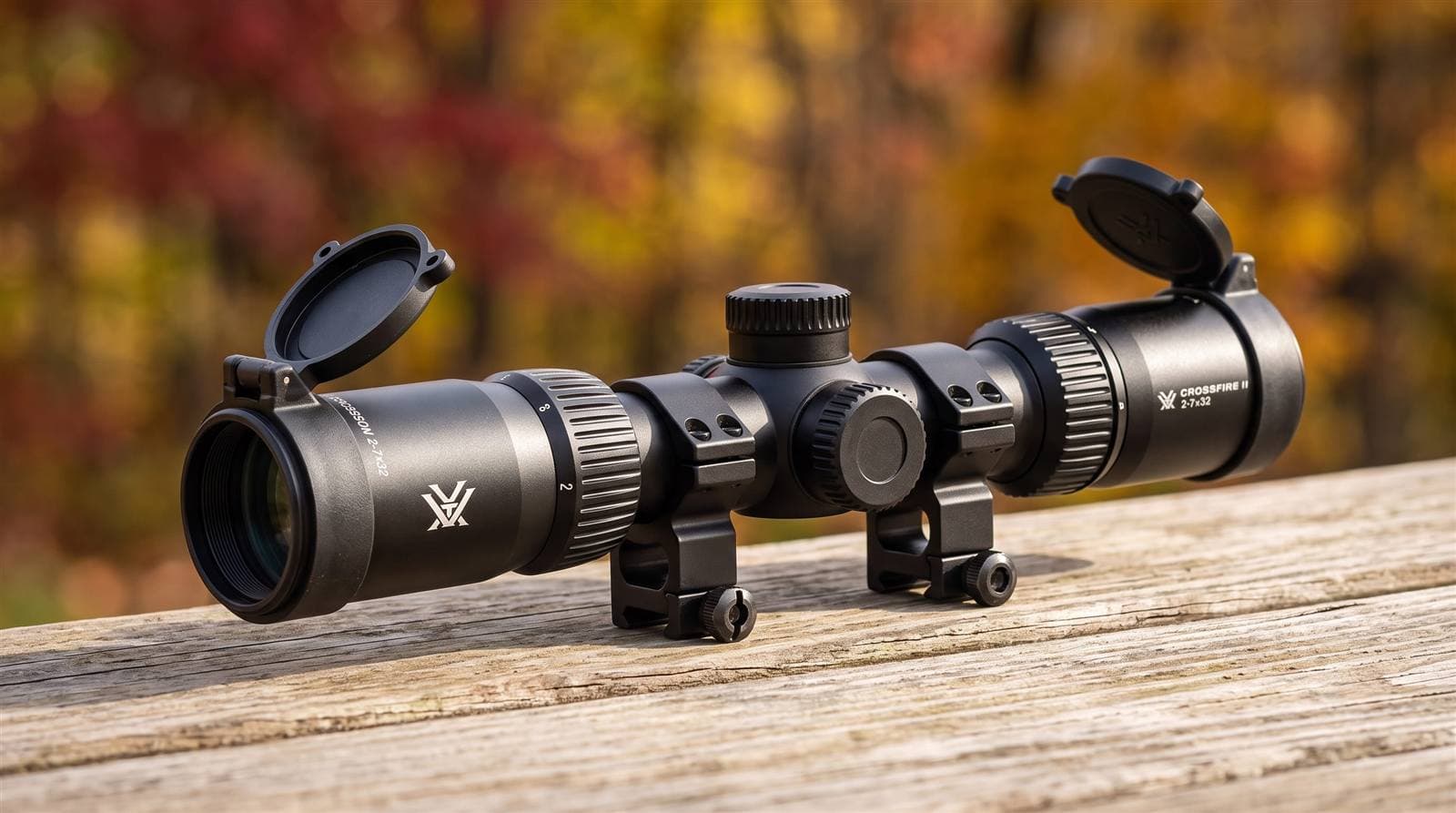
Best Value Illuminated Scope: Vortex Crossfire II 2-7x32
The turrets moved in precise 1/2 MOA increments with no measurable drift, and the XBR-2 reticle's 20-to-100-yard hold marks matched our bolt-drop data once calibrated to our crossbow's speed. It ships as a kit with rings, flip caps and a neoprene cover.
It does not range for you. Its Second Focal Plane design also means the hold marks are accurate only at 7x, so plan to shoot at full power.
- My tracking test confirmed the turrets moved in precise 1/2 MOA increments with no measurable drift after repeated adjustments and returns to zero
- The illuminated XBR-2 reticle's 20-to-100-yard hold marks matched my chronographed bolt drop data closely once properly calibrated to my test crossbow's speed
- At 2.7 inches, eye relief was forgiving enough to avoid eyebrow strikes from crossbow recoil across every test session, including with heavier-poundage crossbows
- The Second Focal Plane (SFP) design means the reticle's hold marks are only accurate at maximum magnification (7x), requiring shooters to stay at that power setting for the ranging marks to work as intended
- At 9.5 inches and 14 ounces, this is a full-size scope that adds real bulk and weight to a crossbow compared to compact red dot options
- The fixed 40-yard zero calibration point means shooters using significantly different bolt weights or crossbow speeds will need to re-verify hold marks rather than trusting them out of the box
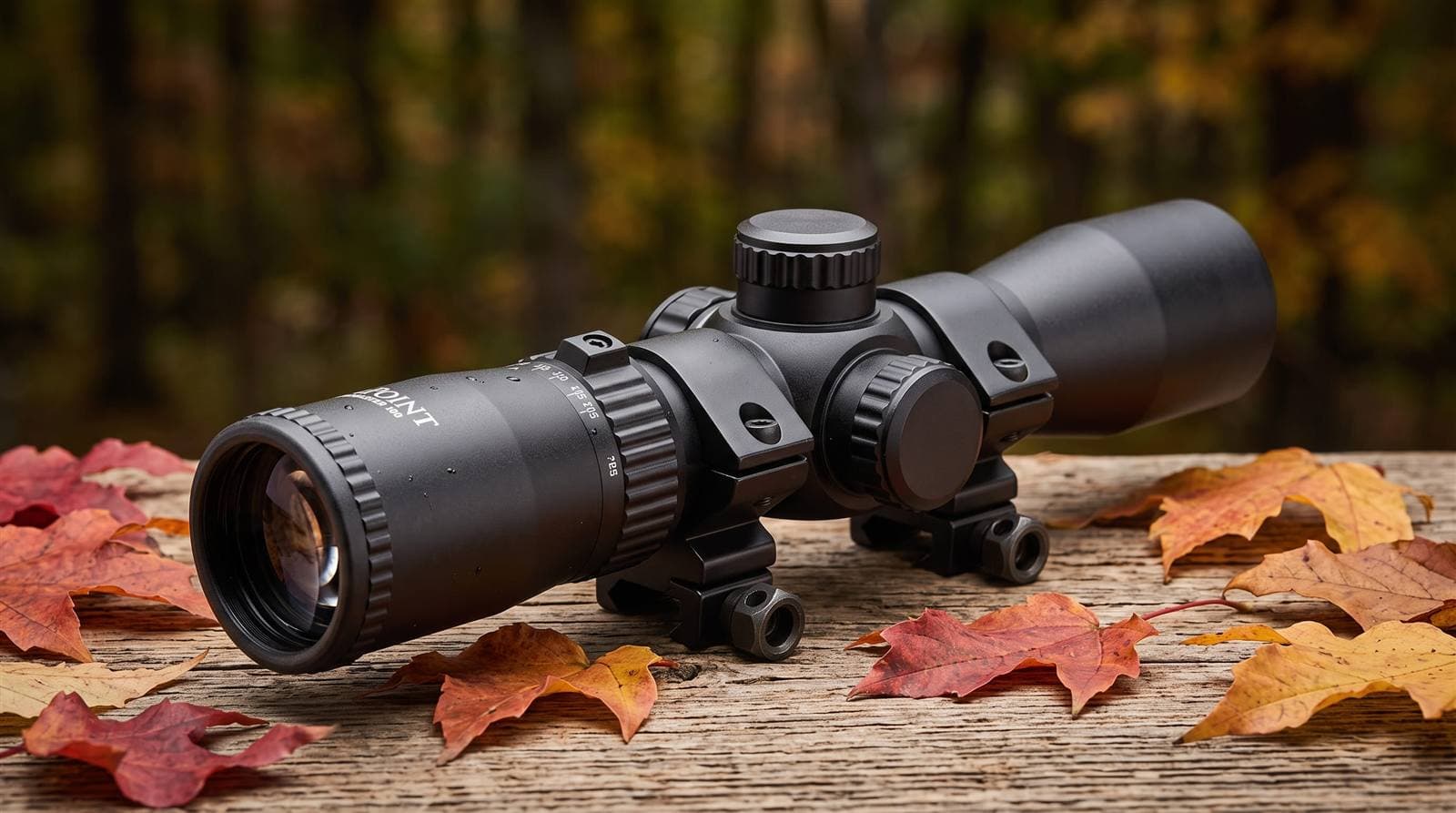
Best Lit Multi-Point Reticle: TenPoint RangeMaster 100
Nine illuminated aiming points tracked accurately across the 380-505 FPS range we tested, and every point is lit, so the full 100 yards stayed usable at dusk. Rings and flip-up caps are included.
It is calibrated only for 380-505 FPS crossbows, and the nine points take practice. If you do not need them, the Vortex covers most hunting distances for less.
- My testing confirmed all nine illuminated aiming points tracked accurately against actual point of impact across the full 380-505 FPS speed range on my test crossbows
- The infinite-position rheostat control gave me precise, granular illumination brightness adjustment rather than fixed intensity settings, an improvement over stepped brightness dials
- Every aiming point being illuminated — unlike scopes that leave longer-range references non-illuminated — meant my low-light testing found the full 100-yard range usable at dusk
- At $295–$355, this sits above true budget scopes while still requiring manual reticle referencing rather than digital rangefinding
- Nine illuminated aiming points across three groupings (dots, crosshairs, chevrons) require practice to use confidently and quickly under field pressure
- This scope is calibrated specifically for 380-505 FPS crossbows, so buyers with speeds outside that band should look at TenPoint's other scope options
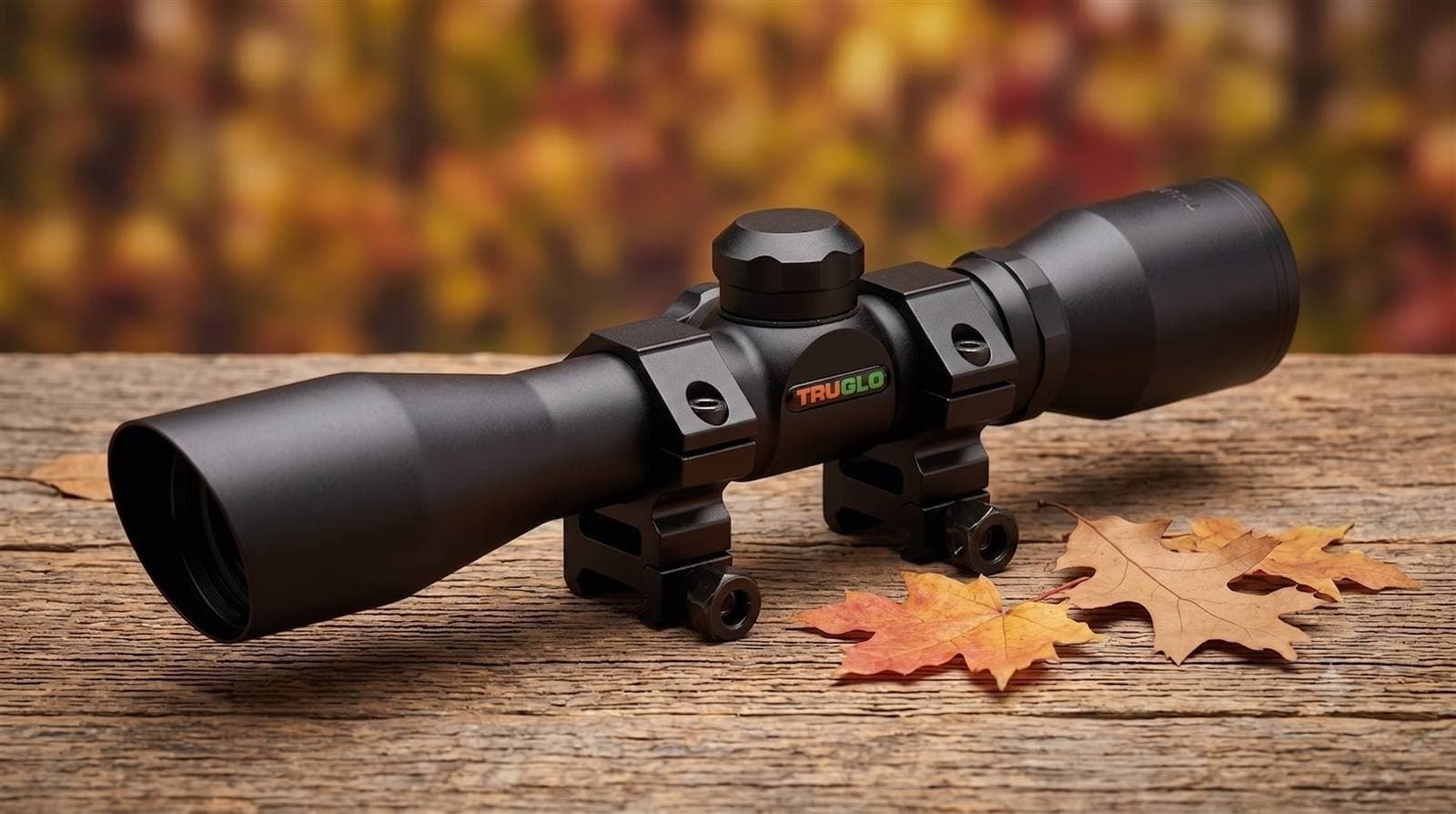
Best Budget Scope: TruGlo 4x32 Compact
A fixed 4x scope with a dual-color illuminated BDC reticle and Weaver-style rings included. The aiming points held zero from 20 to 50 yards once sighted in, and at 10.4 oz it adds little weight.
The reticle is calibrated for a 20-50 yard band, so it suits shots inside 50 yards.
- My testing confirmed the BDC/rangefinder reticle's aiming points held accurate zero from 20 to 50 yards once properly sighted in, a solid result for the price
- Fully-coated lenses delivered noticeably brighter, clearer images through my low-light dawn and dusk testing than I expected at this price point
- The single-piece aircraft-grade aluminum housing showed no shift in zero across my multi-week durability and recoil testing
- At 4x32mm, this is a fixed low-power compact scope, and shooters who want higher magnification for longer-range shooting will find it limiting
- The reticle's specific aiming points are calibrated for a 20-50 yard trajectory band, so my testing found it less useful for crossbows shooting well outside that speed/range profile
- Battery for the illuminated reticle is a separate component to track and replace, unlike scopes with sealed integrated illumination systems
Best Under $60: CVLIFE 3-9x40 Compact
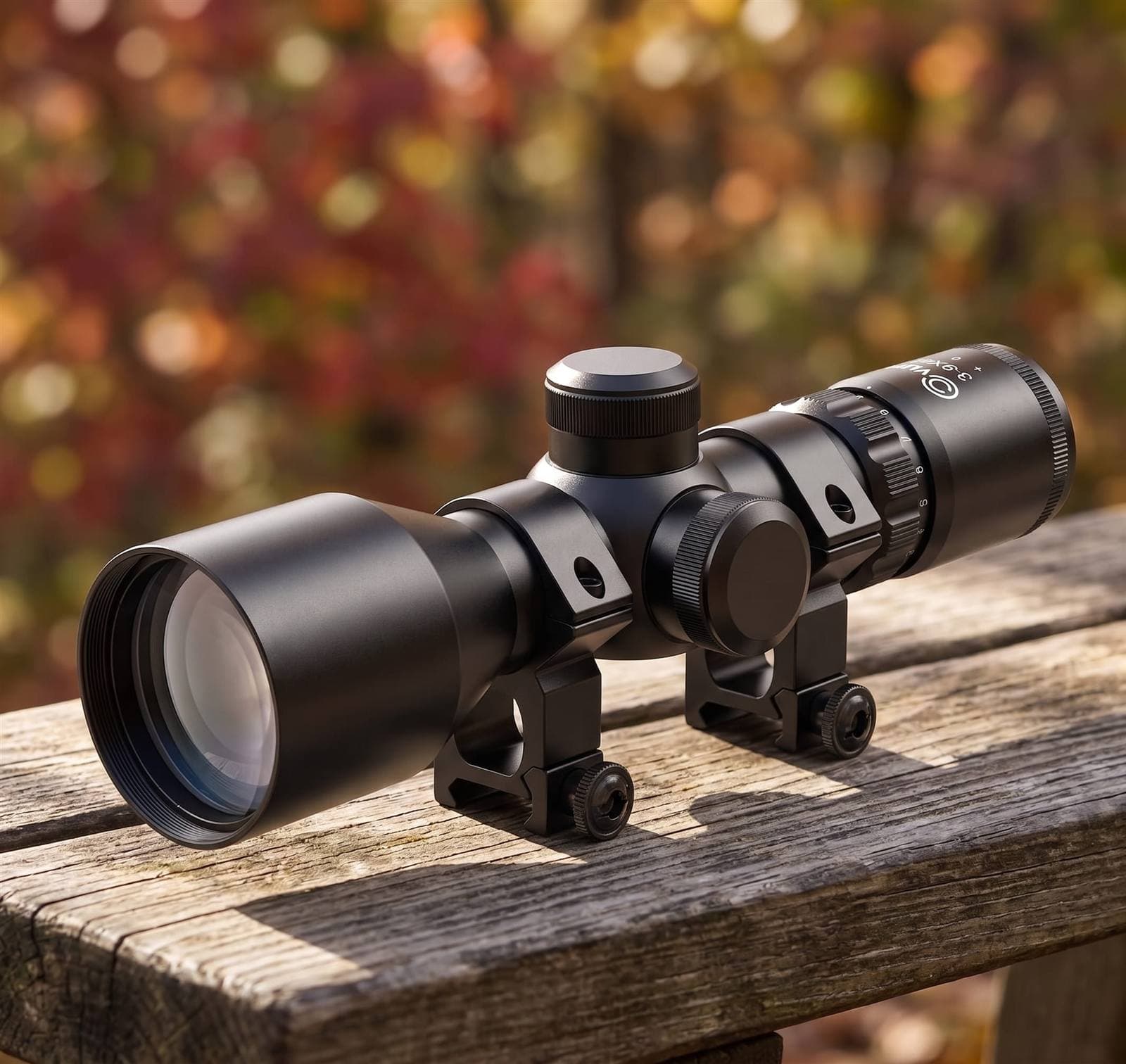
The cheapest scope here is a variable 3-9x with a simple crosshair reticle and two 20mm rail mounts included. The 3-9x range worked as advertised, and the nitrogen-filled housing did not fog in our cold and humidity tests.
It is an entry-level optic, so expect less tracking precision than the Vortex, and its 2.7-3.3 inch eye relief is shorter than dedicated crossbow scopes. Good for a first crossbow or a spare.
- My testing confirmed the 3-9x variable zoom worked as advertised, giving us usable magnification range from close-in shots up to longer distances on one scope
- The nitrogen-filled, fully sealed housing showed no fogging in my low-temperature and humidity testing, a real strength for a scope this affordable
- Included 20mm mounts meant my test setup was ready to sight in immediately, with no separate rail hardware to source
- This scope is designed and marketed primarily as a rifle/airgun optic, and buyers should confirm rail compatibility before mounting on a crossbow
- At 2.7-3.3 inches, eye relief is shorter than dedicated crossbow scopes, which I found less forgiving under recoil at the low end of that range
- The simple crosshair reticle lacks the rangefinding aiming points found on purpose-built crossbow scopes, so distance estimation is left entirely to the shooter
Compare All Eight Scopes
Swipe sideways to compare →
| Product | Type | Price | Rating | Buy |
|---|---|---|---|---|
| Burris Oracle X | Scopes | $989–$999 | 4.4 / 5 | Check price |
| Garmin Xero X1i | Scopes | $949–$999 | 4.4 / 5 | Check price |
| TenPoint Vision HD | Scopes | $889–$899 | 4.3 / 5 | Check price |
| EVO-X Marksman Elite | Scopes | $479–$499 | 4.7 / 5 | Check price |
| Vortex Crossfire II 2-7x32 | Scopes | $195–$215 | 4.6 / 5 | Check price |
| TenPoint RangeMaster 100 | Scopes | $295–$355 | 4.6 / 5 | Check price |
| TruGlo 4x32 Compact Scope | Scopes | $69–$99 | 4.3 / 5 | Check price |
| CVLIFE 3-9x40 Scope | Scopes | $45–$55 | 4.1 / 5 | Check price |
Magnification differs more than price does, so check it against how you hunt:
| Scope | Magnification |
|---|---|
| Burris Oracle X | 2-7x, 32mm objective |
| Garmin Xero X1i | 3.5x fixed |
| TenPoint Vision HD | 3-12x (digital) |
| TenPoint EVO-X Marksman Elite | 2-8x |
| Vortex Crossfire II 2-7x32 | 2-7x, 32mm objective |
| TenPoint RangeMaster 100 | 2-7x, 32mm objective |
| TruGlo 4x32 Compact | 4x32 fixed |
| CVLIFE 3-9x40 Compact | 3-9x, 40mm objective |
Which One Should You Buy?
- Most hunters: the Vortex Crossfire II, an illuminated variable scope with rings included.
- You shoot a faster crossbow: the RangeMaster 100 or the EVO-X Marksman Elite for reticles built to track across speeds.
- Ranging is worth the money: the Burris Oracle X if you want zoom, the Garmin Xero X1i for automatic ranging, or the TenPoint Vision HD for video.
- Tight budget: the TruGlo 4x32 for a fixed 4x, or the CVLIFE 3-9x40 for variable zoom.
How to Choose a Crossbow Scope
The essentials are below. Our step-by-step guide to choosing a crossbow scope walks through each decision in more depth.
Magnification: Fixed vs. Variable
A fixed scope like a 4x is simple and light, with nothing to adjust. A variable scope such as 2-7x or 3-9x lets you zoom out for close shots and in for distant ones. Most crossbow hunting happens inside 60 yards, so you rarely need high magnification. Very high zoom mostly makes the sight picture shakier and harder to find your target in.
Reticle Type
Crossbow reticles are usually a BDC (bullet drop compensating) or multi-aiming-point design. Each dot or hash is calibrated to a distance for a specific bolt speed. That calibration is the key point: a reticle set for a 350 FPS crossbow will not line up on a 450 FPS one. Check the speed range the reticle is built for against your crossbow's chronographed FPS. Turret clicks are usually quoted in MOA increments, which is what you use when correcting your zero. Our how fast does a crossbow bolt travel guide shows the speeds across the crossbows we've reviewed.
Eye Relief and Mounting
Crossbow scopes need generous eye relief and are typically mounted well forward, so you can keep a safe, comfortable distance from the optic. Mounting height and ring quality affect zero retention, so use proper rings and torque them evenly. Once mounted, follow our how to sight in a crossbow scope guide to zero at 20 yards and confirm each aiming point.
Illumination
An illuminated reticle helps a great deal at dawn and dusk, when many deer move. It's worth paying a little more for, especially if you hunt low-light windows.
Rangefinding: Worth It?
A rangefinding scope removes the biggest source of missed shots: misjudged distance. It also adds weight, cost, and electronics that need batteries. If you regularly hunt open fields or shoot across unknown distances, it can be worth the investment. If you hunt close from a stand where you know your ranges, a good mechanical reticle is often enough.
Reading Scope Specs Without the Jargon
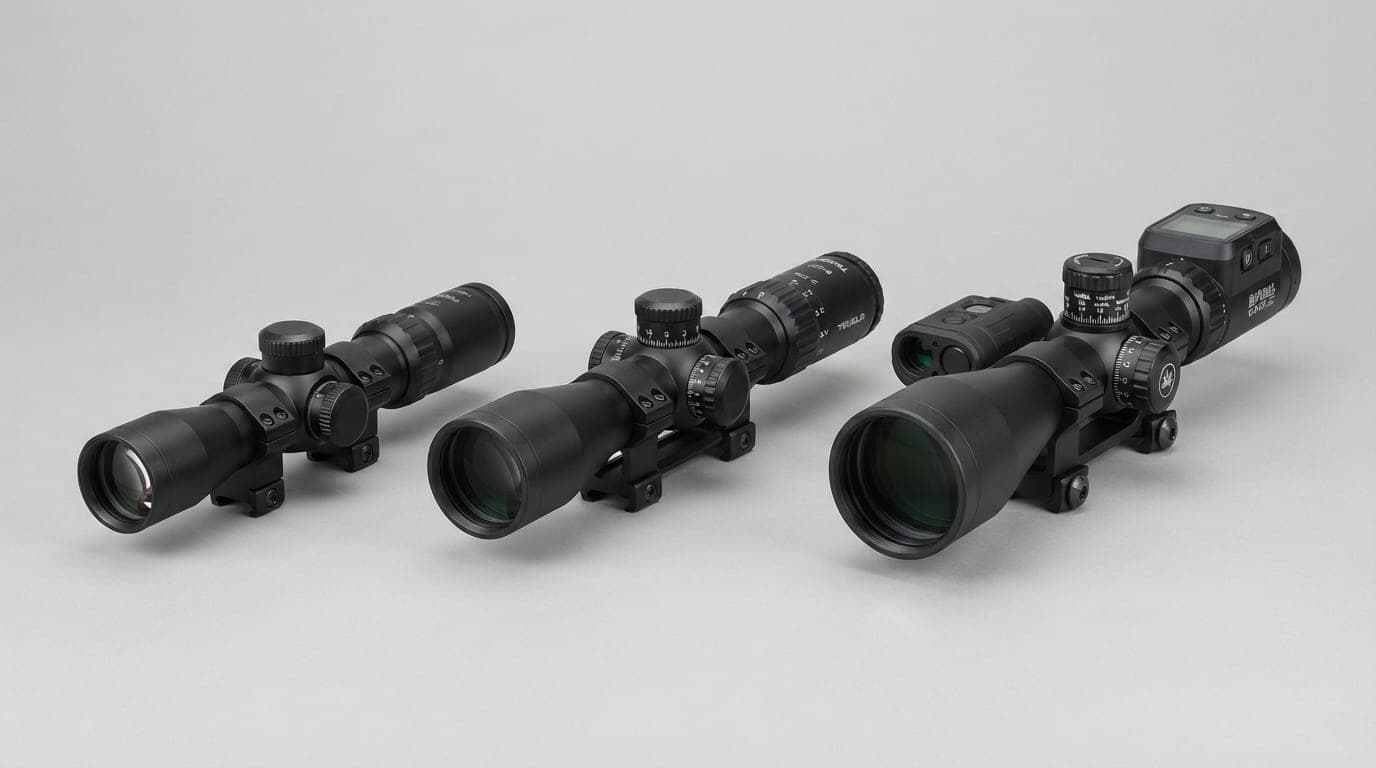
Spec sheets mix optical and mechanical terms, and a few of them decide whether a scope suits you.
| Term | What it means for you | Where it shows up here |
|---|---|---|
| Objective lens (32mm, 40mm) | Larger lenses gather more light but add bulk | Oracle X, Vortex and RangeMaster use 32mm; CVLIFE uses 40mm |
| First vs. second focal plane | Whether reticle marks scale with zoom | The Vortex is second focal plane, so hold marks are accurate at 7x only |
| Rated speed range | The bolt speeds the reticle was calibrated for | EVO-X 300-550 FPS; RangeMaster 380-505 FPS |
| Illumination | A lit reticle for low light | Vortex, RangeMaster and TruGlo |
Mounting Safely
Mount the scope so you keep a safe distance from the eyepiece when the crossbow fires, and never place a hand or thumb above the rail. Our crossbow safety rules for beginners guide covers the habits that go with a new optic.
Questions Worth Asking Before You Pay More
- Do I know my stand distances, or do I misjudge range in open ground?
- Will I carry this crossbow a long way, making optic weight a real cost?
- Am I comfortable with batteries and menus, or do I want a mechanical reticle that cannot fail?
Answering those honestly usually settles the choice between a mechanical reticle and a rangefinding scope faster than any spec comparison.
What You Actually Get at Each Price Tier
Under $100: A Working Sight
At this level you're buying a functional, lightweight optic. The TruGlo 4x32 and CVLIFE 3-9x40 both include mounting hardware. What you give up is refinement: expect less precise adjustments and less confidence that the zero survives hard use across a season.
$195-$500: The Reliability Jump
This is where most hunters should shop. The step up buys repeatable turret adjustments, an illuminated reticle and better low-light glass. The Vortex Crossfire II, TenPoint RangeMaster 100 and EVO-X Marksman Elite live here, and the practical difference over a $50 scope is less time re-checking your zero.
$850 and Up: Ranging and Electronics
Above roughly $850 you're paying for electronics: laser or auto-ranging, inclinometers, ballistic profiles, GPS shot marking and, on the Vision HD, video. That is worth it when distance estimation is your main source of misses, and not when you hunt short, known distances.
Common Crossbow Scope Mistakes
Buying for the Wrong Bolt Speed
The most common problem is a reticle calibrated for a different speed than the crossbow you shoot. A slow-crossbow reticle on a fast crossbow will put your holds off at every distance past your zero. Always match the scope's rated speed range to your crossbow before you buy.
Skipping the Sight-In After Mounting
A scope isn't ready to hunt with just because it's mounted. Zero it at 20 yards, then confirm each aiming point at the distances you'll actually shoot. Check it again at the start of each season and after any hard knock in transport.
Over-Buying Magnification
High magnification feels like an upgrade, but on a crossbow it mostly makes the sight picture harder to hold steady and harder to acquire quickly. A 2-7x scope covers nearly every crossbow hunting situation.
Ignoring Weight and Balance
A heavy optic changes how a crossbow carries and shoulders. The Oracle X at 30.8 oz is substantially heavier than a 10.4 oz TruGlo, which matters on long walks to a stand.
Match the Scope to Your Crossbow
A scope is only as good as its match to your crossbow. High-speed models like the Ravin R29X and TenPoint TRX Ultra push bolts fast enough that a reticle calibrated for slower crossbows can land noticeably off at longer holds, so a multi-speed reticle or a rangefinding scope is the safer choice there. On budget packages like the Barnett Hyper Whitetail 410, the bundled scope is serviceable, and upgrading to a Vortex-class optic is a common first improvement. If you want illumination and aimpoints that can be matched to your bolt speed, Ravin's illuminated scopes offer a red and green reticle with FPS adjustment and aimpoints to 100 yards, at $329 to $599 depending on the model; see the Ravin illuminated scope review.
If you're still choosing a crossbow, our best crossbows of 2026 guide is a good place to start.
Check the Rated Speed Range Against Your Crossbow
This is the one test that decides whether a reticle will work. Two crossbows from our own reviews show how it plays out, using the speeds measured in those reviews.
| Your crossbow | Chronographed speed (from review) | RangeMaster 100 (380-505 FPS) | EVO-X Marksman Elite (300-550 FPS) | Buy |
|---|---|---|---|---|
| Ravin R29X | 444-454 FPS | Inside range | Inside range | Check price |
| TenPoint TRX Ultra | 511-517 FPS | Above range | Inside range | Check price |
The rule is simple: if your measured speed sits inside the rated band, the printed aiming points are meant to line up. If it sits outside, either pick a different scope or plan to rebuild your holds by shooting at each distance. The RangeMaster review lists a 380-505 FPS calibration, so a 515 FPS crossbow falls outside it.
A Scope Buying Checklist You Can Run in Ten Minutes
- Write down your crossbow's chronographed speed with your hunting bolt.
- List your real shot distances. If most are inside 40 yards, a simple reticle is enough.
- Decide whether you need ranging, because it adds weight, batteries and cost.
- Check the rated speed range on each short-listed scope.
- Confirm the mount fits your rail and that rings are included or budgeted.
- Check eye relief against how you shoulder the crossbow, especially if you wear glasses.
- Budget time for sight-in and a second check a week later.
Total Cost of Owning a Crossbow Scope
The price tag is rarely the whole bill. Add up the extras before you compare.
| Cost item | Applies to | What to plan for |
|---|---|---|
| Rings or mount | Any scope without them | The TruGlo, Vortex, RangeMaster and CVLIFE reviews list mounting hardware as included; confirm for any other scope |
| Batteries | Illuminated and ranging scopes | Carry spares and check them before each trip |
| Range time | Every scope | At least one session for sight-in and a follow-up check |
| Protective gear | Rangefinding and digital scopes | Flip caps or a cover; the Vortex kit includes both |
| Repeat purchases | Budget scopes | A scope that will not hold zero costs more in the end |
Worked example with plain arithmetic: if you buy a $50 scope, find it will not hold zero and then buy a $195 scope, you have spent $50 + $195 = $245 for what a single $195 purchase would have covered. That is a scenario, not a prediction, but it is the risk of buying twice.
When a Scope Is Not Holding Zero
Follow your scope and crossbow manuals first. These are the usual suspects in order of likelihood.
| Symptom | Likely cause | What to check |
|---|---|---|
| Groups drift after a few shots | Loose rings or mount | Re-torque to the maker's figure and re-check |
| Impact moves after transport | Knock during travel or loose turret caps | Re-check zero at 20 yards before hunting |
| Holds work at 20 yards but miss at 60 | Reticle speed range does not match your crossbow | Compare chronographed speed with the rated range |
| Aiming points look wrong at low zoom | Second Focal Plane reticle used off full power | On the Vortex, shoot at 7x as the review advises |
| Dim or dead reticle | Battery or contact problem | Replace the battery, then check contacts |
| Fogging | Moisture ingress | Check seals and storage; the CVLIFE is nitrogen-filled per its review |
Who Should Skip a Rangefinding Scope
- You hunt from a stand with known distances.
- You will not keep batteries charged and checked.
- You carry the crossbow on long walks, where the Oracle X at 30.8 oz weighs far more than a 10.4 oz TruGlo.
- You prefer a mechanical sight with nothing to fail.
For those hunters, the Vortex or EVO-X is usually the better fit.
Frequently Asked Questions
What is the best crossbow scope for the money?
For most hunters, the Vortex Crossfire II 2-7x32 at $195–$215 offers the best balance of illumination, variable magnification, and precise turrets. If your budget is tight, the TruGlo 4x32 Compact is a complete budget option.
Do I need a special scope for a crossbow?
Yes, a crossbow-specific scope is strongly recommended. Crossbow scopes use reticles calibrated for the steep trajectory and lower speed of a bolt and are designed with the eye relief and mounting position a crossbow needs. A rifle scope's reticle won't match a crossbow's drop.
What magnification do I need on a crossbow scope?
Most hunters do well with a fixed 4x or a low-power variable such as 2-7x. Crossbow shots are usually inside 60 yards, so very high magnification adds little.
Are rangefinding crossbow scopes worth it?
They can be if you frequently hunt unknown distances, since they remove range-estimation errors. They cost more, weigh more, and depend on batteries, so hunters who know their stand distances can do fine with a mechanical reticle.
How do I sight in a crossbow scope?
Mount it securely with properly torqued rings, zero at 20 yards, then confirm each aiming point at longer distances. Our sight-in guide walks through the full process step by step.
Will a scope reticle work for any bolt speed?
Not always. Aiming points are calibrated for a speed range, so a reticle built for slower crossbows may not match a much faster one. Check the manufacturer's rated speed range against your crossbow.
Does a faster crossbow need a different scope?
Often yes, because aiming points are calibrated to a speed band. A reticle built for slower speeds can sit off on a much faster crossbow, so match your chronographed speed to the scope's rated range before you buy.
Can I use a rifle scope on a crossbow?
It is not recommended. Rifle reticles are calibrated for bullet drop, not bolt drop, and the eye relief and mounting position suit a crossbow poorly. Use a crossbow-specific scope and follow your crossbow manual's mounting guidance.
How often should I re-check my crossbow scope's zero?
Check at the start of each season and after any knock or long transport. A quick confirmation at 20 yards takes a few shots and can save a missed opportunity later.
Is an illuminated reticle worth the extra money?
For dawn and dusk hunting it helps a great deal, since a plain dark reticle can vanish against dark cover. It also needs a battery, so carry a spare and check it before you leave.
Final Recommendation
For most hunters, the Vortex Crossfire II is the scope to buy. Step up to the RangeMaster 100 or EVO-X Marksman Elite for a faster crossbow, and to the Burris Oracle X, Garmin Xero X1i or TenPoint Vision HD if ranging is worth the money. If budget rules, the TruGlo 4x32 and CVLIFE 3-9x40 each cost $99 or less.
Looking to round out your setup? Our crossbow scopes category hub lists every scope we've reviewed, and our best crossbow bolts of 2026 guide covers the ammunition side of your setup.