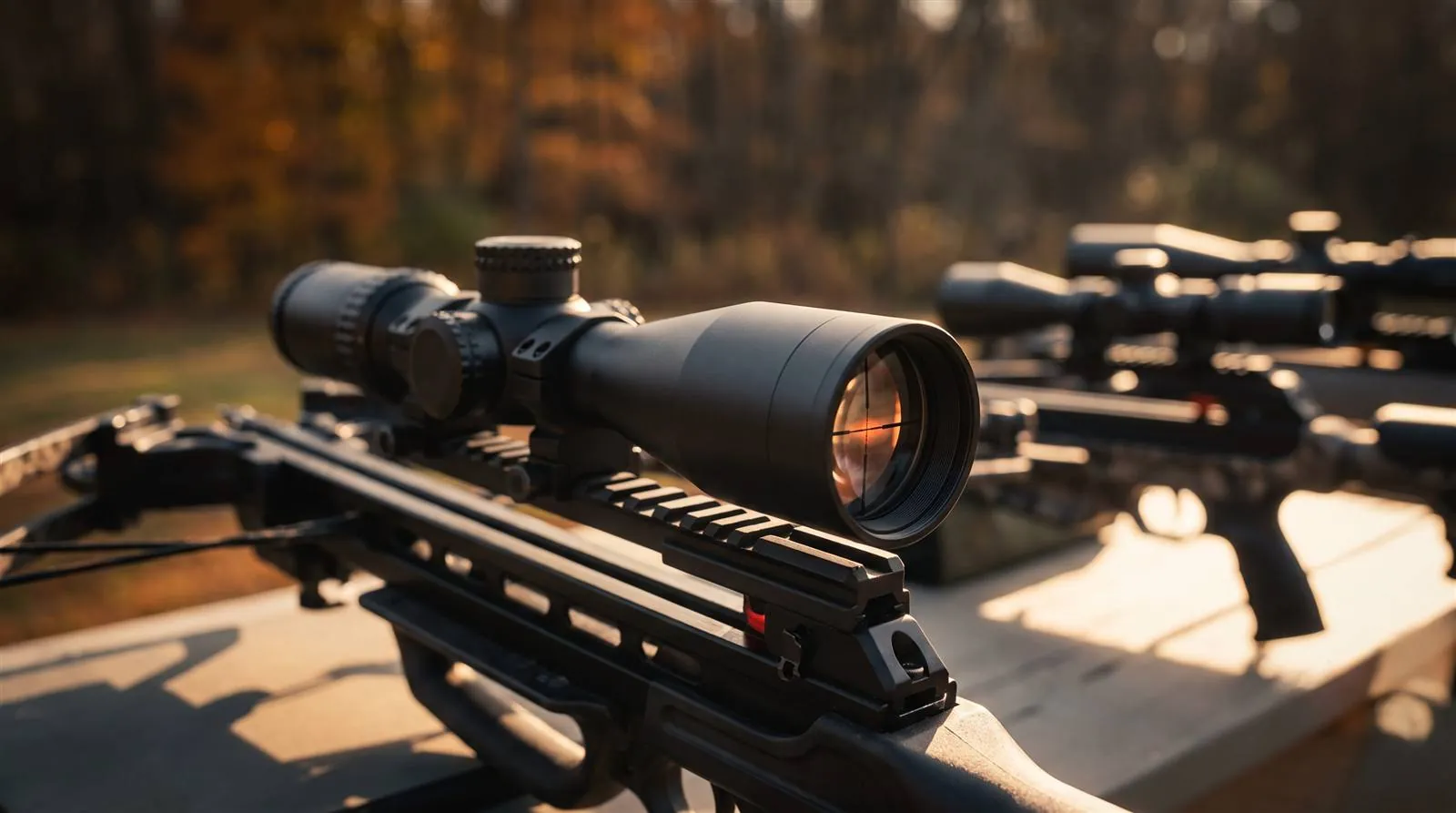
Crossbow Holdover in plain terms
Crossbow Holdover meaning: Holdover is aiming above the target, by a mark or by eye, to allow for the bolt dropping below your line of aim past the distance you zeroed at.
Also called: holdovers, hold over, holding over, holdover marks
Holdover is the amount you aim above the spot you want to hit so that a falling bolt lands on it. A crossbow scope is zeroed at one distance; past that distance the bolt drops below the line of aim, so the shooter holds higher.
You can hold over by eye with a plain crosshair, or with printed marks on a BDC reticle, where each mark already includes the holdover for a set distance at a stated bolt speed. Inside the zero distance the bolt can sit slightly high, and a small hold under may apply instead.
How much holdover a distance needs depends on bolt speed, bolt weight and the zero. The faster the bolt, the less it drops, so the smaller the holdover at each distance.
Why it matters
Crossbow trajectory bends quickly past 30 yards, so the wrong holdover at 40 or 50 yards can move impact out of a deer’s vital area.
Holdover only works when the distance is known. A misjudged range gives the wrong hold even with perfect aim.
Box speeds are often reached with lighter bolts than you hunt with, so printed holdover marks can be off for your setup until you confirm them.
The bolt drop chart estimates the drop, and so the holdover, at each distance for your speed, bolt weight and zero.
How to read it on a spec sheet
- Find the zero distance the scope or reticle assumes; holdover is measured from it.
- Check the speed band the reticle marks are built for.
- On a second focal plane scope, use the magnification the marks are valid at.
- Read holdover figures as inches above aim at a distance, or as a named mark.
- Note whether figures come from the maker, a calculator or your own range sessions.
Common mistakes
- Trusting printed marks without confirming each one at its distance.
- Using the box speed rather than the speed with your hunting bolt.
- Guessing the range, which makes any holdover wrong.
- Practising only at the zero, so holdovers past it are never learned.
- Forgetting that broadheads can land differently from field points.
Confirming your holdovers
- Zero at the distance your scope manual names.
- Shoot a group at each 10-yard step past the zero, aiming with the matching mark.
- Note where each group lands against the aim point.
- Write a small card of holds for that crossbow and bolt.
- Repeat with the broadheads you hunt with before the season.
See it in our reviews
- Vortex Crossfire II 2-7x32 — rated 4.5/5
- TenPoint RangeMaster 100 — rated 4.5/5
Frequently Asked Questions
What is holdover on a crossbow?
Holdover is aiming higher than the spot you want to hit, so the bolt drops onto it. It is needed past the distance your scope is zeroed at, because the bolt falls below the line of aim from there on.
How much holdover does a crossbow need at 40 yards?
It depends on speed, bolt weight and zero. With a 20-yard zero, a slow crossbow needs a lot more holdover at 40 yards than a fast one; a drop calculator gives an estimate, and the range confirms it.
Do multi-reticle scopes remove the need for holdover?
They build it in. Each mark is a holdover for one distance at a stated speed, so you pick the mark instead of guessing, as long as your speed and zero match what the reticle assumes.
Why are my holdover marks wrong?
The usual causes are a bolt speed outside the reticle band, a different zero distance, the wrong magnification on a second focal plane scope, or a bolt and tip heavier or lighter than the reticle assumes.
Is holdover the same as bolt drop?
They are two sides of the same thing. Drop is how far the bolt falls below the line of aim; holdover is how far you aim above the target to cancel that drop at a given distance.
Related guides
Guides where holdover shapes a real choice.
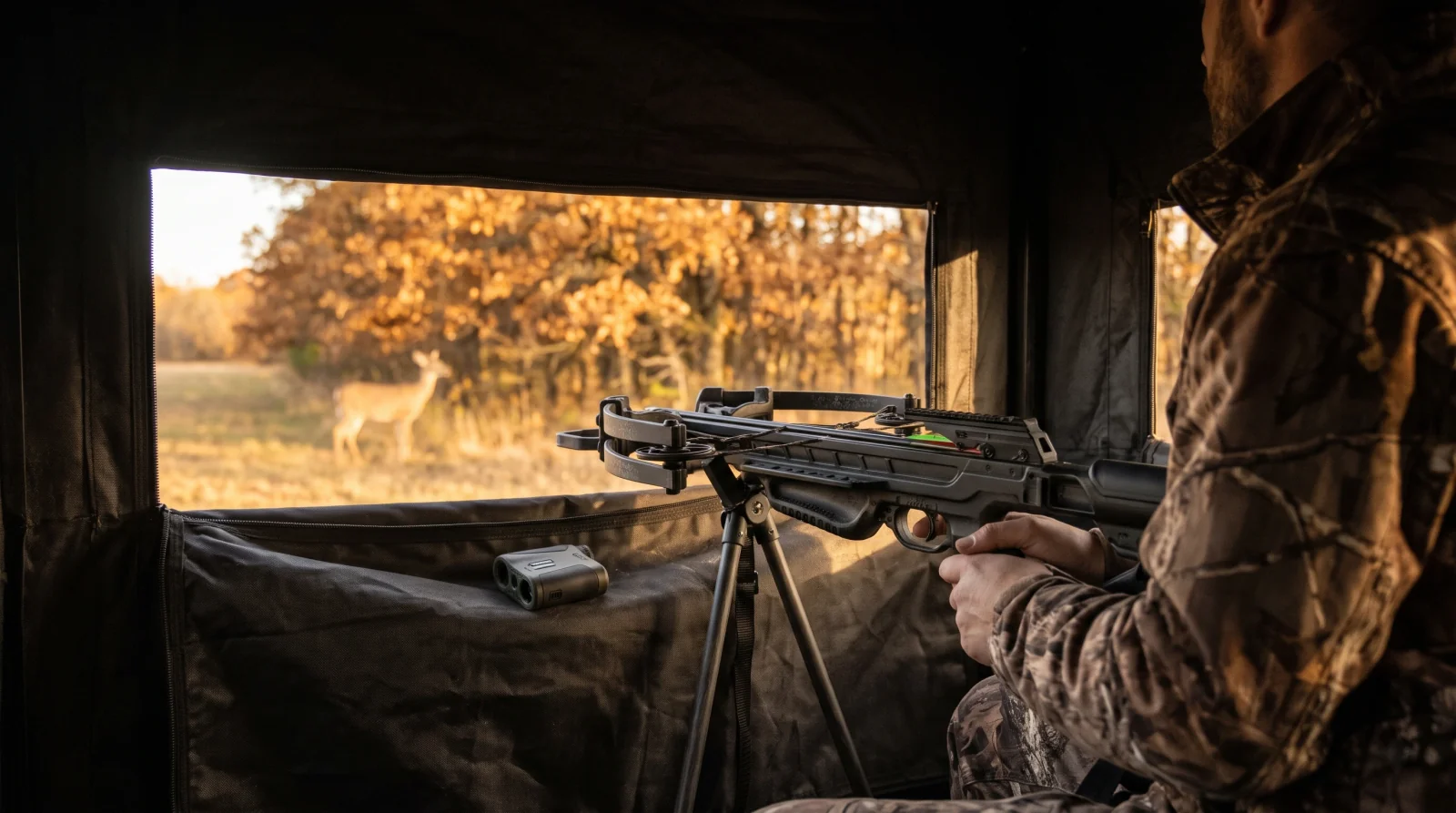 GuideHow Far Can a Crossbow Shoot? Max vs Ethical RangeFlight range, target range and ethical range for deer, with modelled drop, energy and flight time at 30 to 60 yards and a method for setting your limit.Read the guide
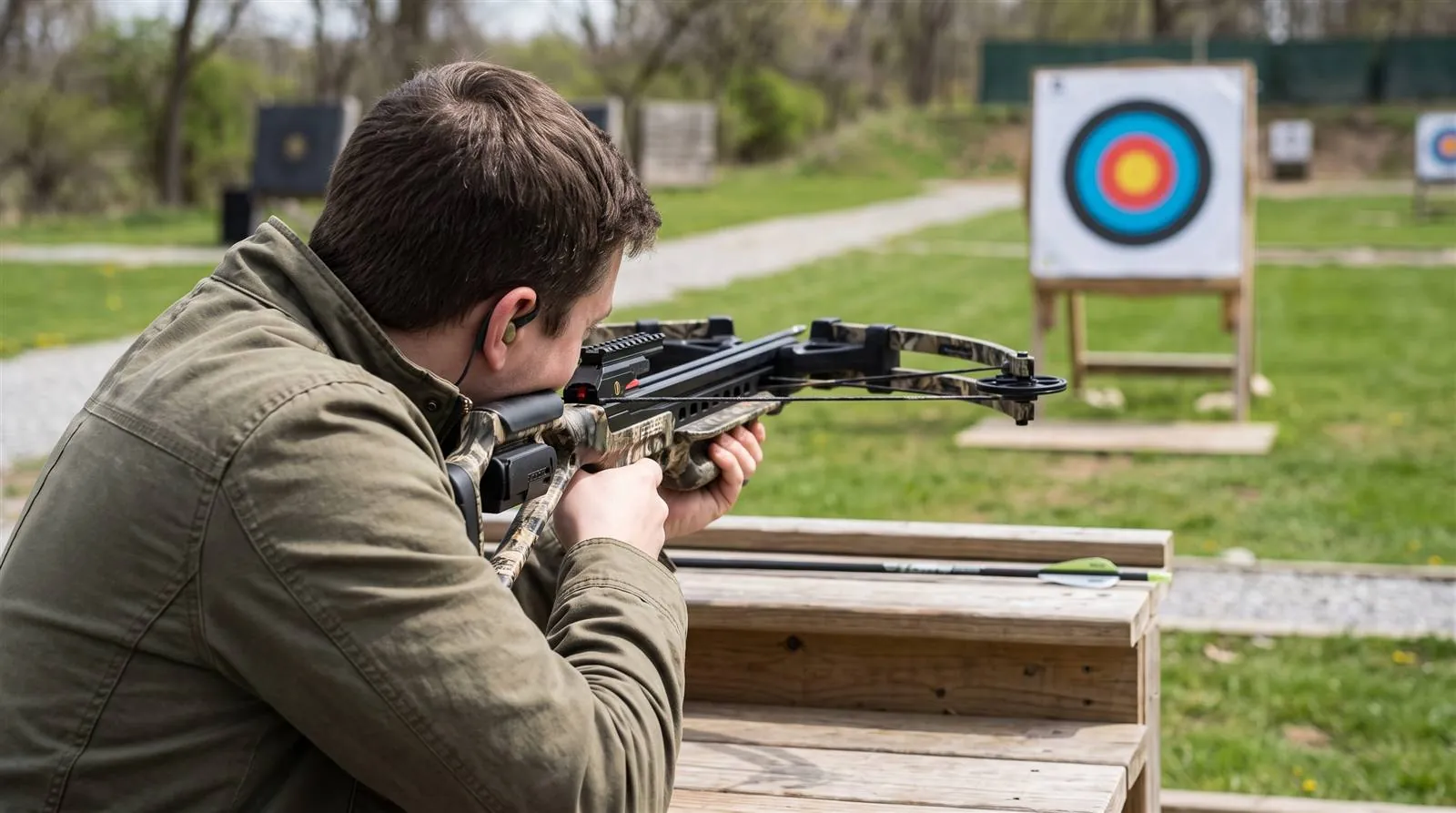 GuideHow to Sight In a Crossbow ScopeSighting in a crossbow scope step by step: safe lane setup, first zero, confirming each aiming point, and re-checking with your hunting tip.Read the guide
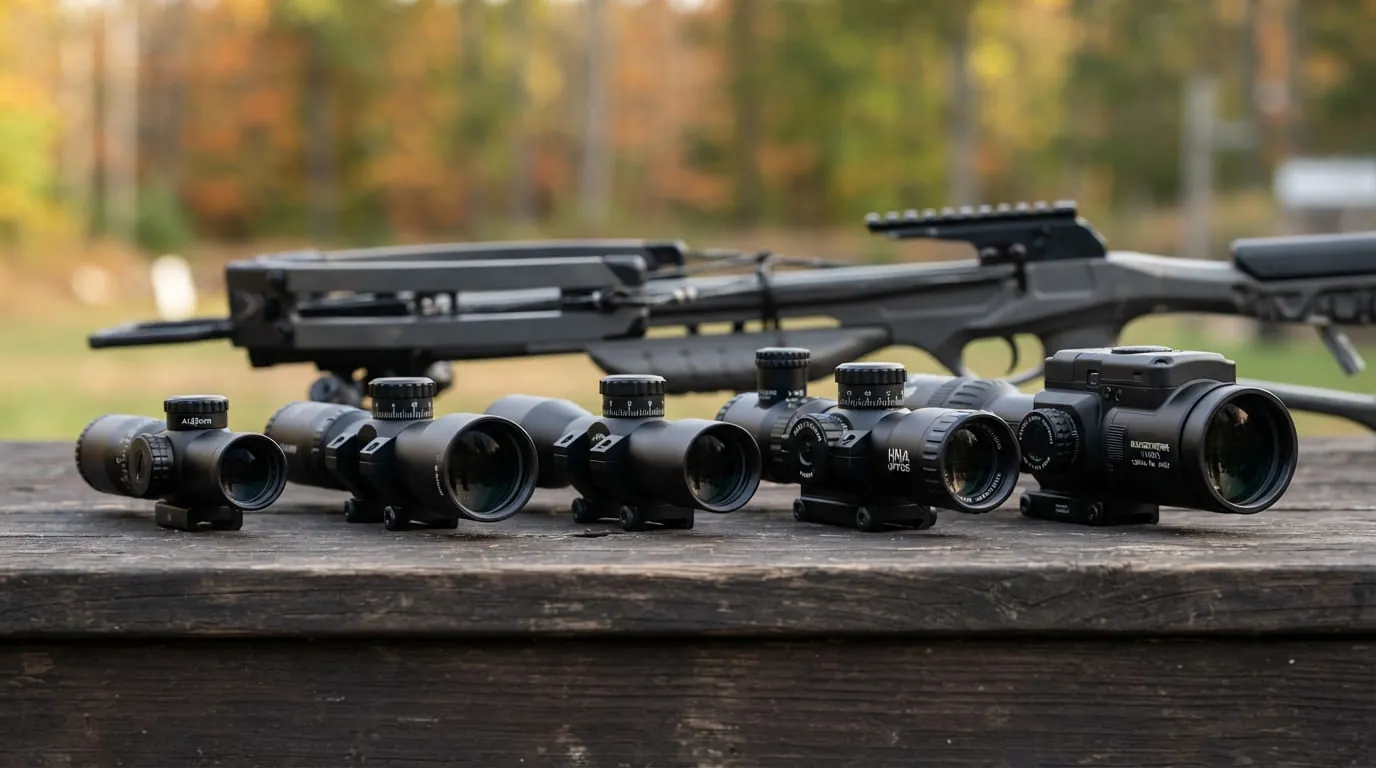 GuideBest Crossbow Scopes of 2026 for Every Bolt SpeedCrossbow scopes compared from a budget variable-zoom scope to laser rangefinding and digital models, with reticle, magnification and speed range for each.Read the guide
Definitions are general information. Manufacturer figures vary, so follow your crossbow's manual and verify local laws with the relevant authority.