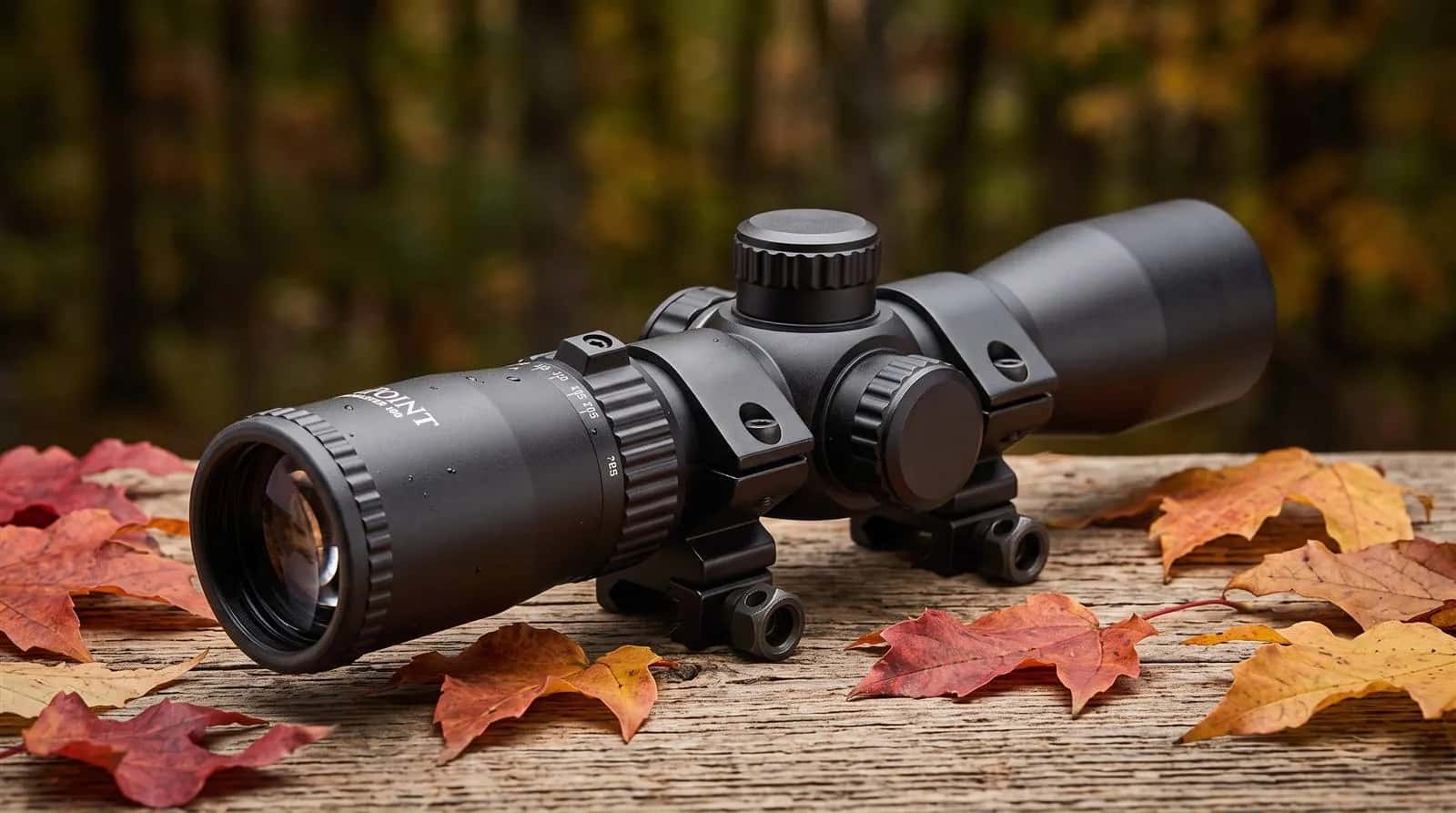
Nine aiming points, every one of them lit: that is the pitch of the TenPoint RangeMaster 100, and it held up in my testing. It is an illuminated 2-7x32 crossbow scope with dots, crosshairs and chevrons calibrated from 20 to 100 yards, priced at $295–$355, and I rate it 4.6 out of 5 after a two-week test on crossbows inside its speed band, from the 20-yard baseline out to the 100-yard chevron.
If you are choosing between a basic hold-mark scope and a digital rangefinding model, this sits in the middle. Below I cover how the nine aiming points tracked, how the rheostat illumination behaves at dawn and dusk, what the 380-505 FPS calibration band means for your crossbow, how it compares with the TenPoint EVO-X Marksman Elite and Vortex Crossfire II, and who should look elsewhere.
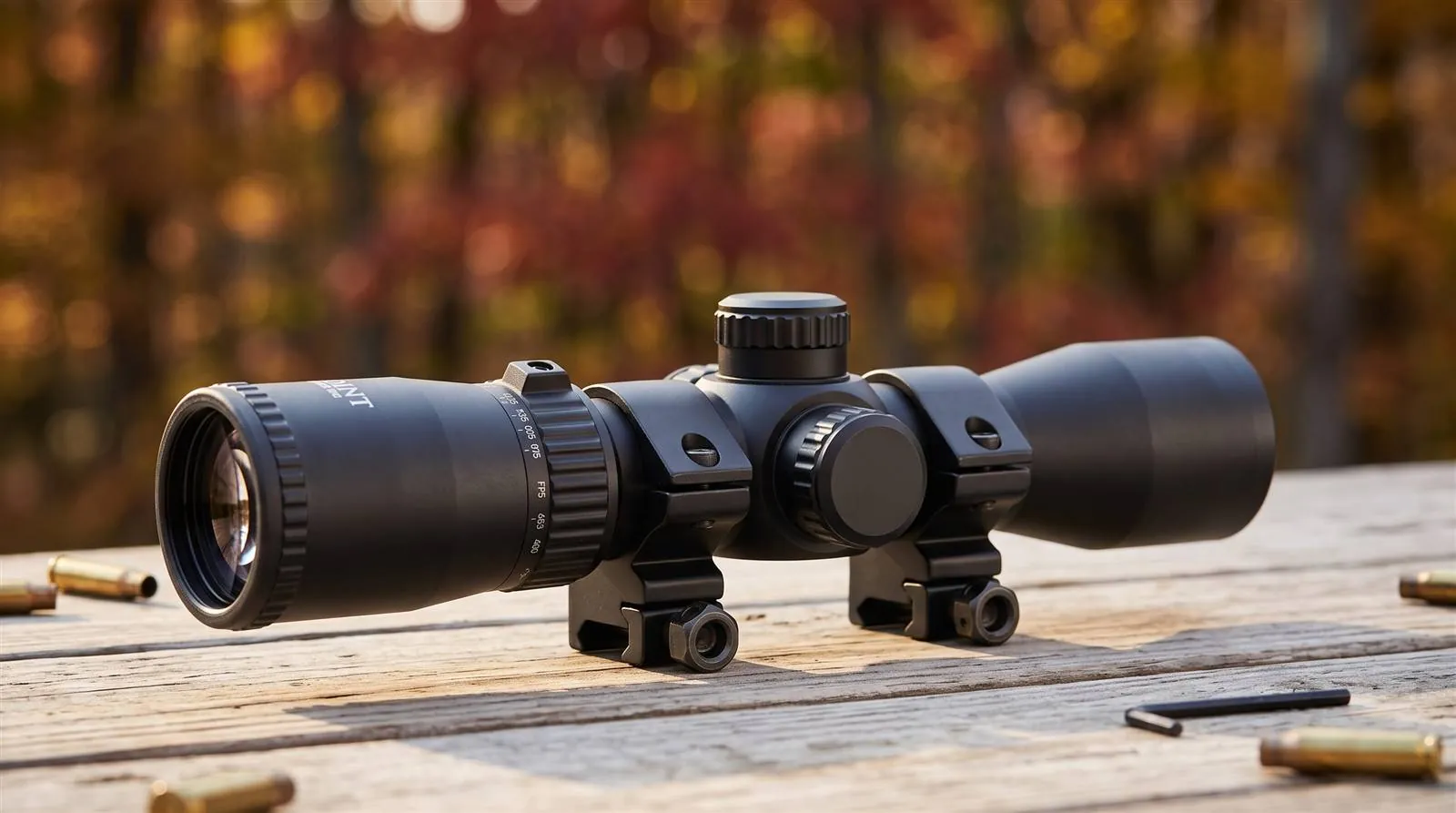
TenPoint RangeMaster 100 Specifications
The specifications below show what the reticle covers and which crossbows it suits.
| Spec | Detail |
|---|---|
| Magnification | 2-7x variable |
| Objective Diameter | 32mm |
| Mount Compatibility | 30mm |
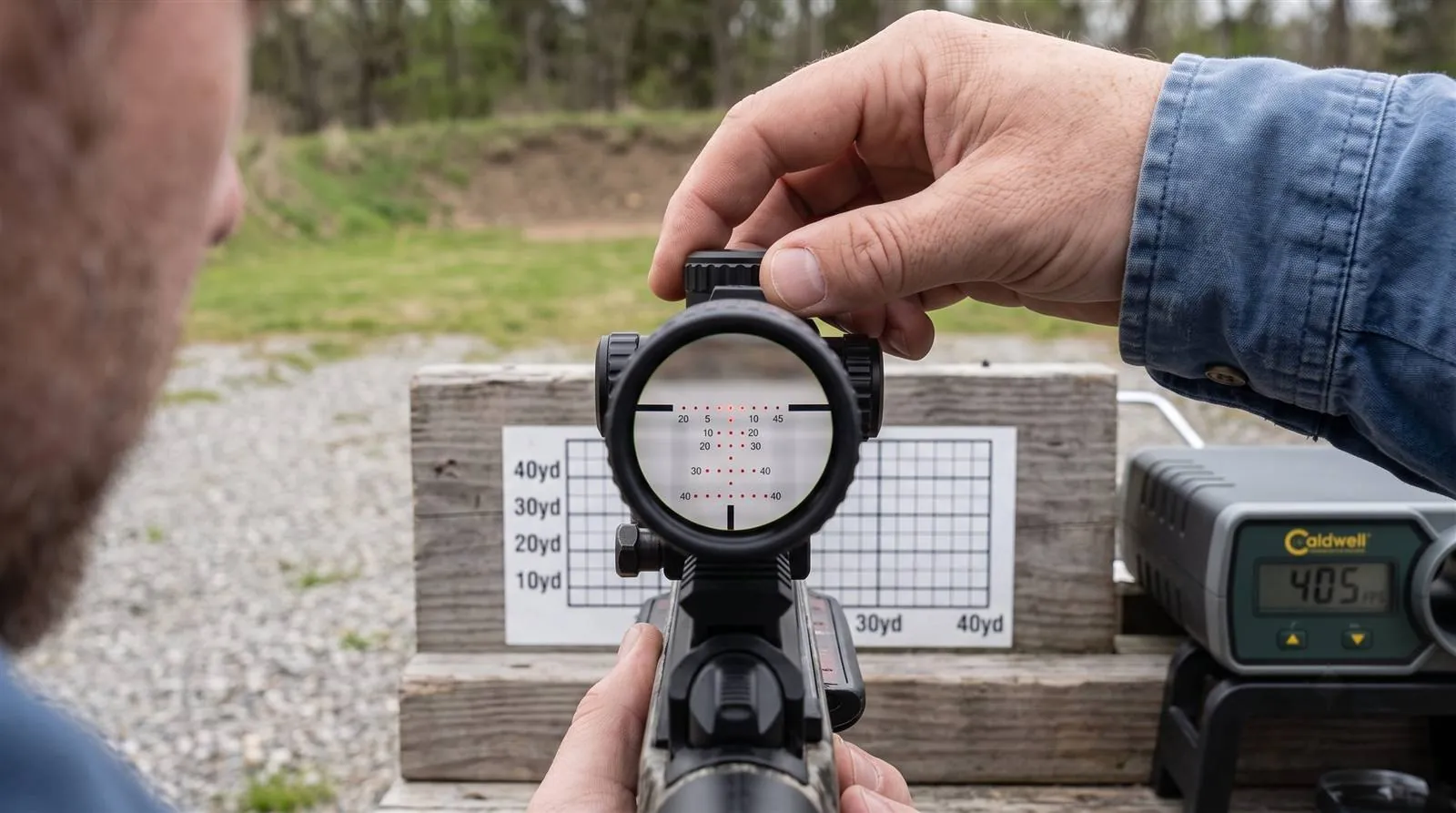
| Reticle | 3 illuminated dots (20/30/40 yd), 3 illuminated crosshairs (50/60/70 yd), 3 illuminated chevrons (80/90/100 yd) |
| Illumination | Red/green, infinite-position rheostat control |
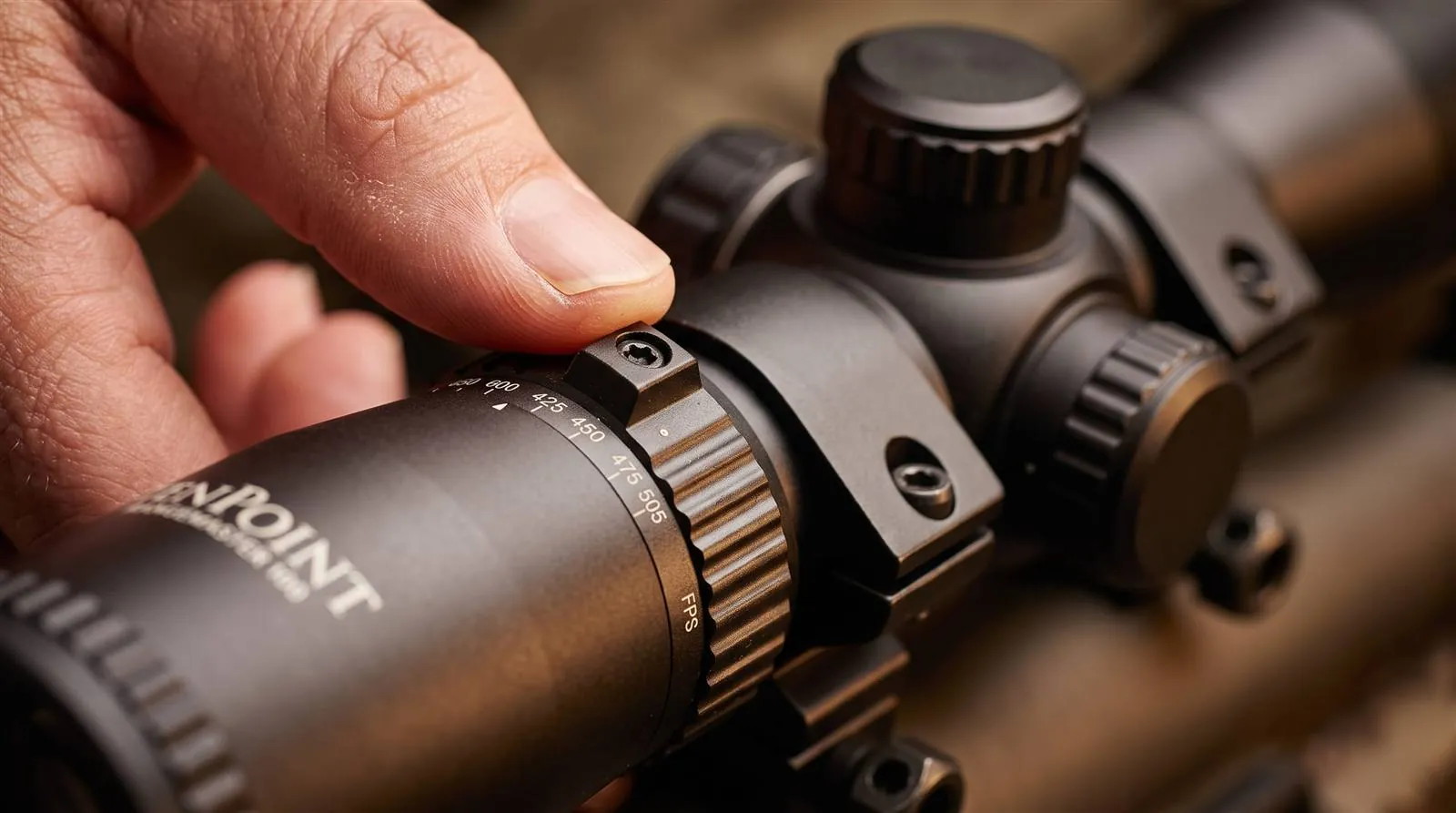
| Speed Compatibility | 380-505 FPS |
| Click Value | 1/2 MOA |
| Eye Relief | 3.00 in |
| Length | 9.1 in |
| Weight | 1.0 lb (16 oz) |
| Water/Fog Resistance | Waterproof, fog-proof |
| Included Accessories | Scope rings, flip-up lens caps |
| Price | $295–$355 |
What I Like
The main strength is consistency across all nine references, backed by an out-of-box kit.
- All nine aiming points tracked accurately. Each illuminated point matched actual point of impact across the full 380-505 FPS band on my test crossbows.
- Granular brightness control. The infinite-position rheostat gave precise illumination adjustment instead of fixed intensity steps, an improvement over stepped dials.
- Full-range illumination at dusk. Every aiming point is lit, unlike scopes that leave longer-range references dark, so the whole 100-yard range stayed usable in my dusk testing.
- Nothing extra to buy. The included scope rings and flip-up lens caps meant my test setup was ready to mount and protect right away.
- Clear, bright glass in low light. The 2-7x zoom and 32mm objective delivered clear, bright images through my dawn and dusk sessions.
So far in testingIf your crossbow shoots 380-505 FPS and you want every aiming point lit, check the current price and kit contents here.
Potential Drawbacks
Most of the drawbacks come from the scope being a precise fit for a specific kind of crossbow.
- Priced above budget scopes. At $295–$355 it sits above true budget options, and it still requires manual reticle referencing instead of digital rangefinding.
- Learning curve. Nine illuminated aiming points in three groupings (dots, crosshairs, chevrons) need practice before they are quick to use under field pressure. Rehearse picking the right reference before the season.
- Fixed speed band. It is calibrated for 380-505 FPS crossbows, so buyers with speeds outside that band should look at TenPoint's other scopes.
- Longer scope. At 9.1 inches it is longer than some compact alternatives, and I found it added front-heavy balance on lighter crossbows.
Key Features Explained
Why does lighting all nine aiming points matter?
Some premium scopes leave their longest-range references dark, on the logic that low-light shots rarely happen at 80-100 yards. The RangeMaster 100 lights every one. Dusk and early morning can still call for a confident long shot, and having every reference visible removes guesswork.
How do the nine aiming points work?
Dots, crosshairs and chevrons all tracked against point of impact across the calibrated 20-100 yard range on crossbows within the rated speed band. The three groups are spaced for ten-yard steps: dots at 20, 30 and 40 yards, crosshairs at 50, 60 and 70, and chevrons at 80, 90 and 100. With every reference lit, I never lost sight of the long-range chevrons. The reticle is only correct if your crossbow's speed falls inside 380-505 FPS, so measure it first. My guide to how fast a crossbow bolt travels explains what drives FPS.
What does an infinite-position rheostat do?
Instead of clicking through brightness steps, the rheostat lets you match illumination to ambient light. That mattered across my dawn, midday and dusk sessions, where a single stepped "medium" setting often felt too dim or too bright.
Optics, rings and caps
The 2-7x range and 32mm objective stayed clear and bright, and the chevrons remained sharp and distinguishable at 7x. The included rings and flip-up caps meant no extra purchases, and the caps held closed during recoil testing and opened smoothly.
Performance & Usability
Optical clarity and illumination
Images stayed clear and bright through low-light dawn and dusk sessions. Having all nine points lit, instead of only the closer dots and crosshairs, kept the full 100-yard range usable in fading light.
Reticle tracking and zero retention
Each aiming point was checked at its calibrated distance, and all nine held true across my test crossbows within the rated speed range. Zero held after repeated firing during my two-week window. Consistency across nine references was the scope's main strength.
How far should you actually shoot with it?
The reticle gives you references out to 100 yards, but a reference is not a reason to take the shot. Keep to the distance at which you can place a bolt consistently in practice, and check your local regulations before you hunt. The longer chevrons are most useful as a tool for practice and for judging distance in fading light, so spend range time on them before you rely on them.
Handling
At 9.1 inches the scope adds some front-heavy balance on lighter crossbows. Quickly picking the right reference takes familiarity, so practice with all nine points before a hunt.
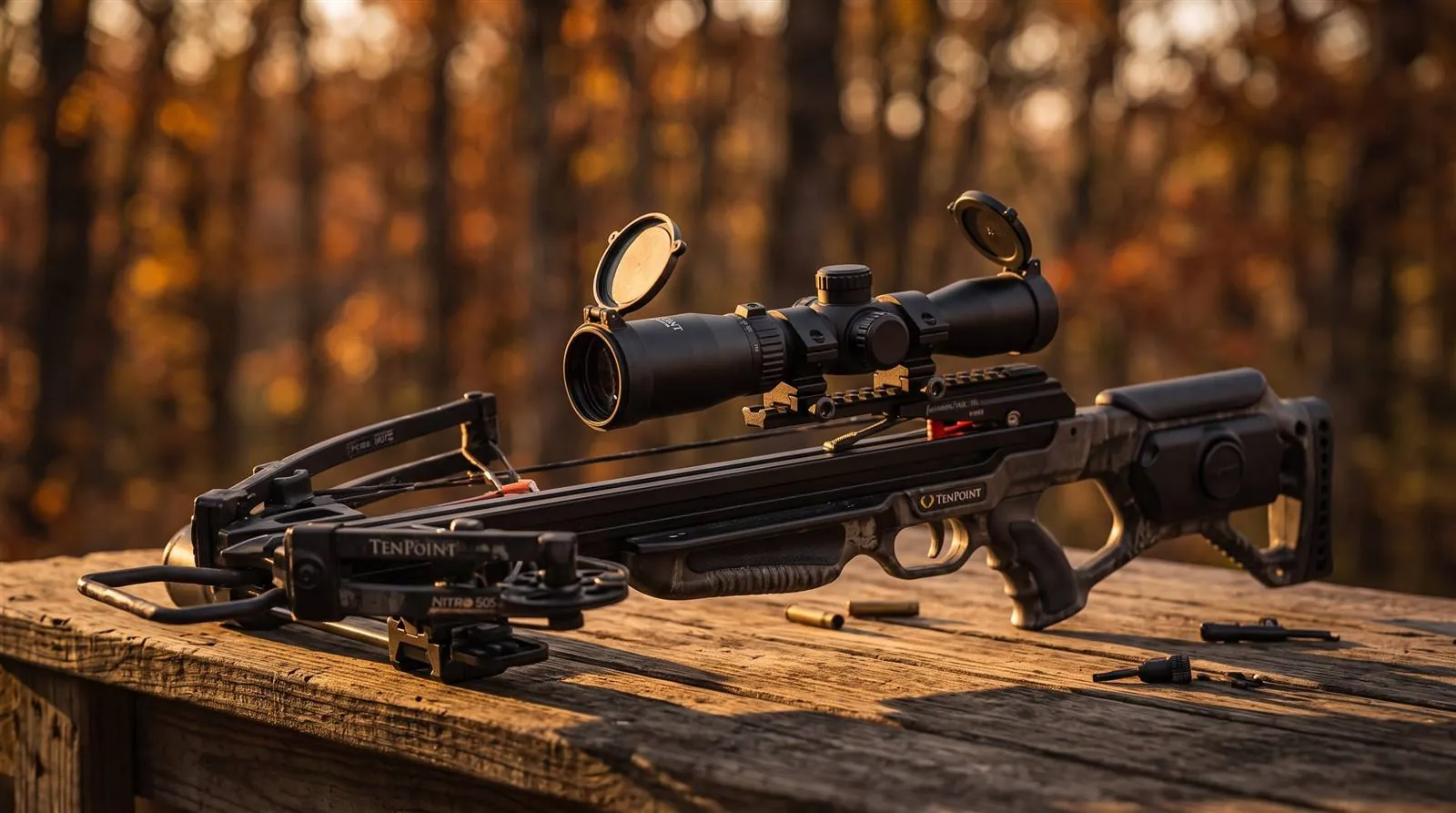
Mounting and setup
Mount the scope with the included rings, confirm your crossbow's chronographed FPS falls within 380-505 FPS, then sight in at the 20-yard baseline. My step-by-step sight-in guide covers verifying every additional aiming point.
Care
Keep the flip-up caps closed when not shooting, and check ring tightness periodically to protect zero. Set the rheostat to match current light instead of leaving it at one brightness.
Who Is the RangeMaster 100 For?
Best suited to:
- A hunter shooting a crossbow within 380-505 FPS who wants 100-yard accuracy
- Someone who values every aiming reference being illuminated, including at longer distances
- A buyer who wants scope rings and flip-up caps included
Consider something else if:
- Your crossbow's speed falls outside the calibrated range
- You want external adjustable turrets
Comparing more options? The crossbow scopes hub lists every scope I have reviewed.
TenPoint RangeMaster 100 vs Alternatives
The two nearest rivals in price both use fixed references, so the comparison is mostly about speed range, illumination and cost. Their figures come from their own reviews.
| Scope | Price | Magnification | Speed band | Notes | Buy |
|---|---|---|---|---|---|
| TenPoint RangeMaster 100 | $295–$355 | 2-7x | 380-505 FPS | All nine references illuminated | |
| TenPoint EVO-X Marksman Elite | $479–$499 | 2-8x | 300-550 FPS | External micro-adjustable turrets, four non-illuminated chevrons | Check price on Amazon |
| Vortex Crossfire II 2-7x32 | $195–$215 | 2-7x | n/a | XBR-2 hold marks 20-100 yards, 40-yard zero | Check price on Amazon |
| Ravin Illuminated Crossbow Scope | $329–$599 | 1.5-5x (listings vary) | n/a | Red and green illumination, aimpoints to 100 yd | Check price on Amazon |
The Marksman Elite covers a wider speed range and adds turrets but leaves its longest references dark. The Crossfire II costs less and includes rings, but its hold marks are accurate only at 7x. Choose the RangeMaster if your crossbow falls in the 380-505 FPS band and you shoot in low light. For a still cheaper option, see the TruGlo 4x32 Compact.
Read nextSee how the scope tiers compareRead the roundup of the best crossbow scopes to place this one among budget, mid-range and digital options.TenPoint RangeMaster 100 Ownership, Setup and Compatibility
Ownership of this scope is mostly about fit, speed band and practice.
What is in the box and what else you need
The file documents scope rings and flip-up lens caps, with 30mm mount compatibility listed. Illumination is red or green with a rheostat dial. I did not record the illumination battery type or life, so check the manual and keep a spare of whatever it specifies. The key thing to bring is your crossbow's real speed, since the reticle is calibrated for 380-505 FPS.
| Item | What I documented | What to do |
|---|---|---|
| Rings | Included, 30mm compatibility | Confirm they suit your rail |
| Caps | Flip-up caps included | Keep closed when not shooting |
| Speed band | 380-505 FPS | Measure or confirm your crossbow's speed |
| Click value | 1/2 MOA | Use for fine zero changes at the baseline |
| Eye relief | 3.00 in | Mount so the rear lens clears your brow |
| Length | 9.1 in | Check balance on a light crossbow |
Worked example: how far one click moves the impact
One MOA is about 1.05 inches at 100 yards, so a 1/2 MOA click is about 0.5 inch there. At the 20-yard baseline, a click moves impact about 0.1 inch (1.05 × 0.2 ÷ 2), so a 1 inch correction takes roughly 10 clicks. That is geometry, not a test result, but it shows why you sight in at 20 yards first and then confirm the longer points.
Symptoms and what to check
| Symptom | Likely cause | What to check |
|---|---|---|
| Upper points do not match impact | Crossbow speed outside 380-505 FPS | Confirm the speed with a chronograph |
| Reticle hard to see at dusk | Brightness set too low or too high | Re-set the rheostat to the light |
| Slow to pick the right point | Nine points in three groups | Practice with all nine before the season |
| Zero shifts | Loose rings | Check ring tightness |
Who should skip it
Skip it if your crossbow is outside 380-505 FPS, if you want external turrets, or if you will not practise the references. This review covers my two-week window, so long-term durability is not documented. See how to sight in a crossbow scope for the routine, and how much a crossbow costs if you are budgeting a full setup.
Value for Money
At $295–$355, the RangeMaster 100 undercuts the TenPoint EVO-X Marksman Elite ($479–$499). The Marksman Elite covers a wider 300-550 FPS range and adds micro-adjustable external turrets, but it mixes illuminated and non-illuminated references. The Vortex Crossfire II 2-7x32 ($195–$215) costs less and also ships with rings, but uses its own XBR-2 hold-mark reticle instead of nine illuminated aiming points.
In my testing the RangeMaster earned its mid-premium price through full illumination on every reference and a complete out-of-box kit, not through the widest speed compatibility or lowest price. The value case holds for hunters within 380-505 FPS. Buyers needing a wider speed range should look at the Marksman Elite, and those on a tighter budget will find the Crossfire II sufficient.
To check whether the TenPoint RangeMaster 100 is calibrated for your crossbow's speed, use the scope speed matcher; the bolt drop chart shows where its marks should land. Every other model I have tested in this class is compared on the crossbow scopes & optics page.
Where the TenPoint RangeMaster 100 ranks
The TenPoint RangeMaster 100 earned a place in Best Crossbow Scopes of 2026 (#6), where it is scored against every other model I tested for that use. For a direct head-to-head, see TenPoint TX Ultra 26.5 vs 29.5. It also comes up in How to Choose a Crossbow Scope, How Fast Does a Crossbow Bolt Travel?, How Much Does a Crossbow Cost? and How to Sight In a Crossbow Scope.
Final Verdict
TenPoint RangeMaster 100
4.6 / 5 — Is it worth buying?
The TenPoint RangeMaster 100 tracked accurately on all nine illuminated aiming points out to 100 yards across my test crossbows, and its included rings and caps simplify setup. The trade-offs are a fixed 380-505 FPS calibration band and a learning curve to use all nine references quickly.
Best for
Hunters within the 380-505 FPS range wanting full-range illuminated accuracy
Skip if
Your crossbow's speed falls outside the calibrated range or you want external adjustable turrets
Score breakdown
- Aiming Point Accuracy4.7/5
- Illumination System4.7/5
- Optical Clarity4.5/5
- Build Quality4.6/5
- Value for Money4.5/5
- Ease of Setup4.7/5
- Weight
- 1.0 lbs
- Length
- 9.1 in
Typical price
$295–$355
Frequently Asked Questions
Is the TenPoint RangeMaster 100 worth it?
Yes for hunters shooting a 380-505 FPS crossbow who want 100-yard accuracy with every aiming point lit. All nine references tracked accurately in my testing, and the included rings and caps add value. Hunters needing a wider speed range should consider the EVO-X Marksman Elite.
How many aiming points does the RangeMaster 100 have?
Nine: three illuminated dots at 20, 30 and 40 yards, three illuminated crosshairs at 50, 60 and 70 yards, and three illuminated chevrons at 80, 90 and 100 yards. All nine are lit.
What crossbow speeds is this scope compatible with?
It is calibrated for crossbows shooting between 380 and 505 FPS. If yours shoots outside that band, the aiming points will not line up with impact and TenPoint's other scopes are a better choice.
Does the RangeMaster 100 include mounting rings?
Yes. It ships with scope rings and flip-up lens caps, so no separate mounting hardware is needed. The scope lists 30mm mount compatibility.
How does the rheostat illumination control work?
It is an infinite-position dial instead of a stepped control, so you can fine-tune red or green brightness to the ambient light from dawn through dusk.
What is the eye relief and click value?
Eye relief is listed at 3.00 inches and adjustments are 1/2 MOA per click. A 1/2 MOA click moves the point of impact in small steps, which helps when you fine-tune the 20-yard baseline.
How does it compare with the Vortex Crossfire II?
The Crossfire II is cheaper at $195–$215 and uses XBR-2 hold marks that are only accurate at 7x. The RangeMaster costs more but lights all nine of its references.
How many clicks does the RangeMaster 100 need to move my point of impact?
Clicks are 1/2 MOA, which is about 0.1 inch at 20 yards. A 1 inch change at the 20-yard baseline therefore takes roughly 10 clicks, which is geometry rather than a measured result.
What happens if my crossbow shoots slower than 380 FPS?
The nine aiming points are calibrated for 380-505 FPS, so a slower or faster crossbow will not line up with impact at distance. TenPoint's other scopes suit speeds outside that band better.
Is the RangeMaster 100 a good first crossbow scope?
It can be, if your crossbow is in the 380-505 FPS band, because the rings and caps are included. Expect to practise with all nine references, as I did, before relying on them.
Related Reviews
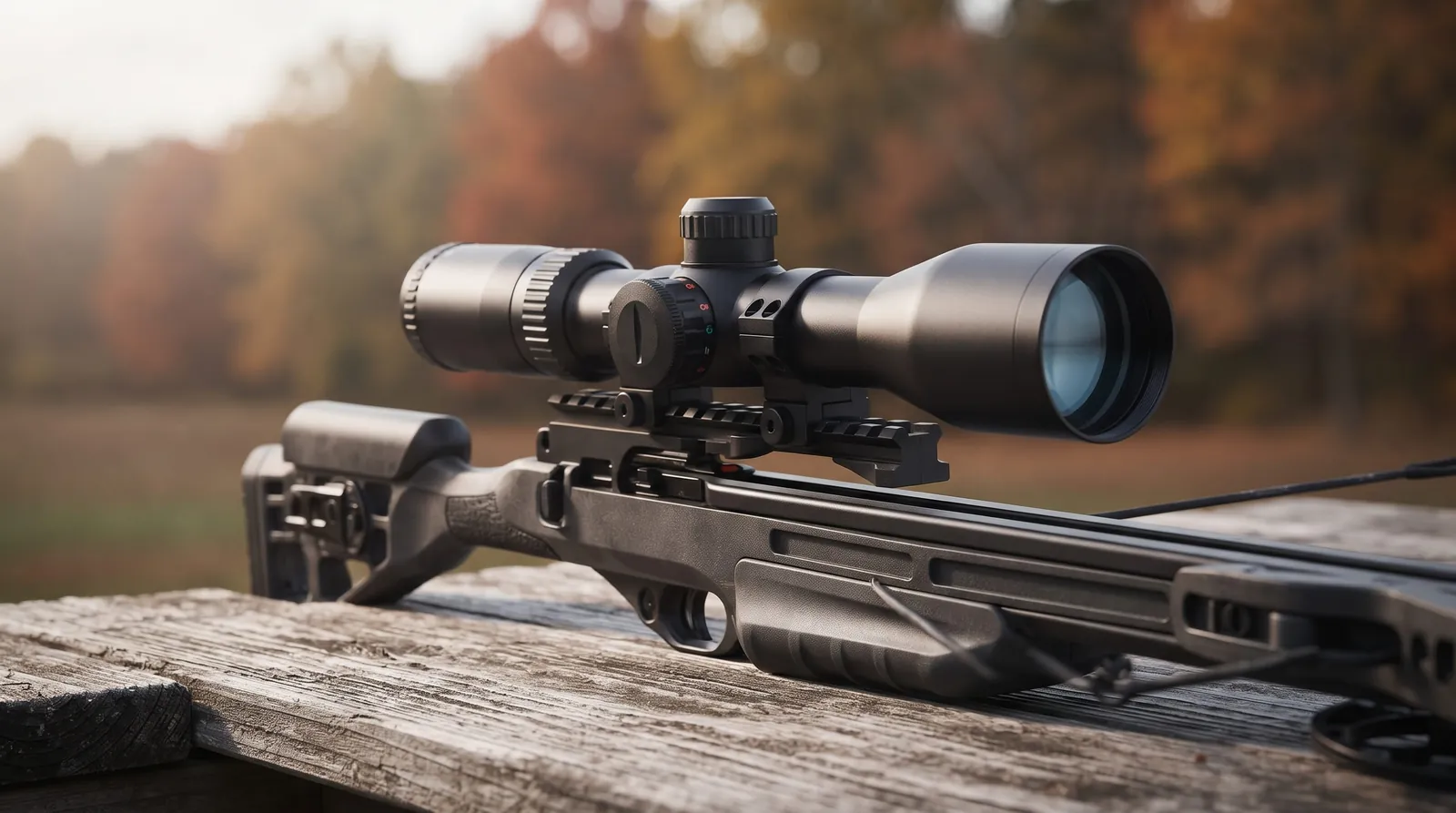 4.3
Ravin Illuminated Scope Review 2026
Red/green illuminated scope made for Ravin crossbows, with 100-yard aim points and speed adjustment. Model-specific fit and few published optical specs.
Read review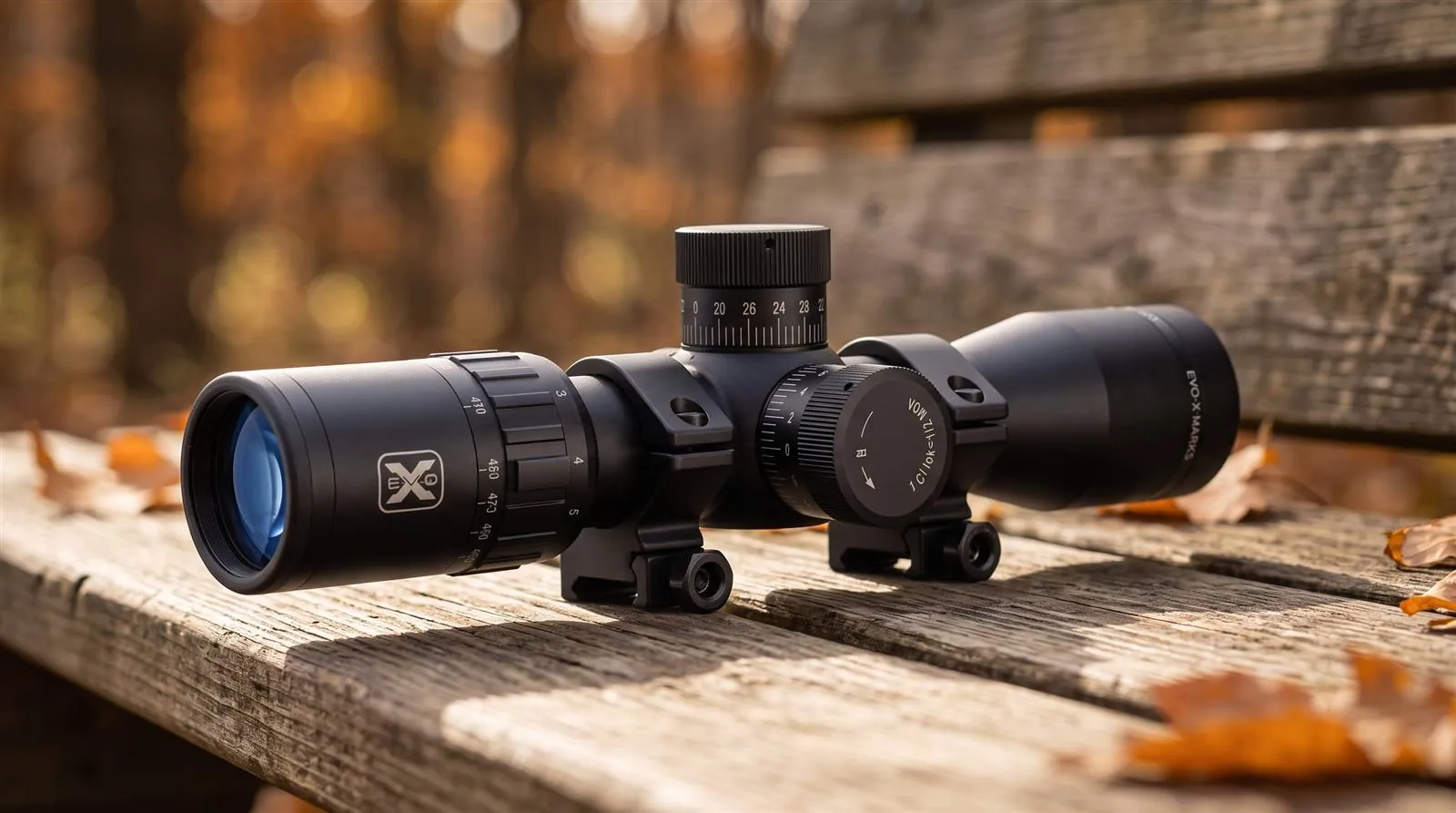 4.7
EVO-X Marksman Elite Review 2026
Glass-reticle crossbow scope that covers a wide speed band and held its zero. Premium optics without batteries at about half the price of digital rivals.
Read review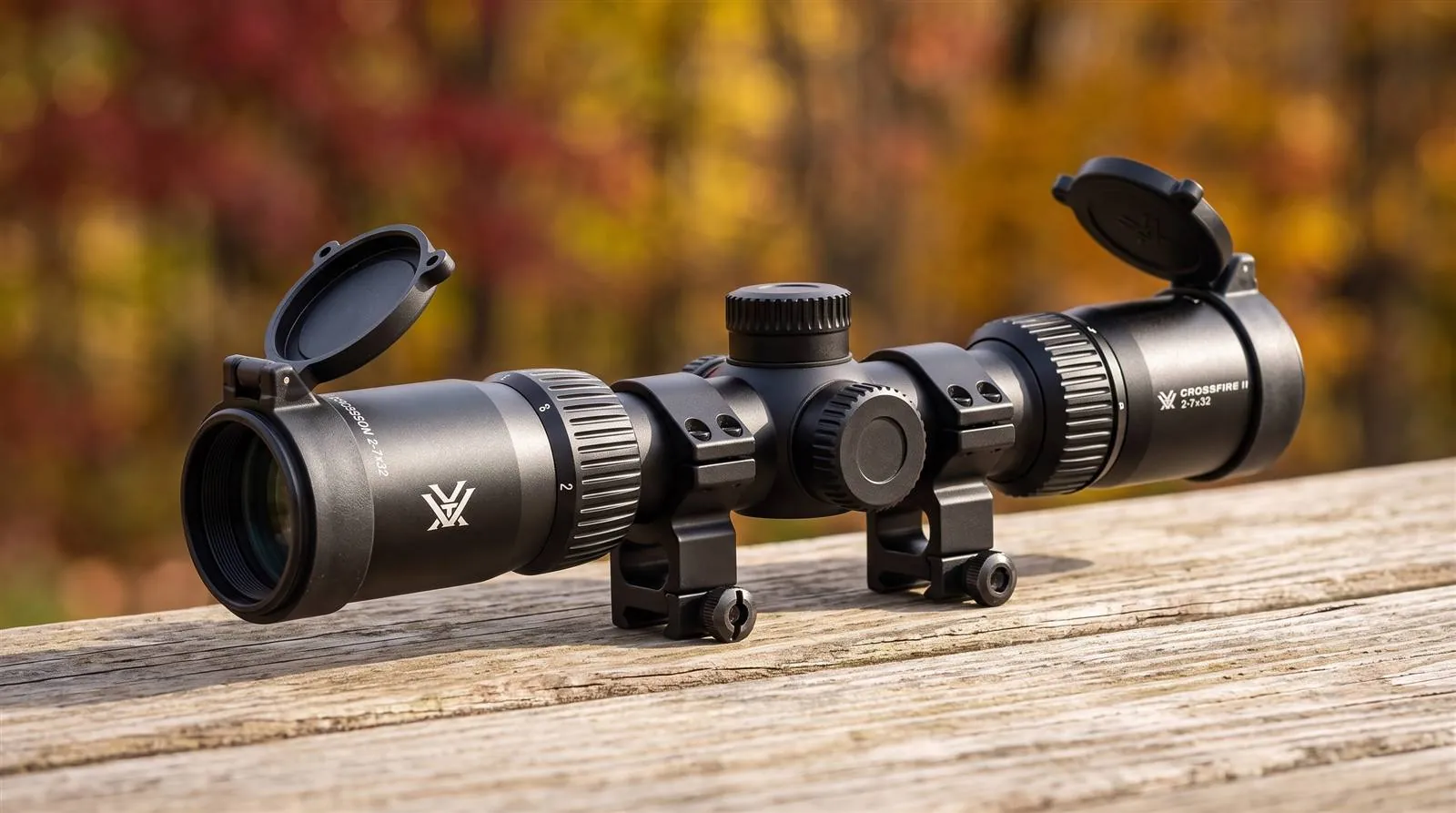 4.6
Vortex Crossfire II Scope Review 2026
2-7x32 crossbow scope with precise 1/2 MOA turrets, hold marks that matched bolt drop once calibrated, and generous eye relief. A common bundled-scope upgrade.
Read review