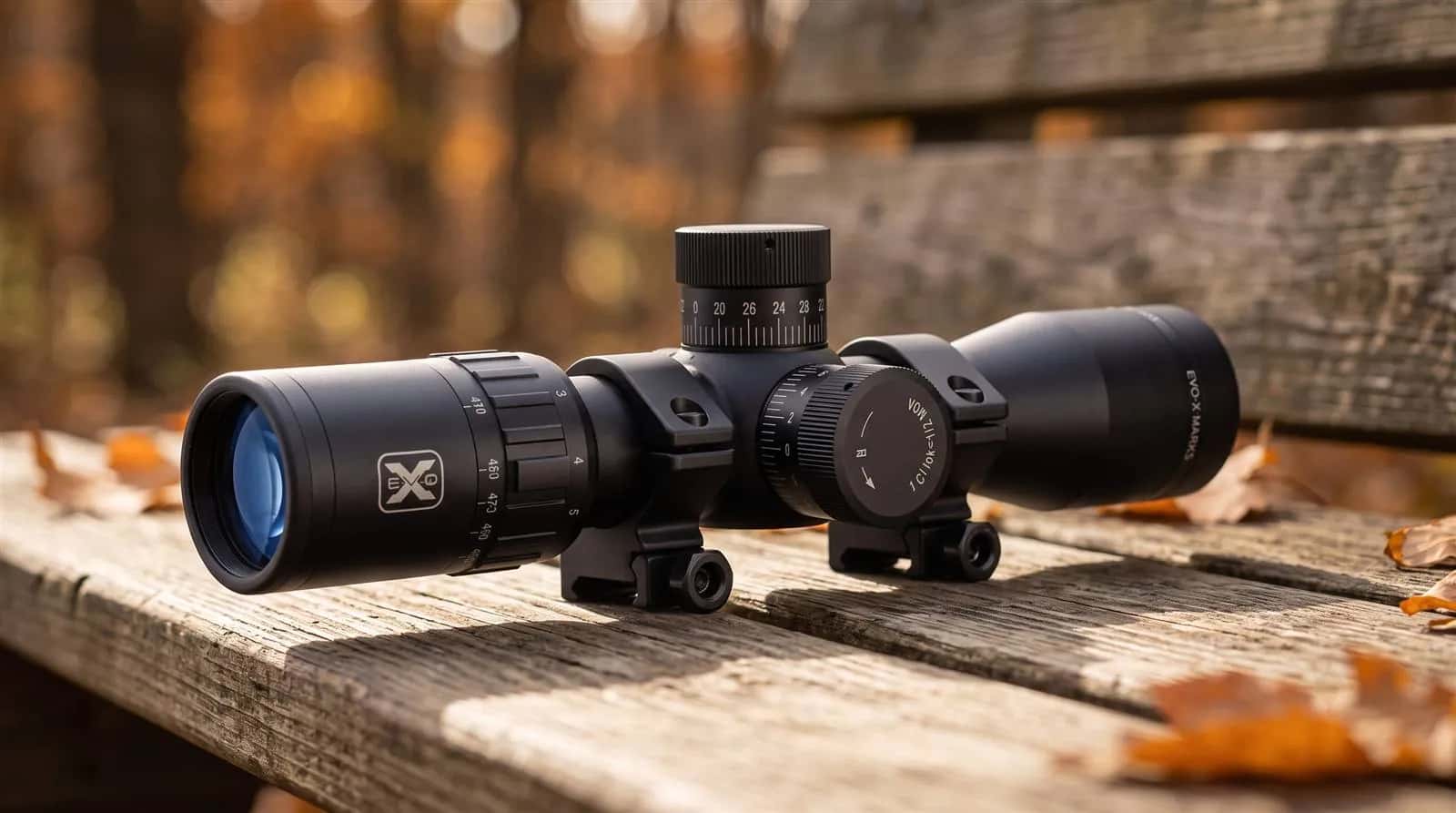
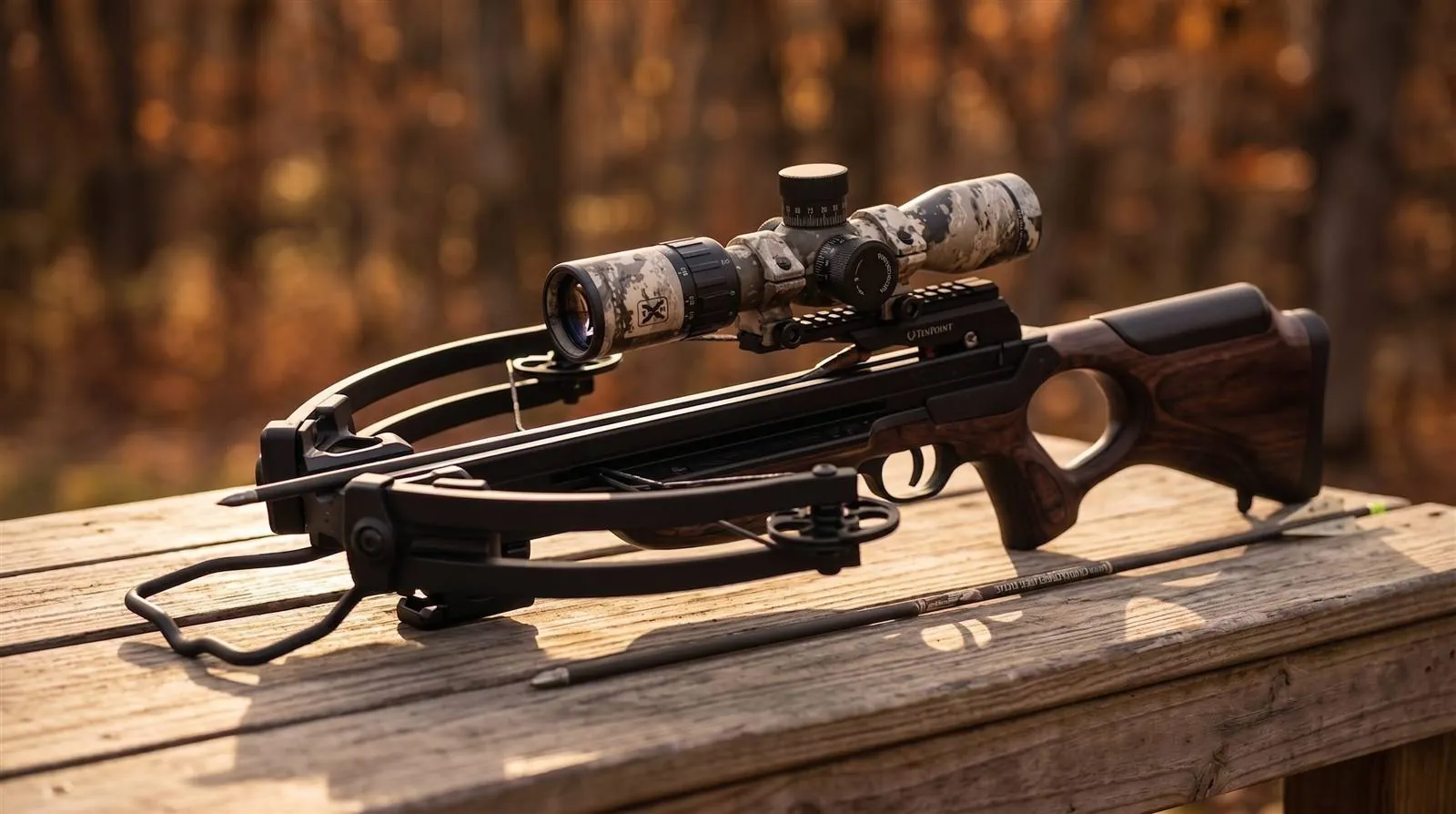
One scope that stays accurate across crossbows shooting anywhere from 300 to 550 FPS is the idea behind the TenPoint EVO-X Marksman Elite 3.0, and my testing backed it up. At $479–$499 it is a traditional optical scope with no electronics, built around a variable speed and arrow drop-compensation reticle, a 2-8x multi-coated optic, a 30mm aluminum tube, an etched glass reticle and external micro-adjustable turrets.
I tested it for two weeks on several crossbows with different chronographed speeds, checking how well the reticle compensation held up and how precisely the turrets moved. This review covers what it does well, where the nine-point reticle asks more of you, and which scope to look at if you want digital ranging instead.
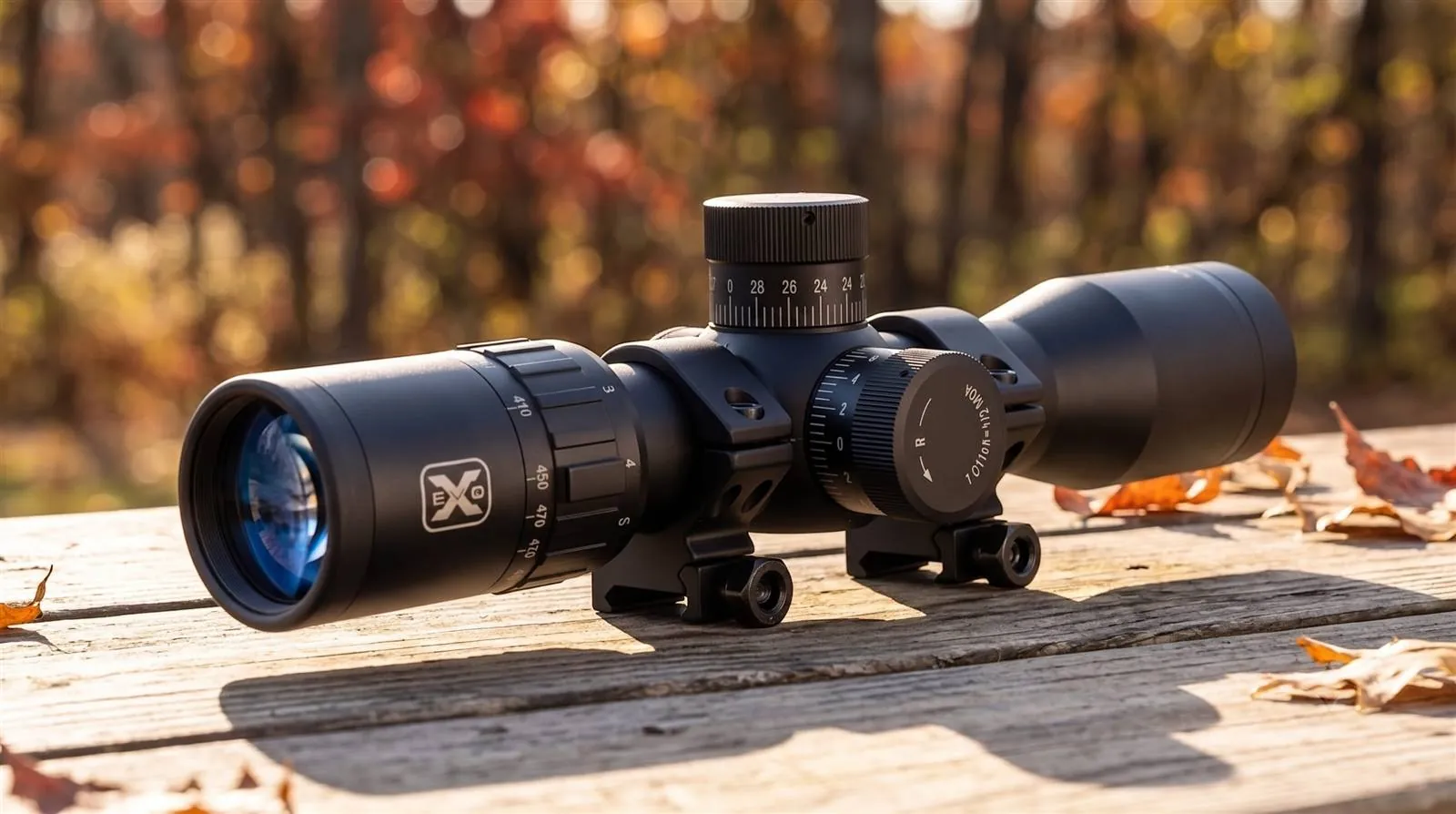
TenPoint EVO-X Marksman Elite Specs and Price
Everything below is from the product specification; the performance results come from my testing in the sections that follow.
| Spec | Detail |
|---|---|
| Magnification | 2-8x, fully multi-coated optics |
| Tube Diameter | 30mm aluminum |
| Reticle | Etched glass, variable speed/arrow drop-compensation |
| Speed Compatibility | 300-550 FPS |
| Calibrated Range | 20 to 100 yards |
| Aiming References | 3 illuminated duplex crosshairs (20/40/60 yd), 2 illuminated dots (30/50 yd), 4 non-illuminated chevrons (70/80/90/100 yd) |
| Illumination | Red or green, adjustable |
| Turrets | External, micro-adjustable windage and elevation |
| Weight | 1.1 lbs |
| Brand | TenPoint |
| Price | $479–$499 |
What I Like
- Reticle tracks across a wide speed range. The compensation reticle tracked accurately across the full rated 300-550 FPS range in my testing, which single-speed scopes cannot do.
- Bright, high-contrast glass. The 2-8x fully multi-coated optics gave brighter, higher-contrast images at dawn and dusk than the fixed-power budget scopes I have reviewed.
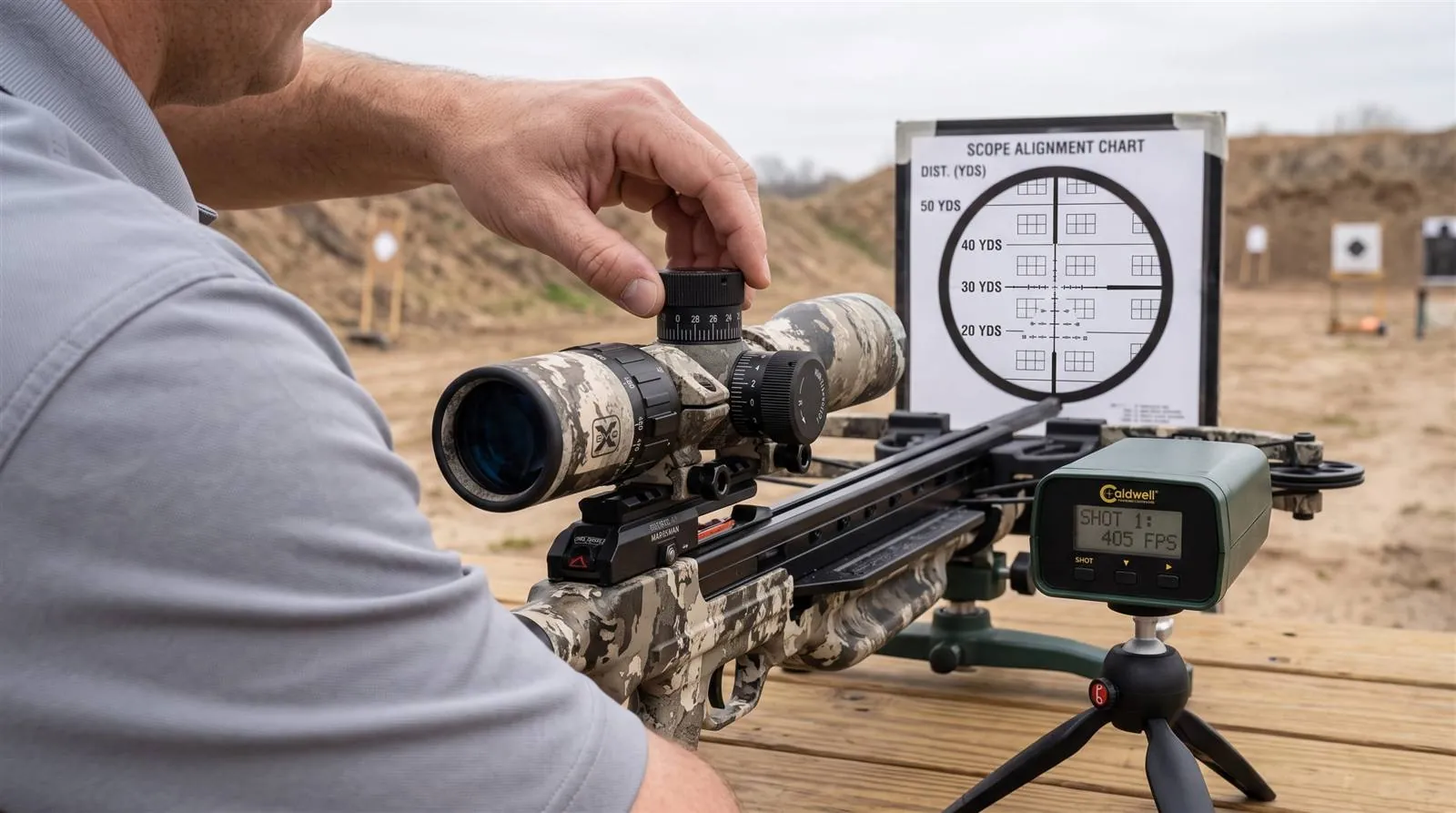
- Tool-free turrets. The external, micro-adjustable target turrets let me dial windage and elevation by hand.
- Nine aiming points. Three illuminated duplex crosshairs, two illuminated dots and four non-illuminated chevrons gave dependable coverage from 20 to 100 yards.
- Zero retention. The 30mm aluminum tube and etched glass reticle showed no shift in zero across two weeks of durability and recoil testing.
So far in testingIf you own more than one crossbow: nine aiming references tracked from 300 to 550 FPS, with zero measurable shift in recoil testing.
Potential Drawbacks
- Premium price for a traditional scope. At $479–$499 it costs more than simple scopes, though it sits well below digital rangefinding models.
- A learning curve. Nine aiming references take more memorization under field pressure than a simpler BDC reticle. Practice at known distances before the season.
- No digital ranging. There is no GPS shot marking or auto-ranging, which digital competitors like the Garmin Xero X1i offer.
- Unlit long-range chevrons. The chevrons for 70-100 yards are non-illuminated, and I found them harder to pick out in low light than the illuminated closer references.
Key Features Explained
What does variable speed compensation mean?
Most crossbow scopes are calibrated for one speed range, which forces buyers to match the scope to their crossbow's exact FPS. The Marksman Elite's reticle adapts its aiming references across a 300-550 FPS band. I used the same scope accurately on several test crossbows with meaningfully different speeds. If you want the background on how bolt drop relates to speed, my crossbow bolt speed guide is a useful companion.
How does the nine-point reticle work?
All nine calibrated references, from the 20-yard illuminated duplex crosshair to the 100-yard non-illuminated chevron, tracked accurately against point of impact across my test crossbow speeds. That breadth suits hunters who want one scope for a wide range of distances.
Are the turrets worth having?
The micro-adjustable target turrets gave me precise, tool-free control over windage and elevation, an upgrade over scopes that bury adjustments under screw-down caps. Once set, they held position through recoil testing. For a refresher on how adjustment values like MOA work, see the glossary.
How good is the illumination?
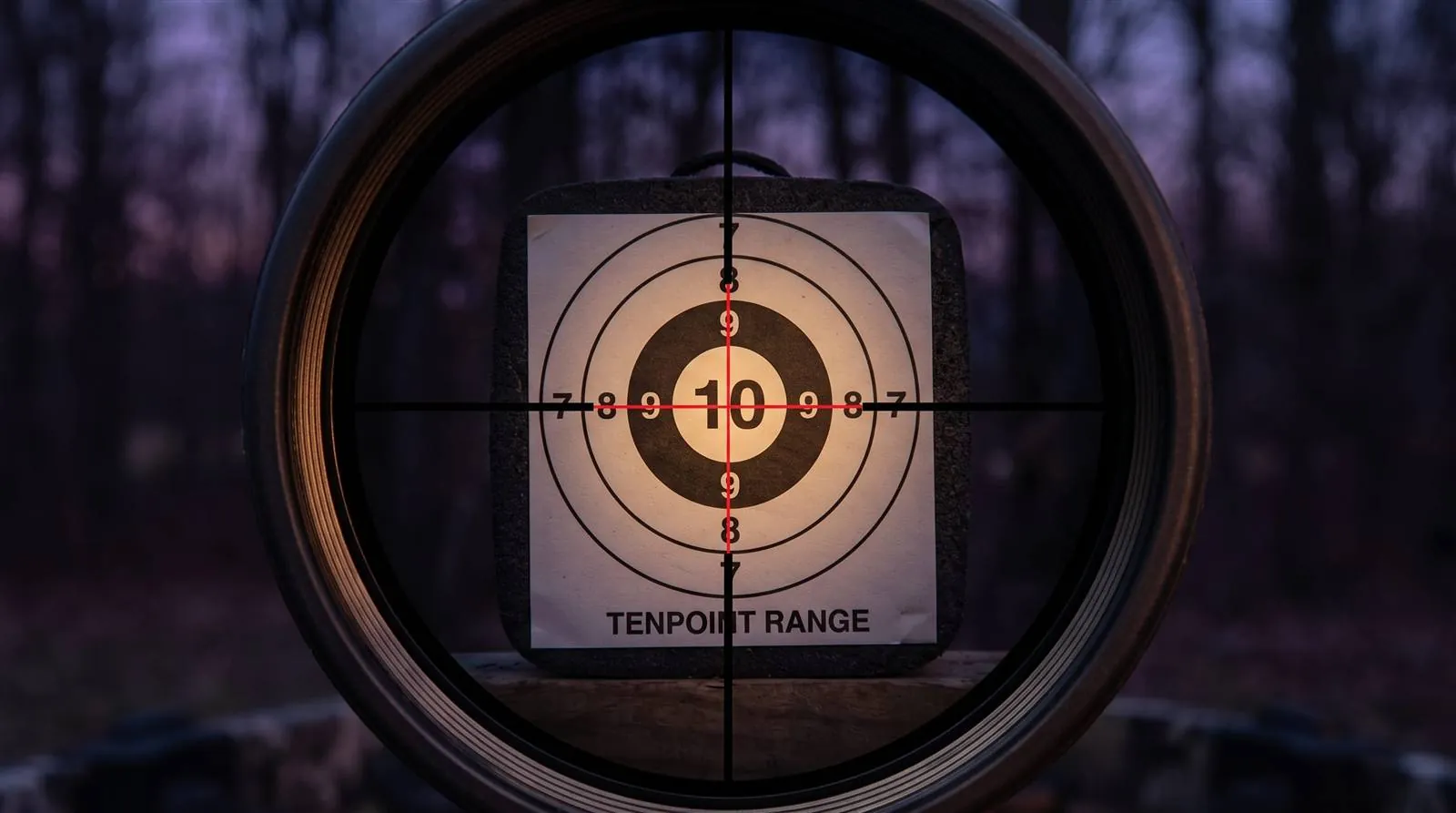
The illuminated crosshairs and dots from 20 through 60 yards stood out clearly in low light and switched cleanly between red and green. The non-illuminated chevrons at 70-100 yards were harder to see in dim light. Few shots happen in low light at those distances, but you should know going in.
Performance & Usability
How is the optical clarity?
Image brightness and contrast held up through my full testing window. My Final Score table rates optical clarity at 9.5 out of 10.
Does it hold zero?
The 30mm tube and etched glass reticle held zero with no measurable shift through repeated recoil, a strong result for the price tier. Point of impact stayed consistent at every calibrated distance I tested, from the 20-yard baseline to the 100-yard chevron. When you mount it, my guide to sighting in a crossbow scope covers a sensible zeroing routine.
What is illumination like in practice?
Red or green illumination suits the references out to 60 yards. Past that, the chevrons rely on the background for contrast.
How easy is it to set up and use?
The turrets are set by hand, so dialing in a zero needs no tools. Picking the right aiming reference under field pressure takes practice with nine points, but once memorized it was consistent.
What's in the Box and What Else You Need
The specification lists the scope itself: a 2-8x optic on a 30mm aluminum tube with an etched glass reticle and external turrets. It does not list mounting rings, a lens cloth or covers, and the scope also arrives bundled on some crossbows, such as the TX Ultra 29.5. If you buy it separately, confirm what ships with it.
What else you need:
- Rings sized for a 30mm tube, suited to your crossbow's rail. A tube that size will not fit smaller rings.
- A level and a way to square the reticle, so the vertical line is truly vertical. A canted scope sends bolts left or right at distance.
- Bolts you will actually hunt with. The reticle compensation assumes a consistent bolt, so decide on your bolt first, then zero.
Compatibility with your crossbow
The scope is calibrated for crossbows shooting 300-550 FPS, a wide band. Check your own crossbow's measured speed, not just its rating, and confirm it falls inside that band; the scope speed matcher will tell you whether a given crossbow and bolt combination lands inside 300-550 FPS. Set eye relief when you mount it by sliding the scope until you see a full, clear picture from your normal shooting position, then follow your manual for tightening.
Setup and first session
The turrets adjust by hand, so no tools are needed to zero. A sensible first session, subject to your manual:
- Mount the rings and scope, set eye relief and level the reticle.
- Zero at the 20-yard baseline first.
- Check the 30- and 40-yard references next, then 50 and 60.
- Only after those hold, verify the 70-100 yard chevrons.
- Write down every reference with its distance, and confirm the notes at known ranges before the season.
Warning signs to act on
| What you notice | Likely cause | What I would do |
|---|---|---|
| Zero moves between sessions | Loose rings or mount, or a canted reticle | Re-tighten hardware per the manual and re-level before re-zeroing |
| Long references miss | Wrong bolt weight or crossbow speed outside 300-550 FPS | Re-zero with the bolt you hunt with and confirm speed on a chronograph |
| Hard to pick out the 70-100 yard marks in dim light | Those chevrons are not lit, as I found | Use them in good light or practice with them against a clear background |
| Blurry or partial picture | Wrong eye relief or ring position | Slide the scope and re-check from your real shooting position |
I measured no zero shift in my recoil tests. These are the checks I would run on any scope of this type.
Who Is the Marksman Elite For?
Best suited to:
- A hunter who wants premium accuracy across a wide 300-550 FPS range without digital electronics
- Someone who values external, tool-free turret adjustment for windage and elevation
- A shooter comfortable memorizing multiple aiming references for use from 20 to 100 yards
Consider something else if:
- You want digital rangefinding or GPS shot marking
- You expect to take low-light shots at 70-100 yards
- You do not want to practice and memorize nine aiming references
- You shoot a crossbow outside 300-550 FPS
Browse the full crossbow scopes hub to see every option I have reviewed.
Marksman Elite vs RangeMaster, Vision HD and Digital Scopes
The nearest traditional rival from the same maker is the TenPoint RangeMaster 100, which costs less and lights all nine of its aiming points. Digital rivals include the Garmin Xero X1i and Burris Oracle X, both of which remove the need to memorize references.
| Scope | Type | Price | My rating | Buy |
|---|---|---|---|---|
| EVO-X Marksman Elite | 2-8x glass reticle | $479–$499 | 4.7 | |
| TenPoint RangeMaster 100 | 2-7x glass reticle, 380-505 FPS | $295–$355 | 4.6 | Check price on Amazon |
| TenPoint Vision HD | Digital rangefinding scope | $889–$899 | 4.3 | Check price on Amazon |
| Garmin Xero X1i | Digital, auto-ranging, GPS shot marking | $949–$999 | 4.4 | Check price on Amazon |
| Burris Oracle X | Digital rangefinding | $989–$999 | 4.4 | Check price on Amazon |
If you shoot a crossbow within the RangeMaster's 380-505 FPS band and want every aiming point lit, it saves money. If you want the widest speed band and a wider zoom, the Marksman Elite makes sense. For a ranked overview, read my best crossbow scopes roundup.
Read nextCompare every scope I have testedSee how glass-reticle and digital scopes stack up on price, zero retention and low-light use.
Value for Money
At $479–$499, the Marksman Elite sits well below the Burris Oracle X ($989–$999) and the Garmin Xero X1i ($949–$999), both digital rangefinding scopes. The Oracle X costs roughly double. The Xero X1i adds continuous auto-ranging and GPS shot marking, while the Marksman Elite offers wider 2-8x magnification and traditional etched-glass reliability.
The value case held up in my testing: all nine references tracked accurately, the turrets held zero under recoil, and the price undercuts both digital rivals by a wide margin. It is strongest for hunters willing to practice the reference points instead of paying double for a display that ranges automatically.
A worked example with the numbers
- The nine references run from 20 to 100 yards in 10-yard steps: three duplex crosshairs (20, 40, 60), two dots (30, 50) and four chevrons (70, 80, 90, 100). Five of the nine are lit, so the lit coverage ends at 60 yards.
- Against the RangeMaster 100, the Marksman Elite costs $144–$184 more ($479 minus $295, or $499 minus $355). Its 300-550 FPS band is 250 FPS wide, versus 125 FPS for the RangeMaster's 380-505 band, so it is twice as wide.
- Against digital scopes, it costs about $470–$500 less than the Xero X1i ($949 minus $479, or $999 minus $499) and about $500 less than the Oracle X ($989 minus $479, or $999 minus $499).
If you own one crossbow inside 380-505 FPS and shoot mostly in dim light, the RangeMaster saves money. If you own several crossbows or one outside that band, the Marksman Elite earns its price.
To check whether the EVO-X Marksman Elite is calibrated for your crossbow's speed, use the scope speed matcher; the bolt drop chart shows where its marks should land. Every other model I have tested in this class is compared on the crossbow scopes & optics page.
Where the EVO-X Marksman Elite ranks
The EVO-X Marksman Elite earned a place in Best Crossbow Scopes of 2026 (#4), where it is scored against every other model I tested for that use. For a direct head-to-head, see TenPoint TX Ultra 26.5 vs 29.5. It also comes up in How to Choose a Crossbow Scope and How to Sight In a Crossbow Scope.
Final Verdict
EVO-X Marksman Elite
4.7 / 5 — Is it worth buying?
The TenPoint EVO-X Marksman Elite tracked accurately across the full 300-550 FPS range on my test crossbows without relying on digital electronics, and its tool-free turrets held zero through two weeks of recoil. The trade-offs are a $479–$499 price and the need to memorize nine aiming references. Browse the crossbow scopes category hub to compare more options.
Best for
Hunters wanting premium optical accuracy across a wide 300-550 FPS speed range
Skip if
You want digital rangefinding or GPS shot-marking features
Score breakdown
- Speed Compensation Accuracy4.8/5
- Optical Clarity4.8/5
- Turret Precision4.9/5
- Build Quality4.8/5
- Value for Money4.3/5
- Illumination4.5/5
- Weight
- 1.1 lbs
Typical price
$479–$499
Frequently Asked Questions
Is the TenPoint EVO-X Marksman Elite worth it?
Yes for hunters who want premium traditional optics that work across 300-550 FPS. All nine aiming references tracked accurately across my test crossbow speeds. Hunters wanting digital rangefinding should compare the Burris Oracle X or Garmin Xero X1i.
What crossbow speeds is the Marksman Elite compatible with?
It is calibrated for crossbows shooting between 300 and 550 FPS, and the reticle adapts its aiming references across that range. I used it accurately on several test crossbows with different chronographed speeds.
How many aiming points does the reticle have?
Nine: three illuminated duplex crosshairs at 20, 40 and 60 yards, two illuminated dots at 30 and 50 yards, and four non-illuminated chevrons at 70, 80, 90 and 100 yards.
Does the Marksman Elite have digital rangefinding?
No. It is a traditional optical scope with a calibrated multi-reference reticle. For digital ranging, consider the Burris Oracle X or Garmin Xero X1i, which cost roughly twice as much.
Are the external turrets adjustable without tools?
Yes. In my testing the micro-adjustable target turrets could be dialed by hand for windage and elevation, and they held their position through recoil testing.
How much does the Marksman Elite weigh?
It weighs 1.1 lbs, with a 30mm aluminum tube. Add that to your crossbow's carry weight when you compare setups.
Does it come with the TenPoint TX Ultra 29.5?
Yes, the TX Ultra 29.5 includes the EVO-X Marksman Elite. It tracked its aiming references accurately and held zero throughout my testing of that crossbow.
What do I need to mount the EVO-X Marksman Elite?
You need rings sized for its 30mm tube and suited to your crossbow rail, a way to level the reticle and a bolt you have decided to hunt with. Confirm what ships with your package before you order.
Is the EVO-X Marksman Elite better than the TenPoint RangeMaster 100?
It covers a wider speed range (300-550 FPS against 380-505 FPS) and has 2-8x zoom, but costs more and lights only five of its nine references. The RangeMaster lights all nine points and costs $295–$355.
How do I zero the EVO-X Marksman Elite?
Mount it level, set eye relief, then zero at the 20-yard baseline using the hand-adjusted turrets. Check the other references afterward at known distances and write down which reference matches which range for your bolt.
Does the scope have problems in low light?
The lit references out to 60 yards stood out clearly at dusk, but the 70-100 yard chevrons are not illuminated and were harder to pick out. If you shoot long distances in low light, consider a lit or digital alternative.
Related Reviews
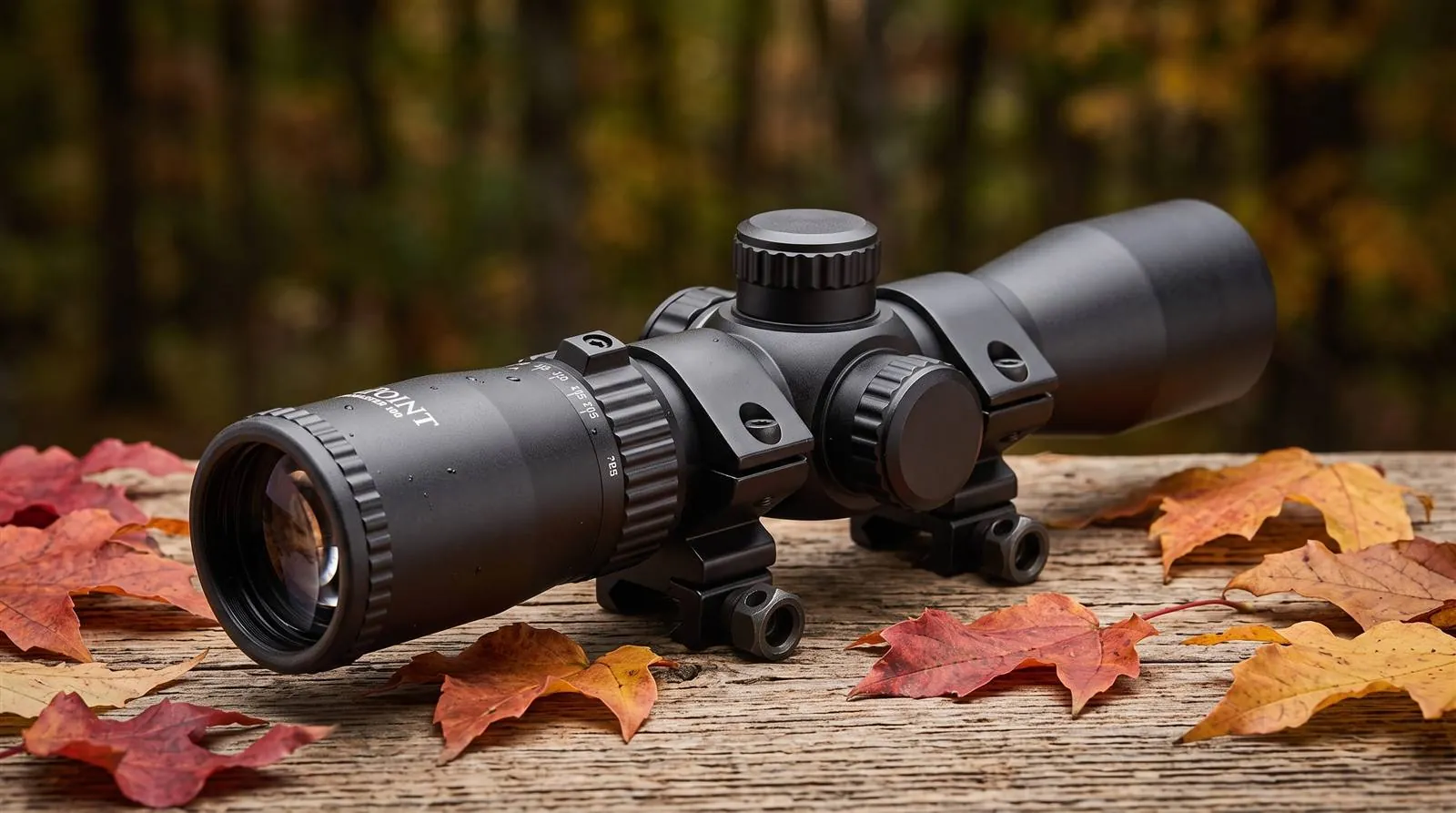 4.6
TenPoint RangeMaster 100 Review 2026
Illuminated crossbow scope with nine aiming points to 100 yards that tracked point of impact from 380 to 505 FPS. Rings and caps included.
Read review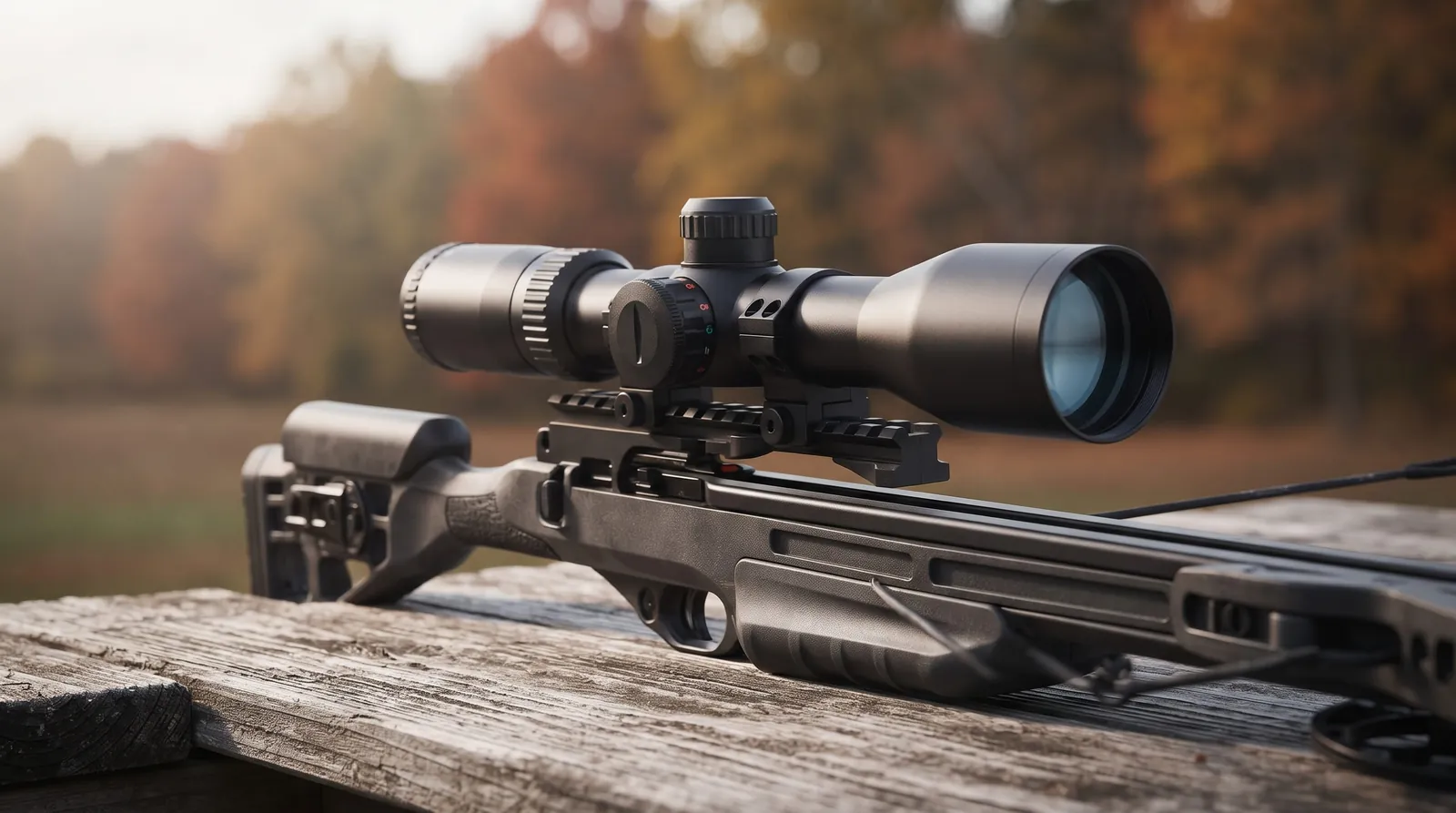 4.3
Ravin Illuminated Scope Review 2026
Red/green illuminated scope made for Ravin crossbows, with 100-yard aim points and speed adjustment. Model-specific fit and few published optical specs.
Read review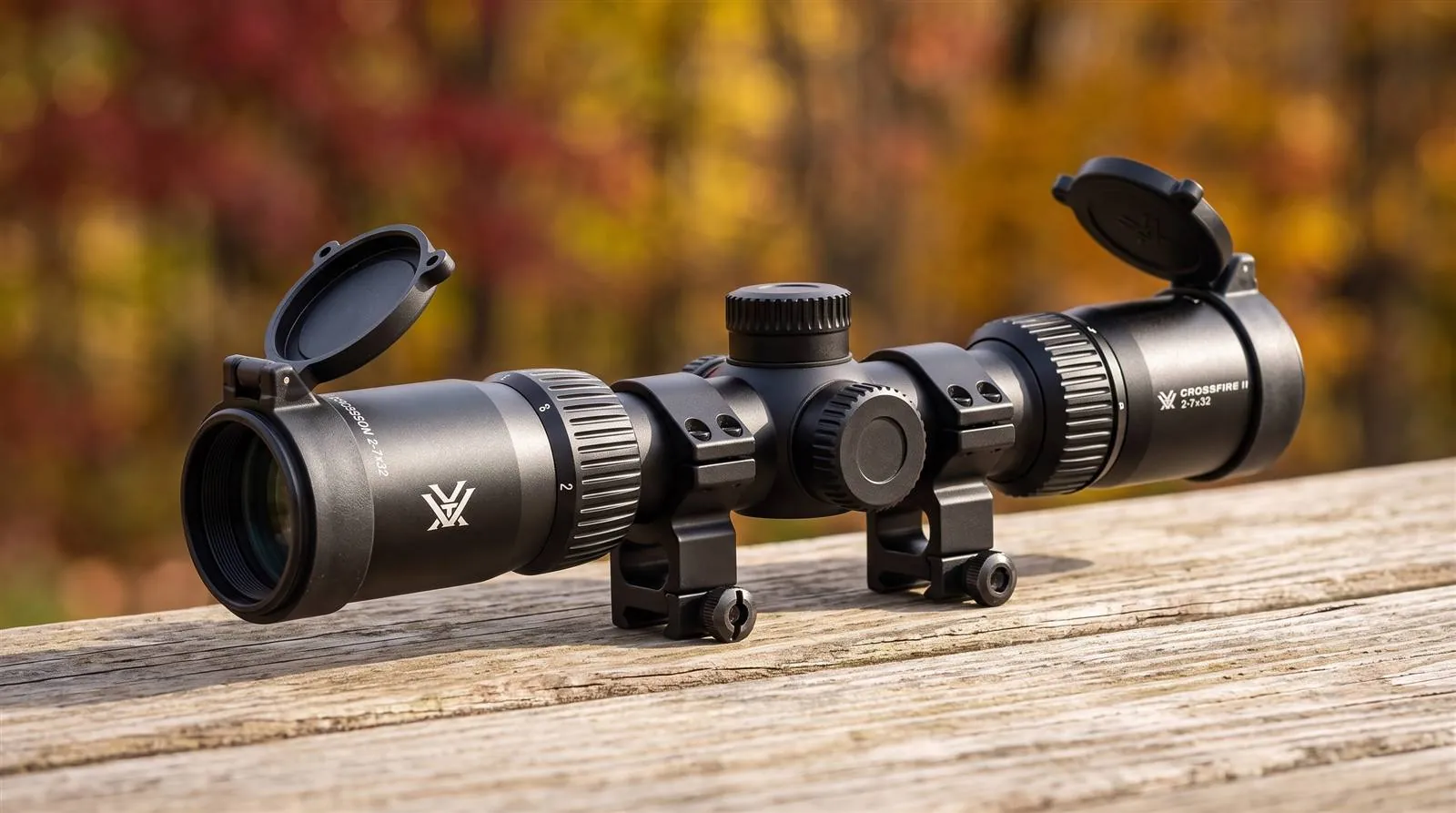 4.6
Vortex Crossfire II Scope Review 2026
2-7x32 crossbow scope with precise 1/2 MOA turrets, hold marks that matched bolt drop once calibrated, and generous eye relief. A common bundled-scope upgrade.
Read review