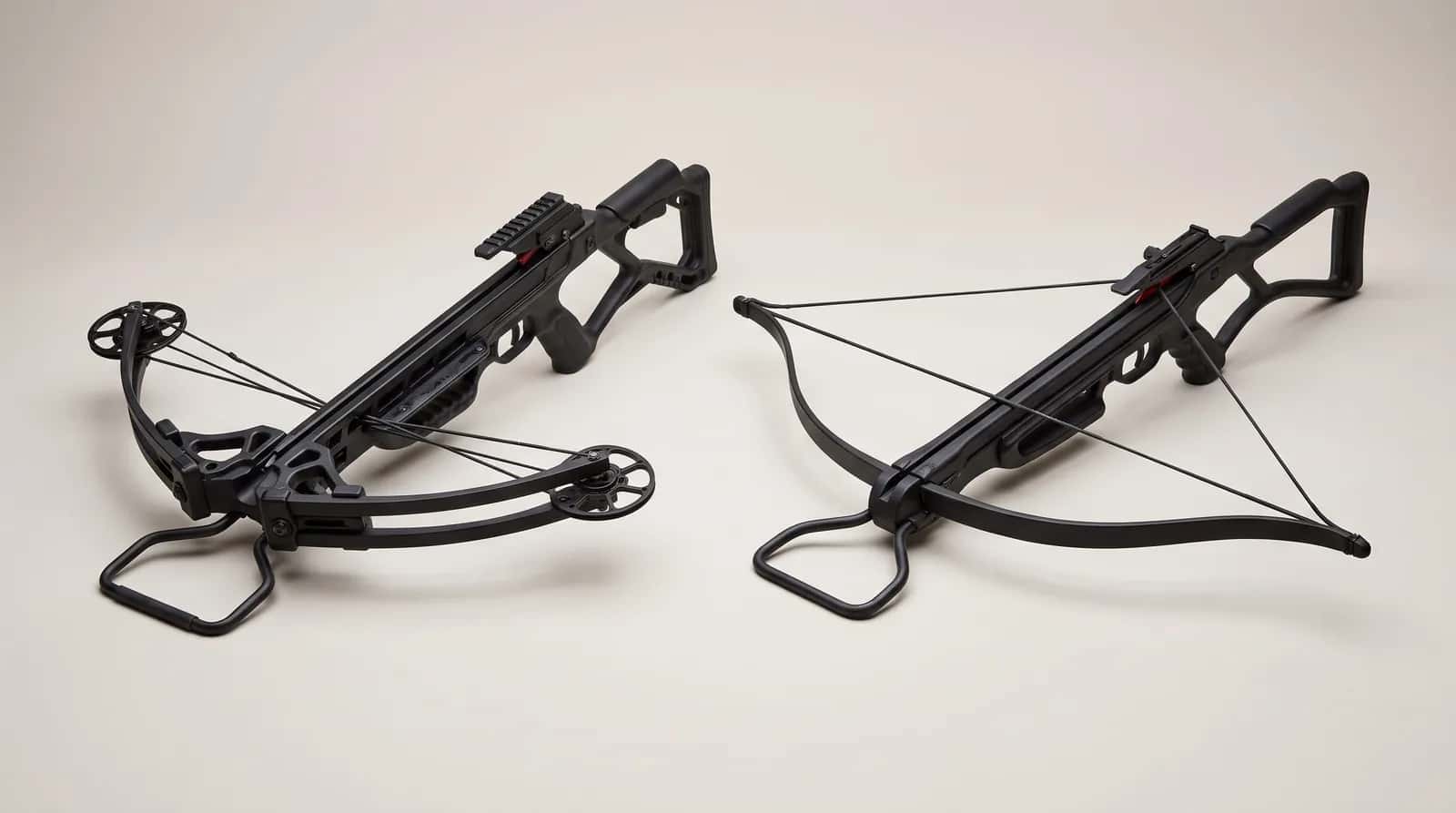
Every crossbow stores energy in bent limbs, but a compound adds cams and cables to the limbs, and a recurve does not. That single design choice decides how fast the bolt flies, how hard the string is to draw, and how much tuning you will do for the life of the crossbow.
This guide is for anyone standing at the first fork in a crossbow purchase: pay for a cam system, or keep the mechanism simple. We compare the two designs on the criteria readers ask about most, using the four tested crossbows in our review library, and finish with plain decision rules.
Verdict by Reader Type
Most buyers fit one of a few profiles. Find yours first, then read the criteria sections for the reasoning.
| If you are... | Lean toward | Why |
|---|---|---|
| On a tight budget and new to crossbows | Recurve | The Avalanche Anaconda is a complete kit at $219 to $239 |
| Valuing simplicity and low upkeep | Recurve | No cam timing to maintain, fewer proprietary parts |
| Shooting past 40 yards regularly | Compound | Higher speed flattens the arc and our compound groups were tighter |
| Limited in strength or wanting easy cocking | Compound | Integrated cocking removes manual effort entirely |
| Hunting from a blind, saddle or stand | Compound (compact) | Short cocked width, such as 7 inches on the TX Ultra 26.5 |
| Prioritising a lightweight carry | Either | The Anaconda (5 lbs) and Mag Air (4.9 lbs bare) are both very light |
Hunting is regulated differently from place to place, including which crossbows are permitted and which minimum specifications apply. Where crossbows are permitted, verify current local rules before you buy anything for hunting.
Compound vs Recurve at a Glance
The table below uses numbers from our own reviews. Speeds for the Anaconda and Mag Air are chronograph results; the TenPoint figures are the manufacturer ratings that our chronograph readings closely matched.
| Feature | Avalanche Anaconda | Excalibur Mag Air | TenPoint TX Ultra 26.5 | TenPoint TRX Ultra |
|---|---|---|---|---|
| Design | Recurve | Recurve | Compound | Compound (reverse-draw) |
| Speed | 232 to 241 FPS measured | 299 to 308 FPS measured | 410 FPS rated | 515 FPS rated |
| Draw weight | 175 lbs | 136 lbs | 220 lbs | 360 lbs |
| Weight | 5 lbs | 4.9 lbs bare | 7.7 lbs | 8.4 lbs |
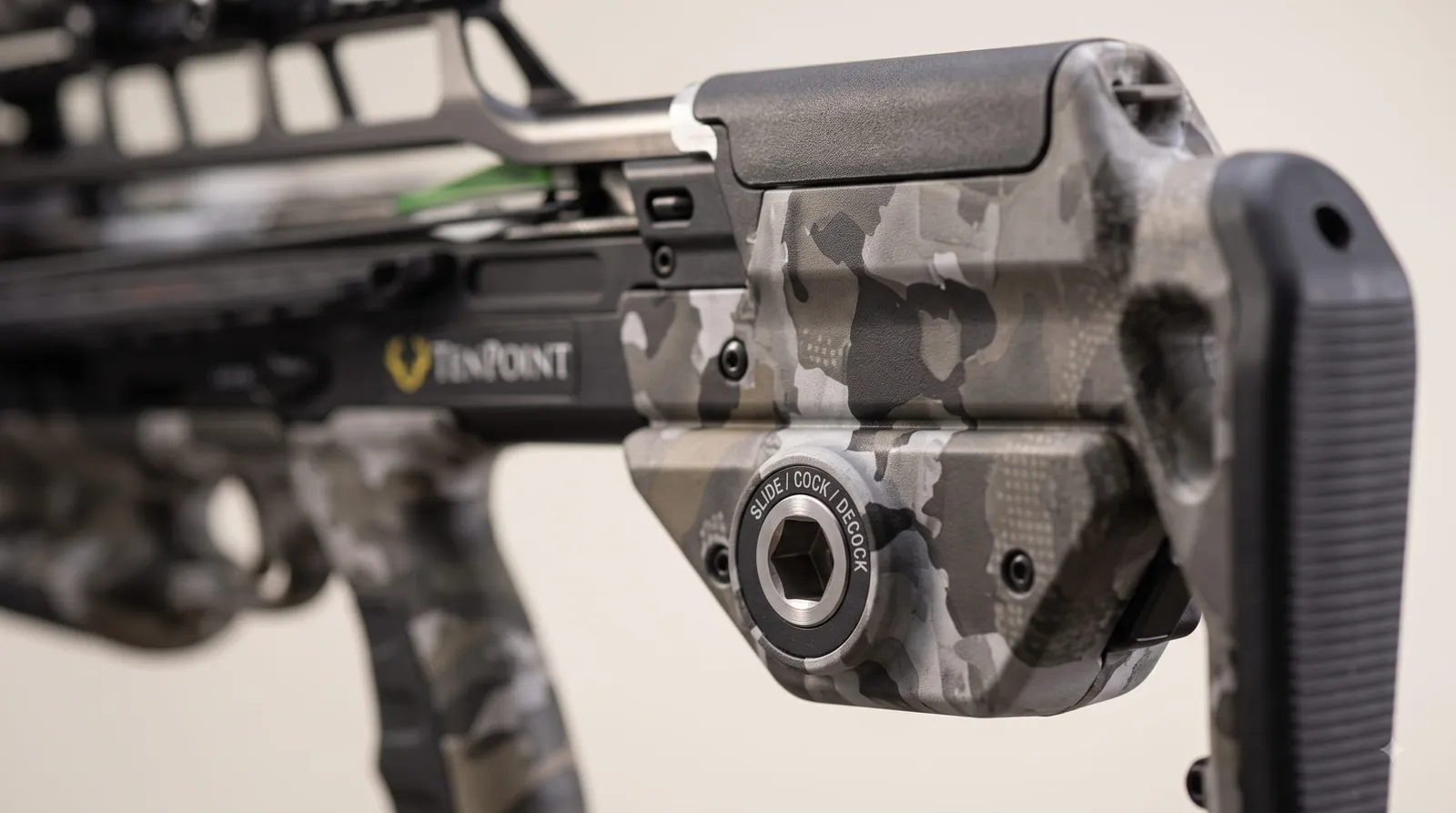
| Cocking | Rope, manual effort | Rope, manual effort | ACUslide MAXX | ACUslide MAXX |
| Price | $219 to $239 | $785 to $815 | $1,999 to $2,199 | $3,495 to $3,515 |
| Our rating | 4.0 / 5 | 3.4 / 5 | 4.6 / 5 | 4.9 / 5 |
Two things stand out. First, the recurves are the lightest crossbows in the group. Second, the heaviest draw weight belongs to the fastest crossbow, and the lowest draw weight is not the easiest to cock. That is the cam system at work, and it is the key to understanding the rest of this comparison.
How the Two Designs Work
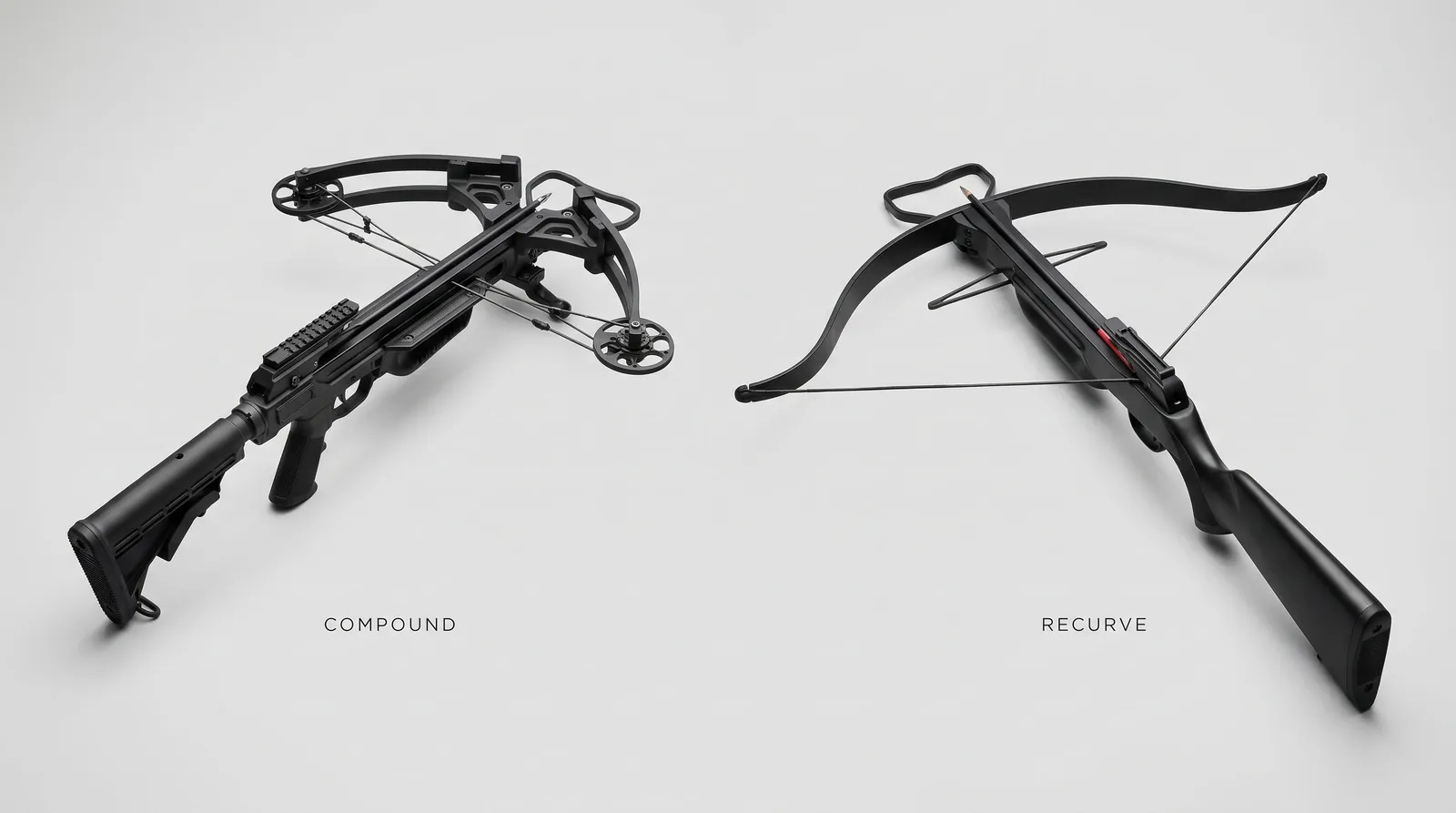
A recurve crossbow stores energy in its limbs alone. The string runs directly from limb tip to limb tip. When you cock it, you bend the limbs, and you work against close to the full draw weight the whole way.
A compound crossbow adds cams (eccentric wheels) at the limb tips, with cables running between them. The cams act like a variable lever: the load peaks mid-draw and then drops off, and a compound can store far more energy in the same power stroke. That is why a compound crossbow can be rated at 360 lbs of draw weight and still be cocked with modest felt effort once a cocking system is attached.
Our Anaconda review puts the trade plainly: a cam system multiplies the effort you put into cocking, while recurve limbs have no such multiplication, so you work against close to the full 175 lbs. In exchange, the mechanism is simpler and cheaper. The recurve crossbow entry in our glossary covers the terminology if you are new to it. If you have settled on a recurve, our recurve crossbow buying guide walks through the specifications to compare.
A related design worth knowing is the reverse-draw layout used on the TRX Ultra, where the limbs and cams sit toward the shooter. It is a compound variation, not a separate category, and our Ravin vs TenPoint comparison covers how two brands approach it.
Speed and Energy
Compounds are faster, and by a wide margin. Across our reviews the fastest recurve measured 308 FPS, and the slowest compound is rated 410 FPS. The TRX Ultra chronographed at 511 to 517 FPS, roughly double the Anaconda.
Speed matters for two reasons. A faster bolt follows a flatter path, which makes misjudged distance less costly. It also carries more kinetic energy for a given bolt weight, since energy rises with the square of velocity. Our guide to how fast a crossbow bolt travels explains how to read the numbers.
Two cautions apply. The Anaconda's 245 FPS rating is a ceiling figure reached with the lightest included bolts, so heavier arrows will be slower. And the TX Ultra 26.5 shows that even within the compound family, speed is traded for compactness: its short 10.25-inch power stroke means less energy than longer flagship models.
Noise and Vibration
Noise is a practical concern for target shooters at a busy range and for hunters hoping for a calm second chance, wherever hunting is permitted.
On our review scores, noise favors the compounds with dampening: the TX Ultra 26.5 scored 9.5 out of 10 and the TRX Ultra 10 out of 10, against 8.7 for the Anaconda and 8 for the Mag Air. In a decibel comparison, the TX Ultra's built-in string dampening produced a clear, audible reduction versus a non-dampened TenPoint model.
The fair reading is narrower than it looks. Recurves are not loud by comparison with older compounds; the recurves scored respectably. The advantage comes from dampening hardware, which is a feature of particular models rather than a law of the design. Any crossbow at these speeds is still audible.
Size, Weight and Handling
Here the recurve holds its own. The Anaconda weighs 5 lbs and the Mag Air 4.9 lbs bare, which our reviews describe as among the lightest crossbows I have tested. The compounds are heavier at 7.7 and 8.4 lbs.
Width is the other half of handling. A recurve's limbs sit wide whether cocked or not, so its footprint is larger than a cocked compound. The TX Ultra 26.5 is 7 inches axle-to-axle when cocked and 26.5 inches overall, and the TRX Ultra is 6 inches cocked. Our ground-blind and saddle trials showed that the compact compound cleared a narrow shooting window with room to spare.
So the answer depends on how you carry and where you shoot. If you walk a long way with the crossbow in hand, the recurve's light weight is a real advantage. If you shoot from a blind or a saddle, a compact compound's narrow cocked width matters more. Axle-to-axle width is worth checking on any model you are considering.
Cocking Effort
This is the criterion where the two designs differ most for the person holding the crossbow. Our ease-of-cocking scores show it: 5.5 for the Anaconda and 4.5 for the Mag Air, against 9.9 and 10 for the TenPoint compounds.
- Recurves: you pull against close to full draw weight, aided by a rope cocking aid. In my testing the Anaconda's rope made cocking manageable for most adult shooters, and the Mag Air's 136 lbs was workable across 30+ logged cycles, but both take noticeably more exertion than any integrated system.
- Compounds: integrated systems such as ACUslide MAXX draw the string for you. The TX Ultra produced identical draw length on every one of 50+ cycles, and the TRX Ultra on 60+.
The compound's convenience has a cost. At 220 and 360 lbs, neither TenPoint model can realistically be hand-cocked, so you depend on the system working. Our guide to cocking a crossbow walks through both approaches, and choosing a draw weight for your body size helps if strength is a concern.
Maintenance and Reliability
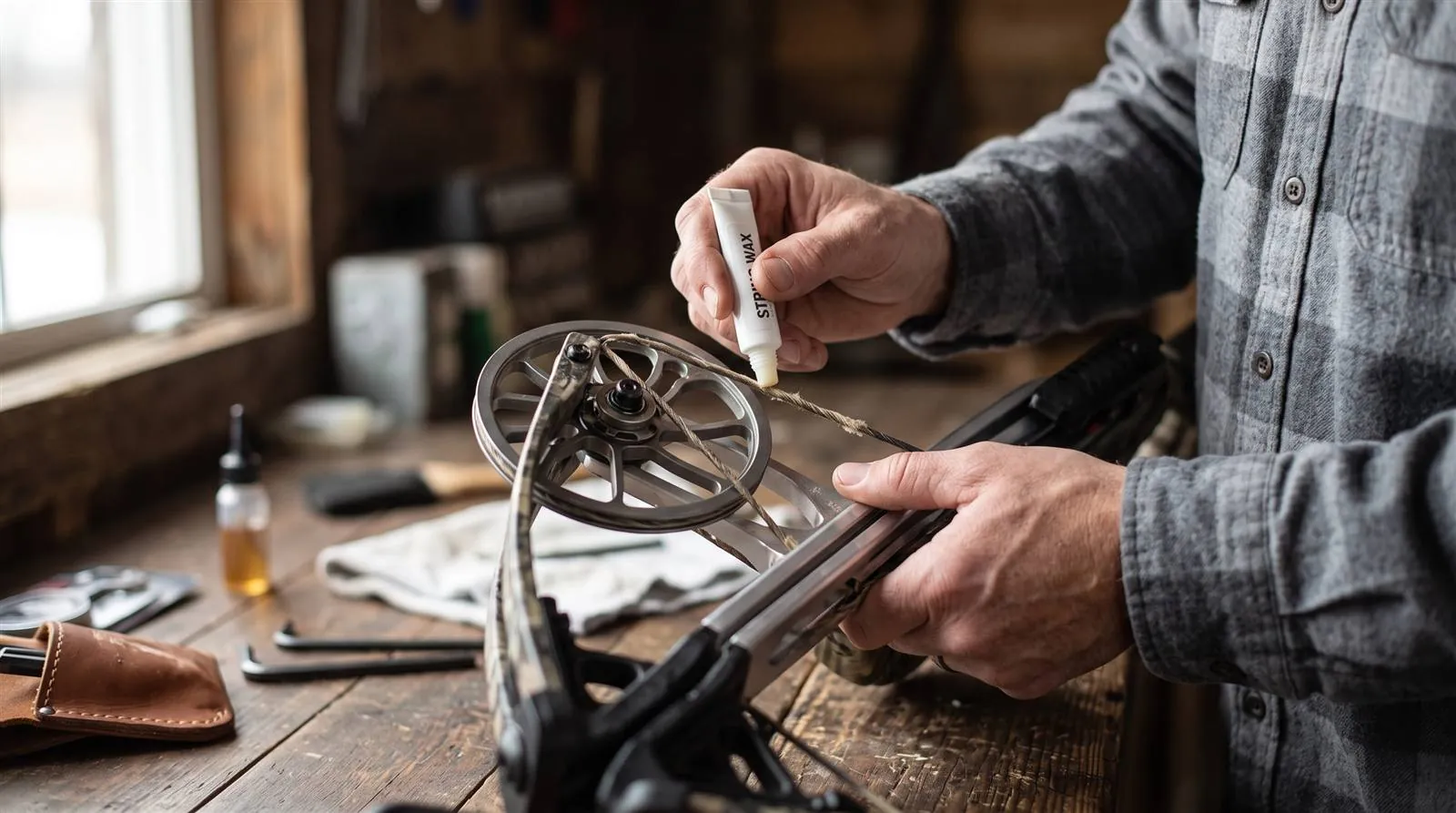
Recurves have less to look after. Our reviews describe no cam timing to maintain and fewer proprietary parts. Routine care is waxing the string, inspecting limbs for cracks or stress marks, and never dry-firing. Our maintenance guide covers the routine.
Compounds need more attention, but the tested ones held up. TenPoint recommends waxing the string and cables every 3 to 5 shooting sessions. The TRX Ultra's axles held cam timing through 60+ shots with no measurable drift. The real difference is repair: the TRX Ultra uses TenPoint-specific strings, cables and a proprietary limb assembly, so repairs away from a dealer are effectively impossible, per our review.
A practical rule: if you live far from a dealer and want to handle your own upkeep, the recurve's simplicity is a genuine benefit. If a dealer is nearby and you value performance, the compound's service model is manageable.
Cost
The price gap is wide. The four crossbows span $219 to $3,515. The Anaconda is a complete kit with scope, quiver, bolts, stringer, sling and cocking rope, so there is little else to buy. Our Anaconda review notes it costs roughly half the price of a Barnett Hyper Whitetail 410 compound ($425 to $485).
That comparison matters. Recurve is not automatically cheaper once you step up: the Mag Air at $785 to $815 costs roughly three times the Anaconda, and our review notes the compound Hyper Whitetail 410 offers higher speed and tighter extended-range accuracy for about half the Mag Air's price. The Mag Air scored 3.4 out of 5 largely for that reason.
Think about the full cost, not only the ticket. Add scope, bolts, a cocking aid if one is not included, and broadheads for hunting. Our crossbow cost guide breaks down typical totals, and the budget crossbow roundup shows what lower price tiers deliver.
Tested for this topic
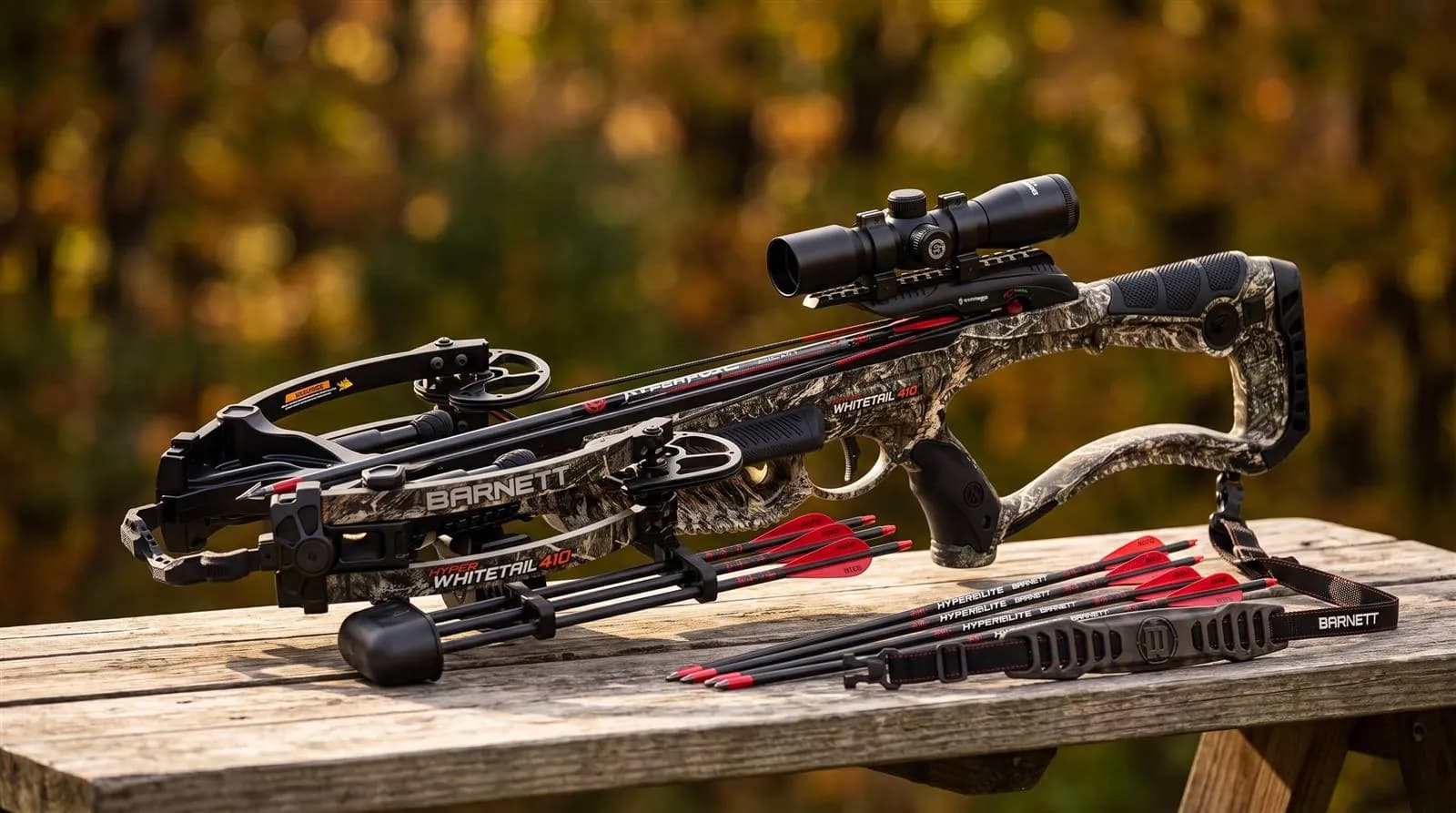
Barnett Hyper Whitetail 410A compound in the low price tier, for comparing against the recurves above.
Learning Curve
A recurve has less to learn. There is no cam timing, no integrated cocking system and few settings. The Mag Air adds a Guardian anti-dry-fire system that engaged in every scenario we could safely simulate, which suits first-time owners. The Anaconda is the simplest of all, though it asks for more physical effort.
A compound asks you to learn a cocking system and a maintenance schedule, but the shooting itself is not harder. If anything, a clean trigger like the 3-lb TriggerTech on the TX Ultra and quicker, repeatable cocking make consistent practice easier. Plan on sighting-in time either way; our sight-in guide covers it. Setup took about 40 minutes on the Anaconda, 55 on the TX Ultra and 70 on the TRX Ultra in my testing.
Accuracy
At 20 to 40 yards, the types are closer than the price gap suggests. Past that, compounds pull ahead.
- The Anaconda's 20-yard groups were reasonably tight, but its 40 and 60-yard groups were wider than every compound in our library.
- The Mag Air's 20 and 40-yard groups were solid and competitive with mid-tier compounds, with a clear gap at 60 yards.
- The TX Ultra held a 2.5-inch cluster at 60 yards.
- The TRX Ultra produced the tightest 100-yard groups I have recorded.
Our reviews attribute the recurve gap to the platform's limits at distance and budget-tier tolerances, not to a defect. The scope matters too: the Anaconda's red dot held zero less reliably than premium illuminated optics. If most of your shooting is under 40 yards, accuracy alone should not push you toward a compound.
Common Mistakes and Myths
Most regret after a purchase traces back to a handful of assumptions. Check yours against this table before you decide.
| Myth | What the reviews and basic mechanics show |
|---|---|
| "Lower draw weight means easier cocking." | Not across designs. The 136 lb Mag Air scored 4.5 for cocking; the 360 lb TRX Ultra scored 10 because its system does the work. |
| "Recurves are always the cheap option." | The Mag Air runs $785 to $815, far above the $425 to $485 compound Barnett Hyper Whitetail 410 mentioned in our Anaconda review. |
| "A compound is too complicated for a first crossbow." | Shooting is no harder; the extra learning is the cocking system and a wax schedule. |
| "Faster always means better." | Speed flattens the arc, but a crossbow you cannot sight in, carry or service is worth less than a slower one you shoot well. |
| "Recurve means inaccurate." | Our recurve groups were usable at 20 to 40 yards. The gap opens at 40 and 60 yards. |
Beyond the myths, three buying mistakes recur:
- Comparing FPS figures that use different bolt weights. See the note on rated speeds earlier in this guide.
- Ignoring dealer distance. Proprietary strings and cables on compounds mean a repair may depend on a service network.
- Skipping the carry test. A crossbow that feels fine in a shop can feel heavy after a long walk, so weigh the numbers in the table above against your real routine.
Scenario Picks
These short scenarios show how the criteria combine. Each is a reasoning aid, not a fixed prescription.
- Weekend range shooter, 20 to 30 yards, modest budget. Distance is short enough that the accuracy gap barely matters. Weigh the complete-kit price of the Anaconda against the effort of rope cocking.
- Someone with a shoulder or back issue. Ask a professional before choosing a high draw weight. An integrated cocking system removes the hand-pull, though you still carry the crossbow's weight.
- Hunter using a ground blind, where legal. Cocked width and noise matter most, which points to a compact dampened compound. Verify local rules first.
- Shooter who wants long-range groups. The compound results at 60 and 100 yards in our reviews are the evidence; the recurves were not tested to that range in the same way.
- Owner far from any dealer. Favor the design with fewer proprietary parts, and confirm warranty and service routes before you pay.
Questions to Ask Before You Pay
Run through this checklist for any model, compound or recurve.
- What is the rated speed, and with what bolt weight?
- How is it cocked, and can I do it comfortably, repeatedly, in the clothes I will wear?
- What does the manufacturer say about string and cable replacement, and who performs it?
- What is in the box, and what must I add (scope, bolts, cocking aid, quiver)?
- What does the warranty cover, and what voids it?
- Does my local authority place any rule on the type I am considering?
Which Should You Choose?
Work through these rules in order and stop at the first that applies.
- Budget under about $300 and you want a complete kit? Choose the recurve. The Anaconda is the only crossbow here in that range.
- Cannot or do not want to apply heavy manual effort? Choose a compound with integrated cocking.
- Shoot at 50 to 100 yards, or want the flattest trajectory? Choose a compound; see the TRX Ultra for the high end.
- Shoot from a blind, saddle or tight stand? Choose a compact compound such as the TX Ultra 26.5.
- Want simplicity, light carry and a built-in dry-fire safeguard, and accept lower speed? The Mag Air fits, at a premium price.
- Still undecided? Read our picks for beginners and see the compound and recurve hubs.
Tested for this topic
TenPoint TX Ultra 26.5The compact compound we rated highest for cramped shooting positions.
Recurves carry higher draw weights for the same speed, and the cocking effort estimator shows what that means by hand, rope and crank; the kinetic energy calculator puts both designs on one scale. If you are also weighing a crossbow against a vertical compound bow, crossbow vs compound bow covers that decision. Current pistol crossbows are almost all recurve designs, and the same trade-offs apply at that size.
For a direct comparison at the same price point, read the Excalibur Micro 380 and CenterPoint Wrath 430 reviews, two models I tested within a few hundred dollars of each other.
Frequently Asked Questions
Which is better for beginners, compound or recurve?
It depends on what matters to the beginner. A recurve has fewer parts and a lower price, which suits someone testing the hobby cheaply. A compound with integrated cocking is easier on the body and quicker to cock, which suits someone who will shoot often.
Is a compound crossbow always faster than a recurve?
In our reviews, yes. The fastest recurve I measured reached 308 FPS, while the compounds are rated 410 and 515 FPS. Bolt weight changes the numbers, so compare ratings that use the same bolt weight.
Are recurve crossbows cheaper to maintain?
Generally, yes, since there is no cam timing and fewer proprietary parts. Our reviews describe waxing the string, checking limbs and avoiding dry-fire as the main routine. Compounds add cables and cams, and some parts are brand-specific.
Is a recurve accurate enough for hunting?
At moderate distances our reviews found recurve groups usable, with the gap to compounds widening at 40 and 60 yards. Whether and how you may hunt with a crossbow depends on local rules, so verify current regulations first.
Why is a recurve harder to cock if its draw weight is lower?
A compound's cams multiply your effort and its integrated system does the work for you. A recurve gives no such multiplication, so a rope aid helps but you still do real work. Our Mag Air at 136 lbs scored lower for cocking than a 360 lb compound.
Can I add a cocking device to a recurve?
Many recurves use a rope aid, and both the Anaconda and Mag Air include one. Compatibility with other devices varies by model, so check the manufacturer's guidance before buying anything extra.
Does a compound crossbow need more maintenance than a recurve?
Slightly more. Both need string waxing and limb inspection, and neither should ever be dry-fired. A compound adds cables and cams to the checklist, and some replacement parts are brand-specific, so confirm service options before buying.
What should a first-time buyer check before choosing between the two?
Check how the crossbow is cocked, what is included in the box, the rated speed and the bolt weight behind it, and the nearest service option. Also verify any local rules that apply to the type you want to use.
Final Recommendation
Pick a compound if performance, easy cocking or cramped shooting positions drive your decision, and pick a recurve if price, light weight and simplicity do. Neither is the right answer for everyone, and the reviews show real trade-offs on both sides.
Your next click: read the Avalanche Anaconda review if you are leaning recurve, or compare models in the compound crossbows and recurve crossbows hubs, or see the best crossbows I've tested across both formats. Check local rules before using any crossbow for hunting.
Gear mentioned in this guide
Reviews we link to above, highest rated first. Read the full review before you buy.
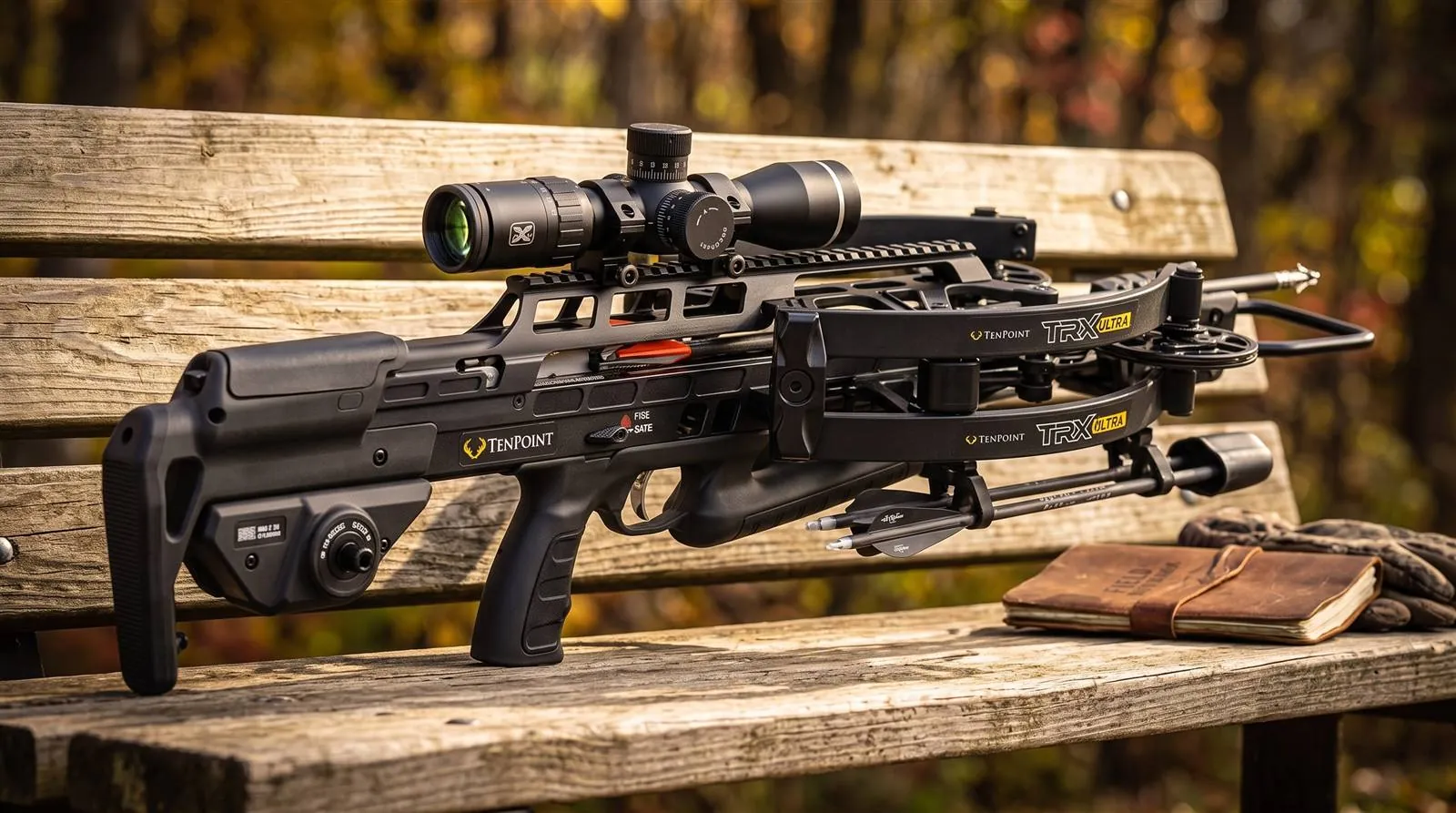
TenPoint TRX Ultra Review
Fastest crossbow in my tests at 511–517 FPS, with the tightest long-range groups near 100 yards. A flagship price that suits a narrow group of buyers.
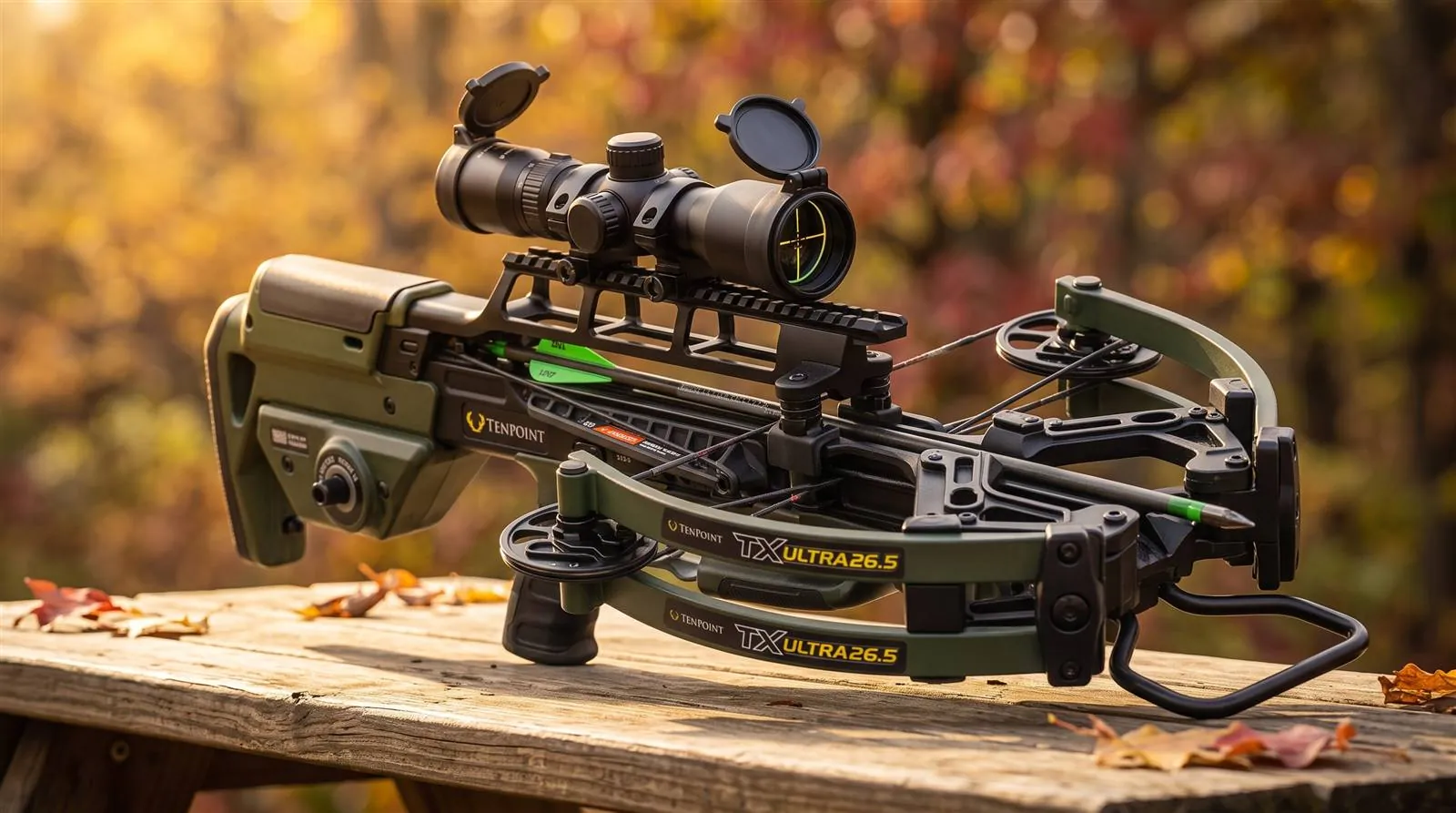
TenPoint TX Ultra 26.5 Review
Very short forward-draw crossbow measured at 406–413 FPS, quiet to shoot and easy to move in saddles, tight blinds and confined stands.
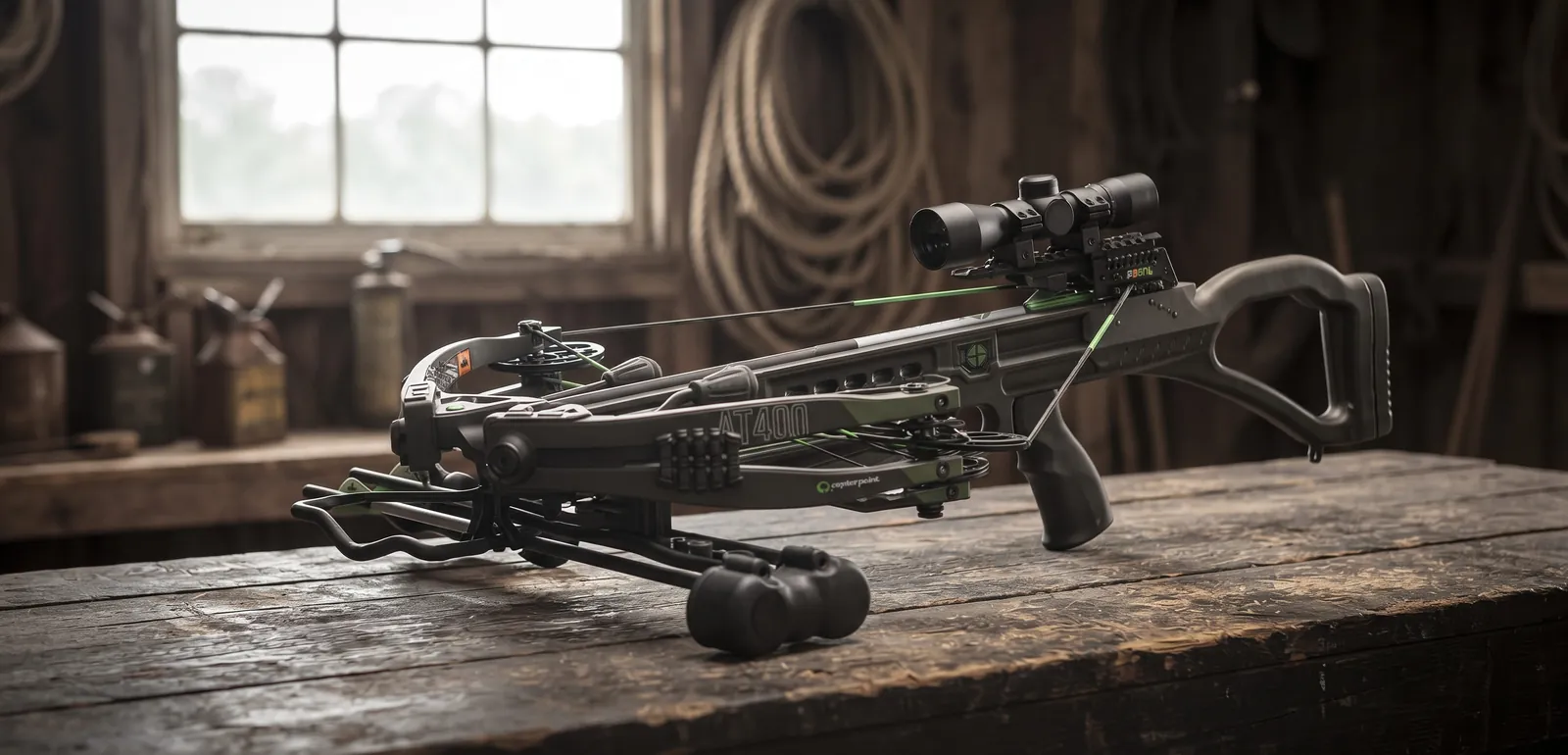
CenterPoint Wrath 430 Review
Fast bullpup compound crossbow rated at 430 FPS with a quiet crank cocker included. Short overall, but heavier and slightly wider cocked than premium compacts.
Ready to compare models? Browse our compound crossbows and recurve crossbows reviews, or see all reviews to see how each one measured up in testing.
More in Buying & Comparison Guides
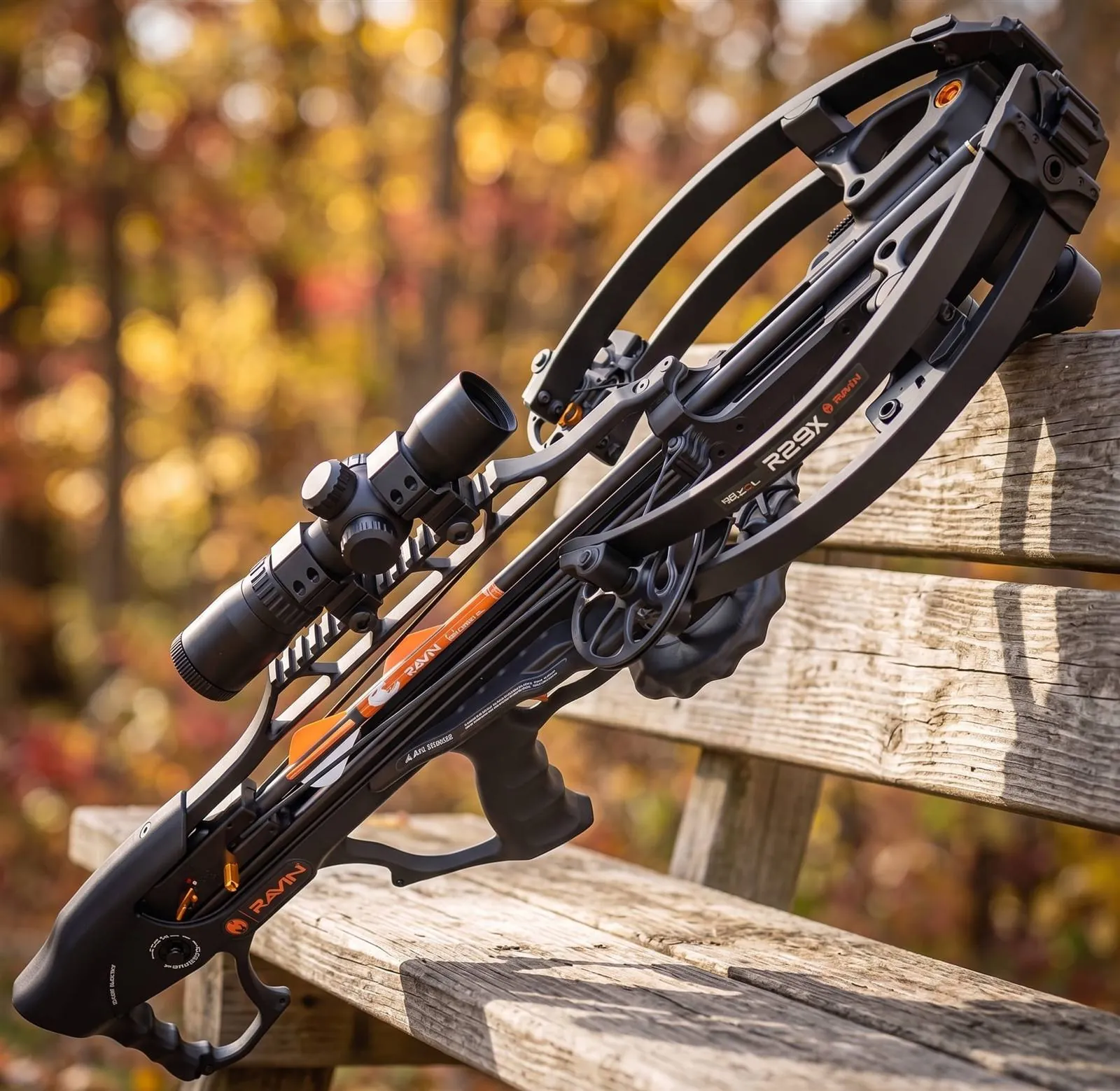
Ravin R29X vs R26X
R26X for stands, blinds and shots inside 40 yards at $500 less; R29X for larger game and longer range, with 50 FPS and 38 ft-lbs more. Measured verdict for each hunter.
Read guide
Recurve Crossbow Buying Guide
How to choose a recurve crossbow for hunting: who it suits, which specs to compare, maintenance, common mistakes and a decision checklist.
Read guide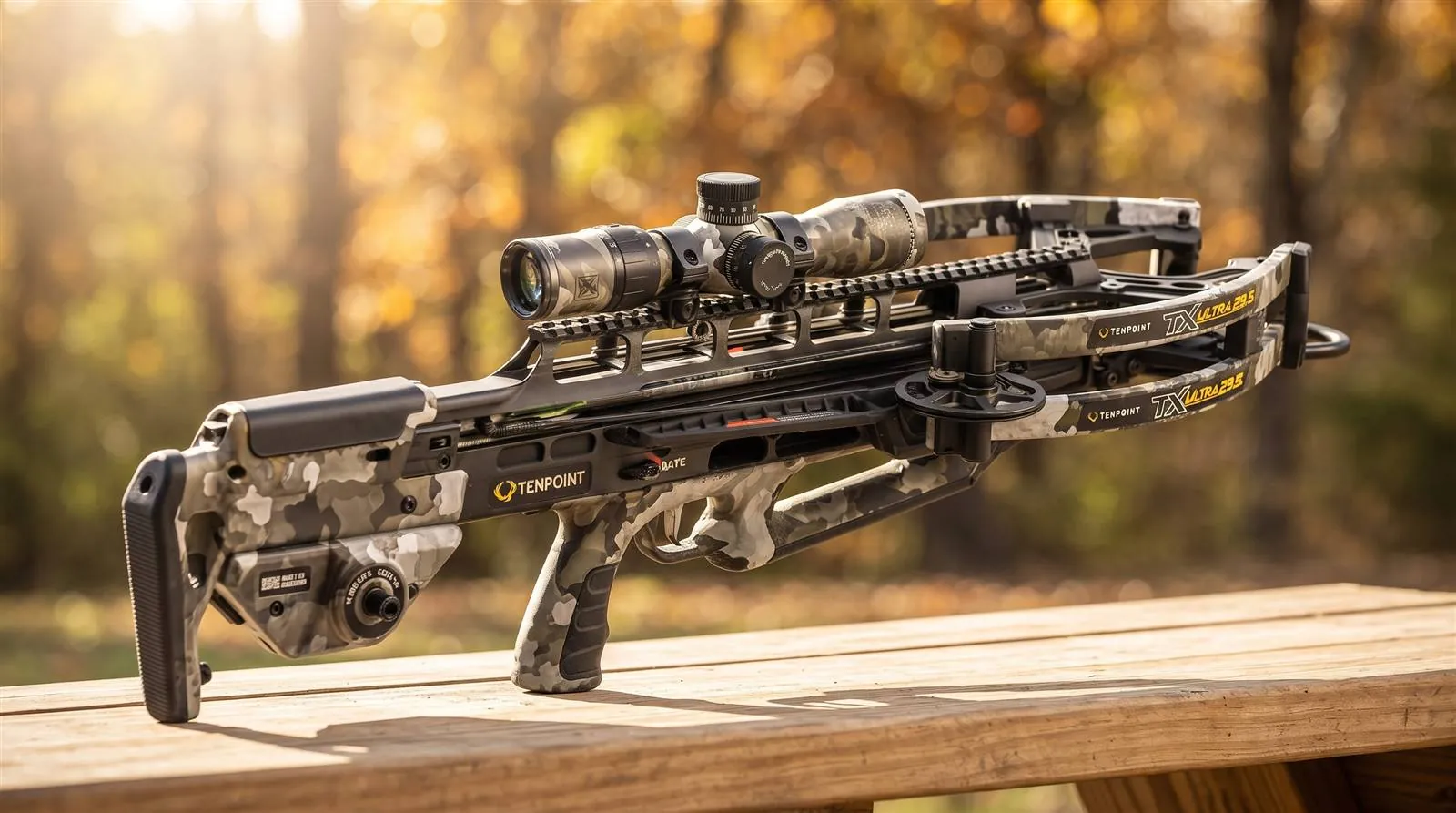
TenPoint TX Ultra 26.5 vs 29.5
TX Ultra 26.5 for saddles, blinds and short shots: shorter, lighter, quieter and $400–500 cheaper. TX Ultra 29.5 for 50 FPS more, 193 ft-lbs and reach past 60 yards.
Read guide