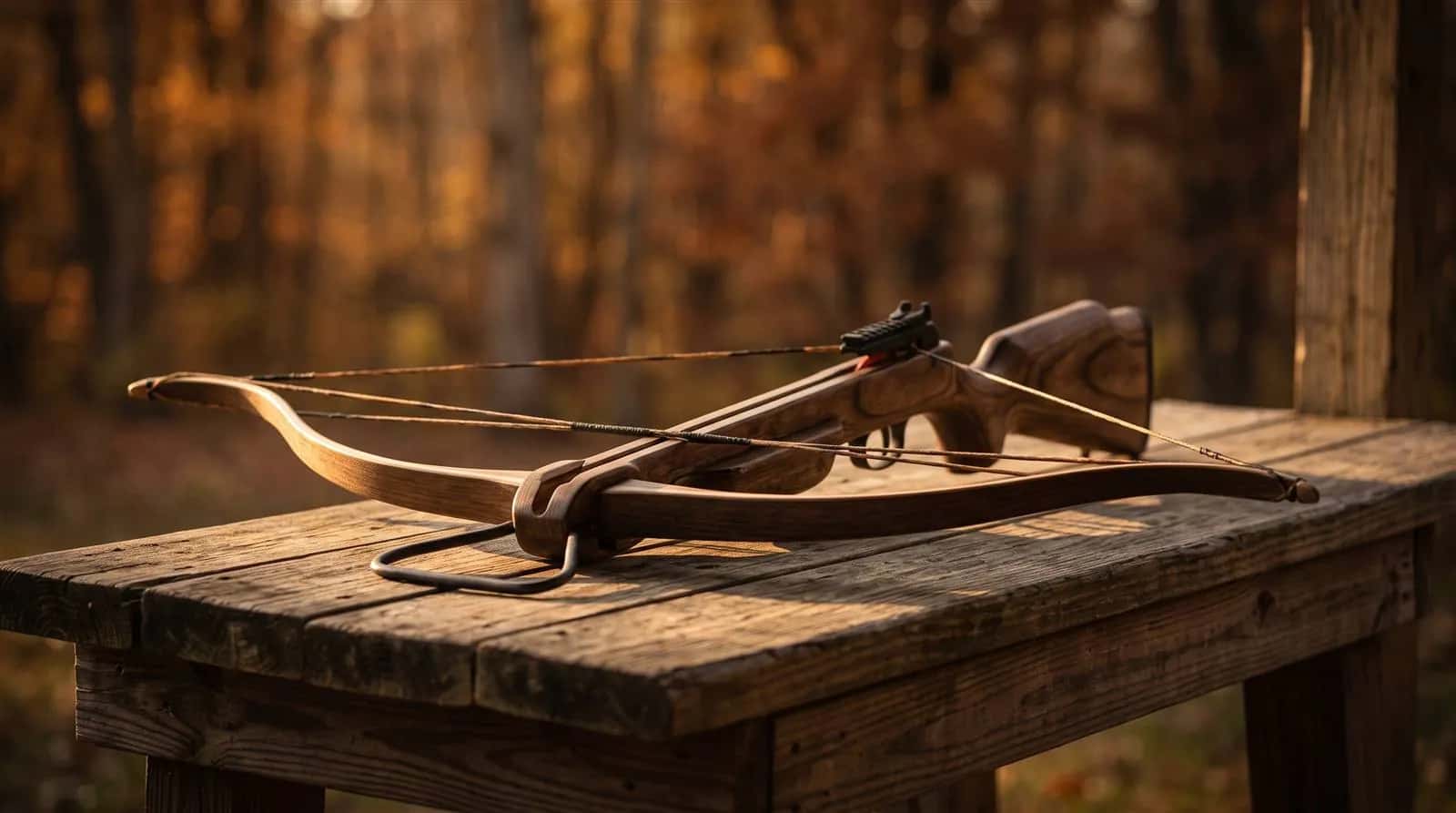
Recurve Crossbow in plain terms
Recurve Crossbow meaning: A recurve crossbow has limbs that curve away from the shooter and carry the string directly, with no cams, so it is simple to maintain and often lower in cost.
Also called: traditional crossbow, camless crossbow, recurve limb crossbow
A recurve crossbow has two limbs whose tips curve forward, away from the shooter when the string is relaxed. The string attaches straight to those tips. As the string is drawn, the limbs bend, and the curve lets them store more energy than a straight limb of the same length.
There are no cams and no cables. Energy storage is closer to a straight line: the further you draw, the more force the limbs push back with. That makes the draw weight at full draw the same number that determines how hard the crossbow is to cock, with no let-off to soften it. Premium recurves exist too: the Excalibur Rev-X is a 413 lb recurve at $1,569–$1,599 with an integrated cocking system that cuts effort to about 16 lbs.
The design is easy to understand and easy to maintain. With fewer parts, there is less to go out of tune, and the main upkeep is the string, the rail and the limbs. The cost is that a recurve generally needs a longer power stroke or more draw weight than a compound to reach a similar speed.
What a recurve trades away and gains
| Aspect | Recurve tendency | What to check |
|---|---|---|
| Speed | Lower than a comparable compound | Rated FPS and the bolt weight used |
| Cocking effort | Rises steadily to a peak, no let-off | Cocking aid included and its rating |
| Width | Wide limbs, even when cocked | Axle-to-axle or limb span quoted for your blind |
| Maintenance | Simple, fewer adjustment points | String life and waxing schedule in the manual |
| Price | Often lower entry price | Whether the scope, quiver and cocker are included |
| Noise | Can be louder without damping | Noise notes in reviews, and limb dampeners |
Why it matters
For a beginner, a recurve is often the lowest-complexity way into crossbows. There is less to inspect and less that can drift out of tune. For target shooting at modest distances, the speed gap to a compound may not matter.
It also matters because recurves are sometimes unfairly dismissed. A recurve with a long power stroke and a well-made string can be a dependable, quiet-enough tool. The choice is about priorities, not a ranking.
Reviewed models are compared on the recurve crossbows page, which helps you weigh speed against simplicity. Because recurves carry higher draw weights, run any model through the cocking effort estimator before buying.
How to read it on a spec sheet
- Check for "recurve" in the product title or type field. If the limbs are described with cams, it is a compound.
- Read the rated FPS and the bolt weight behind it. Recurve ratings are usually lower than compound ratings, so the context matters more than the number.
- Compare overall length and limb span. A wide recurve can be awkward in a ground blind.
- Look at how it is cocked. A 136 lb recurve is usually paired with a rope cocking aid, such as the one included with the Excalibur Mag Air.
- Check anti-dry-fire protection. Some recurves include a mechanism that blocks firing without a bolt seated.
Common mistakes
- Expecting compound speeds from a recurve at the same draw weight.
- Comparing draw weight across types as if the numbers meant the same thing for effort.
- Dry firing. The limbs and string absorb all the energy, which can damage a crossbow of any type. See dry fire.
- Ignoring string wear. A recurve depends on one string, so inspect and wax it as the manual directs.
- Choosing on price alone without checking what is in the box.
How to decide whether a recurve suits you
- Write down where you will shoot: backyard targets, a range or a blind.
- Decide the longest distance you will realistically shoot.
- Check that you can cock the crossbow evenly with the supplied aid.
- Compare rated speeds, and the bolt weights behind them, for recurves against compounds in your budget.
- Confirm the warranty covers limbs and the trigger.
See it in our reviews
- Excalibur Mag Air — rated 3.4/5
- Avalanche Anaconda Crossbow — rated 3.8/5
Frequently Asked Questions
What is a recurve crossbow?
A recurve crossbow uses limbs that curve forward at the tips and attach directly to the string, without cams or cables. It is mechanically simple, usually lighter on maintenance and often lower in price than a compound.
Is a recurve crossbow good for beginners?
It can be. Fewer parts mean less to maintain, and the design is easy to understand. Beginners should still check cocking effort, include a cocking aid and learn the safety rules before shooting.
How fast is a recurve crossbow?
Speed varies by model, draw weight and bolt weight. Among reviewed models, the Excalibur Mag Air is rated 305 FPS, and the Avalanche Anaconda is rated up to 245 FPS with its included 16-inch aluminum bolts, both below the rated speeds of the compounds reviewed. Always check the bolt weight behind a rating.
Do recurve crossbows have let-off?
No. Without cams there is no let-off, so the force climbs to its peak at full draw. That is why a cocking aid is important at higher draw weights.
Are recurve crossbows quieter than compounds?
Not automatically. Noise depends on limb damping, string silencers and construction. Read review notes on noise and vibration rather than assuming a type is quiet.
Are recurve crossbows easier to maintain?
Generally yes, because there are no cams, cables or axles to inspect. You still need to wax the string, lubricate the rail and check the limbs, following the manufacturer's instructions.
Which is better for hunting, recurve or compound?
Many hunters choose a compound for speed and a compact frame, but suitability depends on your range, regulations and comfort. Verify equipment rules with your local wildlife authority before choosing.
Related guides
Guides where recurve crossbow shapes a real choice.
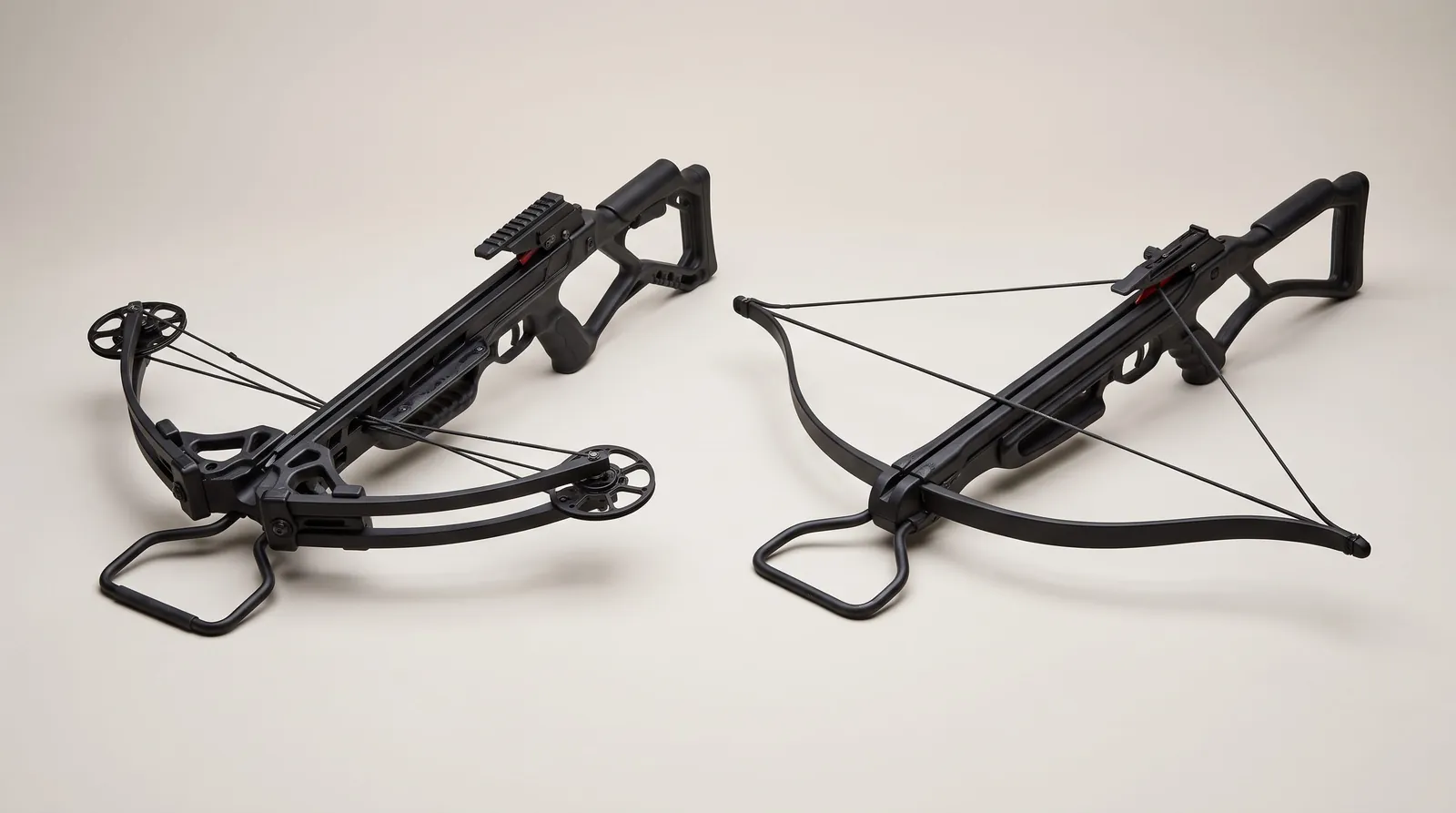 GuideCompound vs Recurve Crossbow: 2026 ComparisonChoose a compound for shots past 40 yards, easy cocking or tight spots. Choose a recurve if price, light weight and simple upkeep matter more.Read the guide
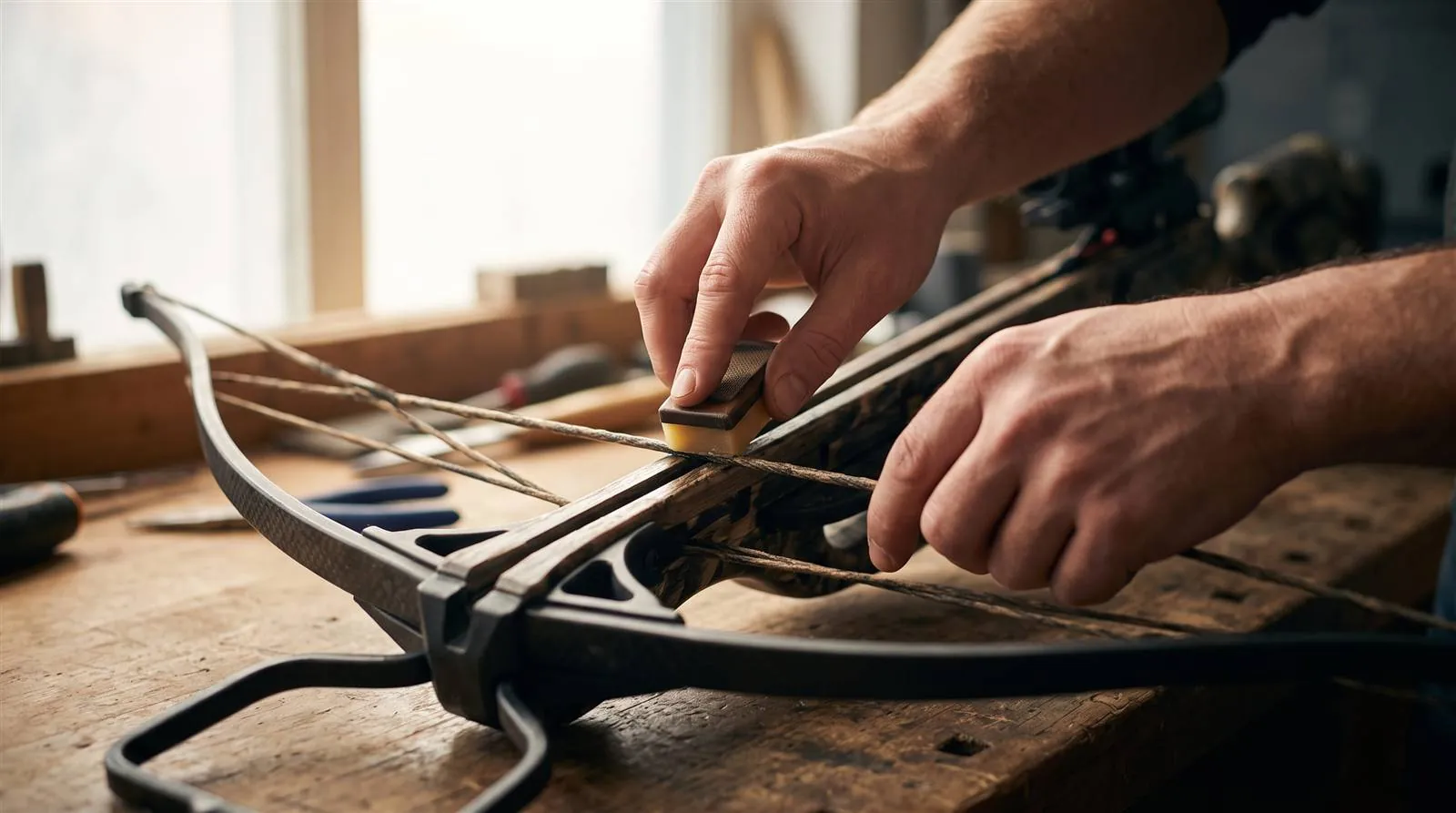 GuideCrossbow Maintenance: Wax, Lube, StoreA crossbow maintenance schedule covering the five-minute pre-shoot check, string waxing, rail lubrication, limb and cam inspection, and storage.Read the guide
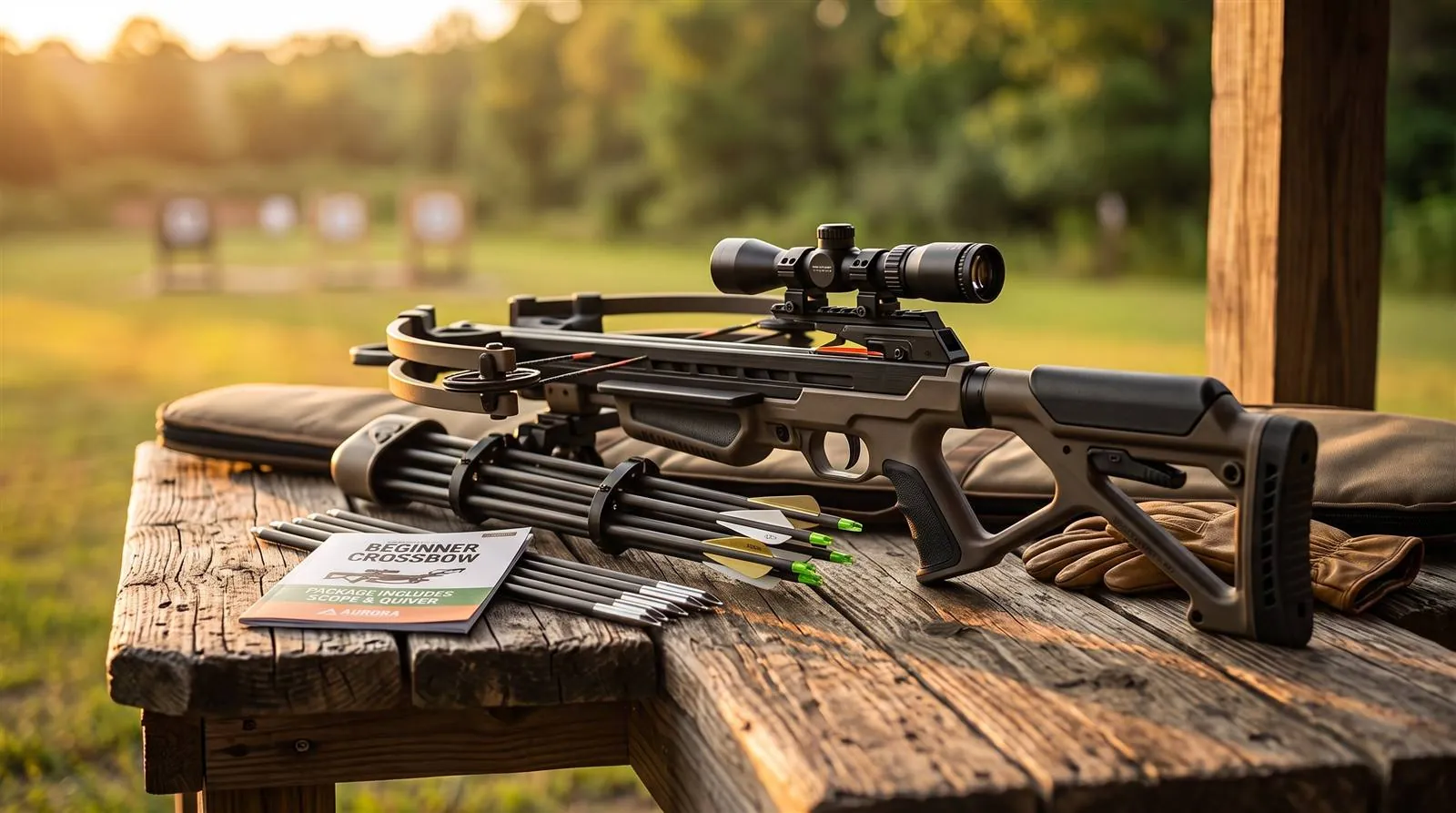 GuideBest Crossbows for Beginners in 2026Beginner crossbows chosen for easy cocking, safety features and complete kits, from a $219 recurve to an integrated-crank compound.Read the guide
Definitions are general information. Manufacturer figures vary, so follow your crossbow's manual and verify local laws with the relevant authority.