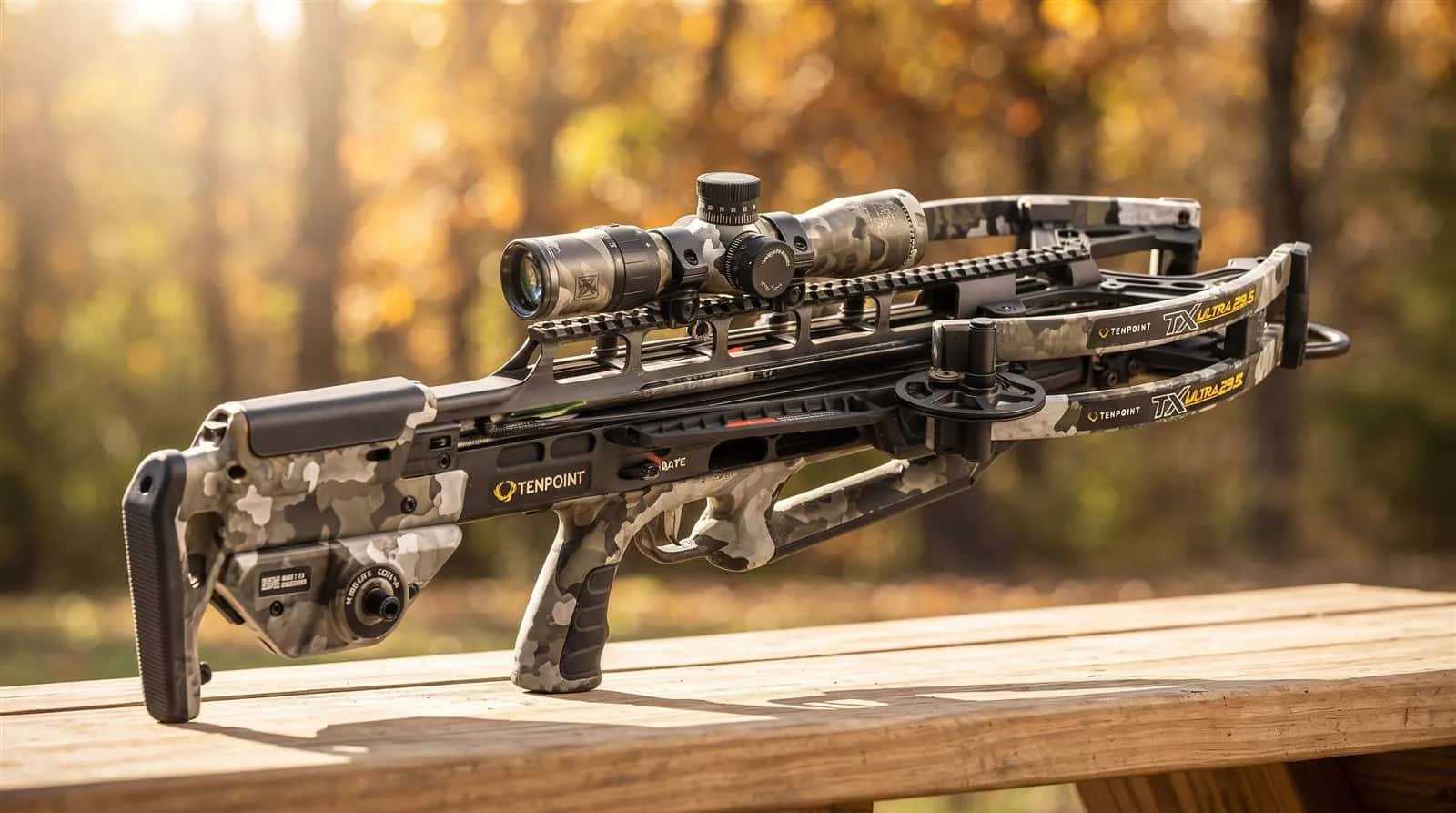
The forward-draw vs reverse-draw crossbow choice (or reverse-draw vs forward-draw crossbow, as some buyers search it) comes down to where the limbs sit. A forward-draw crossbow mounts its limbs at the front of the rail with the tips pointing away from you. A reverse-draw crossbow turns them around, so the tips point back toward you and the string starts further forward. That one change decides how long the crossbow is, where its weight sits and how much it costs.
The marketing makes reverse-draw sound better in every way. My reviews show a more useful picture: at the same speed and the same power stroke, the reverse-draw model is shorter and better balanced, but not always narrower, and it often has bolt limits a forward-draw model does not. This guide compares the two layouts point by point, using matched pairs from crossbows I have reviewed, and ends with simple rules for choosing.
If you are still deciding between limb types more broadly, read compound vs recurve crossbow first. Both layouts here are compound designs.
Forward-Draw vs Reverse-Draw Crossbow at a Glance
| Factor | Forward-draw | Reverse-draw |
|---|---|---|
| Limb position | Front of the rail, tips forward | Set back, tips toward the shooter |
| Overall length | Usually 29–34 inches | Usually 26–29 inches |
| Cocked width | 6–10 inches (narrow models exist) | 6–8.5 inches |
| Balance | Weight toward the front | Weight closer to the grip |
| Power stroke for its length | Shorter | Longer |
| Price range in my reviews | $425 to $2,999 | $649 to $3,515 |
| Bolts | Usually standard 20- or 22-inch | Sometimes a specific length only |
| Model choice | Wide, every price tier | Narrower, mostly premium |
The ranges above come from the crossbows on this site. Your local shop may carry models outside them.
How Each Layout Works
Forward-draw: the conventional design
On a forward-draw crossbow, the riser sits at the front of the rail and the limbs and cams extend forward from it. When you cock it, the string is pulled back along the rail to the latch. The power stroke is the distance between the string's resting point and the latch, so to make it longer the designer has to make the whole front end longer.
That is why most forward-draw crossbows run 32 to 34 inches. Short limbs and aggressive cams can shrink the width, as on the Killer Instinct Logix 435 at 6.75 inches cocked, but they do not shorten the frame.
Reverse-draw: the limbs turned around
A reverse-draw crossbow moves the riser back toward the trigger and points the limb tips toward the shooter, with the cams forward of them. The string starts further forward along the rail, so it travels further before it reaches the latch. The result is a longer power stroke inside a shorter frame.
Because the limbs and riser now sit closer to your hands, the balance point moves back. The crossbow feels lighter at the front even when the total weight is the same.
Size and Length: Where Reverse-Draw Wins
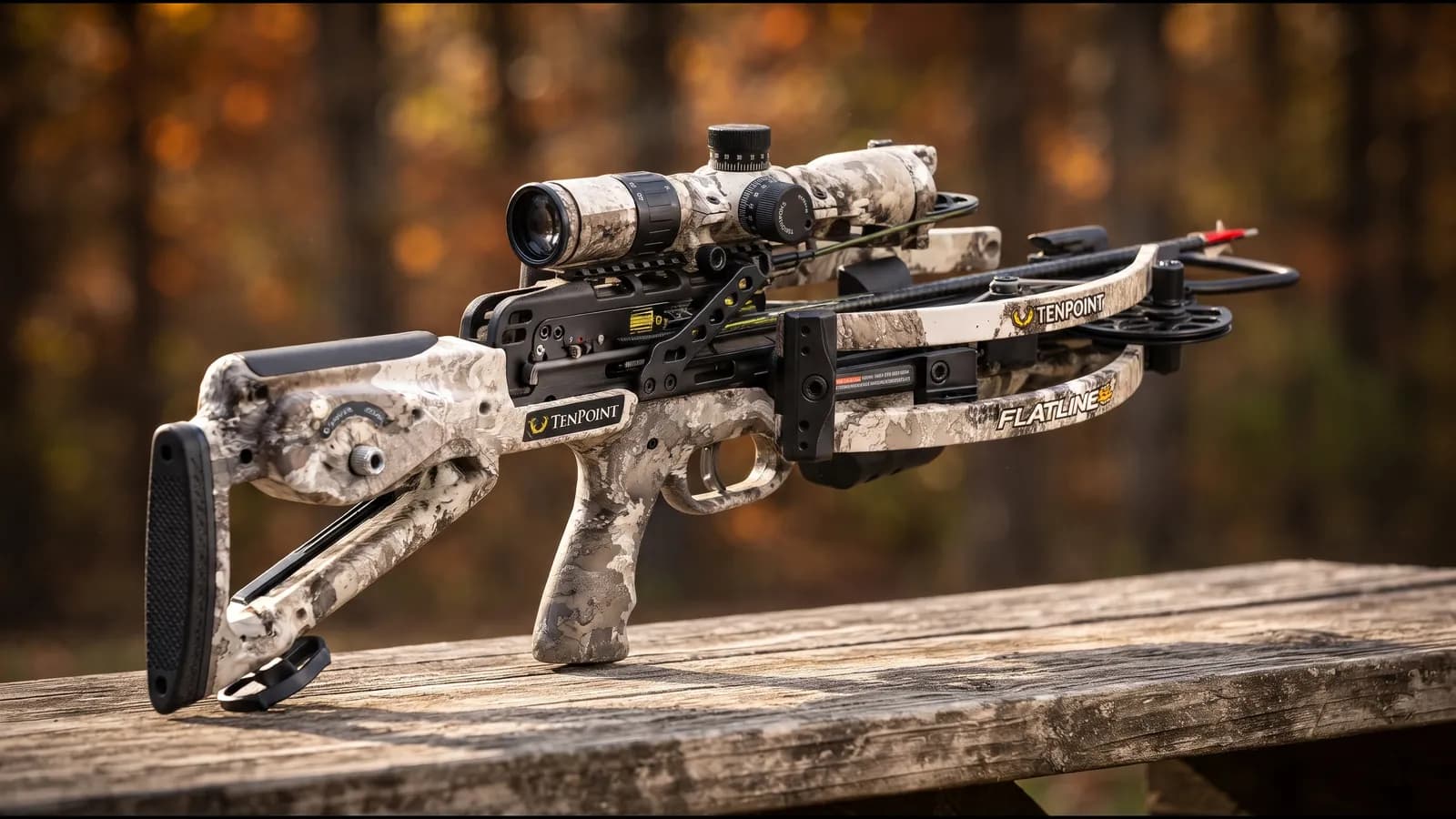
Overall length is the clearest difference, and it is where reverse-draw earns its price. Two matched pairs from my reviews show it:
| Pair | Layout | Power stroke | Overall length | Rated speed | Buy |
|---|---|---|---|---|---|
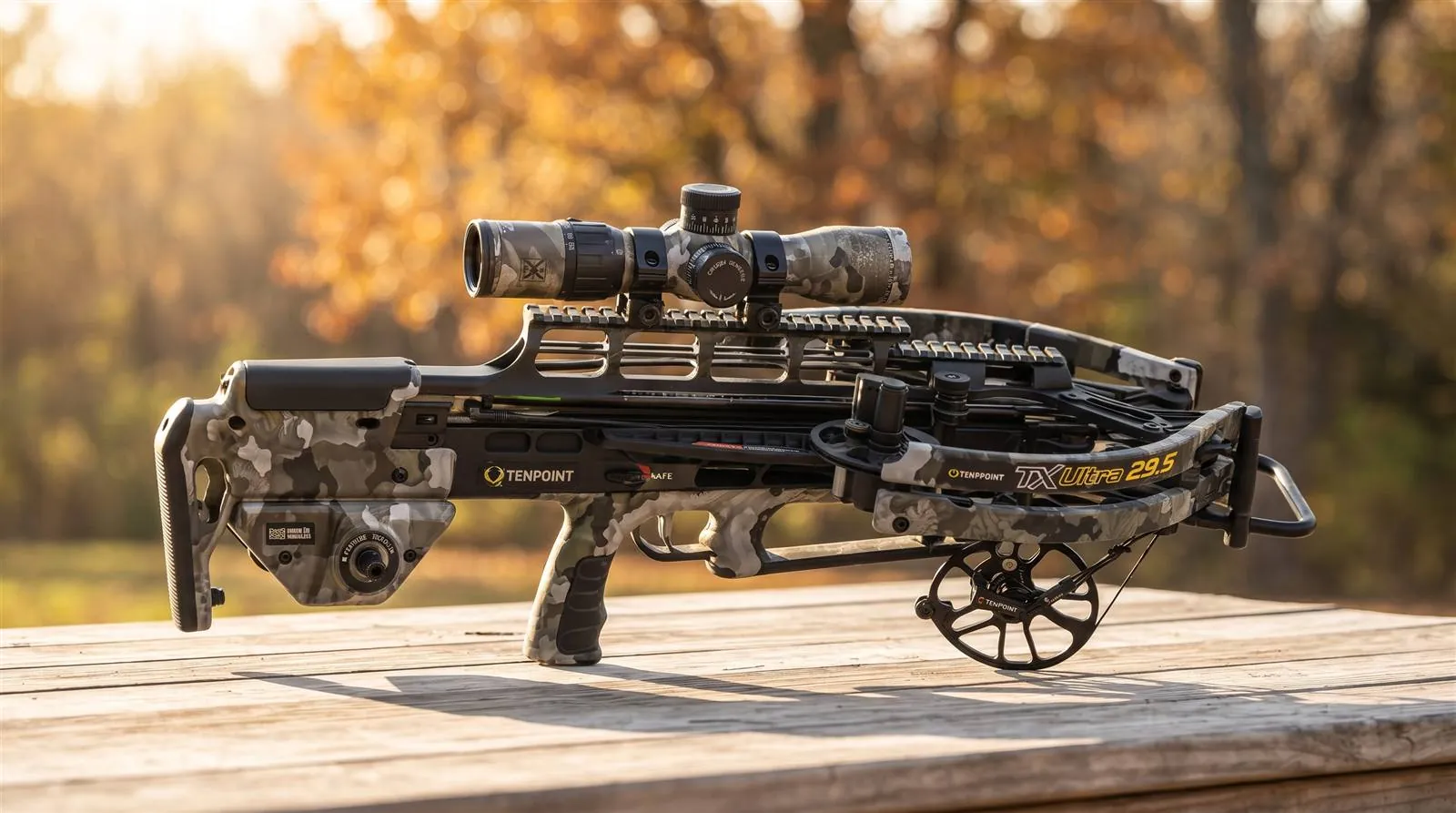
| TenPoint TX Ultra 29.5 | Forward-draw | 13.5" | 29.5" | 460 FPS | Check price on Amazon |
| TenPoint Flatline 460 | Reverse-draw | 13.5" | 26.5" | 460 FPS | Check price on Amazon |
| Killer Instinct Logix 435 | Forward-draw | 15" | 33.75" | 435 FPS | Check price on Amazon |
| Killer Instinct NEO-X | Reverse-limb | 15" | 28" | 415 FPS | Check price on Amazon |
The TenPoint pair has the same power stroke and the same speed rating, and the reverse-draw Flatline is 3 inches shorter. The Killer Instinct pair also shares a power stroke, and the reverse-limb NEO-X is 5.75 inches shorter.
Three inches matters in a small pop-up blind or a saddle, where you swing the crossbow through a tight arc to follow a deer. It matters much less from an open ladder stand or a large box blind.
Cocked Width: Where the Gap Has Closed
Width is where the marketing and the measurements part ways. Reverse-draw crossbows used to be the narrowest available, but narrow forward-draw designs have caught up.
- The forward-draw TX Ultra 29.5 cocks to 6.5 inches; the reverse-draw Flatline 460 cocks to 7.5 inches.
- The forward-draw Logix 435 and the reverse-limb NEO-X both cock to 6.75 inches.
- The narrowest crossbow I have reviewed, the Ravin R26X at 5.75 inches, is a forward-draw design that uses HeliCoil cams.
So if your only problem is limbs clipping a blind window or a tree trunk, you do not need a reverse-draw crossbow. Compare the cocked axle-to-axle figure, not the layout. Our best compact crossbows guide ranks models by both length and width.
Balance and Handling
Reverse-draw crossbow balance is the advantage you feel rather than measure. With the limbs set back, a reverse-draw crossbow puts more of its weight between your hands, so it is easier to hold at the ready and swings with less effort.
That does not mean it is lighter. The reverse-draw TenPoint TRX Ultra weighs 8.4 lbs and the NEO-X 8.2 lbs, both heavier than the forward-draw TenPoint Titan X De-Cock at 7.3 lbs. Short frames need strong risers and heavy limbs, so weight does not fall with length.
Does balance help accuracy?
It helps you hold steady, especially offhand or from a stand where you cannot use a rest. In my testing, though, group size tracked trigger quality and bolt consistency more than limb layout. The forward-draw TX Ultra 29.5 shot tight, repeatable 100-yard groups, and the reverse-draw TRX Ultra shot the tightest I have recorded. Both layouts can be very accurate.
Speed, Energy and Power Stroke
A longer power stroke stores more energy for a given draw weight, which is the real case for reverse-draw. But a forward-draw crossbow can match the speed by using a heavier draw weight or a longer frame.
- The forward-draw TX Ultra 29.5 and the reverse-draw Flatline 460 are both rated at 460 FPS and 193 ft-lbs with a 410-grain bolt, from the same 13.5-inch power stroke.
- The fastest crossbow I have tested is the reverse-draw TRX Ultra, at 511–517 FPS from a 16.25-inch power stroke.
- At budget prices, the forward-draw Barnett Hyper Whitetail 410 has a 15.5-inch power stroke and a 410 FPS rating for $425–$485.
The takeaway: layout changes how much frame you need for a given power stroke, not the ceiling on speed. Run your own bolt weight through the kinetic energy calculator to compare specific models.
Cocking and De-Cocking
Both layouts reach high speeds through high draw weights, so the cocking system matters more than the limb layout. The TX Ultra 29.5 draws 350 lbs and the Flatline 460 300 lbs, and both rely on TenPoint's built-in crank, which also lets you de-cock without firing.
At lower prices the picture changes. The forward-draw Logix 435 and the reverse-limb NEO-X both ship with a rope cocker, and both can be de-cocked through their trigger systems without firing a bolt. Choose the cocking system you can use every time, then choose the layout. Our how to cock a crossbow guide compares rope, crank and integrated systems.
Bolts, Parts and Running Costs
This is where reverse-draw can cost you after the purchase.
- Bolt length. The reverse-draw Flatline 460 shoots TenPoint's 16-inch bolts only. Most forward-draw crossbows take standard 20- or 22-inch bolts, which are easier to find and cheaper to replace.
- Parts and service. Reverse-draw cams, risers and crank systems are model-specific. Expect dealer service for anything beyond strings and routine care.
- Strings and cables. On any short, high-energy frame, check the string and cables near the cams before each session, as covered in how to maintain a crossbow.
Before you buy either layout, check the manual's bolt length and minimum weight, and price a dozen spares. Our how to choose crossbow bolts guide explains the limits.
Price
Reverse-draw costs more because a short frame with a long power stroke needs stronger risers, more complex cams and usually a crank. In my reviews:
- Forward-draw runs from $425 (Barnett Hyper Whitetail 410) to $2,999 (Ravin R29X), with plenty of choice under $1,000.
- Reverse-draw runs from $649 (Killer Instinct NEO-X) to $3,515 (TenPoint TRX Ultra), and most models start near $1,000.
The matched TenPoint pair is the exception: the reverse-draw Flatline 460 ($2,099–$2,299) costs less than the forward-draw TX Ultra 29.5 ($2,499–$2,599). Compare specific models rather than assuming one layout is always dearer. See how much does a crossbow cost for the full price ladder.
Reverse-Draw Crossbow Pros and Cons
Pros
- Shortest frames available for a given power stroke
- Weight sits closer to the grip, so it is easier to hold at the ready
- Long power strokes in compact packages
Cons
- Higher prices at most tiers, with few models under $1,000
- Some models take one bolt length only
- Model-specific parts and dealer-only service
- Not necessarily narrower or lighter than a good forward-draw crossbow
Forward-Draw Crossbow Pros and Cons
Pros
- Wide choice at every price, including under $500
- Standard bolt lengths on most models
- Simpler, more widely serviced design
- Narrow models now match reverse-draw cocked widths
Cons
- Longer frames for the same power stroke
- Weight sits further forward, so it can feel nose-heavy
- Shortest options are limited without moving to reverse-draw
Common Myths and Mistakes
Most buying errors with these two layouts come from assumptions the spec sheets do not support. These are the ones I see most.
- "Reverse-draw is always narrower." It is not. The forward-draw TX Ultra 29.5 cocks to 6.5 inches and the reverse-draw Flatline 460 to 7.5 inches. Width depends on the cams and limbs, not on which way the limbs point.
- "Reverse-draw is always faster." Speed comes from power stroke and draw weight together. The forward-draw TX Ultra 29.5 and reverse-draw Flatline 460 share a 460 FPS rating, so layout alone tells you nothing about speed.
- "Shorter means lighter." The reverse-draw TRX Ultra weighs 8.4 lbs, more than the forward-draw Titan X De-Cock at 7.3 lbs. If you walk a long way to your stand, check the weight figure, not the length.
- Ignoring the bolt requirement. Buying a crossbow that takes one proprietary bolt length changes your running costs for years. Check the manual and price spares before you buy.
- Paying for length you do not need. If you hunt from an open stand or a large box blind, a forward-draw crossbow at a lower price will serve you as well. Sit in your hunting spot with a tape measure first.
- Choosing the layout before the cocking system. A 300 lb reverse-draw crossbow with a crank is easier to live with than a 210 lb forward-draw crossbow with a rope, and the reverse is also true. Decide what you can cock every time, then compare layouts.
Forward-Draw and Reverse-Draw Crossbows Worth Comparing
These are the models from my reviews in each layout, from budget to flagship. Each name links to its full review.
Forward-draw crossbows
Swipe sideways to compare →
| Product | Speed | Draw | Weight | Price | Rating | Buy |
|---|---|---|---|---|---|---|
| Barnett Hyper Whitetail 410 | 410 FPS | 190 lbs | 7.6 lbs | $425–$485 | 4.3 / 5 | Check price on Amazon |
| Killer Instinct Logix 435 | 435 FPS | 210 lbs | 8.4 lbs | $550–$700 | 4.2 / 5 | Check price on Amazon |
| Wicked Ridge Invader M1 | 390 FPS | 175 lbs | 7.1 lbs | $769–$799 | 4.4 / 5 | Check price on Amazon |
| TenPoint Titan X | 400 FPS | 190 lbs | 7.3 lbs | $799–$899 | 4.5 / 5 | Check price on Amazon |
| Ravin R26X | 400 FPS | 12 lbs felt | 6.5 lbs | $1,999–$2,199 | 4.7 / 5 | Check price on Amazon |
| Ravin R29X | 450 FPS | 12 lbs felt | 6.75 lbs | $2,499–$2,999 | 4.8 / 5 | Check price on Amazon |
| TenPoint TX Ultra 29.5 | 460 FPS | 350 lbs | 8 lbs | $2,499–$2,599 | 4.8 / 5 | Check price on Amazon |
- Under $500: the Barnett Hyper Whitetail 410, a 410 FPS package with a 15.5-inch power stroke and a rope-cocking sled.
- Narrow on a budget: the Killer Instinct Logix 435, 6.75 inches cocked for $550–$700, with a Let-Down Triggerbox.
- Crank de-cocking under $900: the Wicked Ridge Invader M1 De-Cock or the TenPoint Titan X De-Cock, both with the ACUdraw De-Cock crank.
- Shortest and narrowest: the Ravin R26X, 26 inches long and 5.75 inches cocked, or the faster Ravin R29X.
- Speed and long range: the TenPoint TX Ultra 29.5, measured at 456–463 FPS with tight 100-yard groups.
Reverse-draw crossbows
Swipe sideways to compare →
| Product | Speed | Draw | Weight | Price | Rating | Buy |
|---|---|---|---|---|---|---|
| Killer Instinct NEO-X | 415 FPS | 195 lbs | 8.2 lbs | $649–$699 | 4.1 / 5 | Check price on Amazon |
| TenPoint Phantom | 400 FPS | — | 7.4 lbs | $999–$1,099 | 4.5 / 5 | Check price on Amazon |
| TenPoint Flatline 460 | 460 FPS | 300 lbs | 7.5 lbs | $2,099–$2,299 | 4.6 / 5 | Check price on Amazon |
| TenPoint TRX Ultra | 515 FPS | 360 lbs | 8.4 lbs | $3,495–$3,515 | 4.9 / 5 | Check price on Amazon |
- Under $700: the Killer Instinct NEO-X, a 28-inch reverse-limb package with hand de-cocking.
- Best value: the TenPoint Phantom De-Cock, 28.5 inches and 7.4 lbs for about $1,000.
- Tight blinds and stands: the TenPoint Flatline 460, 26.5 inches long, if you accept 16-inch bolts.
- Fastest and most accurate: the TenPoint TRX Ultra, measured at 511–517 FPS.
For ranked picks with full write-ups, see best reverse-draw crossbows, and for forward-draw options at every budget, best crossbows under $500 and $1,000.
Which Should You Choose?
Use these rules in order:
- Measure your hunting space. If you hunt a small pop-up blind, a saddle or a cramped stand and a 33-inch crossbow will not swing freely, choose reverse-draw or one of the short Ravin forward-draw models.
- If only width is the problem, choose a narrow forward-draw crossbow. It costs less and takes standard bolts.
- If you hunt open stands or large blinds, choose forward-draw. You will get more crossbow for the money.
- If you shoot long range, either layout works at the top end. The reverse-draw TRX Ultra and forward-draw TX Ultra 29.5 both shot tight 100-yard groups.
- If budget is under $700, forward-draw gives you far more choice. The NEO-X is the main reverse-limb option at that price.
For ranked picks, see best reverse-draw crossbows or the full best crossbows list.
Frequently Asked Questions
What is the difference between a forward-draw and a reverse-draw crossbow?
A forward-draw crossbow mounts its limbs at the front of the rail with the tips pointing away from you. A reverse-draw crossbow sets the limbs back with the tips pointing toward you, giving a longer power stroke in a shorter frame.
Is a reverse-draw crossbow better than a forward-draw crossbow?
It is better for short overall length and balance, which helps in tight blinds and saddles. Forward-draw crossbows usually cost less, take standard bolts and are simpler to service, so neither layout is better for every hunter.
Are reverse-draw crossbows narrower?
Not always. The reverse-draw Flatline 460 cocks to 7.5 inches, while the forward-draw TX Ultra 29.5 cocks to 6.5 inches and the forward-draw Ravin R26X to 5.75 inches. Compare the cocked axle-to-axle figure, not the layout.
Are reverse-draw crossbows faster?
Not inherently. They fit a longer power stroke into a shorter frame, but forward-draw crossbows can match the speed. The forward-draw TX Ultra 29.5 and reverse-draw Flatline 460 share a 460 FPS rating and a 13.5-inch power stroke.
Are reverse-draw crossbows quieter?
Layout alone does not decide noise. String dampening, string stops, bolt weight and limb design matter more. Check each review's noise section rather than assuming either layout is quieter.
Do reverse-draw crossbows need special bolts?
Some do. The Flatline 460 shoots 16-inch TenPoint bolts only, while many reverse-draw and most forward-draw crossbows take standard lengths. Always check the manual's bolt length and minimum weight before buying spares.
Is a reverse-draw crossbow good for beginners?
It can be, if the cocking system is easy, but beginners usually get more value from a forward-draw crossbow at a lower price. Our best crossbows for beginners guide weighs ease of use above all else.
Are Ravin crossbows forward-draw or reverse-draw?
Ravin crossbows are forward-draw designs. Their HeliCoil cams keep very short limbs narrow, which is why the R26X cocks to 5.75 inches, but the limb layout is not reverse-draw.
Final Recommendation
In the forward-draw vs reverse-draw crossbow decision, let your hunting space decide. Choose reverse-draw when overall length genuinely limits you and you value balance enough to pay for it, and check the bolt requirement before you buy. For everyone else, a narrow forward-draw crossbow delivers the same speed and width for less money, with standard bolts and simpler service.
Read nextSee the best reverse-draw crossbowsFour ranked picks from $649 to $3,515, with the width, length and cocking trade-offs side by side.Gear mentioned in this guide
Reviews we link to above, highest rated first. Read the full review before you buy.
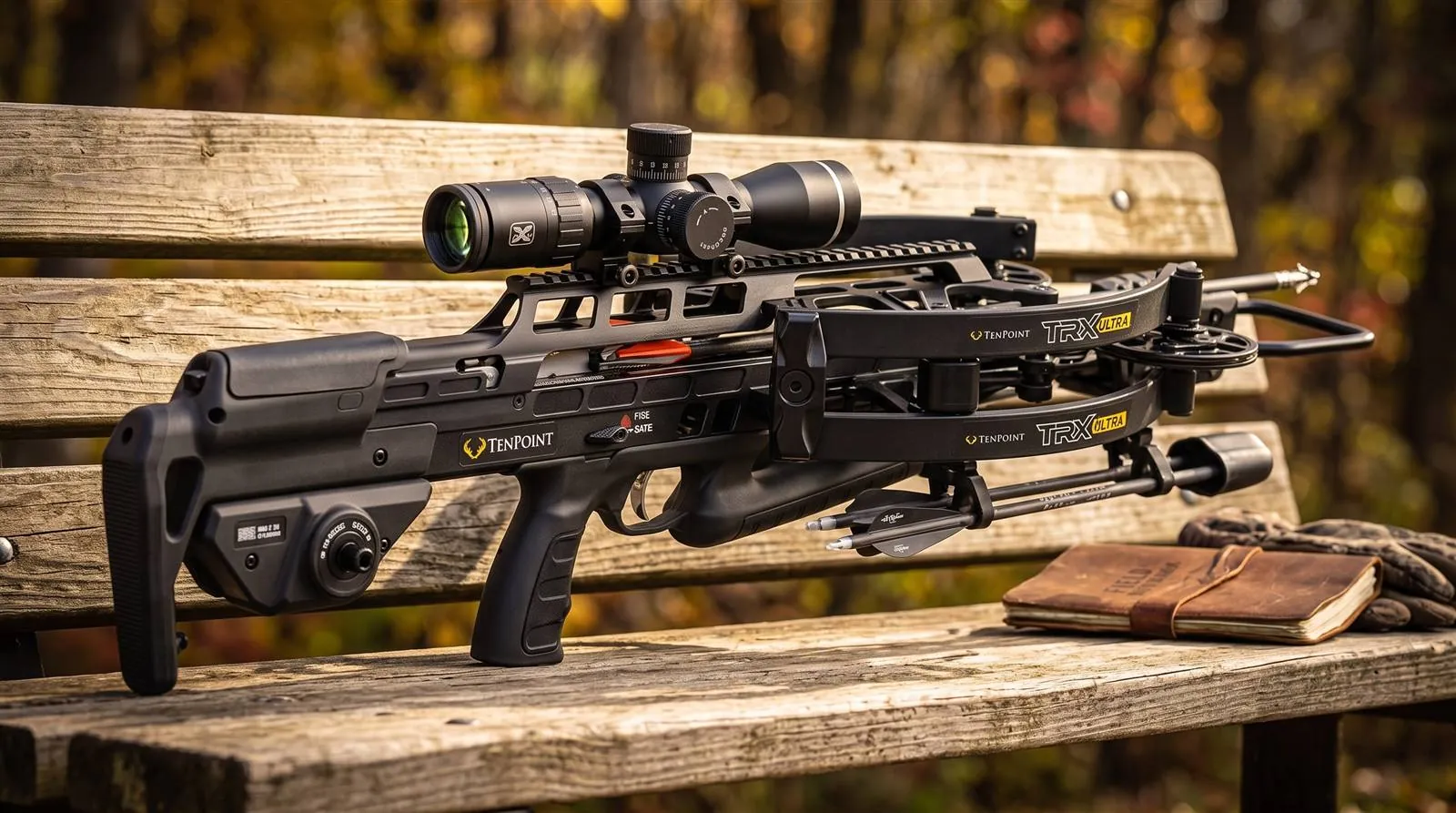
TenPoint TRX Ultra Review
Fastest crossbow in my tests at 511–517 FPS, with the tightest long-range groups near 100 yards. A flagship price that suits a narrow group of buyers.
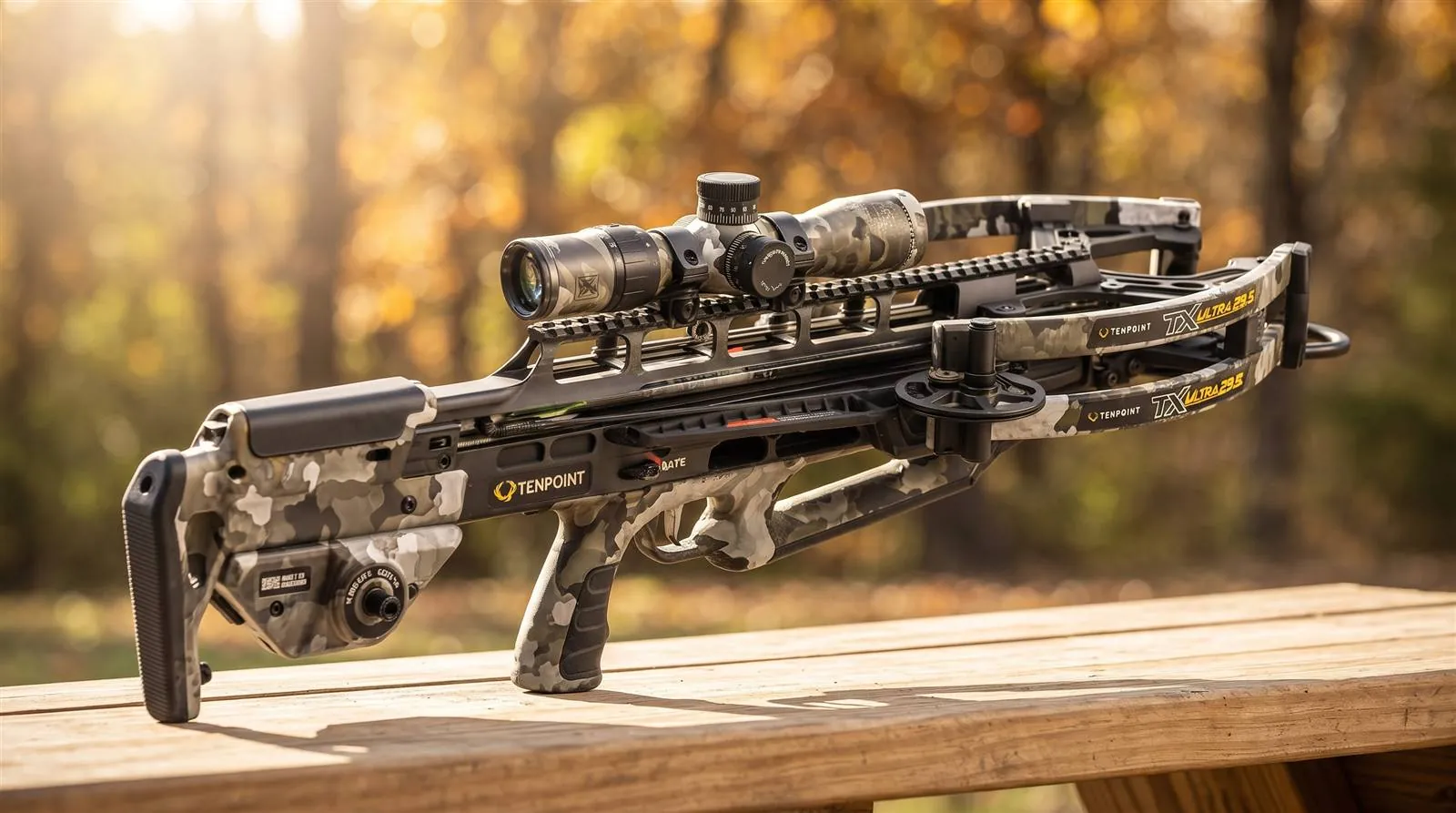
TenPoint TX Ultra 29.5 Review
Forward-draw crossbow measured at 456–463 FPS with tight 100-yard groups and a 6.5-inch cocked width. Speed and range in a narrow frame.
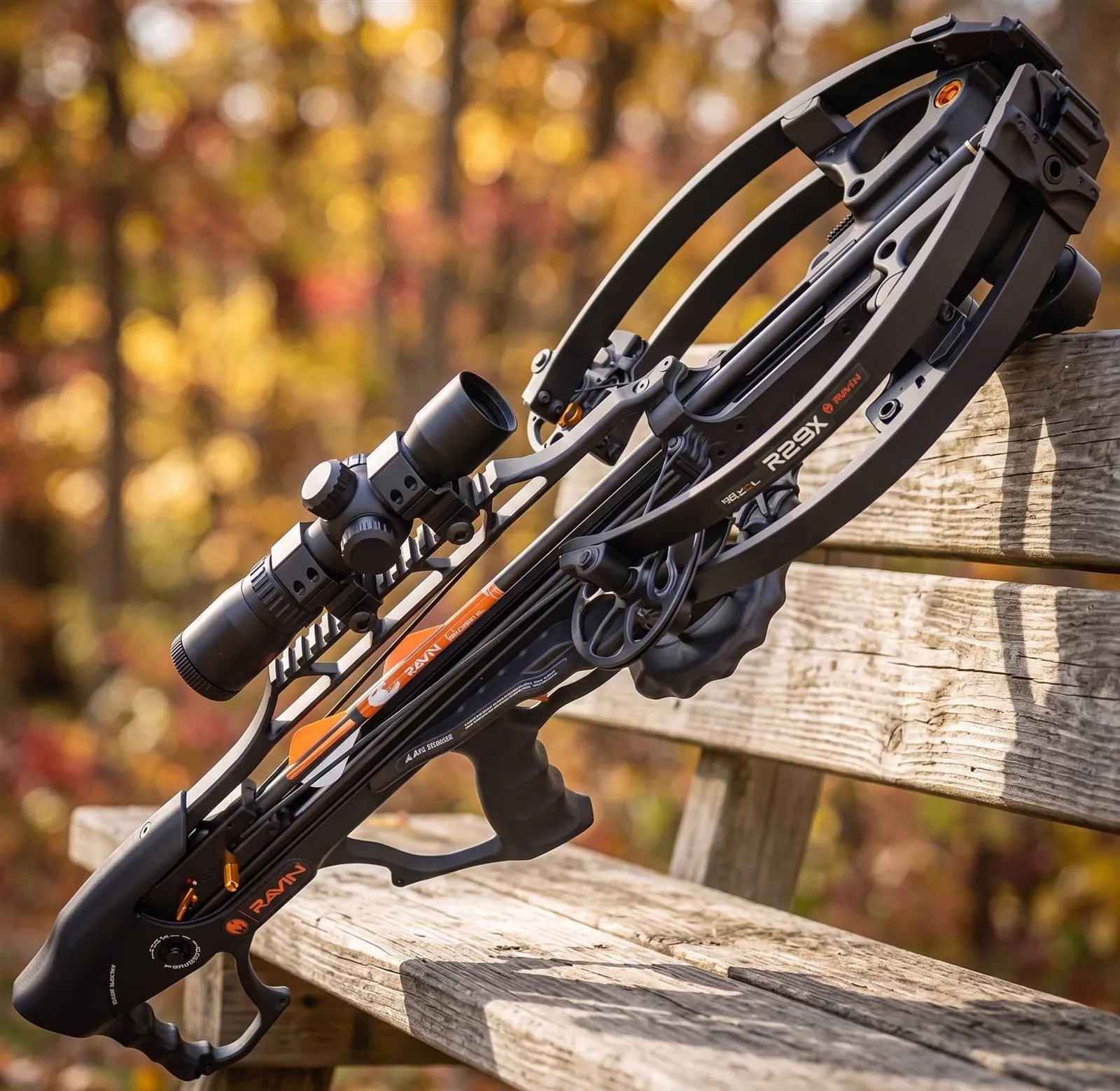
Ravin R29X Review
Compact, stealth-black crossbow producing 444–454 FPS and around 180 ft-lbs of kinetic energy, with an integrated quieter-cocking system.
Ready to compare models? Read our tested crossbow reviews to see how each one measured up in testing.
More in Buying & Comparison Guides
Ravin R29X vs R26X: Which to Buy
R26X for stands, blinds and shots inside 40 yards at $500 less; R29X for larger game and longer range, with 50 FPS and 38 ft-lbs more. Measured verdict for each hunter.
Read guide
Recurve Crossbow Buying Guide: Hunting
How to choose a recurve crossbow for hunting: who it suits, which specs to compare, maintenance, common mistakes and a decision checklist.
Read guideTenPoint TX Ultra 26.5 vs 29.5
TX Ultra 26.5 for saddles, blinds and short shots: shorter, lighter, quieter and $400–500 cheaper. TX Ultra 29.5 for 50 FPS more, 193 ft-lbs and reach past 60 yards.
Read guide