The short version
Core crossbow protocol
Every crossbow is range-tested to the same protocol so that results can be compared across reviews:
- Zero the scope. The sighting system is zeroed before any group is judged.
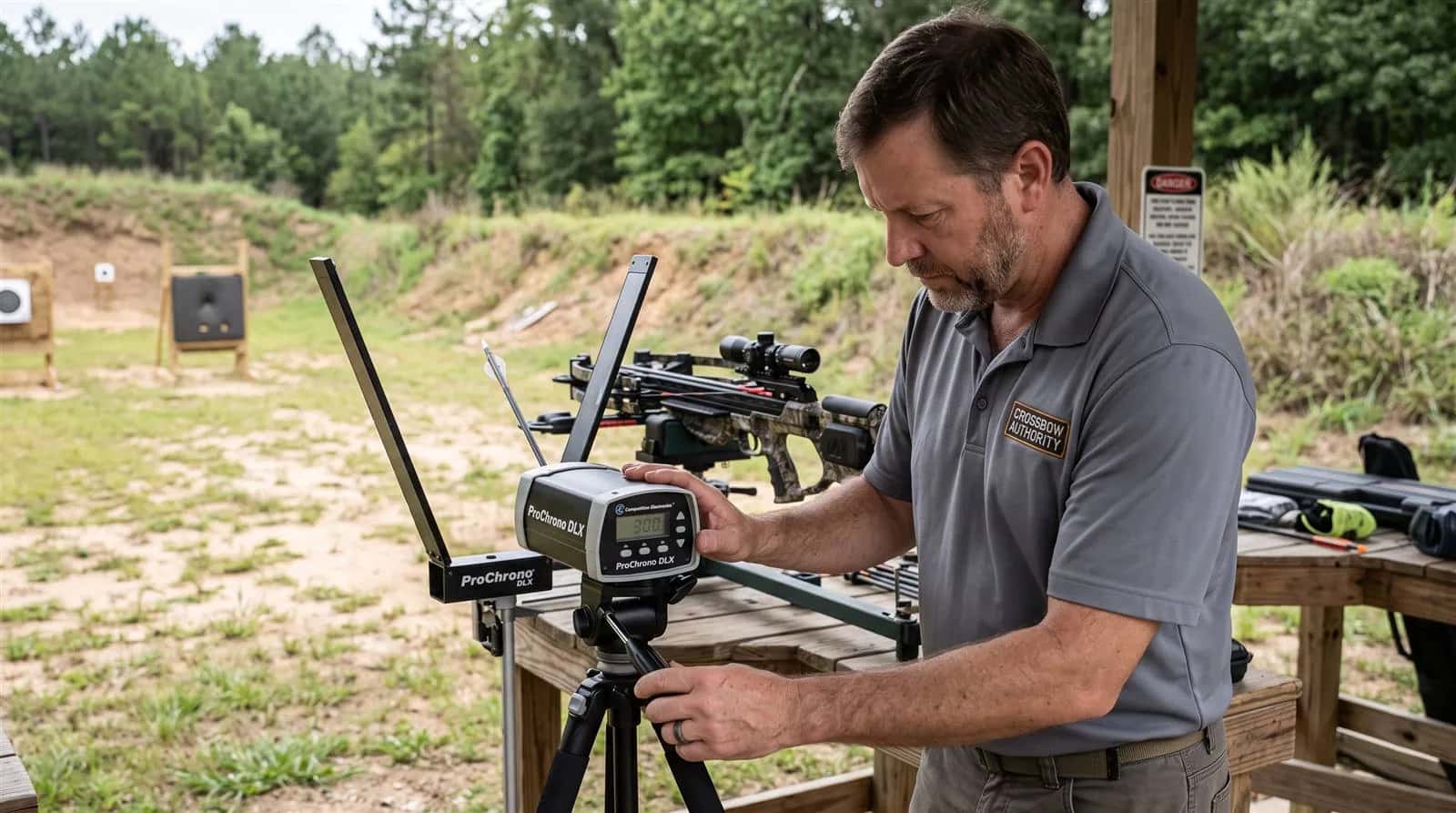
- Chronograph. Several strings are shot over a chronograph with a stated bolt weight, so speed and energy can be calculated and compared with the manufacturer's rating.
- Groups. Groups shot at stated distances (typically 20 to 60 yards), with the bolt used noted.
- Cocking. Cocking effort and method are assessed, with any cocking aid (rope, crank) noted.
Noise, vibration, ergonomics, included components and warranty terms are assessed alongside these numbers and described in prose.
Scopes, bolts and accessories
Scopes, bolts and accessories get tests suited to the product, not the crossbow protocol. A scope is judged on its reticle, ranging system, zero retention and eye relief; bolts on weight, consistency and how they group. Each review's Performance & Usability section states what was done for that product.
Scoring criteria
Every review shows category scores out of 10 in its Final Score table. For a crossbow these are typically speed, accuracy, build quality, ease of cocking, noise and value; scopes, bolts and accessories use categories suited to the product (for example durability or illumination). Warranty terms and limitations are weighed within those categories and described in the text.
How the overall rating is calculated: the overall rating out of 5 is the average of the category scores divided by two, rounded to one decimal. For example, category scores averaging 8.4 give an overall rating of 4.2.
Ratings are an editorial judgement against these criteria. They are not a laboratory score, and a high number never overrides a stated limitation.
Measured vs. claimed vs. researched
Three kinds of information appear in a review, and we keep them apart:
- Manufacturer-rated: figures from the maker's documentation, labelled as claims.
- Measured: results from our own range work, with bolt weight and distance stated.
- Researched: information drawn from manuals, technical documentation and credible published sources, and cited in the review's sources.
Every product reviewed here has been shot by the author. Where a specific figure has not been measured directly, such as a warranty term, a rated speed or a weight taken from the manual, the article labels it as a manufacturer figure rather than presenting it as tested.
Limits of the method
- Results come from the specific sample and conditions described, not from every unit of that model.
- A chronograph and fixed-distance groups are practical measurements, not certified laboratory testing.
- Hunting performance depends on bolt, broadhead, range and legal factors we cannot test for you. Check your local regulations.
Re-testing and updates
Every review shows its last-updated date and is revisited when specifications, pricing, availability or manufacturer terms change. See the update policy. Questions about a result? Email editorial@crossbowauthority.com.