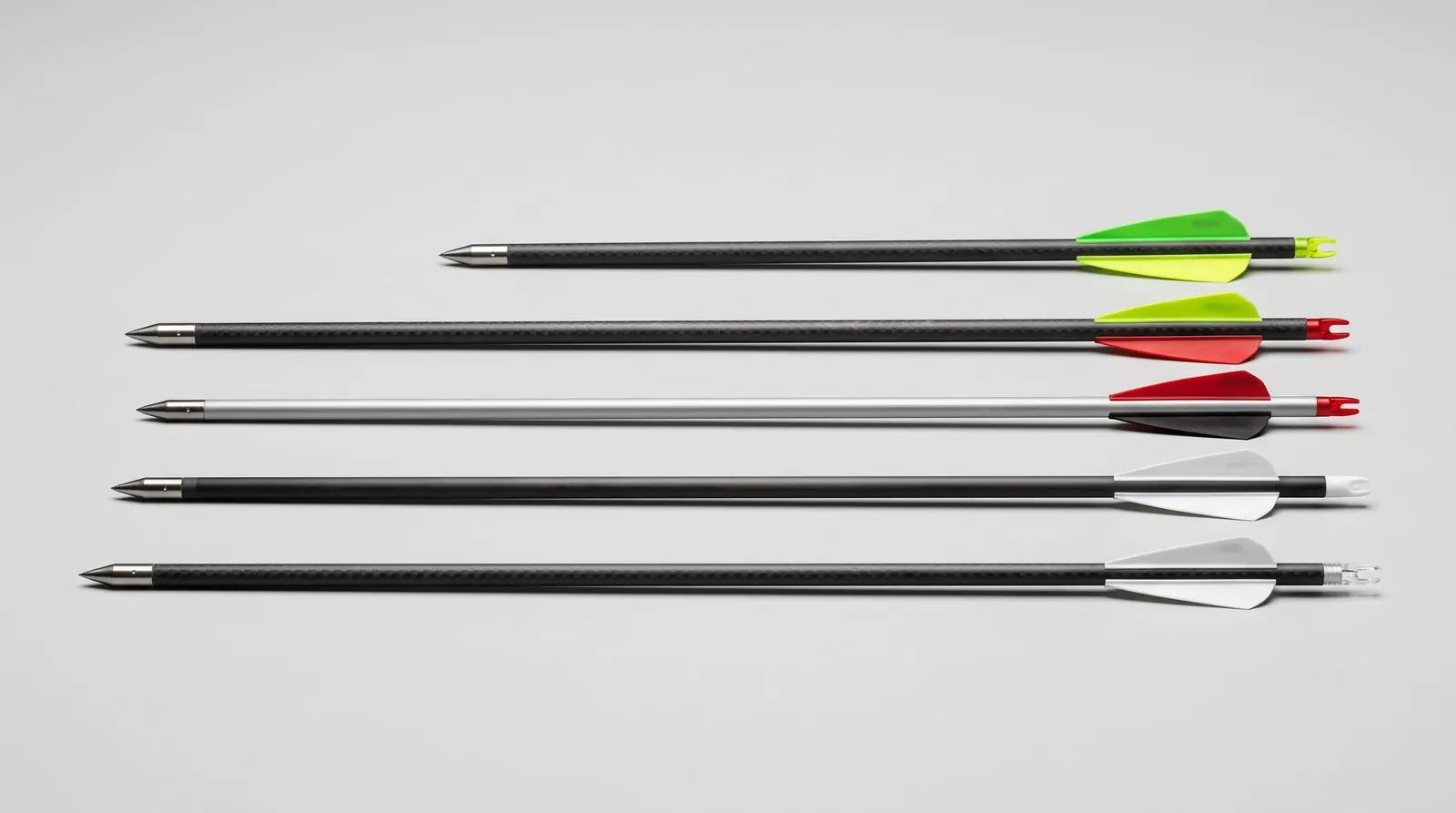
The bolt is the only part of your crossbow that actually leaves it, so it deserves more thought than the packaging suggests. Length, weight, nock and tip all have to fit your crossbow before accuracy even enters the conversation, and a mismatch can be a safety problem rather than a performance quirk.
This guide gives you a six-step framework for choosing crossbow bolts, a side-by-side spec table of the bolts I have reviewed, and the decision rules that separate a sensible purchase from an expensive one. It is for new owners who are replacing the bolts that came in the box, and for experienced shooters moving to a faster crossbow or a new broadhead.
The Six-Step Selection Framework
Work through the steps in order, because each one narrows the next. Skipping to price or brand first is the usual way to end up with bolts you cannot safely shoot.
- Read the manual for length and minimum weight. Every crossbow maker specifies a bolt length and a minimum bolt weight. Write both down. They are hard limits.
- Choose a weight inside the range. Within the allowed range, decide whether you want more speed or more energy.
- Match the nock. The nock must fit your string and, on some platforms, a particular design.
- Check the tip system. The front insert has to thread to the field points and broadheads you plan to use.
- Decide how much consistency you need. Weight and straightness tolerances matter more as your shots get longer.
- Weigh FOC, lighting and budget. These are the refinements. They matter after the first five are settled.
Step 1: Crossbow Bolt Length and Minimum Weight Are Limits
Crossbow bolts are not cut to a shooter's draw length the way vertical-bow arrows are. Each crossbow is designed around a particular length, and the manual says what it is. In our reviews, standard TenPoint and Wicked Ridge bolts run 20 inches, the Carbon Express PileDriver is a 22-inch bolt, and the REEGOX line comes in 16, 18 and 20 inches so buyers can match different crossbows.
Why the limits exist is simple. A bolt that is too short may not sit correctly on the rail or against the string, and one that is too long may not seat or may interfere with the cocking system. A bolt that is lighter than the stated minimum can leave the crossbow with energy the bolt does not absorb, which is the basic idea behind dry-fire damage. Follow your manual on both numbers, and do not use a bolt that is not designed for crossbows.
Step 2: Pick a Weight Inside the Range
Weight is measured in grains. Once you are above the minimum, there is a trade-off between speed and energy: a lighter bolt flies faster on a given crossbow, and a heavier bolt carries more kinetic energy at a given speed and usually penetrates better. Speed and energy are not the same number, and our explainer on how fast a crossbow bolt travels walks through the math.
Practical rules:
- Target and general practice: a mid-weight bolt is the most forgiving on cost. The 400-grain bolts in our lineup suit this role.
- Hunting where energy matters: a heavier bolt such as the 449-grain Carbon Express PileDriver delivers more energy at a given speed, with a slower arc. Check local rules on minimum energy and equipment, because they vary.
- Fast flagship crossbows: these often specify higher minimum bolt weights and sometimes a recommended range. If you upgrade, check that your old supply still qualifies before the first shot.
Step 3: Match the Nock
The nock is the tail end that engages the string. Common styles include moon nocks, flat nocks and capture-style nocks, and the right one depends on your crossbow. The Carbon Express PileDriver uses a Universal Nock System that, per our review, seated securely on multiple platforms, including moon nocks and C-Nocks for older designs. The RAVIN R133 uses a nock designed for Ravin platforms and, per our review, is built exclusively for them (not the R500, R470 or R18 series). Bolts with proprietary nocks can be the only safe choice for some crossbows, so read compatibility notes carefully.
A lighted nock adds a small light for tracking the bolt at dusk and after impact. In our reviews the TenPoint Lighted Pro Elite 400 and the RAVIN R133 tracked well in low light. The cost is a battery to check and a higher price per bolt.
Step 4: Check the Tip System
Most bolts have an insert at the front that accepts a threaded field point or broadhead. Confirm the thread type, weight and head you intend to use. The REEGOX line, per our review, ships with removable 125-grain target points using 8-32 UNC threading, so one set can serve for practice and for swapping to broadheads. The Wicked Ridge Match 400 has a 46-grain aluminum insert, and the Lighted Pro Elite 400 has a 58-grain aluminum insert.
Remember that tip weight changes total bolt weight and balance. When you move from a practice point to a hunting head, re-check your zero. Our guide to sighting in a crossbow scope explains how, and the broadhead roundups can help you choose: see broadheads for deer and the fixed-blade guide.
Step 5: Decide How Much Consistency You Need
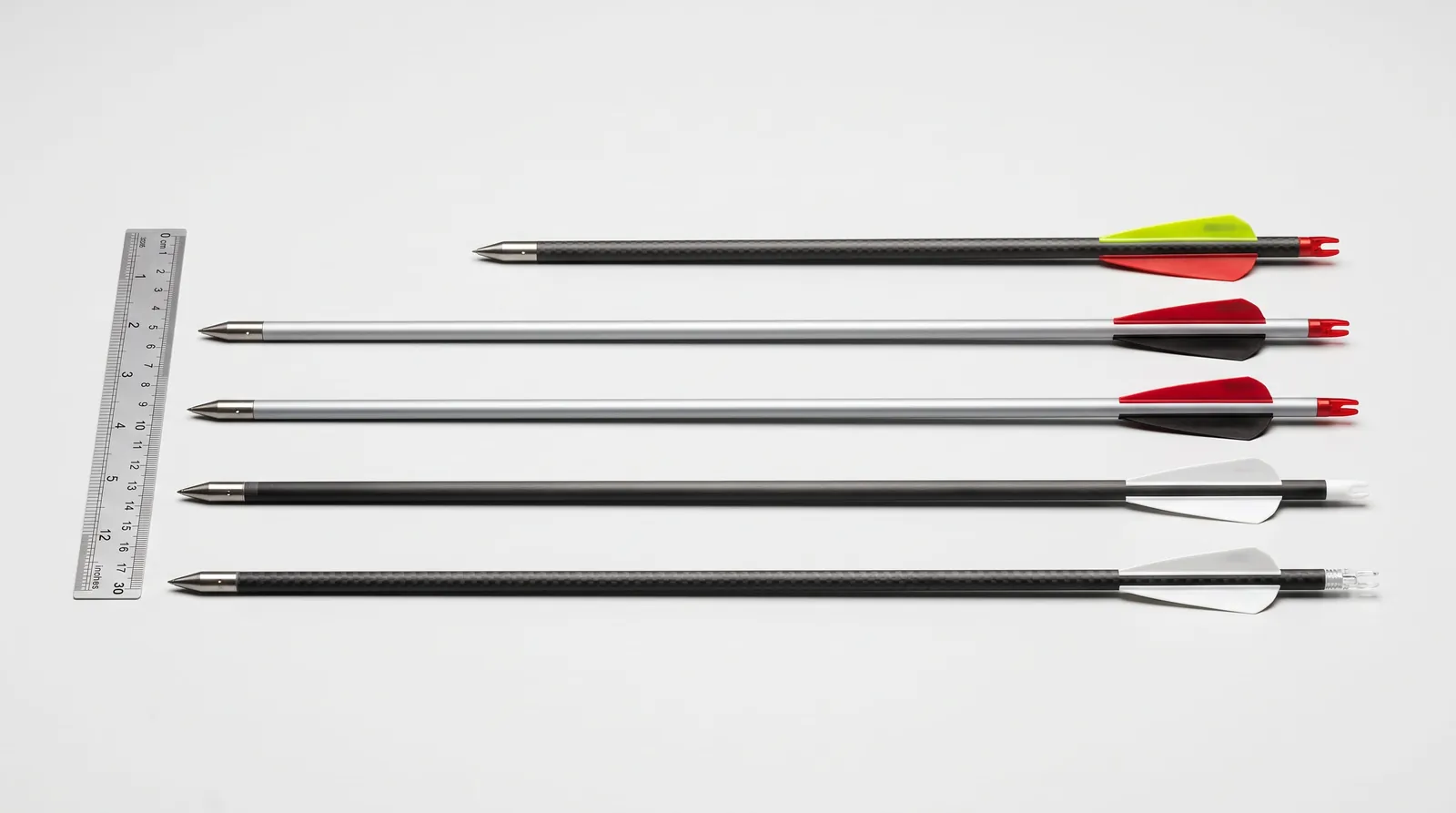
Two bolts of the same length and weight can fly differently if they are not made to the same tolerance. Two numbers matter most: weight tolerance (how close each bolt is to the rated weight) and straightness (how far the shaft deviates from a straight line, in thousandths of an inch).
In our reviews, the TenPoint CenterPunch HPX is weight-matched within 1 grain and has a .001-inch straightness tolerance. The Lighted Pro Elite 400 is rated within 2 grains per dozen and .003 inch. The Wicked Ridge Match 400 is rated within 5 grains per dozen and .004 inch, and the PileDriver within 2 grains and .004 inch. For REEGOX, my testing found consistency noticeably looser than branded options, which showed up as wider groups at 40 and 60 yards.
How much that matters depends on your distance. At 20 yards the differences are small. By 60 yards, tighter tolerances and higher FOC can show up in your groups, as our CenterPunch and Match 400 reviews describe. If you shoot mostly inside 40 yards, a value bolt can be a fair choice, and the savings buy practice volume.
Step 6: Weigh FOC, Lighting and Budget
FOC, or front of center, describes how front-heavy a bolt is. Higher FOC generally helps a bolt keep flying point-first, and our FOC guide explains how to read the number and where it stops helping. Published FOC figures in our reviews run from 13 percent on the Lighted Pro Elite 400 to 15.5 percent on the CenterPunch HPX. The PileDriver, R133 and REEGOX reviews do not list an FOC figure.
Budget is the last filter, not the first. Cost per bolt, calculated from pack price, can look surprising next to the packaging.
Crossbow Bolt Size Chart: Length, Weight and Price
All figures come from our reviews. Per-bolt cost is the pack price range divided by the pack count.
| Bolt | Length | Weight | FOC | Straightness | Weight tolerance | Pack and price | Approx. per bolt | Rating | Buy |
|---|---|---|---|---|---|---|---|---|---|
| TenPoint CenterPunch HPX | 20 in | 445 gr | 15.5% | .001 in | Within 1 grain | 6-pack, $115–$125 | $19–$21 | 4.6 | Check price on Amazon |
| Wicked Ridge Match 400 | 20 in | 400 gr | Up to 14% | .004 in | Within 5 grains per dozen | 6-pack, $59–$79 | $10–$13 | 4.4 | Check price on Amazon |
| TenPoint Lighted Pro Elite 400 | 20 in | 410 gr | 13% | .003 in | Within 2 grains per dozen | 3-pack, $75–$95 | $25–$32 | 4.5 | Check price on Amazon |
| Carbon Express PileDriver | 22 in | 449 gr | Not listed | .004 in | Within 2 grains | 6-pack, $49–$59 | $8–$10 | 4.2 | Check price on Amazon |
| RAVIN R133 | 20 in | 400 gr with 100-grain tip | Not listed | .003 in | Not listed | 3-pack, $84–$108 | $28–$36 | 4.5 | Check price on Amazon |
| REEGOX Crossbow Bolts | 16, 18 or 20 in | 368, 380 or 425 gr | Not listed | Looser, undocumented | Looser, undocumented | 12-pack, $29–$39 | $2–$3 | 3.9 | Check price on Amazon |
Use the table as a shortlist generator. First filter by length and nock compatibility with your crossbow, then by weight inside the allowed range, and only then by price and tolerance.
Which Bolt for Which Shooter?
These matches follow from the table and the review findings. They are starting points, and your crossbow's manual always overrules them.
- You shoot a lot and mostly inside 40 yards. A value bolt such as the Wicked Ridge Match 400 or the low-cost REEGOX line keeps practice affordable.
- You hunt and want extra energy. The Carbon Express PileDriver is the heaviest at 449 grains, but it is a 22-inch bolt, so confirm your crossbow accepts it.
- You shoot past 50 yards or want the tightest groups. The TenPoint CenterPunch HPX had the tightest tolerances and highest FOC among those I tested.
- You hunt at dawn and dusk. A lighted nock helps with tracking. The Lighted Pro Elite 400 fits TenPoint-style platforms, and the R133 is for compatible Ravin crossbows only.
- You own a Ravin crossbow. Check the compatibility note on the RAVIN R133 first, as it excludes some series.
Tested for this topic
TenPoint CenterPunch HPXTightest tolerances and highest published FOC among the bolts I reviewed, if your crossbow accepts a 20-inch, 445-grain bolt.
How Weight and Speed Trade Off
Because heavier bolts are slower, the relationship is worth seeing in numbers. Kinetic energy in foot-pounds is approximately bolt weight in grains times speed in feet per second squared, divided by 450,240.
| Bolt weight | Speed | Approx. kinetic energy |
|---|---|---|
| 400 grains | 400 FPS | 142 ft-lbs |
| 400 grains | 450 FPS | 180 ft-lbs |
| 440 grains | 440 FPS | 189 ft-lbs |
The 450 FPS row matches the 180 ft-lbs we report for the Ravin R29X, and the 440-grain row matches the 189 ft-lbs in our TenPoint TX Ultra 29.5 review. The 400 FPS row is the same formula applied to a slower crossbow. The point is that a small weight increase can add energy even when speed drops a little, which is why heavier bolts are popular for hunting and why advertised speeds are only half of the picture.
Inspecting and Retiring Bolts
Check every bolt before every session. Look down the shaft for cracks or splintering, spin it on a flat surface for a visible wobble, check the nock for cracks or looseness, and make sure the insert and tip are tight. In our Wicked Ridge and TenPoint reviews, the aluminum-bushed nocks held through repeated recoil without cracking, but inspection is still part of the job. Retire any bolt with damage rather than relying on it. Our maintenance guide has a wider checklist for string, rail and fasteners.
Common Mistakes When Choosing Bolts
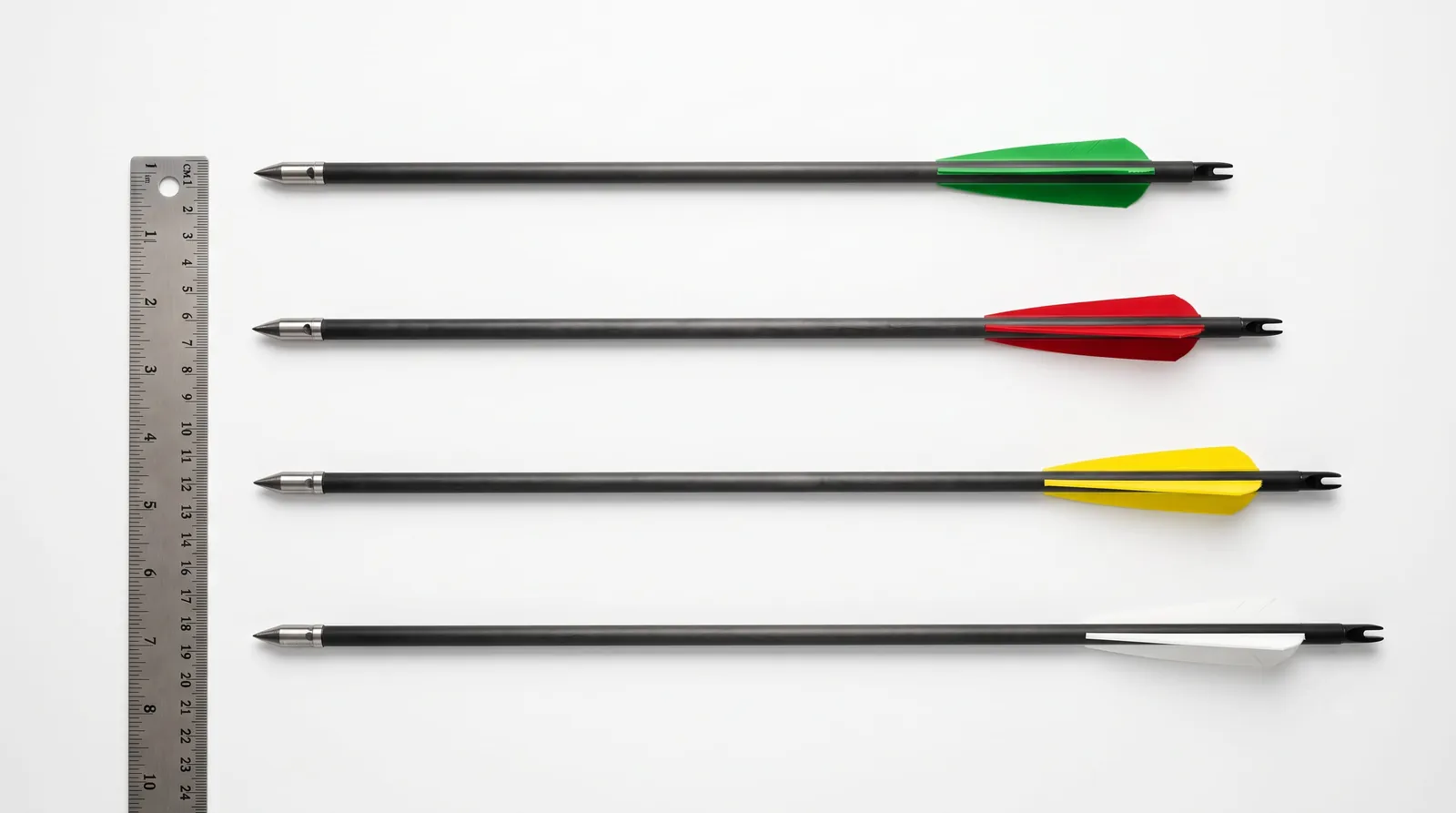
- Buying by length alone. A 20-inch bolt is not interchangeable with another 20-inch bolt if the nock, weight or insert differs.
- Ignoring the minimum weight. Going below the manual's minimum is a safety issue, not a trade-off.
- Buying a dozen before testing one pack. Some crossbows group one bolt much better than another. Test a pack first.
- Forgetting to re-zero. A new bolt or tip changes weight and balance. Re-check your sight-in, and re-check again when you move from a field point to a broadhead.
- Chasing FOC alone. FOC is one factor. A high-FOC bolt with loose tolerances will not beat a well-made bolt with slightly lower FOC.
- Ignoring local rules. Rules about equipment can vary, so verify with the relevant authority before you hunt.
Worked Example: Choosing Bolts for a Crossbow With a 20-Inch, 400-Grain Minimum
This is a plain walk-through with made-up requirements, not a claim about any one crossbow. Suppose the manual says 20-inch bolts, a 400-grain minimum and a moon nock.
- Length: that rules out the 22-inch PileDriver and the 16 and 18-inch REEGOX sizes, leaving the 20-inch bolts in the table.
- Weight: every 20-inch bolt in the table is at or above 400 grains, so all pass the minimum. The R133 lists 400 grains with its 100-grain tip, so it sits exactly on the limit.
- Nock: the R133 is Ravin-only per its review, so it drops out unless your crossbow is a compatible Ravin.
- Tip: confirm the insert threads suit your intended broadhead.
- Distance: if you shoot inside 40 yards, the Match 400 at about $10 to $13 per bolt is the economical choice; if you shoot past 50 yards, compare the CenterPunch HPX at about $19 to $21 per bolt.
The arithmetic for cost per season: if you expect to lose or retire 3 bolts a season, that is 3 times $10 to $13, or $30 to $39, for the Match 400, against 3 times $19 to $21, or $57 to $63, for the CenterPunch HPX. That gap helps decide whether tighter tolerances are worth it for your shooting.
Symptoms and Likely Bolt Causes
When groups open up, bolts are a common suspect. Check these before changing anything on the crossbow, and follow your manual.
| Symptom | Likely bolt-related cause | What to check |
|---|---|---|
| Groups widen past 50 yards | Loose weight or straightness tolerance | Weigh and spin-test several bolts |
| One bolt flies away from the rest | Bent shaft, damaged nock or loose insert | Retire it after inspection |
| Point of impact shifts after a tip change | Different tip weight or balance | Re-zero with the exact tip |
| Bolt will not seat on the rail | Wrong length or incompatible nock | Compare against the manual |
| Nock cracks or splits | Wrong nock for the string or repeated damage | Replace and confirm the nock type |
| Lighted nock goes dark | Battery or contact problem | Replace the battery and test before the hunt |
Bolt Ownership Costs Beyond the Price Tag
The pack price is only the start. A realistic budget adds field points and broadheads, spare nocks and inserts where your bolts allow them, and batteries for lighted nocks. Heavier use means more replacements, so cost per bolt matters more than cost per pack.
Per-bolt cost is simply pack price divided by pack count: the 12-pack REEGOX at $29 to $39 works out to about $2.42 to $3.25, while a 3-pack of lighted bolts at $75 to $95 is $25 to $32. A practice set of cheaper bolts and a smaller matched hunting set is a common way to control cost, as long as you keep them labeled and confirm both fit the manual.
Who Should Skip Premium Bolts
- You rarely shoot beyond 40 yards, where the reviews found tolerance differences small.
- Your crossbow's manual restricts you to a specific proprietary bolt.
- You lose bolts often, such as on rough ground, where cost per bolt matters most.
Check any bolt and head combination in the FOC calculator, and compare its energy at your speed with the kinetic energy calculator. The bolt drop chart shows how a heavier, slower bolt changes your aiming marks.
Frequently Asked Questions
Can I use any length bolt in my crossbow?
No. Each crossbow is designed for a specific bolt length and the manual states it. A bolt that is too short or too long may not seat correctly and can create a safety problem, so match the manufacturer's stated length and do not rely on a generic claim of universal fit.
What happens if I shoot a bolt lighter than the minimum weight?
Shooting below the stated minimum can leave energy in the crossbow that the bolt does not absorb, which is the idea behind dry-fire damage and injury. Treat your manual's minimum weight as a hard limit and check it again when you buy a faster crossbow.
Does spine matter for crossbow bolts?
Less than for vertical-bow arrows, because bolts are short and stiff and crossbow-specific lines are matched by the manufacturer. It becomes more relevant if you mix generic bolts across very different platforms. The PileDriver review lists spine sorting tolerance, but most lines do not publish it.
Do I need a lighted nock?
Only if you regularly shoot or hunt in low light and want help tracking the bolt. In our reviews the lighted nocks stayed trackable at dusk, but they need a battery check and cost more per bolt than non-lighted options.
Is a more expensive bolt always more accurate?
Not automatically. Our reviews found tighter tolerances and higher FOC tightened groups, mostly at 60 yards, while differences at 20 and 40 yards were small. If you rarely shoot past 40 yards, a value bolt may be the better use of money.
Can I use the same bolts for practice and hunting?
Often yes, if the insert threads fit both field points and broadheads and total weight stays inside your crossbow's range. You must re-check your zero with the hunting head, because tip weight and blade design can move the point of impact.
How many bolts should I buy?
Buy at least a pack you can shoot and inspect, and expect to lose or damage some over a season. Many shooters keep a practice set and a smaller, matched hunting set, and mark them so they are not mixed up.
How do I know what bolt length my crossbow needs?
Check your crossbow manual or the maker's specifications, which state a rated bolt length and a minimum weight. If you cannot find them, contact the manufacturer rather than guessing, since a wrong length can affect safe seating.
Are carbon bolts better than aluminum for crossbows?
Carbon shafts are common on the bolts I reviewed and can be made light and straight. Aluminum shafts exist too, but the right choice is the one your manual allows and your budget supports, so follow the maker's guidance.
How often should I replace crossbow bolts?
There is no fixed interval. Inspect every bolt before each session and retire any with cracks, bends, loose nocks or loose inserts, because a damaged bolt can fail or fly unpredictably.
Final Recommendation
Choose in order: your crossbow's rated length and minimum weight, a weight that fits your priorities, the correct nock, a tip system that matches your broadheads, and the tolerances your distances justify. Then use FOC, lighting and price to break ties. If you shoot mostly at moderate range, a value bolt is a fair choice; if you push past 50 yards, the tighter-tolerance bolts in the table are worth examining.
When you are ready to compare, see our best crossbow bolts roundup or browse the crossbow bolts hub.
Read nextSee the tested bolts ranked side by sideOur roundup compares the same bolts by use case, with pricing and the reasons behind each pick.Gear mentioned in this guide
Reviews we link to above, highest rated first. Read the full review before you buy.
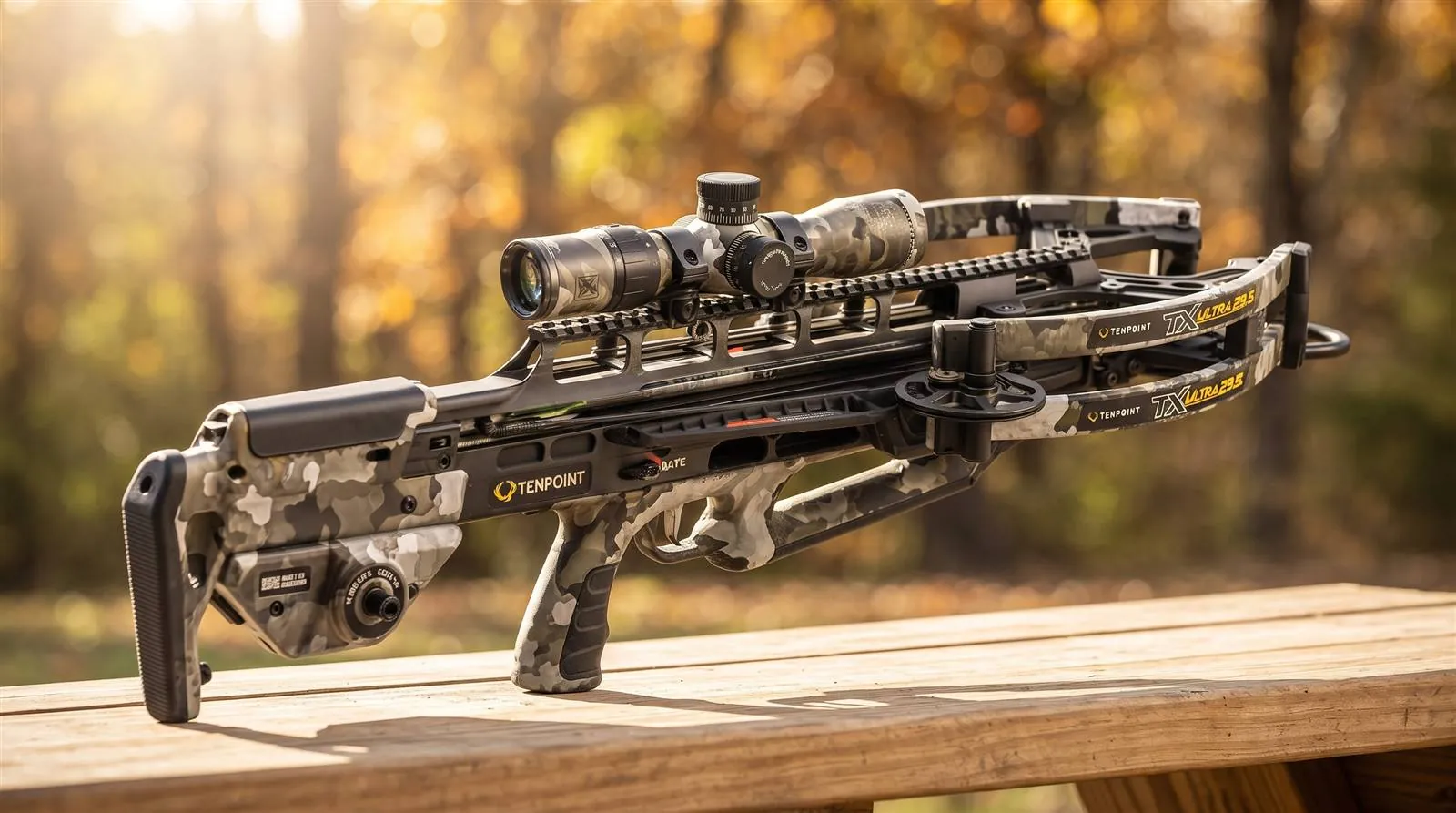
TenPoint TX Ultra 29.5 Review
Forward-draw crossbow measured at 456–463 FPS with tight 100-yard groups and a 6.5-inch cocked width. Speed and range in a narrow frame.
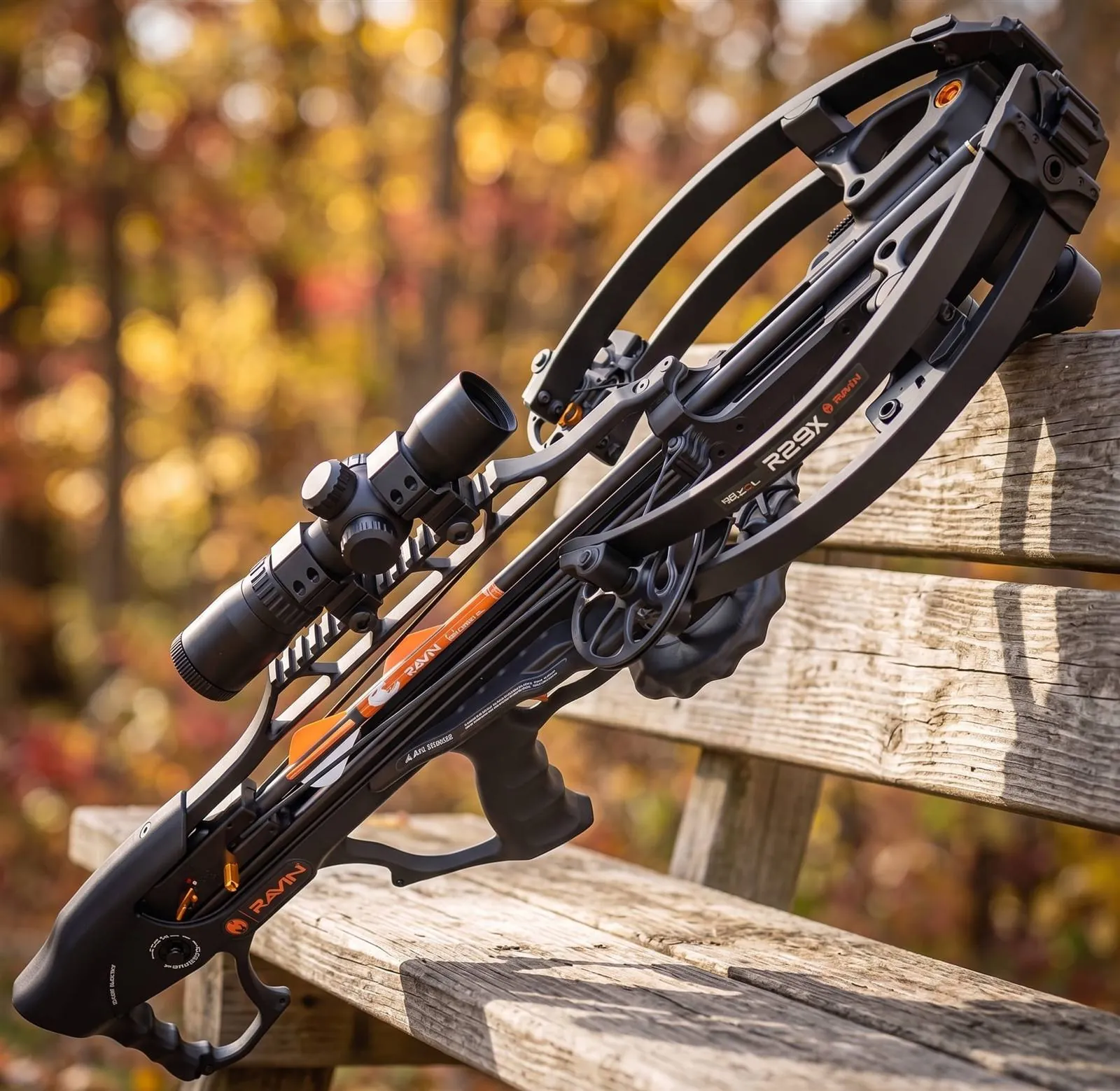
Ravin R29X Review
Compact, stealth-black crossbow producing 444–454 FPS and around 180 ft-lbs of kinetic energy, with an integrated quieter-cocking system.
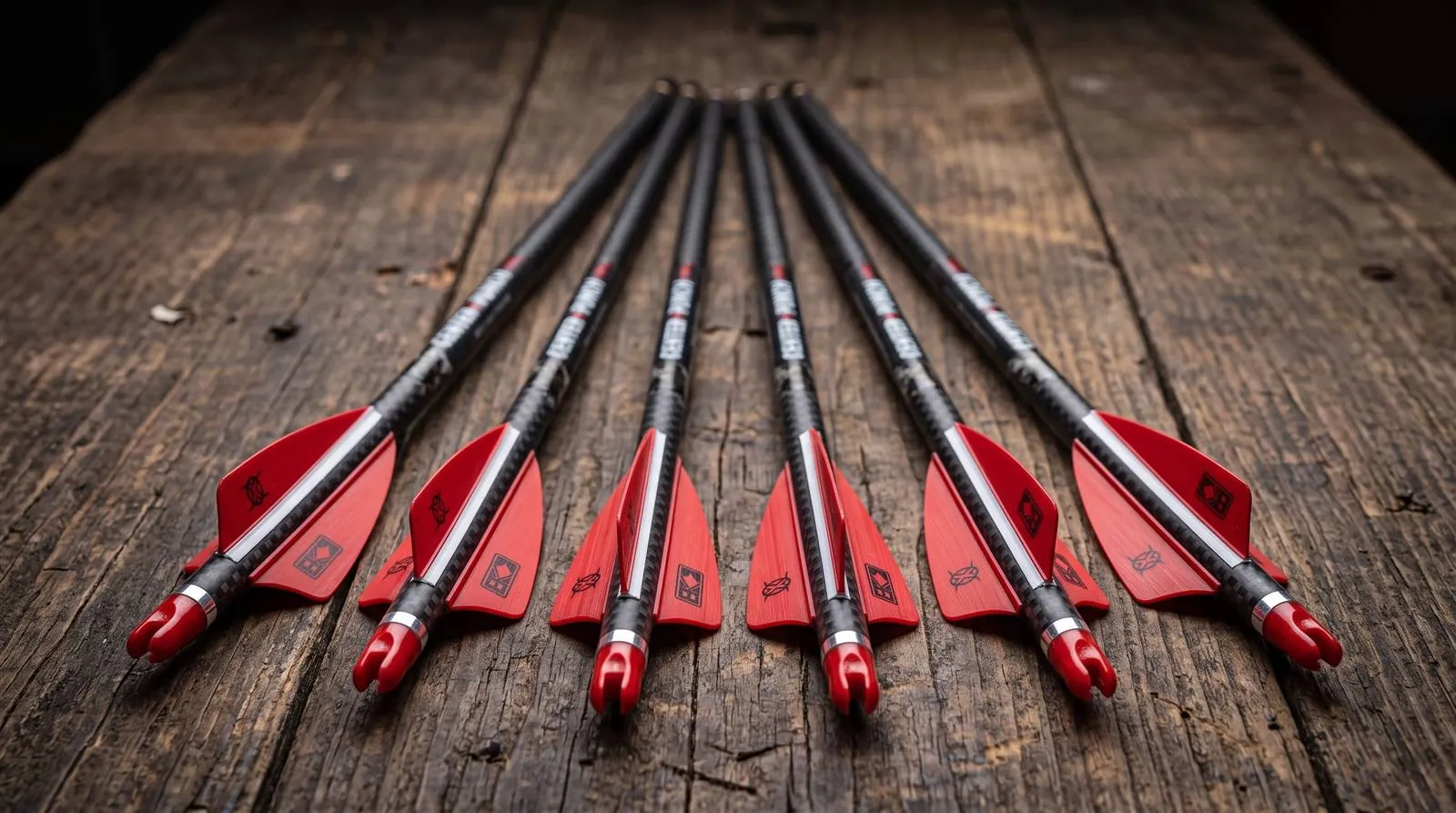
TenPoint CenterPunch HPX Review
Premium 445-grain, 20-inch carbon bolts with tight weight matching. Their consistency showed most past 40 yards, where groups stayed noticeably tighter.
Ready to compare models? Browse our crossbow bolts & arrows reviews, or see all reviews to see how each one measured up in testing.
More in Scopes, Bolts & Broadheads
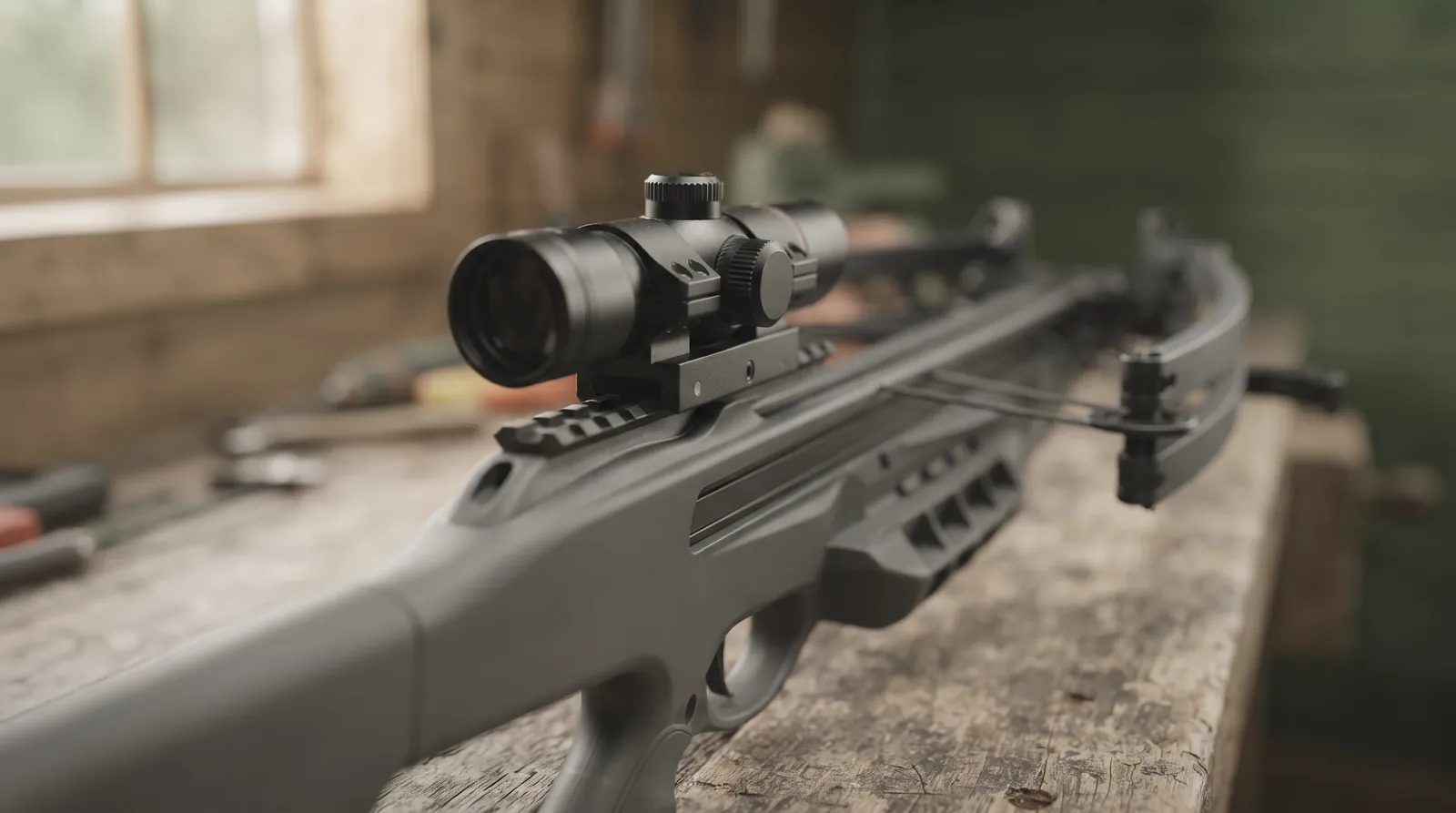
How to Choose a Crossbow Scope
Seven steps to choosing a crossbow scope: intended use, reticle type, magnification, eye relief, focal plane, parallax, and matching your bolt speed.
Read guide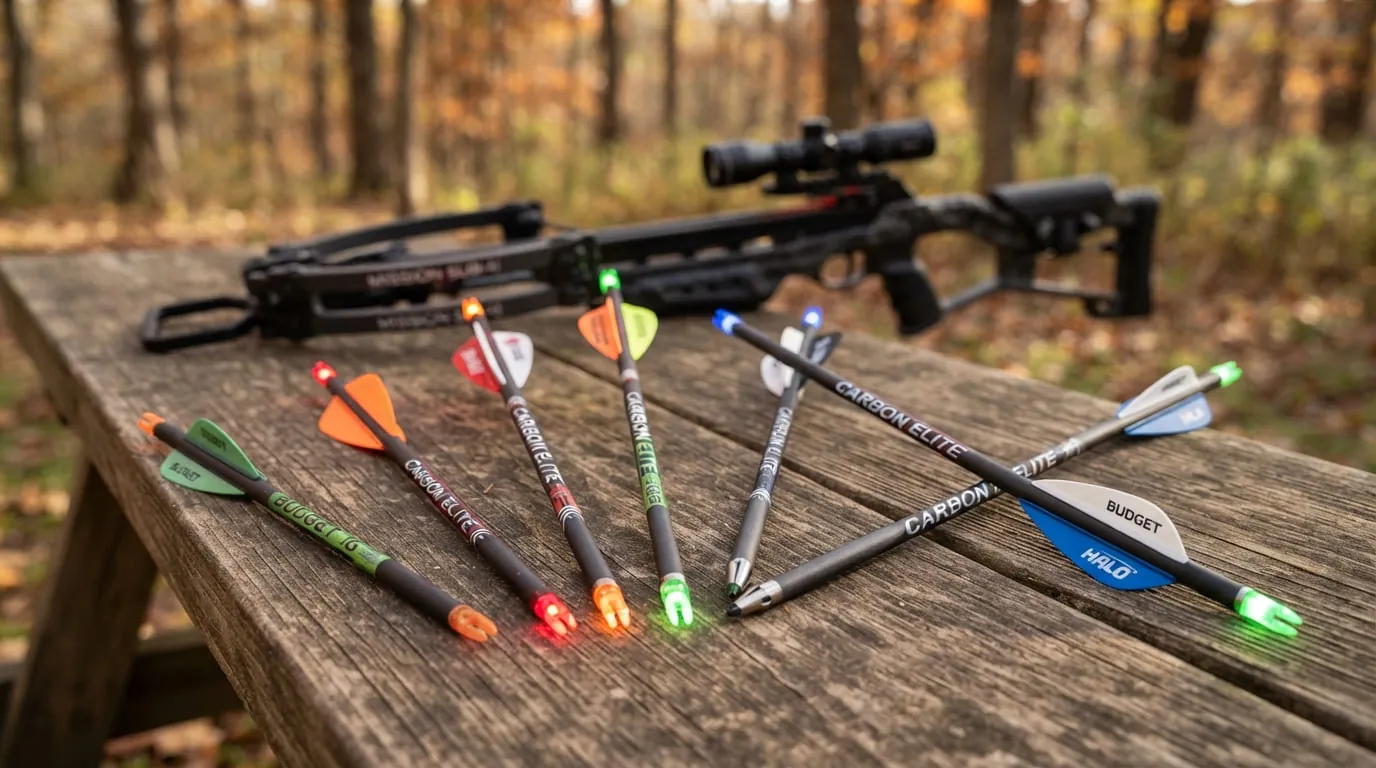
Best Crossbow Bolts of 2026
Crossbow bolts compared by grain weight, length, nock type and straightness, from 12-pack practice bolts to weight-matched carbon and lighted hunting bolts.
Read guide
Best Crossbow Scopes of 2026
Crossbow scopes compared from $45 fixed optics to laser rangefinding and digital models, with reticle, magnification and speed range for each.
Read guide