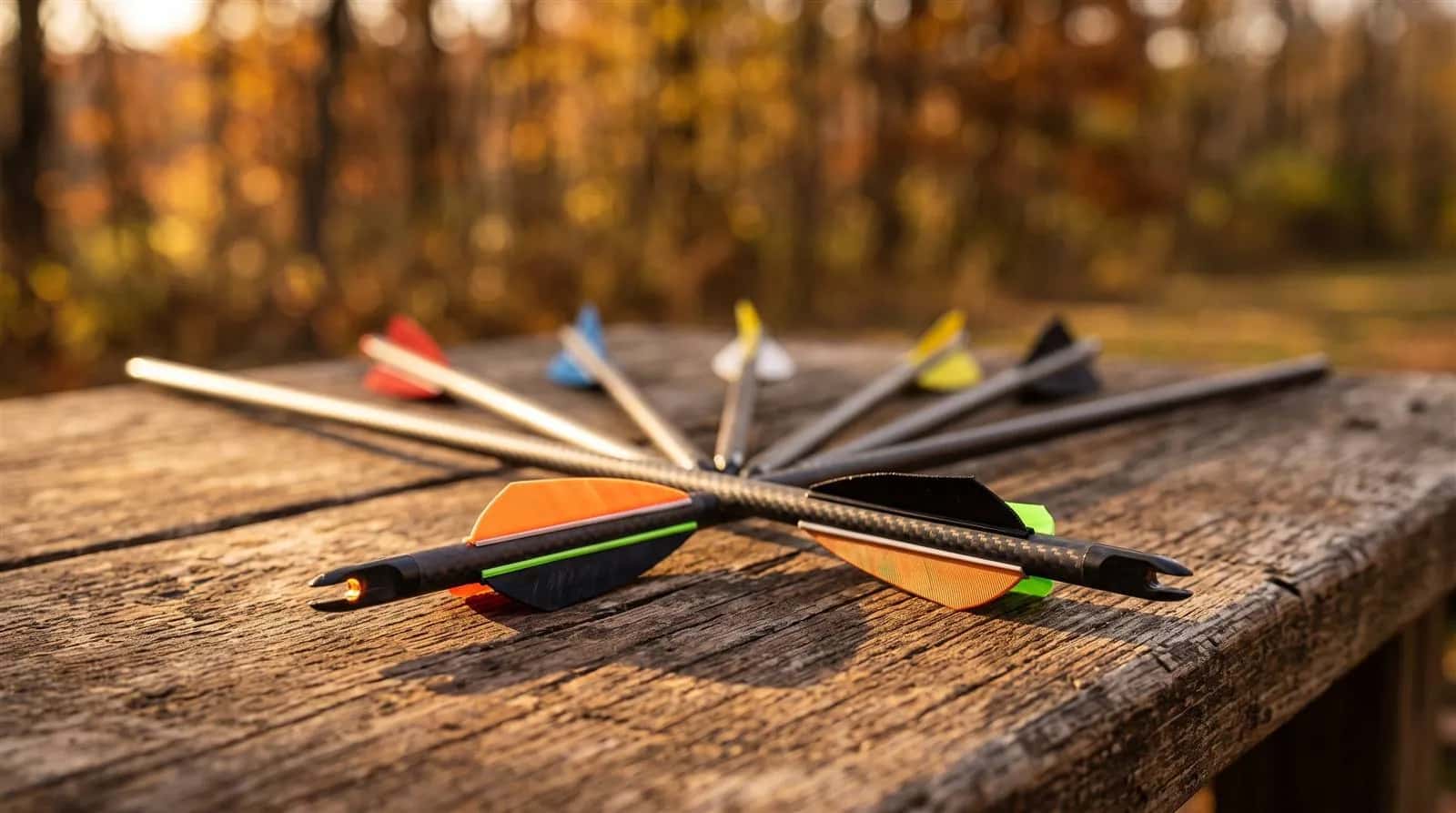
Crossbow Broadhead in plain terms
Crossbow Broadhead meaning: A broadhead is a bladed hunting tip that screws into a bolt insert, built as a fixed-blade or mechanical head and checked against a field point.
Also called: crossbow broadhead, hunting tip, broadhead tip, expandable broadhead
A broadhead is a bladed tip made for hunting with a crossbow where it is legal. It threads into the insert at the front of a bolt and replaces the field point used for practice. Construction falls into two families: fixed-blade heads, where the blades are permanently in place, and mechanical (expandable) heads, where blades are held closed in flight and open on contact.
On the equipment side, a broadhead is defined by its weight in grains, number of blades, blade material, ferrule (the body) material, cutting diameter and thread.
Two of the heads we review, the TenPoint Nemesis and Ravin R102, are both 100-grain mechanical broadheads, compared in detail on that entry.
Broadheads change how a bolt flies. Their shape and mass distribution differ from a field point, so you need to compare the two, and rules about broadhead design vary by jurisdiction. Verify with your local wildlife or hunting authority.
Fixed-blade versus mechanical broadheads
A design summary. The mechanical broadheads entry compares two of the reviewed heads, the TenPoint Nemesis and Ravin R102, spec by spec.
| Factor | Fixed-blade | Mechanical |
|---|---|---|
| Blades | Always open | Folded in flight, open on contact |
| Moving parts | None | Lock, pivots and blades to inspect |
| Retention | Not needed | O-ring or band, collar or internal spring clip |
| Flight versus a field point | Exposed blades can steer it, especially at higher speeds | Compact folded profile usually flies closer |
| What to check | Blade condition and a proper cover | Lock condition and the stated speed rating |
Why it matters
A broadhead is the one part of the bolt that is both a tip and a legal question. Weight, thread, speed rating and blade design all need to suit your crossbow and your jurisdiction. A head that is not rated for your crossbow speed, or does not fit your insert, is the wrong head regardless of how it is advertised.
Because the head changes flight, the most useful habit is to verify it. Shoot a field-point group, then a broadhead group at the same distances, and see how far they separate. The result belongs to that combination, not to broadheads in general.
Changing head weight changes both balance and energy, so check a new head in the FOC calculator and the kinetic energy calculator before you re-zero.
How to read it on a spec sheet
- Start with weight in grains and make sure the bolt remains inside your crossbow weight limits.
- Read the speed rating if one is stated. Ravin rates the R102 to 500 FPS with Ravin crossbows, and the Nemesis is rated for unlimited speed.
- Note the cutting diameter, and whether it is for a single stage or the total of several stages.
- Check the thread against your insert and whether the head uses a collar, O-ring or spring clip to hold blades closed.
- Look at blade material and thickness, replacement-blade availability and pack size.
Common mistakes
- Skipping a flight test against a field point.
- Using a head not rated for your crossbow speed.
- Handling broadheads carelessly. They are sharp; follow the maker handling instructions.
- Not inspecting blades, lock bands or clips for wear before use.
- Assuming all jurisdictions allow all broadhead types. Verify with your local authority.
Prepare a broadhead for use
- Read the maker instructions for threading, blade locking and storage.
- Match tip weight to your practice field point.
- Thread the head onto a test bolt and spin it to check it runs true.
- Shoot a group at your chosen distances and compare the point of impact with your field-point group.
- Inspect blades and locking parts after each use and replace worn parts.
- Check your local rules before use.
See it in our reviews
- TenPoint Nemesis Broadhead — rated 4.3/5
- Ravin R102 Broadhead — rated 4.3/5
Frequently Asked Questions
What is a broadhead on a crossbow?
It is a bladed hunting tip that threads into the insert at the front of a bolt. It replaces the field point used for practice and comes in fixed-blade and mechanical designs, subject to local regulations.
What is the difference between fixed-blade and mechanical broadheads?
Fixed-blade heads have blades that are permanently open, while mechanical heads keep blades closed in flight and open on contact. Mechanical designs have more moving parts, and fixed heads are simpler. Compare them on construction and flight.
What grain broadhead should I use?
Use one that fits your bolt weight limits and matches your practice field point. The Nemesis and R102 are both rated at 100 grains. Check your manual and re-check your zero after swapping.
Do broadheads need a different scope zero?
Often they need checking. Some heads group with field points and some do not. Shoot both at the same distance and compare, then adjust your sighting if necessary.
Are broadheads legal everywhere?
No. Rules differ by jurisdiction and change. Verify with your local wildlife or hunting authority before choosing a broadhead for hunting, and check the current rules each season.
How do I know if a broadhead fits my bolt?
Check the thread, the weight and any compatibility notes. The thread must match your insert, and the combined bolt weight must stay inside your manual limits. Avoid forcing any thread.
Should I practice with broadheads?
Mostly practice with field points, and use broadheads to confirm flight and fit before hunting. Broadheads dull and wear, so keep them for verification and follow the maker handling guidance.
Related guides
Guides where broadhead shapes a real choice.
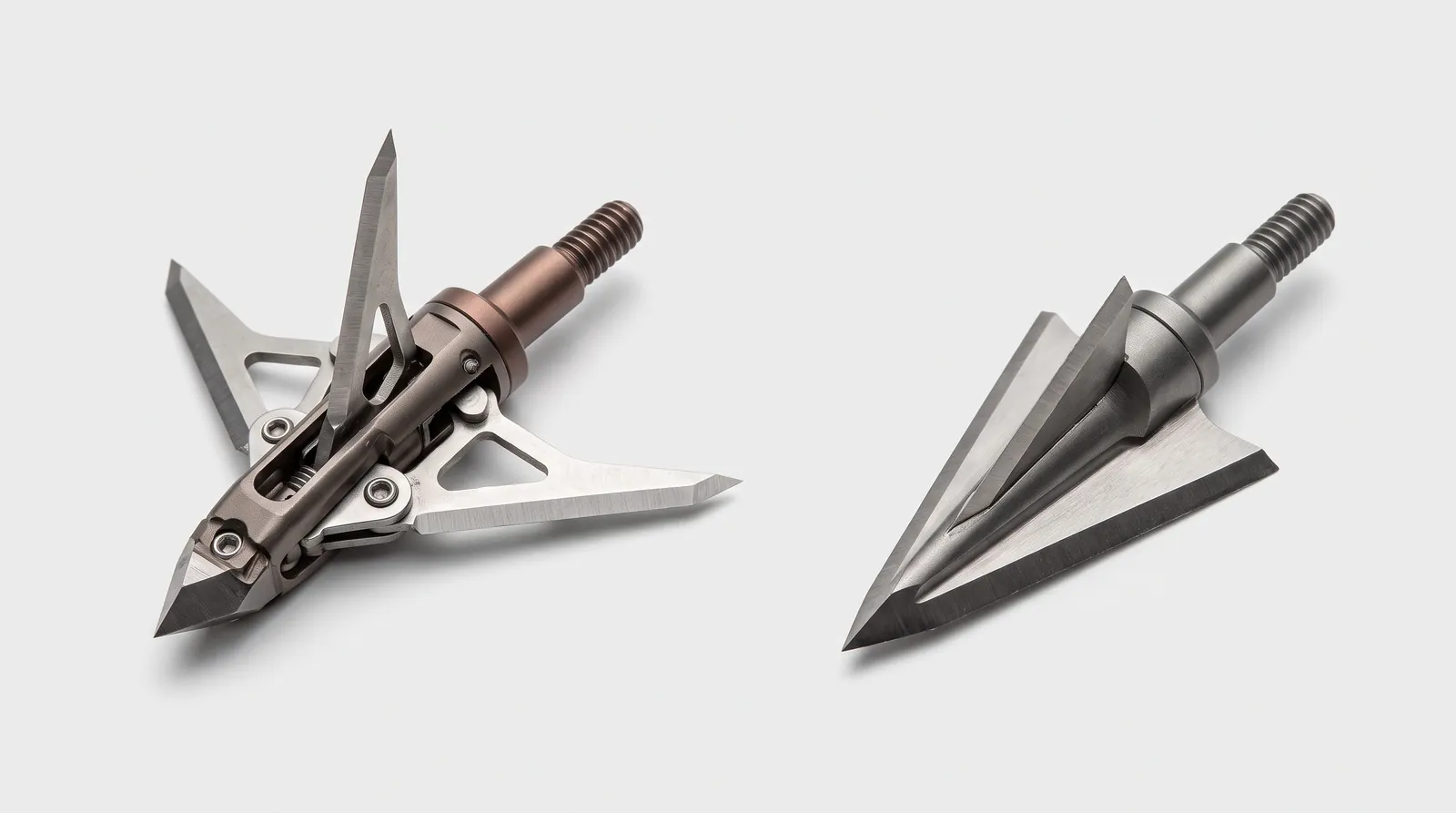 GuideBest Crossbow Broadheads for Deer 2026Four reviewed deer broadheads compared on total cut, blade design and maker speed rating, with notes on matching each head to your bolts and crossbow.Read the guide
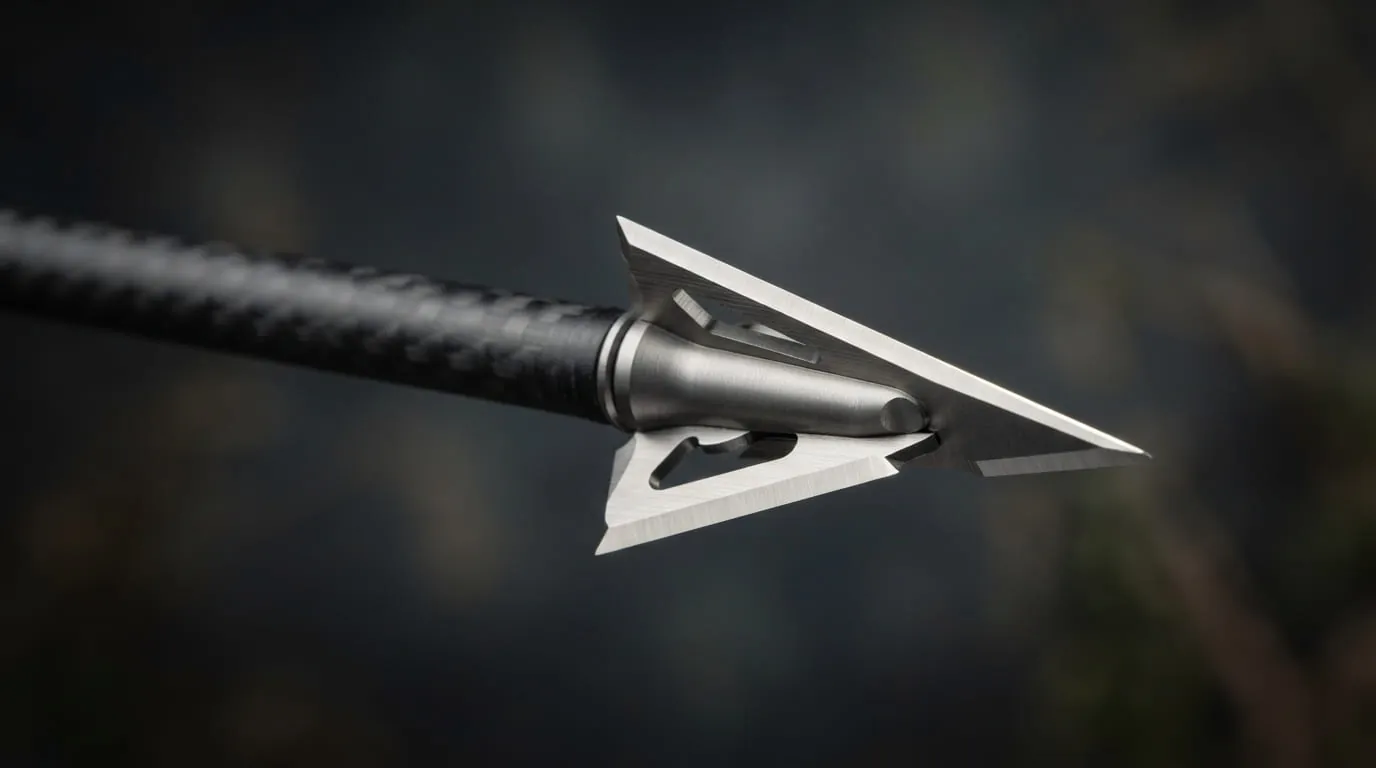 GuideFixed-Blade Broadheads for CrossbowsFixed-blade crossbow broadheads explained: single versus multi-blade designs, cutting diameter, sharpening, practice, and when to choose fixed over mechanical.Read the guide
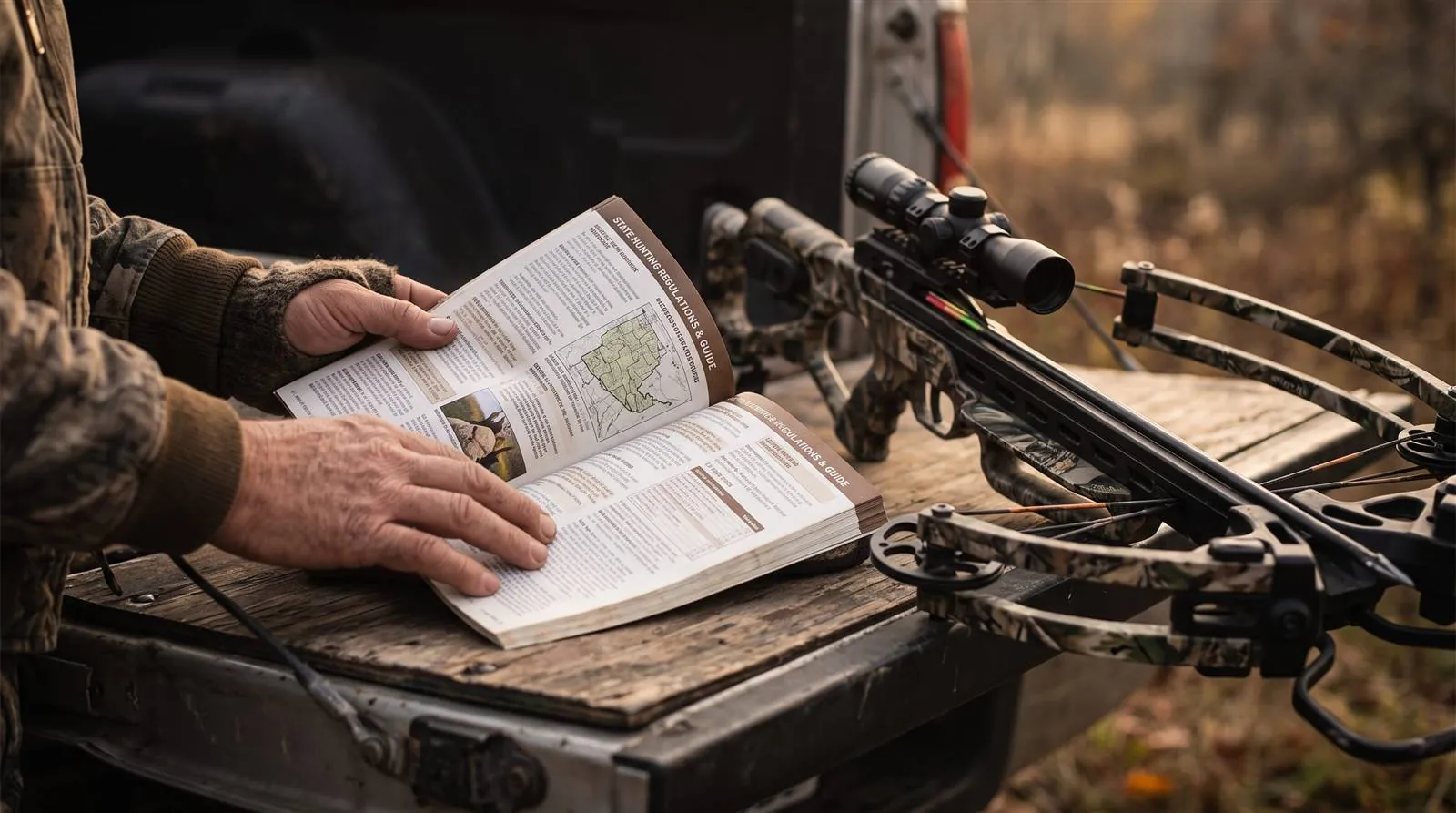 GuideCrossbow Hunting Laws by State (2026)Crossbow hunting rules by state for the current season: who may use a crossbow and when, licensing, equipment limits, and the official sources to verify.Read the guide
 GuideHow to Choose Crossbow Bolts in 2026: Sizing GuideA six-step method for choosing crossbow bolts by length, grain weight, nock and spine, with a size chart and a worked example.Read the guide
Definitions are general information. Manufacturer figures vary, so follow your crossbow's manual and verify local laws with the relevant authority.