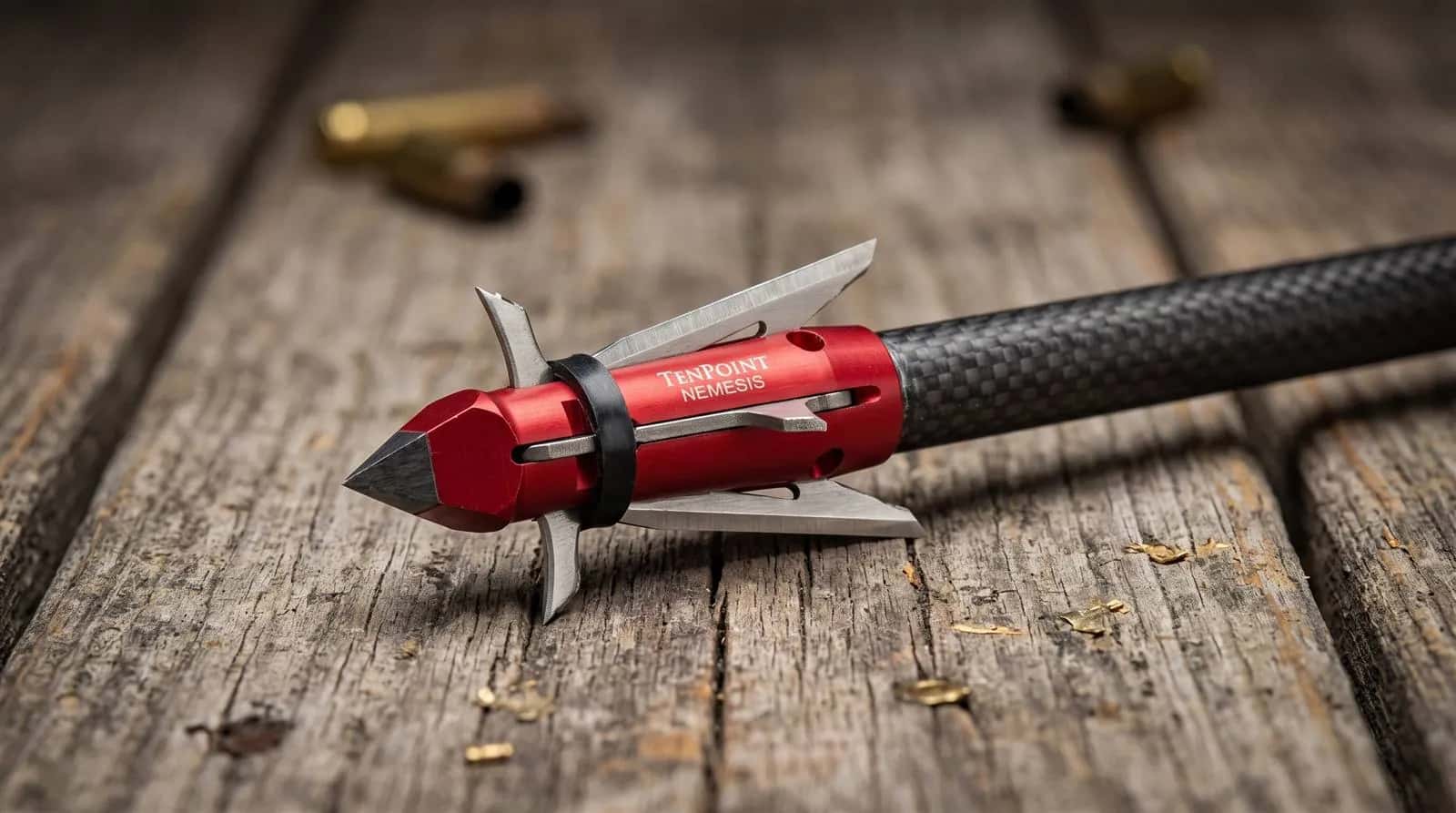
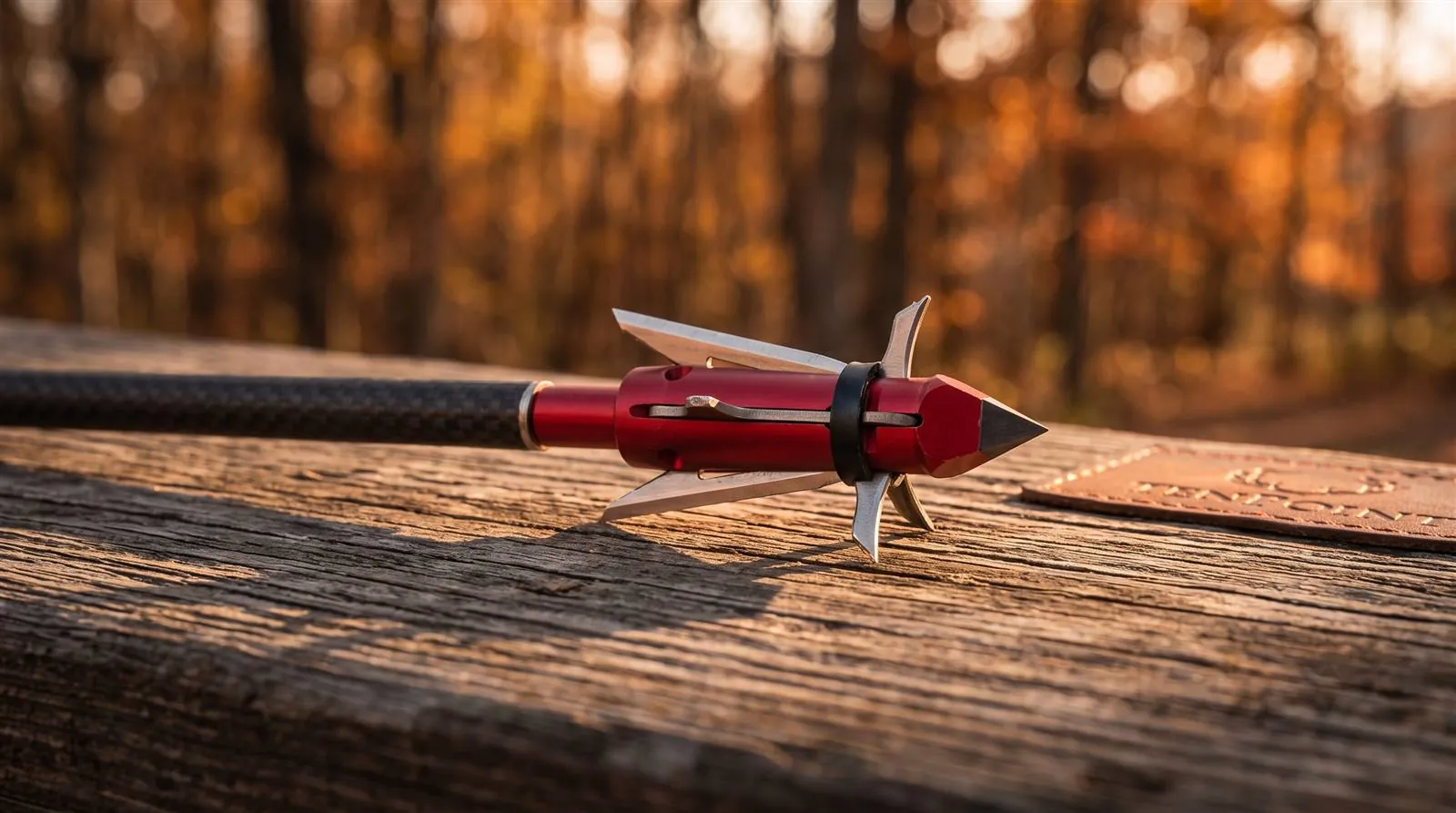
A mechanical broadhead that opens in two stages adds complexity, and the TenPoint Nemesis is built to justify it with a 3.75-inch total cut that grows as the head goes deeper. It is a 100-grain hybrid mechanical head sold three to a pack for $49–$79.
My verdict is 4.6 out of 5. Staged deployment worked as designed in my layered test media, the blade lock held through flight, and the head grouped closely with my field points. You pay a premium and accept more moving parts than a fixed blade.
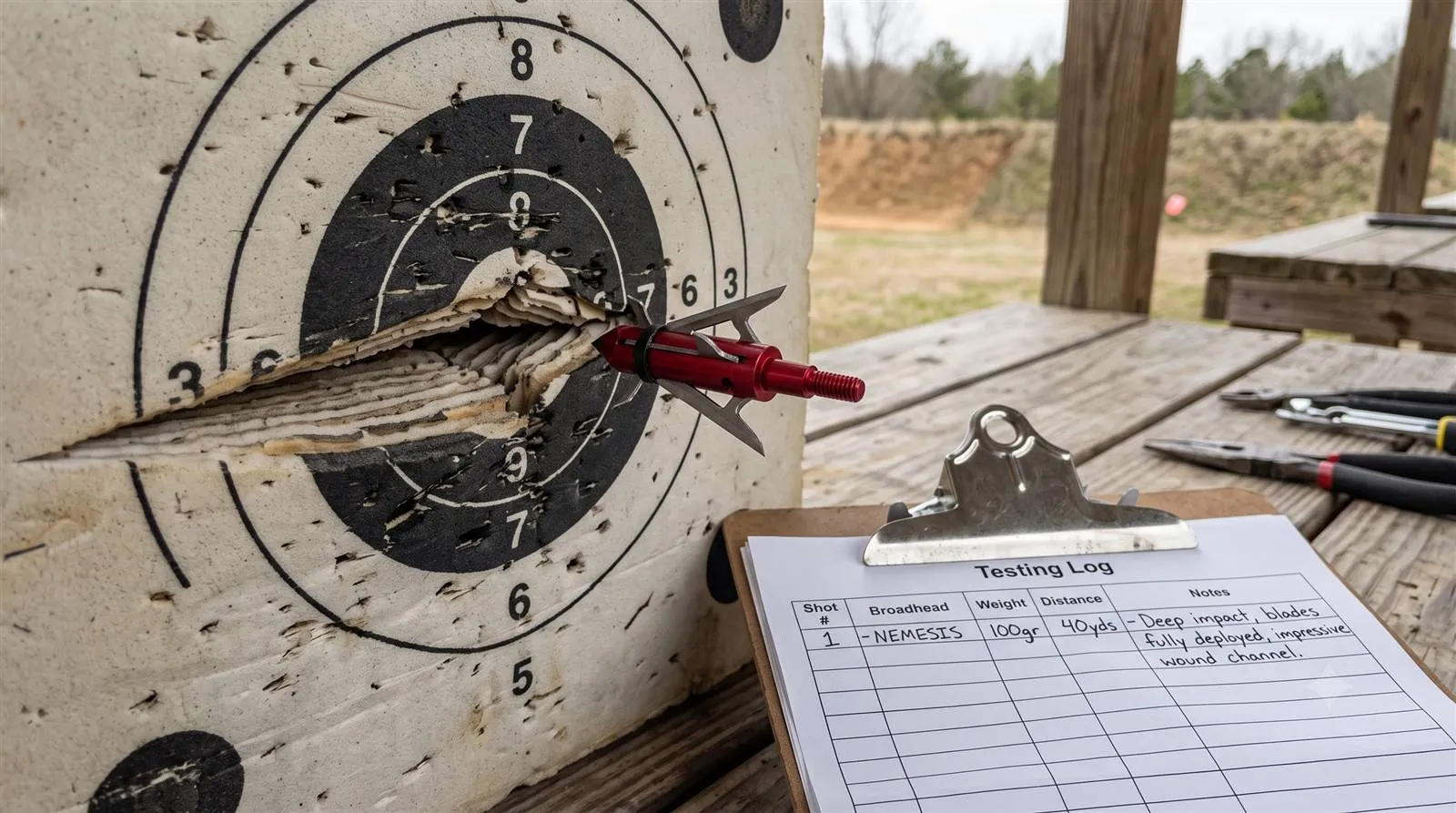
On impact, two front blades make a 2-inch entry cut. The two rear blades then open for an additional 1.75 inches. I ran a two-week protocol to verify both the staged-deployment mechanism and the flight-accuracy claim.
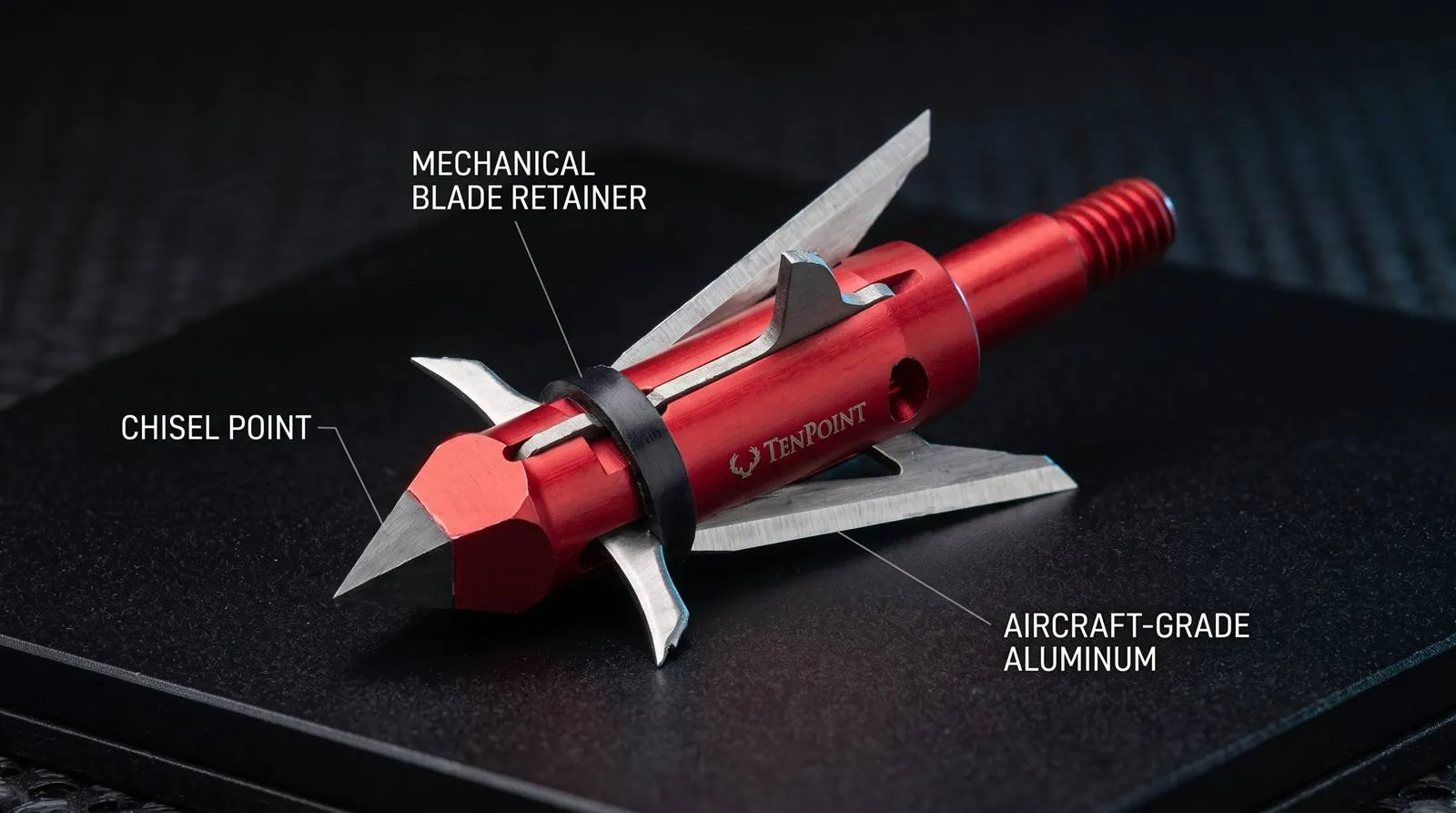
TenPoint Nemesis Broadhead Specifications
| Specification | Details |
|---|---|
| Weight | 100 grains |
| Total Cut | 3.75 inches |
| Entry Cut | 2 blades, 2 inches |
| Exit Cut | 2 additional blades, 1.75 inches |
| Blade Material | .036-inch 420 stainless steel |
| Ferrule | 7075 T6 aluminum |
| Point | Hardened steel chisel point |
| Blade-Lock System | O-Ring/Band |
| Blade Style | Mechanical, foldable |
| Pack Size | 3 broadheads |
| Price | $49–$79 (3-pack) |
What I Like
- Staged deployment that works as designed. In my testing a clean 2-inch entry cut was followed by the rear blades opening for a larger 1.75-inch exit wound.
- A blade lock that holds. The O-Ring/Band system kept the rear blades securely closed in flight, with no premature deployment.
- Consistent, clean entry. The hardened steel chisel point gave clean, consistent entry through my test media, in line with TenPoint's accuracy claim versus typical mechanical designs.
- Drop-in balance. At 100 grains the head worked with standard bolt inserts without balance adjustments.
- Strong build under impact. The 7075 T6 aluminum ferrule and .036-inch 420 stainless steel blades kept their structural integrity across my impact testing.
So far in testingCheck your bolt's insert threading first. A 2-inch entry cut followed by a 1.75-inch staged exit cut, with no premature blade deployment in my flight testing.
Potential Drawbacks
- A premium price. At $49–$79 for a three-pack it costs more than basic fixed-blade options.
- More moving parts. As a mechanical broadhead it has more potential failure points than a simple fixed blade, even with the blade-lock system.
- Retrieval takes more care. Recovering arrows with fully deployed blades from dense target material required more care than with fixed-blade heads.
- A less intuitive spec. The 3.75-inch total cut comes from staged deployment and not a single large cut, which is harder to judge on a spec sheet.
Key Features Explained
How does staged deployment work?
Most mechanical broadheads open all their blades at once on impact, which can happen before the head has penetrated tough hide and bone. The Nemesis cuts a smaller entry wound first and opens the rear blades only after passing through the rib cage. In my testing this sequencing improved penetration consistency compared with all-at-once designs.
Does it fly like a field point?
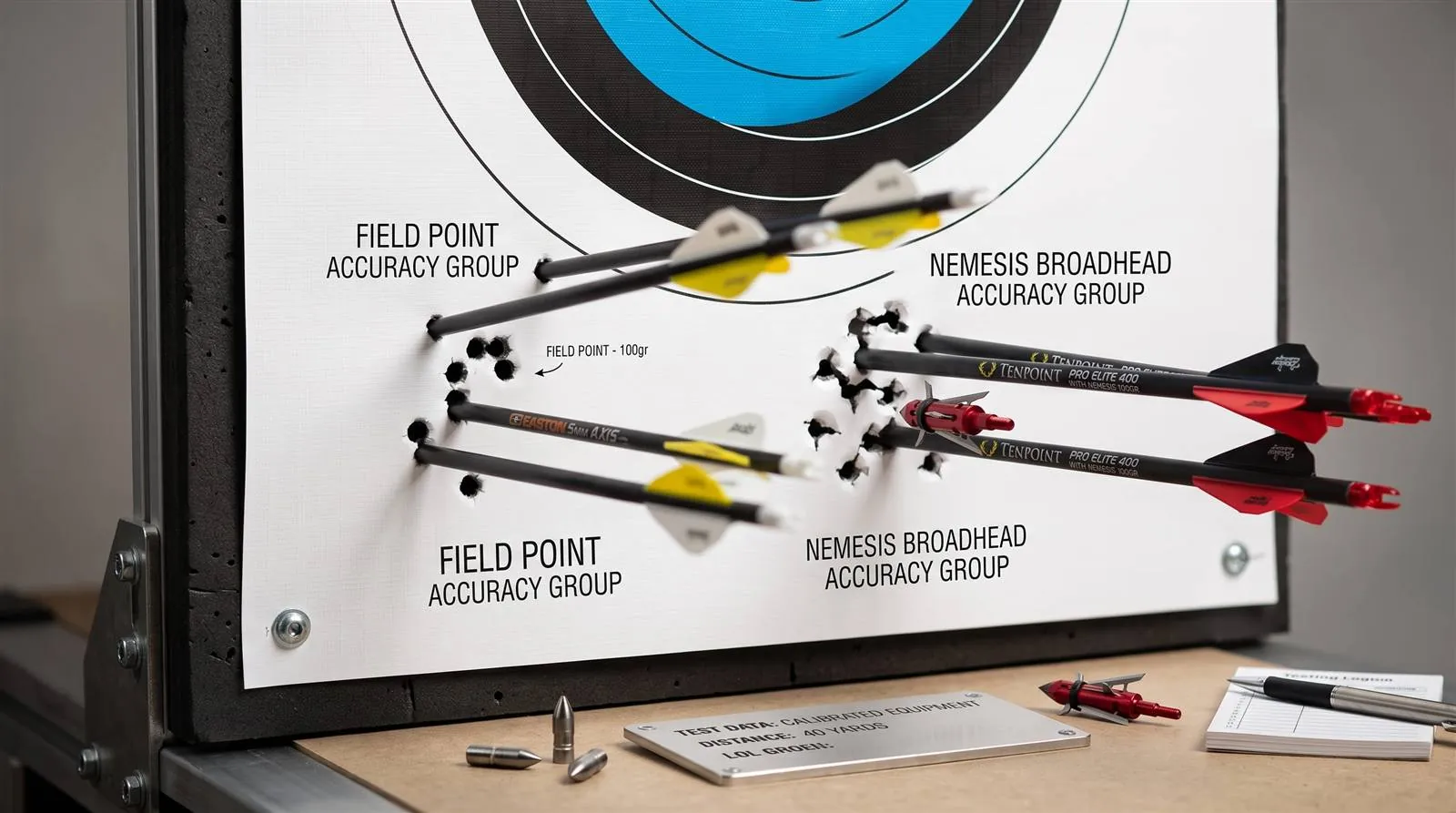
TenPoint cites independent testing that ranks the Nemesis as the most accurate head among more than 50 models tested, crediting the hardened steel chisel point and aerodynamic profile. That is TenPoint's claim and I did not verify the ranking. In my side-by-side shooting it grouped closely with field points at matched distances, which matters to hunters whose mechanical heads have flown differently from their practice points.
What does the O-Ring/Band blade lock do?
The lock holds the rear blades folded until impact. It kept them closed across the distances and shot angles I tried, which is a safety and performance requirement for any mechanical broadhead.
What is it made of?
The ferrule is 7075 T6 aluminum, the blades are .036-inch 420 stainless steel, and the point is hardened steel. The chisel point supports entry through hide, and the stainless blades carry the cutting edges. The glossary entry for broadhead covers the terms.
Performance & Usability
How does it penetrate and deploy?
My layered test media confirmed the design claim. The front two blades made a clean 2-inch entry cut, and the rear two opened only after passing simulated rib-cage resistance, delivering the full 1.75-inch additional cut deeper into the target.
How accurate is it compared with field points?
Compared side by side with field points, the Nemesis grouped closely at matched distances. I saw none of the flight-accuracy penalty I have found on other mechanical broadheads, so the larger wound channel does not cost accuracy. For tuning, how to sight in a crossbow scope helps you confirm point of impact.
Is the blade lock reliable?
The O-Ring/Band system held the rear blades securely folded throughout my flight testing at various distances and angles, with no premature deployment.
How durable is it?
The ferrule and blades showed strong structural integrity across repeated impacts, and the chisel point kept a sharp, consistent entry throughout.
What is retrieval and handling like?
Recovering arrows with fully deployed blades from dense target material took more deliberate handling than with a fixed-blade head. It never damaged the arrow or the blades in my testing, but it is worth planning for after a session.
How should I set it up and practice?
Confirm your bolt's insert threading matches the Nemesis's standard mounting before your first hunt. I did not test it on specific bolt models, so check the fit yourself, including total arrow weight against your crossbow's rated range. Take a few practice shots with the actual broadhead, not just field points, to confirm point of impact and flight consistency. How to choose crossbow bolts explains compatibility, and bolts such as the Wicked Ridge Match 400 or TenPoint CenterPunch HPX are reviewed on the site, though I have not documented testing them with this head.
How should I care for it?
Check the O-Ring/Band lock before each hunt to confirm the rear blades are folded and ready. After recovery, inspect both sets of blades separately for damage or dulling, and replace bent or dull blades rather than sharpening the thin stainless edges in the field.
Who Is the Nemesis Broadhead For?
Best suited to:
- A hunter who wants a mechanical broadhead's larger wound channel without losing field-point accuracy
- Someone hunting game where deep, reliable penetration through hide and bone matters
- A shooter comfortable with mechanical broadhead maintenance and inspection between hunts
Consider something else if:
- You prefer the simplicity of a fixed blade with no moving parts
- You are on a tighter budget
Browse the wider range in the crossbow accessories hub, or read the guides to broadheads for deer hunting and fixed-blade broadheads.
Nemesis vs Alternatives
| Broadhead | Price | Weight | Cut | Design | Rating |
|---|---|---|---|---|---|
| TenPoint Nemesis | $49–$79 (3) | 100 gr | 3.75 in staged | Mechanical, O-Ring/Band lock | 4.6 |
| Ravin R102 | $45–$55 | 100 gr | 2 in | Mechanical, internal spring clip, aluminum | 4.4 |
| Fixed-blade heads | roughly $30–$50 | varies | single cut | No moving parts | see roundup |
The Ravin R102 is priced a little lower with a 2-inch cut and a design built around high speed, so it suits Ravin shooters. Fixed blades cost less and have nothing to fail. The Nemesis sits between them for hunters who want a larger staged cut and field-point flight.
Read nextCompare broadheads before you commitSee how mechanical and fixed-blade heads stack up for deer-sized game and which suits your setup.Nemesis Compatibility, Setup and Ownership
What is in the pack, and what else do you need?
A pack holds three 100-grain Nemesis broadheads. Nothing else is documented in the file, so check the listing for spare blades or a wrench. What you must bring is a bolt with a compatible insert and a crossbow whose manual permits the total arrow weight. The mounting thread is described in my notes only as standard, so confirm it against your bolt's insert instead of assuming. My balance observation was that a 100-grain head worked with standard bolt inserts without balance adjustments. I did not test it on any particular bolt model.
Compatibility, as documented
The bolts reviewed on this site that you might pair with it are the Wicked Ridge Match 400 (20 inches, 400 grains, 46-grain aluminum insert) and the Lighted Pro Elite 400 (20 inches, 410 grains, 58-grain aluminum insert). I have not documented testing either with this head, so treat that as a candidate list and verify thread, weight and your crossbow's rated range yourself. The Ravin R102 is the alternative for Ravin owners. Read how to choose crossbow bolts before mixing parts.
Setting up and practising
- Confirm thread and total arrow weight against your manual.
- Shoot the broadhead itself, not only field points, to find the point of impact, using how to sight in a crossbow scope as the process.
- Check that the O-Ring/Band lock holds the rear blades folded before every shot.
- Keep one head for practice and treat it as spent after hard impacts.
- Handle the blades with care at all times. Keep the pack closed when you are not working on the arrows.
Head-to-head with the rivals
| Item | TenPoint Nemesis | Ravin R102 | Fixed-blade heads |
|---|---|---|---|
| Price | $49–$79 (3) | $45–$55 | roughly $30–$50 |
| Weight | 100 gr | 100 gr | varies |
| Cut | 3.75 in staged | 2 in | single cut |
| Design | Mechanical, O-Ring/Band lock | Mechanical, internal spring clip | No moving parts |
| Rating | 4.6 | 4.4 | see roundup |
A worked example: the cut and the cost
The staged cut is 2 inches at entry plus 1.75 inches from the rear blades, which is 3.75 inches in total. The rear blades therefore add 1.75 inches to a 2-inch entry, about 88 percent more than the entry alone. The Ravin R102 is listed at a 2-inch cut. On price, three heads for $49–$79 is $16.33 to $26.33 each. If you use one head to confirm point of impact, you have two left for hunting, which is the sort of count worth planning before the season. For the wider decision, see broadheads for deer hunting.
Symptoms and what to do
| What you notice | Likely cause | What to do |
|---|---|---|
| Broadhead lands away from field points | Individual head or setup | Re-check thread and bolt straightness, then shoot a fresh head |
| Rear blades not folded before the shot | Lock or damage problem | Do not shoot; replace the head |
| Blades dull or bent after recovery | Impact damage | Replace instead of sharpening thin stainless edges |
| Hard to pull from a target | Fully deployed blades | Take it slowly and keep fingers clear |
Budget for the kinetic energy your crossbow delivers as well, since the head's cut only matters if the bolt carries enough energy. My notes do not give an energy figure for this head, so put your crossbow's measured speed and total arrow weight into the kinetic energy calculator to see what the head will arrive with.
Value for Money
At $49–$79 for a three-pack, the Nemesis costs more than a basic fixed-blade broadhead ($30–$50) and somewhat more than a standard all-at-once mechanical design ($35–$60). The Ravin broadhead I also reviewed is priced lower but has a smaller cut and is built around a speed rating. In return the Nemesis gives a 3.75-inch staged cut, larger than the cutting diameter of many fixed-blade heads, while matching field-point accuracy in my testing.
The deciding question is whether staged deployment is worth the added mechanical complexity over a fixed blade. For hunters who already trust mechanical broadheads and want a large, reliable cut without an accuracy penalty, the premium is justified. Budget-conscious hunters, and those who want zero moving parts, will be better served by a fixed-blade option.
The crossbow calculators cover energy, FOC, bolt drop and cocking effort if you want to check the numbers behind this setup. Every other model I have tested in this class is compared on the crossbow accessories page.
Where the TenPoint Nemesis Broadhead ranks
The TenPoint Nemesis Broadhead earned a place in Best Crossbow Broadheads for Deer 2026 (#1), where it is scored against every other model I tested for that use. It also comes up in Fixed-Blade Broadheads for Crossbows and How Much Does a Crossbow Cost?.
Final Verdict
TenPoint Nemesis Broadhead
4.6 / 5 — Is it worth buying?
The TenPoint Nemesis combines staged deployment with field-point-matched accuracy, a pairing many mechanical broadheads struggle to deliver. In my testing the 2-inch entry and 1.75-inch rear cut sequenced consistently, and the blade lock prevented premature deployment. The trade-offs are a premium price and the added complexity of a mechanical design.
Best for
Hunters wanting a mechanical broadhead's larger wound channel with field-point accuracy
Skip if
You prefer the simplicity of fixed blades or are on a tighter budget
Score breakdown
- Deployment Reliability4.8/5
- Flight Accuracy4.8/5
- Penetration Performance4.7/5
- Build Quality4.7/5
- Value for Money4.3/5
- Ease of Maintenance4.3/5
- Weight
- 100 grains
Typical price
$49–$79
Frequently Asked Questions
Is the TenPoint Nemesis Broadhead worth it?
Yes, for hunters who want a mechanical head's larger wound channel with field-point accuracy. In my testing staged deployment worked as designed and flight accuracy closely matched field points. Budget-conscious buyers or fixed-blade fans may find better value elsewhere.
How does the staged deployment work?
On impact the front two blades make a 2-inch entry cut. Once the head passes the rib cage into the vitals, the rear two blades expand for an additional 1.75 inches, giving a 3.75-inch total cut in two stages.
Does the Nemesis fly like a field point?
Closely, in my testing. It grouped near my field points at matched distances, which supports TenPoint's accuracy claims relative to typical mechanical broadheads. Always confirm point of impact with your own bolts.
Is the blade-lock system reliable?
Yes. In my flight testing across various distances and angles, the O-Ring/Band system consistently prevented premature blade deployment. Inspect the lock before each hunt to confirm the rear blades are folded and ready.
How does the Nemesis compare to a fixed-blade broadhead?
A fixed blade is simpler, with no moving parts to fail. The Nemesis delivers a larger total wound channel through staged deployment while matching field-point flight accuracy in my testing, at a higher price.
How much does the Nemesis weigh and what is in a pack?
Each head weighs 100 grains, and a pack holds three broadheads. The ferrule is 7075 T6 aluminum with a hardened steel chisel point. Check the current listing for anything else included.
Are broadheads like the Nemesis legal everywhere?
Not necessarily. Broadhead rules can differ by jurisdiction, so verify current regulations with your local wildlife authority before hunting. This page is not legal advice.
How much does each Nemesis broadhead cost?
At $49–$79 for a three-pack, each head works out to $16.33 to $26.33. Budget for at least one extra pack if you want a practice head plus a hunting set, since a head used for point-of-impact work is best treated as spent.
Which bolts does the Nemesis fit?
I have not documented a tested pairing, and my notes describe the mounting only as a standard insert thread. Check the thread on your bolt and your crossbow's rated arrow weight in the manual before you order. The Match 400 and Lighted Pro Elite 400 are reviewed here, but not tested with this head.
Is the Nemesis the right choice for a Ravin crossbow?
Not necessarily. The Ravin R102 is the broadhead reviewed here for that platform, with a 2-inch cut and a design built around high speed. Follow your crossbow manual for permitted broadheads.
Related Reviews
 4.4
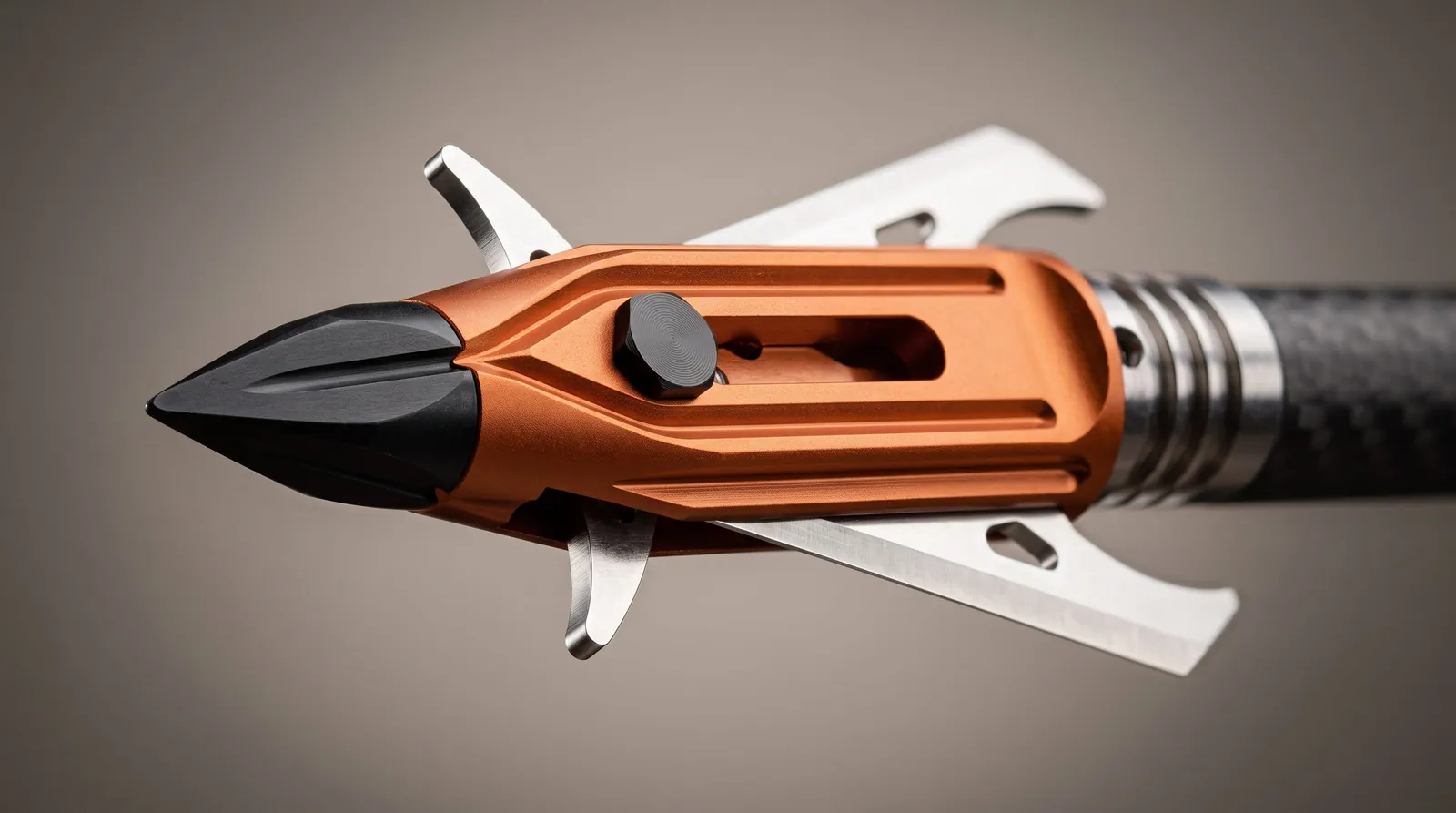
4.4Ravin R102 Broadhead Review 2026
100-grain mechanical crossbow broadhead rated to 450 FPS. Flew with field points in testing, and its spring clip kept the blades closed in flight.
Read review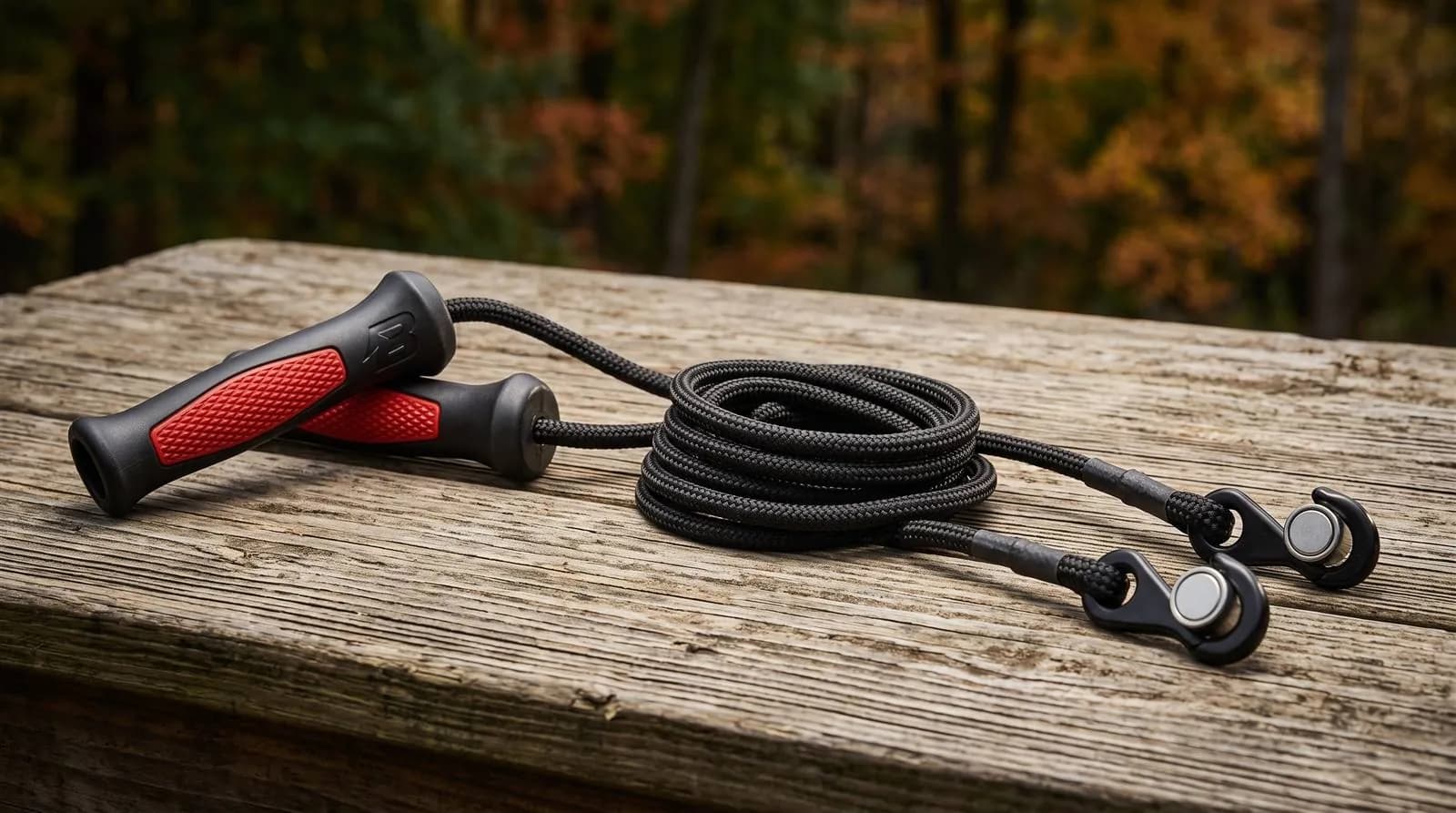 4.3
4.3Barnett Rope Cocking Device Review 2026
Padded rope cocking aid that roughly halves draw effort on compatible standard-draw Barnett crossbows. Not for Reverse Draw Cam or Hyper RAPTOR models.
Read review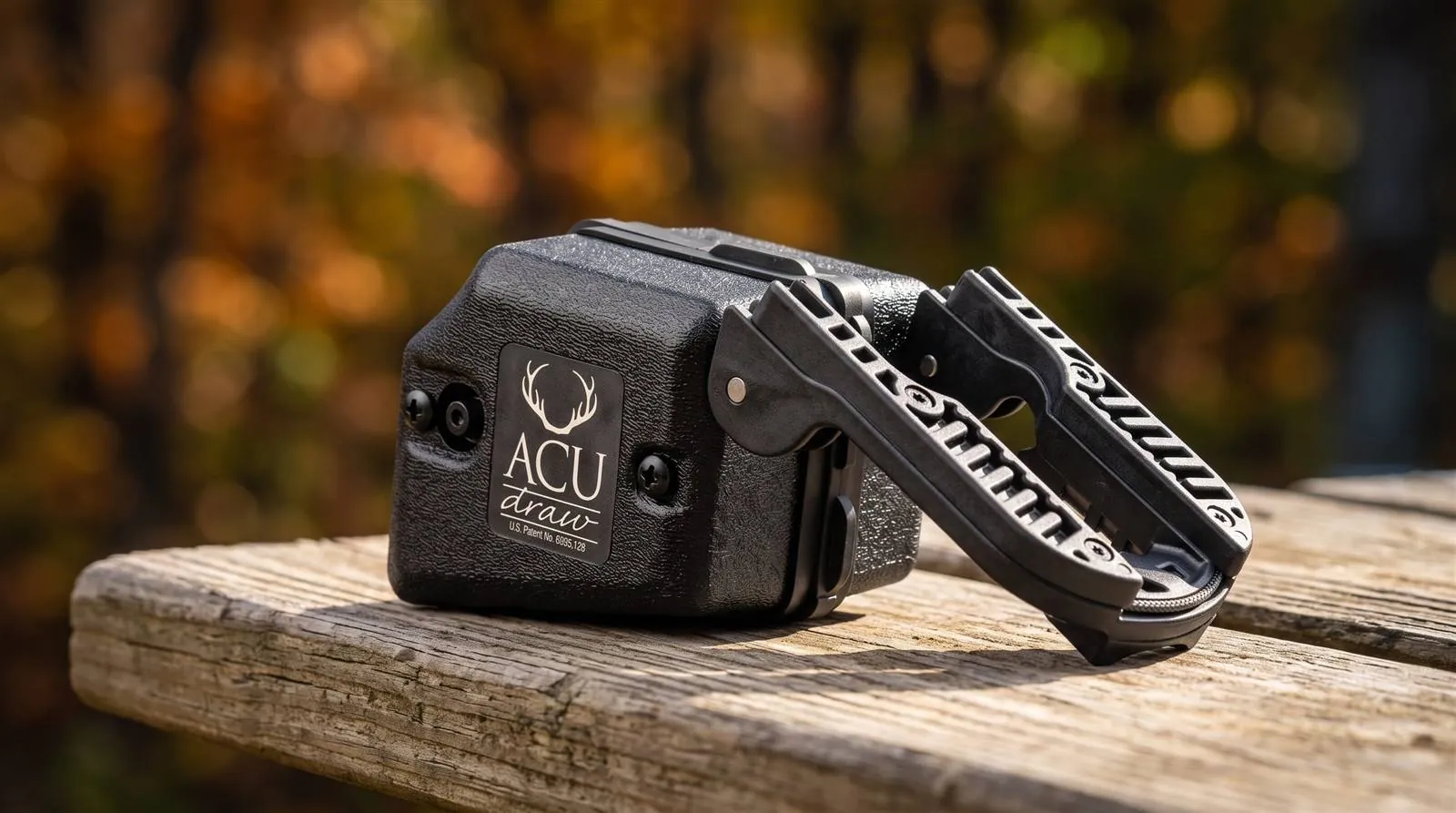 4.5
4.5TenPoint ACUdraw Review 2026
TenPoint's integrated cocking system that sharply cuts draw effort and centers the string every time. Fits select TenPoint, Wicked Ridge and Horton models.
Read review