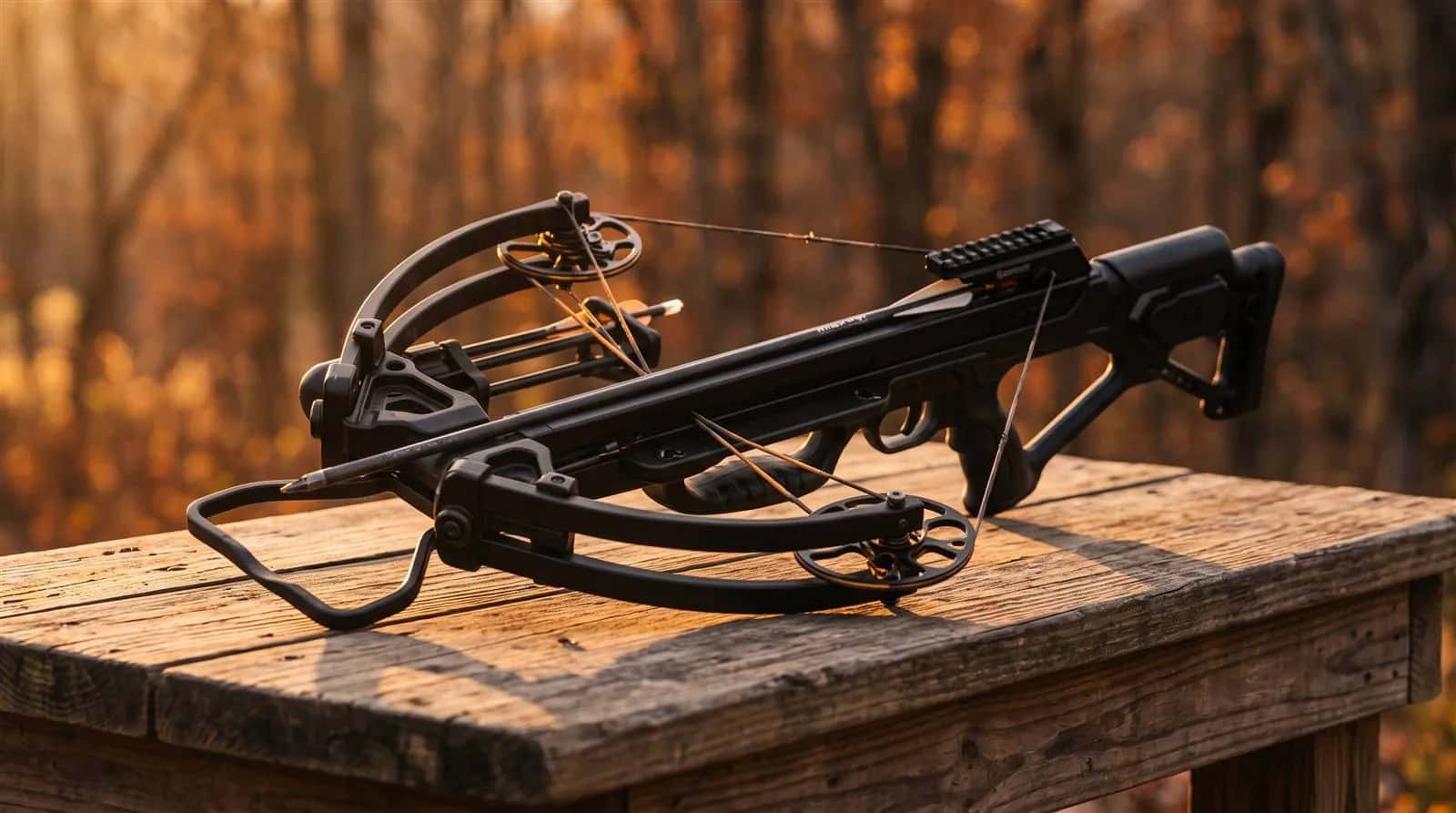
Crossbow Kinetic Energy in plain terms
Crossbow Kinetic Energy meaning: Kinetic energy is the energy a crossbow bolt carries, in foot-pounds, calculated from its weight in grains and its speed in feet per second.
Also called: KE, ft-lbs, foot-pounds, bolt energy, arrow kinetic energy
Kinetic energy is the energy of motion that a crossbow bolt carries. It is worked out from two numbers: the bolt's weight in grains and its speed in FPS. The result is quoted in foot-pounds (ft-lbs).
Because speed is squared in the formula, a small gain in speed raises energy more than the same percentage gain in weight. Raising speed by 12.5 percent raises energy by about 27 percent. Raising bolt weight by 12.5 percent raises energy by 12.5 percent at the same speed.
Energy is a calculated figure, not a measured one. It describes the bolt just after it leaves the string, not what happens downrange or on impact. Drag, bolt design and the target all change the outcome, so treat it as one comparison number among several.
The kinetic energy formula
KE (ft-lbs) = bolt weight (grains) x FPS x FPS / 450,240
A 425-grain bolt at 400 FPS: 425 x 400 x 400 / 450,240, about 151 ft-lbs. At 380 FPS the same bolt carries about 136 ft-lbs.
Kinetic energy by bolt weight and speed (ft-lbs)
Calculated with the formula above. Speed matters more than weight at every step.
| Bolt weight | 300 FPS | 350 FPS | 400 FPS | 450 FPS |
|---|---|---|---|---|
| 350 grains | 70 | 95 | 124 | 157 |
| 400 grains | 80 | 109 | 142 | 180 |
| 450 grains | 90 | 122 | 160 | 202 |
Why it matters
Energy is the figure most often used to compare crossbows with different bolt weights, because it puts speed and weight on one scale. It is also the figure that some regulations and ethical hunting discussions refer to, so verify any minimum with your local wildlife authority before choosing equipment.
It also reveals trade-offs. A lighter bolt can post a higher FPS but a lower energy than a heavier bolt from the same crossbow. Reading both numbers stops you being misled by speed alone. Compare it with momentum, which weighs heavy bolts more favourably.
Rather than working the formula by hand, the kinetic energy calculator accepts any speed and bolt weight and reports energy and momentum together.
How to read it on a spec sheet
- Check whether the energy is calculated from the rated speed, a measured speed, or the manufacturer's own testing.
- Note the bolt weight behind it. The TenPoint TX Ultra 29.5 lists 193 ft-lbs with a 410-grain bolt and 189 ft-lbs with a 440-grain bolt at 440 FPS.
- Do the maths yourself with the formula to check a claim. If your arithmetic differs, the page may be using different inputs.
- Look at energy at the muzzle versus at distance. Most pages quote only the muzzle figure.
- Treat pistol crossbow figures as a different scale. The Steambow AR-6 Stinger II lists up to 15.2 ft-lbs with its optional limbs.
Common mistakes
- Treating kinetic energy as a guarantee of performance on game.
- Comparing energies calculated with different bolt weights as if they used the same one.
- Using the wrong constant. For grains and FPS the divisor is 450,240.
- Adding weight to a bolt without checking the crossbow's rated bolt weight range.
- Assuming energy alone tells you about penetration. Bolt design and FOC also matter.
How to calculate your own kinetic energy
- Weigh your finished bolt, including tip, in grains. Use a grain scale.
- Record the chronographed FPS from a safe, controlled test.
- Multiply the bolt weight by the speed, then by the speed again.
- Divide the result by 450,240.
- Compare with the manufacturer's figure and note the bolt weight used.
See it in our reviews
- Ravin R29X — rated 4.3/5
- TenPoint TX Ultra 29.5 — rated 4.5/5
Frequently Asked Questions
How do you calculate kinetic energy for a crossbow bolt?
Multiply bolt weight in grains by speed in FPS squared, then divide by 450,240. The result is energy in foot-pounds. Always use the same bolt weight that was used for the speed measurement.
Is kinetic energy the same as momentum?
No. Kinetic energy scales with weight times speed squared. Momentum scales with weight times speed. They favour heavy and fast bolts differently, so each tells you something the other does not.
How much kinetic energy does a crossbow bolt have?
It varies widely. Among reviewed models, a pistol crossbow may carry around 15 ft-lbs or less, while high-speed compounds list values near 180 to 193 ft-lbs. Always check the bolt weight behind the figure.
Does a heavier bolt have more kinetic energy?
At the same speed, yes. But the same crossbow usually shoots a heavier bolt more slowly, so the net effect depends on how much speed is lost. Use your own chronograph data to compare.
Is there a minimum kinetic energy for hunting?
Some jurisdictions specify energy, draw weight or bolt requirements. These change, so verify current rules with your local wildlife authority rather than relying on a general figure.
Why does speed matter more than weight in the formula?
Because speed is squared. Increasing speed by 10 percent raises energy by 21 percent, while a 10 percent heavier bolt at the same speed raises it by only 10 percent.
Can I trust the energy figure on the box?
Treat it as the manufacturer's rating. Check that the stated speed and bolt weight reproduce the figure with the formula, and if you own the crossbow, chronograph your own setup.
Related guides
Guides where kinetic energy shapes a real choice.
 GuideBest Crossbows for Deer Hunting in 2026Deer hunting crossbows ranked on accuracy at real hunting ranges, kinetic energy, noise and de-cocking, with a budget pick and a compact ground-blind pick.Read the guide
 GuideCrossbow Hunting Laws by State (2026)Crossbow hunting rules by state for the current season: who may use a crossbow and when, licensing, equipment limits, and the official sources to verify.Read the guide
 GuideHow Fast Does a Crossbow Shoot?Rated crossbow bolt speeds by crossbow type, with why advertised FPS can differ from your own and how speed relates to kinetic energy.Read the guide
Definitions are general information. Manufacturer figures vary, so follow your crossbow's manual and verify local laws with the relevant authority.