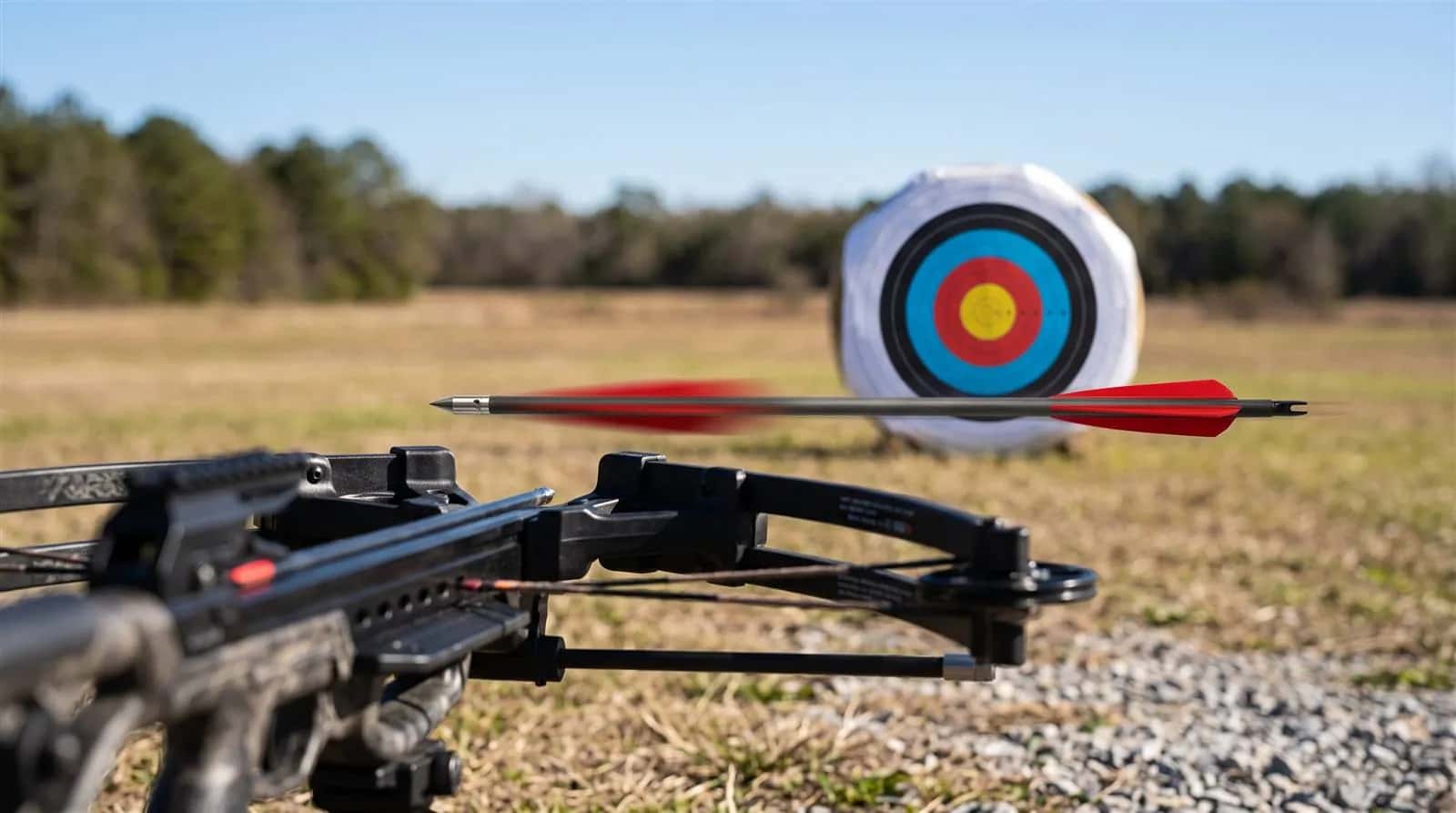
The speed printed on a crossbow box is a ceiling, and the number on a chronograph is what your bolt really does. The gap between them is usually small on well-built crossbows, but it can be large when a maker quotes a figure with its lightest bolt.
This guide gives the direct answer first: crossbow bolts leave the rail at roughly 165 to 515 feet per second in the models I have reviewed, depending on the type. Then it shows measured numbers from our reviews, explains what raises or lowers bolt speed, separates speed from kinetic energy, and covers how to read an advertised figure. It is for buyers comparing models and for owners who want to know what their own crossbow is doing.
Measured Speeds From Our Reviews
Every row below comes from a review in our library. The "measured" column is the range I recorded on a chronograph, and the "rated" column is the manufacturer's claim. Reviews that give a bolt weight or kinetic energy figure are noted. Most readings are from five shot strings with a 400-grain bolt, as the reviews state; the exceptions are noted in the last column.
| Crossbow | Type | Rated FPS | Measured FPS | Price | Notes from the review | Buy |
|---|---|---|---|---|---|---|
| SAS Prophecy 80 | Pistol | 165 | At or near rated | $95–$115 | Low-power; plinking and pest control | Check price on Amazon |
| Barnett Demun Accu Strike | Pistol | 190 | 184–193 | $145–$165 | 7-inch HyperBolts | Check price on Amazon |
| Avalanche Anaconda | Recurve | 245 | 232–241 | $219–$239 | 16-inch aluminum bolts; 245 is a ceiling with the lightest bolts | Check price on Amazon |
| BALLISTA BAT | Compound pistol | 300 | 293–304 | $299–$399 | Small game, target, bowfishing | Check price on Amazon |
| Excalibur Mag Air | Recurve | 305 | 299–308 | $785–$815 | Slower than every compound I reviewed | Check price on Amazon |
| TenPoint Venom X | Compound | 390 | 385–394 | $999–$1,199 | 400-grain bolt | Check price on Amazon |
| TenPoint TX Ultra 26.5 | Compound | 410 | 406–413 | $1,999–$2,199 | 400-grain bolt; compact | Check price on Amazon |
| Killer Instinct LOGIX 435 | Compound | 435 | 429–436 | $550–$700 | 400-grain bolt | Check price on Amazon |
| Barnett Hyper Raptor T-Rex | Compound | 440 | 435–443 | $1,199–$1,299 | 163 ft-lbs | Check price on Amazon |
| Ravin R29X | Compound | 450 | 444–454 | $2,499–$2,999 | 400-grain bolt; 180 ft-lbs | Check price on Amazon |
| TenPoint TX Ultra 29.5 | Compound | 460 | 456–463 | $2,499–$2,599 | 410-grain bolt; 193 ft-lbs | Check price on Amazon |
| Ravin R470 Stealth Gray | Compound | 470 | 463–472 | $2,450–$2,550 | 400-grain bolt | Check price on Amazon |
| TenPoint TRX Ultra | Compound | 515 | 511–517 | $3,495–$3,515 | 400-grain bolt; fastest I have recorded | Check price on Amazon |
Two more reviews rely on published chronograph tests rather than my own, so they are not in the table: the Ravin LR at about 448 FPS against a 450 FPS rating, and the CenterPoint Wrath 430, whose related 430X model measured about 413 FPS against a 430 FPS rating.
Two patterns stand out. First, our measured ranges sat close to the claims, bracketing the rating in most cases. The Avalanche Anaconda is the clear exception: its 232 to 241 FPS reading was just under a 245 FPS ceiling that the maker reaches with the lightest bolts, and its review notes that heavier hunting arrows will be slower. Second, price tracks speed loosely but not strictly. The Killer Instinct LOGIX 435 recorded 429 to 436 FPS at $550 to $700, faster than the TenPoint TX Ultra 26.5 and the Venom X, which cost more.
Speed by Crossbow Type
Pistol Crossbows
In our reviews, pistol crossbows run from the SAS Prophecy 80 at 165 FPS to the compound-limb BALLISTA BAT at 293 to 304 FPS. They suit backyard targets, pest control and, in the Bat's case, small game and bowfishing. Reviews of the pistol crossbows in this range are clear that none are intended for big game.
Recurve Crossbows
Recurve crossbows store energy in the limbs alone, without a cam system, and they top out below the compounds I have reviewed. The Anaconda recorded 232 to 241 FPS and the Excalibur Mag Air 299 to 308 FPS. Our Mag Air review says its 305 FPS trails every compound in the library, in some cases by well over 100 FPS.
Compound Crossbows
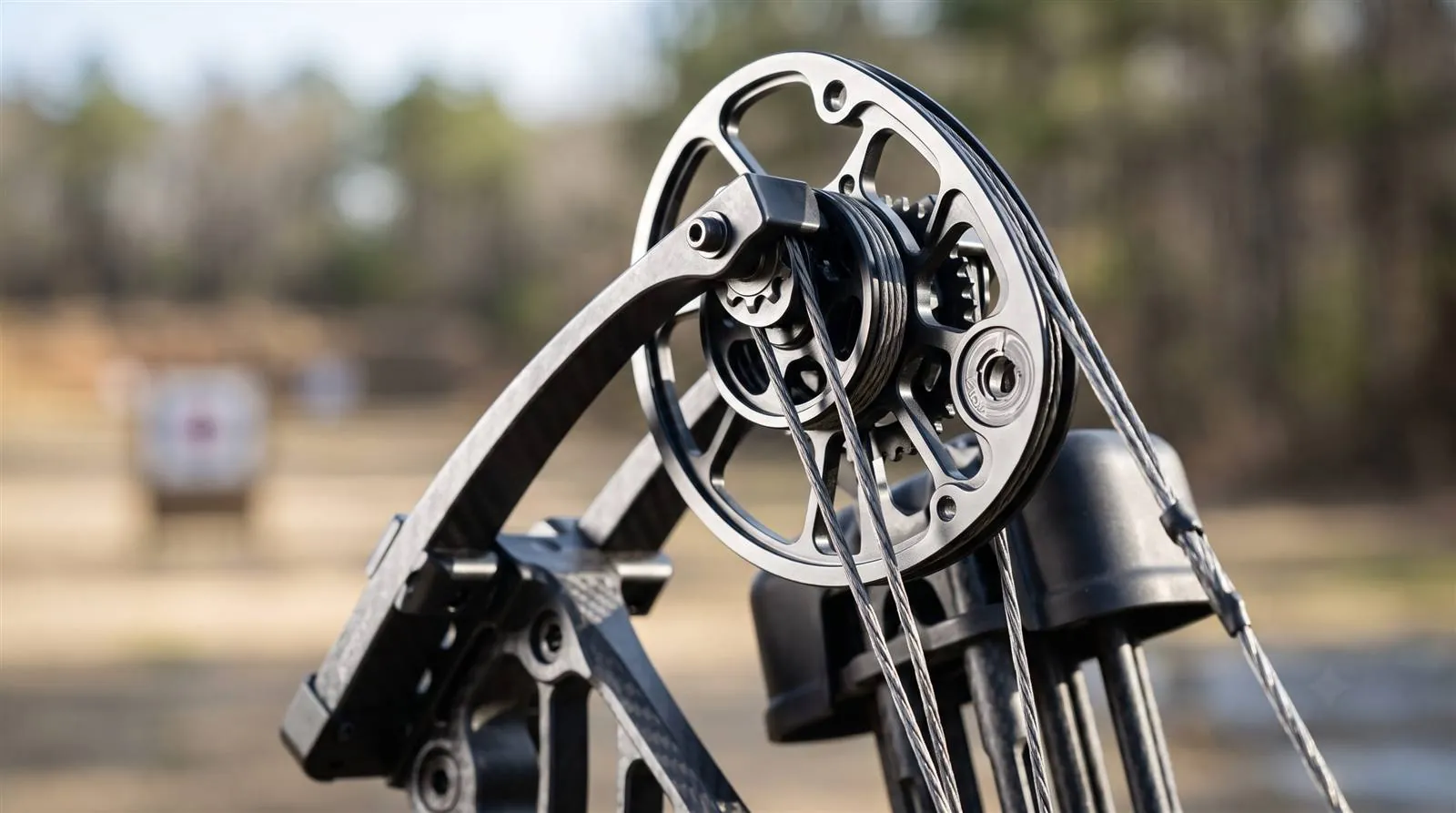
Compound crossbows use cams and cables to store more energy and release it over a longer, more efficient stroke. In our reviews they run from 385 to 394 FPS (Venom X) to 511 to 517 FPS (TRX Ultra). That is a spread of more than 120 FPS inside a single category, which is why "compound" alone tells you very little about speed.
What Changes Bolt Speed
Speed comes from how much energy the crossbow stores, how efficiently it hands that energy to the bolt, and how heavy the bolt is.
| Factor | Effect on speed | What our reviews show |
|---|---|---|
| Draw weight | More stored energy, usually faster | Demun 60 lbs at 184–193 FPS; Anaconda 175 lbs at 232–241 FPS; Venom X 215 lbs at 385–394 FPS |
| Power stroke | Longer stroke gives more time to accelerate the bolt | TX Ultra 26.5 has a 10.25-inch stroke; the LOGIX 435 has 15 inches |
| Cam and limb design | Efficiency of energy transfer | Compounds out-run recurves at similar draw weights |
| Bolt weight | Heavier is slower on the same crossbow | Ratings are tied to a stated bolt weight |
| Bolt length and drag | Longer bolts and larger vanes add weight and drag | Anaconda's 245 FPS applies to the lightest 16-inch bolts |
| String and cable condition | A worn or poorly maintained string can lose speed | See our maintenance guide |
Why Draw Weight Alone Misleads
The Anaconda has a 175 lb draw weight and recorded 232 to 241 FPS. The LOGIX 435, at 210 lbs, recorded 429 to 436 FPS. The extra 35 lbs does not explain a speed gap near 190 FPS; the compound cam system and efficiency do. Likewise the TX Ultra 26.5 listed 220 lbs and a 10.25-inch power stroke for 406 to 413 FPS, while the LOGIX 435 at 210 lbs and a 15-inch stroke recorded 429 to 436 FPS. Our TX Ultra 26.5 review notes that the short stroke means less energy than longer-riser flagships. Read draw weight, power stroke and design together; our guide to draw weight by body size covers the handling side.
Reverse-Draw and Compact Designs
Reverse-draw crossbows such as the R470 and the TX Ultra 29.5 fit a longer power stroke into a shorter frame, according to our reviews. That is how the TX Ultra 29.5 reaches 456 to 463 FPS from a 6.5-inch cocked footprint.
Advertised FPS Versus Chronograph Results
A box figure and a chronograph reading can differ for several reasons. Most of these are general, and any of them can apply to a given model.
- Bolt weight. Makers often quote speed with a light bolt. Switching to a heavier hunting bolt lowers the reading. The Anaconda's review states this directly.
- Best-case conditions. A figure may come from the fastest shot in ideal conditions, while a measured range spans several shots.
- Where the chronograph sits. Placement relative to the muzzle can change the reading slightly.
- Rounding. A 460 FPS rating may represent anything near that figure.
- Equipment condition. String wear, wax and temperature can nudge the result.
In our reviews, the ranges bracketed the claim for most crossbows. A reasonable approach is to treat the rating as a starting point, check which bolt weight it applies to, and look for an independent measured figure when you can. For how we report results, see our testing methodology page.
Speed Versus Kinetic Energy
Kinetic energy measures how much energy the bolt carries, and it depends on both weight and speed squared. In foot-pounds, it is approximately bolt weight in grains times speed in feet per second squared, divided by 450,240.
| Bolt weight | Speed | Approx. kinetic energy |
|---|---|---|
| 400 grains | 400 FPS | 142 ft-lbs |
| 400 grains | 450 FPS | 180 ft-lbs |
| 400 grains | 500 FPS | 222 ft-lbs |
| 450 grains | 350 FPS | 122 ft-lbs |
| 600 grains | 350 FPS | 163 ft-lbs |
The 450 FPS row matches the 180 ft-lbs in our Ravin R29X review. The TX Ultra 29.5 review gives 193 ft-lbs for a 410-grain bolt and 189 ft-lbs for a 440-grain bolt at 440 FPS, showing that a heavier bolt, which also carries more momentum, can hold most of the energy of a faster, lighter one. The bottom two rows show the opposite case: a slower but much heavier bolt can match the energy of a faster, lighter one.
Because speed is squared, a 10 percent speed increase adds roughly 21 percent more energy, while a 10 percent weight increase adds 10 percent. That is why both numbers matter. The T-Rex review cites a commonly used range of 25 to 41 ft-lbs for deer-sized game; rules and recommendations vary, so check your local requirements. Our bolt selection guide explains how to pick a bolt weight inside your crossbow's limits.
Why Speed Still Matters
If energy is the better measure of impact, why chase speed at all? Because speed shapes trajectory and time of flight. A faster bolt arcs less over a given distance, which makes range estimation more forgiving, and it spends less time in the air.
Ignoring the slowing that happens in flight, 60 yards is 180 feet. At 500 FPS that takes about 0.36 seconds. At 250 FPS it takes about 0.72 seconds. In real flight the bolt slows, so times are longer, but the proportion holds. A shorter flight leaves less time for an animal to move or for wind to push the bolt, and our R470 review notes that its 463 to 472 FPS gave a flatter trajectory that made range estimation more forgiving.
Trade-offs come with it. Faster crossbows are heavier, more expensive and often harder to cock. Our cost guide and cocking guide cover those sides. If you are choosing for deer, the best crossbows for deer hunting roundup compares tested models.
Where Speed Affects Your Other Gear
Speed is a compatibility factor as well as a performance number.
- Broadheads. Some heads carry a speed rating. The Ravin R102 is rated up to 450 FPS, and its review calls that a hard ceiling. Compare it with your measured speed using your own bolt weight. See broadheads for deer.
- Scopes. Reticles are built for speed bands. The TenPoint RangeMaster 100 is calibrated for 380 to 505 FPS, the EVO-X Marksman Elite tracked across 300 to 550 FPS, and the Garmin Xero X1i supports speeds up to 650 FPS per its review. A wrong band means wrong aiming points, so confirm during scope sight-in, or browse crossbow scopes.
- Bolts. Faster crossbows often have higher minimum bolt weights. The balance of the bolt matters too, as explained in our FOC guide.
Tested for this topic
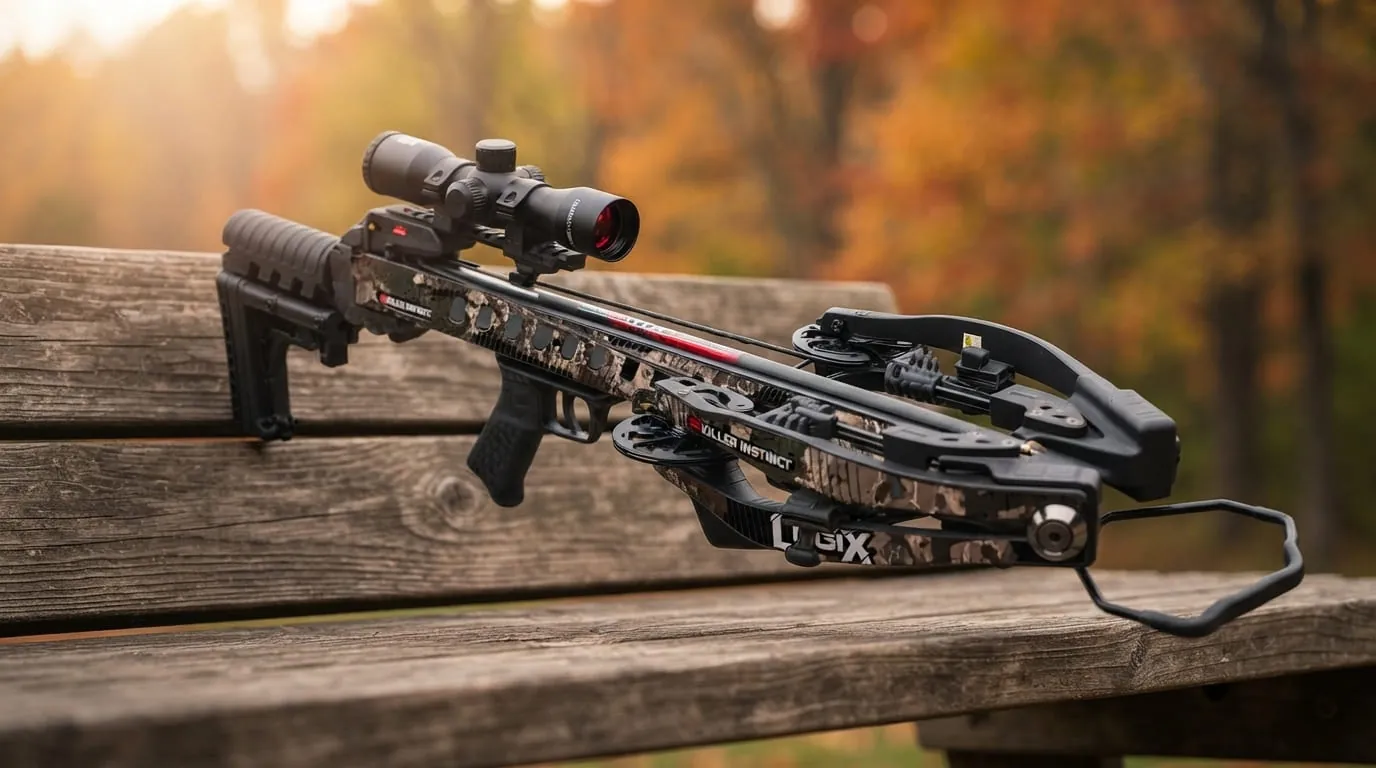
Killer Instinct Logix 435The measured 429 to 436 FPS at $550 to $700 is the best speed for the price in our reviews, with wider 60-yard groups than premium models.
How to Measure Your Own Crossbow's Speed
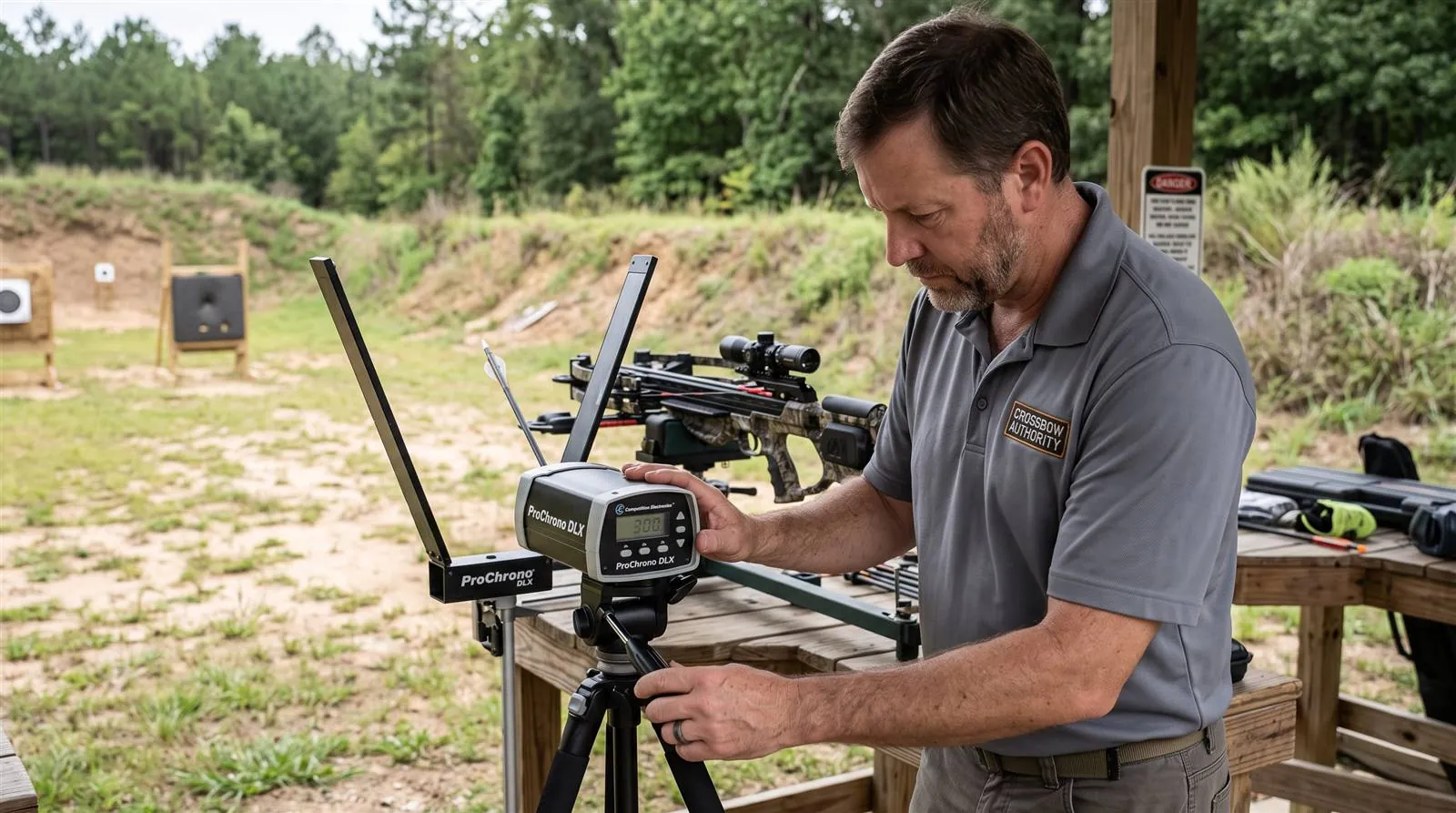
A chronograph gives you a figure for your exact bolt, which is more useful than any rating.
- Choose a safe range and backstop. Follow the chronograph's manual and your range's rules. A bolt that strikes the sensors can damage the unit.
- Set up the chronograph at the distance the manual specifies and aim your crossbow through the center of the sensors.
- Shoot five bolts of the same weight and record each reading.
- Record the range and the average. Write down bolt weight, tip and temperature.
- Calculate kinetic energy with the formula above.
- Repeat with your hunting setup, including the broadhead if you shoot one.
Handle a cocked crossbow carefully at every step, de-cock safely, and read our safety rules before you start.
Common Mistakes When Reading Speed
- Comparing ratings with different bolt weights. Always check the bolt behind the number.
- Treating speed as impact. Energy depends on weight as well.
- Ignoring the downrange drop in speed. Bolts slow in flight, and lighter or draggier bolts slow faster.
- Buying the highest number automatically. Weight, cocking effort, noise and price matter, too.
- Skipping local rules. Some places set equipment requirements, so verify them with the relevant authority.
Worked Examples: Turning Speed Numbers Into Decisions
All arithmetic below uses the formula above and figures from our review table. Where a bolt weight is made up for the exercise, it is labeled.
Example 1: Does a Heavier Bolt Cost You Energy?
Take a 400-grain bolt at 450 FPS: 400 x 450 x 450 / 450,240 is about 180 ft-lbs. Suppose a 440-grain bolt on the same crossbow slows to 425 FPS (a made-up figure for the exercise). Then 440 x 425 x 425 / 450,240 is about 176.5 ft-lbs. The heavier bolt is 25 FPS slower and carries only about 2 percent less energy, with a slower arc and usually a quieter shot. Always chronograph your own bolts rather than assuming a speed drop.
Example 2: How Much Time Does a Shot Spend in the Air?
Distance divided by speed gives time, ignoring in-flight slowing. At 40 yards (120 feet), a 400 FPS bolt takes 120 / 400 = 0.30 seconds, and a 250 FPS bolt takes 0.48 seconds. At 60 yards, 180 feet, the same speeds give 0.45 and 0.72 seconds. The slower crossbow spends about 60 percent longer in the air at either distance.
Example 3: Price Per Measured FPS
Dividing the lowest listed price by the lowest measured speed in our table gives a rough value check:
| Crossbow | Lowest price / lowest measured FPS | Approx. dollars per FPS |
|---|---|---|
| Killer Instinct LOGIX 435 | $550 / 429 | about $1.28 |
| TenPoint Venom X | $999 / 385 | about $2.59 |
| TenPoint TRX Ultra | $3,495 / 511 | about $6.84 |
This is a crude measure that ignores noise, cocking effort, build quality, accuracy and warranty. Use it to see where each extra FPS gets expensive, not to pick a winner.
Which Speed Do You Need? A Short Decision Guide
| Your priority | What to look at | Why |
|---|---|---|
| Backyard target and pest control | Pistol or low-power recurve speeds | Light, simple and affordable; our reviews note none are for big game |
| First hunting crossbow within a budget | Mid-priced compounds in the high-300s to mid-400s FPS | The reviews show these cover typical hunting distances |
| Long-range target shooting | Speed plus tight bolt tolerances | A flatter arc helps, but straightness and FOC also matter |
| Carrying weight or limited strength | Draw weight and cocking effort first | A faster crossbow is harder to live with if you cannot cock it |
| Quiet, compact stand hunting | Compact reverse-draw designs | The reviews show speed does not require a long frame |
When Your Measured Speed Looks Wrong
Follow your manual before adjusting anything, and stop and see a qualified technician if you see string or limb damage.
| Symptom | Likely cause | What to check |
|---|---|---|
| Well below the rating with heavy hunting bolts | The rating used a lighter bolt | Compare bolt weight with the stated figure |
| Speed varies widely shot to shot | Inconsistent cocking, bolt differences or chronograph issues | Weigh bolts and re-check sensor alignment |
| Gradually slower over a season | String and cable wear or missing lubrication | Inspect and service per your manual; see our maintenance guide |
| Slower in cold weather | Temperature affecting string and lubricants | Re-measure in conditions you will hunt in |
| Higher than the rating | Lighter bolt or rounded rating | Record bolt weight; do not exceed broadhead or bolt limits |
Crossbow Speed Myths vs. Facts
| Myth | Fact |
|---|---|
| Higher draw weight always means faster | Our reviews show cam design and power stroke change the answer |
| The advertised FPS is what you will get | It is a ceiling tied to a bolt weight, and our measured ranges can differ |
| Faster means more energy | Energy depends on weight too |
| A recurve is too slow to hunt with | That depends on the game, distance and local rules, not on a speed figure alone |
| Speed fixes poor shot placement | Placement and ethics come first, within local regulations |
Every chronograph string I have recorded is collected on the crossbow test results page, and the kinetic energy calculator turns any speed and bolt weight into foot-pounds.
Speed also sets how much a bolt drops between aiming marks; the bolt drop chart estimates that for any rated speed, and the scope speed matcher lists reviewed scopes calibrated for it.
Frequently Asked Questions
How fast does a crossbow bolt travel?
In our reviews, bolts leave the rail at roughly 165 to 300 FPS from pistol crossbows, 232 to 308 FPS from recurves and 385 to 517 FPS from compounds. Your own figure depends on the crossbow, the bolt weight and the condition of the string.
What is a good FPS for a hunting crossbow?
Speed alone does not decide this, because energy, shot placement and local rules matter too. Compounds in the 385 to 470 FPS range gave flat, forgiving trajectories in our reviews, and the right choice depends on distance, game and your regulations.
Why is my crossbow slower than advertised?
Makers often quote speed with the lightest bolt, so a heavier hunting bolt reads lower. String wear, temperature and chronograph placement can also move the number. Check the stated bolt weight, and measure your own setup for a true figure.
Does a faster crossbow always hit harder?
No. Kinetic energy depends on bolt weight as well as speed, so a heavier bolt at a lower speed can carry similar energy to a lighter, faster one. Compare energy figures with the bolt weight stated.
What is the fastest crossbow you have reviewed?
The TenPoint TRX Ultra, which recorded 511 to 517 FPS against its 515 FPS rating. It is also the most expensive crossbow in the table above at $3,495 to $3,515, and it has a 360 lb draw weight.
Does bolt weight change speed?
Yes. On the same crossbow, a heavier bolt is slower and a lighter bolt is faster, though the heavier bolt carries more energy at a given speed. That is why ratings are tied to a stated weight.
Do broadheads have speed limits?
Some do. The Ravin R102, for example, is rated up to 450 FPS, and its review treats that as a hard ceiling. Compare any head's rating with your own measured speed and follow the maker's instructions.
How long does a crossbow bolt take to reach the target?
Divide the distance in feet by the speed. At 40 yards, which is 120 feet, a 400 FPS bolt takes about 0.30 seconds, and a 250 FPS bolt about 0.48 seconds. Real flights are slightly longer because the bolt slows down.
Is a faster crossbow more accurate?
Not automatically. A faster bolt arcs less, which makes range errors more forgiving, but accuracy also depends on bolt straightness, balance, your scope and technique. Compare groups with your own bolts rather than relying on the speed rating.
Does cold weather change crossbow speed?
It can. Temperature affects strings, lubricants and handling, so measure your crossbow in conditions similar to those you will hunt in, and follow your manual for cold-weather care and lubrication.
Final Recommendation
Read crossbow speed as a pair of numbers: the rating and the bolt weight behind it. Look for measured results, compare energy as well as speed, and match your scope, bolts and broadheads to the speed you actually get.
To compare models, start with the best crossbows roundup or the compound crossbows hub.
Read nextCompare tested crossbows by speed and priceThe roundup puts the models in this guide side by side with who each one suits.Gear mentioned in this guide
Reviews we link to above, highest rated first. Read the full review before you buy.
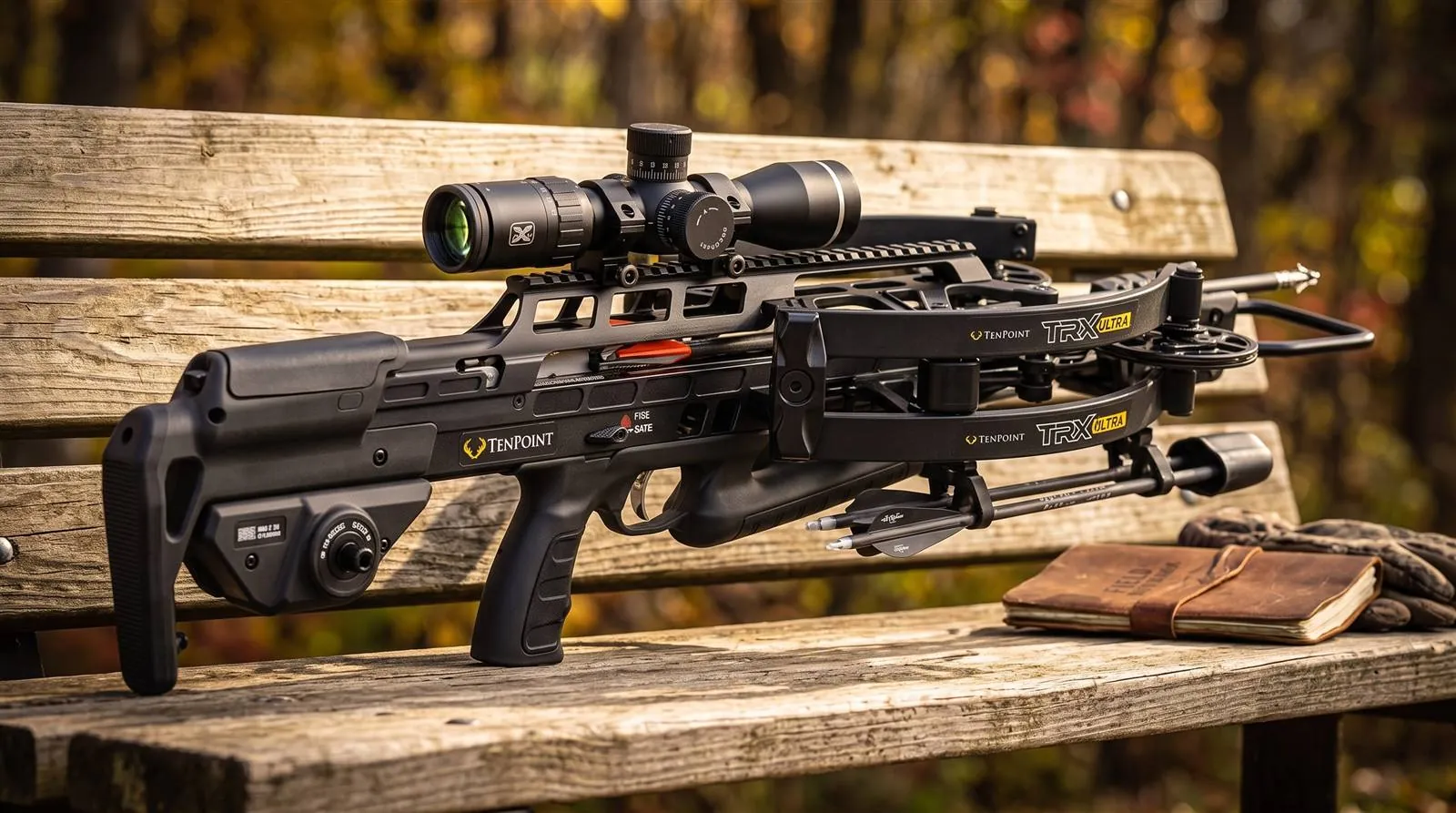
TenPoint TRX Ultra Review
Fastest crossbow in my tests at 511–517 FPS, with the tightest long-range groups near 100 yards. A flagship price that suits a narrow group of buyers.
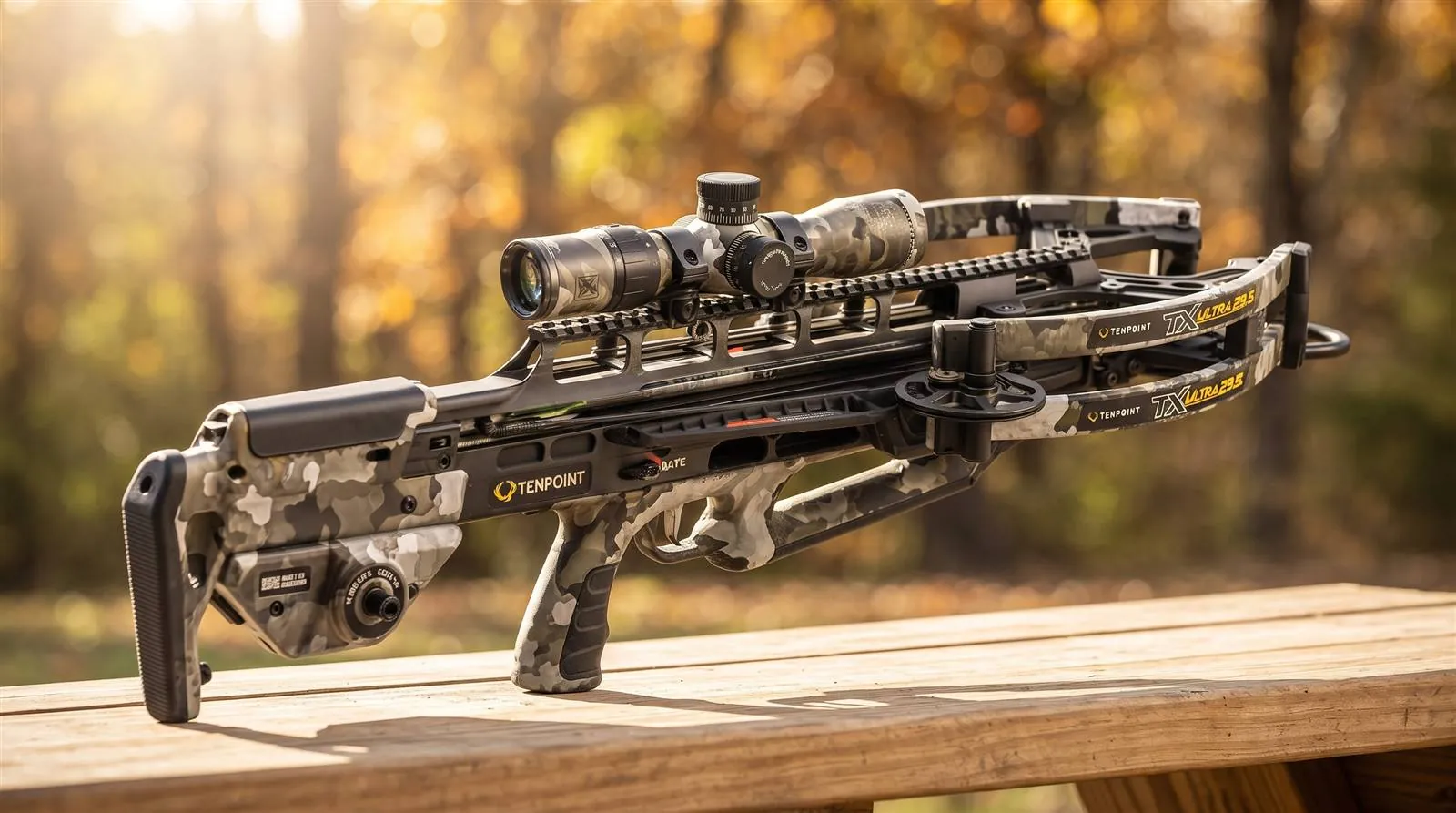
TenPoint TX Ultra 29.5 Review
Forward-draw crossbow measured at 456–463 FPS with tight 100-yard groups and a 6.5-inch cocked width. Speed and range in a narrow frame.
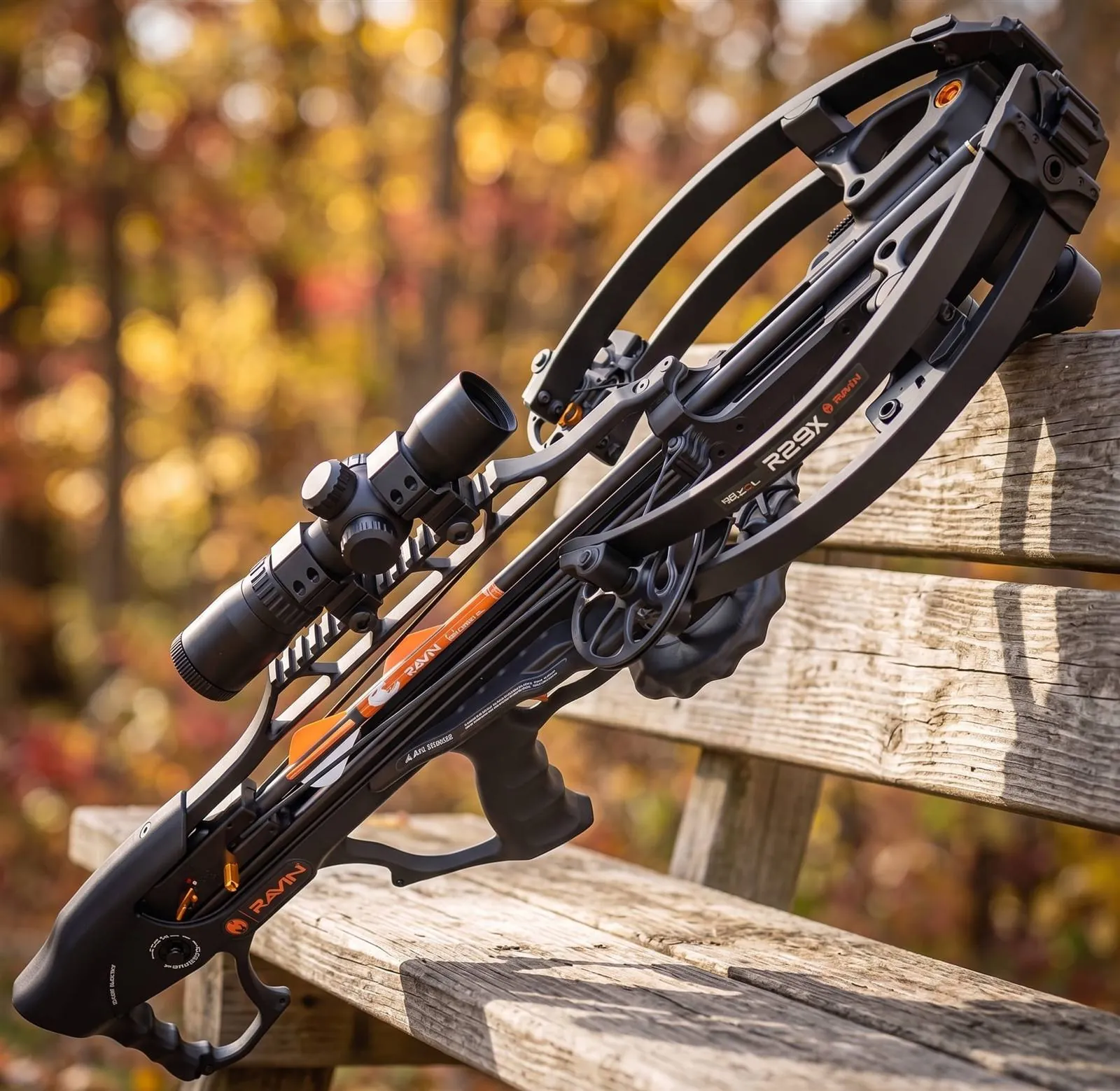
Ravin R29X Review
Compact, stealth-black crossbow producing 444–454 FPS and around 180 ft-lbs of kinetic energy, with an integrated quieter-cocking system.
Ready to compare models? Browse our crossbow bolts & arrows reviews, or see all reviews to see how each one measured up in testing.
More Crossbow Guides
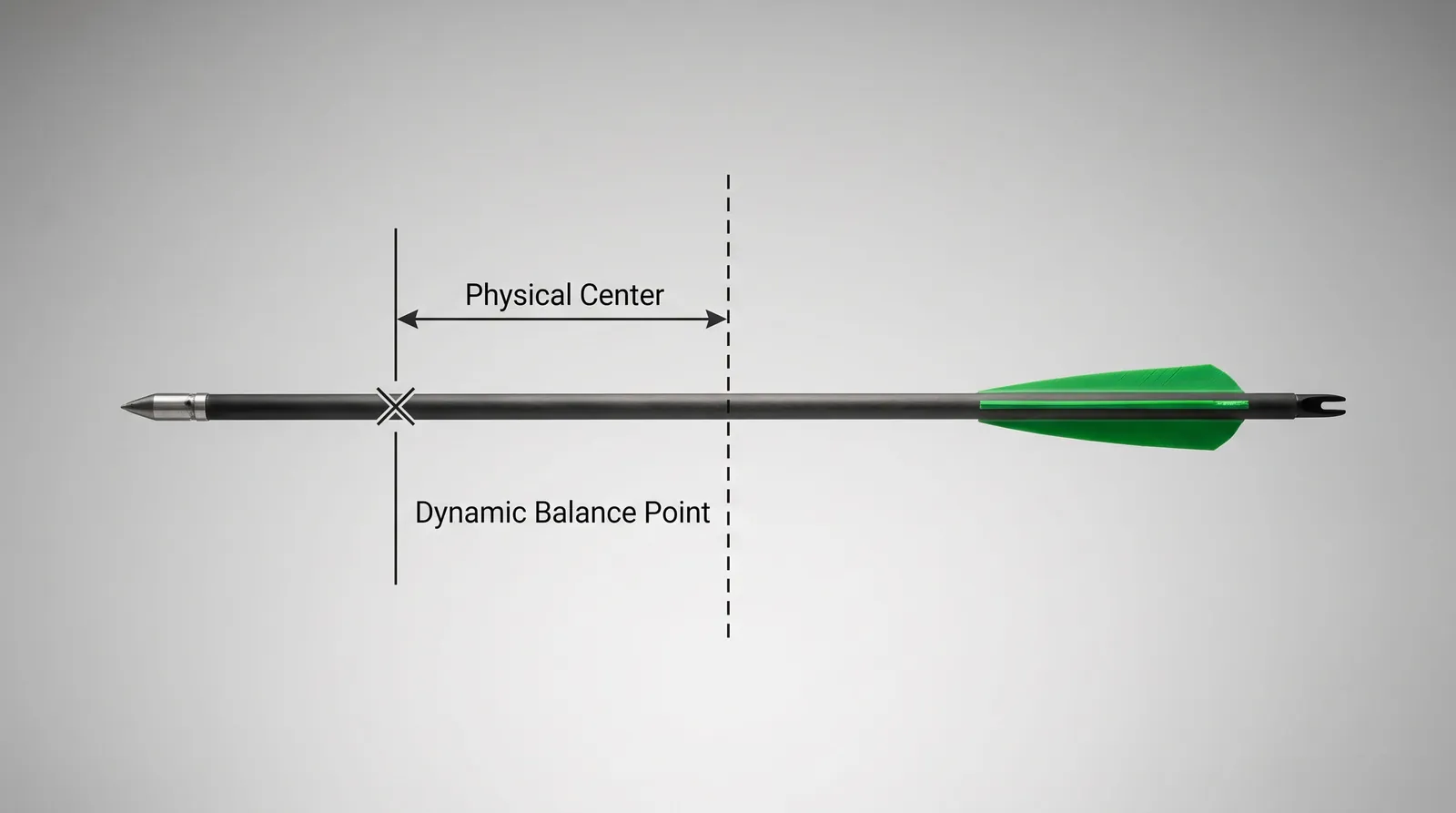
What Is FOC in Crossbow Bolts?
Front of center (FOC) explained for crossbow bolts: how to calculate it, what changes it, how it affects flight, and FOC figures from our bolt tests.
Read guideRavin R29X vs R26X
R26X for stands, blinds and shots inside 40 yards at $500 less; R29X for larger game and longer range, with 50 FPS and 38 ft-lbs more. Measured verdict for each hunter.
Read guide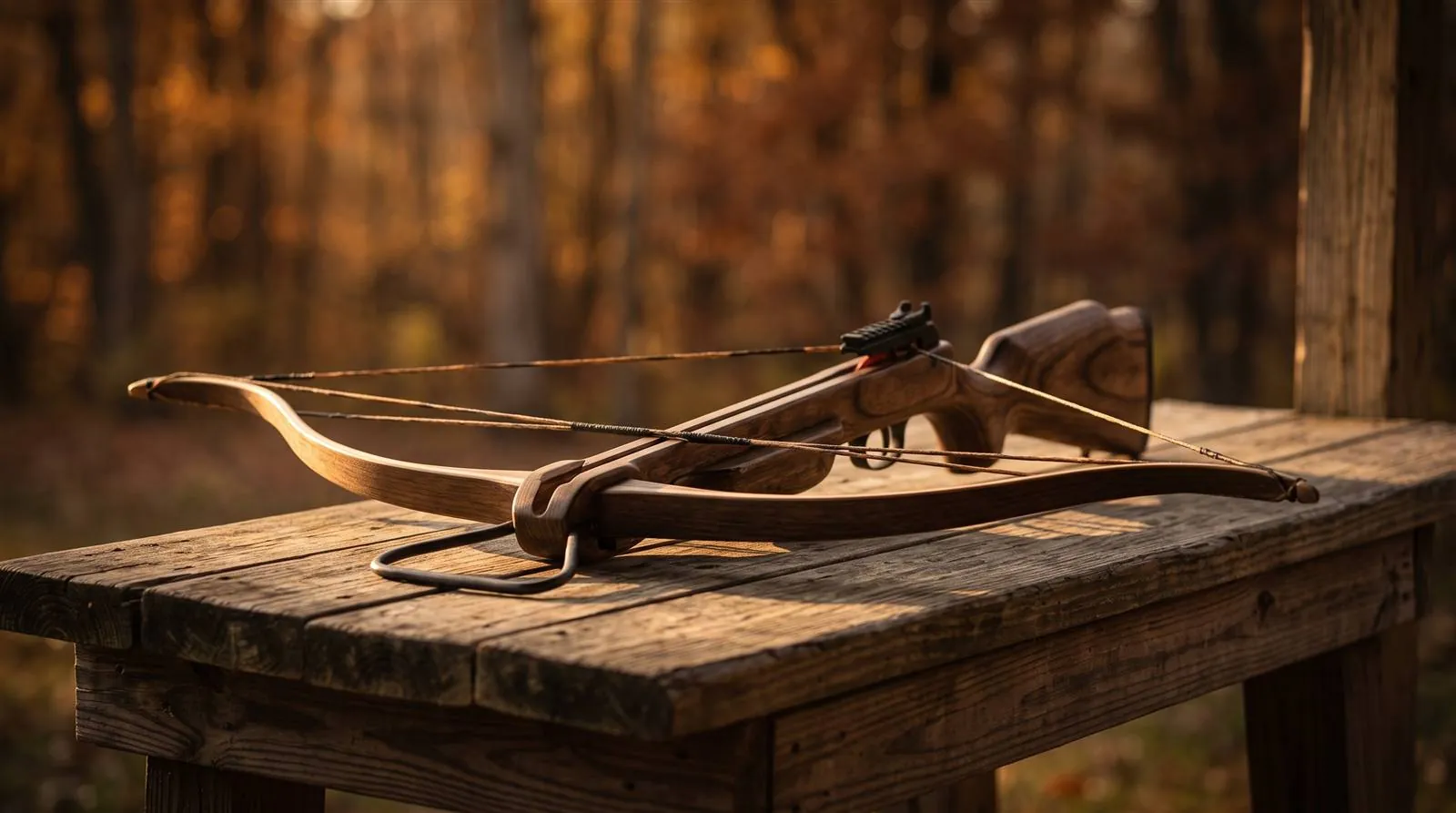
Recurve Crossbow Buying Guide
How to choose a recurve crossbow for hunting: who it suits, which specs to compare, maintenance, common mistakes and a decision checklist.
Read guide