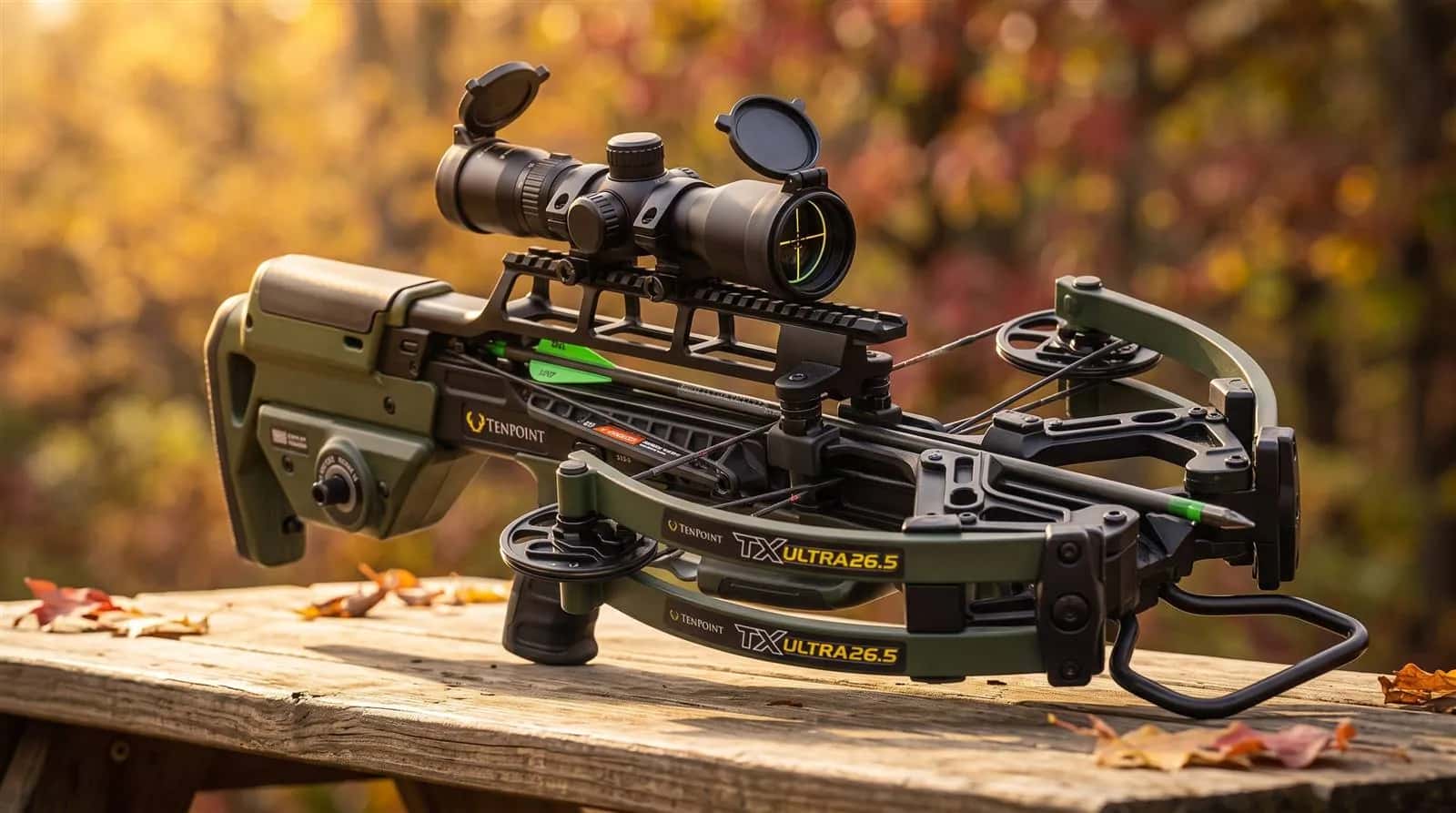
If your crossbow lives in a saddle, a pop-up blind or a box stand, the TenPoint TX Ultra 26.5 is the shortest forward-draw model TenPoint has built, and in my testing it earned its $1,999–$2,199 price for that job. It is rated at 410 FPS, and my chronograph agreed. The trade is top-end speed and long-range precision, which the company's larger models keep.
I tested it for three weeks. That meant chronographing speed, shooting groups, and running handling drills in a simulated ground blind and a saddle harness. Everything below comes from that work. If you are choosing between this model and the longer TX Ultra 29.5, the comparison section further down lays out exactly what each one gives up.
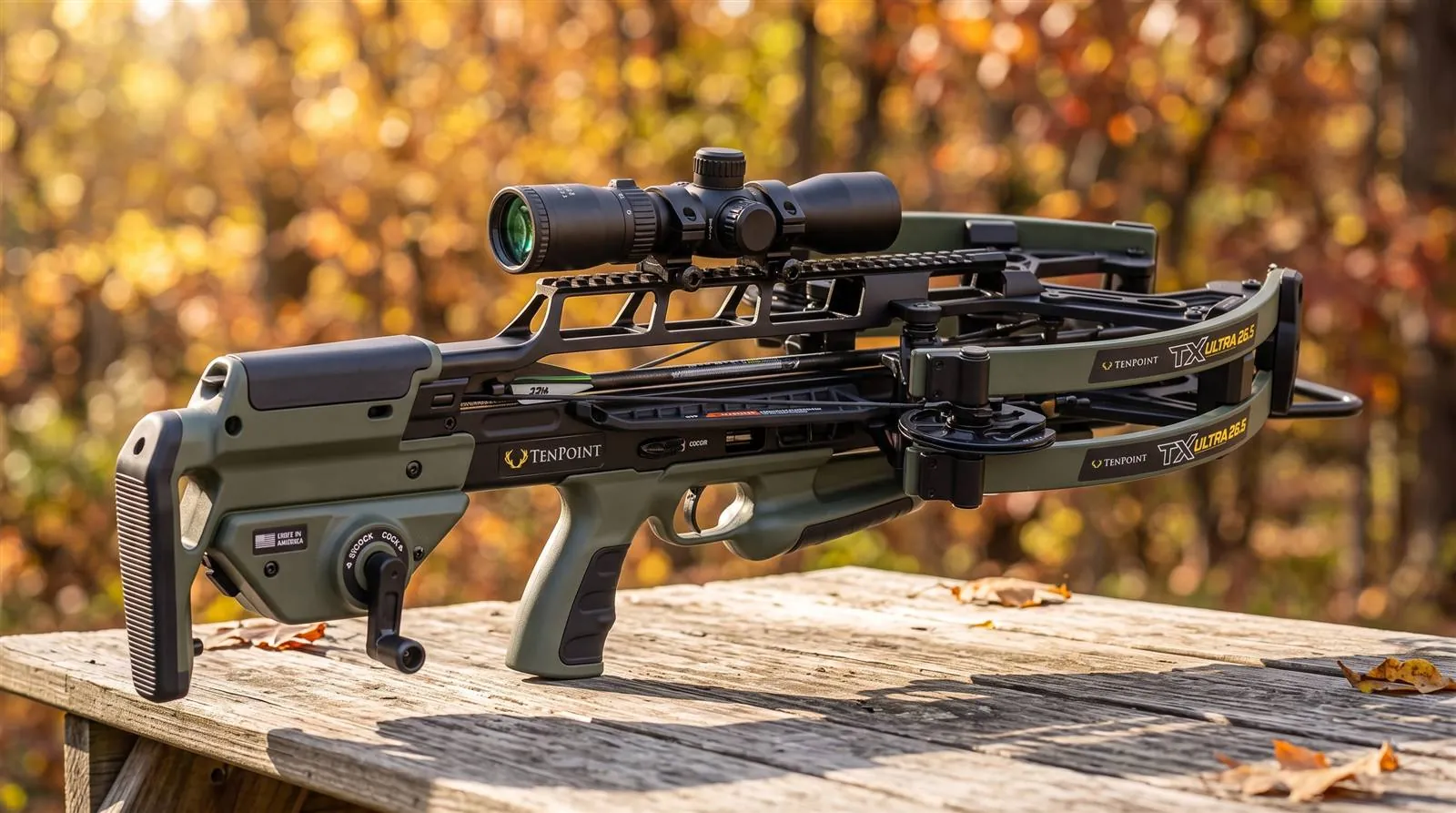
TenPoint TX Ultra 26.5 Specs and Price
The table below collects the numbers most buyers search for first. Speed is the manufacturer rating with a 400-grain bolt; my own chronograph results are in the strip above.
| Spec | Detail |
|---|---|
| Speed | 410 FPS (manufacturer rating, 400-grain bolt) |
| Draw Weight | 220 lbs |
| Power Stroke | 10.25" |
| Axle-to-Axle | 7" (cocked) / 10.75" (uncocked) |
| Overall Length | 26.5" (without foot stirrup) |
| Weight | 7.7 lbs |
| Trigger | TriggerTech Precision, 3-lb zero-creep break |
| Safety | Ambidextrous safety |
| Cocking | ACUslide MAXX integrated cocking/de-cocking |
| Scope | 100-yard RangeMaster illuminated scope (package-dependent) |
| Extras | Built-in string dampening system |
| Warranty | 5 years on limbs/cams; lifetime on trigger mechanism |
| Price | $1,999–$2,199 |
What I Like
- Speed that holds up on the chronograph. I measured 406–413 FPS across five shot strings with a 400-grain bolt, close to TenPoint's 410 FPS rating.
- One of the most maneuverable crossbows I have tested. At 7 inches axle-to-axle cocked and 26.5 inches overall, it handled easily from a saddle and from a tight ground blind.
- A rifle-grade trigger. The TriggerTech Precision trigger broke cleanly at 3 lbs and consistently on every test shot.
- Cocking without manual effort. ACUslide MAXX produced an identical draw length on every one of my 50+ test cycles.
- Lower shot noise. The built-in string dampening system measurably reduced noise compared with the non-dampened TenPoint models I have tested.
So far in testingIf a short frame is what you need, this is the combination to check: 406–413 FPS from a 7-inch cocked, 26.5-inch crossbow.
Potential Drawbacks
Every compact design gives something up. These are the compromises I would want to know about before paying $2,000 or more.
- Speed traded for compactness. 410 FPS is respectable, but TenPoint's TRX Ultra is rated at 515 FPS and the TX Ultra 29.5 at 460 FPS. If outright velocity decides your purchase, look there first.
- A serious price. At $1,999–$2,199 this is not an entry-level crossbow. The Titan X De-Cock covers most hunters' needs for far less when compactness is not the deciding factor.
- No realistic manual backup. At 220 lbs of draw weight, ACUslide MAXX is mandatory. If it fails in the field, you cannot hand-cock this crossbow.
- Less kinetic energy than the longer models. The 10.25-inch power stroke is short, so energy trails the longer-riser flagships. That matters most for larger game at extended range.
Key Features Explained
Why does the compact footprint matter?
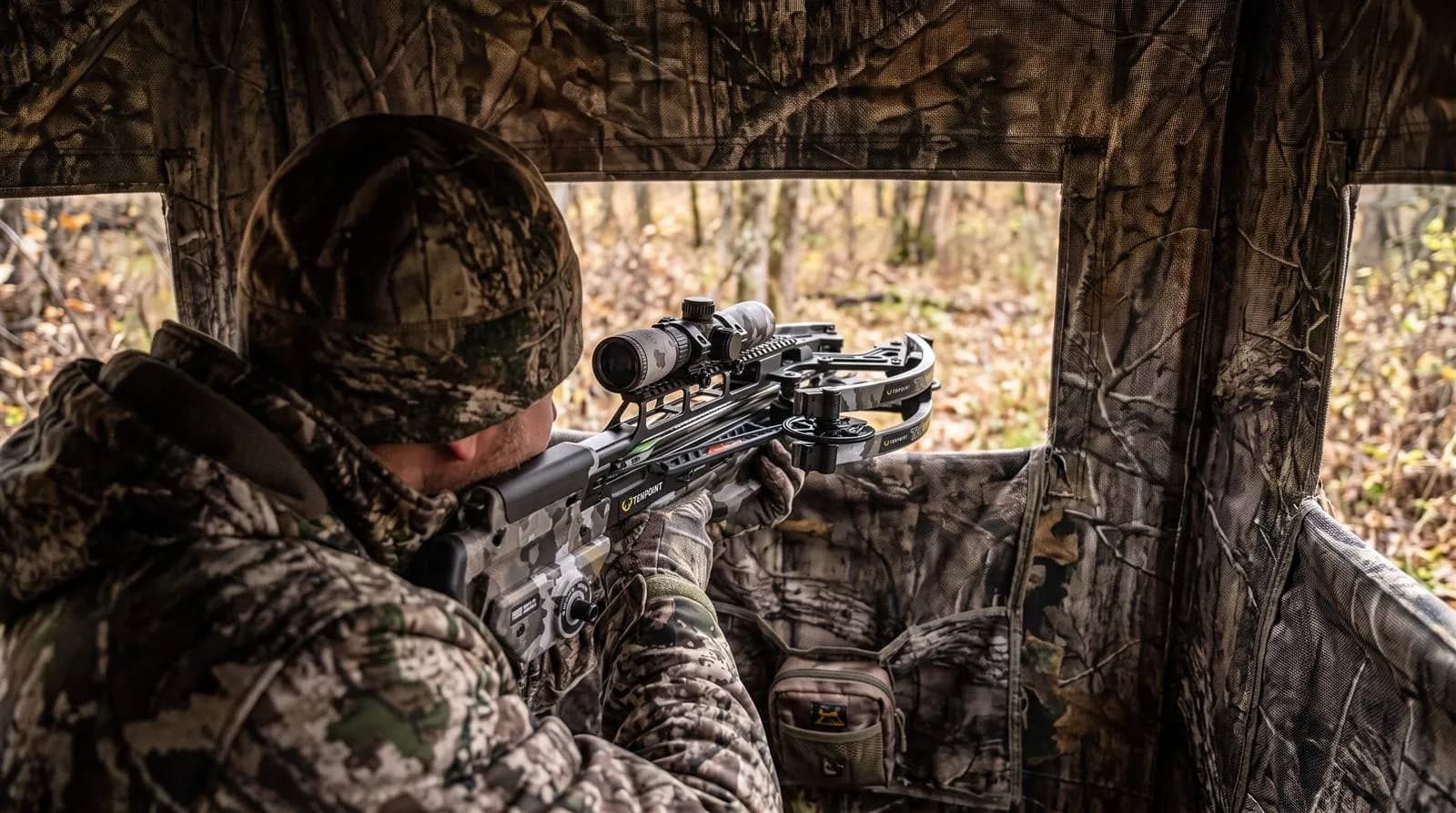
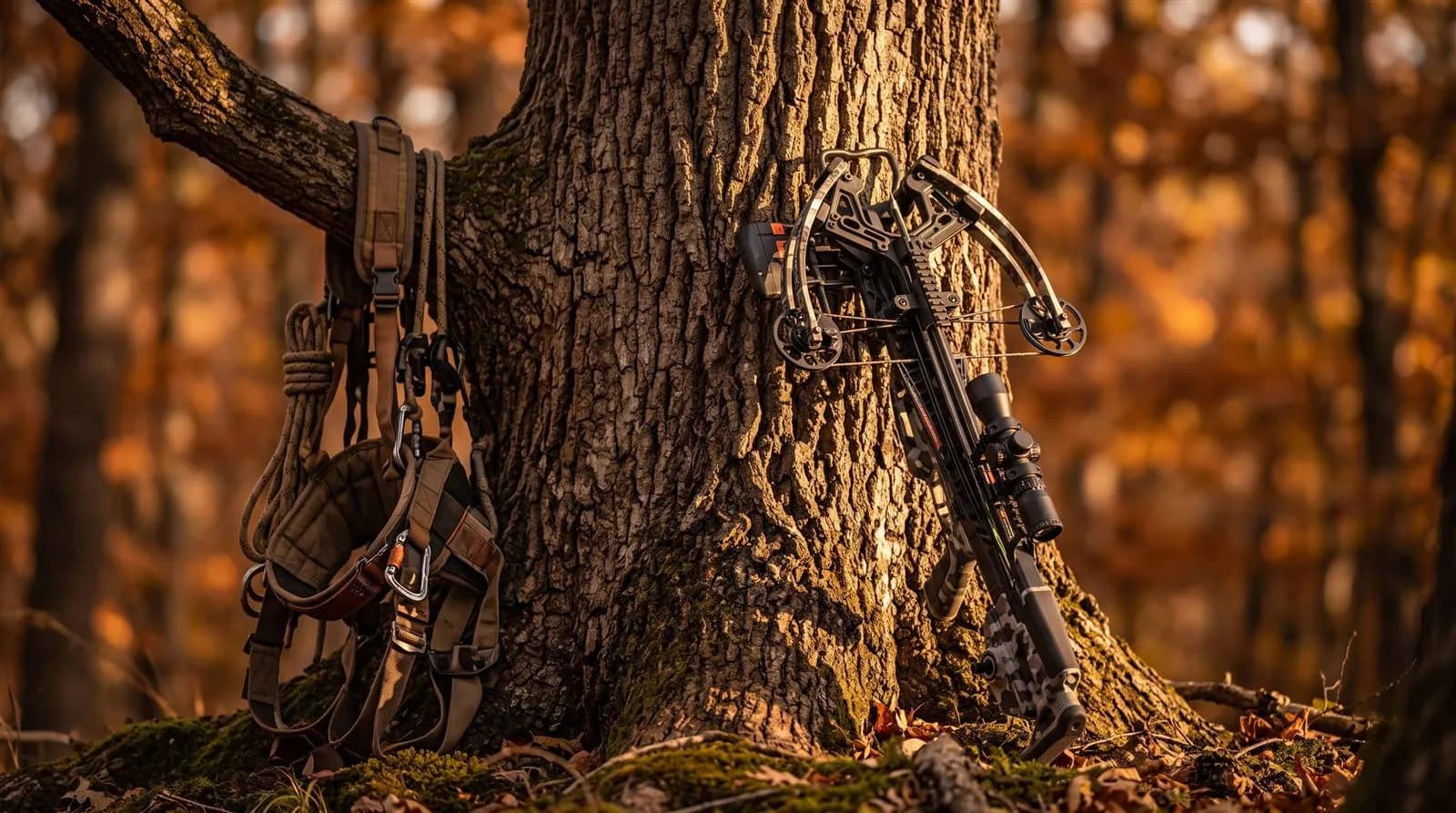
Many full-size crossbows measure 32 inches or more overall. That is fine in an open field and awkward in a saddle harness, a pop-up blind or a box stand. The TX Ultra 26.5 is short enough to swing through a narrow shooting window without catching on blind walls or stand rails, which I confirmed in my ground-blind sessions.
What is special about the TriggerTech Precision trigger?
The trigger broke cleanly and consistently on every sampled shot, with no perceptible creep before the break. It felt noticeably better than the sub-$1,500 crossbows I have tested. A crisp release matters more on a compact platform, because a shorter sight radius leaves less room to hide a heavy or gritty pull.
How does ACUslide MAXX cocking work in practice?
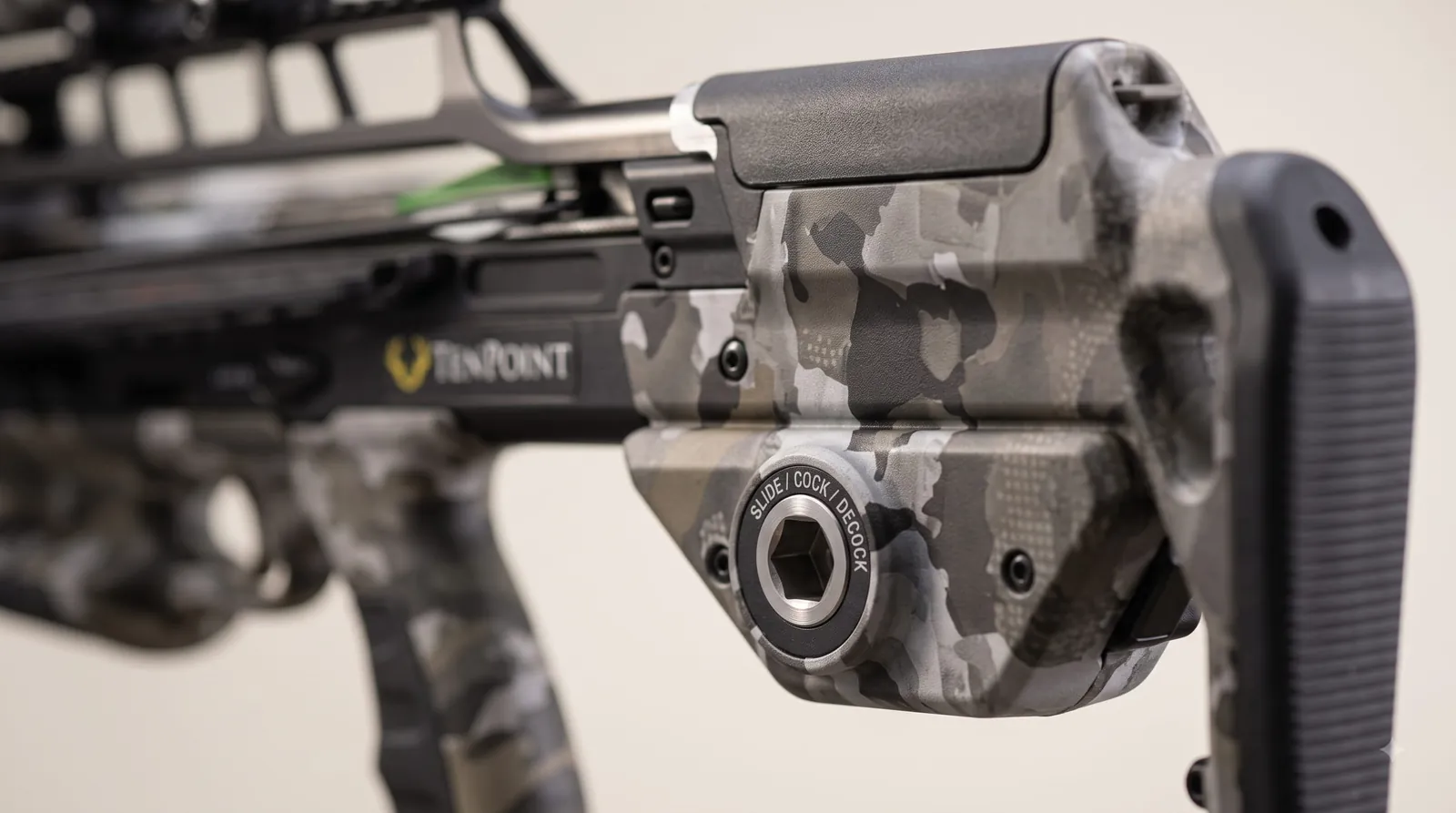
Hand cocking is not realistic at 220 lbs, so the crossbow depends on ACUslide MAXX working every time. Across my 50+ cycles, including a cold-morning check at 36°F, the system drew to an identical point on every cycle with no failed or inconsistent cocks. If you are new to integrated cocking, my how to cock a crossbow guide explains the difference between rope cockers, cranks and built-in systems.
Does the string dampening help?
With a decibel meter, I compared the TX Ultra 26.5 against a non-dampened TenPoint model at the same distance and measured a clear, audible reduction in shot noise. For a hunter in a blind or stand who hopes for a second opportunity, that is a practical benefit. For the axle-to-axle and power stroke numbers behind the speed trade-off, see the glossary.
Performance & Usability
How accurate is it at 60 yards?
Once zeroed with the RangeMaster scope, my 60-yard groups stayed inside a 2.5-inch cluster. That is slightly wider than I measured on TenPoint's longer-riser flagships, which fits the shorter sight radius of a compact design. At the distances most hunters shoot from a blind or saddle, typically under 40 yards, I did not notice the difference.
How loud is it?
Dampening is the main reason this model scored well for noise in my testing. It is still a 410 FPS crossbow, so expect it to be audible. The 29.5 I tested later was audibly louder at the same distance, which I cover in the comparison below.
How does it handle in tight spaces?
Side by side inside my simulated ground blind, the difference in usable shooting window was obvious. The TX Ultra 26.5 cleared the window with room to spare, while a full-length flagship needed repositioning to avoid the fabric on wider swings. That is the clearest practical advantage of the compact platform.
How long does setup take?
It ships mostly assembled. Scope mounting and a full 20-shot zeroing process took about 55 minutes, faster than a full-length flagship because the compact frame is easier to handle on the bench.
Care, storage and carry
Always use the ACUslide MAXX system; this crossbow is not designed to be hand-cocked. Wax the string and cables every 3–5 shooting sessions per TenPoint's guidance, and inspect the dampening components for wear alongside the string. My crossbow maintenance guide covers the routine in full. At 26.5 inches overall it fits a standard backpack-style case far more easily than any full-length crossbow I have tested, so it also suits hikers and backcountry hunters.
What's in the Box and What Else You Need
The spec table above lists what TenPoint puts on this crossbow: the ACUslide MAXX cocking system, an ambidextrous safety, the string dampening system and a 100-yard RangeMaster illuminated scope, though the scope depends on the package. I would not assume anything beyond that, so check your listing for the quiver, bolts and accessories before you order.
Plan to budget for these separately if your package does not cover them:
- Bolts and tips. Confirm the bolt length and weight range in the manual before choosing a bolt. My crossbow bolt selection guide explains the fit questions.
- Broadheads or field points. Sold separately; practice with field points that match your hunting tips.
- String wax and a case. Waxing is part of the routine below, and a case protects the scope in transit.
Scope compatibility
The scope named in the spec is TenPoint's RangeMaster line, which my RangeMaster 100 review covers. In that review the scope is rated for 380–505 FPS crossbows, and this crossbow's 406–413 FPS sits inside that band. If you prefer the wider band of the EVO-X Marksman Elite, check your rail and mounting setup before you buy it separately.
Setup and first session
In practice I would run the first session in this order, and I would follow your manual wherever it differs:
- Inspect the crossbow out of the box, including the string, cables and dampening components.
- Mount the scope and level it to the rail.
- Read the manual's cocking and de-cocking steps, then practice them with no bolt loaded.
- Shoot a few field-point bolts to settle the zero, then adjust the scope.
- Finish with a group at the distance you actually hunt, so you know your real number.
Budget the better part of an hour on day one, and do not hunt with the crossbow until you have confirmed your zero at your hunting distance. My scope sighting guide walks through the routine.
Warning signs to act on
| What you notice | Likely cause | What I would do |
|---|---|---|
| Groups open up or shift | Loose scope mounting, worn string or serving, a damaged bolt | Check mounting screws, inspect the string and replace any bolt with a cracked shaft or damaged nock |
| Cocking feels uneven or the slide hesitates | A dry or dirty rail, or a mechanism fault | Stop, do not fire, clean and lubricate per the manual, and contact a TenPoint dealer if it persists |
| String shows fuzz or fraying | Overdue waxing or wear | Wax on the 3–5 session cycle TenPoint recommends and replace the string if wear continues |
| Louder shot than usual | Worn or loose dampening components | Inspect the dampening parts alongside the string |
None of these happened during my testing, which included more than 50 cocking cycles. They are the checks I would run on any crossbow of this type.
Who Is the TX Ultra 26.5 For?
Deciding between speed and maneuverability? My compound vs. recurve crossbow guide covers the fundamentals, and the compound crossbows hub lets you compare more options at every price tier.
Best suited to:
- A saddle hunter, or someone regularly shooting from tight ground blinds and confined box stands
- A buyer who wants TenPoint's current trigger and ACUslide MAXX cocking without full flagship pricing
- A hunter who values lower shot noise and will trade some top-end speed for it
Consider something else if:
- You need maximum speed or long-range performance
- You are budget-constrained
- You never shoot from a confined position, in which case the extra length of a bigger crossbow costs you nothing
- You want a crossbow you could cock by hand if the mechanism ever failed
How the TX Ultra 26.5, TX Ultra 29.5 and TRX Ultra Relate
These three share a name family, the ACUslide MAXX cocking system, a TriggerTech trigger and the same warranty terms in my reviews (5 years on limbs and cams, lifetime on the trigger mechanism). They differ in length, draw weight, power stroke, speed and price. Think of them as three steps up the same ladder: each step buys speed and long-range energy, and costs money and some compactness.
| Item | TX Ultra 26.5 | TX Ultra 29.5 | TRX Ultra |
|---|---|---|---|
| Rated speed | 410 FPS | 460 FPS | 515 FPS |
| My chronograph | 406–413 FPS | 456–463 FPS | 511–517 FPS |
| Draw weight | 220 lbs | 350 lbs | 360 lbs |
| Power stroke | 10.25" | 13.5" | 16.25" |
| Axle-to-axle, cocked | 7" | 6.5" | 6" |
| Weight | 7.7 lbs | 8 lbs | 8.4 lbs |
| Price | $1,999–$2,199 | $2,499–$2,599 | $3,495–$3,515 |
| My rating | 4.6 | 4.8 | 4.9 |
| Where I would use it | Saddle, tight blinds, short shots | Blinds and stands, plus reach to extended range | Long-range work near 100 yards |
Two things stand out. First, the cocked width shrinks as you move up the line even though overall size and speed grow, so "bigger" does not mean "wider" here. Second, the 26.5 is the only one of the three with a carry weight under 8 lbs, which matters over a long carry. If you shoot inside 40 yards from a confined position, the 26.5 already does what you need. If you routinely look past 60 yards, step up. My axle-to-axle and power stroke glossary entries explain why those two columns drive the speed gap.
TX Ultra 26.5 vs 29.5 and Other Alternatives
The two TX Ultra models share a name and a cocking system but are different crossbows. The 26.5 is shorter, cheaper and quieter. The 29.5 is faster and stores far more energy. Here is how the nearest options compare, using the figures from each review.
| Model | Overall length | Rated speed | Price | My rating | Buy |
|---|---|---|---|---|---|
| TX Ultra 26.5 | 26.5" | 410 FPS | $1,999–$2,199 | 4.6 | |
| TX Ultra 29.5 | 29.5" | 460 FPS | $2,499–$2,599 | 4.8 | Check price on Amazon |
| TRX Ultra | 6" cocked axle-to-axle | 515 FPS | $3,495–$3,515 | 4.9 | Check price on Amazon |
| Ravin R26X | 26" | 400 FPS | $1,999–$2,199 | 4.7 | Check price on Amazon |
| Ravin R10 Pro XK7 | 32.5" | 420 FPS | $1,499–$1,799 | 3.9 | Check price on Amazon |
| Titan X De-Cock | 33" | 400 FPS | $799–$899 | 4.5 | Check price on Amazon |
| Excalibur Hybrid X | 29.6" | 435 FPS | $1,965–$2,099 | 4.3 | Check price on Amazon |
The Ravin R26X is the closest like-for-like rival: nearly the same length and price, with a 12 lb felt cocking effort from its HeliCoil system. If you are still weighing the two brands, my Ravin vs TenPoint guide compares cocking systems, noise and ownership costs. The Ravin R10 Pro XK7 costs less but is a longer crossbow at 32.5 inches.
Read nextCompare the two brandsSee how Ravin and TenPoint differ on cocking, noise, footprint and ownership cost before you commit.
For a full side-by-side of the two TX Ultra models, read my TenPoint TX Ultra 26.5 vs 29.5 comparison.
Value for Money
At $1,999–$2,199, the TX Ultra 26.5 sits well below the TRX Ultra at $3,495–$3,515. The TRX Ultra is faster and more accurate at extended range, but it costs roughly $1,300–$1,500 more and does not share the 26.5's maneuverability. The TX Ultra 29.5 costs about $500 more and is 50 FPS faster by rating.
The value case held up in my testing for the specific buyer this crossbow is built for. The chronographed speed, the TriggerTech trigger and the ground-blind advantage justify the price if your hunting is cramped. It is not the crossbow to buy for outright speed or the lowest price.
A worked example with the numbers
Step by step, using the rated speeds and the prices listed in my reviews:
- The 29.5 costs $400–$500 more than the 26.5 ($2,499 minus $1,999, or $2,599 minus $2,199) for 50 more rated FPS. That is roughly $8–$10 per extra FPS.
- The TRX Ultra costs $1,316–$1,496 more than the 26.5 for 105 more rated FPS, or about $13–$14 per FPS.
- Kinetic energy is mass times speed squared divided by 450,240. With the 400-grain bolt at the 410 FPS rating, that works out to about 149 ft-lbs. That is a calculation from the rating, not a measurement, and the kinetic energy calculator will run it for your own bolt. The 29.5 review lists 193 ft-lbs, but with a 410-grain bolt, so the gap is a little over 40 ft-lbs.
If your shots stay under 40 yards, that energy gap rarely decides anything. If you hunt big game at the edge of your range, it may.
At its rated 410 FPS, the kinetic energy calculator shows what the TenPoint TX Ultra 26.5 delivers with the bolt weight you plan to shoot, and the bolt drop chart estimates how far each reticle mark falls at that speed. The cocking effort estimator compares its 220-lb draw weight by hand, rope and crank. If you plan to replace the scope, the scope speed matcher lists reviewed scopes calibrated for 410 FPS. Every other model I have tested in this class is compared on the compound crossbows page.
Where the TenPoint TX Ultra 26.5 ranks
The TenPoint TX Ultra 26.5 earned a place in Best Crossbows of 2026: Tested Picks (#3), Best Compact Crossbows 2026, Tested (#2) and Best Crossbows for Deer Hunting 2026 (#5), where it is scored against every other model I tested for that use. For a direct head-to-head, see TenPoint TX Ultra 26.5 vs 29.5, Wicked Ridge vs TenPoint, Ravin vs TenPoint Crossbows Compared and Crossbow vs Compound Bow Compared. It also comes up in How Fast Does a Crossbow Bolt Travel? and How Much Does a Crossbow Cost?.
Final Verdict
TenPoint TX Ultra 26.5
4.6 / 5 — Is it worth buying?
The TX Ultra 26.5 is among the most maneuverable crossbows I have tested, and my ground-blind and saddle trials showed that its 26.5-inch frame is a practical advantage. Chronographed speed matched TenPoint's 410 FPS rating and the string dampening reduced shot noise. The trade-off is top-end speed and long-range precision compared with the flagships. See how it stacks up in my best crossbows roundup.
Best for
Saddle hunters, ground blind and confined-stand shooters, hunters who want current TenPoint technology without flagship pricing
Skip if
You need maximum speed or long-range performance, or you are budget-constrained
Score breakdown
- Speed (FPS)4.7/5
- Accuracy4.7/5
- Build Quality4.8/5
- Ease of Cocking5.0/5
- Value for Money3.8/5
- Noise Level4.8/5
- Speed
- 410 FPS
- Draw weight
- 220 lbs
- Weight
- 7.7 lbs
- Length
- 26.5" overall
Typical price
$1,999–$2,199
Frequently Asked Questions
Is the TenPoint TX Ultra 26.5 worth it?
For saddle hunters and anyone who regularly shoots from tight blinds or confined stands, yes. My maneuverability testing showed a practical advantage over full-length crossbows in cramped positions. Hunters who do not need that compactness may get more performance per dollar from the Titan X De-Cock.
How fast is the TenPoint TX Ultra 26.5 in real testing?
My chronograph measured 406–413 FPS across five shot strings with a 400-grain bolt. That is close to TenPoint's 410 FPS rating, so the advertised speed is realistic for this crossbow.
What is the difference between the TX Ultra 26.5 and the TX Ultra 29.5?
The 26.5 is 26.5 inches overall, rated at 410 FPS and priced at $1,999–$2,199. The 29.5 is 29.5 inches overall, rated at 460 FPS, and costs $2,499–$2,599. The 26.5 is the more compact and quieter of the two.
Is the TX Ultra 26.5 fast enough for hunting big game?
410 FPS with a quality broadhead is sufficient at typical hunting distances under 40–50 yards. The short power stroke gives it less energy than the longer flagships, so check your local regulations and keep shots within a comfortable range.
How is the TX Ultra 26.5 different from the TenPoint TRX Ultra?
The TRX Ultra is TenPoint's reverse-draw flagship, rated at 515 FPS for extended-range accuracy. The TX Ultra 26.5 is a forward-draw compact model that trades some speed and long-range precision for a much shorter footprint and a lower price.
Does the built-in string dampening reduce noise?
In my testing, yes. A decibel meter showed a clear, audible reduction in shot noise compared with a non-dampened TenPoint model at the same distance. It is still a fast crossbow and remains audible.
Can I cock the TX Ultra 26.5 by hand?
No. At 220 lbs of draw weight, it is designed around the ACUslide MAXX system, and there is no realistic manual option. It completed more than 50 cycles for me without a failed cock.
What comes with the TenPoint TX Ultra 26.5 and what else do I need to buy?
The spec lists ACUslide MAXX cocking, an ambidextrous safety, string dampening and a 100-yard RangeMaster illuminated scope, depending on the package. Check your listing for bolts and a quiver, and budget for broadheads, string wax and a case.
How long does it take to set up and sight in the TX Ultra 26.5?
It ships mostly assembled. My scope mounting and 20-shot zeroing took about 55 minutes. Allow an hour for day one, and confirm your zero at your actual hunting distance before relying on it.
Is the TX Ultra 26.5 loud, and does the dampening matter?
It is quieter than the 29.5 and than the non-dampened TenPoint model I compared it with, but it is still a 410 FPS crossbow and clearly audible. The dampening helps most when a quieter shot matters for a follow-up opportunity.
Should I buy the TX Ultra 26.5, 29.5 or TRX Ultra?
Buy the 26.5 if compactness and price matter most, the 29.5 if you want 460 FPS and more reach, and the TRX Ultra only if you shoot near 100 yards. The comparison table above sets length, power stroke, speed and price side by side.
Related Reviews
 4.8
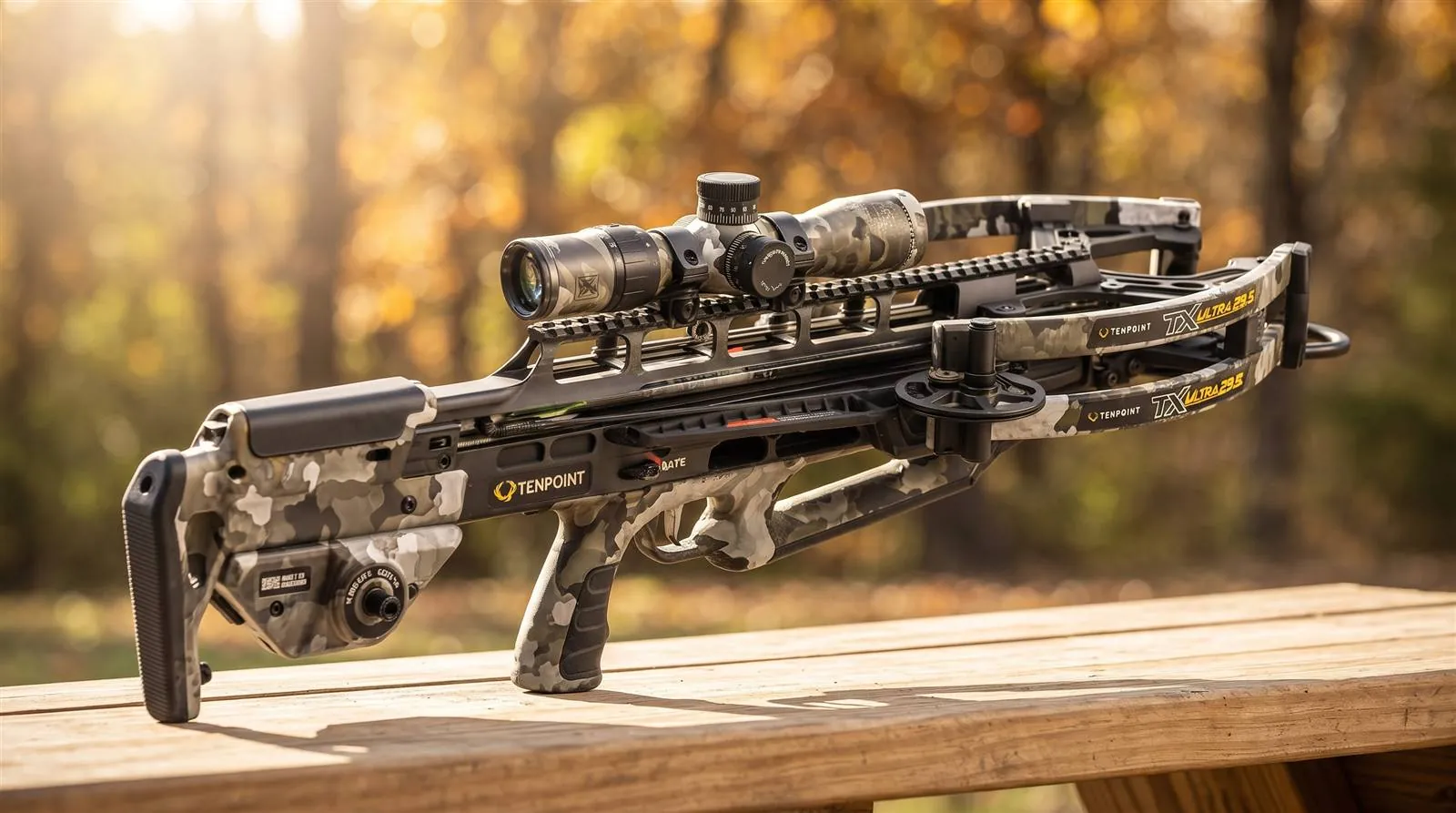
TenPoint TX Ultra 29.5 Review 2026
Forward-draw crossbow measured at 456–463 FPS with tight 100-yard groups and a 6.5-inch cocked width. Speed and range in a narrow frame.
Read review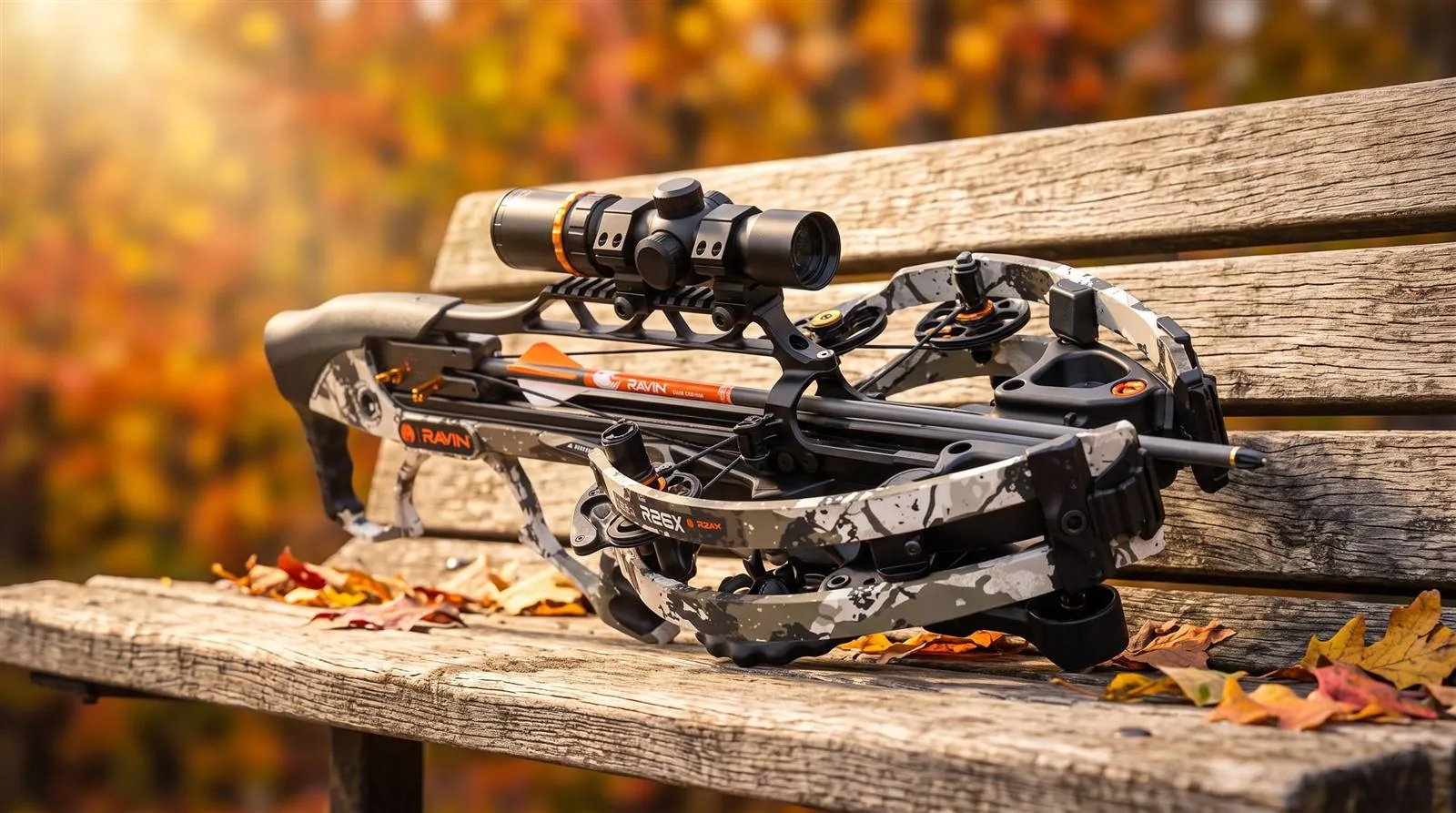 4.7
Ravin R26X Review 2026: 400 FPS, Tested
Compact compound crossbow measured at 395–403 FPS, with a HeliCoil cam and noticeably quieter cocking than crank rivals. Built for treestands and blinds.
Read review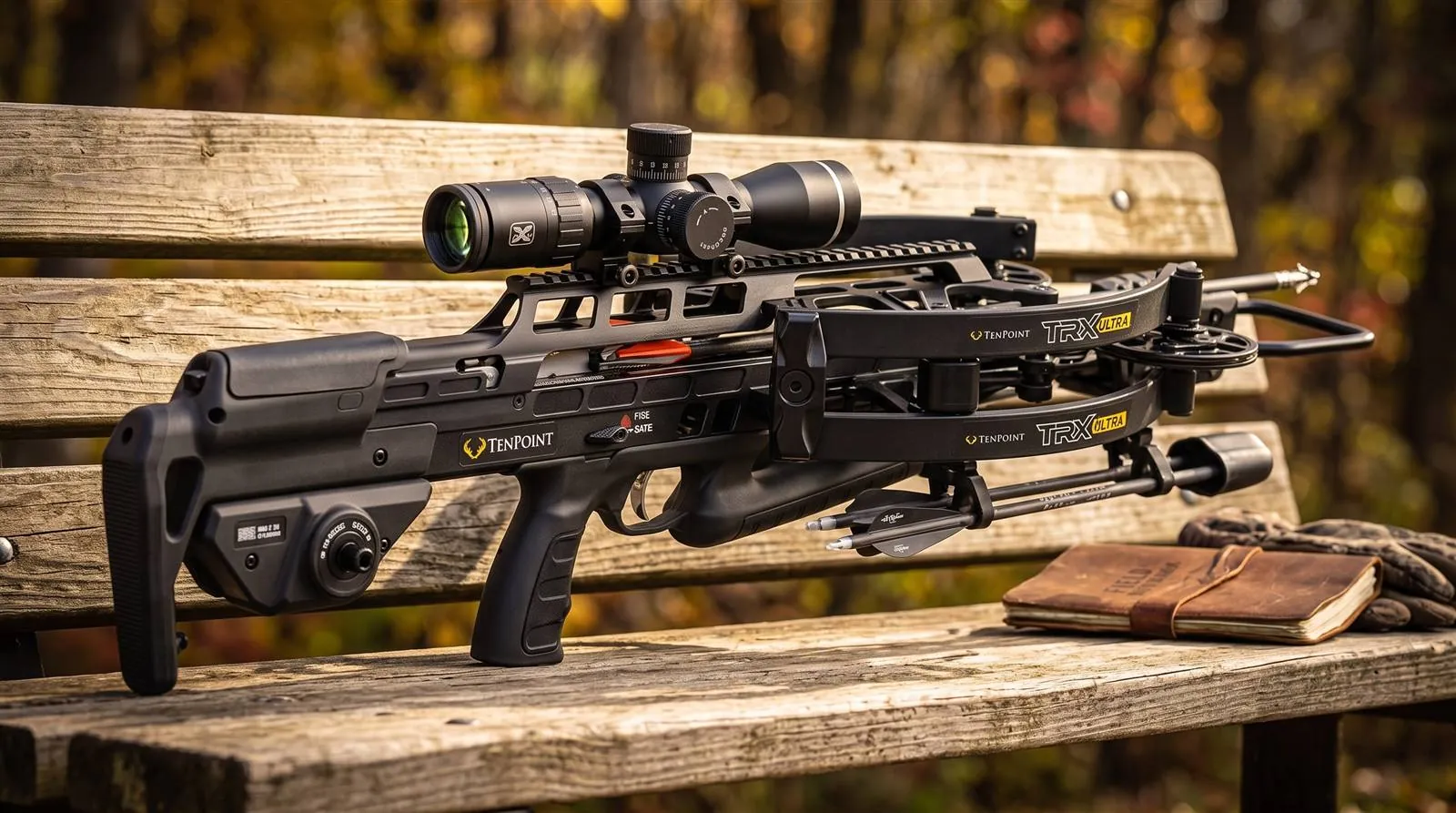 4.9
TenPoint TRX Ultra Review 2026
Fastest crossbow in my tests at 511–517 FPS, with the tightest long-range groups near 100 yards. A flagship price that suits a narrow group of buyers.
Read review