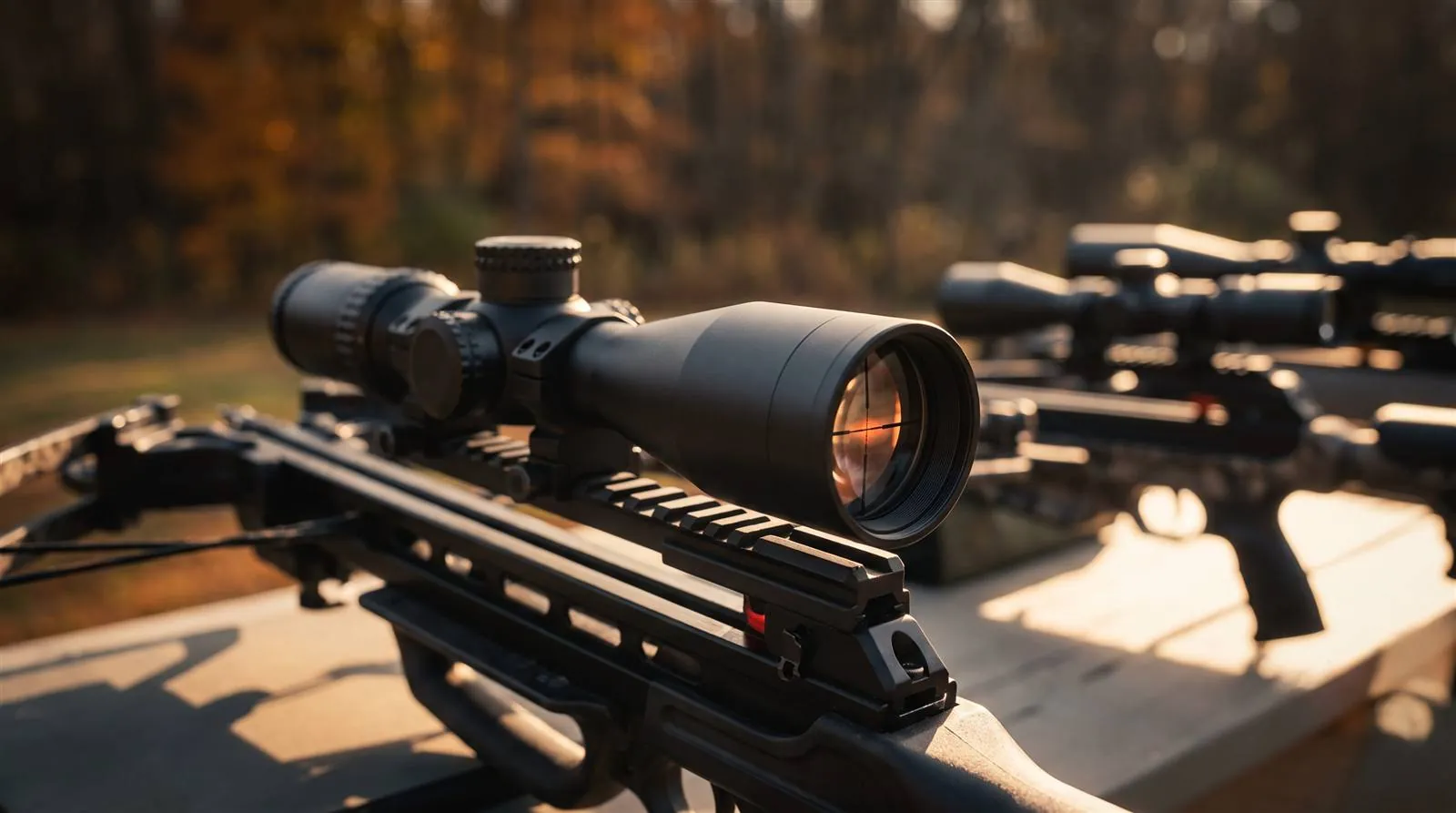
Crossbow Scopes & Optics Reviews 2026
A crossbow scope turns a bolt's arc into a repeatable aim point. This hub explains reticle styles, speed matching, eye relief and price tiers, then compares nine reviewed scopes so you can decide what your crossbow actually needs.
- 4.4/5
- Average rating
Pre-purchase checklist
- Chronograph or look up your crossbow's real speed with the bolt you will use.
- Check that speed against the reticle's rated band.
- Confirm rail type and ring height against your crossbow.
- Decide whether you need illumination, ranging, or neither.
- Check eye relief against your cheek weld and the crossbow's string position.
- Budget for batteries, rings and a lens cover or flip caps.
- Plan a full range session using the sighting guide.
- Verify local rules on hunting equipment with your wildlife agency before relying on electronics such as rangefinders or recording features.
Start here
Ranked and compared
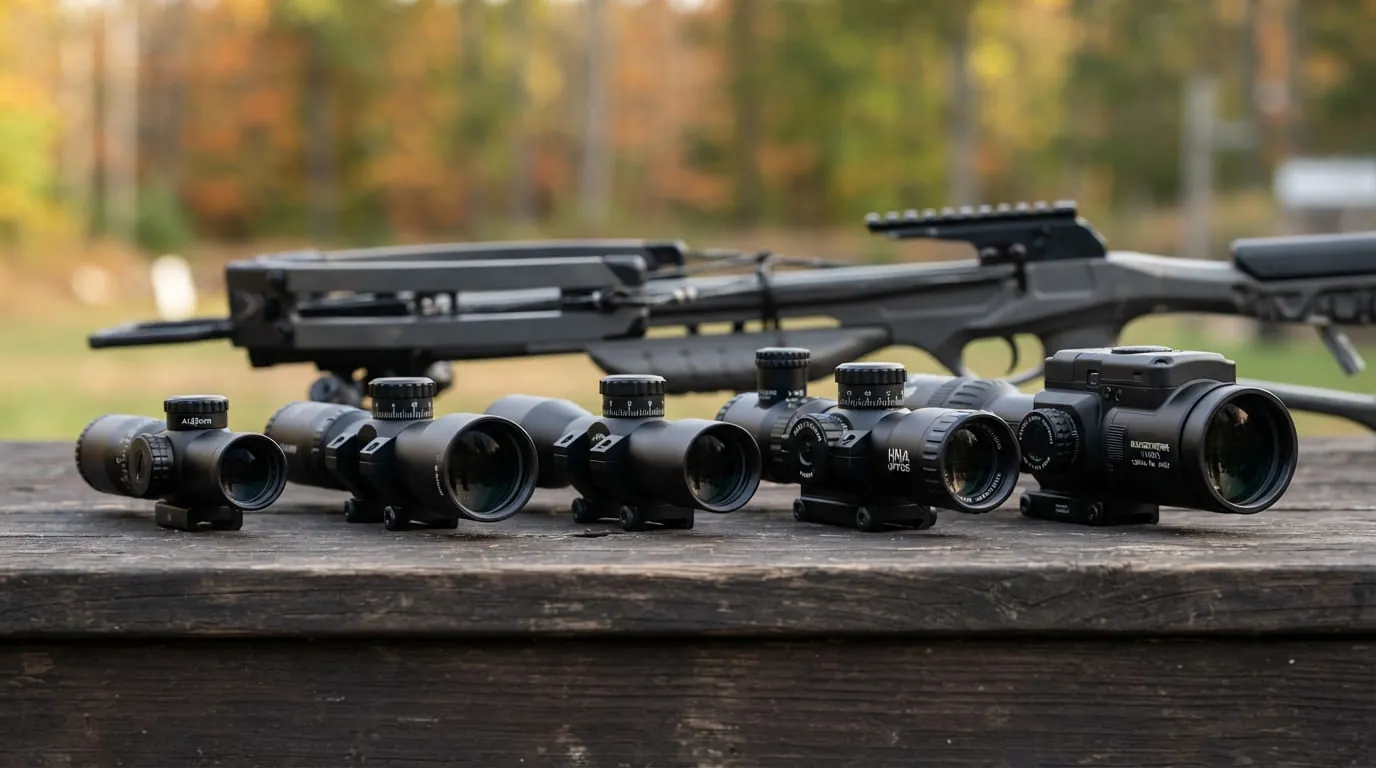 Ranked & comparedBest Crossbow Scopes of 2026Crossbow scopes compared from $45 fixed optics to laser rangefinding and digital models, with reticle, magnification and speed range for each.See the rankings
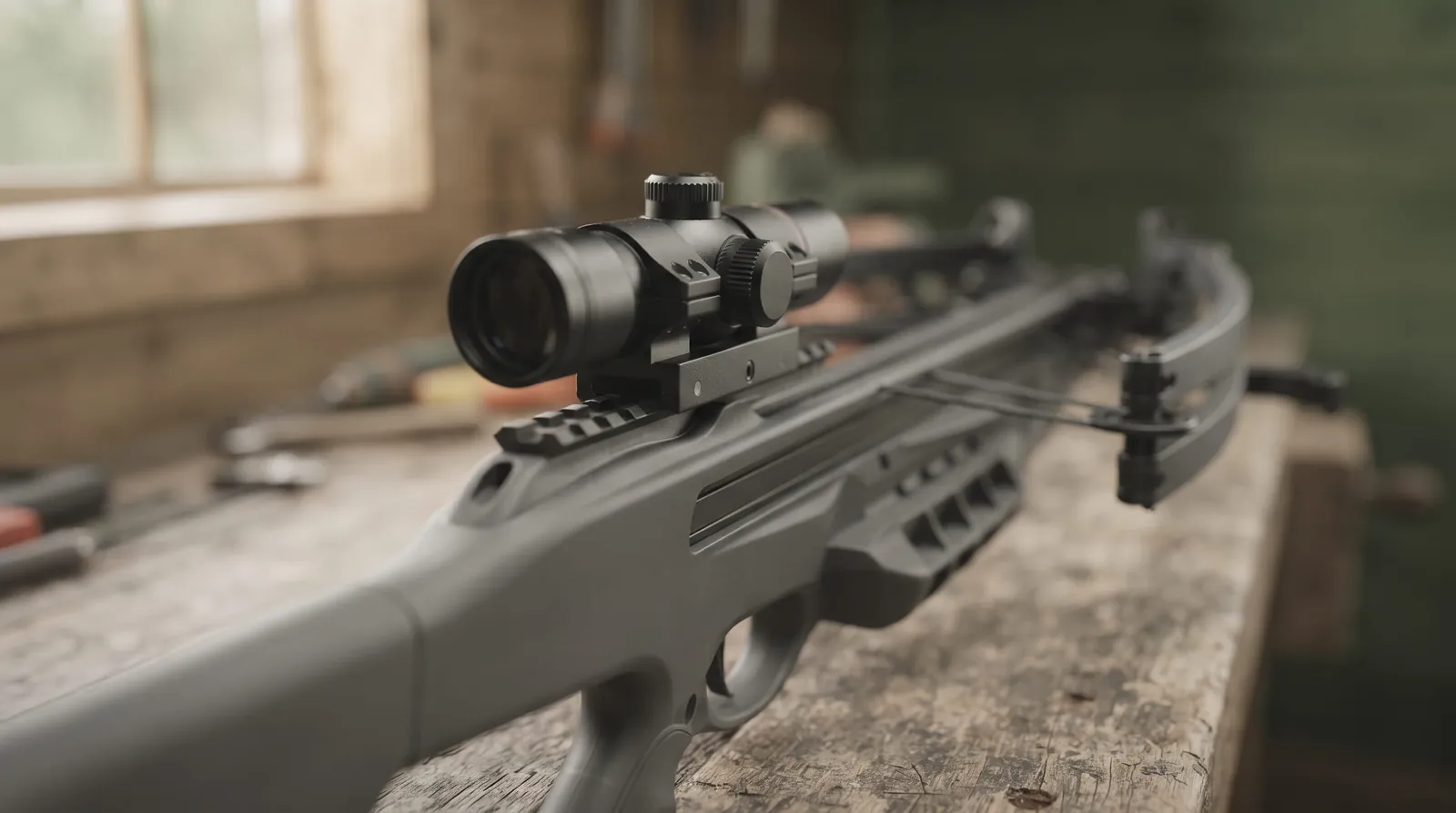 Buying guideHow to Choose a Crossbow ScopeSeven steps to choosing a crossbow scope: intended use, reticle type, magnification, eye relief, focal plane, parallax, and matching your bolt speed.Read the guide
Shortcuts
Match your situation
- 1You want the top-scoring modelEVO-X Marksman Elite4.7/5, $479–$499Jump to review
- 2You want to spend as little as possibleCVLIFE 3-9x40 Scope$45–$55, rated 4.1/5Jump to review
- 3You want the best score under $1,000TenPoint RangeMaster 1004.6/5 at $295–$355Jump to review
- 4You carry it all dayTenPoint Vision HD1.15 lbs (18.4 oz)Jump to review
Every model, one method
All 9 scopes reviews
Highest rated first. Scores weigh measured results against price and intended use; each review names who should look elsewhere.
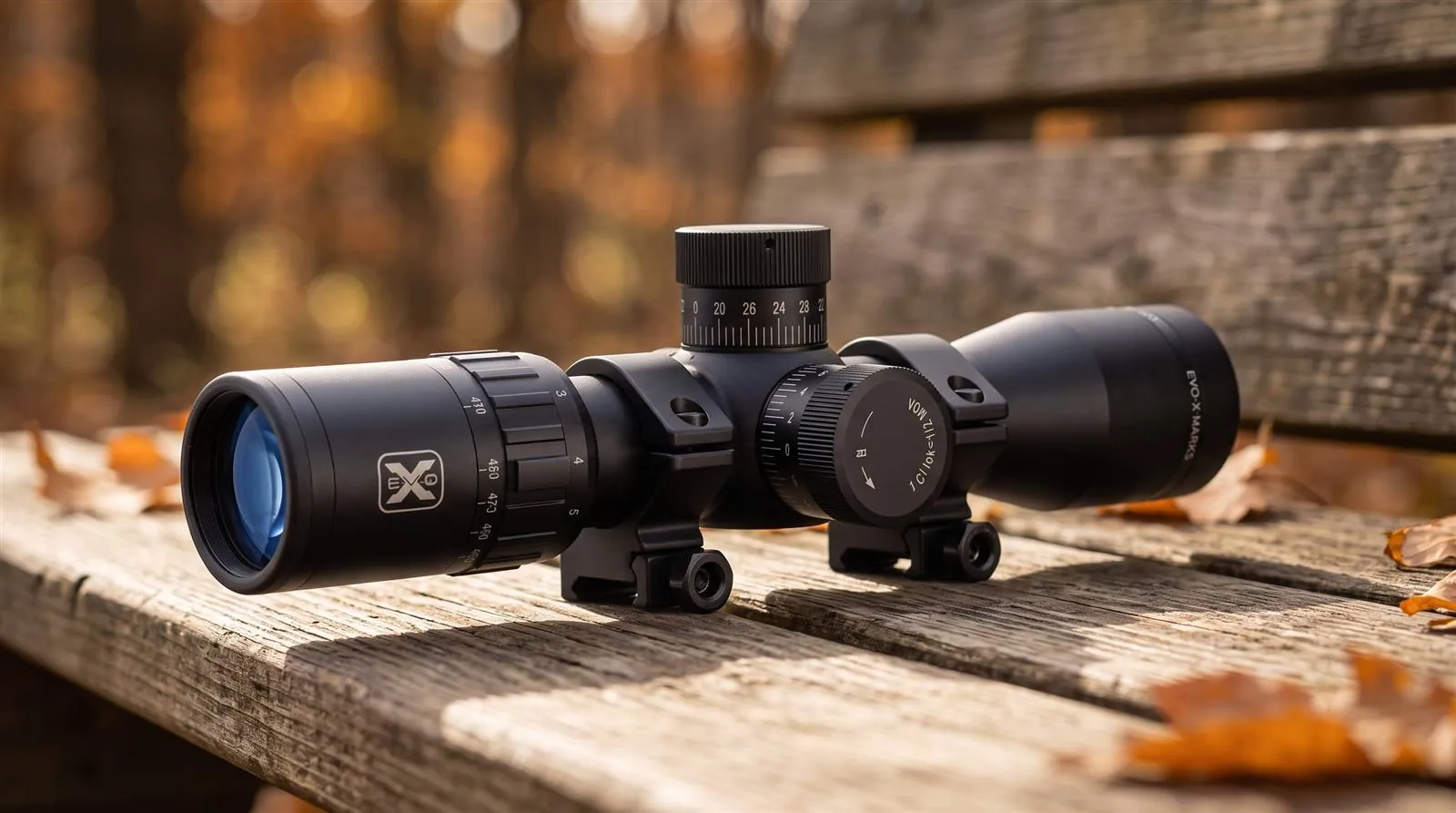
EVO-X Marksman Elite Review
Glass-reticle crossbow scope that covers a wide speed band and held its zero. Premium optics without batteries at about half the price of digital rivals.
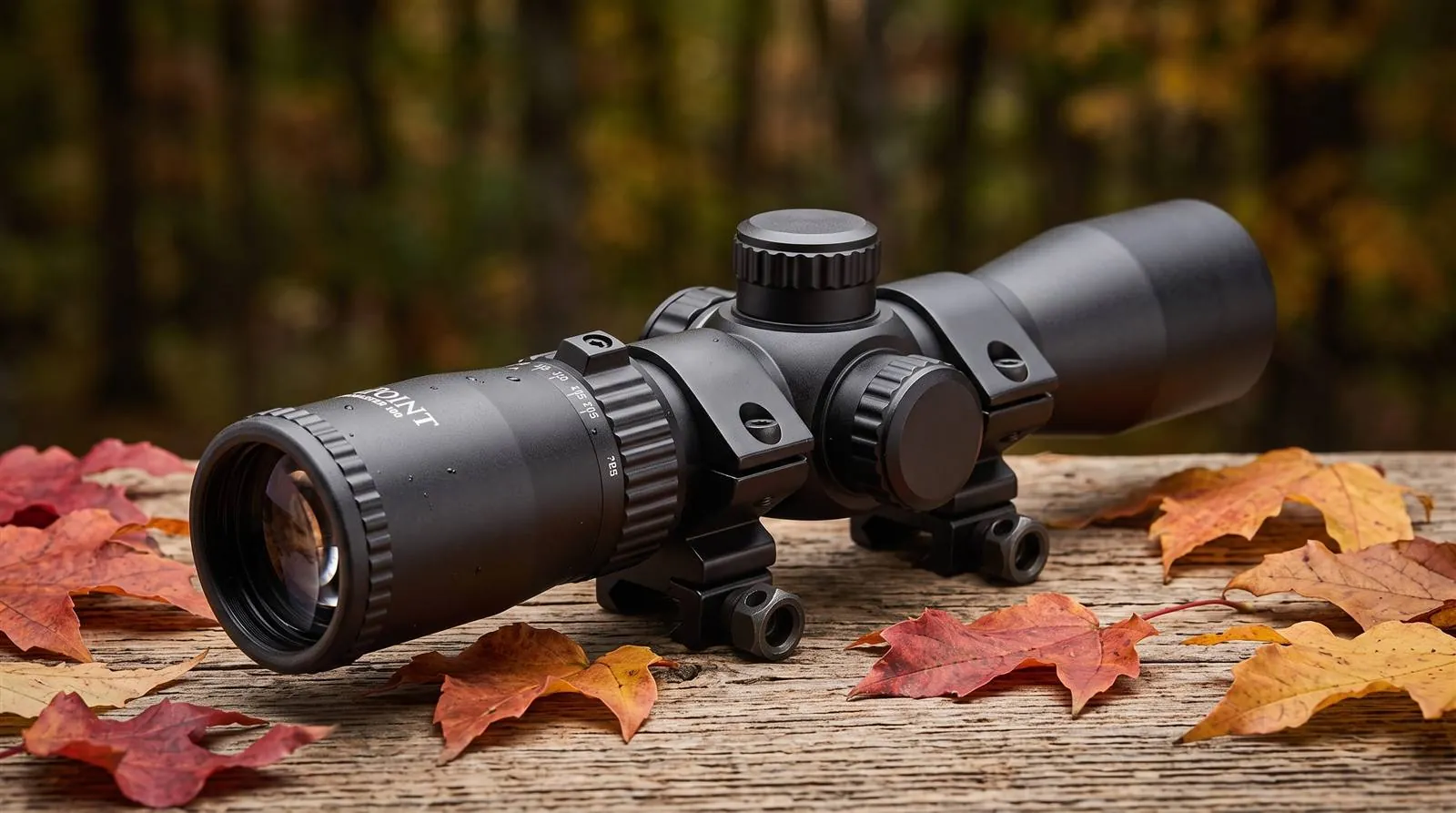
TenPoint RangeMaster 100 Review
Illuminated crossbow scope with nine aiming points to 100 yards that tracked point of impact from 380 to 505 FPS. Rings and caps included.
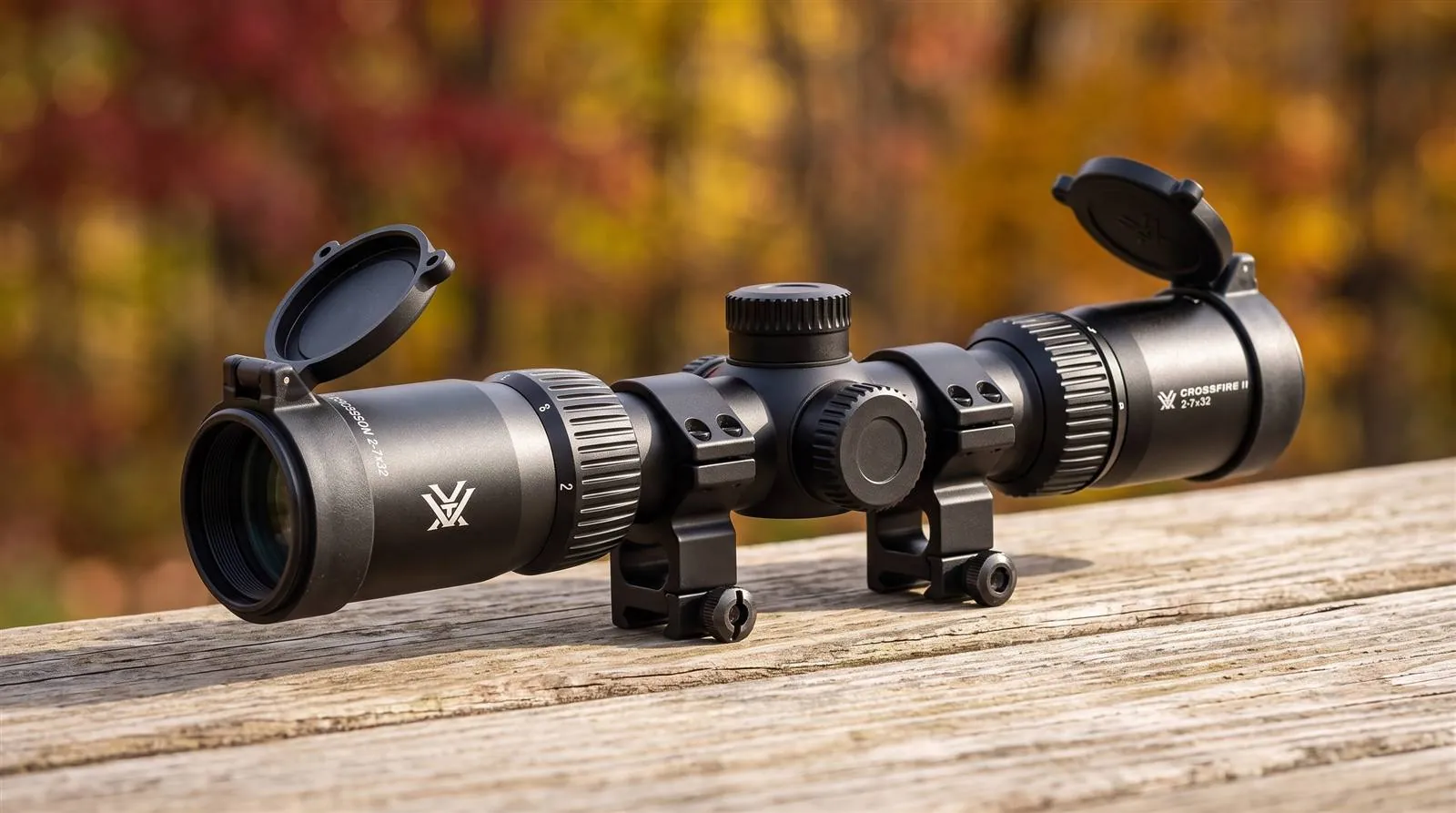
Vortex Crossfire II Scope Review
2-7x32 crossbow scope with precise 1/2 MOA turrets, hold marks that matched bolt drop once calibrated, and generous eye relief. A common bundled-scope upgrade.
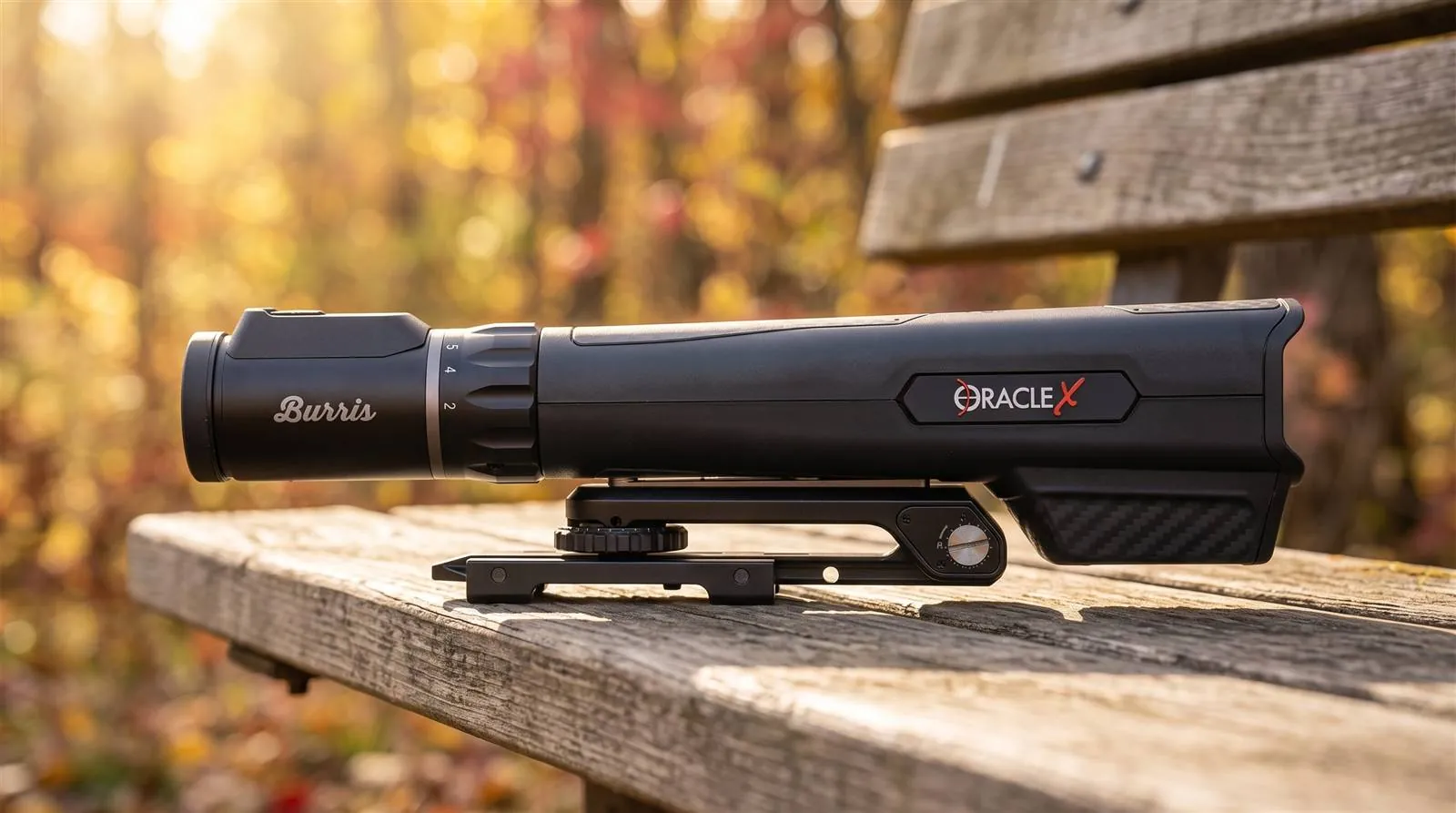
Burris Oracle X Scope Review
Laser rangefinding crossbow scope that measures range and shot angle, with angle compensation that checked out from a simulated treestand.
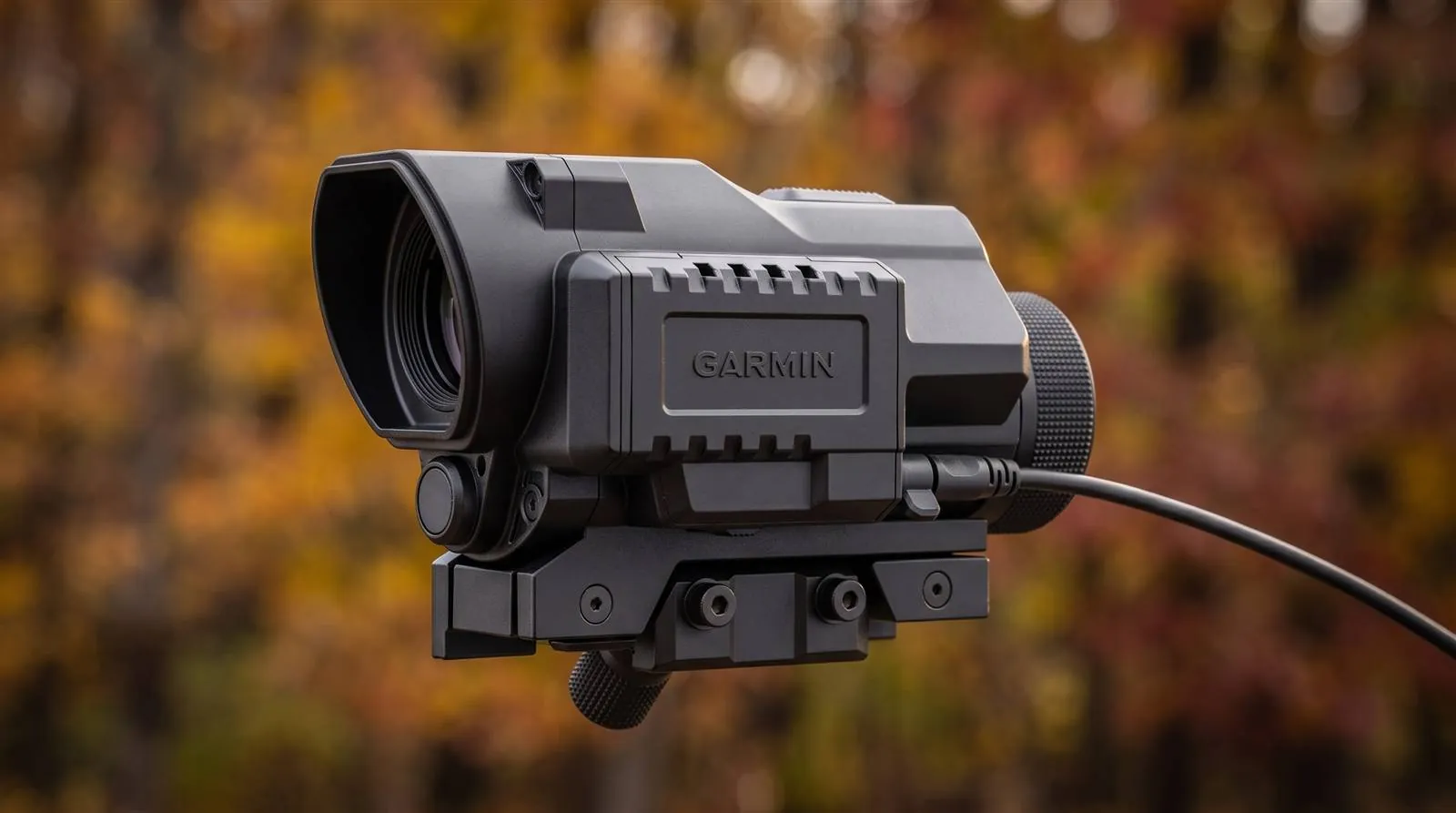
Garmin Xero X1i Scope Review
Auto-ranging crossbow scope with continuous laser ranging, aim points that tracked bolt drop to 80 yards and GPS shot tracking. Fixed magnification only.
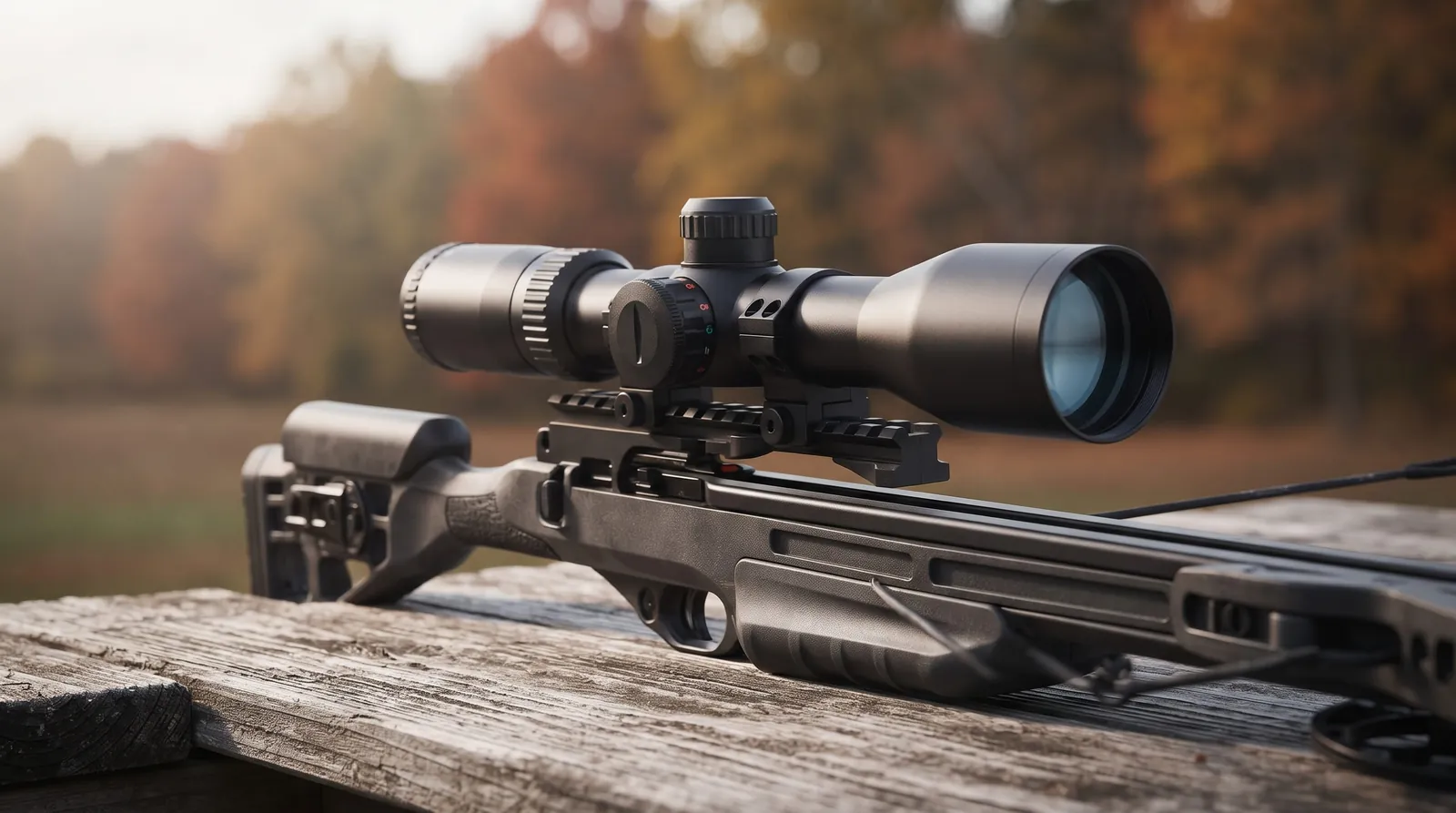
Ravin Illuminated Scope Review
Red/green illuminated scope made for Ravin crossbows, with 100-yard aim points and speed adjustment. Model-specific fit and few published optical specs.
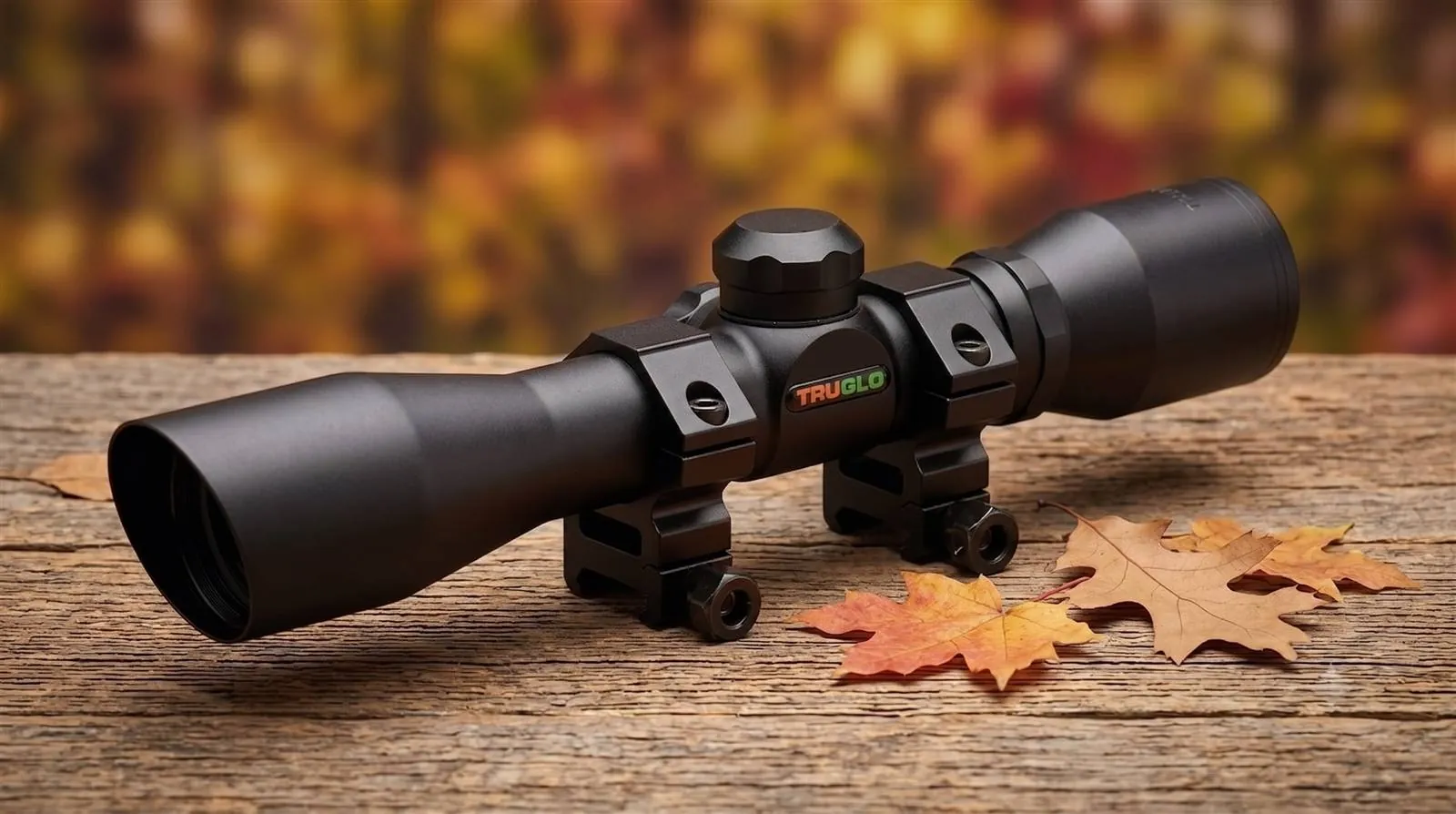
TruGlo 4x32 Crossbow Scope Review
Fixed 4x32 crossbow scope with BDC aim points that held true from 20 to 50 yards, no zero shift under recoil, and Weaver-style rings included.
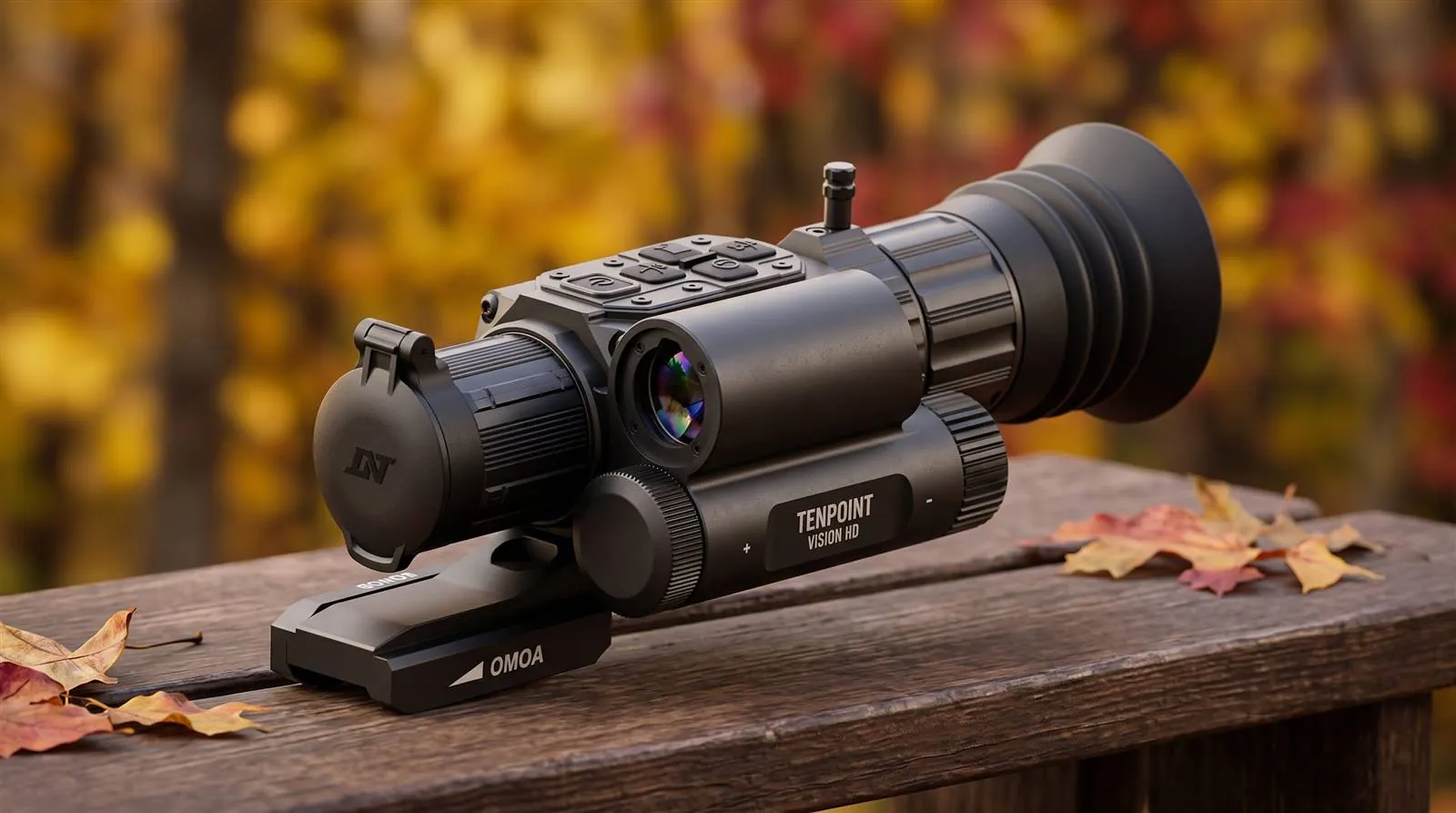
TenPoint Vision HD Review
Digital crossbow scope that combines laser ranging out to 1,100 yards, ballistic aim points and HD hunt recording, with a 3-year warranty.
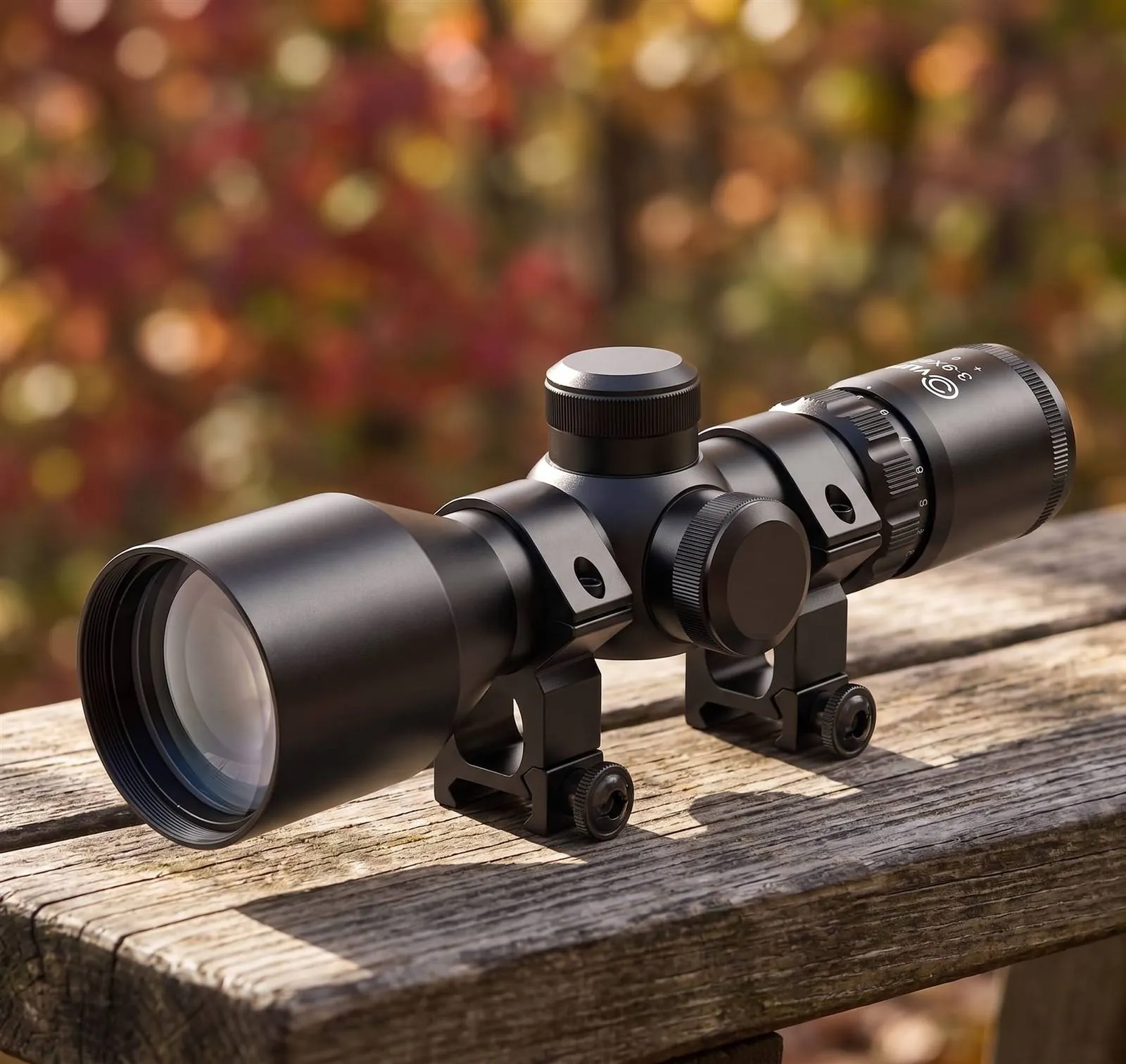
CVLIFE 3-9x40 Scope Review
Budget 3-9x40 crossbow scope for 20mm rails. Stayed fog-free in cold and humidity and held zero under recoil, with a plain crosshair reticle.
Most crossbow accuracy complaints are really aiming-system complaints. The bolt leaves the rail on a curved path, so the crosshair that works at 20 yards is wrong at 40, and a scope is the part that translates that curve into something you can hold on target. Choosing one is less about brand and more about matching a handful of numbers to your crossbow.
If you already own a crossbow and only need to know whether a particular scope fits it, jump to the compatibility section. If you are buying your first scope, read the whole page once; the checklist near the end condenses it.
What a crossbow scope has to do
A crossbow scope has two jobs a rifle scope never faces. It must survive the shock of limb release, which is a different kind of impact than rifle recoil, and it must give you aim points calibrated to a bolt that drops far faster than a rifle bullet. A scope that fails either test will lose zero or put you in the wrong place at distance.
That is why crossbow-specific optics use reticles with multiple aim points. A BDC reticle (bullet drop compensating) places marks below the main crosshair, each one tied to a distance for a particular bolt speed. You hold on the mark that matches your range instead of turning a turret between shots.
The category splits into three families:
- Optical multi-aim-point scopes with glass reticles, such as the RangeMaster 100, the EVO-X Marksman Elite and the Vortex Crossfire II.
- Simple scopes with a basic crosshair or short BDC band, such as the CVLIFE 3-9x40 and TruGlo 4x32.
- Digital or laser-ranging scopes that measure distance and move the aim point for you, such as the Garmin Xero X1i, Burris Oracle X and TenPoint Vision HD.
Reading the spec sheet
Speed calibration and reticle range
Every drop-compensating reticle is built for a speed band. The RangeMaster 100 is calibrated for 380-505 FPS crossbows, the EVO-X Marksman Elite is rated across 300-550 FPS, and Ravin's 450 FPS scope is not compatible with the R500, R470, R29X or R18. If your measured speed sits outside the band, the lower marks will be wrong. Our guide to how fast a crossbow bolt travels explains why advertised and chronographed speeds differ.
Magnification and focal plane
Higher magnification narrows the field of view and exaggerates movement. The Vortex Crossfire II is a second focal plane scope, so its hold marks are only correct at maximum power (7x), per the review. A fixed 4x scope like the TruGlo avoids that trap entirely. Check focal plane and magnification before assuming a zoom ring is an advantage.
Eye relief
Eye relief is the distance from your eye to the rear lens. Crossbow scopes sit closer to the eye than rifle scopes, so too little relief risks a bruised brow. The Vortex Crossfire II lists 2.7 inches and the Vision HD lists 65mm; the CVLIFE lists 2.7-3.3 inches, which our review found less forgiving at the low end.
Click value and the arithmetic of adjustment
Turrets move the point of impact in fixed steps of MOA. One MOA is about 0.21 inch at 20 yards. The Vortex Crossfire II moves in 1/2 MOA clicks, so each click shifts impact about 0.105 inch at 20 yards. If your group lands 2 inches off, that is roughly 9.5 MOA, or about 19 half-MOA clicks. The same 2-inch miss on a 1/4 MOA scope like the TruGlo takes about 38 clicks. Knowing this before you start prevents over-correcting. The full range routine is in our scope sighting guide.
Every scope I have scored, side by side
Highest rating first. Every one of these mounts on a standard Picatinny or Weaver rail; the review states which crossbow speeds the reticle is calibrated for.
| Model | My rating | Price | Weight | Length |
|---|---|---|---|---|
| EVO-X Marksman Elite | 4.7 / 5 | $479–$499 | 1.1 lbs | — |
| TenPoint RangeMaster 100 | 4.6 / 5 | $295–$355 | 1.0 lbs | 9.1 in |
| Vortex Crossfire II Scope | 4.6 / 5 | $195–$215 | 14 oz | 9.5" |
| Burris Oracle X Scope | 4.4 / 5 | $989–$999 | 30.8 oz (1.925 lbs) | 11.9" |
| Garmin Xero X1i Scope | 4.4 / 5 | $949–$999 | 1.9 lbs (with integrated mount) | — |
| Ravin Illuminated Scope | 4.3 / 5 | $329–$599 | — | 8.75 in (222mm) |
| TenPoint Vision HD | 4.3 / 5 | $889–$899 | 1.15 lbs (18.4 oz) | — |
| TruGlo 4x32 Crossbow Scope | 4.3 / 5 | $69–$99 | 10.4 oz | — |
| CVLIFE 3-9x40 Scope | 4.1 / 5 | $45–$55 | 320g (11.3 oz) | 7.48 in (190mm) |
Which scope for which buyer
| If you want | Start with | Why, from my reviews |
|---|---|---|
| A cheap first scope for a 20–50 yard lane | TruGlo 4x32 | $69–$99, 10.4 oz, aim points calibrated for 20–50 yards |
| An upgrade over a bundled scope | Vortex Crossfire II | $195–$215, 1/2 MOA turrets and generous eye relief |
| Aim points to 100 yards across many speeds | TenPoint RangeMaster 100 | $295–$355, nine aim points that tracked from 380 to 505 FPS |
| Premium glass with no battery to fail | EVO-X Marksman Elite | $479–$499, calibrated 20–100 yards and held zero |
| Automatic ranging and shot tracking | Garmin Xero X1i | $949–$999, laser ranging with aim points that tracked to 80 yards; 1.9 lbs |
Price tiers and what they buy
Cost scales with electronics, not clarity. At the low ends of the quoted ranges, the Garmin Xero X1i ($949) costs roughly 14 times the TruGlo 4x32 ($69). That does not make the TruGlo fourteen times worse; it means you are buying different capabilities.
| Tier | Typical price in our reviews | What you get | What you give up |
|---|---|---|---|
| Budget | $45-$99 | Basic reticle, rings often included, light weight | Narrow calibrated range, shorter eye relief on some |
| Mid-range | $195-$355 | Illuminated multi-aim-point reticle, tracking turrets, accessories | No ranging, manual hold selection |
| Premium optical | $479-$499 | Wide speed range, brighter glass, hand turrets | Learning curve with nine references |
| Digital and laser | $889-$999 | Ranging, angle compensation, extras (GPS, video) | Weight, batteries, electronics that can fail |
Ownership costs are small but real. Illuminated reticles need batteries, the Burris Oracle X uses a CR123 cell with a claimed 3,000 range activations, the Garmin runs a year on AAA lithium cells per my testing notes, and the Vision HD uses a rechargeable 21700 battery. Budget scopes may need separate rings; the TruGlo and Vortex include them, while the CVLIFE's included mounts fit 20mm rails only.
Compatibility with your crossbow
Check four things before ordering.
- Rail type. The CVLIFE ships with 20mm mounts; Weaver or dovetail setups need other hardware. The TruGlo includes Weaver-style rings.
- Speed band. Compare your chronographed speed to the reticle's rated band, as above.
- Brand lock-in. Ravin scopes are speed-rated and model-specific, and TenPoint's Vision HD ships with profiles for common TenPoint speeds.
- Bolt weight. A heavier or lighter bolt changes drop. The Vortex review notes the fixed 40-yard zero needs re-verification with different bolt weights.
Bolt balance matters here too: the concept is covered in what FOC means for accuracy.
Common mistakes and myths
- "Any rifle scope will do." Rifle scopes are not built for limb-release shock, and their reticles assume flat-shooting ballistics. The CVLIFE is a rifle and airgun optic by design, so its review flags rail compatibility and short eye relief as items to confirm.
- Trusting the printed speed. Marketing speeds are best-case. Calibrate to what a chronograph shows with your bolt.
- Buying range you will not use. The Burris Oracle X ranges deer-sized targets to 200 yards, which its review calls well beyond ethical crossbow distances for most hunters.
- Skipping the mount check. A good scope on a loose ring will never hold zero.
- Ignoring weight. A 30.8 oz optic changes balance on a light crossbow; the RangeMaster's 9.1-inch length already made one test crossbow front-heavy.
- Stopping at one range session. Recheck zero after travel, drops or temperature swings. See crossbow maintenance.
Who should skip this category's premium tier
Skip digital rangefinding scopes if you shoot a fixed lane at known distances, if weight on a long walk matters, or if you prefer gear with no battery to fail. The Vision HD review notes there is no mechanical fallback if its battery dies, and the Burris and Garmin add heavy, electronics-rich hardware.
Skip the very cheapest scopes if you shoot a fast crossbow or need reliable eye relief. The TruGlo's aim points are calibrated for a 20-50 yard band, so it is a poor match for a crossbow shooting well outside that profile.
Skip brand-locked scopes if you may switch crossbow brands, as the Ravin review points out.
Frequently Asked Questions
Can I use a rifle scope on a crossbow?
It is not recommended. Rifle scopes are not generally rated for the shock of limb release, and their reticles assume flat rifle trajectories rather than a bolt's arc. The CVLIFE 3-9x40 is a rifle and airgun optic that works on a crossbow only after you confirm rail fit and accept its shorter eye relief.
What magnification do I need on a crossbow scope?
Most reviewed scopes sit between fixed 3.5x and 7x variable, with the EVO-X reaching 8x and the Vision HD 12x. Lower power gives a wider field of view and is easier to hold steady, so choose more zoom only if you actually shoot longer, known distances.
Do I need an illuminated reticle?
Illumination helps at dawn, dusk and in dense cover, and the RangeMaster 100 illuminates all nine aim points. It adds a battery to manage, so if you shoot mostly in good daylight, a non-illuminated or simpler reticle may suit you and save money.
How much should I spend on a crossbow scope?
Reviewed prices run from $45 to about $999. Mid-range scopes between roughly $195 and $355 gave strong tracking and illuminated reticles in our reviews. Spend more only for ranging, angle compensation, GPS or video that you will genuinely use.
Are rangefinding crossbow scopes worth it?
They are worth it when you shoot unknown distances or from elevated stands, because they correct the aim point automatically. The trade-offs are weight, cost near $900-$1,000 and dependence on batteries, so fixed-lane or ground shooters often do better with an optical scope.
Why does my scope's reticle not match where the bolt lands?
The most common cause is a speed mismatch: your crossbow's actual speed with your bolt differs from the speed the reticle was calibrated for. Chronograph the setup, re-zero at 20 yards, then verify each aim point rather than trusting the printed distances.
What does second focal plane mean for hold marks?
On a second focal plane scope, the reticle stays the same apparent size as you zoom, so its distance marks are only correct at one magnification. The Vortex Crossfire II is accurate at 7x, so you must leave it there when using the hold marks.
How often should I recheck my scope's zero?
Recheck at the start of each season, after any travel, drop or hard knock, and after changing bolts or tips. The EVO-X and TruGlo held zero through multi-week testing, but a quick confirmation group costs only a few bolts.
Can I mount any scope on any crossbow?
No. Rail type, ring height and speed calibration all matter. Ravin's scopes are model-specific, the CVLIFE ships with 20mm mounts only, and the TruGlo includes Weaver-style rings. Confirm fit against your crossbow's manual or the manufacturer before buying.
At what distance should I zero a crossbow scope?
Most multi-line reticles are designed to be zeroed with the top mark at 20 yards, after which the lower marks fall at the distances the speed calibration promises. Some reticles differ: the Vortex Crossfire II review notes a fixed 40-yard zero that must be re-verified with a different bolt weight. Follow the reticle's own manual, then confirm each mark on paper rather than trusting the printed distances. Our sight-in guide walks through the process.
Should I choose a red dot or a magnified scope for a crossbow?
A red dot suits short-range target shooting: one aim point, fast on target, no magnification to steady. A speed-calibrated scope suits hunting at mixed distances because its marks account for bolt drop. Budget kit red dots can also be the weak link; the Avalanche Anaconda review found its bundled red dot did not hold zero as reliably as premium package scopes. If you will ever shoot past about 30 yards, choose the multi-line scope.
Guides that help you decide
Run the numbers