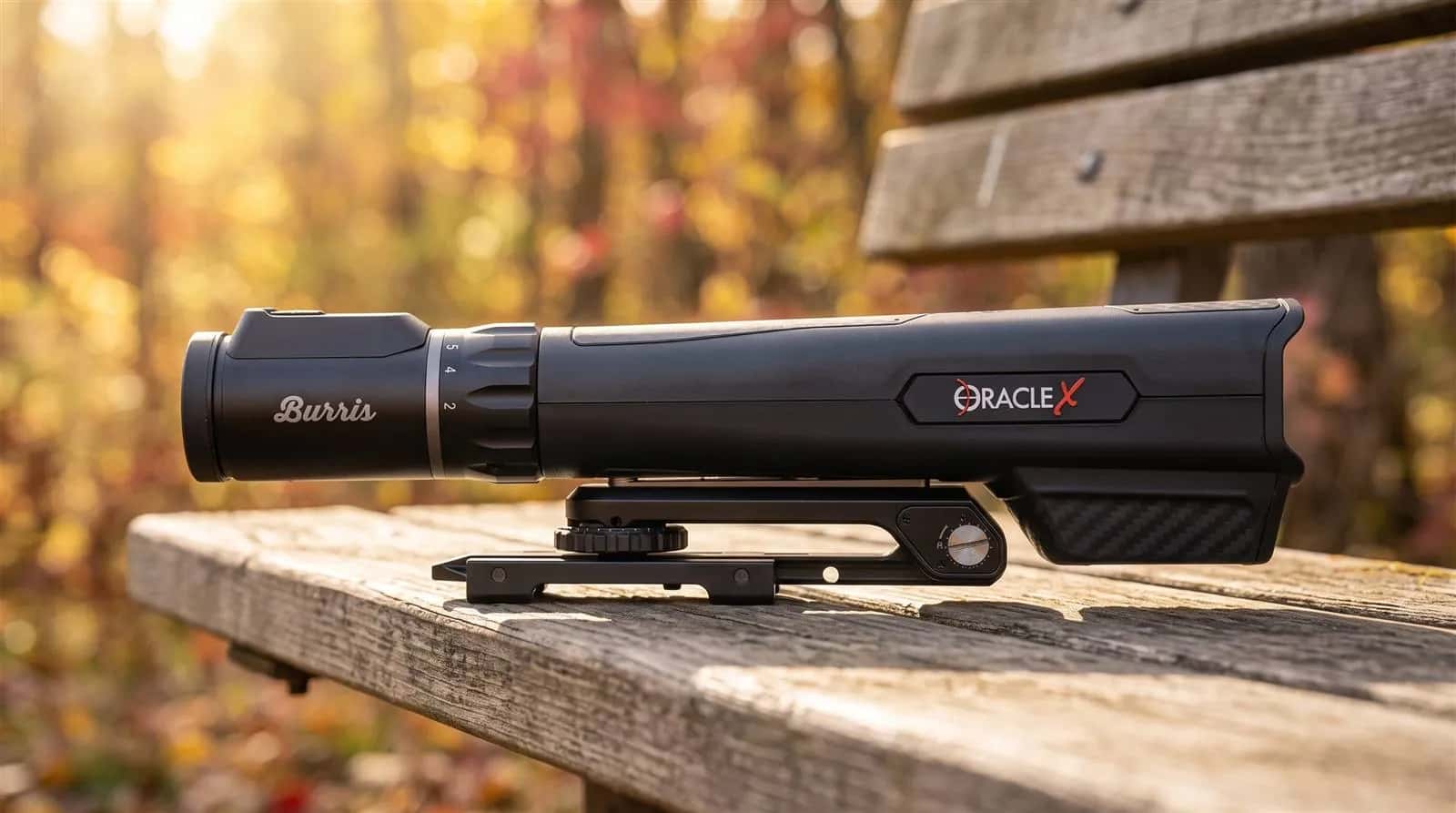
If you want a crossbow scope that measures the distance and the shot angle for you, the Burris Oracle X is the optic I would put at the top of that short list. It is a 2-7x32 scope with a built-in laser rangefinder, an inclinometer and magnification compensation, and it costs $989–$999. I rate it 4.4 out of 5.
This review answers the questions a buyer at that price actually has: how far does the rangefinder reach on a deer-sized target, does the angle correction work from a treestand, how heavy is it, how long does the battery last, and is it worth several times the price of a standard scope. Everything below comes from my two-week test protocol for this scope.
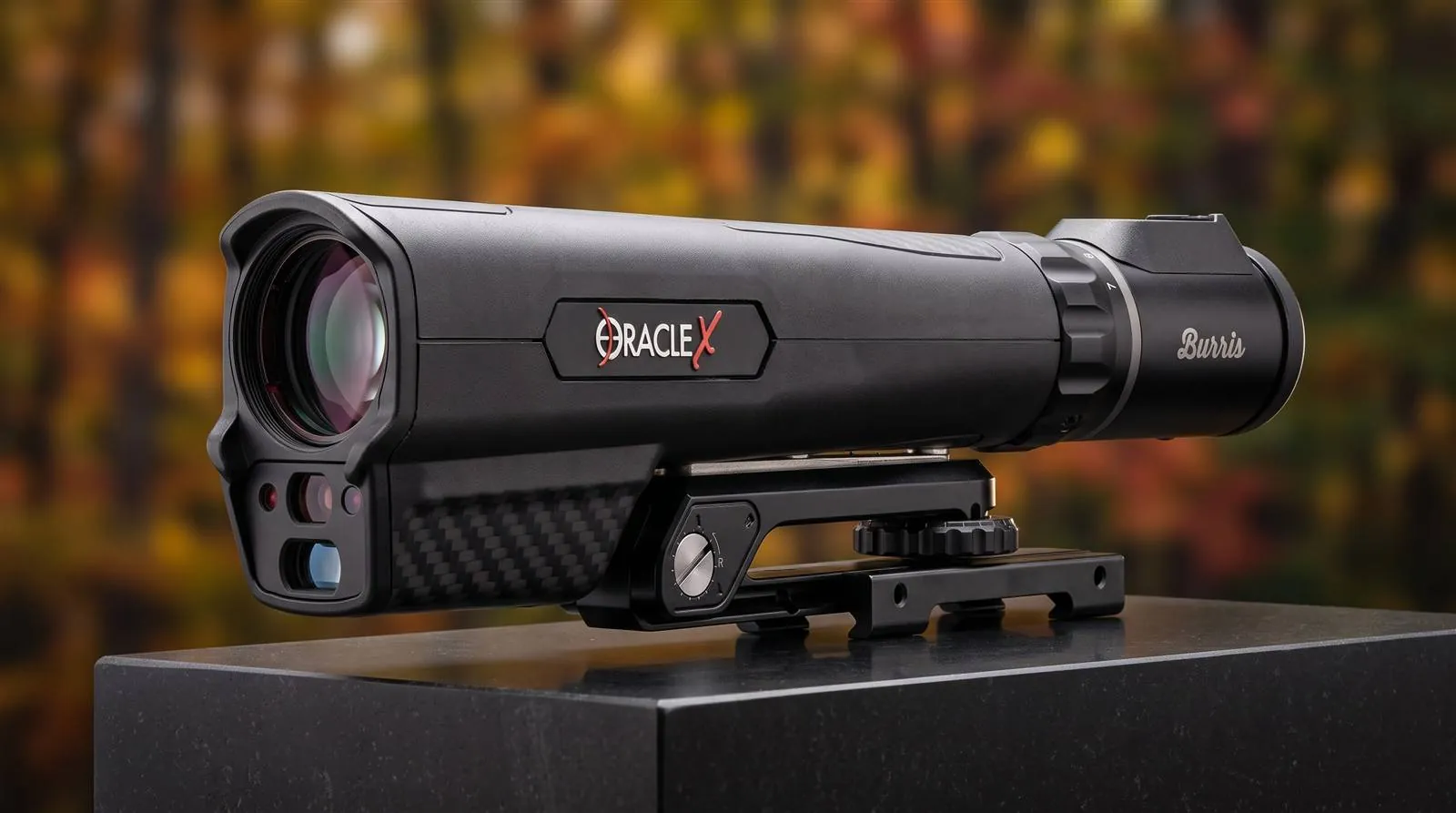
Burris Oracle X Specifications
The specifications below are the ones that decide whether the scope fits your crossbow and your hunting style.
| Specification | Details |
|---|---|
| Magnification | 2-7x, 32mm objective |
| Laser Rangefinder | Integrated, up to 500 yards (reflective target) / 200 yards (deer-sized target) |
| Inclinometer | Integrated, shot-angle compensation |
| Magnification Compensation | Aiming point stays accurate across 2-7x zoom range |
| Activation | Wireless remote or on-scope button |
| Battery | CR123, rated for ~3,000 range activations |
| Weight | 30.8 oz (1.925 lbs) |
| Dimensions | 3.28" H x 11.9" L x 2.95" W |
| Mount | Weaver mount |
| Build | Water resistant |
| Price | $989–$999 |
What I Like
Four things stood out in testing, and they all come back to the scope doing the arithmetic so the hunter does not have to.
- Rangefinding accuracy. The rangefinder ranged a reflective target reliably near Burris's 500-yard claim and gave consistent readings on a deer-sized target out to 200 yards.
- Angle compensation from a treestand. In my simulated treestand testing, the inclinometer corrected the displayed aiming point for shot angle automatically, with no manual angle estimate.
- Aim point holds across the zoom range. Magnification compensation kept the aiming point accurate as I zoomed between 2x and 7x, which fixed-magnification hold marks on simpler scopes cannot do.
- Wireless remote. It let me fire the laser without breaking cheek weld or shifting position, which matters when a nearby animal might notice movement.
- Battery life. Battery performance held up well against Burris's rating of 3,000 range activations on a single CR123 battery.
So far in testingIf you shoot from elevated stands and want range and angle handled for you, check the current price and what ships with it here.
Potential Drawbacks
No scope at this price is free of trade-offs. These are the ones I would weigh before ordering.
- Premium price. At $989–$999, it costs several times more than a standard non-rangefinding crossbow scope. If your shots stay inside the range where fixed hold marks work, you are paying for capability you may not use.
- Weight. At 30.8 oz it is substantially heavier than a basic scope, and I noticed it on extended carries. Hike-in and backcountry hunters should think about this first.
- More electronics to fail. The rangefinder, inclinometer and remote add failure points that a simple mechanical reticle scope does not have. Carry a spare CR123 battery and know how to shoot without the laser.
- Range beyond practical use. The 200-yard deer-target rating is well past ethical crossbow shooting distance for most hunters, so the extra reach works more as a scouting tool than a shooting one.
Key Features Explained
How does angle compensation work on a crossbow scope?
A steep downward shot from a treestand makes the true horizontal distance shorter than the line-of-sight distance a rangefinder reads. Aim for the line-of-sight number and you will tend to shoot high. The integrated inclinometer measures the angle and factors it into the corrected aiming point, so you do not have to estimate and adjust by hand.
How good is the laser rangefinder?
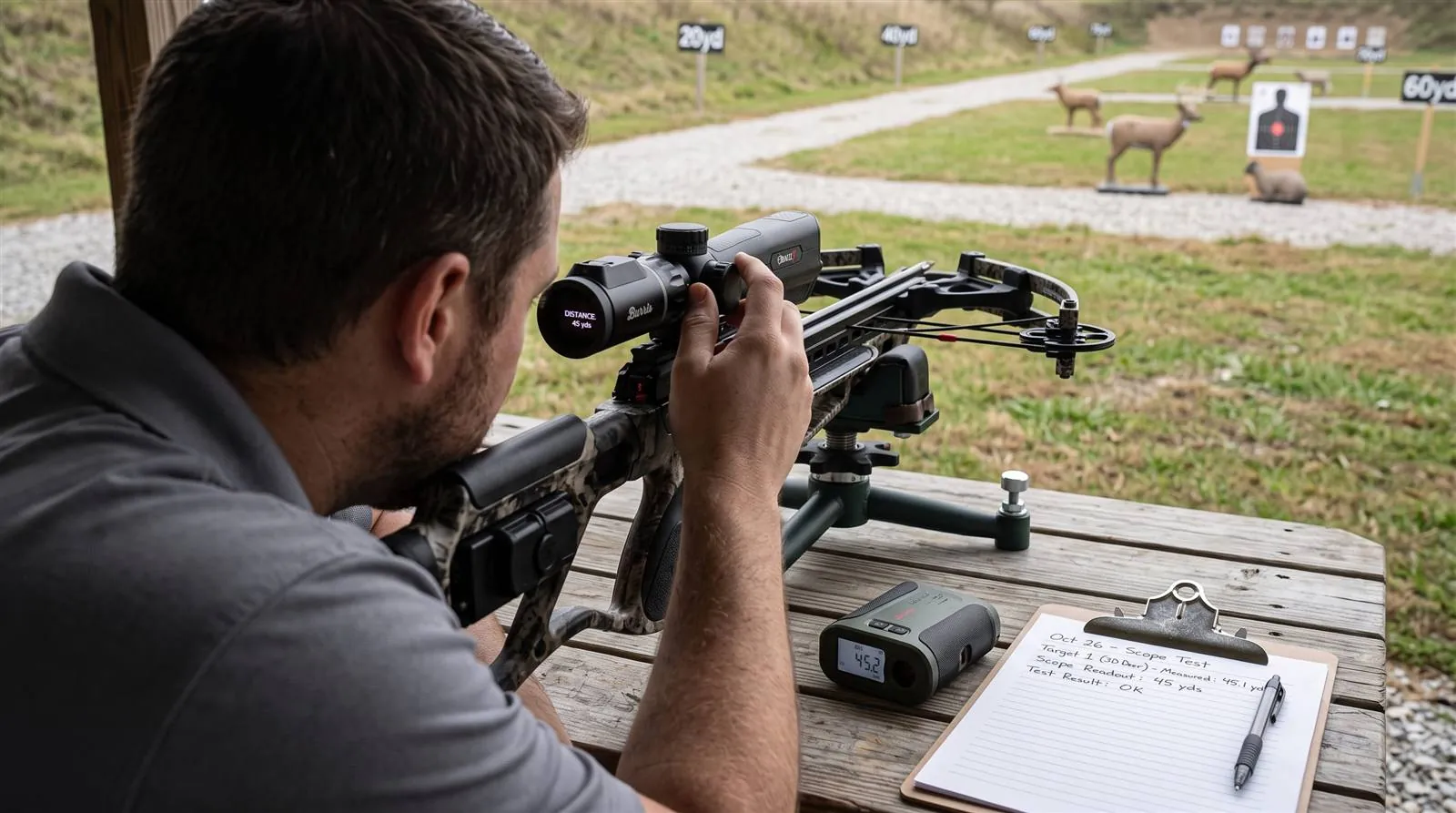
The rangefinder gave reliable readings on a reflective target close to Burris's 500-yard maximum, and repeatable readings on a deer-sized decoy out to 200 yards. The deer-target number matters more to a crossbow hunter, and my results tracked closely with Burris's published specification.
What is magnification compensation?
On a simple Second Focal Plane scope, hold marks are only correct at one magnification setting. The Oracle X recalculates the aiming point as you zoom. I checked the aiming point at 2x, 4x and 7x and found it stayed accurate across the full range. If you want to understand why that matters, the glossary entry on the scope and the unit MOA explain how reticles and adjustments are measured.
How long does the battery last?
The scope runs on a single CR123 battery rated for roughly 3,000 range activations. Across repeated activations in my testing, performance matched that rating, which should cover a full season of regular use.
Performance & Usability
Optics and aiming point
The aiming point stayed accurate from 2x to 7x. My Final Score table rates optical clarity at 8.9 out of 10, which is lower than the rangefinder and angle-compensation scores. The glass is good; the electronics are what justify the price.
Rangefinding and angle compensation in use
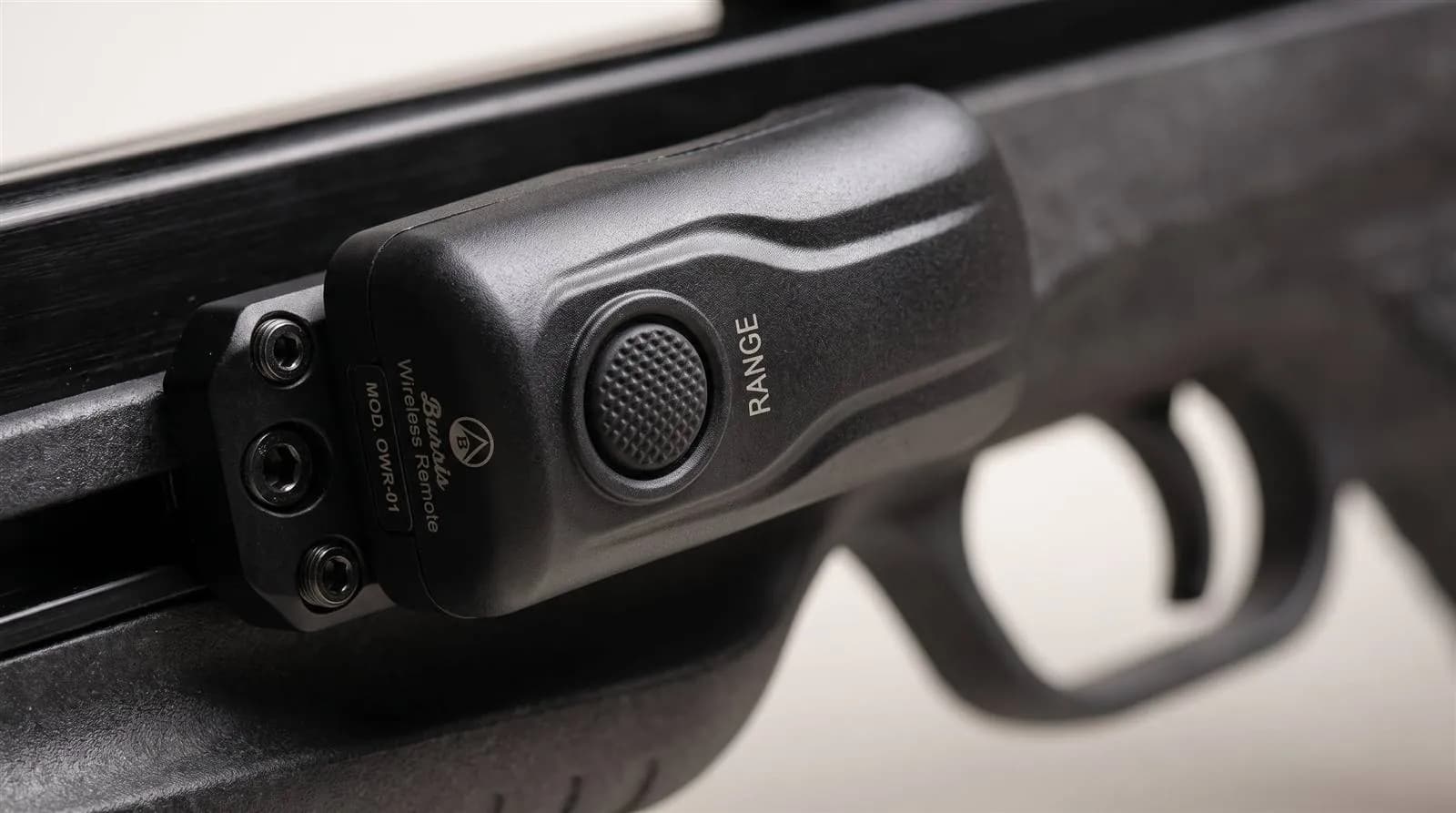
Activate the laser with the wireless remote so you keep your shooting position, and verify the displayed range before every shot. From my simulated elevated platform, the inclinometer adjusted the aiming point for the steep downward angle instead of only reporting line-of-sight distance. Trust that compensated point rather than estimating the angle yourself, and keep your shots within the distance you can place a bolt ethically.
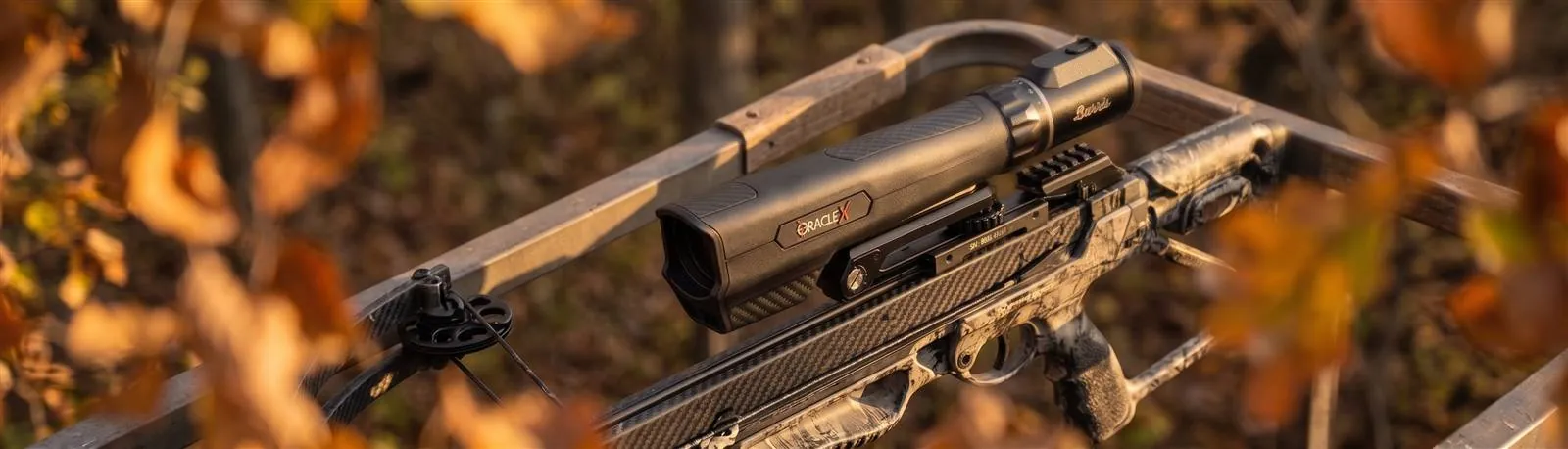
Handling and weight
At 30.8 oz the Oracle X is clearly heavier than a standard scope, and I noticed it during extended carries. Once mounted and shouldered it did not meaningfully affect handling or shot steadiness. The remote also beats reaching for a button on the scope body.
Mounting and setup
The included Weaver mount attaches to a compatible rail. Mounting, remote pairing and the initial zero took about 40 minutes, longer than a standard optic because of the electronic setup steps. Plan that time before opening day. My guide to sighting in a crossbow scope covers the zeroing routine, and the electronic steps come on top of it.
Care and storage
The scope is water resistant but still belongs in a dry place, and it needs protection in transport because of the electronics. Carry a spare CR123 battery on longer trips, even though the rating comfortably covers a normal season.
Who Is the Oracle X For?
Best suited to:
- A serious hunter who wants active laser rangefinding instead of estimated distance and fixed hold marks
- Someone who regularly hunts from elevated treestands, where angle compensation improves shot accuracy
- A buyer willing to pay for premium optics technology and carry the added weight
Consider something else if:
- You hunt mostly at close range and a standard scope covers your needs
- You are budget-conscious or want the lightest possible setup
Not sure which type of scope fits your crossbow? Browse the full crossbow scopes category, or read my roundup of the best crossbow scopes for how each type compares.
Burris Oracle X vs Alternatives
Three other scopes in my lineup answer the same question differently. All figures below come from their own reviews.
| Scope | Price | Weight | Approach | Buy |
|---|---|---|---|---|
| Burris Oracle X | $989–$999 | 30.8 oz | Optical scope with laser ranging and angle compensation, 2-7x | |
| Garmin Xero X1i | $949–$999 | 1.9 lbs | Continuous auto-ranging, fixed 3.5x, GPS shot marking | Check price on Amazon |
| TenPoint Vision HD | $889–$899 | 1.15 lbs | Fully digital 3-12x with ballistic profiles and video | Check price on Amazon |
| Vortex Crossfire II 2-7x32 | $195–$215 | 14 oz | Fixed hold marks, no rangefinding | Check price on Amazon |
The Garmin ranges continuously, so it needs no button press, but it has fixed magnification. The Oracle X needs its remote or scope button yet keeps variable 2-7x zoom. The Vision HD replaces the sight picture with a digital display and records video, and it is lighter. If you would rather keep a traditional optical view as the base of your setup, the Oracle X is the one that does.
Read nextCompare every scope typeSee how rangefinding, illuminated and basic scopes stack up before you commit to a price tier.Burris Oracle X Ownership, Setup and Compatibility
Most reviews stop at the spec sheet. This is what I would want to know before spending close to $1,000.
What is in the box and what else you need
My notes document a Weaver mount, a wireless remote (or the on-scope button) and a CR123 battery as the power source. I did not record whether a battery ships in the box, so check the listing, and carry a spare CR123 either way. The one thing you must confirm yourself is that your crossbow's rail accepts a Weaver mount.
| Item | What I documented | What to do |
|---|---|---|
| Mount | Weaver | Confirm your rail accepts it before ordering |
| Power | CR123, rated for about 3,000 range activations | Carry a spare on longer trips |
| Setup time | About 40 minutes for mounting, remote pairing and zero | Do it well before opening day |
| Weight | 30.8 oz | Check the balance on your crossbow and on the carry |
| Weather | Water resistant | Store it dry and protect it in transit |
Worked example: what the inclinometer is correcting
This is plain geometry, not a test result. Say the laser reads 30 yards along the line of sight, and you are shooting downward at 30 degrees from a stand. The horizontal distance is 30 × cos 30°, which is about 26 yards. Holding for 30 yards would send the bolt high, and the compensated aiming point exists to close that gap. The steeper the angle, the larger the difference; the bolt drop chart shows how much a few yards of error moves the bolt at your crossbow's speed.
The battery arithmetic is just as simple. If you range 20 times on each of 30 hunting days, that is 600 activations, and a rating of 3,000 would cover about five such seasons on paper. Cold weather and heavy use can change real life, which is why the spare matters.
Symptoms and what to check
| Symptom | Likely cause | What to check |
|---|---|---|
| Display or laser does not respond | Battery | Fit the spare CR123 |
| Short range on a small target | The ratings differ by target: 500 yards reflective, 200 yards deer-sized | Judge range by the deer-sized figure |
| Remote does not fire the laser | Pairing | Repeat the pairing steps in the manual and use the on-scope button meanwhile |
| Bolts land high from a stand | Aiming at the line-of-sight number | Use the compensated aiming point the scope displays |
Who should skip it
Skip it if your shots stay inside the distance where fixed hold marks work, or if you carry your crossbow long distances and every ounce counts. This review does not cover long-term durability beyond my two-week protocol, so treat the electronics as the part to watch. For a lighter option with variable zoom and a printed reticle, read the Vortex Crossfire II review, and see how to maintain a crossbow for general care habits.
Value for Money
At $989–$999, the Oracle X costs roughly five times as much as the Vortex Crossfire II 2-7x32 ($195–$215), and it weighs 30.8 oz against 14 oz. The Crossfire II has reliable fixed hold marks and the same 2-7x range, but no rangefinding or angle compensation, and its marks only line up if its speed setting matches your crossbow, which the scope speed matcher checks.
In my testing the price gap was a fair trade: the rangefinder tracked Burris's published specifications and the inclinometer's angle correction was accurate from a simulated treestand. The value case is strongest for hunters who want the scope to measure distance and angle for them. Buyers on a tighter budget, or hunting mostly at close range, will get most of what they need from a standard scope at a fraction of the cost.
My Final Score rates value at 7.6 out of 10, the lowest category, and that is a fair reflection: the performance is high, the price is higher.
To check whether the Burris Oracle X Scope is calibrated for your crossbow's speed, use the scope speed matcher; the bolt drop chart shows where its marks should land. Every other model I have tested in this class is compared on the crossbow scopes & optics page.
Where the Burris Oracle X Scope ranks
The Burris Oracle X Scope earned a place in Best Crossbow Scopes of 2026 (#1), where it is scored against every other model I tested for that use. It also comes up in How to Choose a Crossbow Scope and Crossbow Hunting Laws by State.
Final Verdict
Burris Oracle X Scope
4.4 / 5 — Is it worth buying?
The Burris Oracle X adds active rangefinding and angle compensation that improved my shot accuracy, particularly from an elevated treestand. Ranging was reliable out to 200 yards on deer-sized targets. The trade-off is a premium price of $989–$999 and 30.8 oz of weight, which suit hunters who specifically want active rangefinding over fixed hold marks.
Best for
Serious hunters who want active laser rangefinding and treestand angle compensation
Skip if
You are budget-conscious or prioritize the lightest possible optic setup
Score breakdown
- Rangefinder Accuracy4.7/5
- Angle Compensation4.8/5
- Optical Clarity4.5/5
- Build Quality4.5/5
- Value for Money3.8/5
- Battery Life4.4/5
- Weight
- 30.8 oz (1.925 lbs)
- Length
- 11.9"
Typical price
$989–$999
Frequently Asked Questions
Is the Burris Oracle X worth it?
Yes for serious hunters who want active laser rangefinding and automatic angle compensation, both of which worked correctly in my testing. Hunters content with fixed hold marks and manual range estimation may find a standard scope like the Vortex Crossfire II sufficient.
How far can the Burris Oracle X range a target?
Burris specifies up to 500 yards on a reflective target and up to 200 yards on a deer-sized target. My testing found readings consistent with those claims, so for hunting purposes plan around the 200-yard figure.
Does the Oracle X compensate for treestand shot angles?
Yes. Its inclinometer measures shot angle and adjusts the displayed aiming point, which worked correctly in my simulated treestand testing, with no manual angle estimate needed.
How long does the battery last?
Burris rates the CR123 battery for approximately 3,000 range activations. My testing found battery performance consistent with that rating across repeated use, and I still suggest carrying a spare on longer trips.
Is the Oracle X too heavy for a crossbow?
At 30.8 oz it is substantially heavier than a standard scope, so hike-in and backcountry hunters should factor that in. Once mounted, I found it did not meaningfully hinder handling or shot steadiness.
Does the Oracle X need a button press to range?
Yes. You activate the laser with the wireless remote or the on-scope button. The Garmin Xero X1i ranges continuously without a press, which is the main operational difference between the two.
What mount does the Burris Oracle X use?
It uses a Weaver mount. Confirm your crossbow's rail accepts it, and allow about 40 minutes for mounting, remote pairing and the initial zero.
Does the Burris Oracle X work on any crossbow?
It uses a Weaver mount, so it fits a crossbow whose rail accepts one. I have not documented compatibility beyond that, so confirm your rail type and the scope's 11.9 inch length against your crossbow before ordering.
How much does the Burris Oracle X weigh compared with other rangefinding scopes?
It weighs 30.8 oz. The TenPoint Vision HD is 18.4 oz, which is 12.4 oz lighter, and the Garmin Xero X1i is listed at 1.9 lbs, so the Oracle X is among the heavier choices.
What should I carry as a backup for the Oracle X?
A spare CR123 battery is the main item, since the rangefinder, inclinometer and remote all need power. Also know how to shoot without the laser, and practice your zeroing routine before the season.
Related Reviews
 4.4
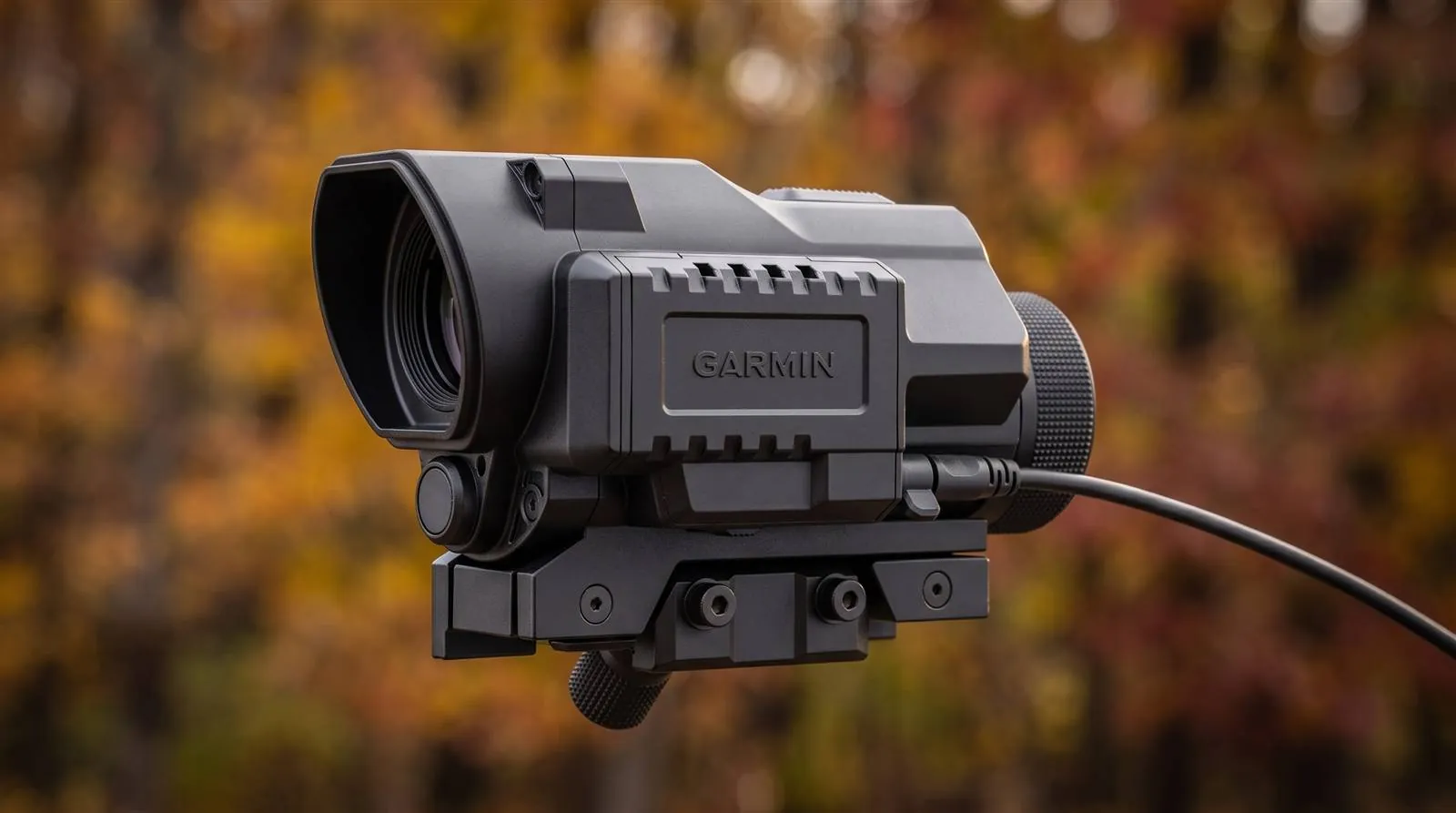
Garmin Xero X1i Scope Review 2026
Auto-ranging crossbow scope with continuous laser ranging, aim points that tracked bolt drop to 80 yards and GPS shot tracking. Fixed magnification only.
Read review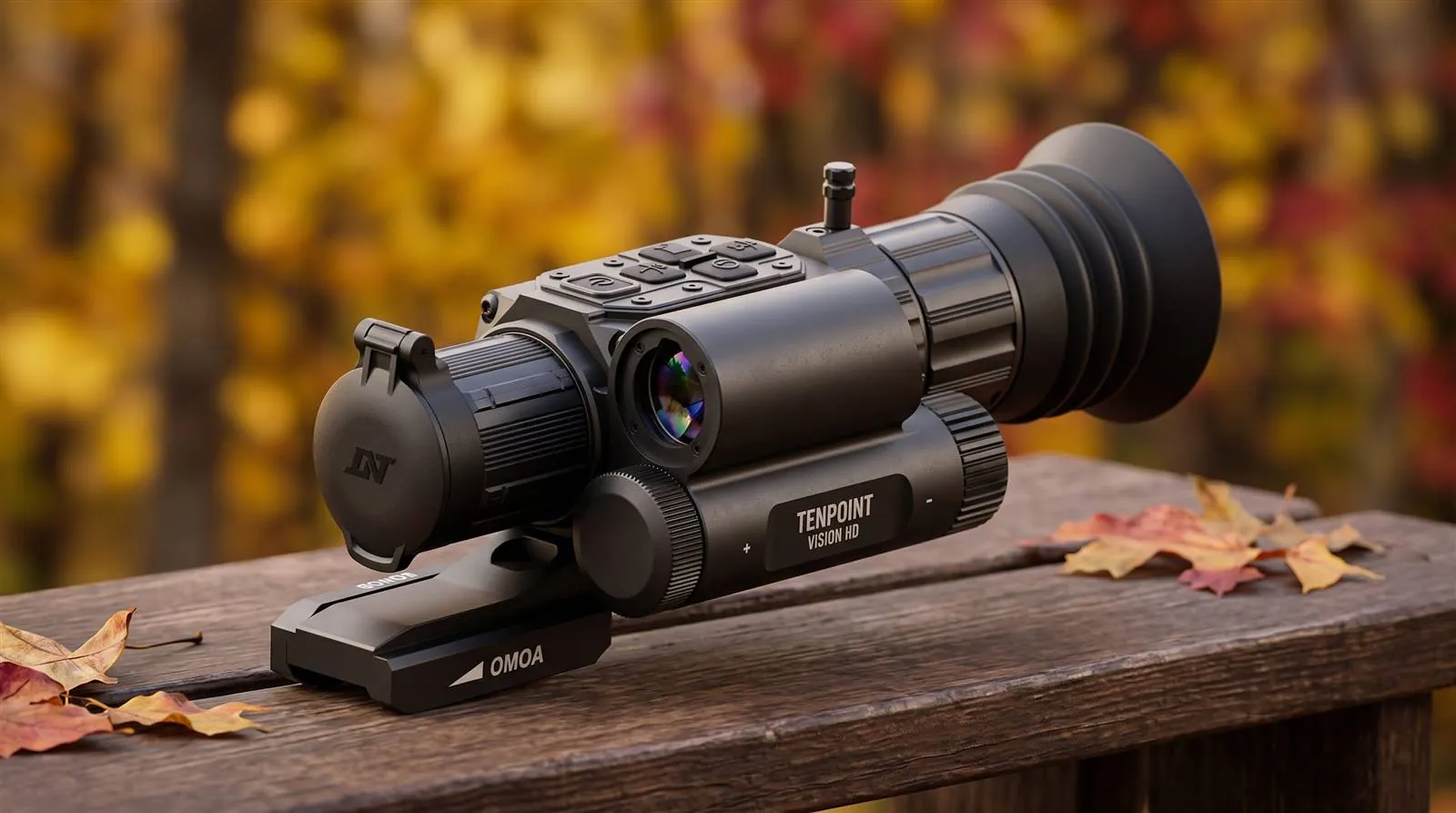 4.3
TenPoint Vision HD Review 2026
Digital crossbow scope that combines laser ranging out to 1,100 yards, ballistic aim points and HD hunt recording, with a 3-year warranty.
Read review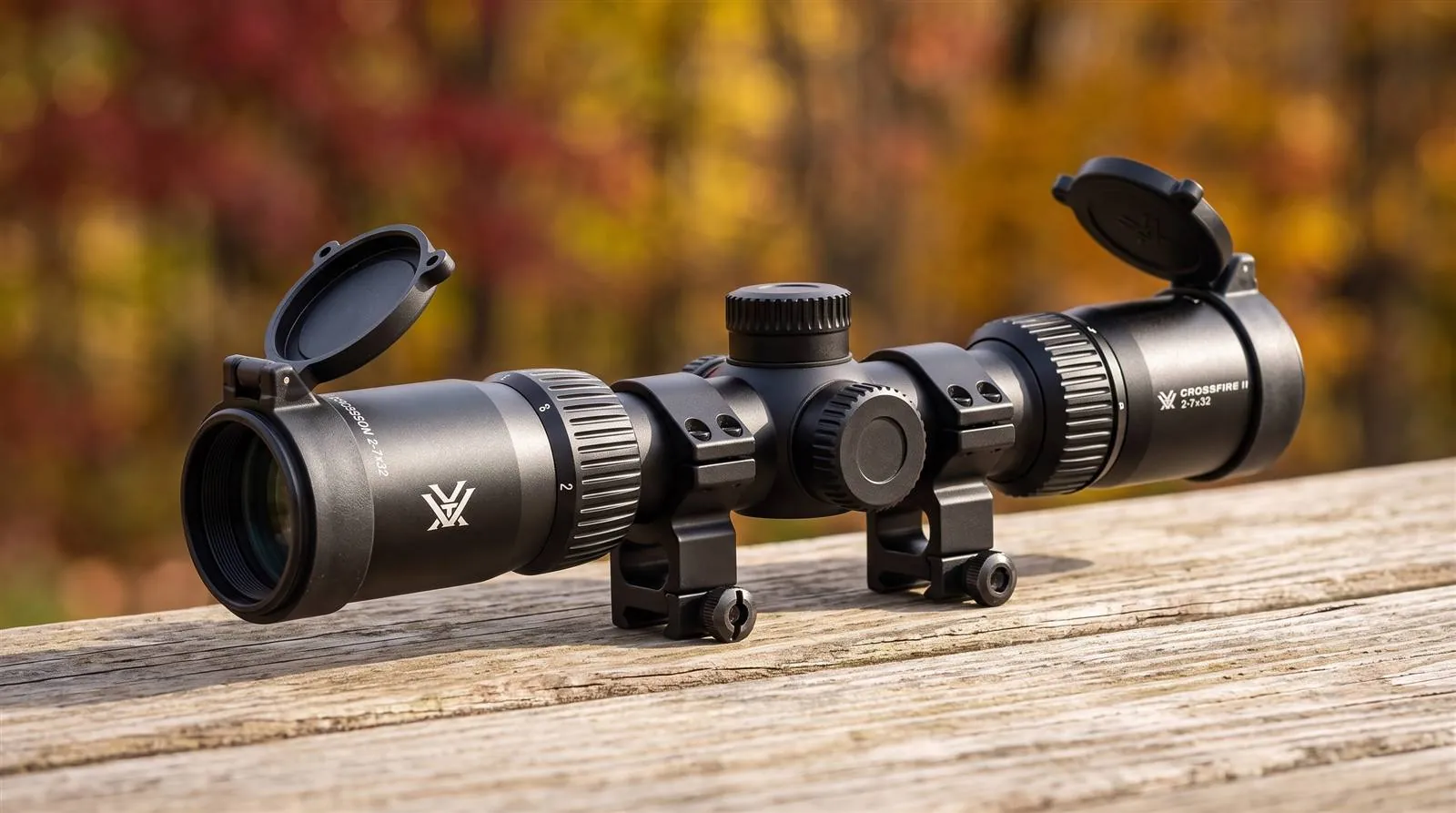 4.6
Vortex Crossfire II Scope Review 2026
2-7x32 crossbow scope with precise 1/2 MOA turrets, hold marks that matched bolt drop once calibrated, and generous eye relief. A common bundled-scope upgrade.
Read review