How to Cock a Crossbow: Rope vs Crank
How to cock a crossbow safely: step-by-step rope cocking device and crank methods, hand cocking risks, de-cocking, and which system suits you.
Why Cocking Is the Most Important Skill to Get Right
Cocking a crossbow means drawing the string back and seating it in the trigger latch so the crossbow is ready to fire. It sounds simple, but it's where most beginners make their biggest mistakes, and it's the step that most directly affects both safety and accuracy. A string pulled back unevenly sits crooked on the latch, which sends bolts off target, and a careless hand near the string or rail can cause a serious injury.
Crossbow draw weights commonly run well over 150 pounds, which is far more than most people can safely pull by hand. That's why nearly every modern crossbow relies on a cocking aid of some kind. This guide covers the main methods, walks through each one step by step, and helps you decide which system fits your crossbow and your body.
Always follow your crossbow manufacturer's manual first. Procedures differ between models, and the manual is the final authority on your specific crossbow. This guide gives you the general approach and the reasoning behind it.
Cocking Methods at a Glance
| Method | Effort | Cost | Best For |
|---|---|---|---|
| Hand cocking | Highest (full draw weight) | Free | Low draw-weight crossbows only |
| Rope cocking device | Reduced by roughly half | $19–$29 | Budget-conscious hunters |
| Crank cocking device | Very low (about 5 lbs felt) | About $285–$295 as an add-on | Hunters who want easy, repeatable cocking |
| Integrated cocking system | Very low | Included in the crossbow | Premium crossbows |
Cocking Basics That Apply to Every Method
Start With the Crossbow Unloaded and the Safety On
Never begin cocking with a bolt on the rail. Do the procedure with the crossbow unloaded, and engage the safety as soon as the string seats. Keep the muzzle pointed in a safe direction throughout.
Keep Your Fingers and Hands Clear
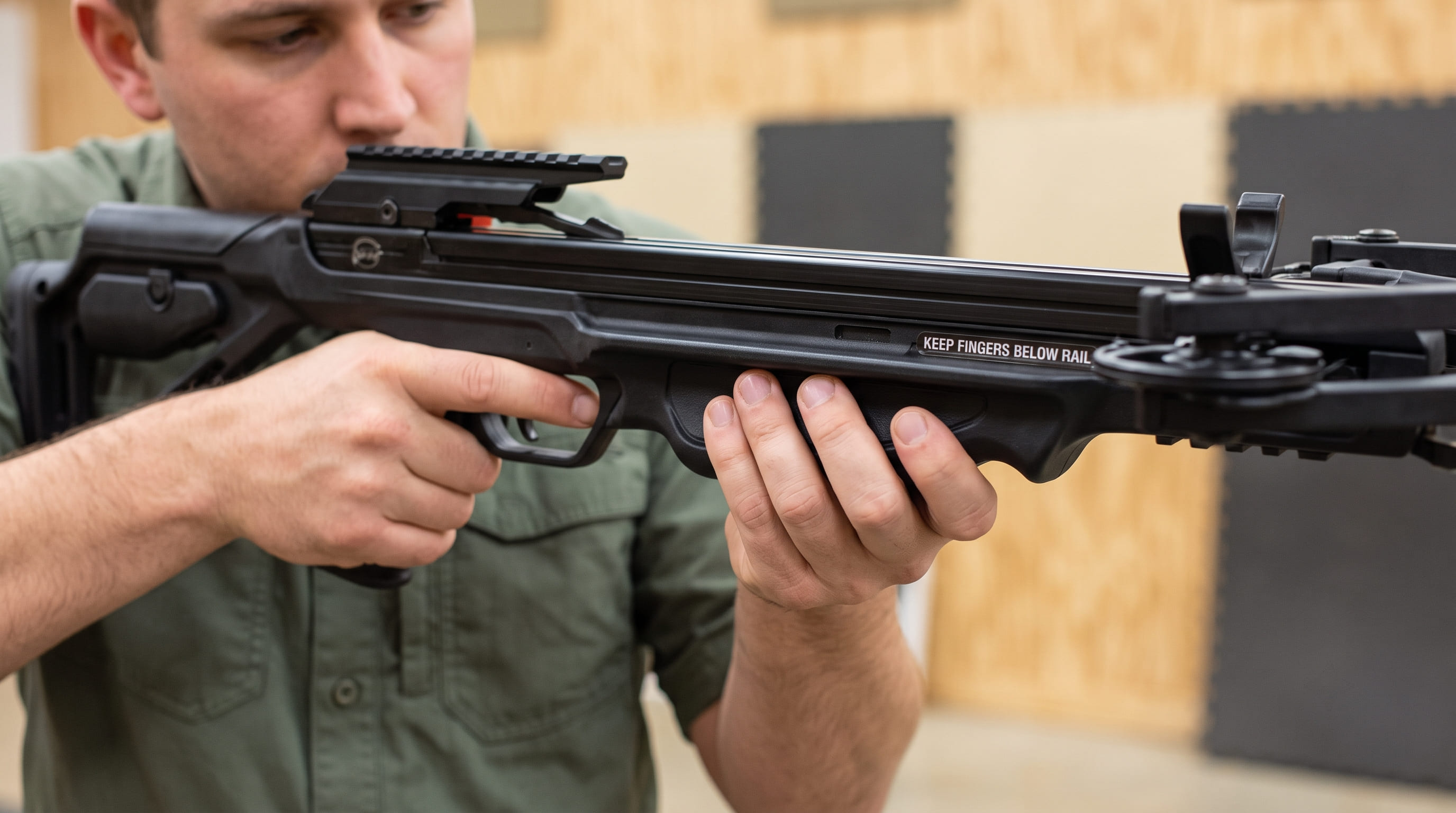
The most common injuries come from fingers or thumbs on or above the flight track when the crossbow fires or the string moves. Keep all fingers below the rail and away from the string's path at all times, and hold the crossbow only by the stock, grip, and handles designed for the purpose.
Get the String Centered and Even
The string has to travel evenly on both sides so it seats squarely in the latch. Many crossbows have a center mark on the string for this reason. An uneven draw, where one limb is pulled farther than the other, will cant the string and shift your point of impact. Draw smoothly and use the same steady motion every time.
Never Dry-Fire
Dry-firing means releasing the string without a bolt on the rail. It can damage the limbs and cams and voids most warranties, and it can be dangerous. Only fire with a proper bolt loaded, and use the de-cock method (below) if you need to safely lower the string without firing.
Method 1: Hand Cocking
How It Works
Hand cocking means placing your foot in the stirrup and pulling the string by hand with your fingers, without any aid. It's the simplest method and the hardest.
Why We Don't Recommend It for Most Crossbows
At the draw weights typical of hunting crossbows, hand cocking is difficult to do evenly, and it takes real strength. Uneven pulls are easy to make, which hurts accuracy, and fatigue makes mistakes more likely across a day of shooting. Hand cocking is only realistic for very low draw-weight crossbows, such as small pistol crossbows. If your crossbow came with a cocking aid or requires one, use it.
Method 2: Rope Cocking Device
How It Works
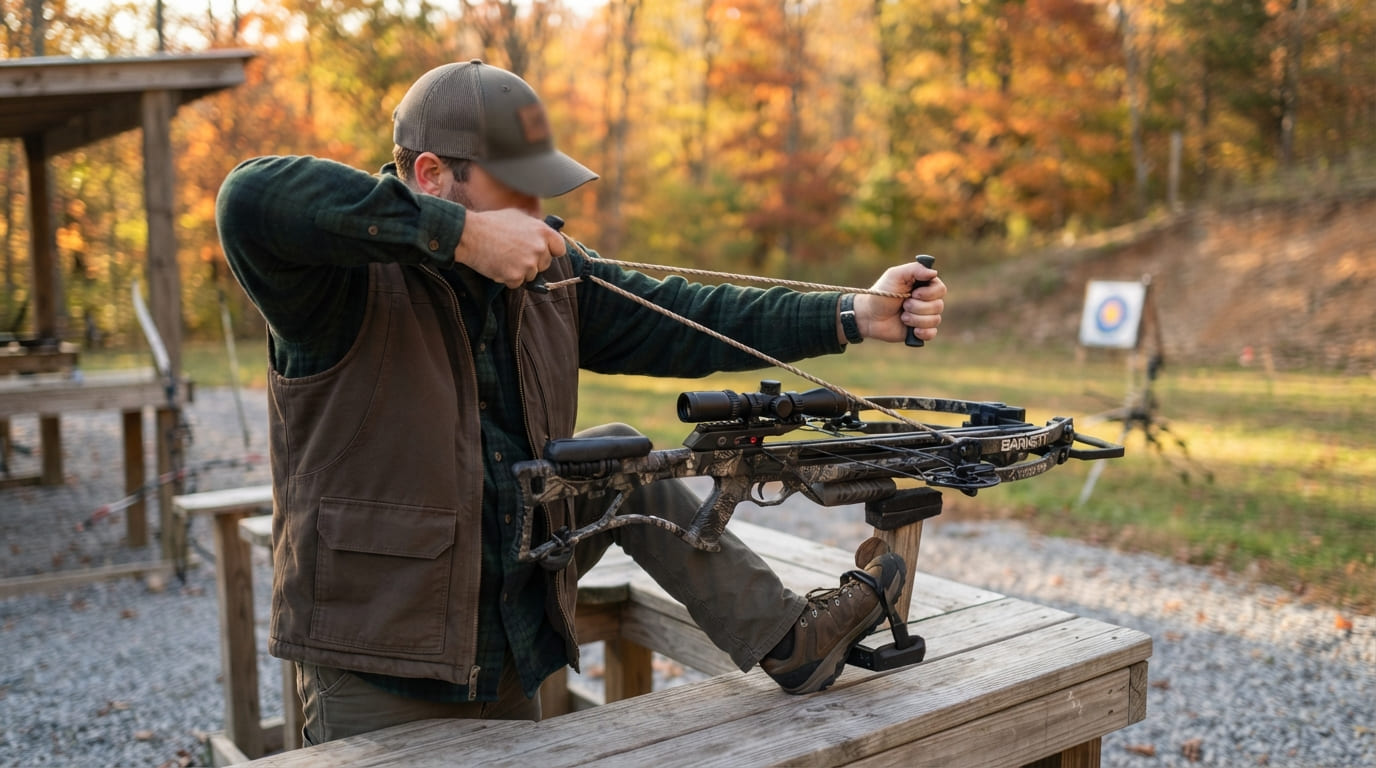
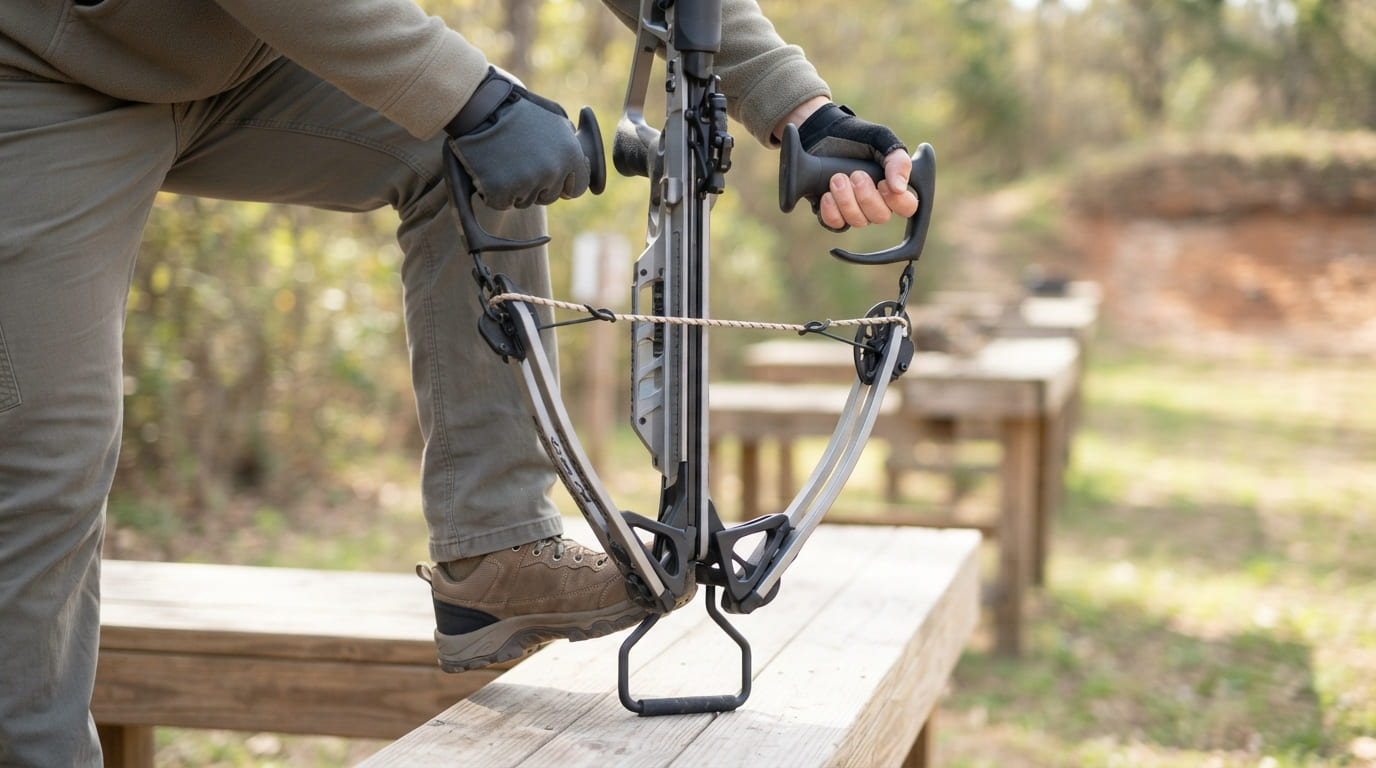
A rope cocking device is a length of rope with handles that hooks onto the string and uses leverage to reduce the effort of pulling it back. It's the most common entry-level solution and comes bundled with many budget crossbow packages. The Barnett Premium Rope Cocking Device, for example, is a 50-inch rope with ambidextrous handles and a magnet lock, priced $19–$29, and it cuts cocking tension by up to 50%.
Step-by-Step Rope Cocking
- Make sure the crossbow is unloaded and the safety is on.
- Place the crossbow on the ground, muzzle down, and put your foot firmly in the stirrup.
- Attach the rope to the string according to your device's instructions, with the hooks positioned evenly on either side of center.
- Grip both handles and pull straight up in a smooth, even motion, keeping your back straight and using your legs, not just your arms.
- Pull until the string seats in the latch. You should hear or feel it lock into place.
- Confirm the safety is engaged, then remove the rope.
- Inspect the string to make sure it sits evenly before loading a bolt.
Pros and Cons of a Rope Device
The big advantages are price, portability, and simplicity. Our review found it cut effort by roughly half, and the compact device fits easily in a pack. The downsides are that it still takes real effort, it takes more time than a crank, and it's a separate accessory you can forget or lose. It's also not compatible with every crossbow: the Barnett device, for example, doesn't work with Barnett's reverse-draw models. Check compatibility before you buy.
Method 3: Crank Cocking Device
How It Works
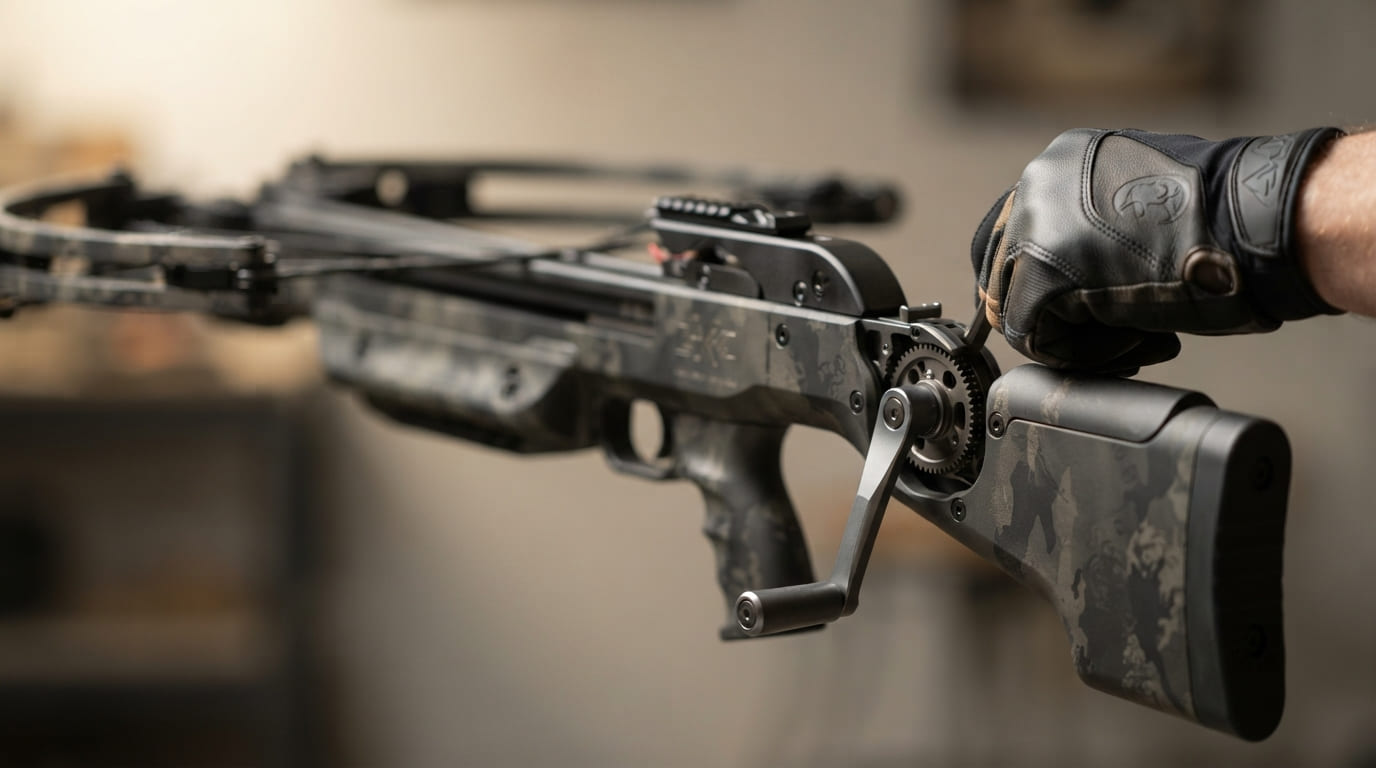
A crank cocking device uses a hand crank and gearing to draw the string back, so you turn a handle instead of pulling on a rope. Some are built into the crossbow's stock and others attach as an accessory. The TenPoint ACUdraw, a stock-integrated crank priced $285–$295, reduced effective cocking effort to roughly 5 pounds in our review, requiring little more than a finger's worth of strength.
Step-by-Step Crank Cocking
- Confirm the crossbow is unloaded and the safety is on.
- Engage the crank according to your model's instructions. Many systems have a rope or hook that attaches to the string.
- Turn the handle in a smooth, steady motion. The gearing does the work.
- Continue until the string seats in the latch and the crank stops or signals it's finished.
- Confirm the safety is on and disengage the device.
- Check the string for even seating.
Pros and Cons of a Crank
The main benefit is how little effort it takes, which makes it a strong option for shooters with limited upper-body strength, older hunters, and anyone who cocks repeatedly across a long day. Because the mechanism draws the string the same way each time, our review noted excellent consistency in anchor point and string tension. The costs are the price, some added weight and bulk, and compatibility limits: the ACUdraw fits select TenPoint, Wicked Ridge, and Horton models and is not for use on ultra-narrow or reverse-draw crossbows.
Method 4: Integrated Cocking Systems
Many premium crossbows build the cocking mechanism into the design, so there's nothing separate to attach or lose. Examples we've reviewed include the Ravin R29X and Ravin R26X, which use Ravin's integrated Silent Cocking system, and the TenPoint TX Ultra 29.5 and TRX Ultra, which use TenPoint's ACUslide MAXX.
The difference in felt effort can be dramatic. Our crossbow draw weight by body size guide covers examples like the TX Ultra 29.5 bringing 350 lbs of true draw weight down to roughly 13.3 lbs felt. Integrated systems are also the quietest and most repeatable option, which matters if you re-cock in a blind with game nearby.
The tradeoff is that the system is mandatory hardware. At those draw weights, hand cocking isn't a realistic backup, so if the mechanism fails in the field, you're not shooting until it's repaired.
Rope vs. Crank: Which Should You Choose?
Choose a Rope If
You're on a budget, you have a crossbow with a moderate draw weight, and you can handle some effort. Many first-time buyers start here, and it's the reason a rope sled is included in packages like the Barnett Hyper Whitetail 410, where it reduced felt draw effort to roughly 95 lbs from a true 190 lbs in our review.
Choose a Crank or Integrated System If
Cocking effort is a real concern for you, you shoot a lot, or you hunt in situations where a quiet, repeatable re-cock matters. A crank costs more, but the ease of use adds up across a season. If you're shopping for a crossbow with easy cocking built in, our best crossbows for beginners guide highlights the easiest-to-cock option we've reviewed.
Think About Your Own Body
There's no shame in choosing the easier system. A smaller-framed shooter, an older hunter, or anyone with a shoulder or back issue will shoot better and more safely with a crank. Our draw-weight guide helps you match a crossbow to your frame.
How to De-Cock a Crossbow Safely
A cocked crossbow that you don't fire is a hazard. You shouldn't leave it cocked, and you shouldn't dry-fire it to empty it. The safe options are to use a built-in de-cocking feature, if your crossbow has one, or to fire the crossbow into a suitable target with a proper bolt, as the manual directs.
Systems like the ACUdraw De-Cock on the TenPoint Titan X De-Cock and the Wicked Ridge Invader M1 De-Cock let you gradually lower the string to rest without firing. That's a genuine safety and convenience feature at the end of a hunt when you didn't take a shot. Always follow your manual's exact de-cocking procedure, because the wrong sequence can be dangerous.
Common Cocking Mistakes
Uneven String Seating
If the string doesn't seat evenly, your bolts will drift. Cock smoothly and check the string against its center mark each time.
Leaving the Crossbow Cocked
Don't leave a crossbow cocked for extended periods. Long-term cocking can stress the limbs and string and is a safety risk. Cock it when you're ready to hunt, and de-cock it safely when you're done.
Rushing in the Field
A cold, tired hunter in a rush is the most likely to make a mistake. Slow down, keep your hands clear, and cock deliberately.
Ignoring the Manual and Compatibility
Cocking devices are not universal. Confirm that the device you buy is designed for your exact crossbow, and follow the manufacturer's procedure.
Skipping Maintenance
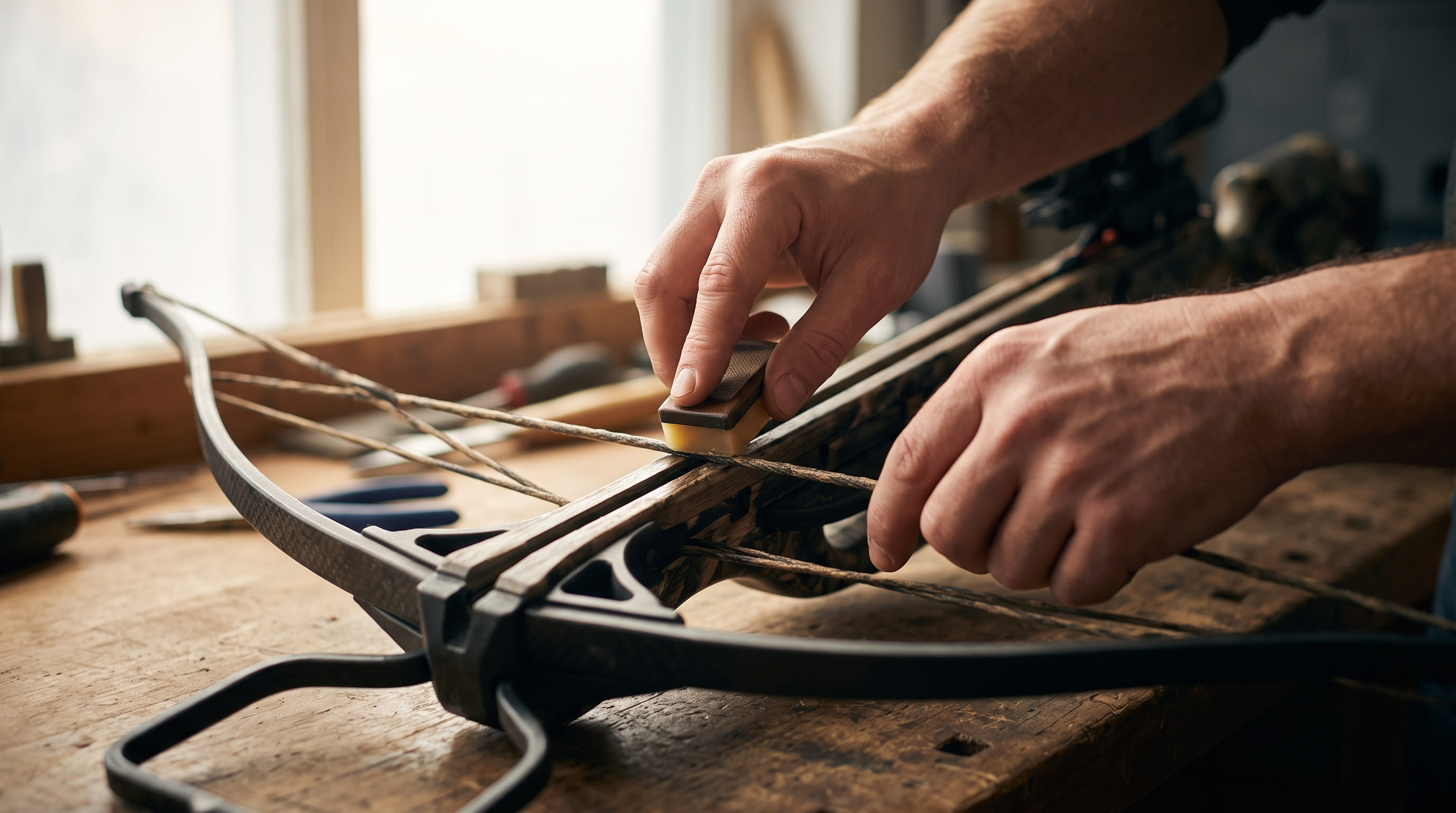
A dry, worn string and rail make cocking harder and can cause uneven seating. Our how to maintain a crossbow guide covers waxing and inspection intervals, and our crossbow safety rules for beginners guide covers the broader safe-handling rules.
Frequently Asked Questions
How do you cock a crossbow?
Place your foot in the stirrup with the crossbow unloaded and the safety on, attach your cocking aid, and pull or crank the string back evenly until it seats in the latch. Then engage the safety, remove the aid, and check the string. Always follow your manual for your specific model.
Is a rope or a crank better for cocking a crossbow?
A crank takes far less effort and is more repeatable, but it costs more. A rope is cheaper and more portable and cuts effort by roughly half, but it takes more strength. Choose based on your budget, your strength, and your crossbow's compatibility.
Can you cock a crossbow by hand?
Only on very low draw-weight crossbows. Typical hunting crossbows have too much draw weight to hand cock evenly and safely, so use a cocking aid.
How do you uncock a crossbow without firing it?
Use a built-in de-cocking system if your crossbow has one, or follow your manual's approved procedure. Never dry-fire the crossbow to empty it.
How much effort does it take to cock a crossbow?
It depends on the system. A rope device cuts effort by roughly half, while a crank like the ACUdraw reduces it to about 5 pounds. Integrated systems can bring very high draw weights down to a manageable felt effort.
Why does my crossbow shoot off target after cocking?
The most common cause is an uneven string seating. Check that the string is centered and both sides were pulled equally, and inspect your string and rail for wear.
Final Recommendation
If you're new to crossbows, a rope cocking aid is a fine, affordable starting point, and a crank or integrated system is worth paying for if cocking effort matters to you. Whichever you use, keep your fingers clear, cock evenly, never dry-fire, and follow your manual. Learn the routine at the range until it's automatic, so it stays safe and quiet when it counts.
Looking to round out your setup? Our crossbow accessories category hub lists the cocking devices we've reviewed, and our how to sight in a crossbow scope guide covers the next step once you're comfortable cocking.
Ready to compare models? Read our tested crossbow reviews to find your perfect match.