Crossbow Cocking Aid in plain terms
Crossbow Cocking Aid meaning: A cocking aid is a rope or crank device that cuts the effort needed to draw a crossbow string and helps it seat evenly in the latch.
Also called: crossbow cocking device, cocking device, cocking assist, cocking mechanism
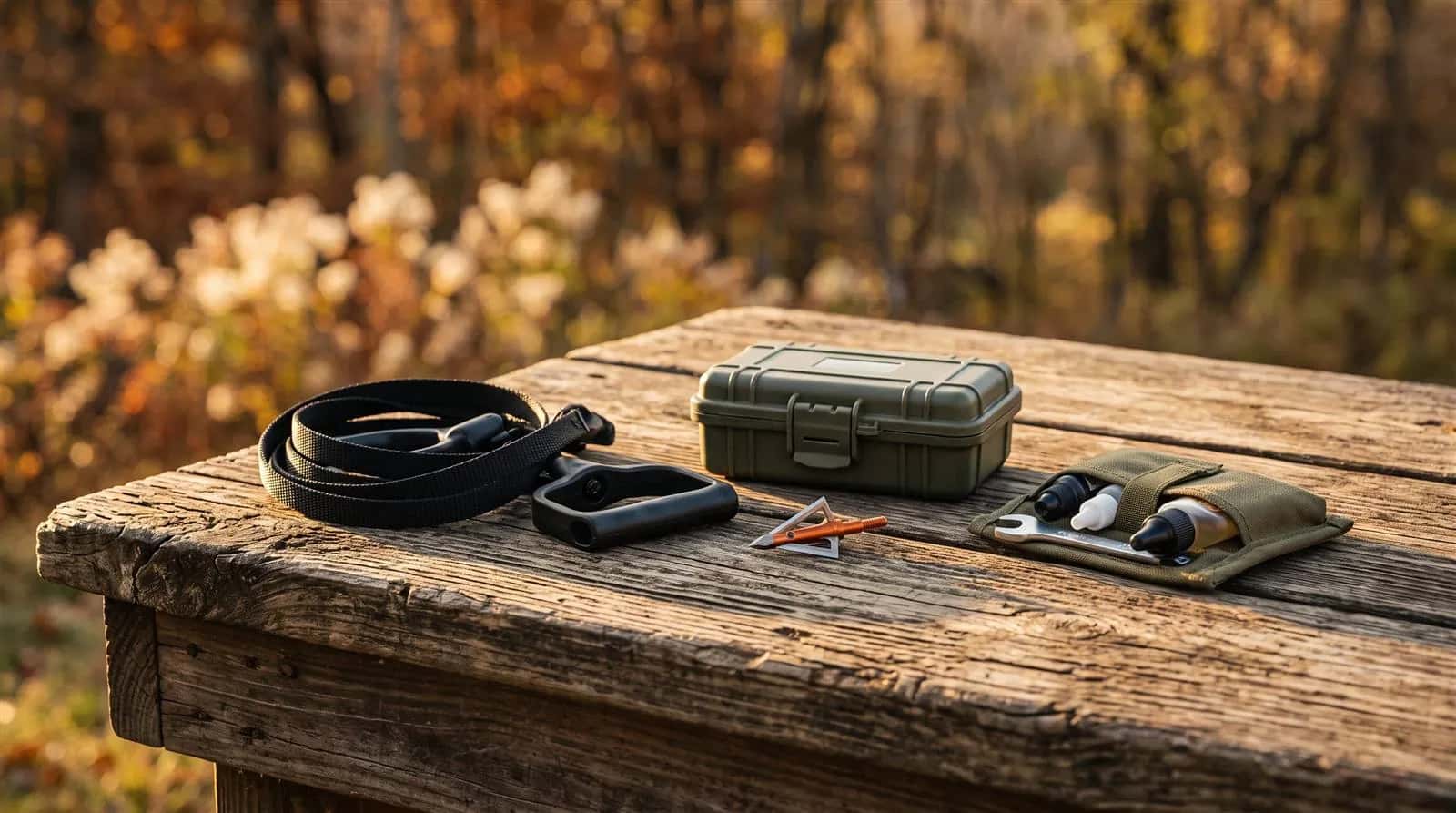
A cocking aid is any device that helps you pull a crossbow string back to the latch. The two families are the cocking rope, a pulley-and-handle system that multiplies your pull, and the crank cocking device, a geared mechanism that winds the string back. Some crossbows ship with one, some have one built into the stock, and others expect you to buy it separately.
The aid has two jobs. The obvious one is cutting the effort, because a modern draw weight of 150 lbs or more is a lot to haul by hand. The less obvious one is evenness: both sides of the string need to travel the same distance so it sits square in the string latch. A string that is cocked unevenly tends to shoot to one side and wears unevenly.
Cocking by hand with no aid is possible on lighter, usually recurve designs, but it is the least repeatable method. Most manufacturers specify the aid their crossbow was built around, and that instruction is the one to follow.
Rope, crank and hand cocking compared
| Type | Typical effort | Speed | Carry weight | Main trade-off |
|---|---|---|---|---|
| None (hand cocking) | Full draw weight | Fast if you can do it | Nothing | Hard to cock evenly; limited to lighter crossbows |
| Rope cocker | Roughly half of draw weight | Moderate | Under a pound | Still needs real strength; easy to forget |
| Detachable crank | Low and steady | Slower | Moderate | Extra part to attach and carry |
| Integrated crank | Low and steady | Slower | Built into the stock | Adds cost and bulk; model-specific |
Why it matters
Cocking is where many shooters get tired, rushed or careless. A good aid lowers the physical barrier, which matters for shooters with limited upper-body strength and for anyone who cocks many times in a session.
Even string travel affects accuracy. An aid that centres the string reduces one source of left-right error before the bolt is ever fired, and it reduces uneven wear on the string and cables.
It also affects safety. A crossbow that is cocked awkwardly, or by someone straining, is more likely to be mishandled. Pairing the right aid with a clear de-cocking plan is part of owning a crossbow responsibly.
Use the cocking effort estimator to see how much a rope or crank reduces the effort at your crossbow's draw weight before choosing one.
How to read it on a spec sheet
- Check whether the aid is included, sold separately, or built in. A listed price for the crossbow may not cover it.
- Look for the compatibility list. A rope or crank is usually rated for specific models, and some makers exclude certain layouts, for example the Barnett rope lists its own reverse draw cam models as incompatible.
- Compare felt effort, not just draw weight. A figure such as 5 lbs felt on a 190 lb crossbow describes the crank, not the limbs.
- Note the rope length or crank handle design if you are very tall, very short or left-handed.
- Ask what happens if the aid fails. On very heavy crossbows there may be no realistic hand-cocking backup.
Common mistakes
- Using an aid that is not listed for your crossbow, which can load the string or latch unevenly.
- Attaching a rope or crank incorrectly (for example hooked on one side only) and drawing an uneven string.
- Hand cocking a crossbow that is too heavy to draw evenly, then shooting with the string off-centre.
- Leaving the rope at home. A detachable aid you forget is no help in the field.
- Forgetting that cocking is only half of the job and having no plan to unload a cocked crossbow.
Choosing and checking a cocking aid
- Read your manual for the aid it specifies and any listed compatibility.
- Confirm the aid matches your crossbow model, not just its draw weight.
- Inspect rope, handles, hooks, gears and locks for wear before each session.
- With the crossbow pointed in a safe direction, attach the aid exactly as described and keep fingers clear of the rail and flight track.
- Draw the string smoothly and watch that both sides travel evenly into the latch.
- Check the safety switch and the string seating before loading a bolt.
- Decide how you will unload before you cock, and carry what that method needs.
See it in our reviews
- Barnett Rope Cocking Device — rated 4.2/5
- TenPoint ACUdraw — rated 4.5/5
- TenPoint Titan X — rated 4.5/5
Frequently Asked Questions
Do I need a cocking aid for a crossbow?
Not always, but most modern compound crossbows are heavy enough that one is strongly recommended and often required by the manufacturer. An aid makes the draw easier and more even, which also helps accuracy and reduces wear on the string.
What is the difference between a rope cocker and a crank?
A rope cocker uses pulleys to roughly halve the effort but you still pull with your arms. A crank uses gearing so the effort is low and steady, but it is slower, heavier and often model-specific.
Can I use any cocking aid on any crossbow?
No. Aids are usually rated for specific models, and reverse-draw and very narrow designs are common exclusions. Check the manufacturer compatibility list and follow your manual before attaching anything to the string.
Does a cocking aid improve accuracy?
It can, indirectly. By drawing both sides of the string evenly it helps the string seat square in the latch, removing one cause of left-right error. It does not replace a good zero and consistent form.
How much effort does a rope cocking aid save?
Rope aids are commonly rated at roughly half of the draw weight, a little more after pulley friction. The cocking rope entry works through an example.
Is a built-in crank worth the extra cost?
It is worth considering if you cock many times a day, have limited upper-body strength, or want nothing extra to carry. Occasional shooters on a lighter crossbow may be well served by a rope.
Can a cocking aid also de-cock a crossbow?
Only some can. A few integrated crank systems run in reverse to lower the string under control. Never assume yours does. Follow the manufacturer approved method and our guide on how to de-cock a crossbow safely.
What should I do if my cocking aid breaks?
Stop using it, keep the crossbow pointed safely, and contact the manufacturer or a qualified dealer. Do not improvise a replacement with ordinary rope or hardware, and do not dry fire to release the string.
Related guides
Guides where cocking aid shapes a real choice.
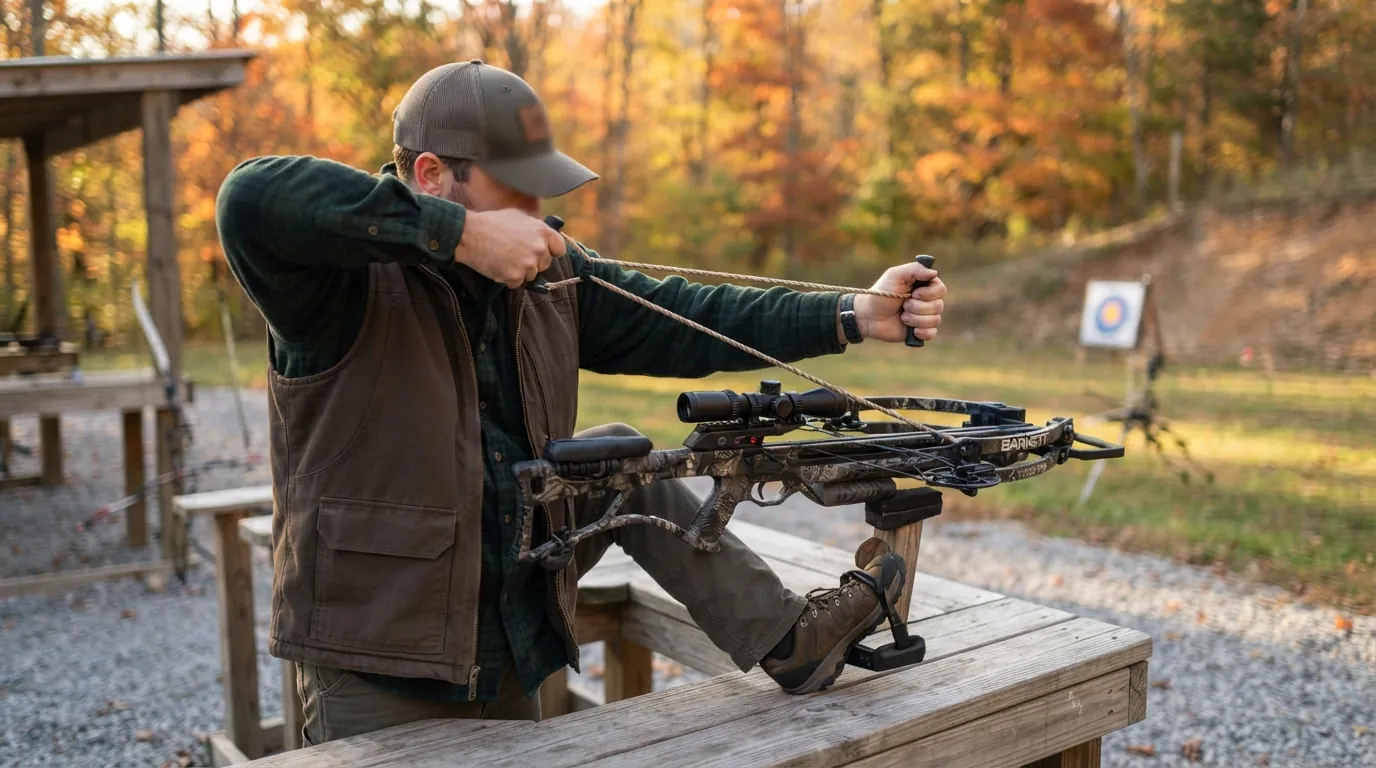 GuideHow to Cock a Crossbow: By Hand, Rope or CrankHand cocking, rope cocking, crank devices and integrated systems compared, with the steps that keep the string centered and your fingers clear.Read the guide
 GuideHow to Decock a Crossbow Safely (2026)How to de-cock a crossbow safely using integrated systems or a discharge bolt into a rated target, plus what never to do and how to fix common mistakes.Read the guide
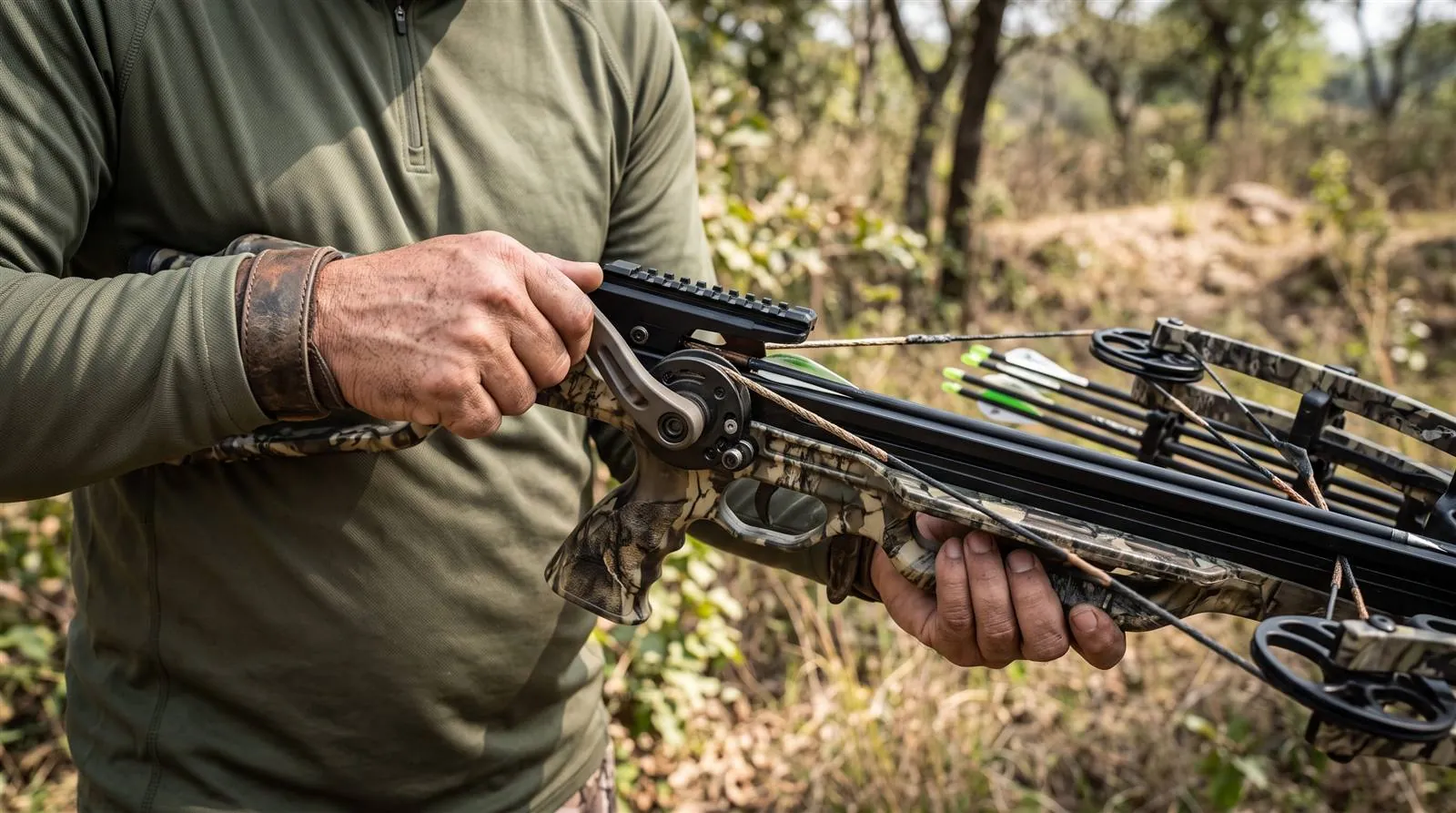 GuideCrossbow Draw Weight: How Much Do You Really Need?How much draw weight you can cock comfortably, true versus felt draw weight, a ten-cycle self-test, and how rope and crank aids change the numbers.Read the guide
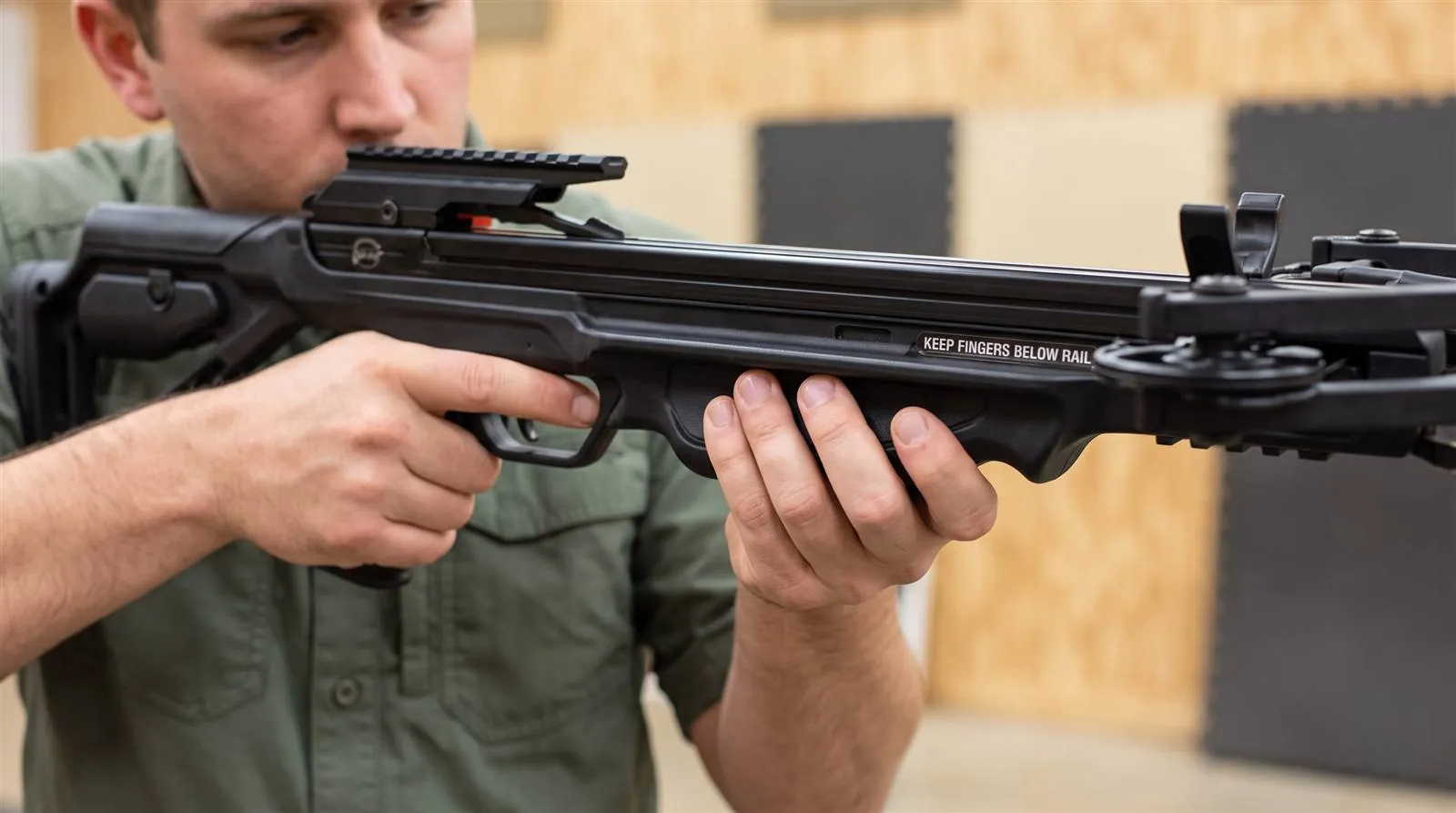 GuideCrossbow Safety Rules for BeginnersCore crossbow safety rules: finger placement below the rail, avoiding dry fire, treating a cocked crossbow as loaded, safe cocking and safe de-cocking.Read the guide
Definitions are general information. Manufacturer figures vary, so follow your crossbow's manual and verify local laws with the relevant authority.