Crossbow hunting rewards preparation more than horsepower. Almost any modern hunting crossbow carries enough energy for deer; what decides the season is whether it is legal where and when you hunt, whether it hits where you aim with the head you will actually hunt with, whether you can shoot it from your stand or blind, and whether you know when not to shoot.
This hub walks through how to hunt with a crossbow in the order the season happens: what you can hunt, the rules, setup, the hunting method, the shot, the recovery, then gear and safety. Each section gives the short version and links to the guide or calculator that goes deeper. Figures for crossbows come from manufacturer specifications; energy and range figures are labelled as published guidance.
What Can You Hunt With a Crossbow?
Where the law allows it, a crossbow can take anything a vertical bow can: deer, elk, black bear, wild hogs, turkey, predators and small game, and with a reel kit, fish. The limits are legal (which species and seasons allow a crossbow), ethical (enough energy and the right head for the animal) and practical (shot distance and how quickly you can reload). If you are still deciding between the two tools, our crossbow vs compound bow comparison sets them side by side.
A widely republished bowhunting rule of thumb sorts game by the kinetic energy an arrow should carry at impact. Treat the bands below as general guidance for planning: no wildlife agency publishes them, they are not a law, and they do not guarantee penetration; broadhead design, bolt weight and shot placement matter as much.
| Game class (examples) | Rule-of-thumb energy at impact | Typical head | What matters most |
|---|---|---|---|
| Small game (rabbit, squirrel) | Under 25 ft-lbs | Blunt or spring-arm small-game head | Close, careful shots; a backstop, because bolts skip |
| Medium game (deer, pronghorn) | 25 to 41 ft-lbs | Fixed-blade or mechanical broadhead | Shot angle and range, not speed |
| Large game (elk, black bear, wild hog) | 42 to 65 ft-lbs | Durable fixed-blade broadhead | A heavier bolt for penetration; a shorter range limit |
| Toughest game (Cape buffalo, grizzly) | Over 65 ft-lbs | Heavy, cut-on-contact heads | Usually outside crossbow seasons and rules; check first |
Turkey and fish are not on that chart. Every full-size hunting crossbow in our reviews lists far more energy than the medium-game band at the rail, which is why heads, angles and distance, not raw speed, are the real variables for most hunters. Our guide to crossbow FPS and energy for deer charts launch energy by bolt weight and speed and explains why no FPS minimum exists.
Deer
Whitetail and mule deer are why most people buy a crossbow, and the deer pages on this site go deepest. Any crossbow with a sound broadhead and a solid zero is enough; the choice comes down to cocking effort, width in a blind and noise. Our best crossbows for deer hunting roundup ranks six models on those points, and the shot placement section below covers where to aim. Our guide on how to hunt deer with a crossbow lays out the whitetail season itself: stand or blind setup, then early season, rut and late season.
Elk and moose
Big, heavy-boned animals reward a heavier bolt and a durable fixed-blade broadhead over maximum cutting diameter. Open country tempts long shots, so set a lower range limit than you would for deer and practice at the distances the terrain actually gives you. Crossbow access in elk and moose seasons is narrower than for deer in many places, so check the rules before you plan the trip.
Black bear
Bear sits in the large-game band. Hide, fat and long hair soak up blood, so a lethal hit can leave a thin trail; a broadside or slightly quartering-away shot at modest range and a head that cuts on contact give the best chance of a short recovery. Bear seasons, baiting rules and weapon rules vary widely, which is a question for the laws page, not this one.
Wild hogs
Hogs are in the large-game band too, and mature boars carry a thick shoulder plate, so shot angle matters more than speed: aim tight behind the shoulder and pass on a hog that is facing you. Rules on hogs differ from state to state and sometimes by land type, so confirm them before you go.
Turkey
Turkeys present a small vital area and react to movement, which is where a crossbow helps: it is already cocked, so there is no draw to give you away. Hunters use large-cut mechanical heads or turkey-specific heads made for body or head-and-neck shots; keep shots close and know exactly where your zero puts the bolt at short range. Spring and fall crossbow rules differ, so check both.
Predators, small game and bowfishing
Coyotes take a normal broadhead; small game calls for blunt or spring-arm small-game heads that stop bolts skipping into the grass, and a lighter, cheaper bolt you will not mind losing. Bowfishing needs a reel kit and line attached to the bolt, and crossbow use for fishing is legal in some waters and not others. Bowhunter's guide to small-game and bird hunting notes that many states allow archery tackle for waterfowl but not crossbows, and that birds should only be shot on the ground or water, never in flight.
How Much Energy Do Reviewed Crossbows Carry?
The kinetic energy calculator turns any bolt weight and speed into foot-pounds, using grains × FPS² ÷ 450,240. Here is how five crossbows from our reviews compare on their makers' own figures. These are manufacturer ratings with the maker's named bolt, at the rail, not figures from our own shooting.
| Crossbow | Maker's rated speed (with bolt) | Maker's listed energy | Cocked width (maker) | Buy |
|---|---|---|---|---|
| Wicked Ridge Invader M1 | 390 FPS (370 grain); 380 FPS (410 grain) | 125 ft-lbs; 131 ft-lbs | 9.5" | Check price on Amazon |
| TenPoint Titan X | 400 FPS (410 grain) | 146 ft-lbs | 9.75" | Check price on Amazon |
| Barnett Hyper Whitetail 410 | 410 FPS (380 grain) | 142 ft-lbs | 9.2" | Check price on Amazon |
| TenPoint TX Ultra 26.5 | 410 FPS (410 grain) | 153 ft-lbs | 7" | Check price on Amazon |
| Ravin R29X | 450 FPS (400 grain) | 180 ft-lbs | Not listed | Check price on Amazon |
Every one of them lists roughly double the top of the large-game band or more at the rail. Energy does fall with distance. As a worked estimate: the bolt drop chart models a 400-grain bolt at 400 FPS losing roughly 1.5 FPS per yard, so a bolt leaving at 400 FPS (about 142 ft-lbs) arrives at 40 yards near 340 FPS, about 103 ft-lbs. That is still well above the large-game band, so for hunting the useful questions are bolt weight, head and distance.
If you are choosing a bolt for elk, bear or hogs, heavier bolts give up some speed but carry more momentum. Always stay inside the bolt specification in your crossbow manual.
Our guide to how to choose crossbow bolts explains weight, length and nocks, so you can pick a hunting bolt your crossbow is rated for.
Crossbow Hunting Seasons and Legality
Crossbow rules are set by each state wildlife agency and change more often than most hunters expect. In general terms, states tend to follow one of three patterns: a crossbow is allowed through archery season like any bow, allowed only in firearm or special seasons, or allowed in archery season only with a qualifying permit, often tied to a disability. Rules can also set a minimum draw weight, bolt or broadhead requirements, hunter-education requirements, hunter-orange rules for overlapping seasons, and how a crossbow must be carried in a vehicle.
We keep every state summary, with links to each agency, on one page: our guide to crossbow hunting laws by state. Read your state's current regulations for the species and season you plan to hunt before you buy a tag or a crossbow. Nothing here is legal advice.
Setting Up Before the Season
Start at least a month before opening day. Each step below has its own guide.
Pick a draw weight you can cock in the cold
You will cock the crossbow in the dark, in layers, possibly at the base of a tree. Our guide to crossbow draw weight by body size helps match the crossbow to the person, so you do not end up with a pull you can only manage on a warm afternoon.
A rope or crank cocking aid cuts the effort, and the cocking effort estimator shows by how much for your draw weight.
Practice the method you will use in the field: our guide on how to cock a crossbow covers the cocking rope, crank and integrated systems step by step. If you hunt from a stand, pick a method you can use seated without leaning out of the stand.
Reviewed for this topic
TenPoint Titan XACUdraw De-Cock crank cocking with built-in de-cocking, rated 400 FPS by TenPoint.
Sight in, then confirm every distance
Mount the scope firmly and zero the top aiming point at 20 yards.
Then check each mark on your reticle at the distances you will shoot. Our guide on sighting in a crossbow scope walks through the six steps and the click math.
If a BDC reticle does not line up with your bolt speed, the bolt drop chart linked above shows where the gap is.
Tune your broadheads
A broadhead can land away from the group your field points made, because blades ahead of the bolt magnify any wobble.
Spin-test each bolt, align fixed blades with the vanes, match head and point weight, and only then touch the scope. The full order of checks is in our crossbow broadhead tuning guide.
If you have not chosen a head yet, our roundup of the best crossbow broadheads compares fixed and mechanical heads rated for fast crossbows.
Practice the way you will hunt
The range bench is where you find your zero. The stand or blind is where you find out whether you can use it. Bowhunter and Grand View Outdoors both advise shooting from your actual setup before the season, and the details below are the usual ones:
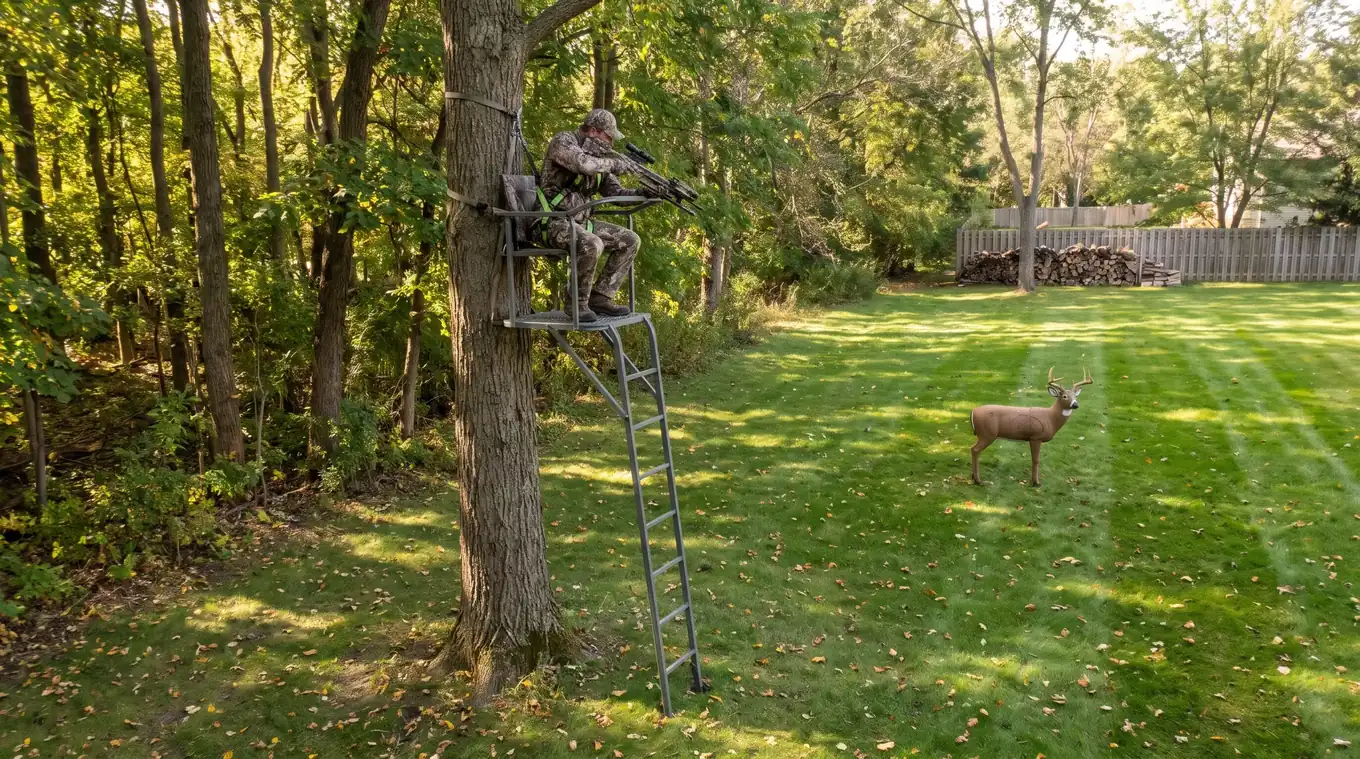
- Same position. Sit in the stand or on the blind chair you will hunt from and shoot from it, at a target on the ground.
- Same clothes. Practice in your coldest layers and gloves; a jacket can change how the stock fits your shoulder and how your finger reaches the trigger.
- Same rest. Use the shooting rail, sticks or bipod you will hunt with, so the crossbow sits the same way every time.
- Same angles. Shoot down from height and at the hard-left and hard-right angles the stand allows; our guide to crossbow shooting high, low or sideways explains why steep angles change the hit.
- Limb clearance. Check that the limbs clear the stand rail, blind window and branches at every angle before you need it.
- Low light. Take a few shots at dawn or dusk so you know how the reticle looks at the edge of legal light.
Range the landmarks around your stand with a rangefinder on the first sit, so you know the distances before an animal shows up.
Tree Stand, Ground Blind or Still-Hunting?
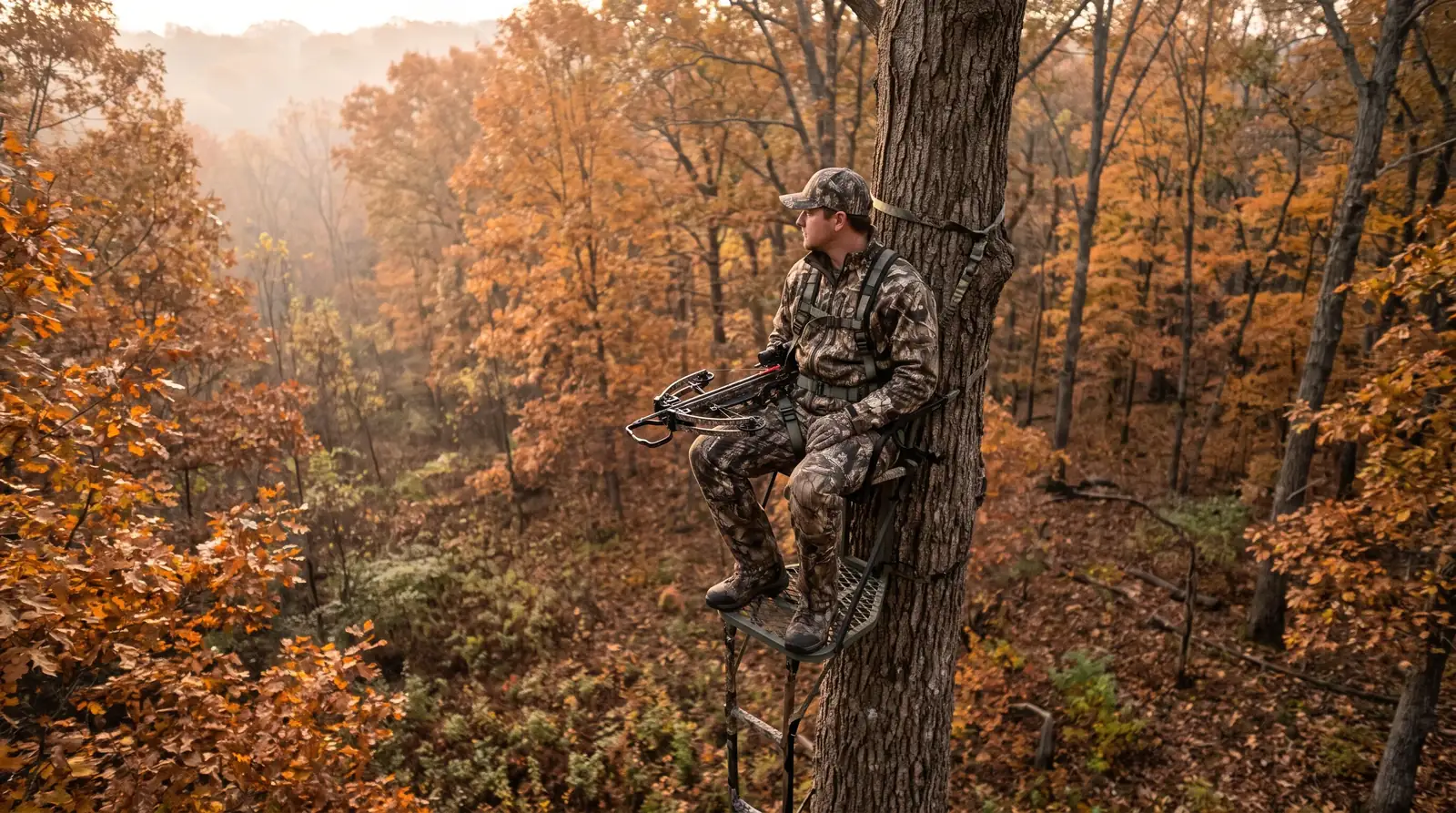
Most crossbow hunting is done from a fixed position, because the crossbow is heavier than a vertical bow and you cannot quickly re-cock for a second shot. Each method changes what you need from the crossbow.
| Method | Strengths | Watch for | Crossbow fit |
|---|---|---|---|
| Tree stand or saddle | Height keeps scent and movement above game; wide view | Fall risk; steep down-angles; limb clearance on the rail | Moderate weight, solid rest, haul line |
| Ground blind | Hides movement; easy for older hunters; good in rain and cold | Window height and width; limb and string clearance; shorter view | Narrow cocked width, short length, quiet shot |
| Still-hunting or stalking | Covers ground; suits hogs, predators and small game | Carrying cocked; noise; shooting off-hand | Light, short; safe carry habits |
From a tree stand or saddle
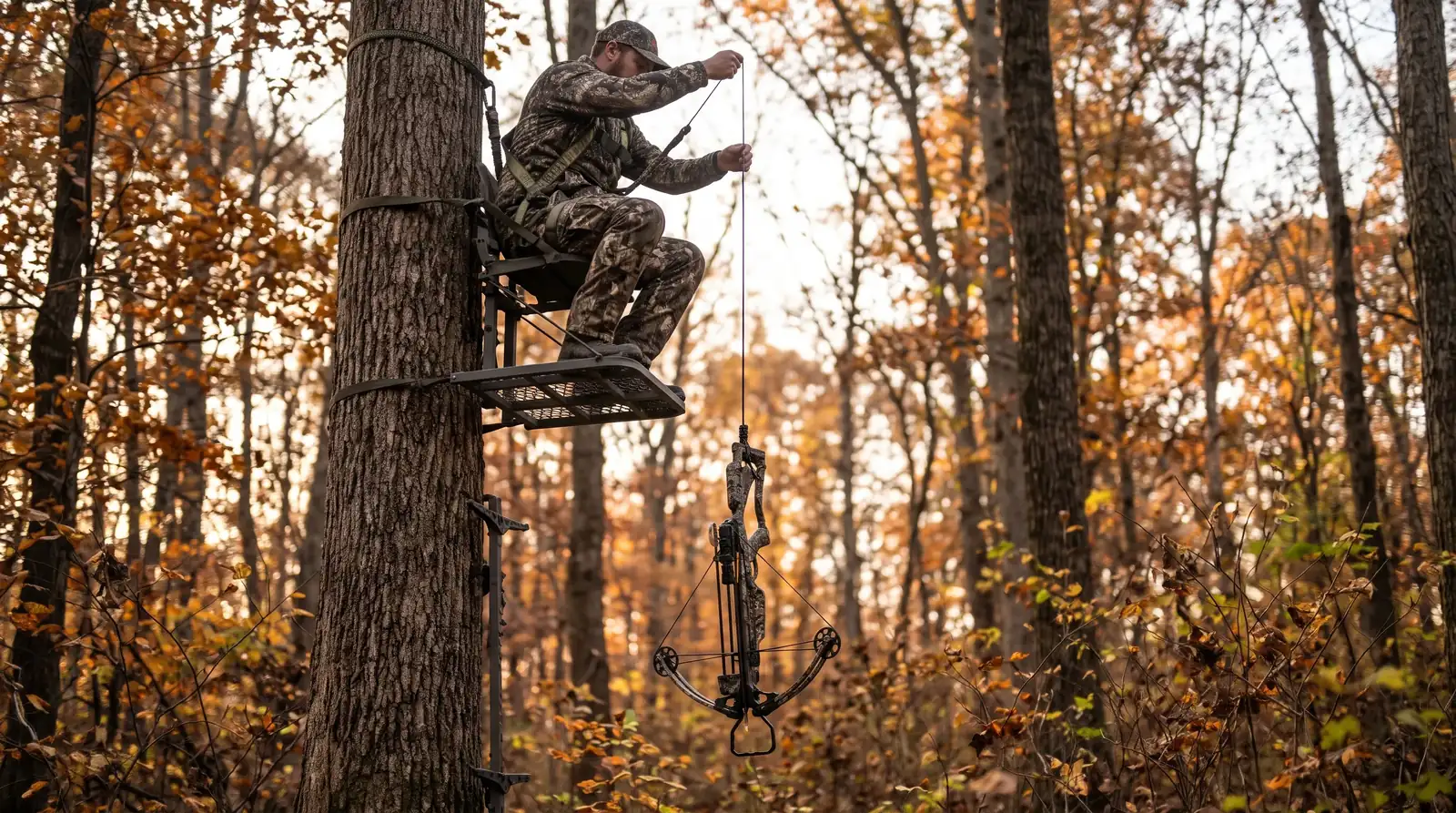
Height helps, but it adds two jobs: getting the crossbow up safely and shooting down at an angle. Haul it up on a line, uncocked and never loaded (see the safety section below), and set your shooting lanes so animals pass inside your proven range. Shooting down from height also moves the impact point, which the high/low guide linked above explains with stand-height examples.
From a ground blind
Sit far enough back to stay in the shadows, open only the windows you need, and check before the hunt that the limbs and string clear the window frame when you shoot. Width matters here: the axle-to-axle width when cocked is the number to compare. The TX Ultra 26.5 in the table above is 7 inches wide cocked, against 9.2 to 9.75 inches for the full-size models listed, and our best compact crossbows roundup compares more narrow frames.
Still-hunting and stalking
Moving with a crossbow means carrying it cocked or cocking when you find an animal, and the cocking step makes noise and movement. Bowhunter advises never walking with a loaded crossbow and, when moving quickly, cocking and loading only after you stop; keep the safety on and follow your state's carry rules and your manual. A short, light crossbow and a set of shooting sticks make off-hand shots far steadier.
Shot Placement and Ethical Range
A clean kill comes from putting a sharp broadhead through the heart and lungs. The shot that does that most reliably is broadside or slightly quartering away, on a relaxed animal, inside your proven range, with nothing in the bolt's path. Our guide to crossbow shot placement on deer gives the take-or-pass call and aim point for every angle, with diagrams and tree stand aim points; the short version:
- Aim tight behind the front shoulder, low-to-middle of the chest on a broadside deer, so the bolt passes through both lungs and near the heart.
- Quartering away: aim so the bolt exits through the far front shoulder; the entry point moves back.
- Pass on quartering-to and facing shots. The shoulder and leg bones guard the vitals.
- Pass on alert animals. A crossbow bolt is fast, but a tense deer can still drop as it reacts to the sound.
- Clear path. A twig can deflect a bolt; check the lane, not just the animal.
What is an ethical range for a crossbow?
There is no single number. Bowhunter's crossbow primer sets 40 to 50 yards as the maximum for deer, and most hunters set a lower personal limit. A practical method: your limit is the longest distance at which you can put every bolt into a paper plate, from your hunting position, on the first shot of the day, in hunting clothes. Then shorten it for wind, low light, a moving or alert animal, or a steep angle. The bolt drop chart shows how quickly the trajectory bends past 30 yards, which is why misjudging the distance by a few yards matters more at 45 than at 20. Our guide on how far a crossbow can shoot separates maximum flight distance from an ethical hunting range.
Tracking and Recovery After the Shot
Recovery starts the moment the bolt leaves the rail. The North Carolina Wildlife Resources Commission's recovery tips set out the steps most hunter-education courses teach:
- Watch and listen. Note where the animal was hit, which way it ran, the last place you saw it and any crash. Deer hit in the vitals may jump and kick; a gut-shot deer may hunch and run off slowly.
- Wait. The commission advises at least 15 to 30 minutes before tracking unless the animal goes down in sight, and an hour or more for a poorly hit animal, especially a gut shot.
- Start at the hit site. Look for blood, hair, tissue, bone and tracks, and find the bolt if it passed through.
- Read the sign. Use the table below.
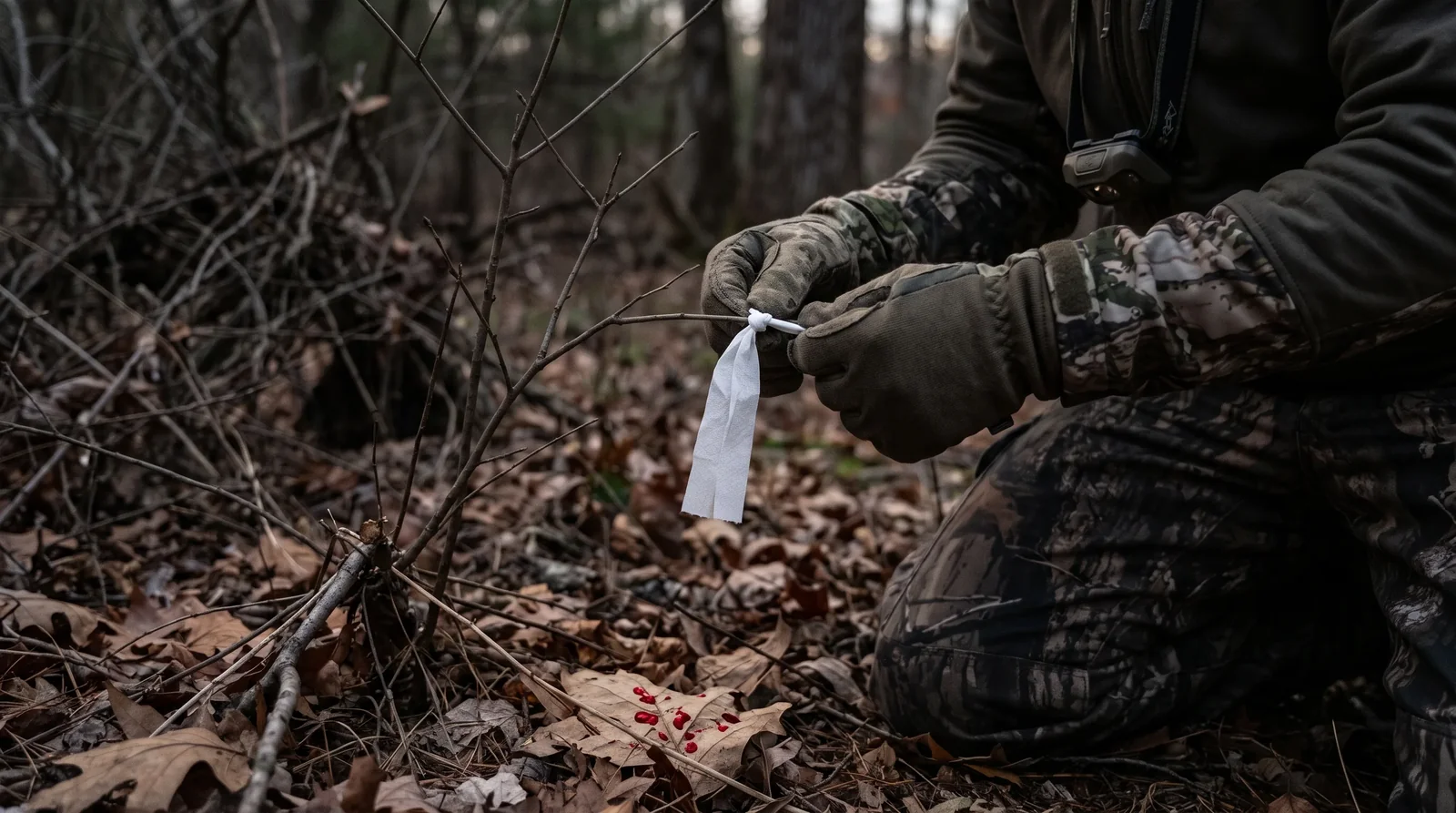
- Mark the trail and walk beside it. Biodegradable tissue or flagging lets you back-track without stepping on sign.
- Get help and widen the search if the trail fades. Several sets of eyes, then expanding circles or parallel lines.
- Approach from behind. Be ready for a follow-up shot if the animal is still alive.
| Sign (NC WRC guidance) | Likely hit | What it usually means |
|---|---|---|
| Bright red, frothy blood | Lungs | Short tracking distance |
| Bright red, not frothy | Artery | Often a good hit; follow steadily |
| Dark red blood | Muscle or liver | Wait longer before following |
| Dark blood with plant matter | Gut | Back out and wait well over an hour |
A lighted nock helps you see the hit and find the bolt, and a pass-through bolt tells you a lot about the hit from what is on it. On a thin or fading trail, the commission's own rule is the one to keep: do not stop until every reasonable effort to recover the animal is used up.
Crossbow Hunting Gear Checklist
| Category | Item | Why |
|---|---|---|
| Crossbow | Crossbow, sighted in with your hunting head | The zero you trust |
| Cocking rope or crank, and a de-cocking method | You need both to start and end the hunt safely | |
| Quiver with bolts and broadheads, plus a practice or discharge bolt | Spare shots and a safe way to unload | |
| Aiming | Rangefinder | Distances to landmarks before game arrives |
| Shooting sticks, bipod or a stand with a rail | Steady rest | |
| Stand and blind | Full-body harness and tether, lifeline if you use one | Fall arrest from leaving the ground to returning |
| Haul line | Raise and lower the crossbow uncocked and unloaded | |
| Recovery | Flashlight or headlamp, flagging, knife, gloves | Tracking and field dressing |
| Paperwork | License, tags, any permit or hunter-education card | Required in the field in many states |
| Care | String wax and rail lube, bow wrench | Small fixes in camp |
For broadheads, cocking aids and other add-ons we cover, see the crossbow accessories page, which groups everything we review by job.
Crossbow Hunting Safety
Crossbow accidents in the field tend to come from the same few moments: climbing, carrying, cocking and unloading. Our list of crossbow safety rules for beginners covers the basics; these are the hunting-specific ones, from state wildlife agencies and hunter-education courses.
- Wear a full-body harness in any tree stand. Wisconsin DNR advises a full-body harness (fall-arrest system) whatever stand you use, a short tether, three points of contact while climbing, and a lifeline from the ground to the stand.
- Never climb with the crossbow. Raise and lower it on a haul line, uncocked and unloaded: Wisconsin DNR calls an un-cocked crossbow the safest way to raise or lower one from a stand. Tie the line to the stock away from the trigger and raise it pointing down, as Pennsylvania's bowhunter-education course teaches. That course allows cocking at the base of the tree if you cannot cock safely in the stand, but never with a bolt loaded; only cock in the stand with a device that does not make you lean over.
- Load only when you are settled. Treat a cocked crossbow as dangerous, keep fingers and thumbs below the rail, and keep the safety on until you are on target.
- Know what is beyond the target. A bolt that passes through can travel a long way.
- Never dry-fire. Releasing the string without a bolt can wreck limbs and cams and hurt you; our guide to dry firing a crossbow explains the damage and what to inspect.
- Unload at the end of every sit. Use your crossbow's de-cock system or shoot a discharge bolt into a safe target.
- Follow one procedure. Our guide on how to de-cock a crossbow safely covers each method.
Keeping the Crossbow Hunt-Ready
A season of cold, wet sits is harder on a crossbow than a summer at the range. Wax the string and cables on the schedule in your manual, apply rail lube if your maker calls for it, and check that scope and mounting screws are tight.
Look for fraying on the serving before every trip, and if the crossbow takes a knock or a fall, confirm the zero before you hunt again. Our guide on how to maintain a crossbow has the full checklist.
If you are still deciding whether a crossbow is the right tool at all, our look at crossbow hunting vs bow hunting separates what the equipment changes from the skills and ethics it does not.
Frequently Asked Questions
What can you hunt with a crossbow?
Where the law allows it, a crossbow can take deer, elk, moose, black bear, wild hogs, turkey, predators and small game, and fish with a bowfishing kit. Which species and seasons allow a crossbow is set by each state, so check your state's regulations first.
How far can you ethically shoot a deer with a crossbow?
Published guidance often puts the maximum at 40 to 50 yards, but your limit is the distance you can hit reliably from your hunting position, on the first shot, in hunting clothes. Most hunters set it shorter and reduce it for wind, low light or an alert animal.
How much kinetic energy do you need to hunt deer with a crossbow?
A widely used bowhunting guideline puts deer-sized game at 25 to 41 ft-lbs at impact. Full-size hunting crossbows list well over 100 ft-lbs at the rail, so broadhead choice, angle and range matter more than extra speed. Some states set their own minimums.
Can you use a crossbow during archery season?
It depends on the state. Some allow crossbows through the whole archery season, some only in firearm or special seasons, and some only with a permit. Check the current regulations for your state and the species you plan to hunt.
Should you sight in with broadheads or field points?
Zero first with field points that weigh the same as your broadheads, then shoot your broadheads. If they land in a different spot after tuning, set your hunting zero with the broadheads.
How long should you wait before tracking a deer?
North Carolina's wildlife agency advises at least 15 to 30 minutes unless the deer goes down in sight, and an hour or more for a poor hit, especially a gut shot. Dark blood or blood with stomach matter is a sign to back out and wait longer.
Can you climb into a tree stand with a cocked crossbow?
Do not climb with it at all. Wisconsin DNR says the safest way to raise or lower a crossbow is un-cocked, on a haul line tied to the stock, pointing down, once you are secured in the stand. Some hunter-education courses allow cocking at the base of the tree if you cannot cock safely in the stand, but never load a bolt until you are secured.
Is a crossbow good for turkey hunting?
It can be, because a cocked crossbow needs no draw movement when a bird is close. Use a head made for turkey, keep shots short, and check whether your state allows crossbows in the spring and fall seasons.
Bottom Line
Crossbow hunting comes down to a short list done well: confirm the rules, zero with the head you hunt with, practice from your real seat, keep shots inside your proven range, and plan the recovery before you pull the trigger. If you are still choosing a crossbow for the season, start with the deer roundup linked above; if you already own one, work through the setup steps in order.
Read nextCrossbow hunting laws by stateCheck crossbow seasons and equipment rules where you hunt.Gear mentioned in this guide
Reviews we link to above, highest rated first. Read the full review before you buy.
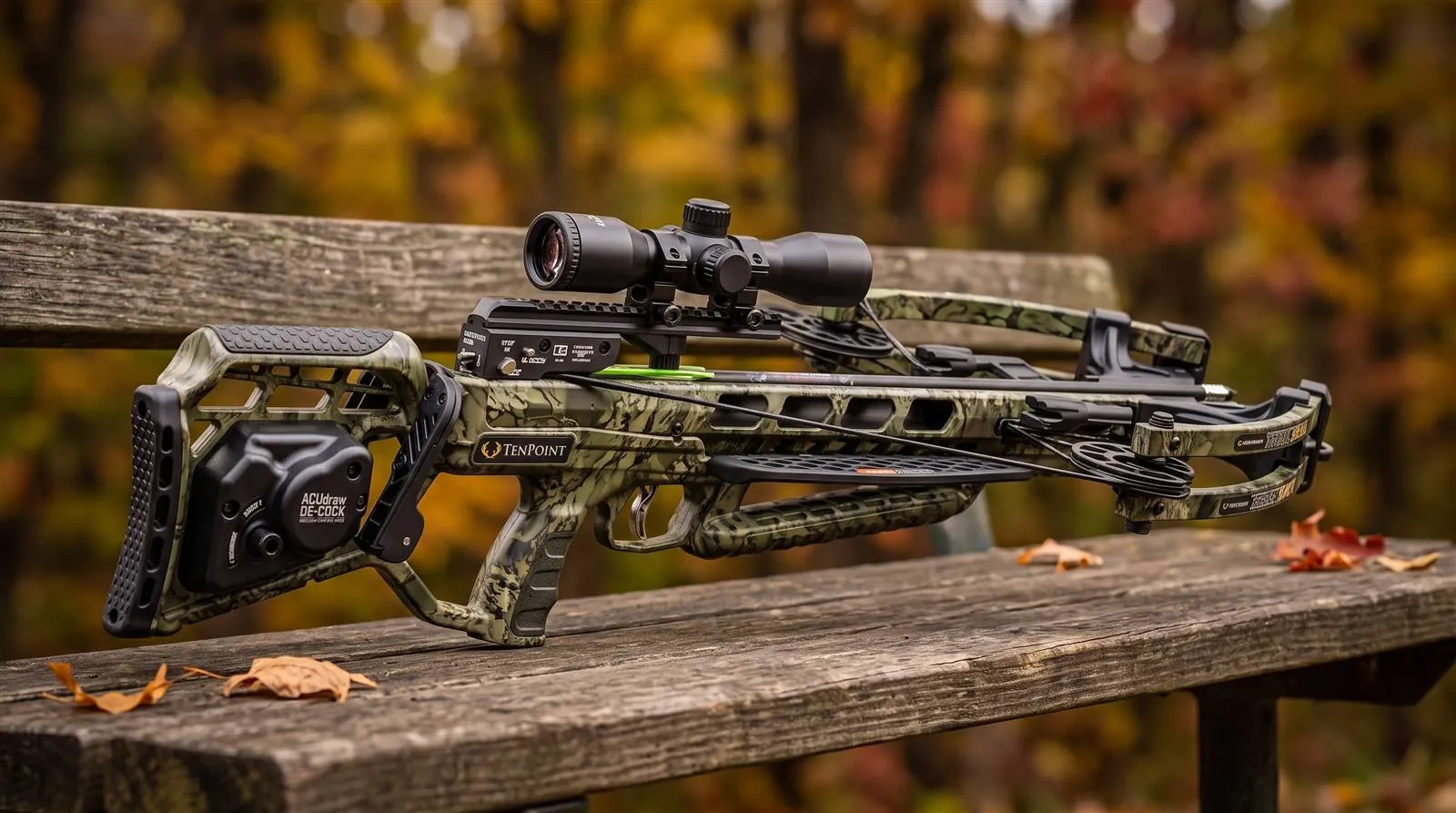
TenPoint Titan X Review
Mid-priced compound crossbow rated at 400 FPS, with integrated cocking and a controlled de-cocking system. A good first TenPoint.
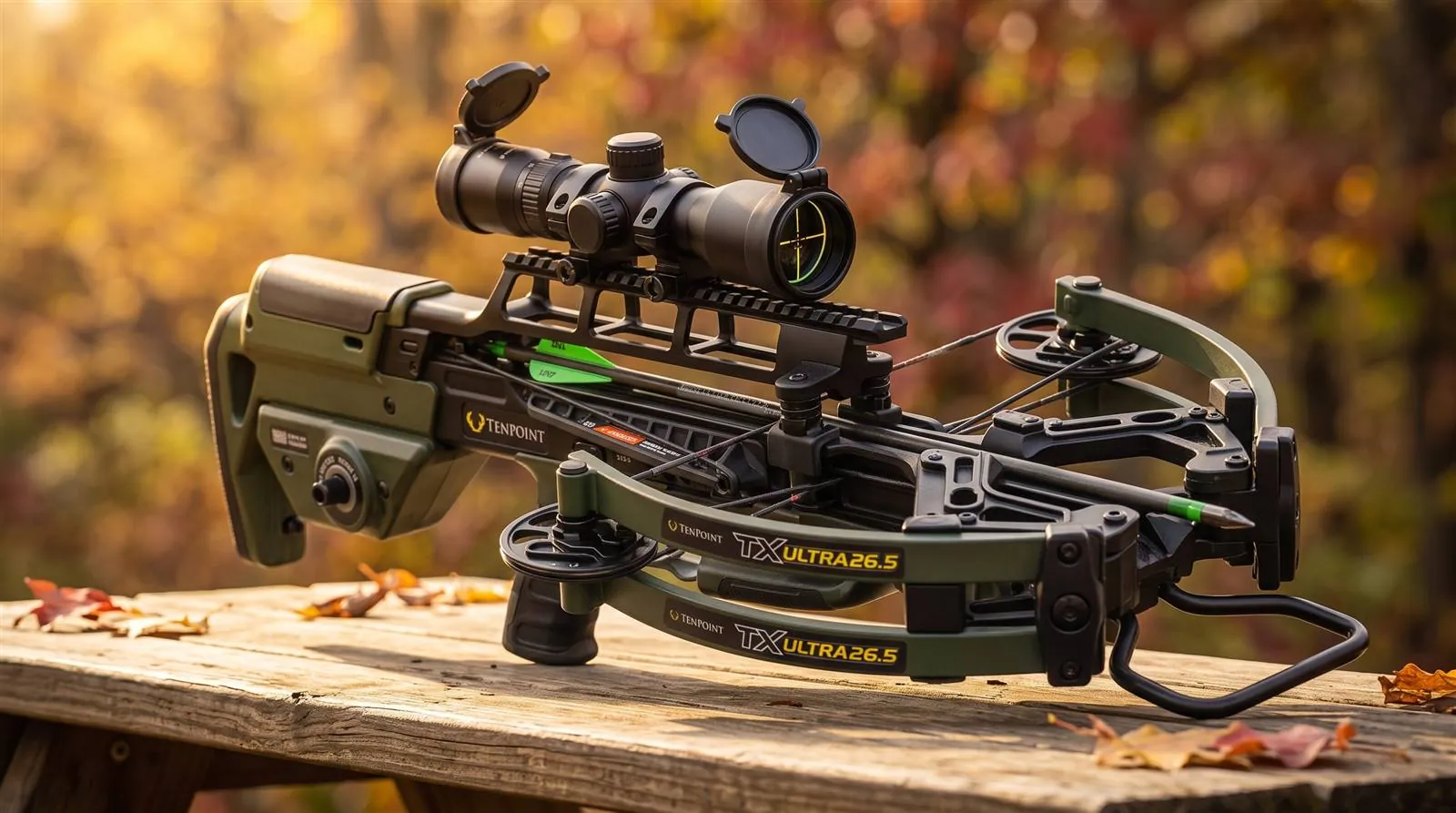
TenPoint TX Ultra 26.5 Review
Very short forward-draw crossbow rated at 410 FPS, with an integrated string stop and easy to move in saddles, tight blinds and confined stands.
Wicked Ridge Invader M1 Review
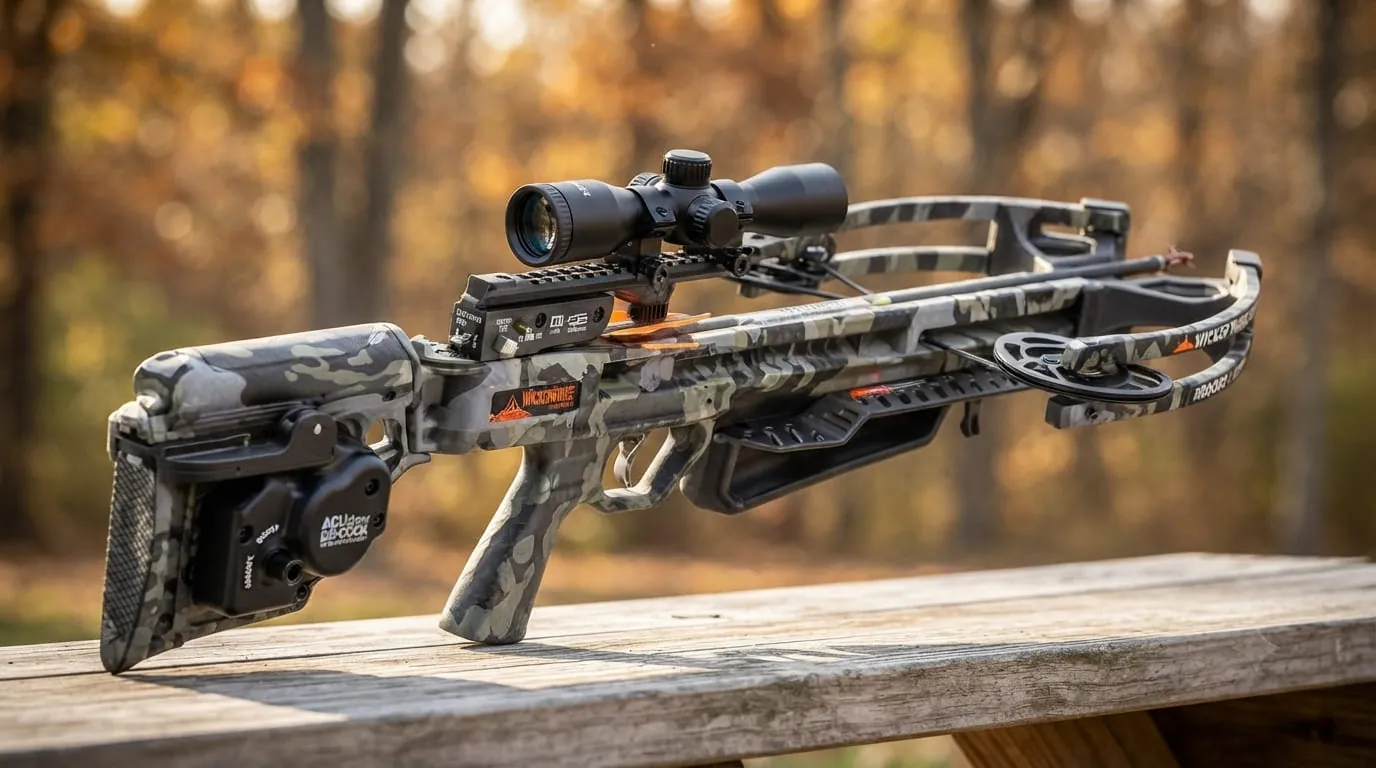
Light 5.8 lb compound crossbow rated at 390 FPS, with integrated crank cocking, ACUdraw De-Cock safe unloading and a lighted scope.
Ready to compare models? Read our crossbow reviews to see how each one compares.
More in Hunting Laws & Field
Crossbow Hunting Laws by State (2026)
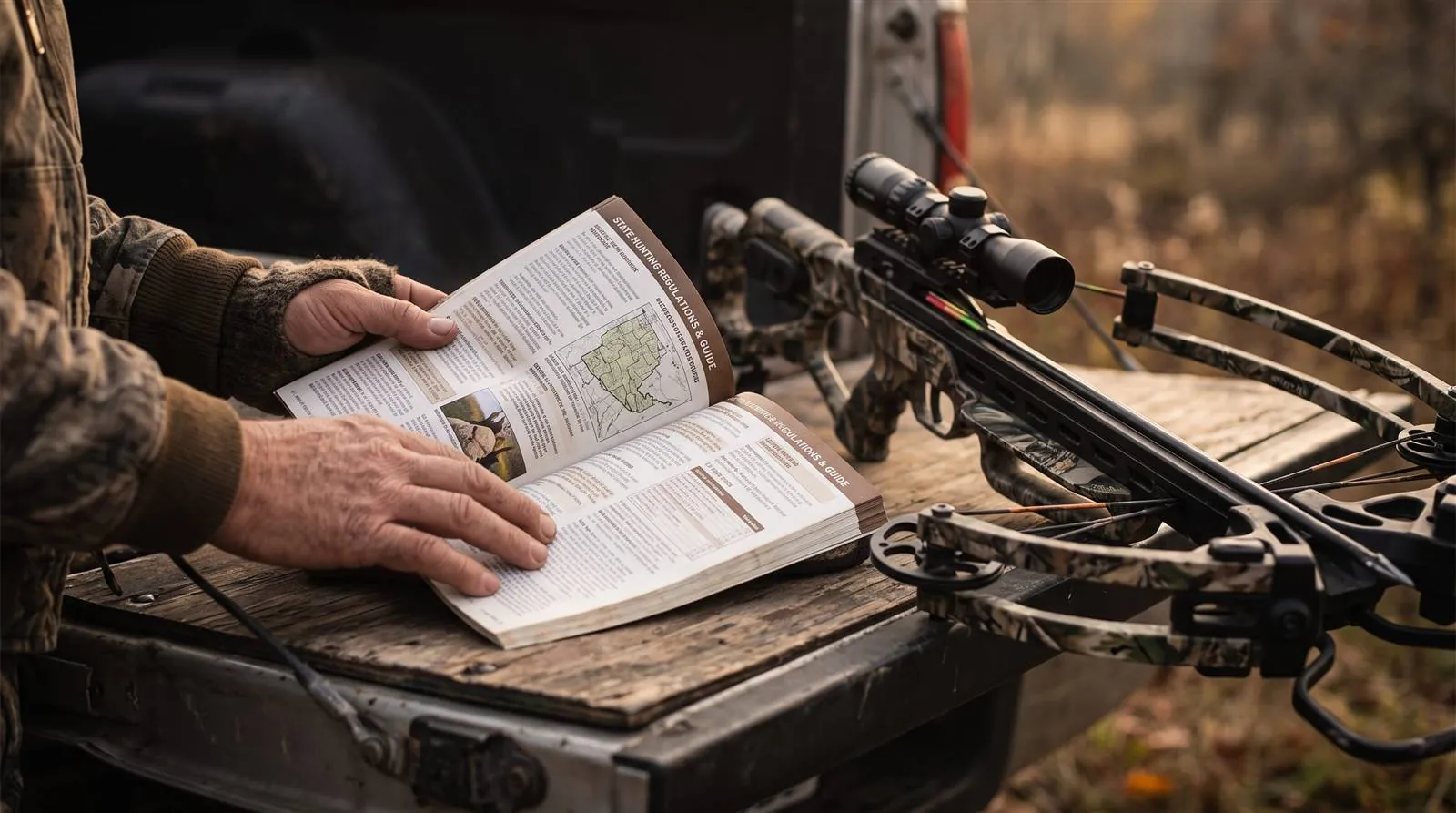
Crossbow hunting rules by state for the current season: who may use a crossbow and when, licensing, equipment limits, and the official sources to verify.
Read guide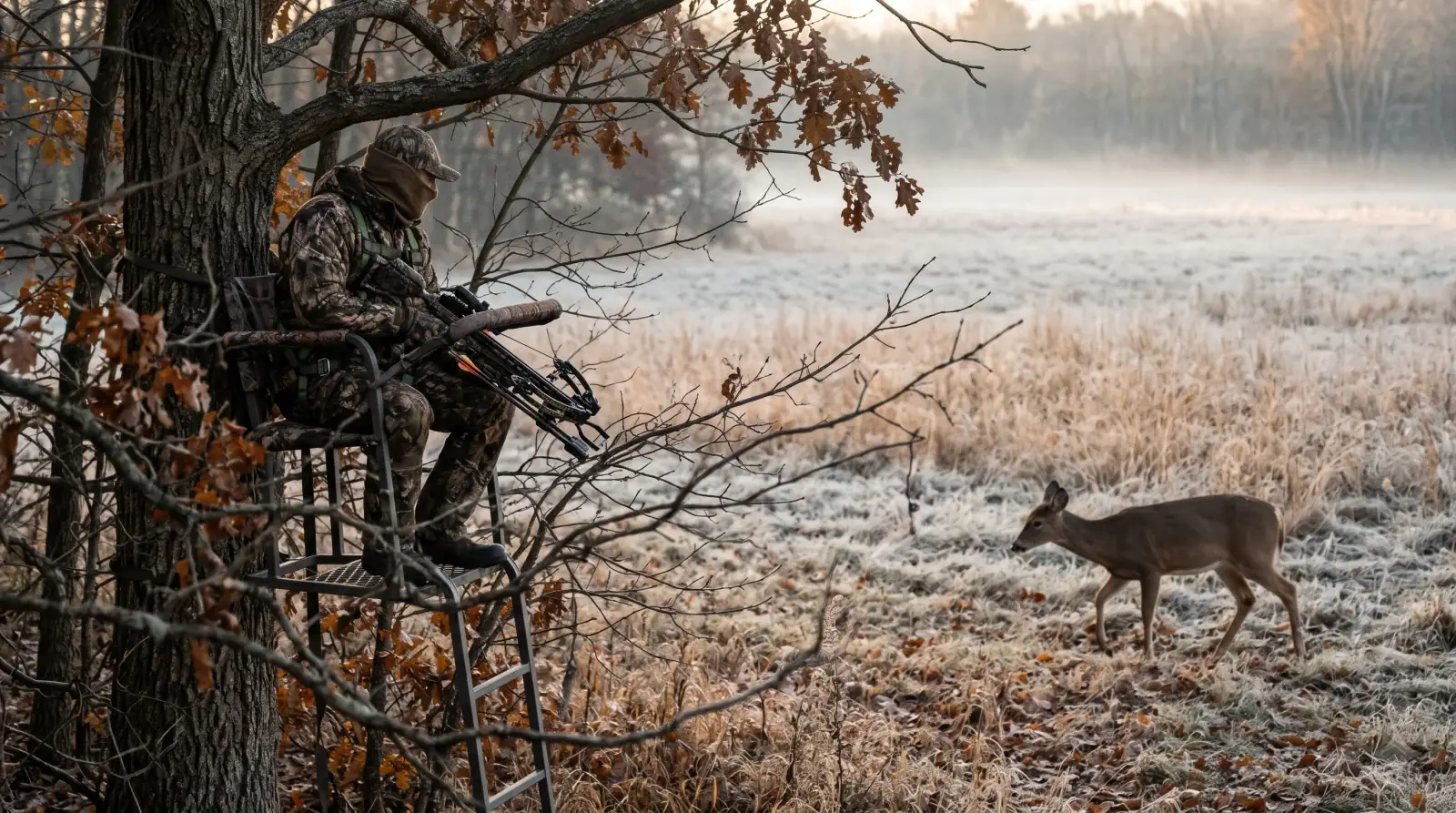
How to Hunt Deer With a Crossbow: A Season Plan
A step-by-step whitetail plan for crossbow hunters, from sight-in and stand or blind setup to season timing, the shot and the first minutes after it.
Read guide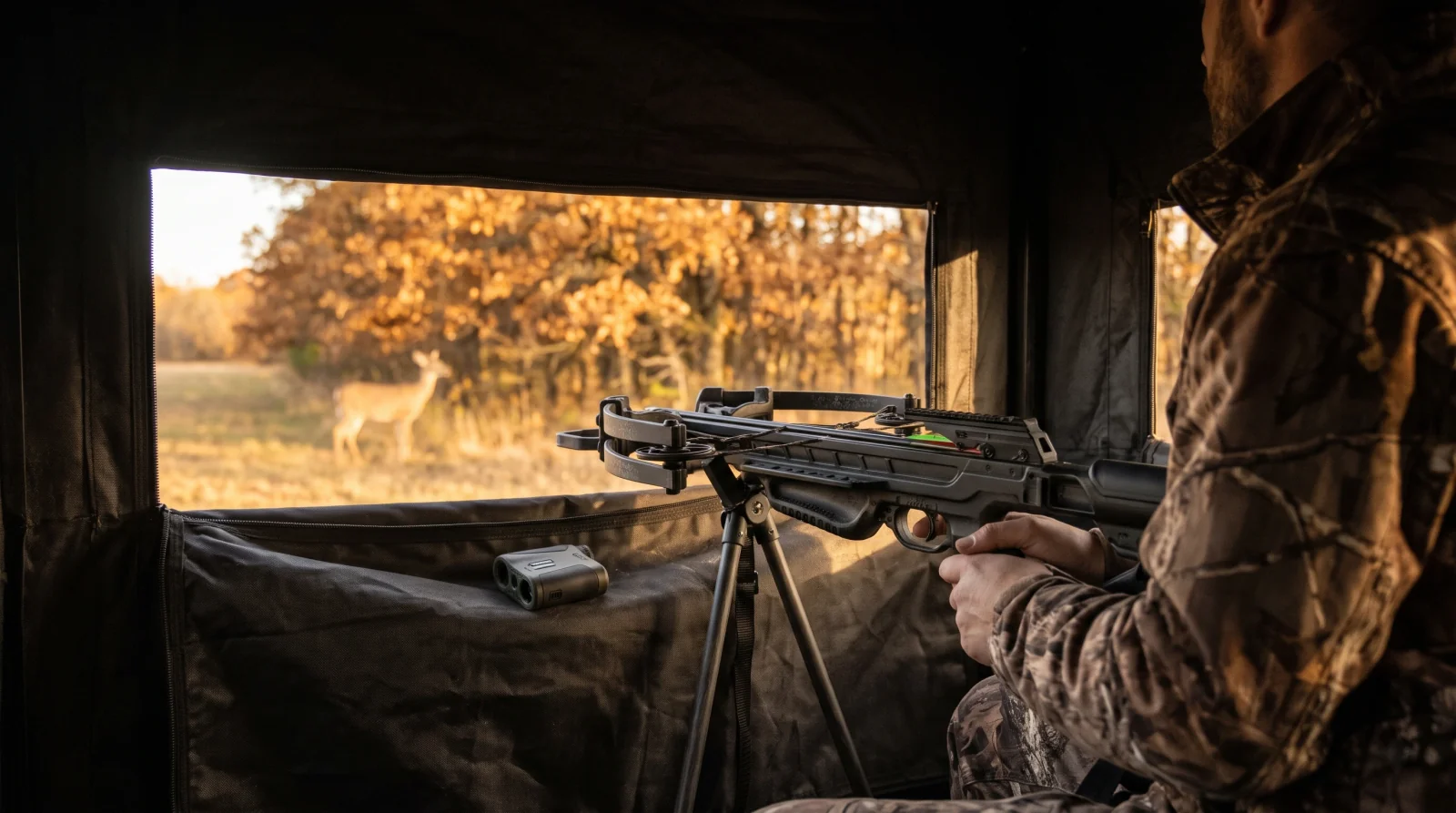
How Far Can a Crossbow Shoot? Max vs Ethical Range
Flight range, target range and ethical range for deer, with modelled drop, energy and flight time at 30 to 60 yards and a method for setting your limit.
Read guide