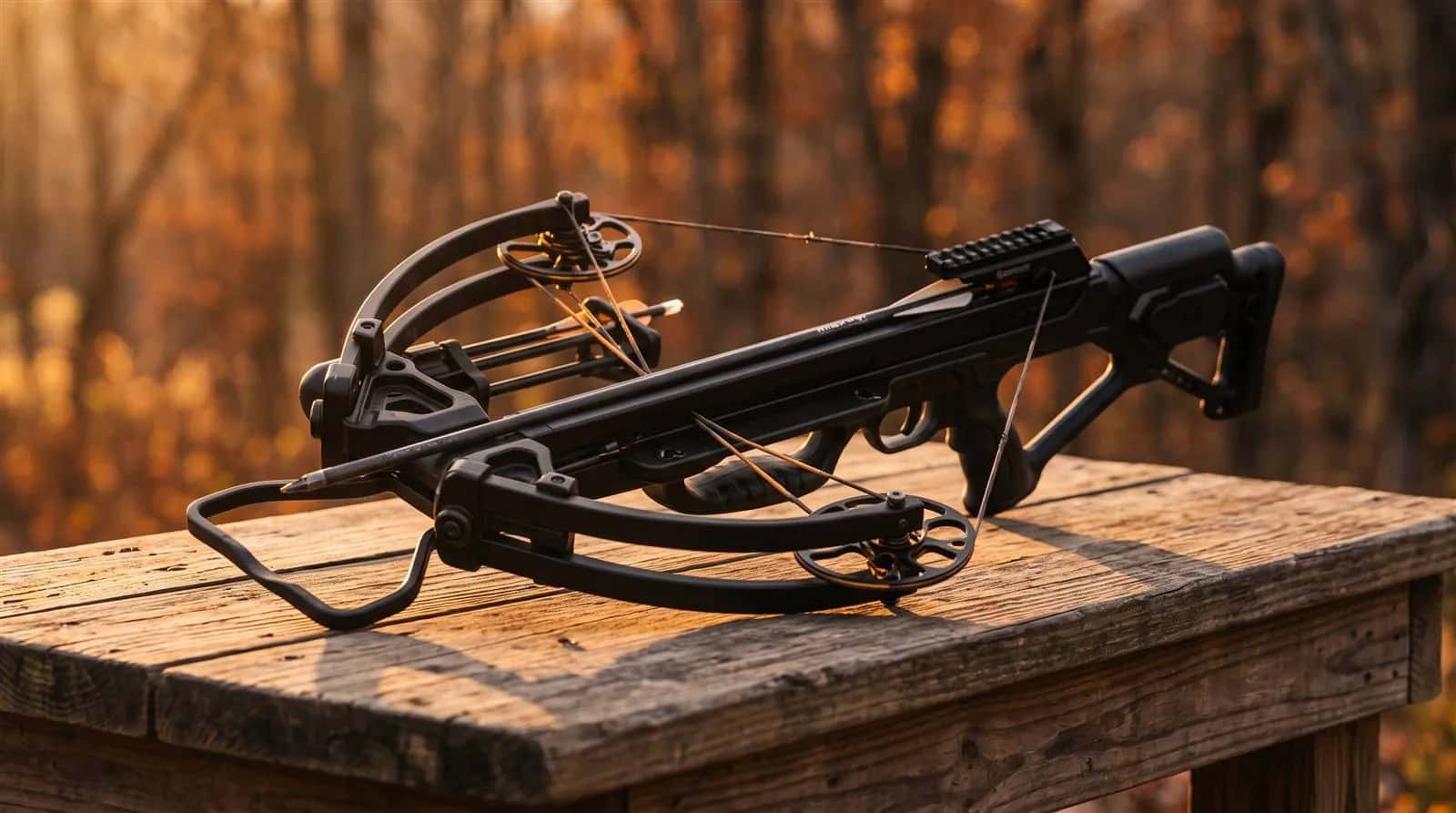
Compound Crossbows Reviews 2026
Compound crossbows use cams to store more energy in a short power stroke. This hub shows how to weigh speed, cocking effort, width and price, and how our eighteen reviews are judged against each other.
- 4.5/5
- Average rating
Pre-purchase checklist
- Check your local wildlife agency's rules on minimum draw weight and equipment before choosing a model for hunting. Our state law overview is a starting point only.
- Decide the maximum cocking effort you can repeat safely, then compare felt draw weight.
- Measure the space where you will use it and compare overall length or cocked width.
- List what is in the box and what you must add: scope, quiver, cocking aid, bolts.
- Read the review's limitations and warranty sections.
- Budget for bolts, wax, string and a proper target.
- Plan where the crossbow will be stored, uncocked.
Start here
Ranked and compared
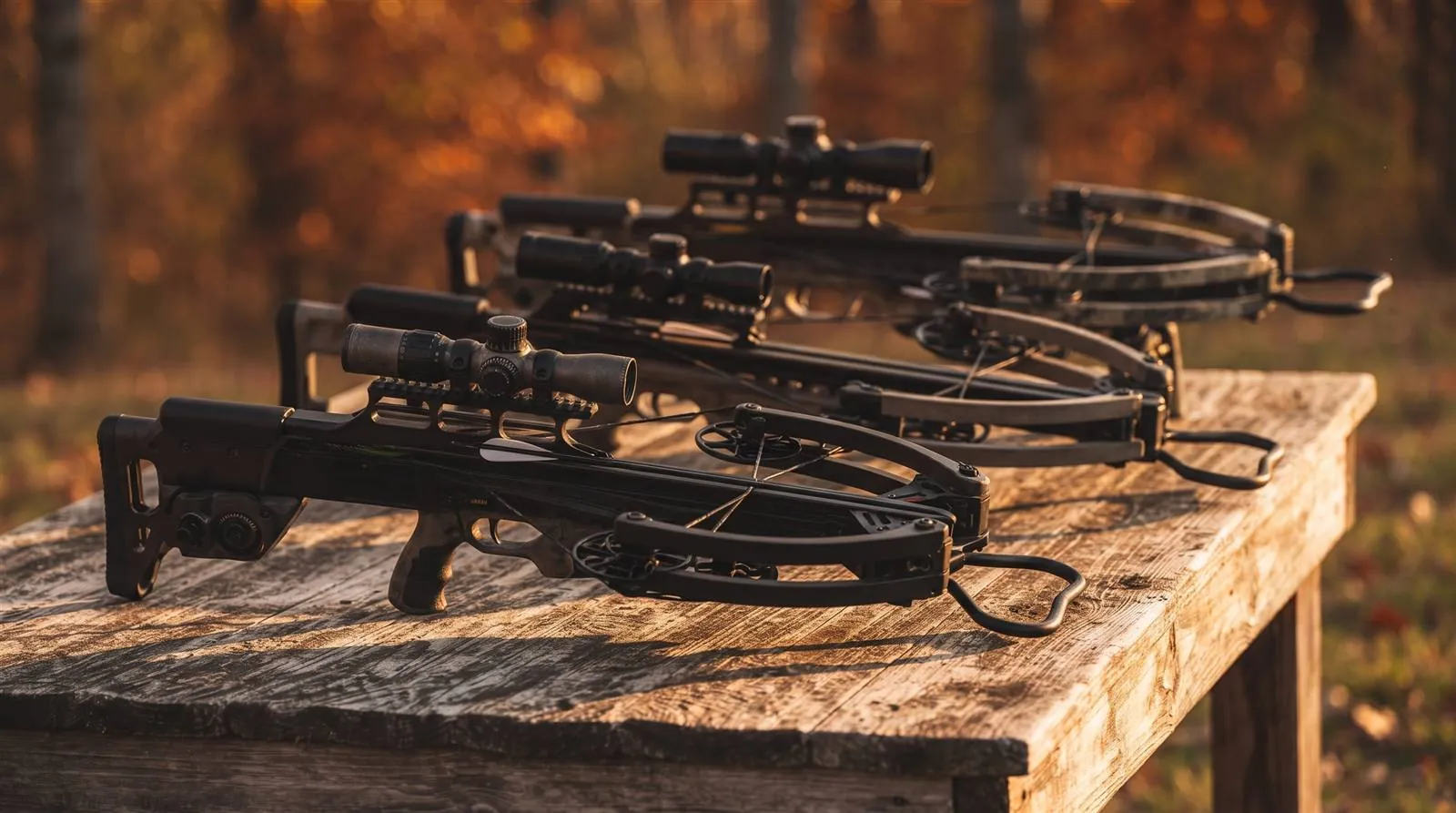 Ranked & comparedBest Crossbows of 2026: Tested PicksOur highest-rated crossbows across every price tier, from the TenPoint TRX Ultra flagship to the Barnett Hyper Whitetail 410, each chosen for a specific buyer.See the rankings
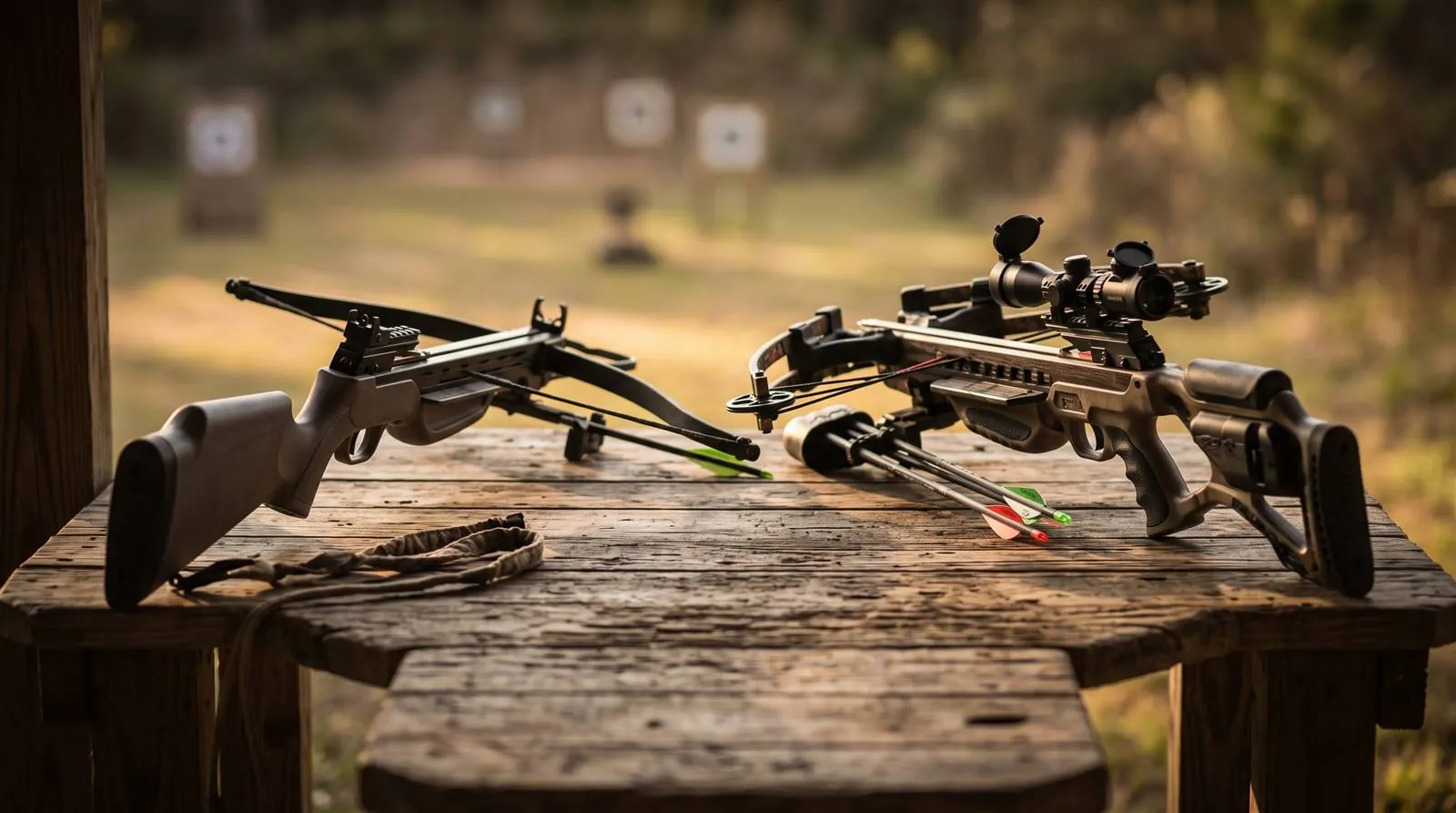 Ranked & comparedBest Crossbows Under $1,000 (2026)Budget crossbows under $500 and under $1,000 compared on measured speed, included gear and trigger quality, with what extra money actually buys.See the rankings
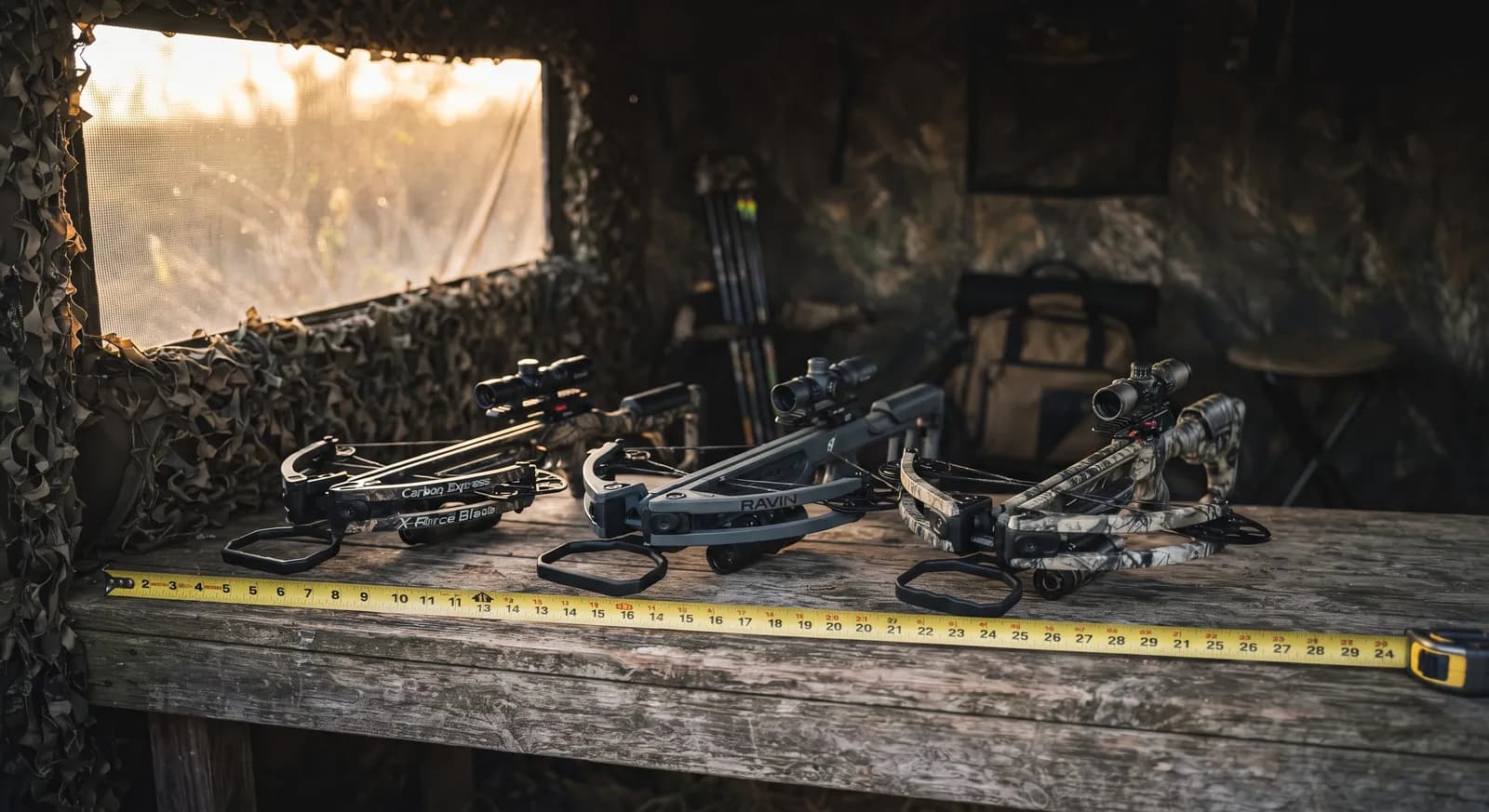 Ranked & comparedBest Compact Crossbows 2026, TestedThe narrowest crossbows we have tested, ranked by cocked width, weight and speed, from the Ravin R26X to budget reverse-draw options for blinds and treestands.See the rankings
Shortcuts
Match your situation
- 1You want the top-scoring modelTenPoint TRX Ultra4.9/5, $3,495–$3,515
- 2You want to spend as little as possibleBarnett Recruit XP Crossbow$339–$449, rated 4.0/5
- 3You want the best score under $1,000TenPoint Venom X4.6/5 at $999–$1,199
- 4You carry it all dayRavin R26X6.5 lbs
- 5You want the most measured speedRavin R470 Stealth Gray463–472 FPS
Stuck between two?
Compare head to head
- Compound crossbow vs Recurve crossbowCompound if you shoot past 40 yards, want easy cocking or hunt from tight spots; recurve if price, light weight and simple upkeep matter more. Measured speeds: 232–308 FPS recurve vs 410–515 FPS compound.
- Ravin crossbows vs TenPoint crossbowsTenPoint or Wicked Ridge under $1,000; Ravin R26X for the narrowest frame near $2,000; Ravin R470 for speed per dollar near $2,500; TenPoint TRX Ultra for the fastest at any price.
- Ravin R29X vs Ravin R26XR26X for stands, blinds and shots inside 40 yards at $500 less; R29X for larger game and longer range, with 50 FPS and 38 ft-lbs more. Measured verdict for each hunter.
- TenPoint TX Ultra 26.5 vs TenPoint TX Ultra 29.5TX Ultra 26.5 for saddles, blinds and short shots: shorter, lighter, quieter and $400–500 cheaper. TX Ultra 29.5 for 50 FPS more, 193 ft-lbs and reach past 60 yards.
- Wicked Ridge crossbows vs TenPoint crossbowsWicked Ridge is TenPoint's value brand: buy the Invader M1 to spend least, the Titan X for a little more speed at $30–100 more, the Venom X or Phantom for a lighter or shorter frame at about $200 more.
Every model, one method
All 18 compound reviews
Highest rated first. Scores weigh measured results against price and intended use; each review names who should look elsewhere.
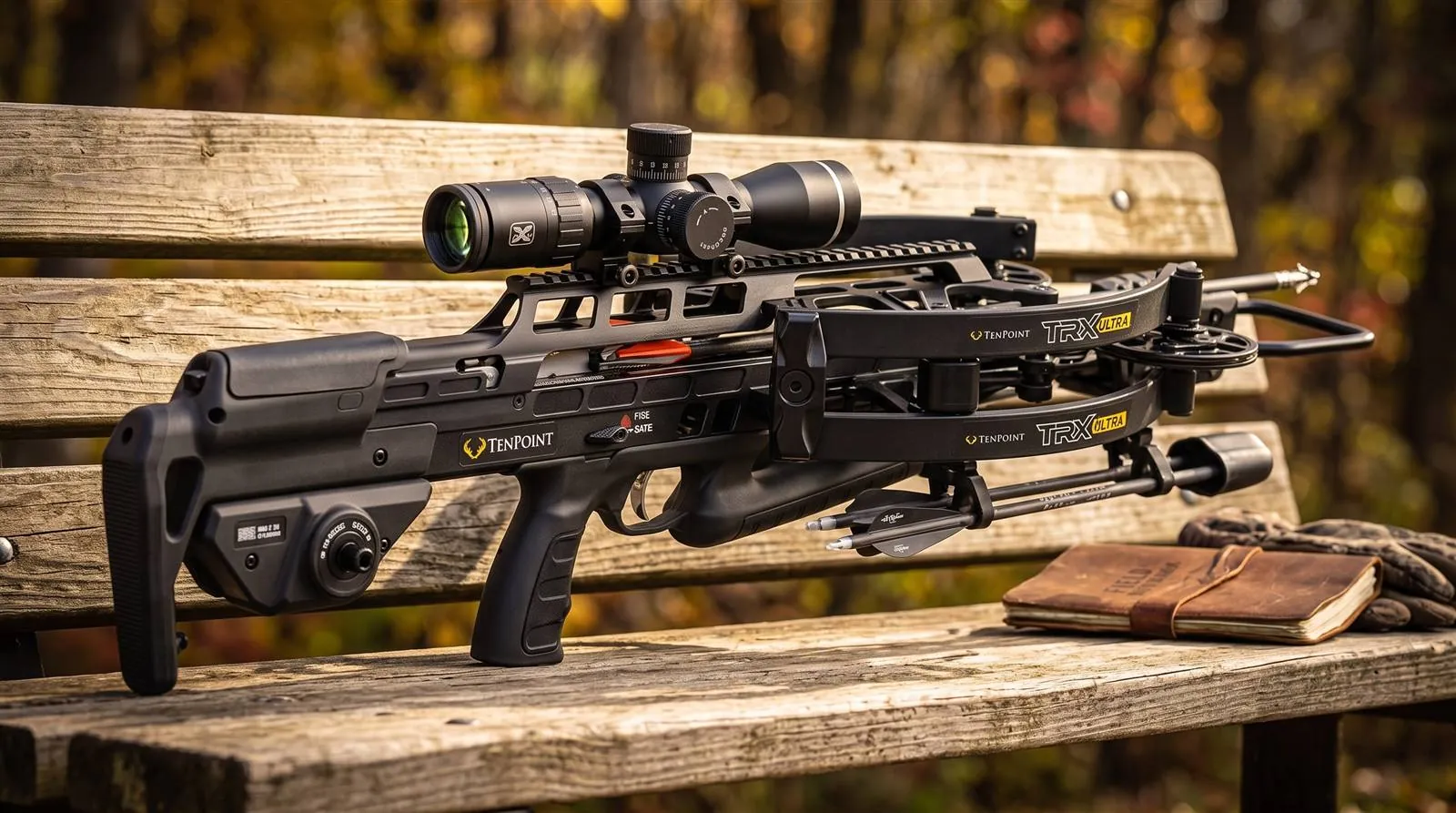
TenPoint TRX Ultra Review
Fastest crossbow in my tests at 511–517 FPS, with the tightest long-range groups near 100 yards. A flagship price that suits a narrow group of buyers.
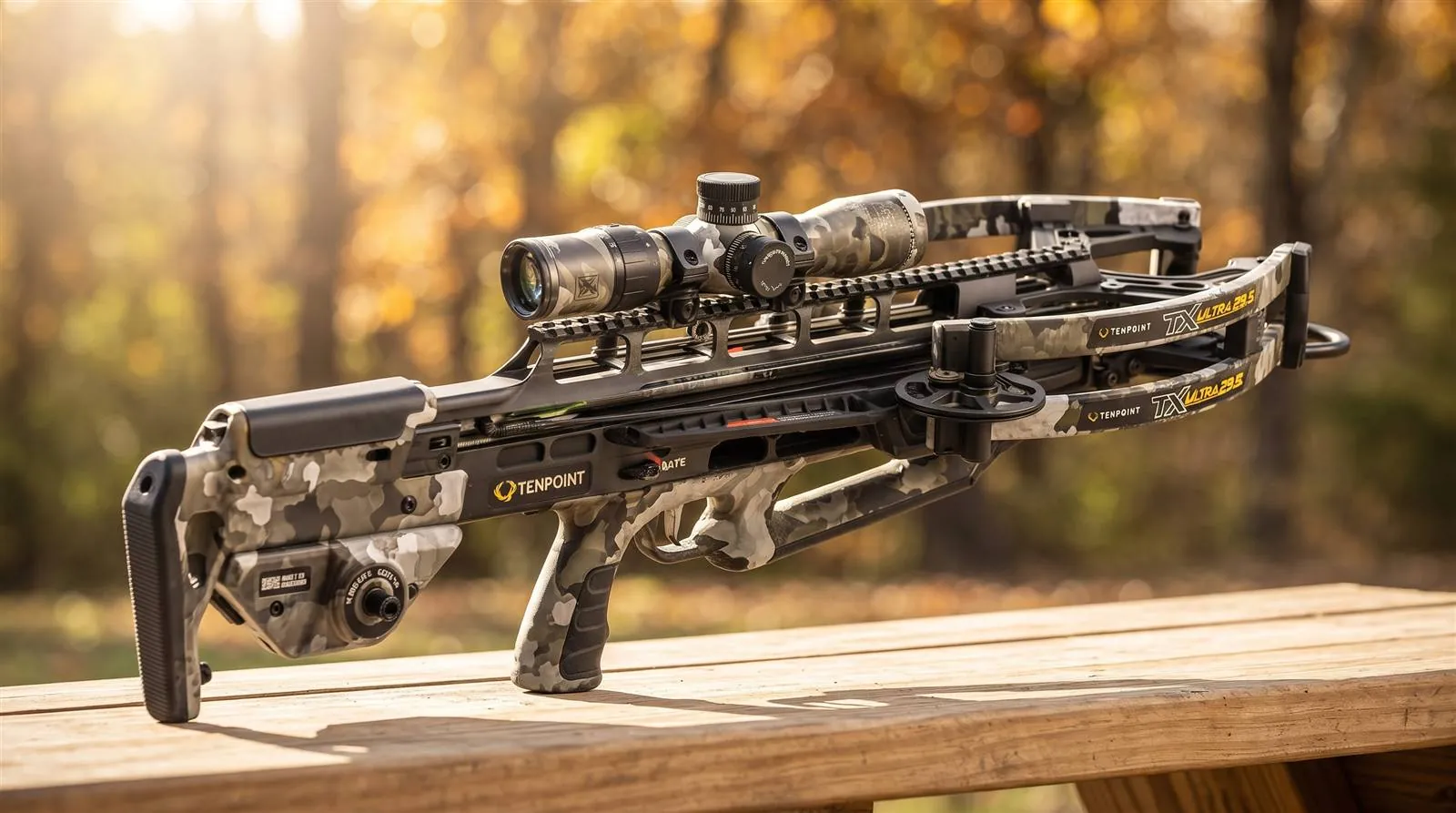
TenPoint TX Ultra 29.5 Review
Forward-draw crossbow measured at 456–463 FPS with tight 100-yard groups and a 6.5-inch cocked width. Speed and range in a narrow frame.
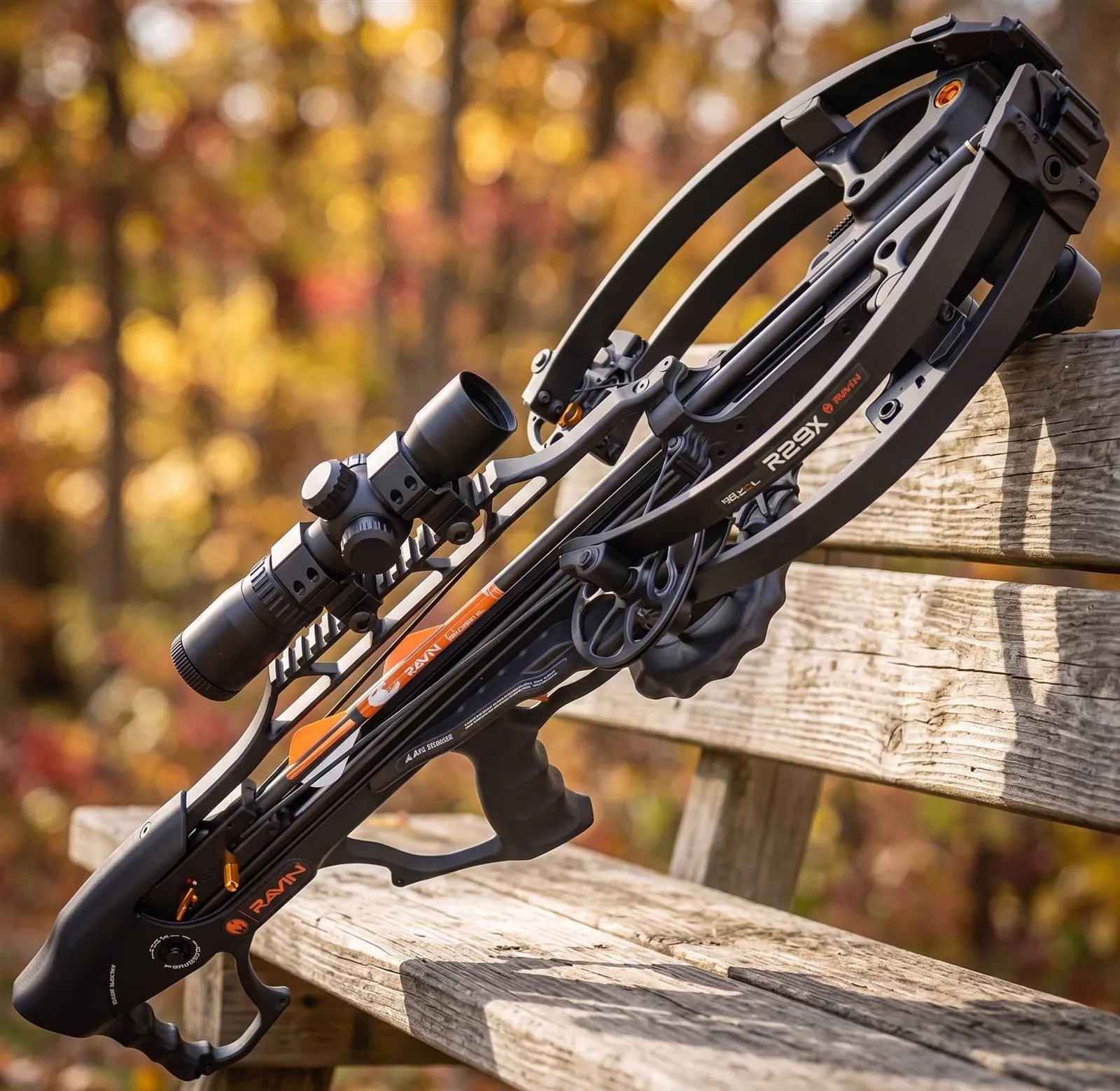
Ravin R29X Review
Compact, stealth-black crossbow producing 444–454 FPS and around 180 ft-lbs of kinetic energy, with an integrated quieter-cocking system.
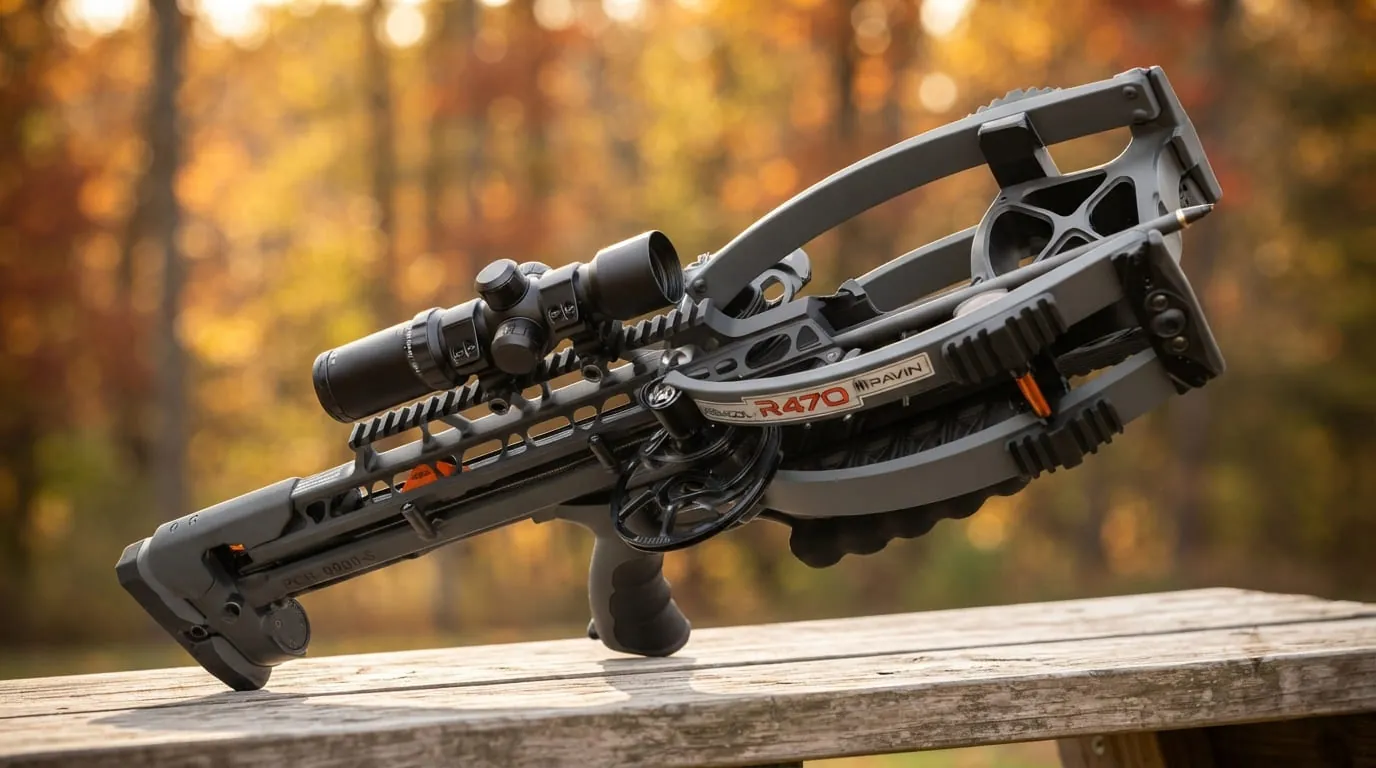
Ravin R470 Stealth Gray Review
Flagship-speed crossbow measured at 463–472 FPS in a compact frame, with a Cerakote finish that showed no wear and a quiet integrated cocking system.
Ravin R26X Review
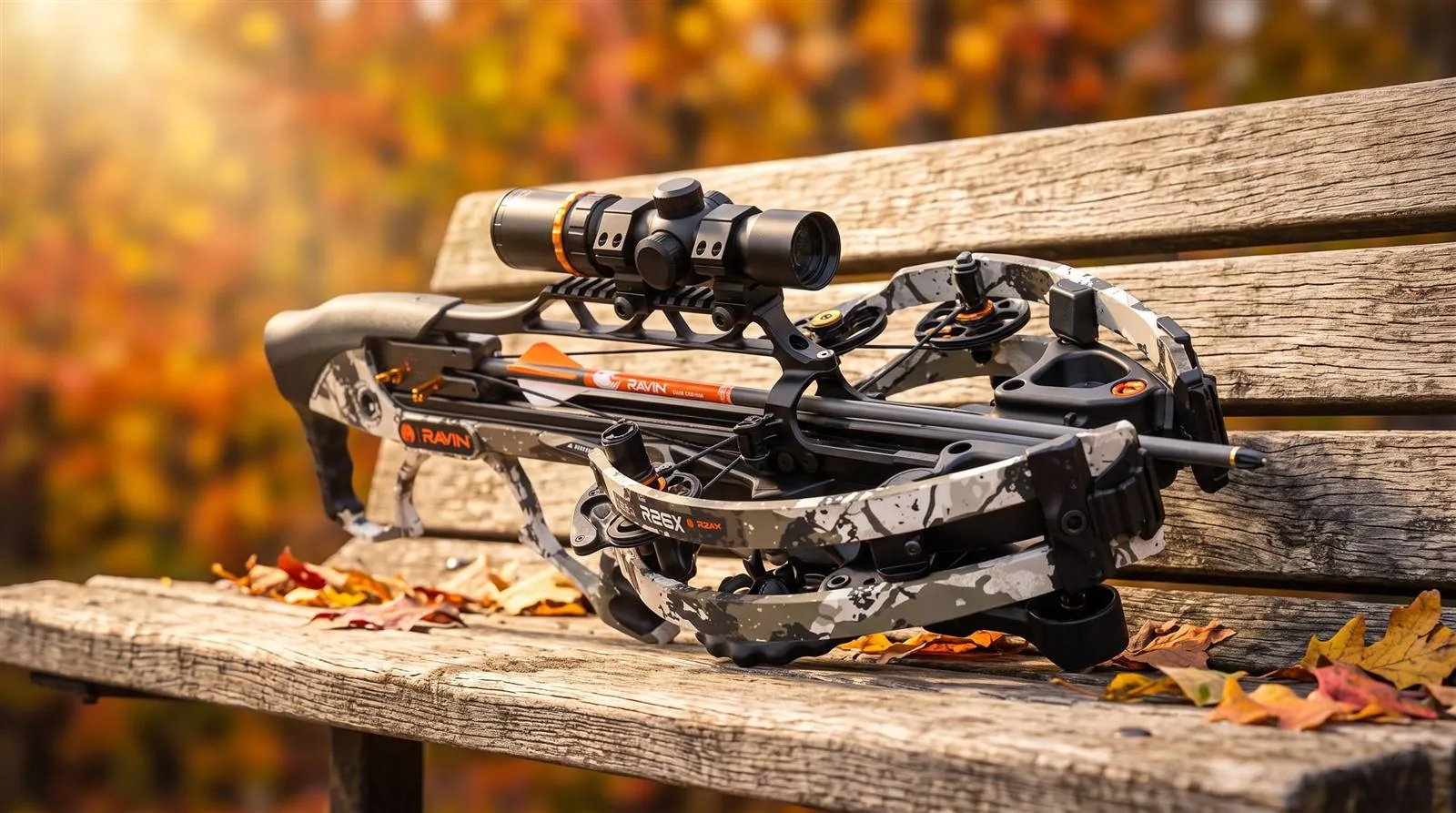
Compact compound crossbow measured at 395–403 FPS, with a HeliCoil cam and noticeably quieter cocking than crank rivals. Built for treestands and blinds.
TenPoint Venom X Review
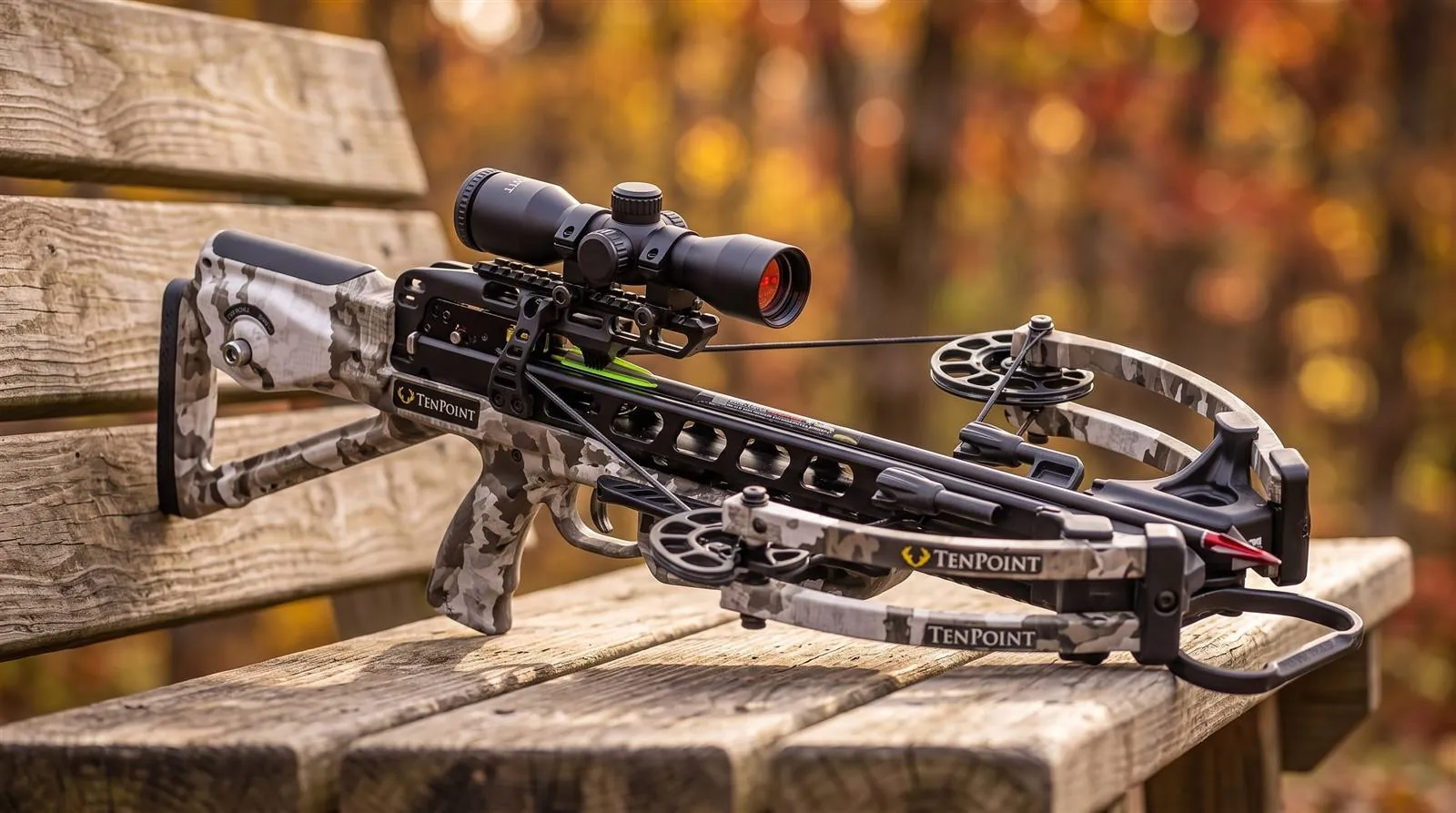
Light 6.9 lb crossbow measured at 385–394 FPS, with a trigger that outperforms its price and the most affordable entry to TenPoint's ACUslide cocking.
TenPoint TX Ultra 26.5 Review
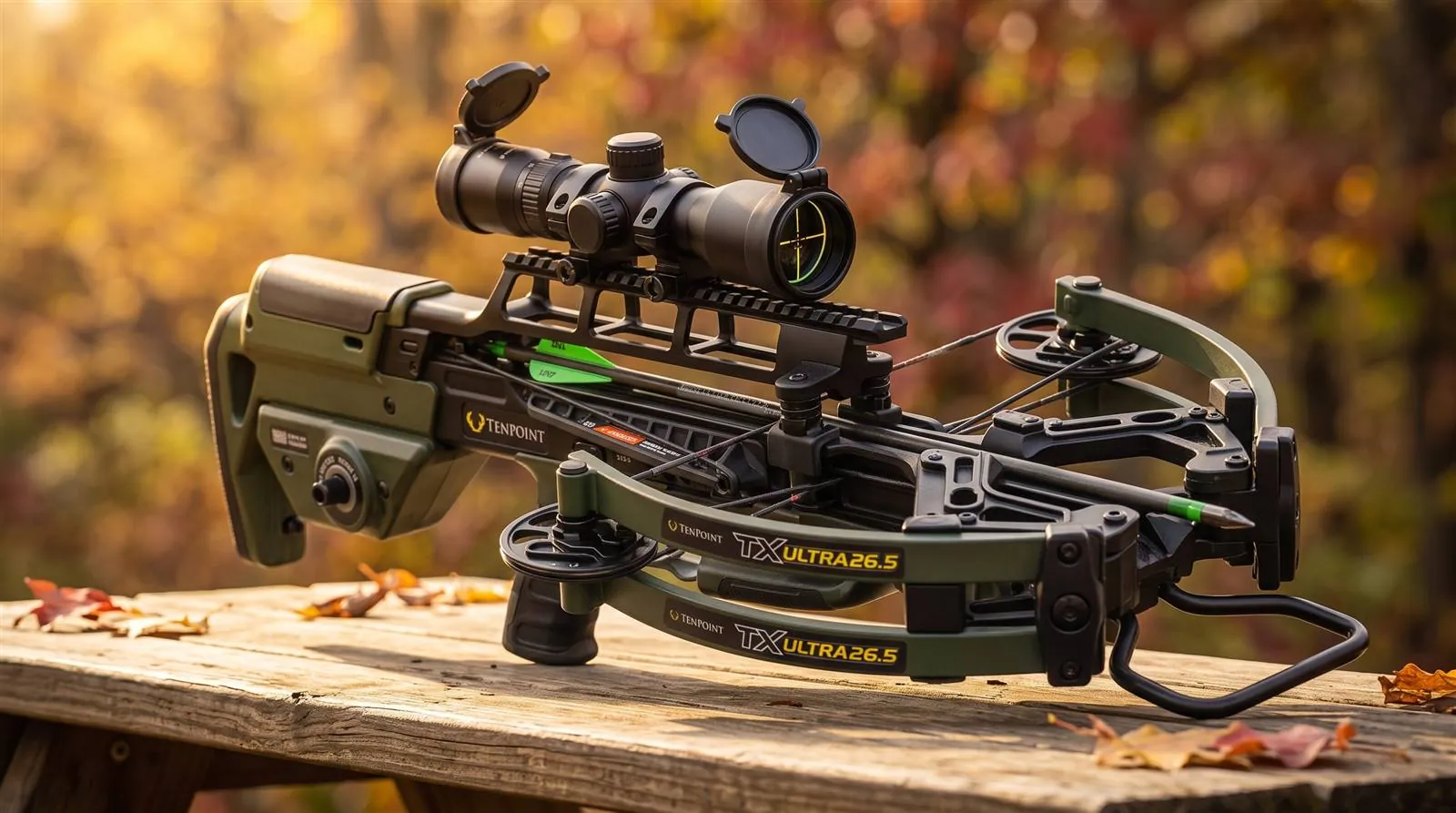
Very short forward-draw crossbow measured at 406–413 FPS, quiet to shoot and easy to move in saddles, tight blinds and confined stands.
Ravin LR Crossbow Review
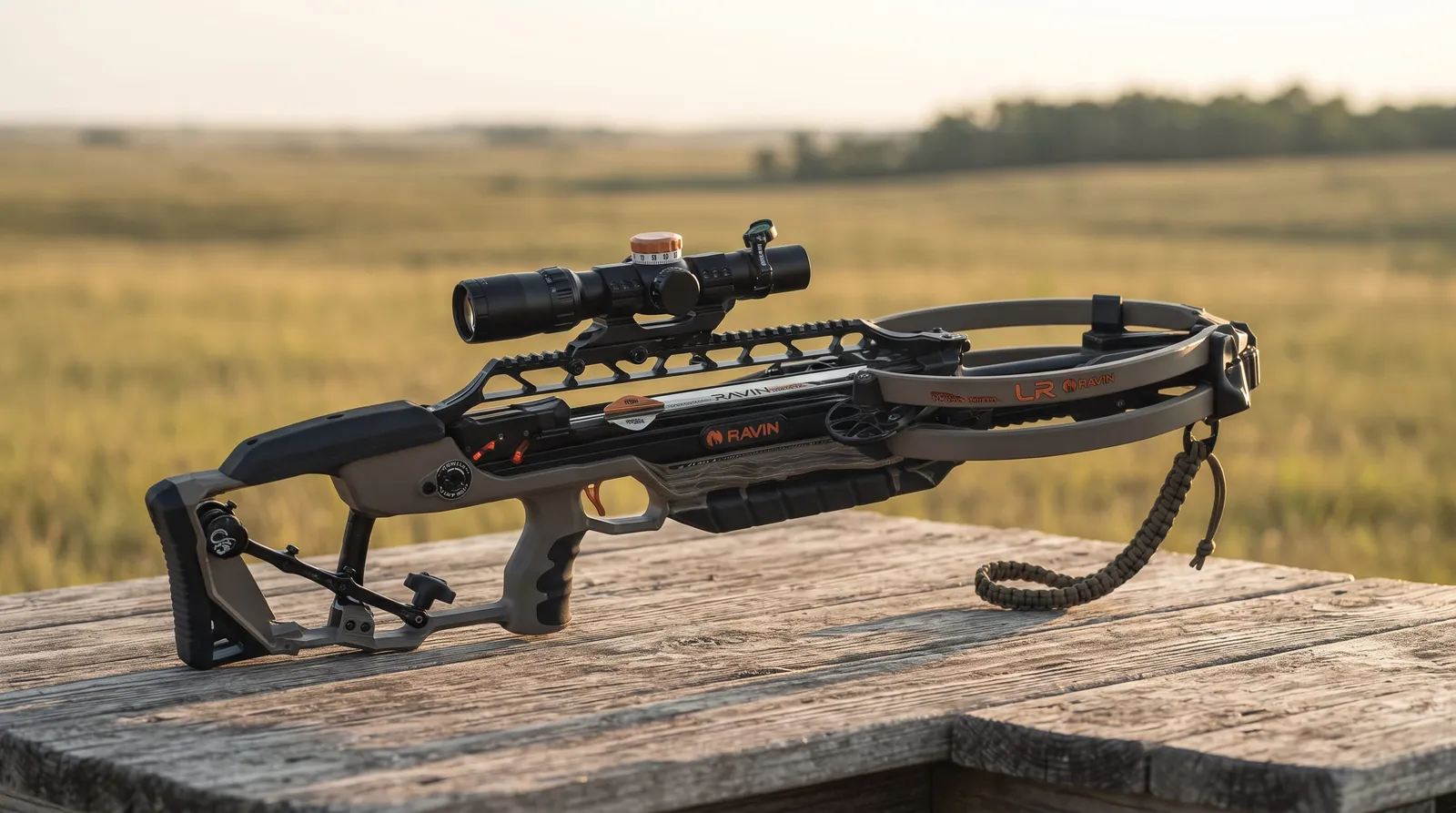
Long-range 450 FPS crossbow with a fully adjustable stock and turret scope, built for precision shooting. Longer, heavier and pricier than Ravin's compacts.
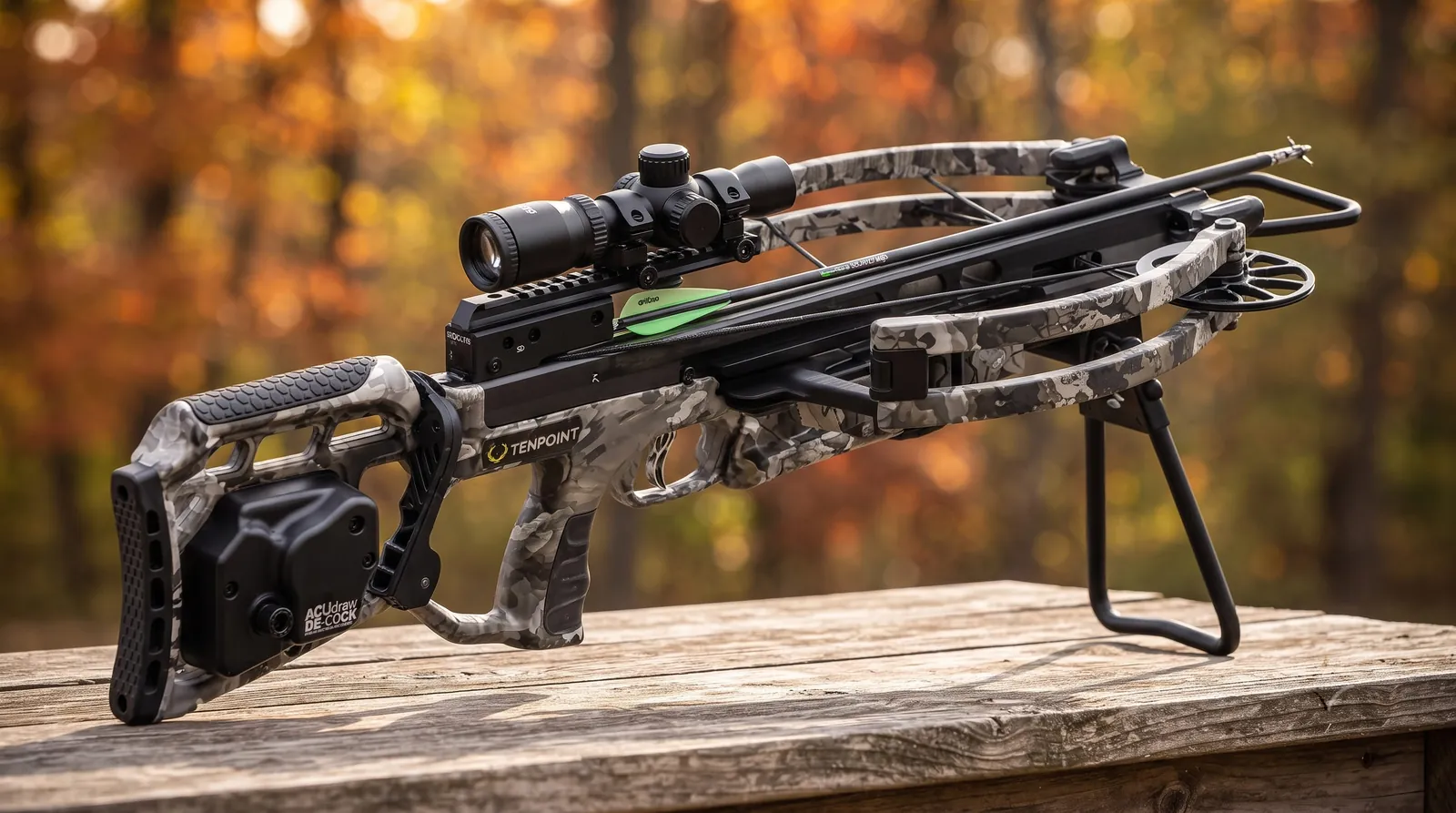
TenPoint Phantom De-Cock Review
Compact 7.4 lb reverse-draw crossbow rated at 400 FPS, with ACUdraw De-Cock cocking and a lighted scope included. Short enough for blinds and brush.
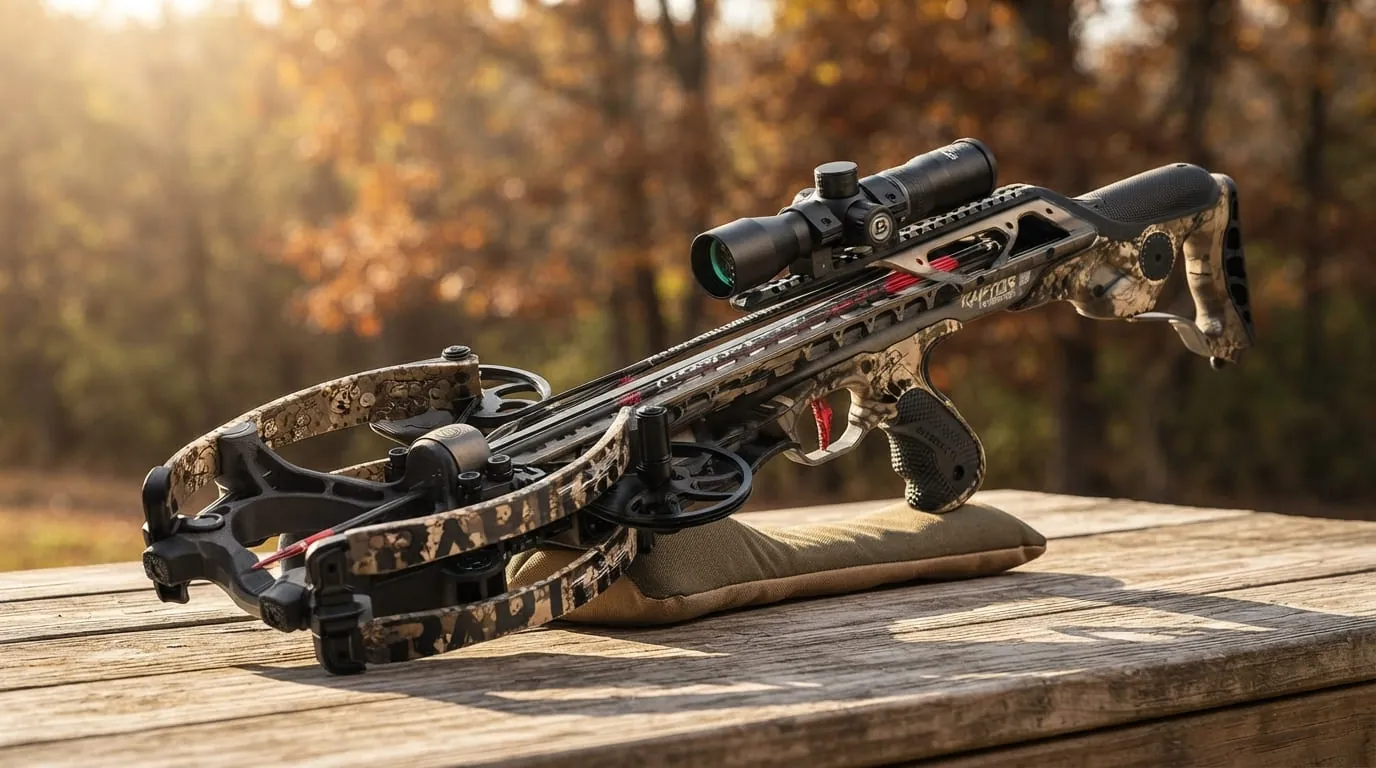
Barnett Hyper Raptor T-Rex Review
High-speed compound crossbow measured at 435–443 FPS, with a crisp premium trigger and reliable de-cocking for well under flagship prices.
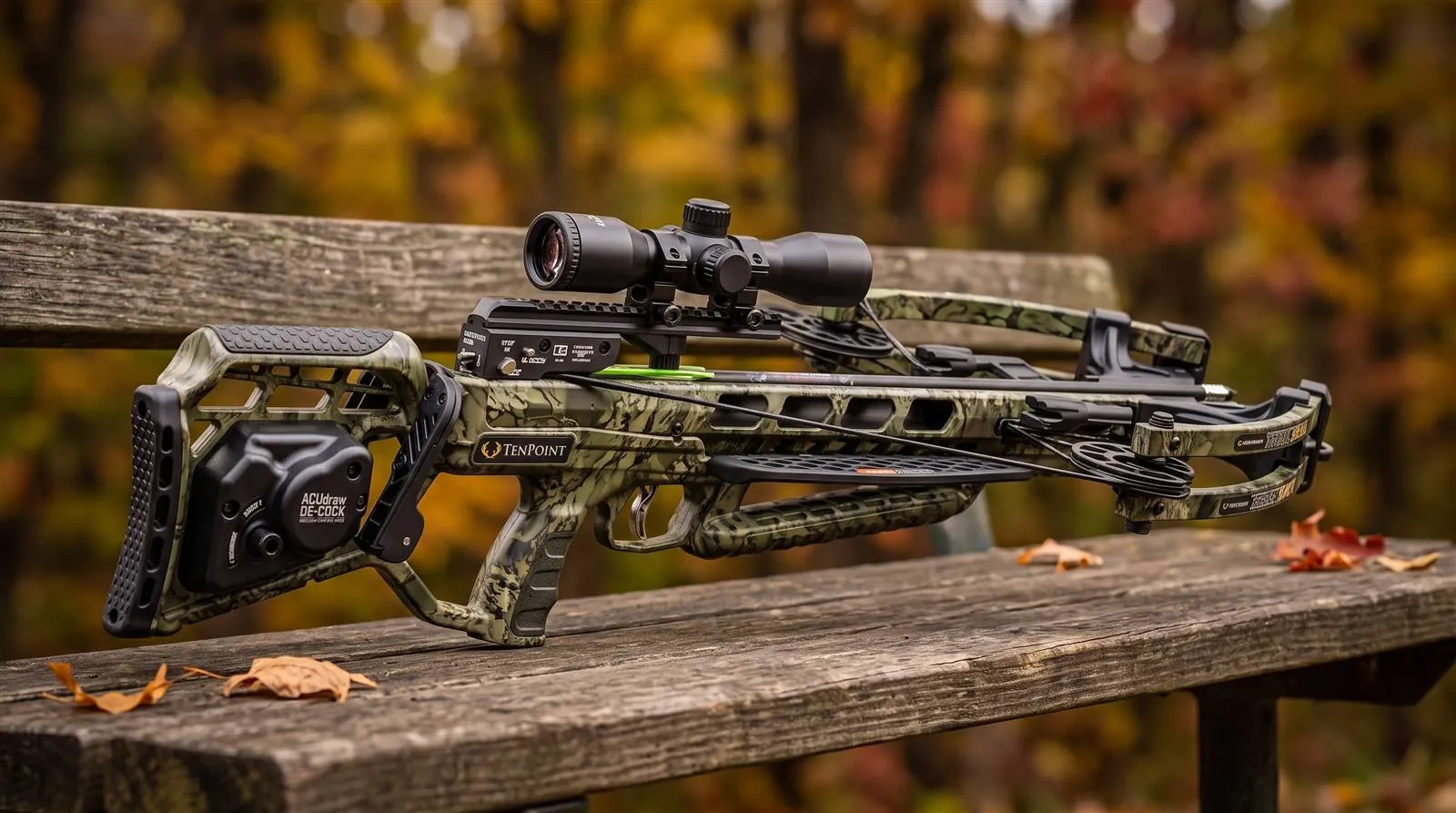
TenPoint Titan X De-Cock Review
Mid-priced compound crossbow measured at 395–404 FPS, with integrated cocking and a controlled de-cocking system. A good first TenPoint.
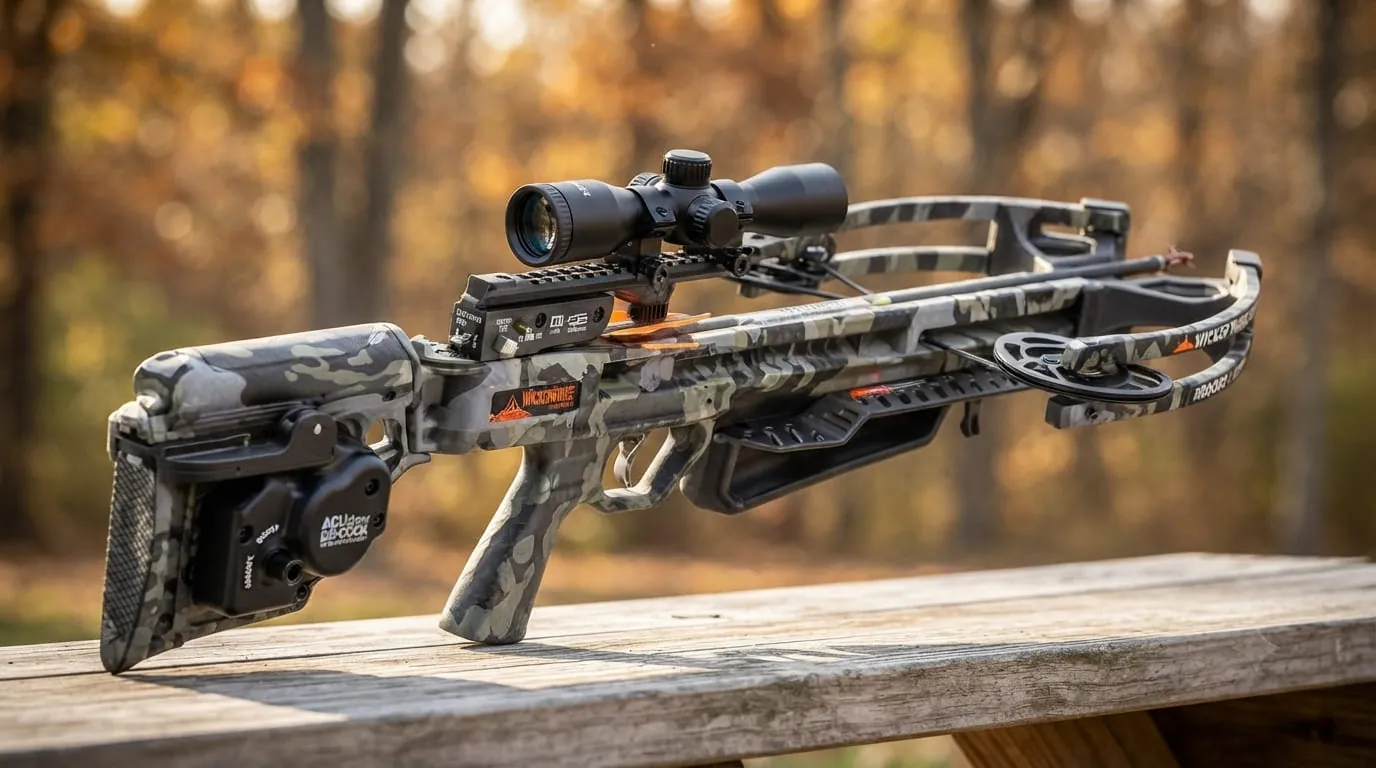
Wicked Ridge Invader M1 Review
Compound crossbow measured at 384–393 FPS, with integrated crank cocking and ACUdraw De-Cock safe unloading at a lower price than TenPoint's own models.
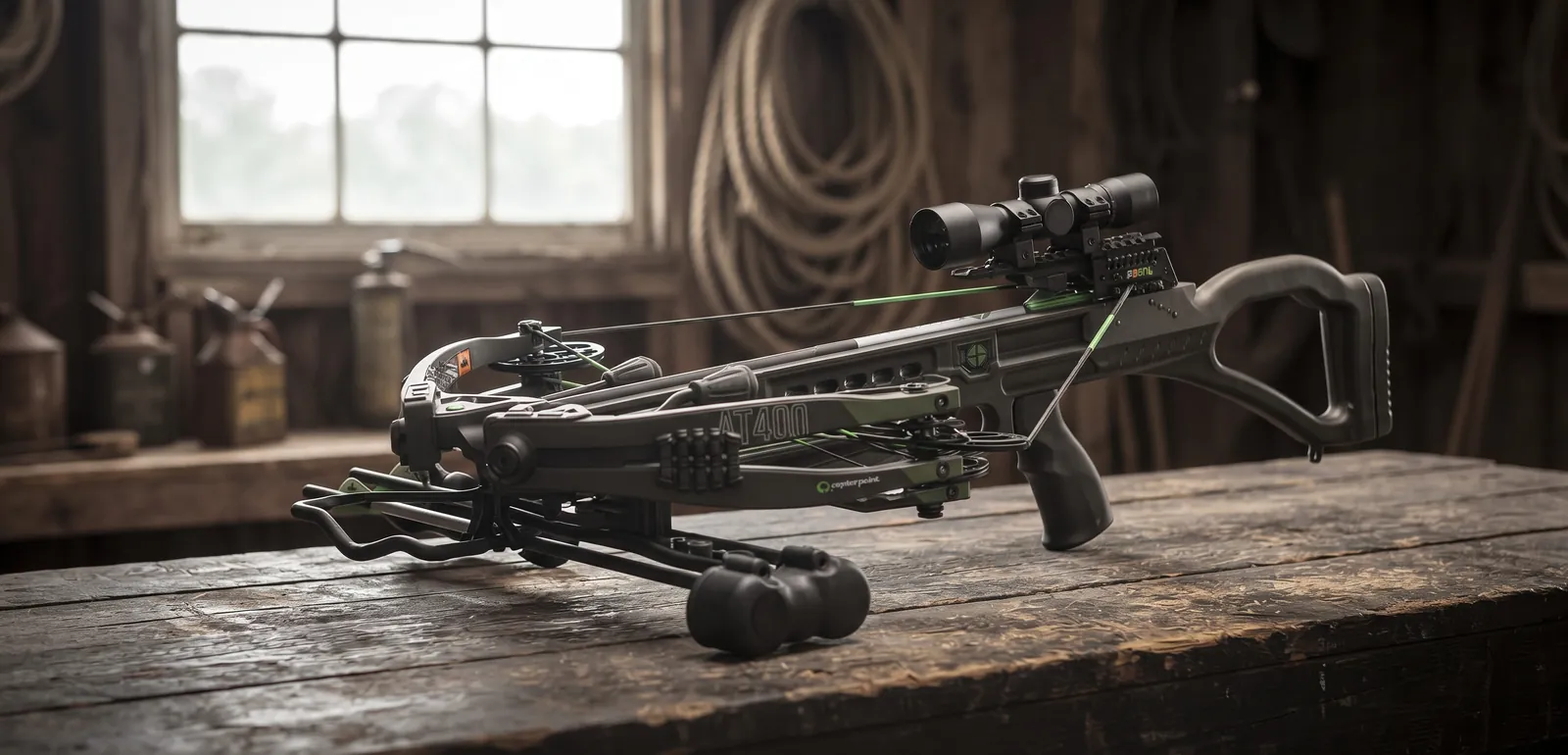
CenterPoint Wrath 430 Review
Fast bullpup compound crossbow rated at 430 FPS with a quiet crank cocker included. Short overall, but heavier and slightly wider cocked than premium compacts.
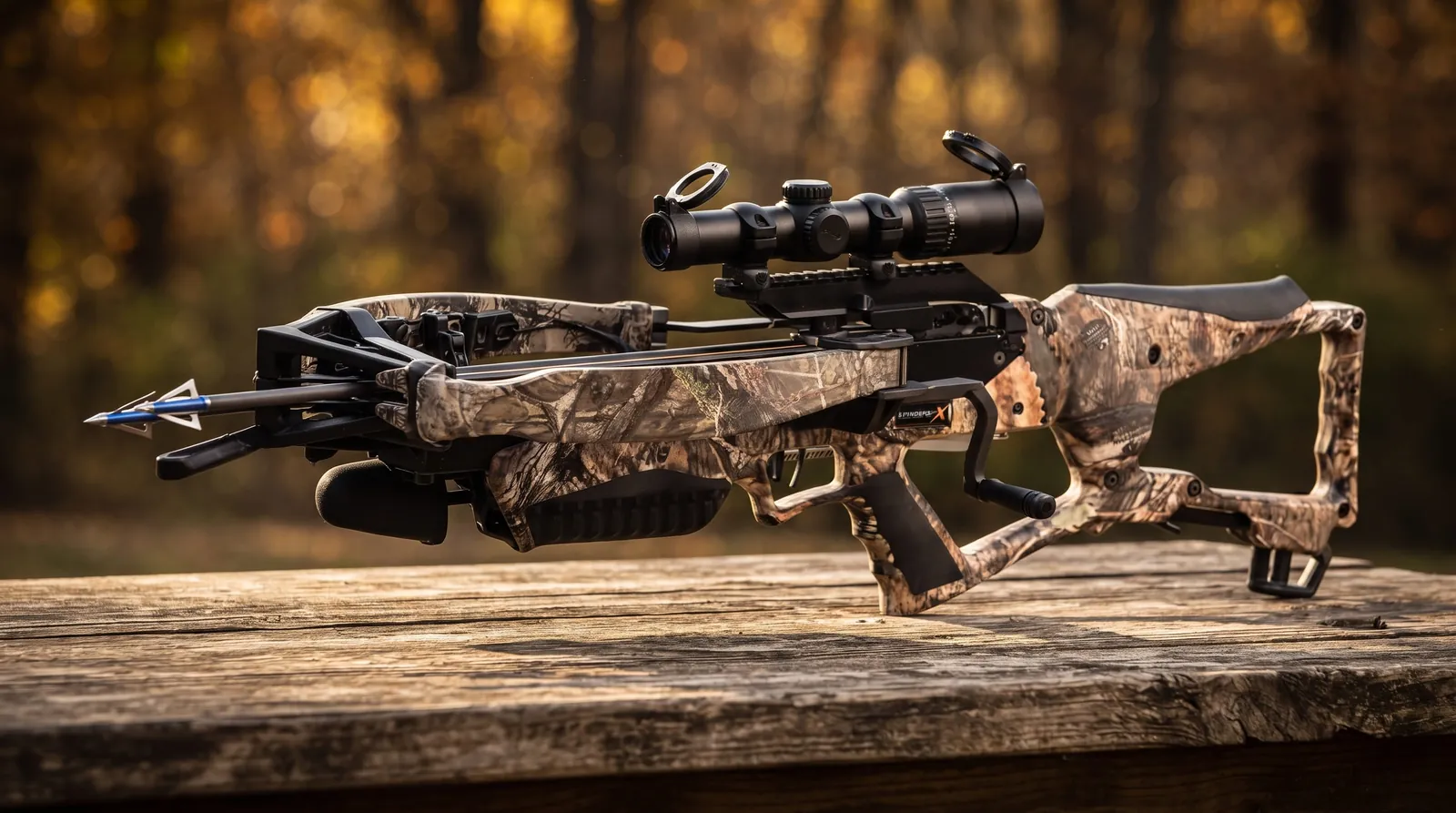
Excalibur Hybrid X Review
435 FPS compound crossbow with CeaseFire anti-dry-fire protection and a complete hunting kit. Scores high on speed and accuracy but weighs 8.3 lbs bare.
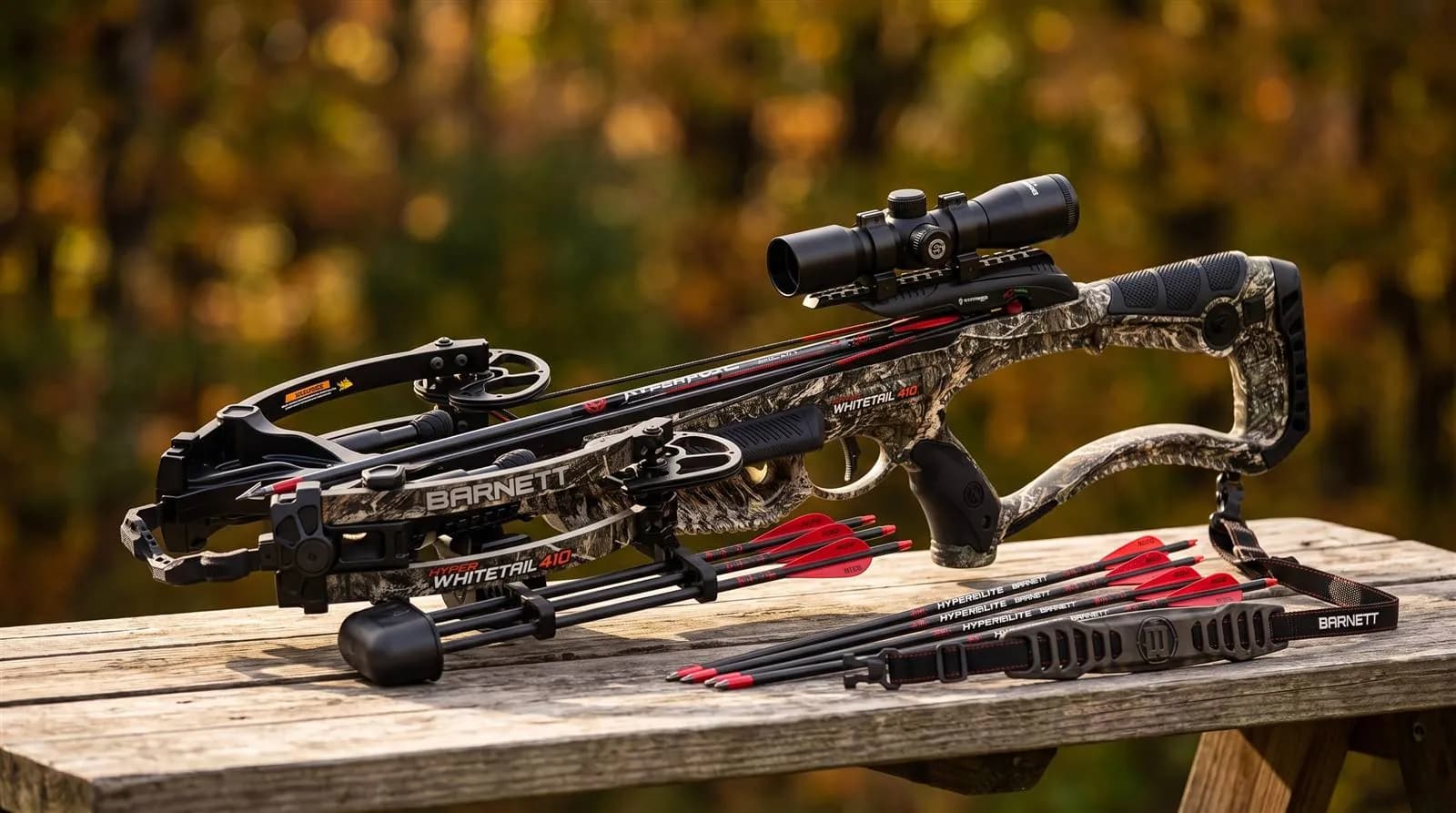
Barnett Hyper Whitetail 410 Review
Hunting-ready compound crossbow package that matched its 410 FPS rating. Scope, bolts and cocking aid included; groups hold up best inside 40 yards.
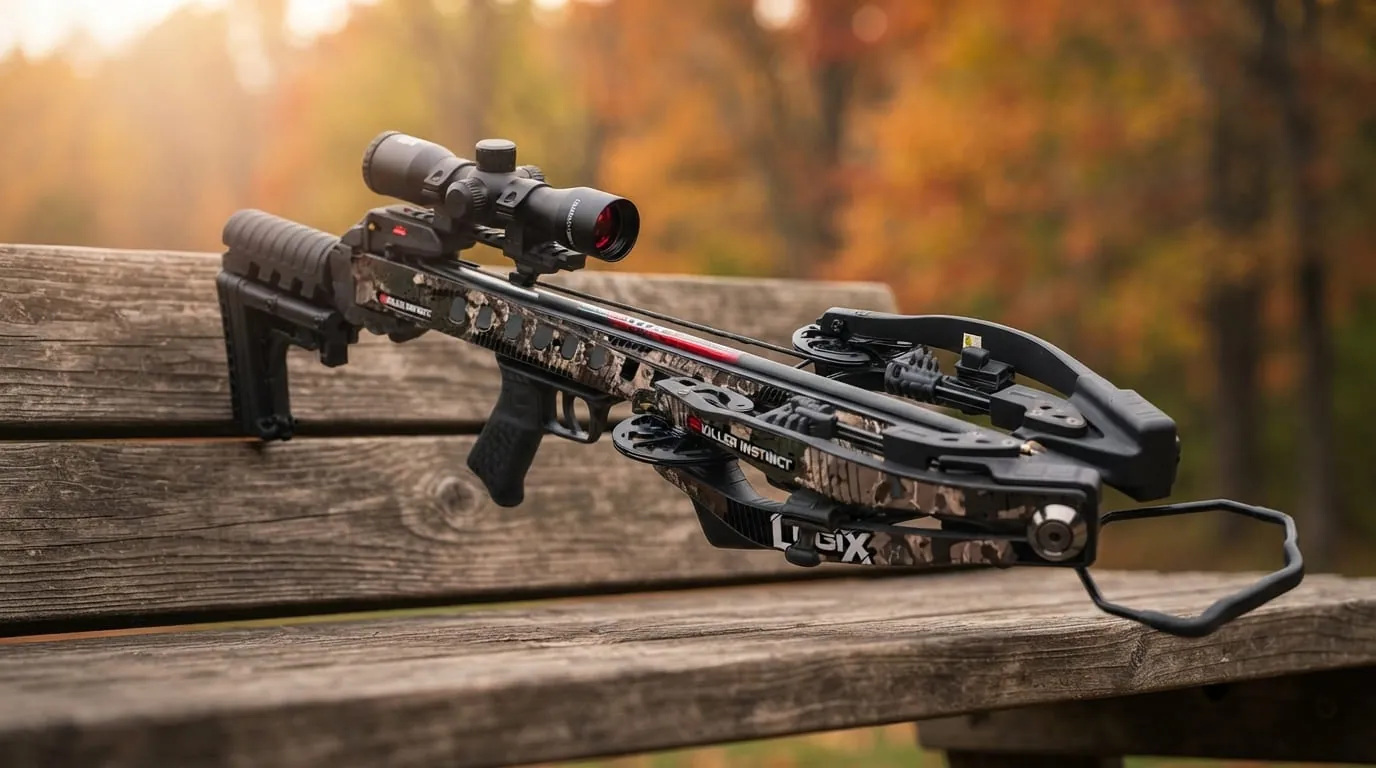
Killer Instinct Logix 435 Review
Mid-priced compound crossbow measured at 429–436 FPS, with a Let-Down Triggerbox for de-cocking and a limited lifetime warranty. Heavier to cock.
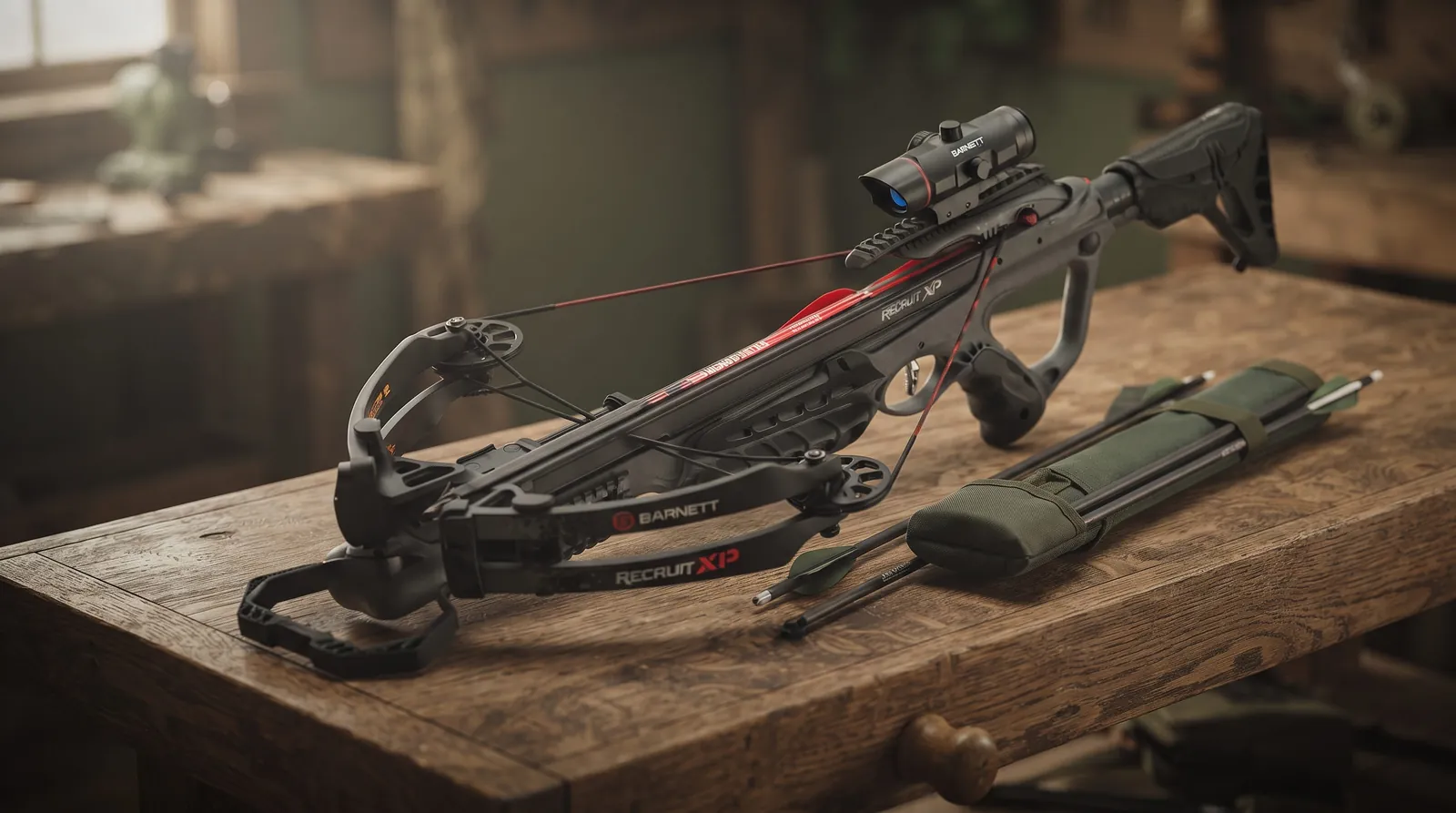
Barnett Recruit XP Crossbow Review
Short, light 350 FPS compound crossbow with anti-dry-fire trigger and a complete kit. Suits newer shooters and smaller-framed adults.
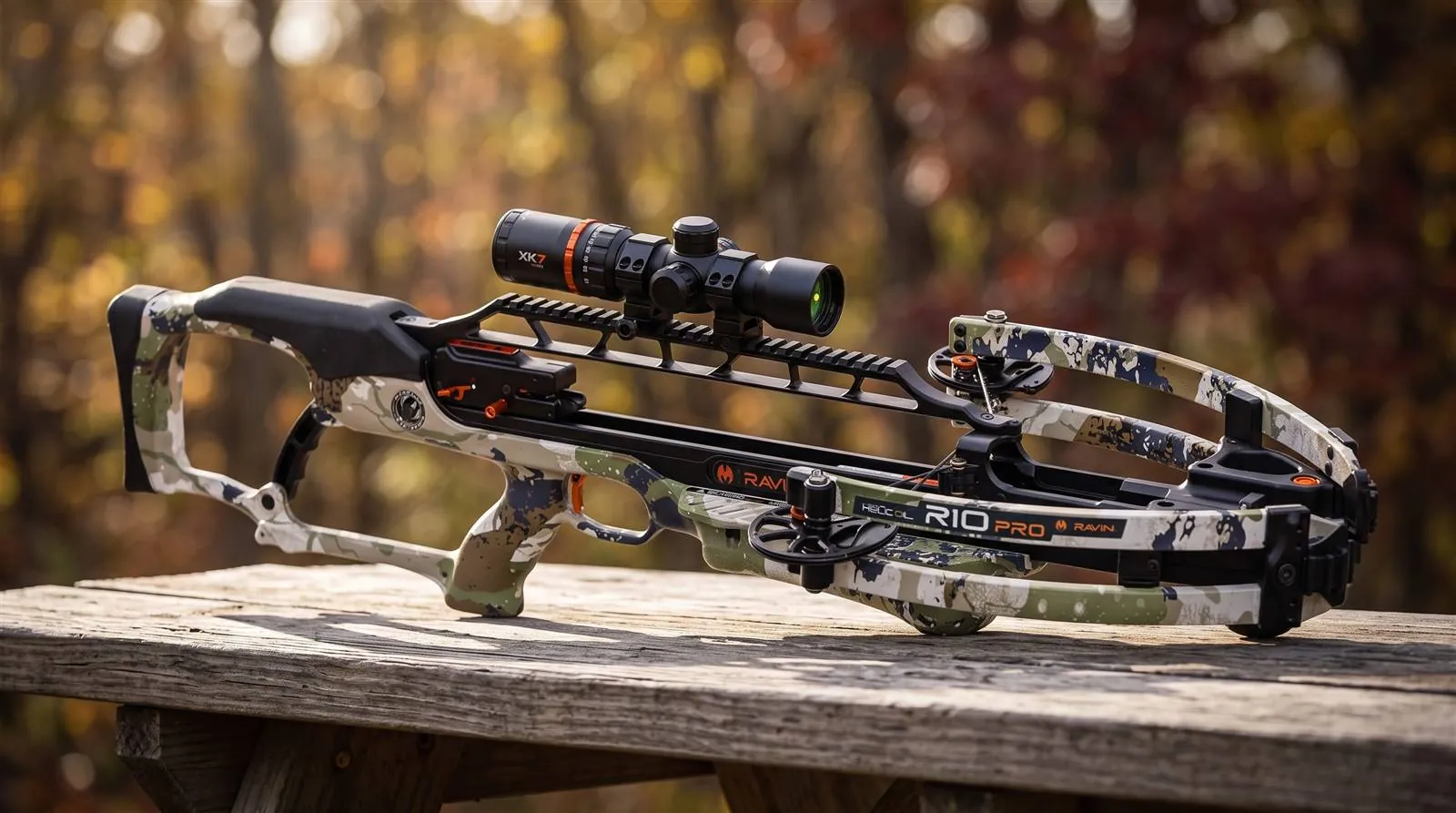
Ravin R10 Pro XK7 Review
Pre-assembled 6.8 lb compound crossbow with the XK7 illuminated scope. Matched its 420 FPS rating and held zero, though louder than rivals.
Most people searching for a compound crossbow are really trying to answer three questions at once: how fast do I need it to be, how hard will it be to cock, and how much of the price is speed versus convenience. The answers pull in different directions, and a single headline number rarely settles them.
If you are still deciding between limb designs, start with our compound vs recurve comparison, then come back here to narrow down models.
What defines a compound crossbow
A compound crossbow uses cams and cables on the limbs. As the string is drawn, the cams rotate and change how much force you feel, then release the stored energy through a longer effective stroke than the physical rail length suggests. That is why compounds can post higher speeds from a shorter, narrower frame than a recurve of similar draw weight.
The trade-off is complexity. Cams must stay timed, cables and strings stretch, and limb bolts need periodic checks. Our maintenance guide covers the routine.
A related term you will see is let-off, the drop in holding force at full draw. On a crossbow the string is held by the trigger rather than your hand, so let-off matters less for aiming and more for how the design stores and releases energy.
Forward-draw or reverse-draw?
Within the compound family there are two layouts. A forward-draw compound mounts the limbs at the front with the tips pointing away from you; it is the conventional, lower-cost design, and most of the reviewed models under $1,300 use it. A reverse-draw compound turns the limbs around so the cams sit out front and the string travels a longer power stroke inside a shorter frame; the Ravin R470 Stealth Gray and TenPoint Phantom De-Cock are reviewed examples. Reverse-draw buys you a short, narrow, well-balanced crossbow at a higher price and usually with model-specific bolts and cocking systems. Choose it when length and balance in a blind or stand matter more than purchase price; choose forward-draw when budget comes first.
Reading the specifications with real numbers
Manufacturer figures are measured under specific conditions, usually a light bolt and a fresh string, so treat them as a way to compare models rather than a promise for your setup. Four numbers do most of the work.
Speed and energy. Kinetic energy is proportional to mass times speed squared. With the same bolt weight, a bolt leaving at 450 FPS carries (450 / 400) squared, about 1.27 times the energy of one at 400 FPS. Against the 515 FPS rating of the TenPoint TRX Ultra, a 400 FPS model such as the Ravin R26X has about 60 percent of the energy at equal bolt weight, since (400 / 515) squared is roughly 0.60. Bolt weight changes this, so see our guide on how fast a crossbow bolt travels.
True versus felt draw weight. The R26X lists 340 pounds true and 12 pounds felt with its assisted cocking. The TenPoint TX Ultra 29.5 lists 350 pounds with 13.3 pounds felt. A rope-cocked Hyper Whitetail 410 is 190 pounds true and 95 pounds felt with the sled. Felt weight tells you about effort; true weight tells you about stored energy.
Weight. The reviewed range runs from 6.5 pounds (R26X) to 8.4 pounds (TRX Ultra and Logix 435). Carrying a two-pound heavier crossbow across a day is noticeable, while offhand steadiness at the shot sometimes favors extra mass.
Dimensions. Overall length runs from 26 inches (R26X) to 33.75 inches (Logix 435). Some listings give axle-to-axle width instead, and that figure is not interchangeable with overall length. Check which one a page is quoting.
Every compound I have scored, side by side
Highest rating first. Prices are the ranges I recorded at review time; speeds are the manufacturer rating next to what my chronograph measured with the bolt weight stated in each review.
| Model | My rating | Price | Rated speed | My chronograph | Draw weight | Weight |
|---|---|---|---|---|---|---|
| TenPoint TRX Ultra | 4.9 / 5 | $3,495–$3,515 | 515 FPS | 511–517 FPS | 360 lbs | 8.4 lbs |
| Ravin R29X | 4.8 / 5 | $2,499–$2,999 | 450 FPS | 444–454 FPS | 12 lbs felt (approx. 300 lbs true, HeliCoil assisted) | 6.75 lbs |
| TenPoint TX Ultra 29.5 | 4.8 / 5 | $2,499–$2,599 | 460 FPS | 456–463 FPS | 350 lbs (13.3 lbs felt via ACUslide MAXX) | 8 lbs |
| Ravin R26X | 4.7 / 5 | $1,999–$2,199 | 400 FPS | 395–403 FPS | 12 lbs felt (340 lbs true, HeliCoil assisted) | 6.5 lbs |
| Ravin R470 Stealth Gray | 4.7 / 5 | $2,450–$2,550 | 470 FPS | 463–472 FPS | Felt effort reduced via HeliCoil Silent Cocking (reverse-draw, true stored weight not published) | 6.9 lbs |
| TenPoint TX Ultra 26.5 | 4.6 / 5 | $1,999–$2,199 | 410 FPS | 406–413 FPS | 220 lbs | 7.7 lbs |
| TenPoint Venom X | 4.6 / 5 | $999–$1,199 | 390 FPS | 385–394 FPS | 215 lbs | 6.9 lbs |
| Barnett Hyper Raptor T-Rex | 4.5 / 5 | $1,199–$1,299 | 440 FPS | 435–443 FPS | 220 lbs | 8.2 lbs |
| Ravin LR Crossbow | 4.5 / 5 | $2,449–$2,499 | 450 FPS | Not measured | 12 lbs draw force (integrated cocking) | 8.1 lbs |
| TenPoint Phantom De-Cock | 4.5 / 5 | $999–$1,099 | 400 FPS | Not measured | 220–230 lbs | 7.4 lbs |
| TenPoint Titan X De-Cock | 4.5 / 5 | $799–$899 | 400 FPS | 395–404 FPS | 190 lbs (5 lbs felt via ACUdraw De-Cock) | 7.3 lbs |
| Wicked Ridge Invader M1 | 4.4 / 5 | $769–$799 | 390 FPS | 384–393 FPS | 175 lbs (ACUdraw De-Cock crank assisted) | 7.1 lbs |
| Barnett Hyper Whitetail 410 | 4.3 / 5 | $425–$485 | 410 FPS | 404–412 FPS | 190 lbs (95 lbs felt with rope-cocking sled) | 7.6 lbs |
| CenterPoint Wrath 430 | 4.3 / 5 | $729–$799 | 430 FPS | Not measured | 200 lbs | 8.3 lbs |
| Excalibur Hybrid X | 4.3 / 5 | $1,965–$2,099 | 435 FPS | Not measured | 336 lbs (14 lbs cocking effort) | 8.3 lbs (10.3 lbs with accessories) |
| Killer Instinct Logix 435 | 4.2 / 5 | $550–$700 | 435 FPS | 429–436 FPS | 210 lbs | 8.4 lbs |
| Barnett Recruit XP Crossbow | 4.0 / 5 | $339–$449 | 350 FPS | Not measured | 150 lbs | 6 lbs |
| Ravin R10 Pro XK7 | 3.9 / 5 | $1,499–$1,799 | 420 FPS | 415–423 FPS | 12 lbs felt (Versa-Draw assisted) | 6.8 lbs |
Which compound for which buyer
| If you want... | Start with | Why |
|---|---|---|
| The fastest, tightest-grouping crossbow regardless of price | TenPoint TRX Ultra | 511–517 FPS measured and sub-2-inch groups at 100 yards |
| Flagship speed for about $1,000 less | Ravin R470 Stealth Gray | Near-TRX speed with Ravin's integrated cocking |
| A compact frame for saddles and blinds | TenPoint TX Ultra 26.5 or Ravin R26X | 26 to 26.5 inches long, 12 lbs or less felt cocking |
| Safe de-cocking at the end of a sit under $900 | TenPoint Titan X De-Cock | ACUdraw De-Cock crank lets the string down without a shot |
| The same crank for less | Wicked Ridge Invader M1 De-Cock | TenPoint's cocking platform at a Wicked Ridge price |
| A complete first hunting package under $500 | Barnett Hyper Whitetail 410 | Scope, quiver and rope sled in the box, 149 ft-lbs |
| The lightest carry near $1,000 | TenPoint Venom X | 6.9 lbs with ACUslide cocking and de-cocking |
Budget and ownership costs
The purchase price is only part of the cost. Plan for these items:
- Bolts and points. Field points wear out and bolts get damaged on hard targets. See how to choose crossbow bolts.
- Strings and cables. Compounds use more string material than recurves. Replacement intervals depend on the model, so follow the manual.
- Wax and lubricant. String wax and rail lubricant are inexpensive but not optional.
- Scope. Some kits include one; others expect you to add your own. Our scope roundup shows the options, and how to choose a crossbow scope explains what matters before you buy.
- Target and range access. A bolt-stopping target rated for your speed is worth buying before you start.
A rough way to compare: take the lowest listed price in the table, add a realistic accessory budget, and compare that total to the all-in-one kits. Our cost guide breaks down what typical price tiers include.
Compatibility with scopes, bolts and cocking aids
Three compatibility points cause most of the returns and frustration.
- Bolts. Use the bolt length, weight and nock the manual specifies. A bolt that is too light for the draw weight can be unsafe in a dry-fire sense, and the wrong nock may not seat on the string. Check bolt length against the stated minimum.
- Scopes. Reticles are matched to speed. A bullet-drop compensating reticle calibrated for one speed will print differently on another. Sight in with the bolts you plan to shoot using our scope sighting guide.
- Cocking aids. Rope, crank and integrated reverse-draw systems are not interchangeable between models. A cocking aid from another brand may not fit your stock or may be unsafe on it.
Common mistakes and myths
- Buying on FPS alone. Higher speed with a heavier, longer frame may be worse for your use than a slower, handier model.
- Ignoring felt draw weight. A 350-pound true weight with a 13-pound felt cocking effort is a different experience from a 215-pound crossbow with a rope.
- Assuming all compounds are loud. Our reviews note noise and vibration individually. See noise and vibration for what to look for.
- Skipping the manual's maintenance schedule. Cams and cables are the reason to read it.
- Treating the price range as a ranking. Prices shift; the review rating shows how the model performed against its own class.
Who should skip a compound crossbow
A compound is not the right answer for everyone. Consider a recurve instead if you want fewer moving parts, plan to do your own repairs, or want the lowest possible entry price. Our recurve crossbow hub explains that trade-off honestly, including how few recurves I have reviewed so far.
If you only need a short-range backyard plinker, a pistol crossbow is a different category with different safety considerations. And if your main goal is a lighter draw you can manage easily, check our guide to draw weight by body size.
Two calculators make the spec sheets above easier to compare: the kinetic energy calculator turns any rated speed and bolt weight into foot-pounds, and the cocking effort estimator shows what a 200-lb or higher draw weight feels like with a rope, a crank or an integrated system. The bolt drop chart then shows how much flatter the fastest models shoot at 40 and 50 yards. If you are not sure a compound is the right design for you, the recurve crossbows page covers the simpler alternative.
Frequently Asked Questions
Are compound crossbows faster than recurves?
Generally yes. The cams store more energy in a short power stroke, so compounds usually post higher rated speeds at a given price. In our reviews the recurves sit at 245 and 305 FPS while the compounds range from 390 to 515 FPS, though bolt weight and draw weight both matter.
What is the difference between true and felt draw weight?
True draw weight is the force the limbs store. Felt draw weight is what you actually pull, which an assist system can reduce. The Ravin R26X lists 340 pounds true and 12 pounds felt with its assisted cocking.
How fast is fast enough for a compound crossbow?
There is no single number. Energy depends on bolt weight as well as speed, and the right choice depends on your use and your jurisdiction's rules. Compare the rated speed in each review against the model's weight, noise and price rather than chasing the top figure.
Do compound crossbows need more maintenance than recurves?
Typically yes, because cams, cables and limb bolts add inspection points. You wax strings and cables, check timing as the manual directs, and store the crossbow uncocked. Our maintenance guide gives a general routine, but your manual is the authority for your model.
Which compound crossbow is easiest to cock?
The reviewed models with assisted or reverse-draw systems list the lowest felt effort, including 5 pounds for the TenPoint Titan X De-Cock and 12 pounds for the Ravin R26X. Rope-cocked models require more effort and good technique, so read the cocking section of each review.
Can a compound crossbow be used for hunting?
Where crossbow hunting is permitted, yes, provided the model meets your jurisdiction's equipment rules such as minimum draw weight. Regulations differ by state and country and change, so verify current rules with your wildlife agency before you hunt.
Is an expensive compound crossbow worth the money?
It depends on what the extra money buys. In our reviews higher prices tend to bring lighter frames, lower felt cocking effort, narrower profiles and higher ratings, but not always higher speed. If those do not matter to you, a lower-priced model with a good rating may serve you better.
Do I need a scope for a compound crossbow?
Most crossbows are sold with a scope or with scope mounts, and you need some form of sighting system to shoot accurately. Check the box contents in each review, then sight in with the bolts you will actually use.
How do I store a compound crossbow?
Store it uncocked, unloaded and out of reach of children, away from heat and moisture, following your manual. Lightly lubricate the rail and wax the string as directed. Never leave a crossbow cocked for long periods.
Is a compound crossbow better than a compound bow?
It depends on the job. A compound crossbow is cocked by a mechanism and aimed through a scope, so it is easier to shoot accurately with less practice and suits hunters with shoulder or back limits. A vertical compound bow is lighter, quieter to carry and quicker for a second shot. Our crossbow vs compound bow guide weighs both, and seasons and legal equipment differ by jurisdiction, so check with your wildlife agency.
What is a reverse-draw compound crossbow?
A compound whose limbs point back toward the shooter with the cams in front, which allows a long power stroke in a short, narrow frame and shifts the balance toward the middle of the stock. The Ravin R470 Stealth Gray and TenPoint Phantom De-Cock are reviewed reverse-draw models. They cost more than forward-draw compounds and often need brand-specific bolts, so budget for the whole system.