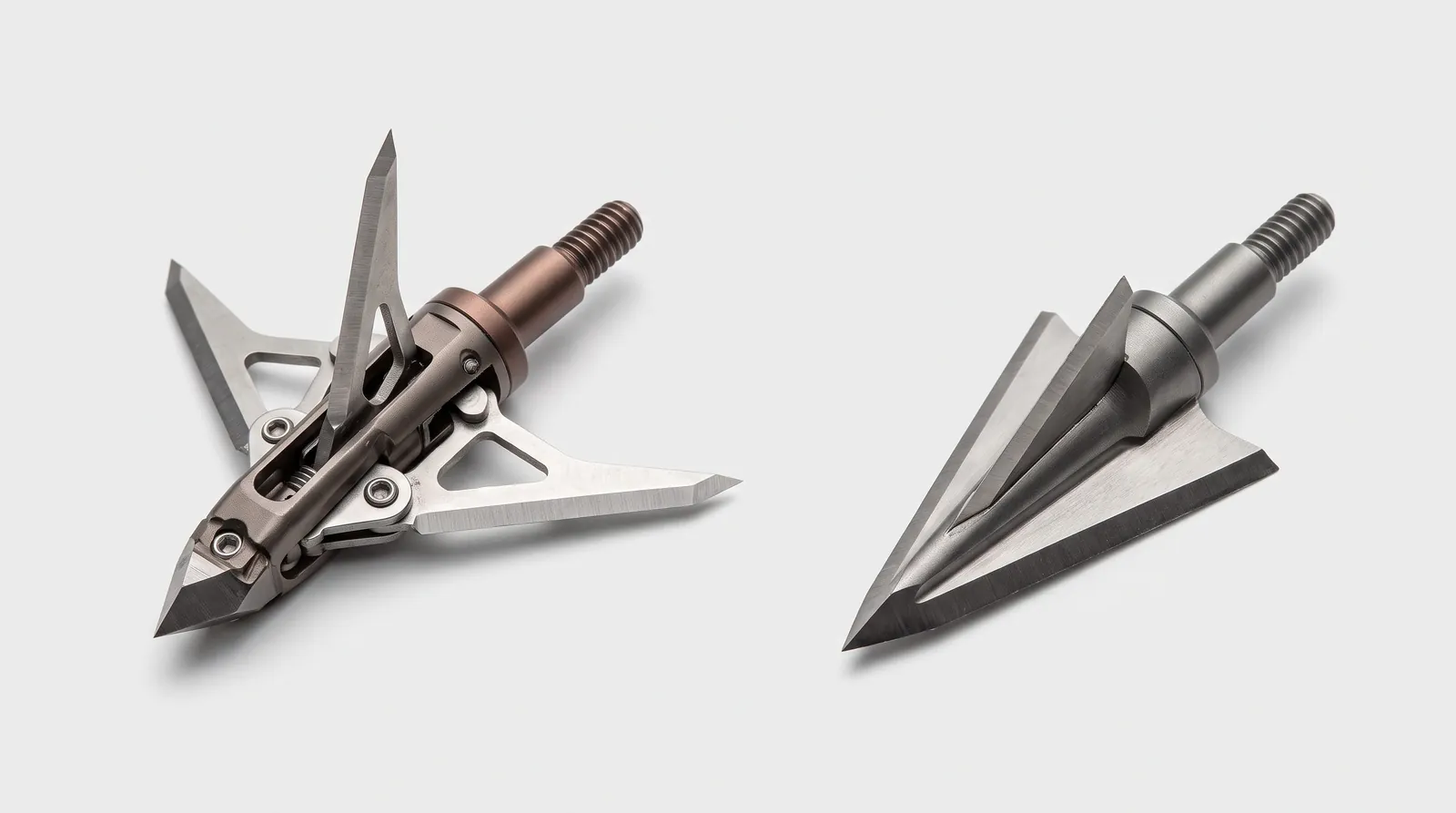
The head on the end of your bolt is the only part that touches the animal, which is why deer hunters should pick it against their crossbow's measured speed, not against a package claim. I have reviewed two broadheads so far, so this is a comparison of two rather than a ranking, with a third card for the bolt that carries them. Each has a full review, and ratings and prices below come straight from those reviews. Always confirm your local hunting rules and the broadhead's rated speed before the season.
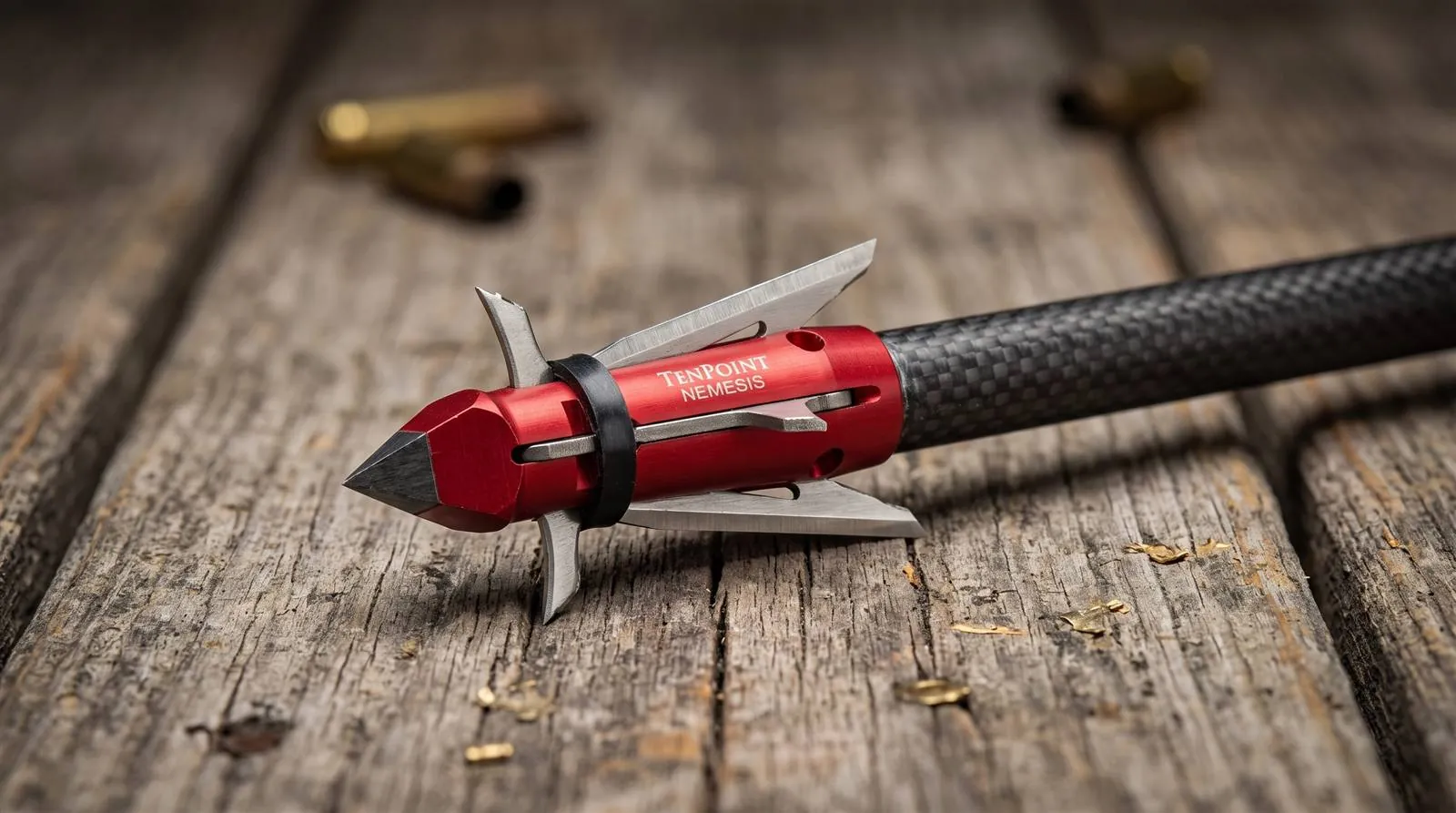
Largest Cutting Diameter: TenPoint Nemesis
The Nemesis is a 100-grain hybrid mechanical with a 3.75-inch total cut. Its staged design makes a smaller entry cut, then opens the rear blades after passing rib-cage resistance, which worked as designed in our layered test media. It flew consistently with field points, and the O-Ring/Band lock held the blades closed with no premature deployment.
The review lists no speed rating, so confirm TenPoint's rated ceiling before shooting it from a very fast crossbow.
- My testing confirmed the staged deployment worked exactly as designed — a clean 2-inch entry cut followed by the rear blades opening for a larger 1.75-inch exit wound
- The O-Ring/Band blade-lock system held the rear blades securely closed during flight in my testing, with no premature deployment
- The hardened steel chisel point delivered clean, consistent entry through my test media, backing up TenPoint's claim of superior accuracy versus typical mechanical designs
- At $49–$79 for a three-pack, this is a premium broadhead price point above basic fixed-blade options
- As a mechanical broadhead, the moving-parts design inherently carries more failure points than a simple fixed-blade broadhead, even with the O-Ring/Band lock system
- My testing found retrieving arrows with fully deployed blades from dense target material required more care than with fixed-blade heads
Rated to 450 FPS: Ravin R102
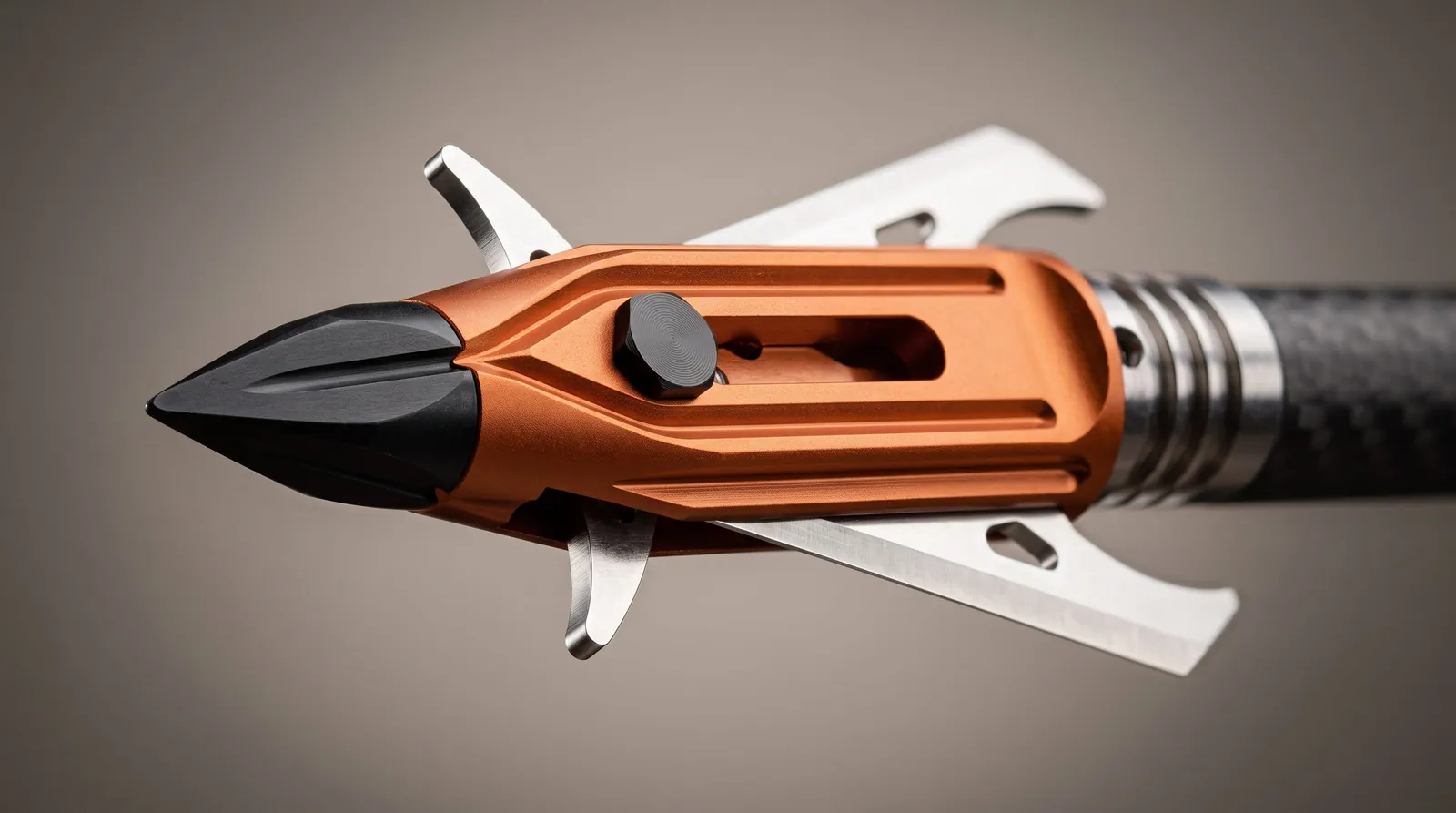
The R102 is a 100-grain rear-deploying mechanical with a 2-inch cut and a 7075-T6 aluminum body. Its internal spring clip kept the blades folded through flight at speeds approaching its 450 FPS rating, and it flew consistently with field points.
The cut is more modest than the Nemesis, and the aluminum body showed more cosmetic wear after repeated impacts, though that did not affect function.
- My testing confirmed the internal spring clip held the rear blades securely folded during flight without needing separate lock rings or O-rings, simplifying maintenance
- Flight accuracy stayed consistent with field points at matched distances at speeds approaching the rated 450 FPS in my testing, backing Ravin's high-speed compatibility claim
- The hardened 12L14 steel tip delivered clean, consistent entry through my test media across repeated impacts
- At 2 inches, cutting diameter is more modest than some hybrid mechanical broadheads offering larger staged cuts
- As a mechanical broadhead, it still carries more moving parts and potential failure points than a simple fixed-blade design
- My testing found the aluminum body, while light, showed more cosmetic wear after repeated impacts than steel-bodied alternatives
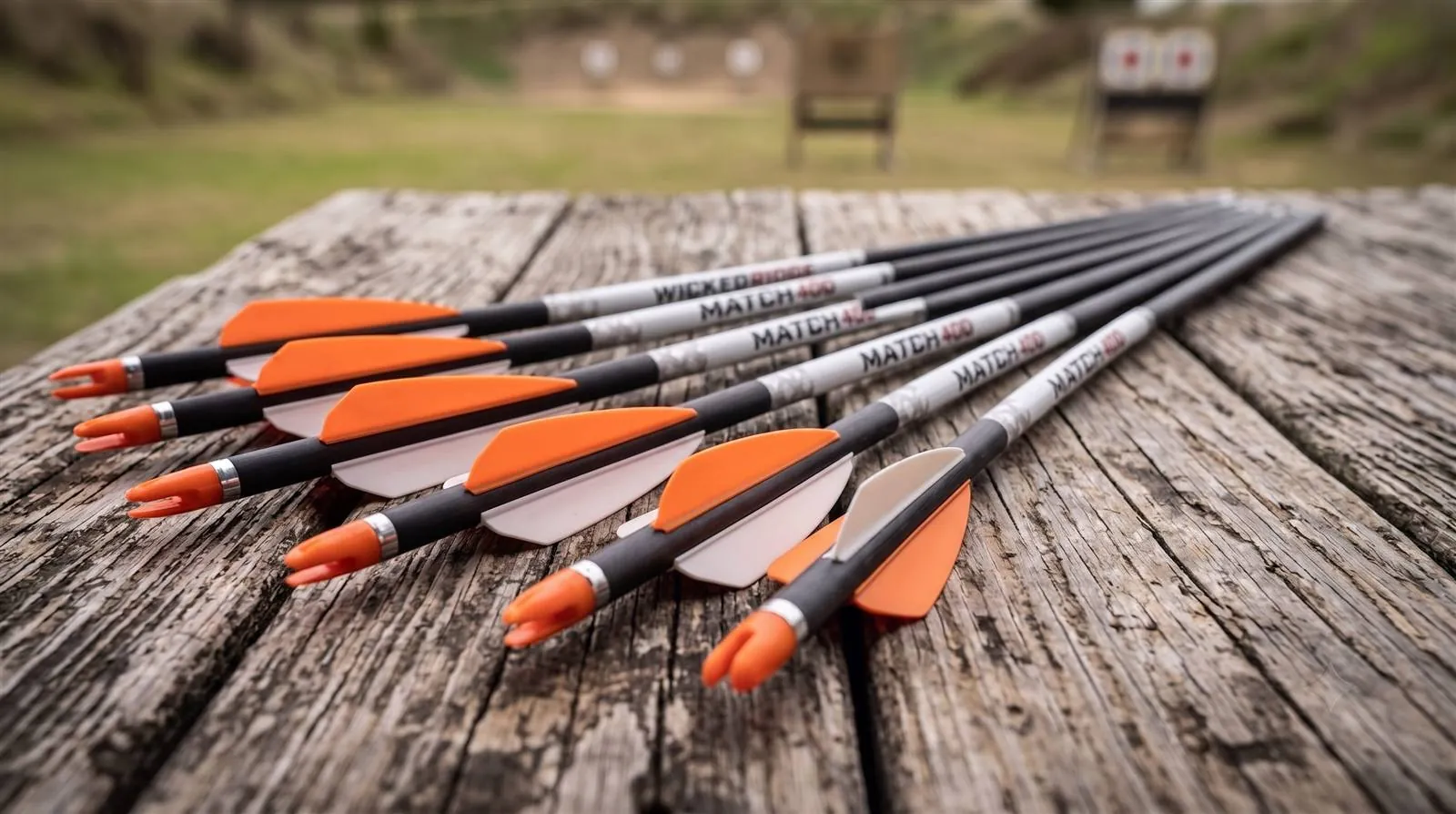
Bolt Pairing: Wicked Ridge Match 400
A broadhead flies only as well as the bolt behind it. The Match 400 is a 400-grain, 20-inch carbon bolt with a 46-grain aluminum insert that lifts FOC to about 14%, sold as a six-pack for $59 to $79. Our review says to confirm the insert threading matches your broadhead and that total arrow weight stays inside your crossbow's rated range.
It is a bolt, not a broadhead, and broadheads are sold separately.
- My testing confirmed the six-pack's weight stayed within Wicked Ridge's rated 5-grain weight tolerance, a solid consistency standard for a value-tier bolt
- The 46-grain aluminum insert pushed FOC up to an useful 14%, and my downrange testing showed noticeably tighter groups than lighter-insert bolts at the same price point
- Six bolts per pack gives more shooting volume per purchase than premium three-packs, a real practical advantage for high-round-count practice sessions
- At .004 inches, straightness tolerance is looser than TenPoint's premium CenterPunch HPX line (.001 in), which my testing found showed up as marginally wider groups at 60 yards
- This is a non-lighted bolt, so hunters wanting low-light bolt recovery should look at the Lighted Pro Elite 400 instead
- The fixed 20-inch length and 400-grain weight won't suit every crossbow — buyers should confirm compatibility with their specific platform before purchase
Swipe sideways to compare →
| Product | Type | Price | Rating | Buy |
|---|---|---|---|---|
| TenPoint Nemesis Broadhead | Accessories | $49–$79 | 4.6 / 5 | Check price on Amazon |
| Ravin R102 Broadhead | Accessories | $45–$55 | 4.4 / 5 | Check price on Amazon |
| Broadhead | Weight | Cutting Diameter | Speed Rating |
|---|---|---|---|
| TenPoint Nemesis | 100 grain | 3.75 in total | — |
| Ravin R102 | 100 grain | 2 in | About 450 FPS |
Pack sizes and price ranges: both are sold three to a pack, the Nemesis at $49 to $79 and the R102 at $45 to $55.
Which One Should You Buy?
- Largest cutting diameter with field-point accuracy: the TenPoint Nemesis. Confirm its rated speed first if your crossbow is very fast.
- A fast crossbow up to about 450 FPS: the Ravin R102. The Ravin R29X chronographed 444-454 FPS in our review, right at that ceiling.
- A crossbow faster than 450 FPS: the R102 is not a match. The TenPoint TRX Ultra (511-517 FPS) exceeds its rating, so check the manufacturer's rated ceiling on any head you consider.
- Zero moving parts: see our fixed-blade hunting broadheads guide.
How We Choose
We weigh measurable factors, and we say plainly that two reviewed heads cannot be a ranking: cutting diameter, flight accuracy against field points, penetration in layered test media, blade-lock reliability, and fit with your crossbow's speed and kinetic energy. We do not chase the largest cutting diameter on the shelf, and we only recommend broadheads I have reviewed ourselves. Our testing methodology sets out how each review is run.
Mechanical vs. Fixed-Blade Broadheads for Deer
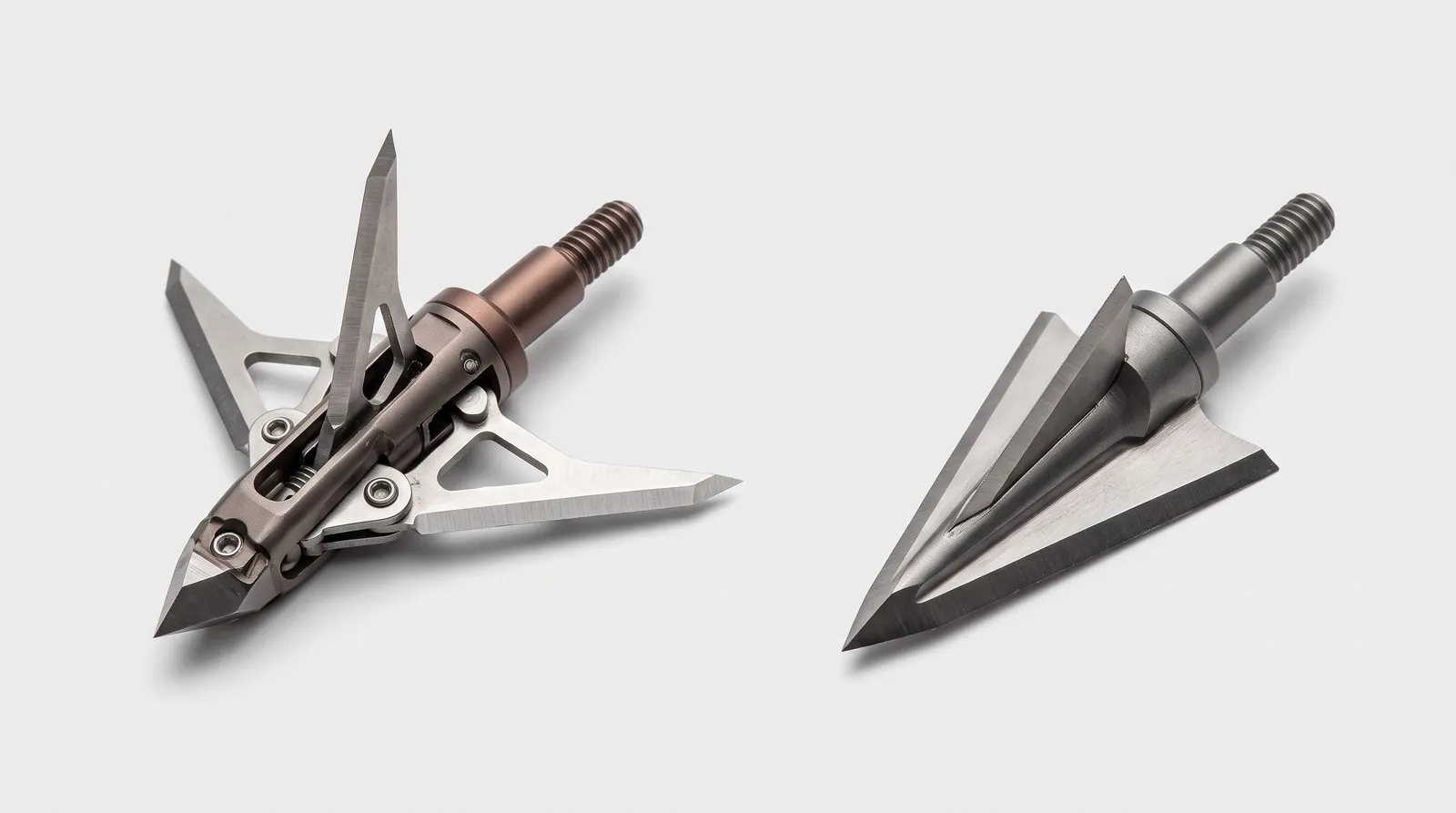
Mechanical Broadheads: Larger Wound Channels, More Moving Parts
Mechanical broadheads fly closed and open their blades on impact, typically delivering a larger cutting diameter than a fixed-blade design of the same weight. Our reviews of both the TenPoint Nemesis and Ravin R102 found that both flew consistently with field points at matched distances, which isn't guaranteed with every mechanical broadhead on the market.
Fixed-Blade Broadheads: Maximum Reliability
Fixed-blade broadheads have no moving parts to fail, deploy, or lock closed during flight, making them the simplest, most failure-resistant choice for deer hunting. The tradeoff is a smaller cutting diameter and, on some designs, slightly reduced flight accuracy compared to field points due to blade profile drag — though well-made fixed blades can match field-point flight closely. Our fixed-blade hunting broadheads guide covers blade count, single vs. double bevel, and sharpening in more depth.
Which Should You Choose for Deer?
For whitetail and similarly-sized deer species, either design is effective when properly matched to your crossbow's speed and kinetic energy. Choose mechanical if you want the largest reliable wound channel and are comfortable with periodic mechanism inspection; choose fixed-blade if you prioritize absolute reliability and want to eliminate moving-parts failure as a variable entirely.
The Blade-Lock Question
If you do go mechanical, pay close attention to how the broadhead keeps its blades folded during flight. Our reviews of both found the O-Ring/Band system (TenPoint Nemesis) and the internal spring clip (Ravin R102) held blades securely through repeated flight testing at various shot angles, with no premature deployment in either case. Blade-lock designs differ between mechanical broadheads, so the mechanism is worth researching specifically rather than assuming all mechanical designs perform equally.
Cutting Diameter and Ethical Shot Placement
Why Bigger Isn't Automatically Better
A larger cutting diameter increases the wound channel and can improve blood trail visibility, but it isn't a substitute for accurate shot placement. A well-placed 2-inch cut, like the Ravin R102 delivers, produces a clean, ethical harvest just as reliably as a larger staged cut when shot placement is accurate — cutting diameter matters most as a margin for imperfect shots, not as the primary factor in ethical hunting.
Staged Deployment for Deep Penetration
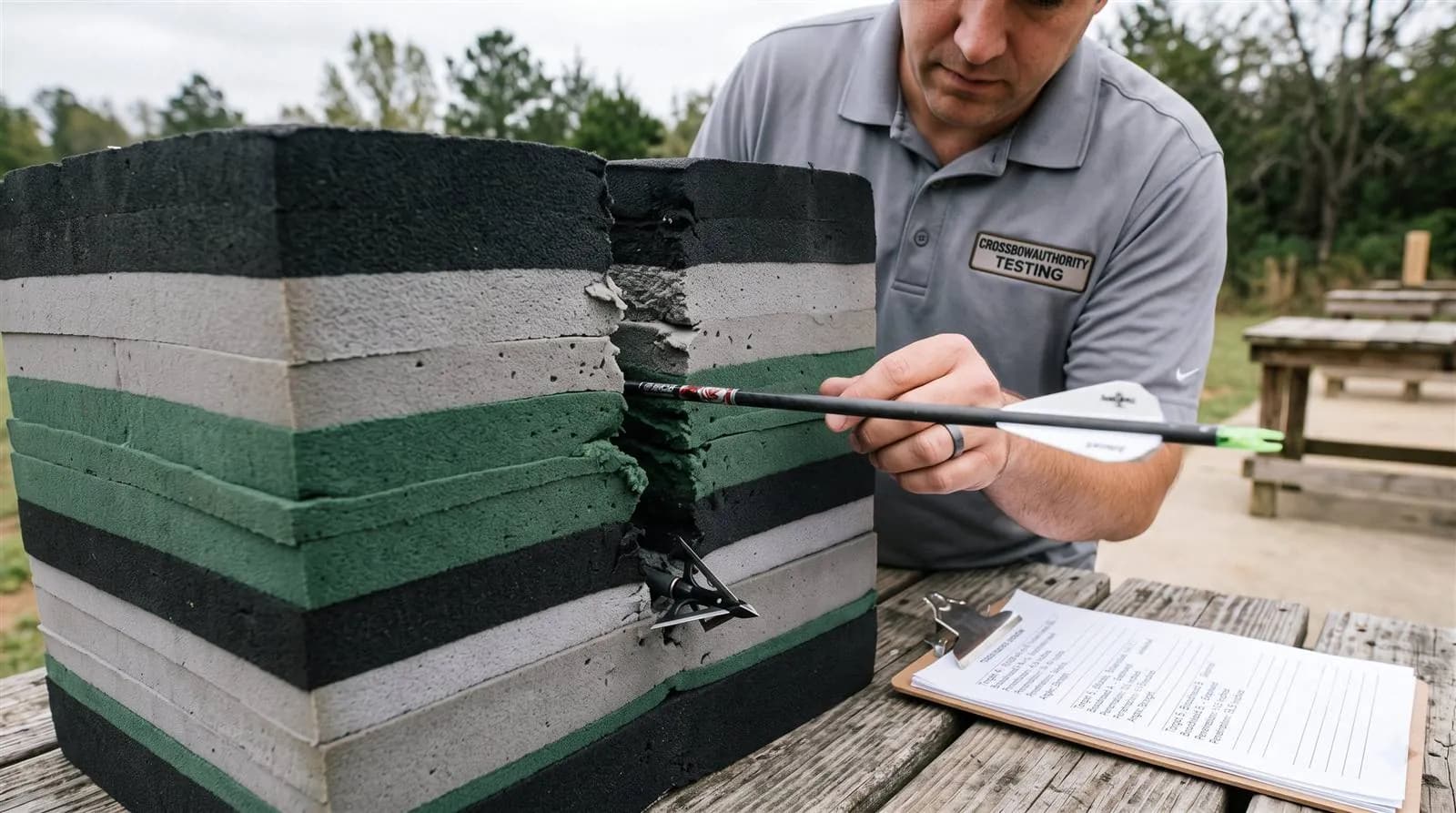
The TenPoint Nemesis uses a staged deployment design — a smaller entry cut followed by a larger cut once the broadhead passes the rib cage — which our TenPoint Nemesis review found worked as designed in layered test media, opening the rear blades only after passing simulated rib cage resistance. This is a meaningful consideration for deer hunting specifically, where the rib cage represents real resistance a broadhead must pass through before delivering a lethal hit.
Shot Angle and Cutting Diameter Interaction
A broader cutting diameter provides more margin when a shot angle isn't perfectly broadside, since a larger wound channel is more likely to intersect vital organs even when the entry point is slightly off from ideal. This doesn't mean hunters should take marginal shots expecting the broadhead to compensate — rather, a larger cutting diameter is a safety margin for the inevitable imperfect shot, not a license to take questionable ones. Cutting diameter should be treated as one factor among several, not a replacement for disciplined shot selection.
Matching Broadhead to Crossbow Speed
Why Speed Rating Matters
Mechanical broadheads not specifically rated for high-speed crossbows can suffer from premature blade deployment or structural stress at extreme velocities. The Ravin R102 is explicitly rated for crossbows up to 450 FPS, and our review confirmed its internal spring clip held blades securely folded through flight at speeds approaching that ceiling — an advantage for owners of fast crossbows. Check the numbers first: the Ravin R29X chronographed 444–454 FPS in our review, right at the R102's ceiling, and the TenPoint TRX Ultra (511–517 FPS) exceeds the R102's 450 FPS rating, so the R102 is not a match for it. The Nemesis review does not list a speed rating, so confirm the manufacturer's rated ceiling before shooting it from a very fast crossbow.
Checking Compatibility Before You Buy
Before selecting a broadhead, confirm your crossbow's actual chronographed speed and check the broadhead manufacturer's rated speed ceiling. Shooting a broadhead beyond its rated speed risks blade deployment failure or structural damage, undermining the accuracy and reliability you're paying for in the first place.
Aluminum vs. Steel Broadhead Bodies
The Ravin R102's 7075-T6 aluminum body trades some surface durability for a lighter, corrosion-resistant head. Our review found this tradeoff reasonable for most deer hunting scenarios, though it noted more cosmetic surface wear on the aluminum body after repeated impacts than steel alternatives typically show — a purely cosmetic tradeoff that didn't affect functional performance.
Kinetic Energy and Deer-Specific Considerations
Kinetic Energy Guidelines for Deer
Commonly cited minimums for deer-sized game fall in the range of 25–41 foot-pounds of kinetic energy (requirements vary by jurisdiction, so check your local hunting regulations), with the higher end providing a stronger margin for less-than-ideal shot angles. Both broadheads in our lineup, at 100 grains, integrate cleanly with standard bolt setups without requiring balance adjustments, and pairing either with a crossbow in the 350+ FPS range typically exceeds commonly cited deer-hunting kinetic energy minimums. Larger species like elk generally call for kinetic energy well above the deer-specific range, so treat these figures as deer-specific guidance rather than a universal standard across all game sizes.
Broadhead Weight and Total Arrow Weight
A 100-grain broadhead is the most common weight for crossbow bolts and pairs well with the majority of factory bolt setups without requiring re-tuning. If you're running a heavier or lighter broadhead than your bolts were originally matched to, re-verify your point of impact at hunting distances before the season, since even small weight changes at the front of the arrow can shift accuracy.
How Bolt Weight Affects Overall Kinetic Energy
Broadhead weight is only part of the kinetic energy equation — total bolt weight, including the shaft, insert, vanes, and nock, all factor into the final energy delivered on impact. A heavier bolt paired with the same broadhead will generally carry more kinetic energy at a given speed than a lighter bolt, though at some cost to velocity and trajectory flatness. If you're building out a deer-hunting setup from scratch, consider your complete bolt weight alongside your broadhead choice rather than evaluating the broadhead's kinetic energy contribution in isolation.
Practice Before the Season
Shoot Your Actual Broadhead, Not Just Field Points
A broadhead's true flight behavior can only be verified by shooting the actual broadhead, not assuming it matches field-point flight based on spec sheet claims alone. Take several practice shots with your hunting broadhead at your expected hunting distances before the season opens, and re-verify point of impact any time you change bolts, broadheads, or your crossbow's sight settings. A handful of practice shots at your maximum intended hunting range is worth far more than dozens of shots at a comfortable, closer distance that doesn't reflect a realistic field scenario.
Inspect Before Every Hunt
Mechanical broadheads in particular should be inspected before each hunt to confirm the blade-lock mechanism is secure and blades are properly seated. A broadhead that deploys prematurely during flight, or fails to deploy on impact, defeats the purpose of choosing that design in the first place.
After the Shot: Blade Care and Replacement
Once you've recovered your bolt after a hunt, inspect the blades for dulling, bending, or damage before considering the broadhead reusable. Both broadheads in our lineup use replaceable blade sets rather than sharpenable fixed edges — attempting to field-sharpen thin mechanical blades typically does more harm than good, so replacing worn or damaged blades is the safer, more reliable approach for maintaining consistent performance across a season.
A Simple Pre-Season Checklist
Work through these in order and write the results down. It takes one range session.
- Chronograph your crossbow with the bolt and head you will hunt with, and note the FPS.
- Compare that speed with the broadhead's rated ceiling.
- Confirm the insert threads match and the total bolt weight sits inside your crossbow's range.
- Shoot field points and your broadhead at your intended distances, and compare groups.
- Inspect the blade lock and replace any worn band or bent blade.
- Re-check your sight with our how to sight in a crossbow scope guide if the point of impact moved.
Local Rules Can Decide for You
Some jurisdictions set minimum cutting diameters, ban certain head types or restrict hunting devices. Check current regulations with your wildlife agency, and see our crossbow hunting laws by state guide for where to start. Nothing here is legal advice.
Common Broadhead Buying and Setup Mistakes
Most broadhead trouble comes from the match between head, bolt and crossbow, not from the head itself. These are the errors worth catching before the season.
| Mistake | Why it causes trouble | What to do instead |
|---|---|---|
| Buying on cutting diameter alone | A bigger cut does not fix a head that flies differently from your field points | Pick the head you can group well, then compare cut size |
| Ignoring the speed rating | A head used above its rated ceiling risks early deployment or damage | Chronograph your crossbow and compare it with the maker's stated ceiling |
| Assuming all inserts fit | Thread and insert mismatches leave the head loose or off-axis | Check thread type in the head and bolt instructions before buying |
| Skipping the broadhead range session | Field-point groups can hide a head that drifts | Shoot the exact head at your longest realistic distance |
| Reusing a bent or dulled blade set | Damaged blades change flight and cutting | Replace blades or the head, following the maker's guidance |
| Changing one thing at the last minute | A new bolt, head or sight setting moves the point of impact | Re-check impact after every change |
Broadhead Compatibility Checklist
Run this before you spend money on a second pack.
- Write down your crossbow's chronographed speed with your hunting bolt.
- Find the head's stated speed rating in the maker's instructions. If none is listed, as with the Nemesis in our review, ask the maker.
- Confirm the head's weight (both reviewed heads are 100 grain) matches what your bolts and manual allow.
- Check that your bolt's insert accepts the head's thread. Our Wicked Ridge Match 400 review tells owners to confirm threading first.
- Check that total bolt weight stays inside your crossbow's rated range, since a heavy head adds to it.
- Confirm your local rules allow the head type and cutting diameter.
Why a Broadhead Might Not Group With Your Field Points
If groups open up once you screw on a broadhead, work through the common causes in order. This is general archery practice, so follow your crossbow and bolt manuals for specifics.
| Symptom | Likely cause | First thing to check |
|---|---|---|
| Broadheads land to one side of field points | Head or blade alignment against the vanes | Rotate the head and re-test; check vane clearance |
| Random fliers at long range | Head not seated or insert not flush | Look for a gap at the head and insert joint |
| Whole group shifts low or high | Extra front weight changes trajectory | Re-sight at your hunting distances |
| One bolt strikes differently each time | Bent shaft or damaged nock | Roll the shaft on a flat surface and inspect the nock |
| Blades open in the quiver or in flight | Worn lock band, clip or retention | Replace the worn part before shooting again |
What a Broadhead Really Costs Over a Season
The sticker price is only part of it. Both reviewed heads come three to a pack, so the per-head cost is plain division from the review prices.
| Head | Pack price | Per head (price divided by 3) |
|---|---|---|
| Ravin R102 | $45 to $55 | about $15 to $18 |
| TenPoint Nemesis | $49 to $79 | about $16 to $26 |
A sensible plan for one pack is one head for practice, one for hunting and one spare, but heads that hit hard targets may need replacing sooner. Replacement blade sets, extra bolts and a second pack for practice can double the real outlay, so budget for at least two packs if you want to shoot the exact head you will hunt with. Prices change, so confirm current figures on the review pages.
Who Should Skip a Mechanical Broadhead
- You will not inspect locks and blades before each hunt.
- Your crossbow is faster than the head's stated ceiling, or you cannot confirm the ceiling.
- You want a single head for years with minimal upkeep, where a fixed blade fits better.
- Your local rules restrict mechanical heads or set a minimum cut that the head does not meet.
Our fixed-blade guide covers that alternative, and the crossbow bolts guide explains how bolt weight and balance affect any head.
Read nextHow fixed-blade broadheads compareHow a fixed head is built, what you gain and give up against a mechanical one, and how to tune it.A heavier head shifts the balance point forward, so check the finished bolt in the FOC calculator and confirm the energy it carries at your speed with the kinetic energy calculator.
Frequently Asked Questions
What's the best broadhead for deer hunting with a crossbow?
Our reviews found both the TenPoint Nemesis (larger 3.75-inch staged cut) and Ravin R102 (2-inch cut, rated to 450 FPS) effective for deer, with the right choice depending on your crossbow's speed and whether you prioritize maximum wound channel or high-speed compatibility.
Is mechanical or fixed-blade better for deer hunting?
Both are effective when properly matched to your setup. Mechanical broadheads typically offer a larger cutting diameter and field-point-matched flight; fixed-blade broadheads offer maximum reliability with zero moving parts to fail.
How much kinetic energy do I need for deer hunting?
Commonly cited minimums for deer-sized game are 25–41 foot-pounds of kinetic energy, and requirements vary by jurisdiction, so check your local regulations. Most crossbows in the 350+ FPS range paired with a typical bolt exceed this range.
Should I practice with my actual broadhead or just field points?
Always shoot your actual hunting broadhead at your expected hunting distances before the season, since broadhead flight can differ meaningfully from field points depending on the specific design and your bolt setup.
Can I use a high-speed-rated broadhead on any crossbow?
A broadhead's speed rating is a maximum, not a minimum, so the Ravin R102's 450 FPS rating is not a problem on slower crossbows. The reverse is the issue: never shoot a broadhead from a crossbow faster than its rated ceiling, which rules out the R102 on crossbows above 450 FPS.
Do I need to replace the blades after every shot?
Inspect them after every shot at an animal or hard target. Both reviewed heads use replaceable blade sets, so dull, bent or damaged blades should be swapped rather than reused, since field sharpening thin mechanical blades usually does more harm than good.
Why do my broadheads hit differently from my field points?
Broadhead blades act like small wings, so slight misalignment, an unseated head or a bent shaft can steer the bolt. Check alignment and seating first, then re-sight at hunting distances before blaming the head.
How many broadheads should I buy for deer season?
Both reviewed heads come three to a pack. A common approach is one for practice, one for hunting and one spare, with a second pack if you want extra practice shots with the exact head you will hunt with.
Does a heavier broadhead make my crossbow quieter or slower?
Extra front weight raises total bolt weight, which typically lowers speed slightly while helping energy retention. Stay inside your manual's rated bolt weight range and re-check your point of impact after any change.
Can I put a broadhead on any bolt?
No. The bolt needs an insert whose thread fits the head, and total weight must stay inside your crossbow's range. Check both in the bolt and broadhead instructions, and consult your crossbow manual before shooting a new combination.
Final Recommendation
If your crossbow shoots up to about 450 FPS, the Ravin R102 is the cleaner fit because its speed rating is stated. If you want the larger staged cut and have confirmed the Nemesis suits your crossbow's speed, choose that. Prefer no moving parts? Compare both with the fixed-blade guide first.
Still choosing the crossbow itself? See our best crossbows for deer hunting guide for kinetic energy and noise-tested picks across every budget. Looking for more hunting accessories to round out your setup? Our crossbow accessories category hub lets you browse the full lineup of tested gear to pair with your broadhead choice for the coming deer season.
More in Scopes, Bolts & Broadheads
How to Choose a Crossbow Scope
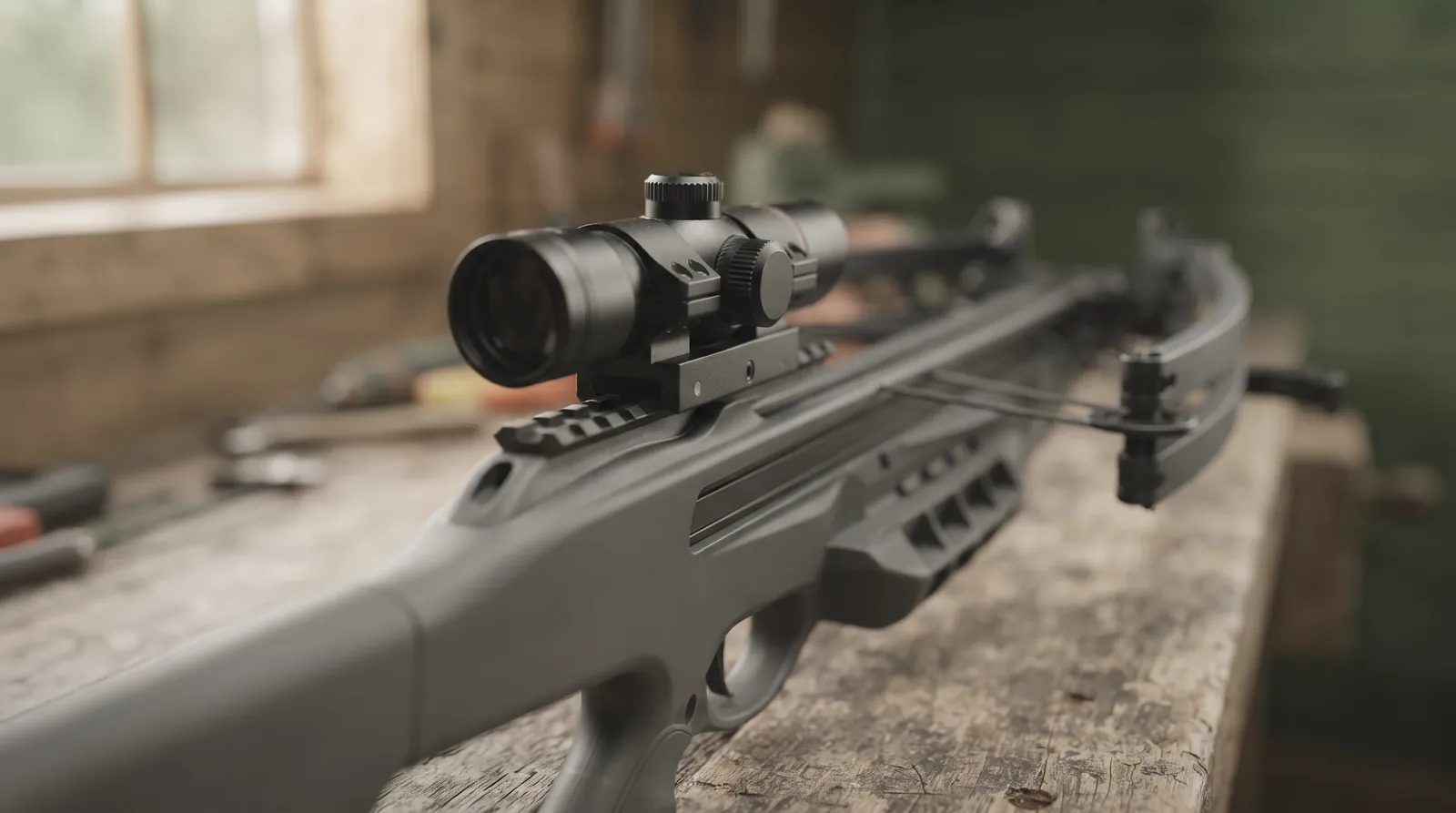
Seven steps to choosing a crossbow scope: intended use, reticle type, magnification, eye relief, focal plane, parallax, and matching your bolt speed.
Read guide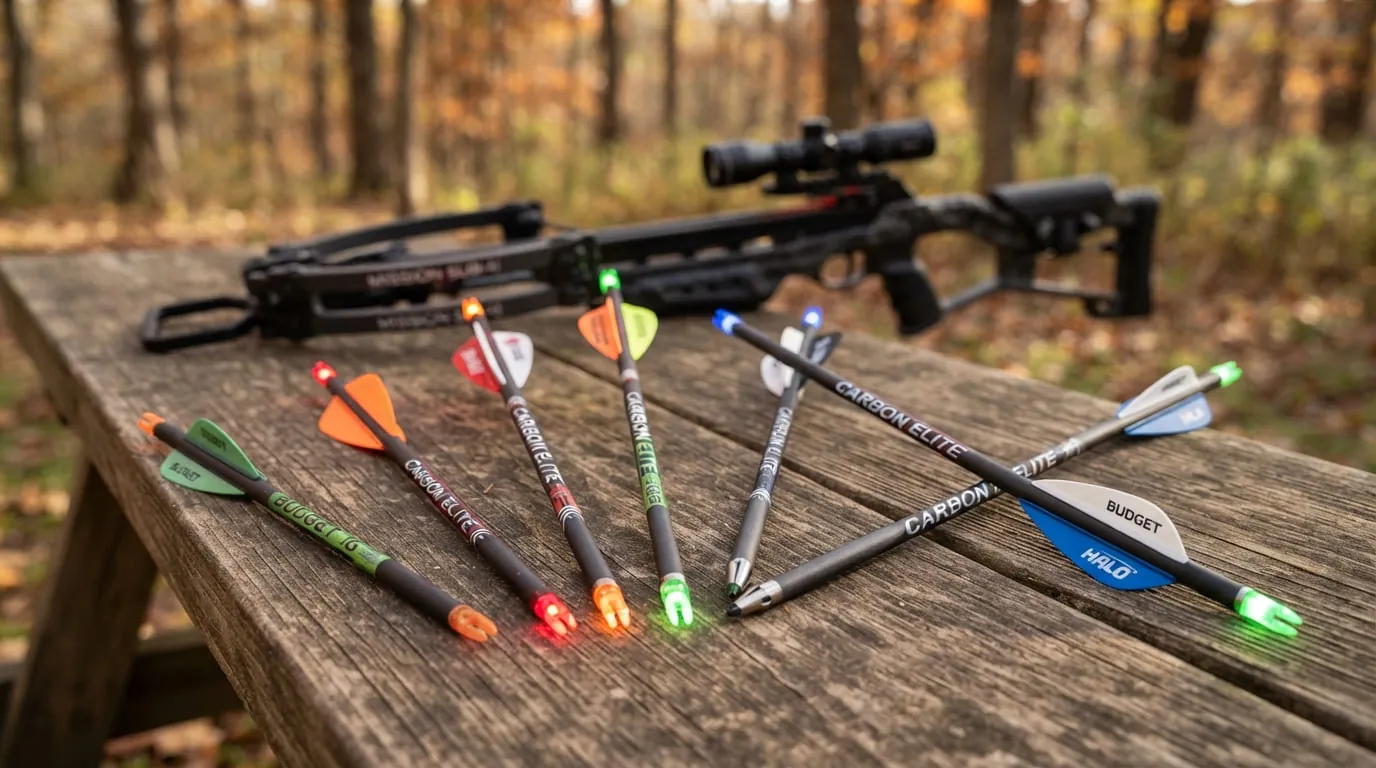
Best Crossbow Bolts of 2026
Crossbow bolts compared by grain weight, length, nock type and straightness, from 12-pack practice bolts to weight-matched carbon and lighted hunting bolts.
Read guide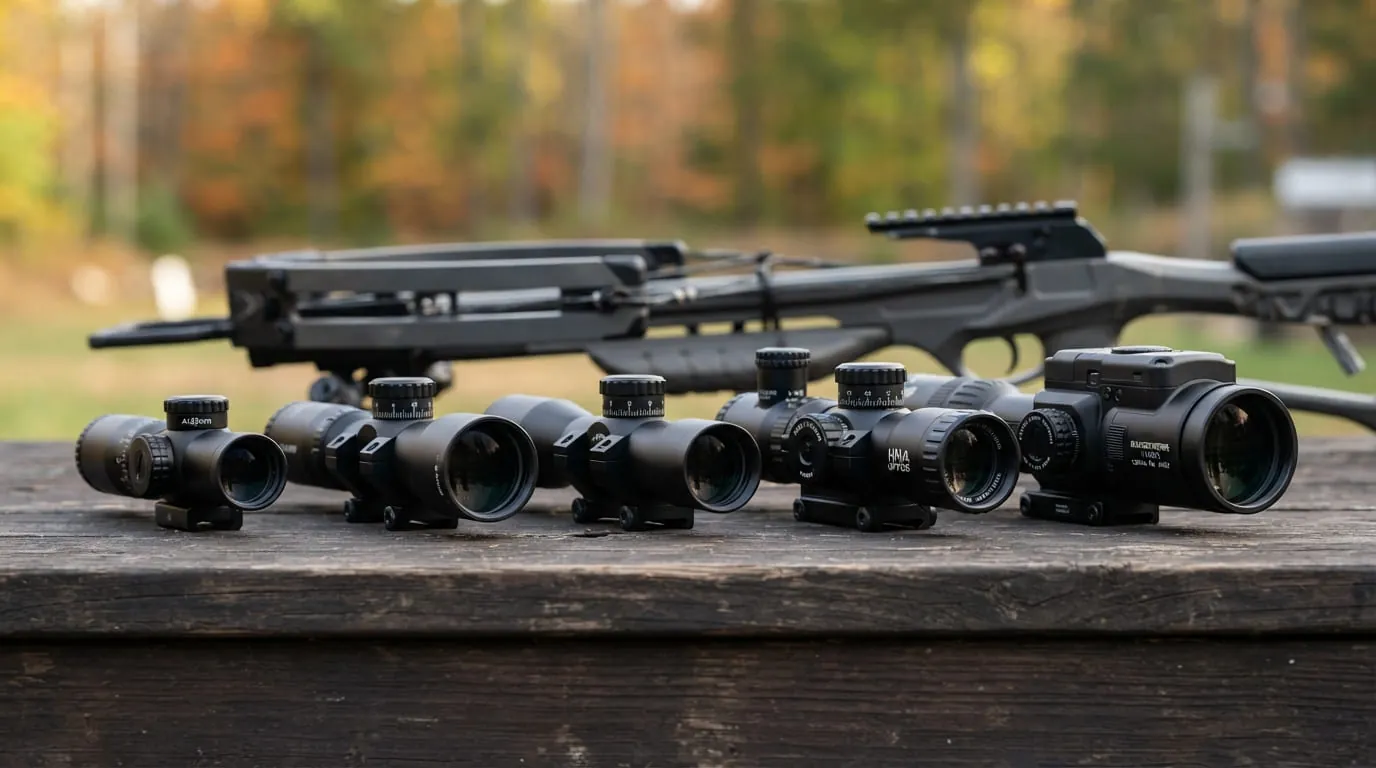
Best Crossbow Scopes of 2026
Crossbow scopes compared from $45 fixed optics to laser rangefinding and digital models, with reticle, magnification and speed range for each.
Read guide