Fixed-Blade Hunting Broadheads Guide
Fixed-blade hunting broadhead guide: how they work, single vs. multi-blade design, cutting diameter, penetration, and when to choose fixed over mechanical.
What Is a Fixed-Blade Broadhead?
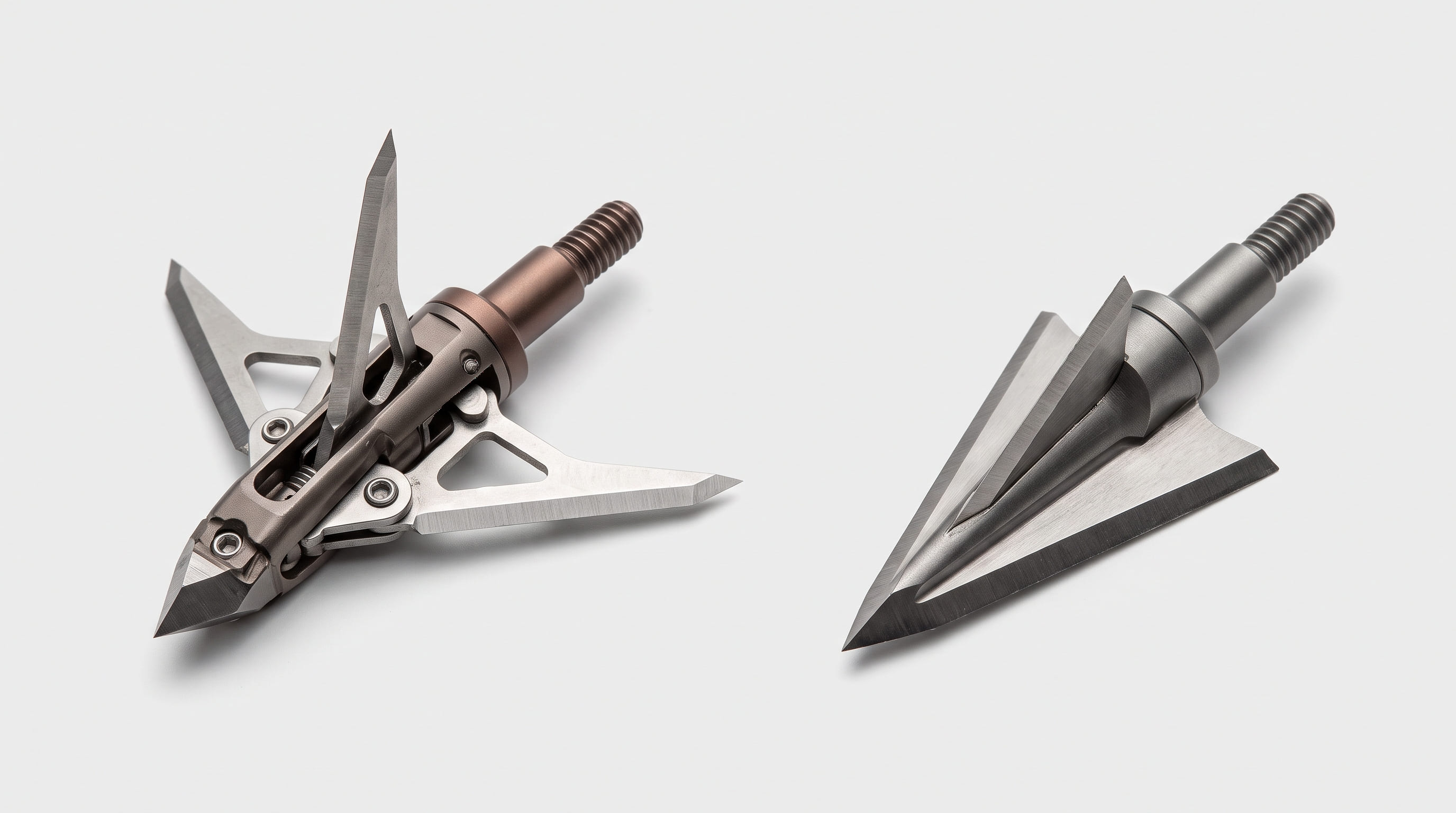
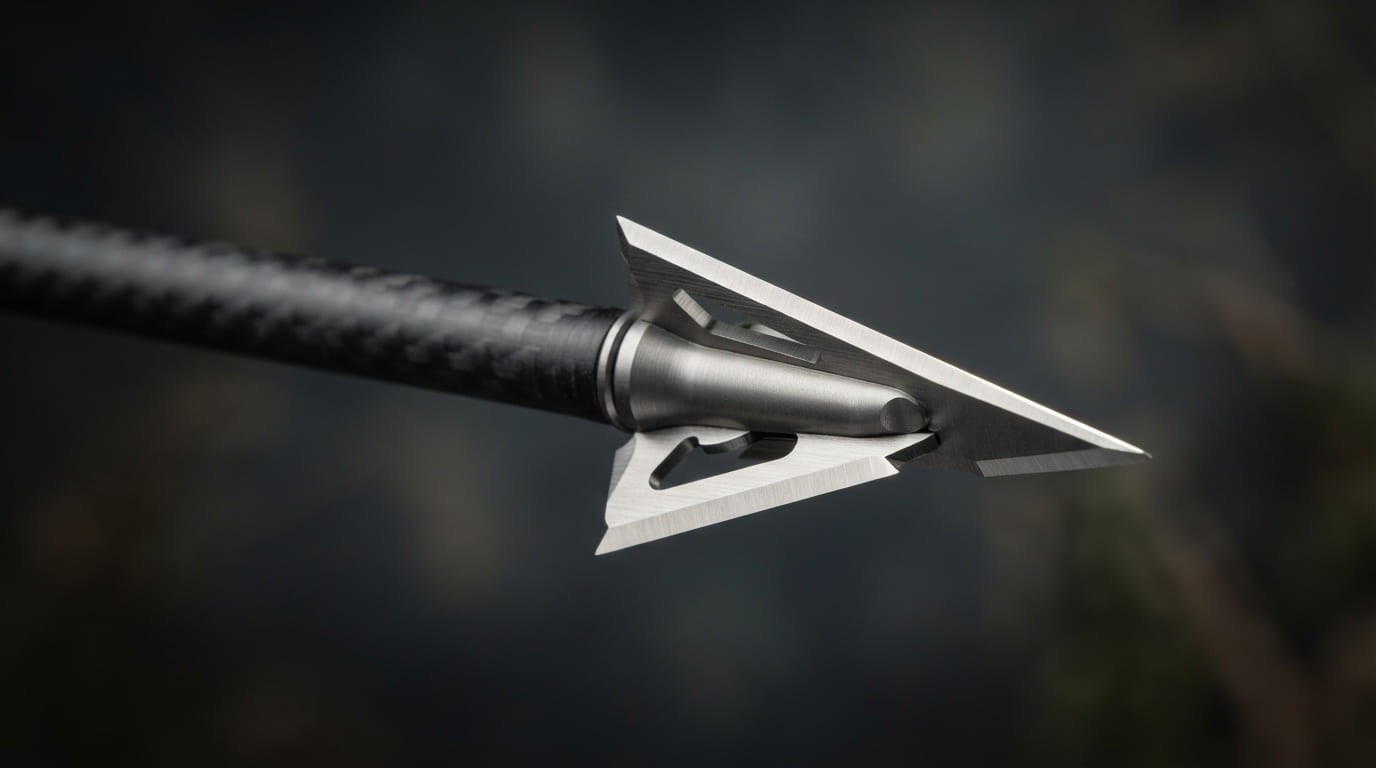
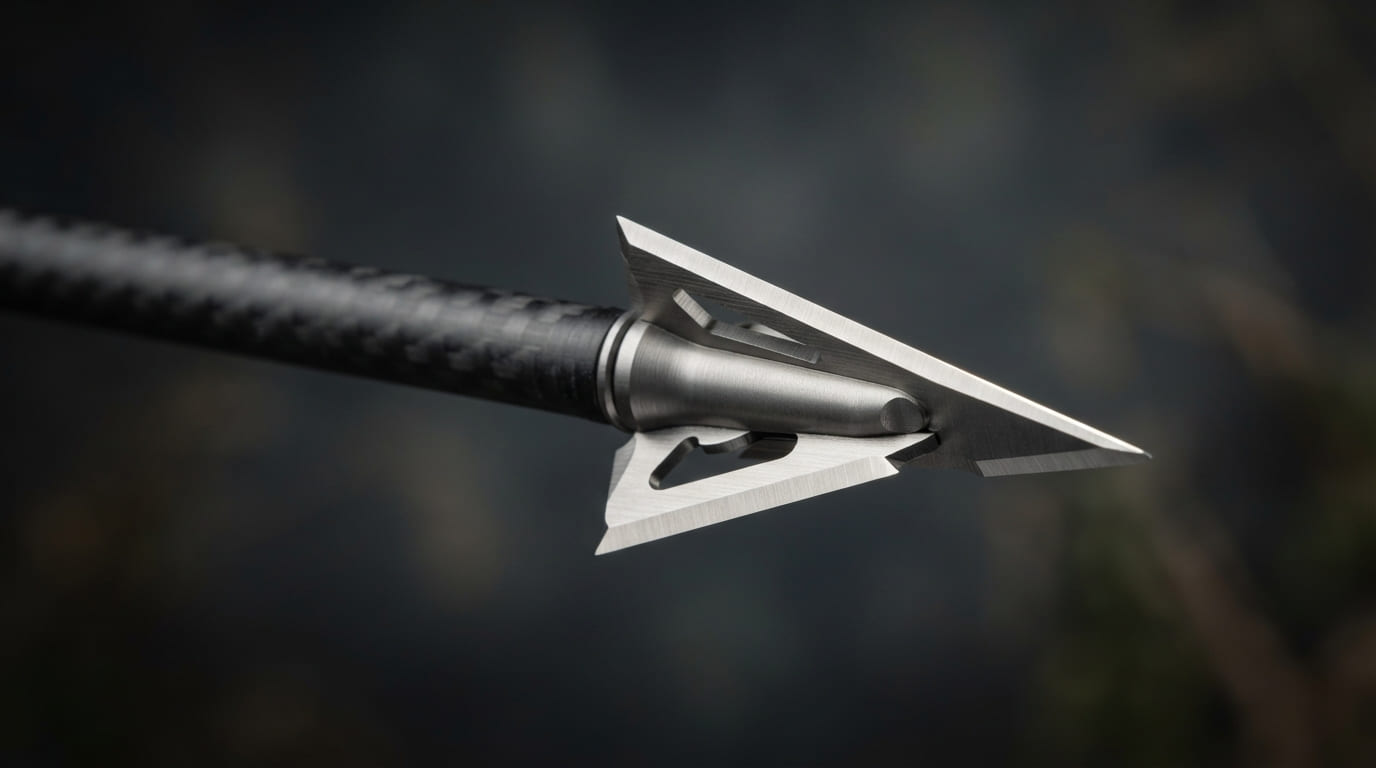
A fixed-blade broadhead has its cutting blades permanently set in their final cutting position — there's nothing to deploy, unfold, or trigger on impact. What you see in your hand is exactly what strikes the animal, with no moving parts between the point and the vitals. That simplicity is the entire appeal: a fixed-blade head can't fail to open, can't deploy early on a branch or a bolt-carrier lip, and can't jam partway through its deployment cycle the way a mechanical broadhead occasionally can.
The tradeoff is that fixed blades typically cut a smaller diameter than a mechanical broadhead of the same weight, and their exposed cutting edges create more air resistance in flight — which can mean a slightly larger difference from field-point trajectory than a well-designed mechanical head flying closed. Neither of these tradeoffs is disqualifying; they're simply the other side of the reliability fixed blades offer.
How Fixed-Blade Broadheads Work
One-Piece and Replaceable-Blade Designs
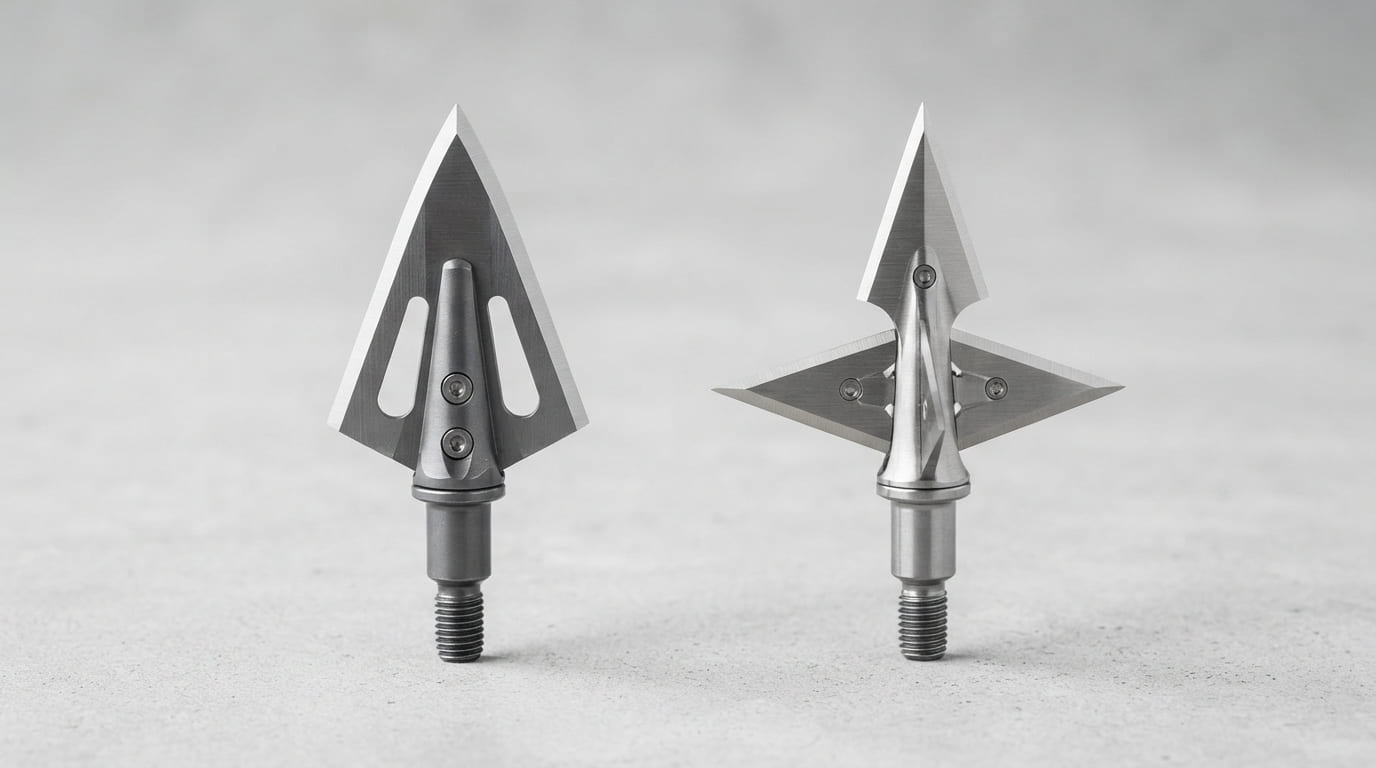
Most fixed-blade broadheads fall into one of two construction types. A one-piece design machines the ferrule and blades from a single piece of steel, which maximizes structural strength and lets the edge be resharpened repeatedly across a hunting career. A replaceable-blade design uses a separate ferrule body with slot-in steel blades secured by a bushing or retaining collar — less durable per blade, but far more convenient in the field, since a dulled or damaged blade set swaps out in seconds rather than requiring a sharpening kit.
Two-Blade, Three-Blade, and Four-Blade Configurations
A two-blade fixed head produces the cleanest flight and the deepest penetration per unit of kinetic energy, because it presents the least cross-sectional resistance passing through tissue and bone. A three- or four-blade configuration sacrifices some penetration depth in exchange for a wider wound channel and an easier-to-follow blood trail, since more cutting surfaces mean more disrupted tissue along the entry path. Neither is objectively correct — the right choice depends on whether your priority is maximum penetration on a quartering shot or a more visible blood trail on a broadside shot in thick cover. If low-light blood-trail visibility is your main concern, pairing any blade configuration with a lighted nock like our tested Ravin R133 can help you track a hit shot in dim conditions regardless of which broadhead you choose.
Single-Bevel vs. Double-Bevel Edges
A double-bevel edge is sharpened symmetrically on both sides, flying true without inducing rotation, and is the more forgiving choice for most crossbow hunters. A single-bevel edge is sharpened on one side only, deliberately inducing a slow rotation as it passes through the animal, which some hunters believe improves tissue separation and blood trail visibility on tougher, larger-boned game. Single-bevel heads demand more attention to arrow spine and rest tuning to fly accurately, making them a more advanced choice than a step-one upgrade for a first-time broadhead buyer.
Fixed-Blade vs. Mechanical Broadheads
Reliability Is the Core Difference
A fixed-blade broadhead has no deployment mechanism to fail. There's no O-ring, band, or spring clip that can degrade, no blade that can partially open in the quiver, and no risk of a blade catching on a bolt-carrier lip or a tree branch on the way to full draw. Our testing and research into mechanical broadhead failure modes — covered in more depth in our best crossbow broadheads for deer hunting guide — consistently points to the blade-lock mechanism as the single point of failure that fixed-blade designs simply don't have.
Cutting Diameter and Wound Channel
Mechanical broadheads, like the TenPoint Nemesis and its staged 3.75-inch total cut, can deliver a larger wound channel than most fixed-blade designs of comparable weight, because their blades don't need to withstand flight-induced drag while folded. Fixed-blade heads typically top out in the 1.5–2-inch cutting diameter range for a given structural strength, trading some wound-channel size for the certainty that the blades will be in the same position on impact as they were leaving the rail.
Flight Accuracy and Field-Point Match
A well-designed fixed-blade broadhead with a low-profile blade geometry can fly nearly identically to a field point, but exposed blades inherently create more aerodynamic drag than a mechanical head flying closed — meaning fixed blades are somewhat more sensitive to proper arrow spine, broadhead alignment, and consistent fletching than a mechanical design. This isn't a reason to avoid fixed blades; it's a reason to actually shoot your hunting broadhead at your maximum intended range before the season, which we cover below.
Penetration Under Marginal Hits
Because fixed blades have nothing to deploy, they retain more of their kinetic energy for straight-line penetration rather than expending some of it opening blades on impact. On a quartering shot that clips bone or requires passing through heavier muscle mass, a fixed-blade head's penetration advantage becomes most apparent — a genuine reason hunters targeting larger or tougher game frequently default to fixed blades over mechanical designs.
Choosing Cutting Diameter and Blade Count
Matching Blade Count to Game Size
For deer-sized game, a two- or three-blade fixed head in the 1–1.5-inch cutting diameter range delivers reliable, ethical performance when shot placement is accurate. For larger game where deeper penetration matters more than wound-channel width — elk, larger hogs, or bear where legal — a two-blade design with a narrower cutting diameter is generally the safer choice, prioritizing pass-through penetration over a wider but shallower wound.
Cutting Diameter Isn't a Substitute for Shot Placement
A larger cutting diameter provides more margin for a slightly imperfect shot angle, but it doesn't compensate for poor shot selection. Our position on this, consistent across every broadhead guide on this site, is that cutting diameter is a safety margin for the inevitable imperfect shot — not a license to take questionable ones in the first place.
Kinetic Energy Still Matters
Fixed-blade broadheads don't reduce your crossbow's kinetic energy requirements. Most bowhunting organizations recommend a minimum of 25–41 foot-pounds of kinetic energy for deer-sized game, and larger species require meaningfully more. Our how fast does a crossbow bolt travel guide breaks down chronographed speeds across our full tested lineup if you need to confirm your platform delivers enough energy for the blade profile and game size you're hunting. If you're hunting larger, tougher game and specifically want maximum penetration margin, a high-kinetic-energy platform like our tested Ravin R29X or TenPoint TRX Ultra gives a two-blade fixed head more retained energy to work with on a marginal hit.
Sharpening and Maintaining Fixed-Blade Broadheads
One-Piece Heads: Sharpen, Don't Replace
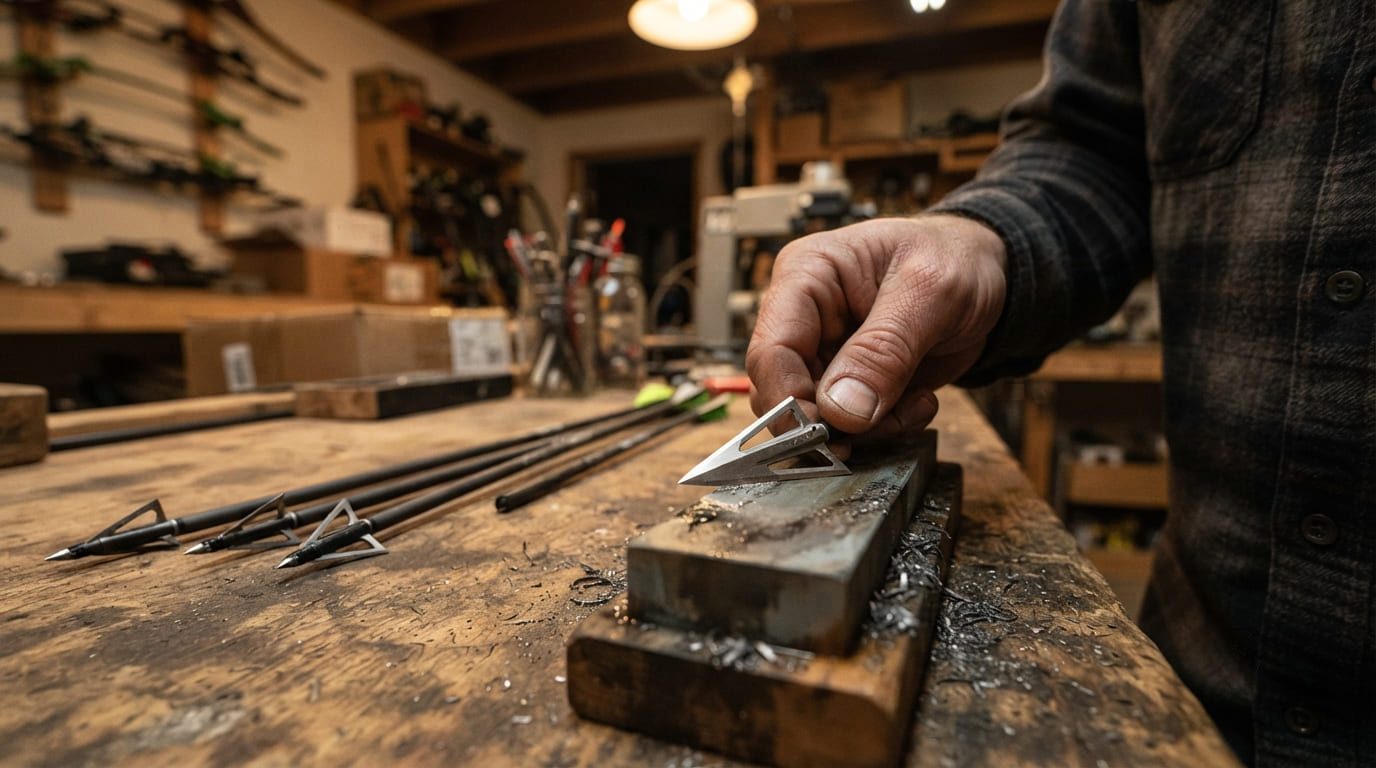
A one-piece fixed-blade broadhead is designed to be resharpened, typically with a dedicated broadhead sharpening tool or a fine-grit stone worked along the factory bevel angle. A properly maintained one-piece head can last for multiple seasons, making the upfront cost of a quality sharpening tool a worthwhile investment if you're committed to this broadhead style long-term.
Replaceable-Blade Heads: Swap, Don't Sharpen
Attempting to field-sharpen thin replaceable blades typically does more harm than good — the steel is often too thin to hold a hand-sharpened edge reliably, and uneven sharpening can throw off blade balance and flight. Carry a spare blade set and swap in fresh blades any time the existing set shows dulling, nicking, or bending, rather than trying to restore a worn set in the field.
Inspect Before Every Hunt
Regardless of design, check for bent blades, a loose ferrule-to-blade fit, and any corrosion on the cutting edge before every hunt. A broadhead that looked fine in your case at the end of last season can develop enough corrosion or edge damage over the off-season to meaningfully affect penetration.
Storage Between Seasons
Store fixed-blade broadheads in a dry, temperature-stable case rather than leaving them mounted on bolts inside a garage or shed where humidity swings are common. Even a light film of surface corrosion on a cutting edge translates to measurably higher cutting resistance on impact, and a broadhead that looked pristine when it was packed away in December can develop enough oxidation by August to warrant a fresh sharpening pass before it ever sees the field again. A light coat of gun oil or a dedicated rust-preventative wipe on the blades before off-season storage is a cheap habit that avoids this problem entirely.
Practicing With Fixed-Blade Broadheads
Shoot the Actual Broadhead
Because exposed blades create more aerodynamic drag than a mechanical head flying closed, fixed-blade point of impact can shift more noticeably from field points than a mechanical broadhead's does. Always shoot your actual hunting broadhead at your expected hunting distances before the season opens, and re-verify zero any time you switch bolts, broadheads, or adjust your scope or sight.
Tuning Considerations
If your fixed-blade broadhead consistently groups away from your field points despite a properly tuned crossbow, check broadhead-to-shaft alignment first — a broadhead that isn't perfectly true to the shaft axis will fly inconsistently regardless of blade design. Spinning the arrow by hand or on a spin-tester before the hunt can reveal wobble that's invisible at a glance but shows up clearly downrange.
When Broadhead-Specific Grouping Doesn't Improve
If you've confirmed broadhead-to-shaft alignment, checked fletching clearance against your rail and rest, and your fixed-blade groups still open up noticeably compared to field points, the next variable to check is arrow spine. A shaft that's too stiff or too weak for your crossbow's draw weight and speed will amplify any inconsistency introduced by the broadhead's exposed blade surface, since a mismatched spine causes the arrow to oscillate differently in flight than a field-point-only setup would suggest. Most bolt manufacturers publish spine charts matched to draw weight and speed ranges — cross-checking your bolt choice against that chart before assuming the broadhead itself is the problem can save a lot of wasted practice sessions. Our tested Wicked Ridge Match 400 and TenPoint CenterPunch HPX bolts are both good reference points for how insert weight and FOC affect this kind of broadhead-specific tuning.
Distance Matters More Than You'd Expect
A fixed-blade broadhead that shoots identically to field points at 20 yards can show a measurable divergence at 50 or 60 yards, simply because small aerodynamic differences compound over distance. If you intend to take shots at your crossbow's maximum practical hunting range, verify point of impact at that actual distance rather than assuming a close-range zero check tells the whole story.
Frequently Asked Questions
Are fixed-blade broadheads better than mechanical broadheads?
Neither is universally better — fixed blades offer maximum reliability with no moving parts to fail, while mechanical broadheads typically deliver a larger cutting diameter and closer field-point flight match. Choose based on whether reliability or wound-channel size matters more for your specific hunting situation.
What cutting diameter should I choose for deer hunting?
A 1–1.5-inch cutting diameter on a two- or three-blade fixed head is genuinely effective for deer-sized game when paired with accurate shot placement and adequate kinetic energy.
Can I resharpen a fixed-blade broadhead?
One-piece fixed-blade heads are designed to be resharpened with a dedicated tool or fine-grit stone. Replaceable-blade heads should have their blade sets swapped rather than sharpened, since the thinner steel doesn't hold a field-sharpened edge reliably.
Do fixed-blade broadheads fly differently than field points?
They can, more so than a well-designed mechanical head flying closed, because exposed blades create more aerodynamic drag. Always shoot your actual hunting broadhead at your expected hunting distances before the season to confirm point of impact.
Are single-bevel fixed blades worth using on a crossbow?
Single-bevel heads can improve tissue separation on larger, tougher game, but they require more careful tuning and arrow-spine matching than a double-bevel design. They're a reasonable upgrade once you're comfortable with fixed-blade fundamentals, not a recommended starting point.
Final Recommendation
Fixed-blade broadheads remain the simplest, most failure-resistant choice available for crossbow hunters, trading some cutting diameter and a slightly larger field-point deviation for the certainty that nothing has to deploy correctly on impact. If you're hunting larger or tougher game, prioritizing deep penetration on marginal shot angles, or simply want to eliminate moving-parts failure as a variable entirely, a quality fixed-blade head is a genuinely sound choice.
For a side-by-side look at how mechanical broadheads compare on cutting diameter, staged deployment, and speed ratings, see our best crossbow broadheads for deer hunting guide, which covers our tested picks in the TenPoint Nemesis and Ravin R102. As we bring fixed-blade broadheads through our own chronograph and penetration testing, we'll add tested picks to this guide rather than recommending products based on manufacturer claims alone.
Looking to round out your hunting setup? Our crossbow accessories category hub lets you browse the full lineup of tested gear to pair with your broadhead choice for the coming season.
Ready to compare models? Read our tested crossbow reviews to find your perfect match.