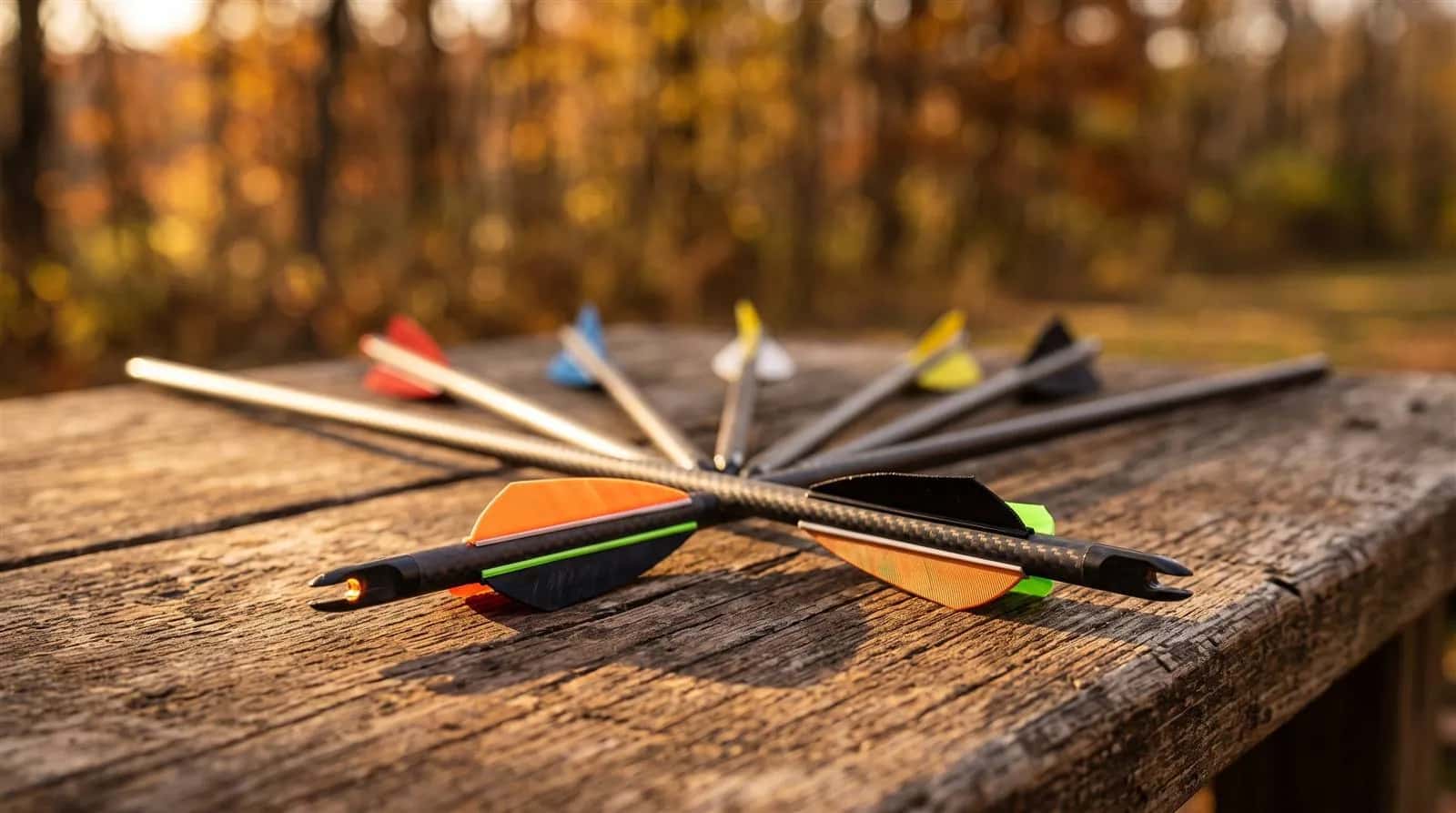
Crossbow FOC (Front of Center) in plain terms
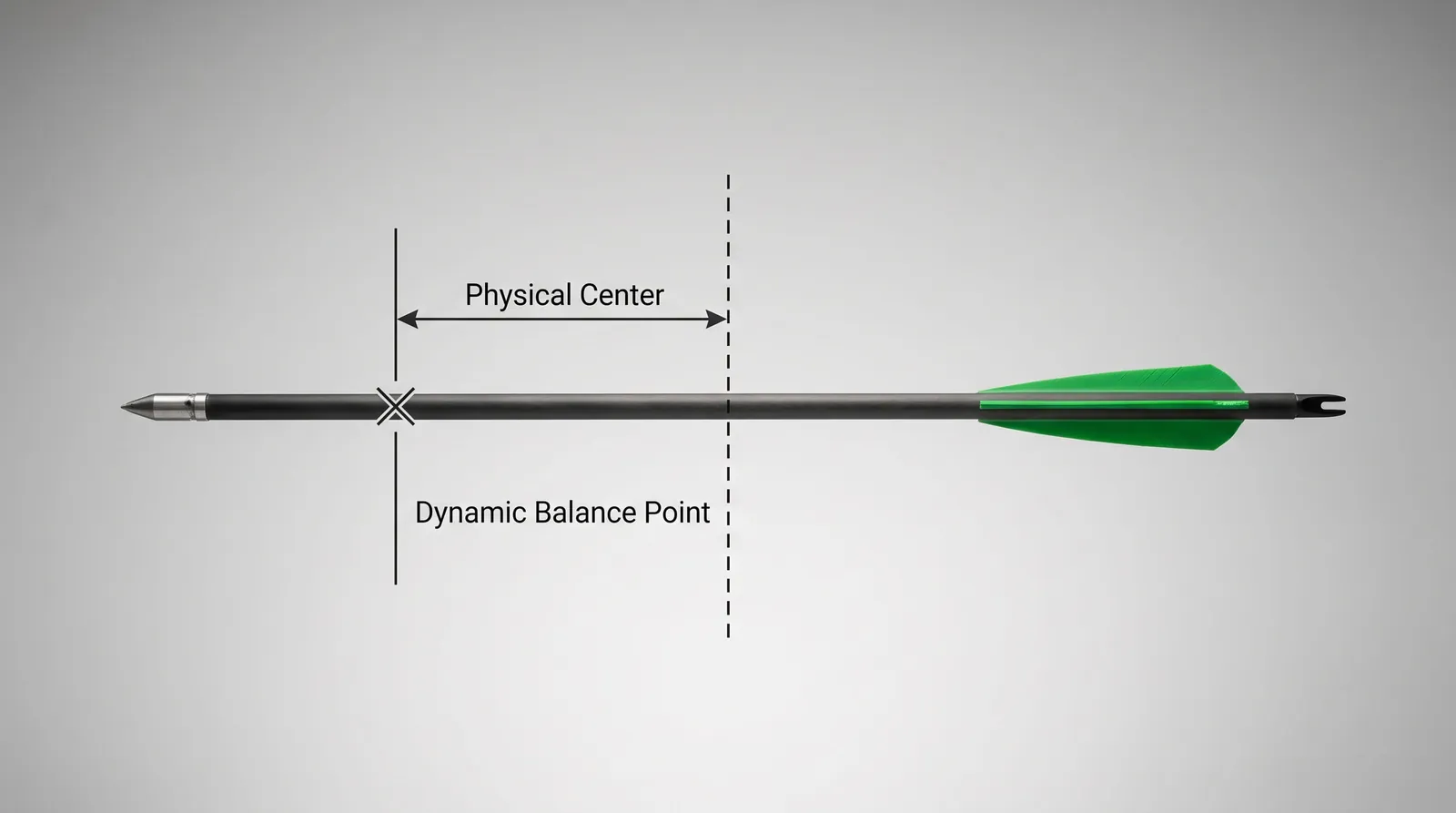
Crossbow FOC (Front of Center) meaning: FOC is the percentage of a bolt’s length by which its balance point sits ahead of the midpoint, a measure of how front-heavy the bolt is.
Also called: front of center, front of centre, arrow FOC, crossbow bolt FOC, arrow balance
FOC (front of center) is the percentage of a bolt's length by which its balance point sits ahead of the middle of the bolt. A bolt with zero FOC balances exactly at its midpoint. A positive FOC means the front is heavier, which is the normal situation because tip, insert and shaft weight sit forward of the vanes and nock.
Flight stability is the reason people care. A forward balance point helps the bolt keep pointing in the direction of travel, so it tends to be more forgiving of small imperfections, and it changes how the bolt behaves with a broadhead. The usual way to adjust FOC is to change tip weight, because moving the front weight shifts the balance point more than almost any other change.
FOC is a description of balance, not a score. A higher number is not automatically better, and sensible values depend on the bolt, the crossbow and the maker's guidance. For scale, most crossbow bolts sit somewhere around 7 to 15 percent with a field point fitted, and the premium bolts we have reviewed with a published figure fall between 13 and 15.5 percent. Use it to explain differences in flight and to compare field points with broadheads, not as a single quality figure.
How to calculate FOC: formula and worked examples
FOC % = (balance point distance from the nock end − half of overall length) ÷ overall length × 100
A 20-inch bolt balances 12.4 inches from the nock end. Half of 20 is 10, so (12.4 − 10) ÷ 20 × 100 = 12 percent FOC. A 22-inch bolt balancing at 13.2 inches gives (13.2 − 11) ÷ 22 × 100 = 10 percent. Balancing at exactly 10 inches on a 20-inch bolt gives 0 percent.
How the balance point changes FOC (20-inch bolt, worked numbers)
These figures are a worked example of the formula, not measurements of a specific bolt. Moving the balance point 0.4 inch forward changes FOC by 2 percentage points on a 20-inch bolt.
| Balance point from nock end | Half of overall length | Difference | FOC |
|---|---|---|---|
| 10.0 in | 10.0 in | 0.0 in | 0 percent |
| 11.0 in | 10.0 in | 1.0 in | 5 percent |
| 12.0 in | 10.0 in | 2.0 in | 10 percent |
| 12.4 in | 10.0 in | 2.4 in | 12 percent |
Why it matters
Balance is one of the few bolt variables you can change cheaply. Swapping a 100-grain tip for a 125-grain tip adds 25 grains at the front, which both raises FOC and changes total weight, speed and the point of impact. That is why changing FOC deliberately, one variable at a time, is more useful than chasing a target number.
FOC is also why a bolt can fly differently with a broadhead than with a field point of similar weight. A broadhead has a different shape and often a different mass distribution, and the nock end may behave differently as a result. Comparing both with the same bolt is the reliable check.
The FOC calculator does the arithmetic from your bolt length, balance point and head weight.
How to read it on a spec sheet
- Treat a listed FOC as a manufacturer figure for a particular tip weight. Ask which tip it assumes.
- Check the overall length used in the calculation. Some makers measure from the nock groove and some from the end of the nock.
- If a listing gives only a range, assume it spans field-point and broadhead weights.
- Compare FOC alongside total weight and straightness, not alone. A well-balanced bolt with poor straightness still groups poorly.
- Remember a lighted nock moves weight to the rear, which lowers FOC unless the maker compensates.
Common mistakes
- Measuring the balance point from the wrong end. The formula uses distance from the nock end.
- Forgetting to subtract half of the length. The raw balance point is not the FOC.
- Chasing a high FOC with a tip so heavy that the bolt drops below your crossbow minimum or exceeds its maximum weight.
- Comparing FOC figures from different makers without checking the length convention.
- Changing tip weight and nock style together, then not knowing which change affected flight.
Measure FOC at home
- Fit the exact tip, nock and insert you plan to shoot, so the bolt is in its final build.
- Measure overall length with a rule, following the convention your guide or maker uses, and write it down.
- Balance the bolt across a ruler edge or a narrow support, and find the point where it stays level.
- Measure from the nock end to that point and write it down.
- Subtract half the overall length, divide by overall length and multiply by 100.
- Repeat with each tip weight you are considering and keep the numbers in a note.
See it in our reviews
- Ravin R133 — rated 4.4/5
- Carbon Express PileDriver — rated 4.2/5
Frequently Asked Questions
What does FOC mean for crossbow bolts?
FOC means front of center. It is the percentage by which the bolt balance point sits ahead of its midpoint, relative to overall length. It describes how front-weighted the bolt is, which affects how stable it is in flight.
How do you calculate FOC?
Measure the distance from the nock end to the balance point, subtract half of the overall length, divide by overall length and multiply by 100. For a 20-inch bolt balancing at 12.4 inches, the result is 12 percent.
What is a good FOC for a crossbow bolt?
There is no single correct number, but most crossbow bolts land around 7 to 15 percent with a field point fitted, and the premium bolts we have reviewed with a published figure sit between 13 and 15.5 percent. Fit length, weight and straightness first, then use FOC as a tie-breaker.
How do I increase FOC?
The usual method is a heavier tip or insert, which adds weight at the front. Any change also raises total weight, so check it stays within the limits in your manual and re-check your scope zero afterwards.
Does FOC change with a broadhead?
It can. A broadhead and a field point of the same listed weight may have different mass distribution, so the balance point and flight can differ. Test both on the same bolt and confirm the point of impact.
Does a lighted nock lower FOC?
It can, because it adds weight to the rear of the bolt. Some products compensate with matched weights, as the Ravin R133 does. If you add a lighted nock to a bolt you already use, expect the balance to shift slightly.
Does FOC make a bolt more accurate?
Not by itself. Straightness, weight consistency, nock fit and shooter consistency usually matter as much or more. Balance helps stability and tolerance of small errors, but it will not make a poor bolt group tightly.
What is the difference between FOC and balance point?
The balance point is a measurement in inches: where the finished bolt rests level. FOC turns that measurement into a percentage of bolt length, so bolts of different lengths can be compared. You need the balance point to work out FOC, not the other way round.
Related guides
Guides where foc shapes a real choice.
 GuideCrossbow Bolt FOC Explained for HuntersFront of center (FOC) explained for crossbow bolts: how to calculate it, what changes it and how it affects flight, with published figures for common bolts.Read the guide
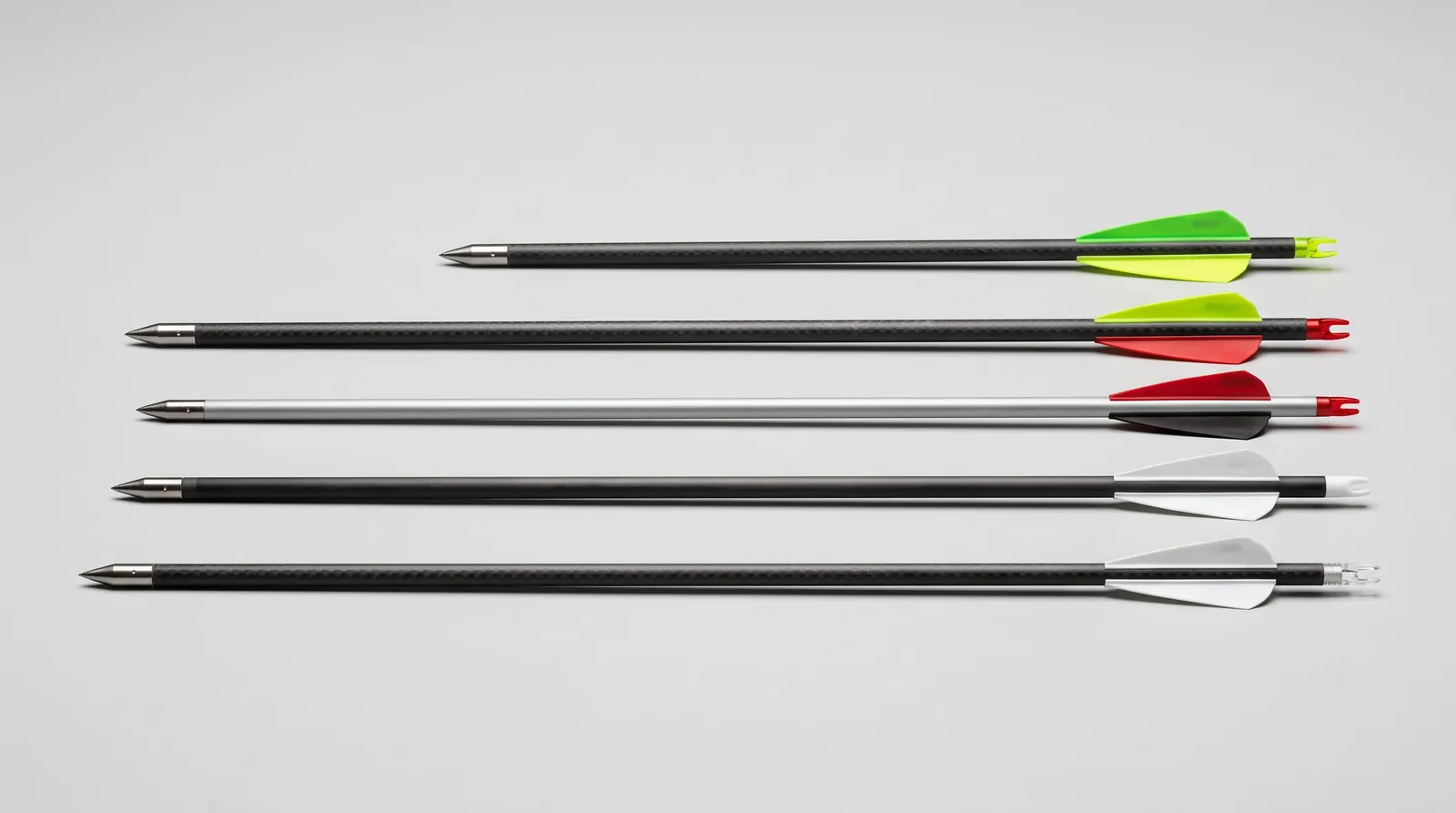 GuideHow to Choose Crossbow Bolts in 2026: Sizing GuideA six-step method for choosing crossbow bolts by length, grain weight, nock and spine, with a size chart and a worked example.Read the guide
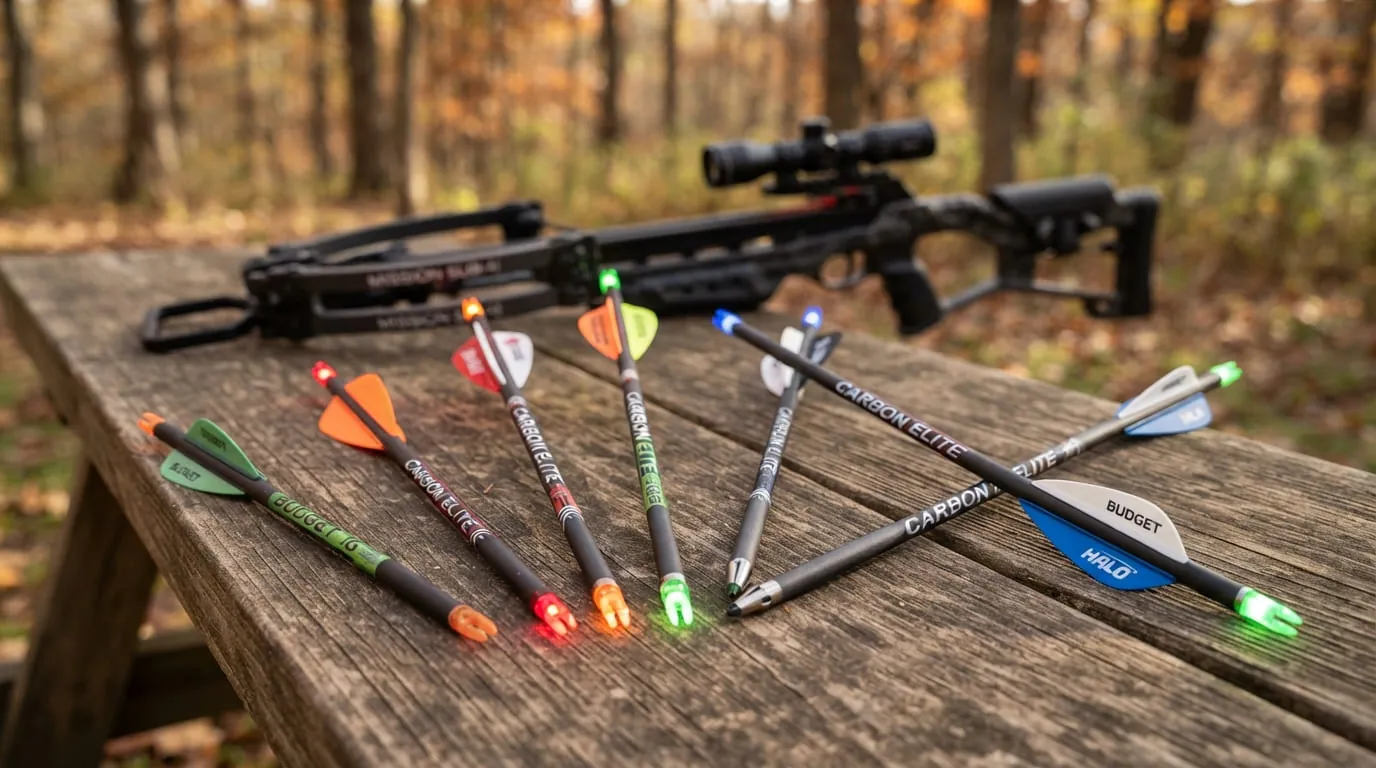 GuideBest Crossbow Bolts in 2026 for Hunting and PracticeCrossbow bolts for hunting and practice compared by grain weight, length, nock and straightness, from 12-pack practice bolts to weight-matched carbon.Read the guide
Definitions are general information. Manufacturer figures vary, so follow your crossbow's manual and verify local laws with the relevant authority.