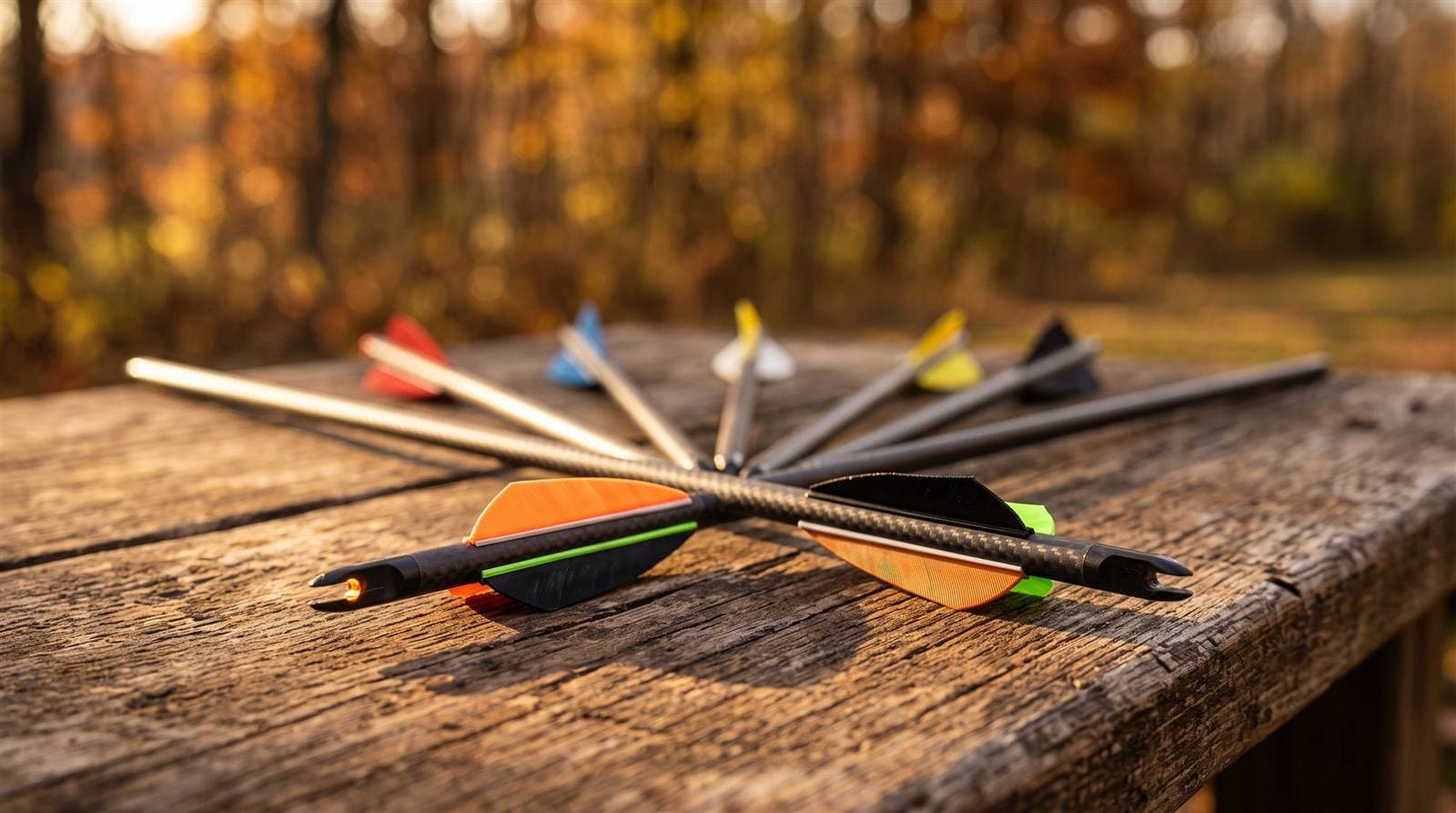
What Is Mechanical Broadhead?
A broadhead with folding blades held closed in flight by a band, clip or collar, and rated for speed and bolt weight.
Mechanical Broadhead: definition
Also called: expandable broadhead, mechanical head, expanding broadhead, hybrid mechanical broadhead
A mechanical broadhead keeps its blades folded against the ferrule during flight and opens them on contact. Because the folded head is compact, it can fly closer to a field point than a fixed head, which is the main appeal. A retention method holds the blades closed, such as an O-ring or band, a collar or an internal spring clip.
The TenPoint Nemesis is a hybrid design with staged deployment: two front blades make a 2-inch cut and two rear blades add 1.75 inches, for a 3.75-inch total cut, with an O-Ring/Band lock. The Ravin R102 is a rear-deploying design with an internal spring clip and a 2-inch cutting diameter, rated up to 450 FPS.
Moving parts mean more to inspect. The lock, the pivots and the blades all matter, and the speed rating tells you what the maker has designed the head for. Like any broadhead, a mechanical head threads into the insert and should be verified against your practice setup.
Mechanical broadhead features compared
| Feature | TenPoint Nemesis | Ravin R102 |
|---|---|---|
| Deployment | Staged: front blades then rear blades | Rear-deploying |
| Cutting diameter | 3.75 inches total | 2 inches |
| Blade lock | O-Ring/Band | Internal spring clip, no rings needed |
| Weight | 100 grains | 100 grains |
| Rated speed | Not stated in review | Up to 450 FPS |
| Price (3-pack) | $49–$79 | $45–$55 |
Why Mechanical Broadhead matters
The lock and the rating are the two features that decide whether a mechanical head suits your crossbow. A head rated below your speed is the wrong head, and a worn band or clip is a reason to replace the part before the next outing.
The other important consideration is retrieval. Heads with blades open in the target need more care to remove than a fixed head, so follow the maker instructions and handle them cautiously.
How to read it on a spec sheet
- Read the speed rating and compare it with your crossbow rated speed.
- Check the cutting diameter and whether it is a total across stages.
- Look at the lock system (band, collar or clip) and whether replacement parts are sold.
- Check weight, thread and the body material.
- Read the maker instructions for storage and cleaning.
Common mistakes
- Using a head not rated for your crossbow speed.
- Using worn or stretched retention bands.
- Forgetting that blades open in a target and need careful removal.
- Treating the cutting diameter as the only spec that matters.
- Skipping a field-point comparison.
Inspect a mechanical head
- Look at the blades, pivots and ferrule for damage.
- Check the lock (band, clip or collar) for wear and replace parts as instructed.
- Close the blades by the maker procedure and confirm they stay closed.
- Thread onto a test bolt and spin it for wobble.
- Compare a head group with a field-point group at your distance.
- Store the head with blades protected.
In my testing
In my Nemesis and R102 reviews I shot each head against field points at matched distances, checked that the lock held the blades closed through flight, and inspected the head after repeated impacts. How I test.
See it in our reviews
- TenPoint Nemesis Broadhead — rated 4.6/5
- Ravin R102 Broadhead — rated 4.4/5
Frequently Asked Questions
What is a mechanical broadhead?
It is a broadhead with folding blades that stay closed in flight and open on contact. A band, clip or collar holds them closed, and the head threads into the bolt insert like any other tip.
Do mechanical broadheads fly like field points?
Often closer than fixed heads because the blades fold flat, but it varies. The Nemesis and R102 flew like my field points in testing; verify any head on your own setup before you rely on it.
What does the speed rating on a broadhead mean?
It is the top crossbow speed the maker designed the head for. The R102 is rated up to 450 FPS. If your crossbow is faster, confirm compatibility with the maker before using it.
What is the difference between O-ring and spring-clip locks?
Both keep the blades closed in flight. An O-ring or band is a replaceable elastic part, while a spring clip is internal metal hardware. Check the maker instructions for inspection and replacement.
Are mechanical broadheads harder to maintain?
They have more parts to inspect, such as locks and pivots, so they need a little more attention than a fixed head. Replace worn parts and follow your manual and the head maker guidance.
Are mechanical broadheads allowed everywhere?
No. Broadhead rules vary by jurisdiction and change, so verify with your local wildlife or hunting authority before use, and check the rules again each season.
What does cutting diameter mean?
It is the stated width of the blades when deployed. On a staged head such as the Nemesis, the total of both stages is quoted. Compare the figure along with weight, lock and rating.
Keep learning
Guides that use this term
- GuideBest Crossbow Broadheads for Deer 2026Best crossbow broadheads for deer hunting: two reviewed mechanical heads compared, plus how to choose by speed rating, cutting diameter and kinetic energy.Read the guide
- GuideFixed-Blade Hunting Broadheads GuideFixed-blade hunting broadhead guide: how they work, single vs. multi-blade design, cutting diameter, penetration, and when to choose fixed over mechanical.Read the guide
- GuideCrossbow Hunting Laws by StateCrossbow hunting laws by state: which states allow full archery-season use, which restrict it, and how to verify current rules before you hunt.Read the guide
Related terms
- BroadheadA bladed hunting tip that screws into a bolt insert, built as a fixed-blade or mechanical head and checked against a field point.
- Fixed-Blade BroadheadA broadhead whose blades are permanently open and attached, with no moving parts and a simple, durable construction.
- Field PointA non-bladed practice tip that threads into a bolt insert and matches broadhead weight for target shooting.
- InsertThe threaded fitting at the front of a bolt shaft that accepts field points and broadheads.
- FPS (Feet Per Second)The speed of a bolt as it leaves the crossbow in feet per second, usually rated with one specific bolt weight.
- GrainThe unit used to weigh crossbow bolts and tips, where 7,000 grains equal one pound, so a 400-grain bolt weighs about 0.9 ounce.
Browse the gear
Definitions are general information. Manufacturer figures vary, so follow your crossbow's manual and verify local laws with the relevant authority.