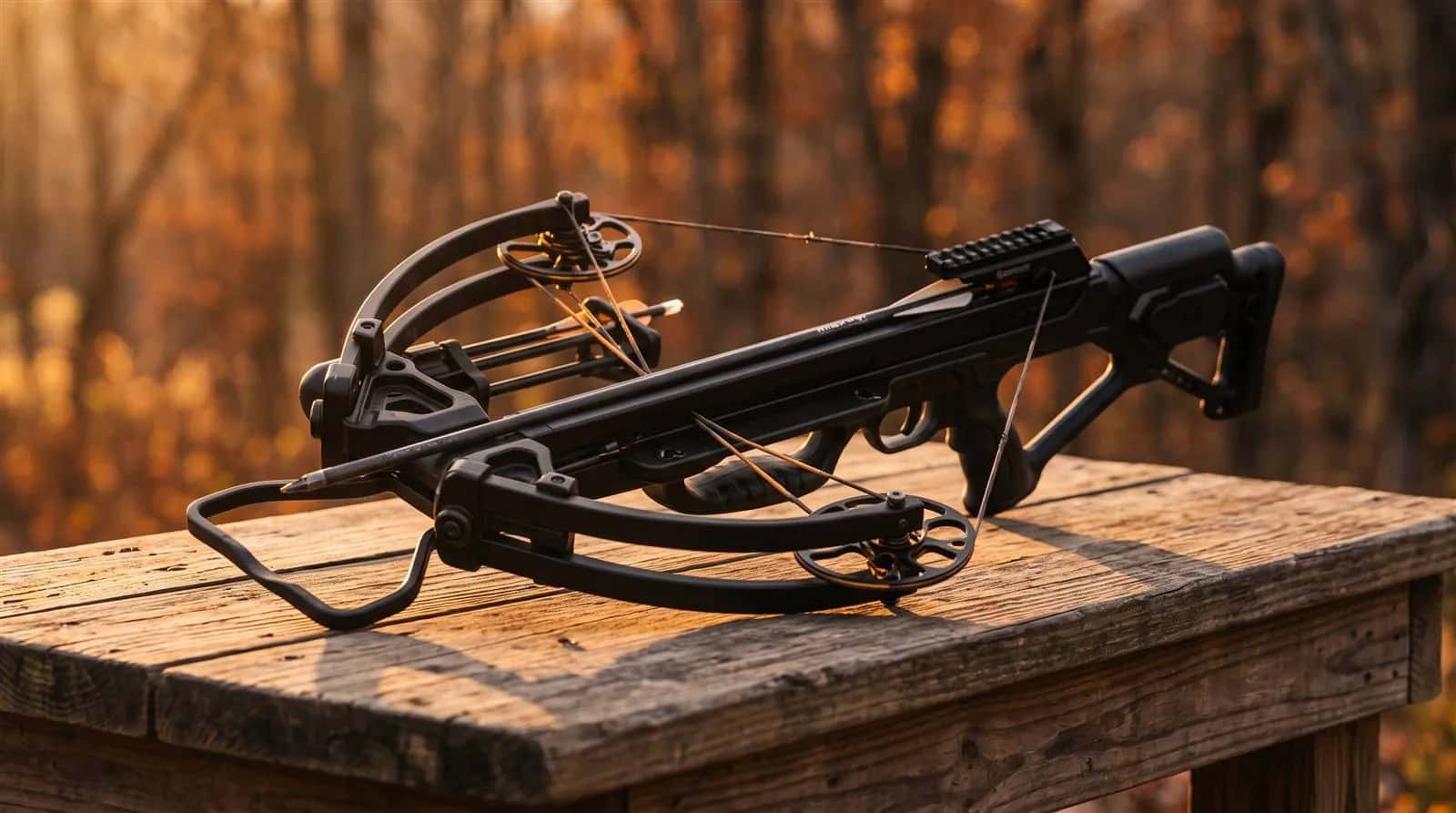
Crossbow Chronograph in plain terms
Crossbow Chronograph meaning: A chronograph measures the real speed of a bolt in feet per second as it passes the sensor, so you can check a crossbow against its rated FPS.
Also called: chrono, bolt speed meter, arrow chronograph, measured speed, chronographed speed
A chronograph is a device that measures how fast a projectile is travelling. For crossbows it reports bolt speed in FPS, measured a short distance in front of the crossbow rather than calculated from a spec sheet.
Its value is that it turns a manufacturer's claim into a checked number. A rating is taken with one bolt weight under the maker's conditions; a chronograph shows what your crossbow does with the bolt you actually shoot.
Speed varies a little from shot to shot, so a single reading means little. Shooting several strings and reporting the lowest and highest reading gives a range that shows both the speed and how consistent the crossbow is.
Rated versus chronographed speed in reviews
Each row comes from the review file, measured in five shot strings with a 400-grain bolt unless noted.
| Crossbow | Rated FPS | Chronographed FPS |
|---|---|---|
| TenPoint TRX Ultra | 515 | 511 to 517 |
| Ravin R470 Stealth Gray | 470 | 463 to 472 |
| TenPoint TX Ultra 29.5 (410-grain bolt) | 460 | 456 to 463 |
| Killer Instinct Logix 435 | 435 | 429 to 436 |
| Barnett Hyper Whitetail 410 | 410 | 404 to 412 |
Why it matters
Box speeds drive many buying decisions, and they are not always comparable. A chronograph reading with a stated bolt weight lets you compare crossbows fairly, which is how the fastest crossbows ranking on this site is ordered.
Your real speed also sets your scope. A reticle or speed ring is calibrated to a speed band, so a measured figure is the number to enter in the scope speed matcher and the kinetic energy calculator.
A drop in measured speed over time can be an early sign of a worn string or another problem, so a reading at the start of each season is a useful baseline.
How to read it on a spec sheet
- Check the bolt weight. A reading with a 400-grain bolt is not comparable with one taken with a 350-grain arrow.
- Prefer a range from several shot strings over a single "best" number.
- Compare the range with the rating: a few FPS either side is normal; a large shortfall is worth investigating.
- Note whether a figure is your reviewer's own reading or a published test from elsewhere. Reviews on this site label them separately.
- Remember that speed is measured near the crossbow; the bolt slows downrange.
Common mistakes
- Comparing one crossbow's chronograph reading with another's box rating.
- Judging a crossbow on a single shot.
- Shooting a bolt lighter than the manual's minimum weight to chase a higher reading, which can damage the crossbow.
- Setting up the chronograph without a safe backstop or without following its instructions.
- Assuming energy is measured. Kinetic energy is calculated from the measured speed and the bolt weight.
How to chronograph your crossbow safely
- Read the chronograph instructions and your crossbow manual first.
- Set up at a safe range with a proper backstop and nothing downrange.
- Place the chronograph at the distance its instructions specify, with the bolt path clear of the unit.
- Use the bolt weight you hunt with, and note it.
- Shoot several strings and record each reading, then compare the range with the rating.
In my testing
Every crossbow review on this site that reports a measured speed comes from five shot strings over a chronograph, almost always with a 400-grain bolt, reported as a low-to-high range. The TenPoint TRX Ultra read 511 to 517 FPS against its 515 FPS rating, and every crossbow in that ranking landed within a few FPS of its rating. How I test.
See it in our reviews
- TenPoint TRX Ultra — rated 4.9/5
- Ravin R470 — rated 4.7/5
- Killer Instinct Logix 435 — rated 4.2/5
Frequently Asked Questions
What does a crossbow chronograph measure?
It measures bolt speed in feet per second as the bolt passes the sensor. That reading can then be combined with the bolt's weight to calculate kinetic energy and momentum.
Why is my chronograph reading lower than the rated speed?
The usual reasons are a heavier bolt than the one used for the rating, an "up to" rating, string wear or the chronograph's placement. Compare with the same bolt weight first before suspecting a fault.
How many shots should I chronograph?
Several strings, not one shot. Reviews on this site use five shot strings and report the lowest and highest reading, which shows both speed and consistency.
Do I need a chronograph to own a crossbow?
No. It is useful if you want to confirm your speed for a scope speed setting or to check a crossbow over time, but sighting in carefully at your hunting distances matters more.
Does a chronograph measure kinetic energy?
No. It measures speed only. Kinetic energy is calculated from that speed and the bolt weight in grains, which the kinetic energy calculator does for you.
Which crossbow measured fastest on a chronograph here?
The TenPoint TRX Ultra, at 511 to 517 FPS with a 400-grain bolt. The Ravin R470 Stealth Gray was next at 463 to 472 FPS, and the full ranking is in the fastest crossbows guide.
Related guides
Where chronograph decides a real choice: these guides put the term to work with measured numbers.
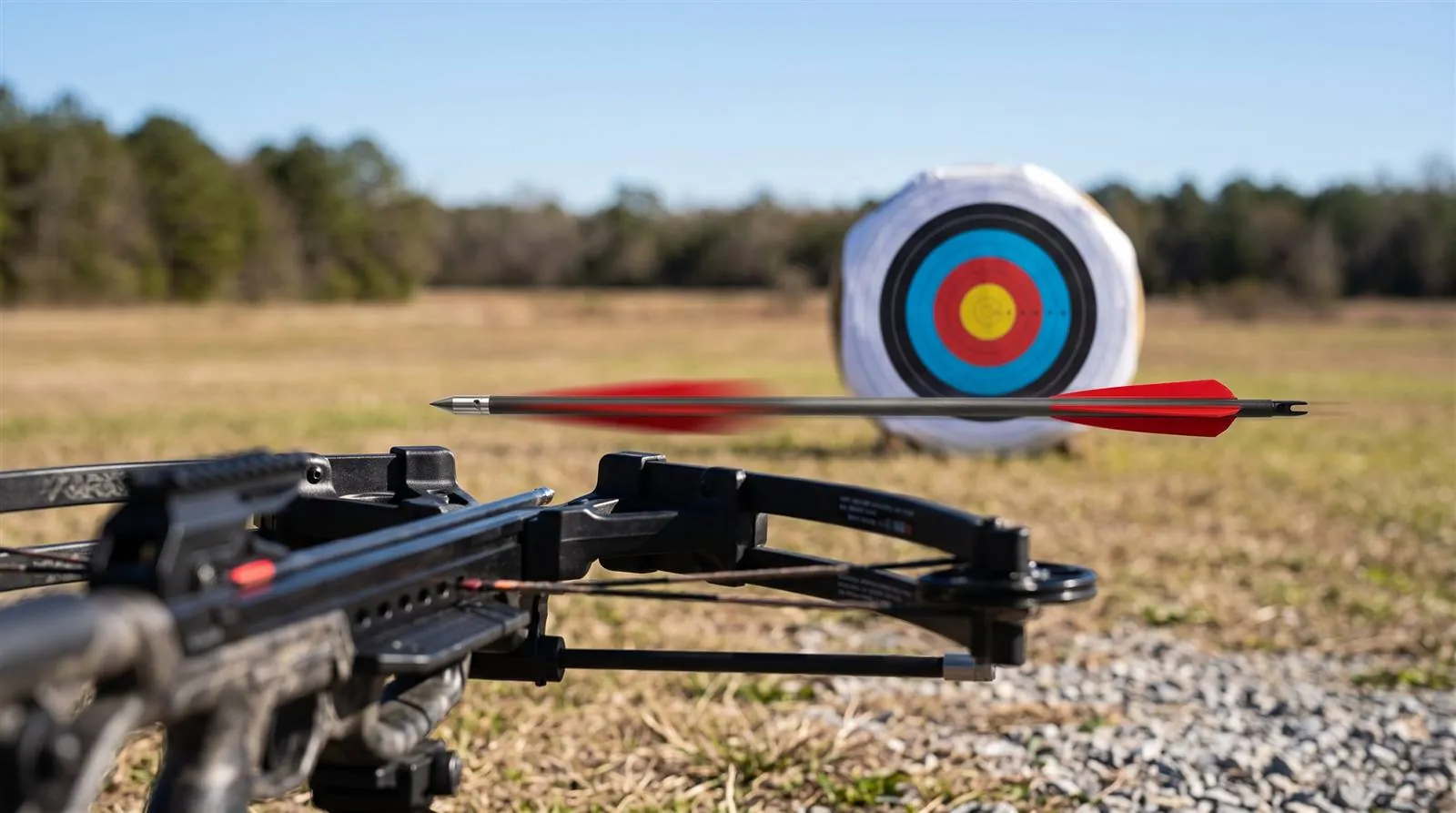 GuideHow Fast Does a Crossbow Shoot?Measured crossbow bolt speeds from my chronograph tests, by type and price tier, with why advertised FPS differs and how speed relates to kinetic energy.Read the guide
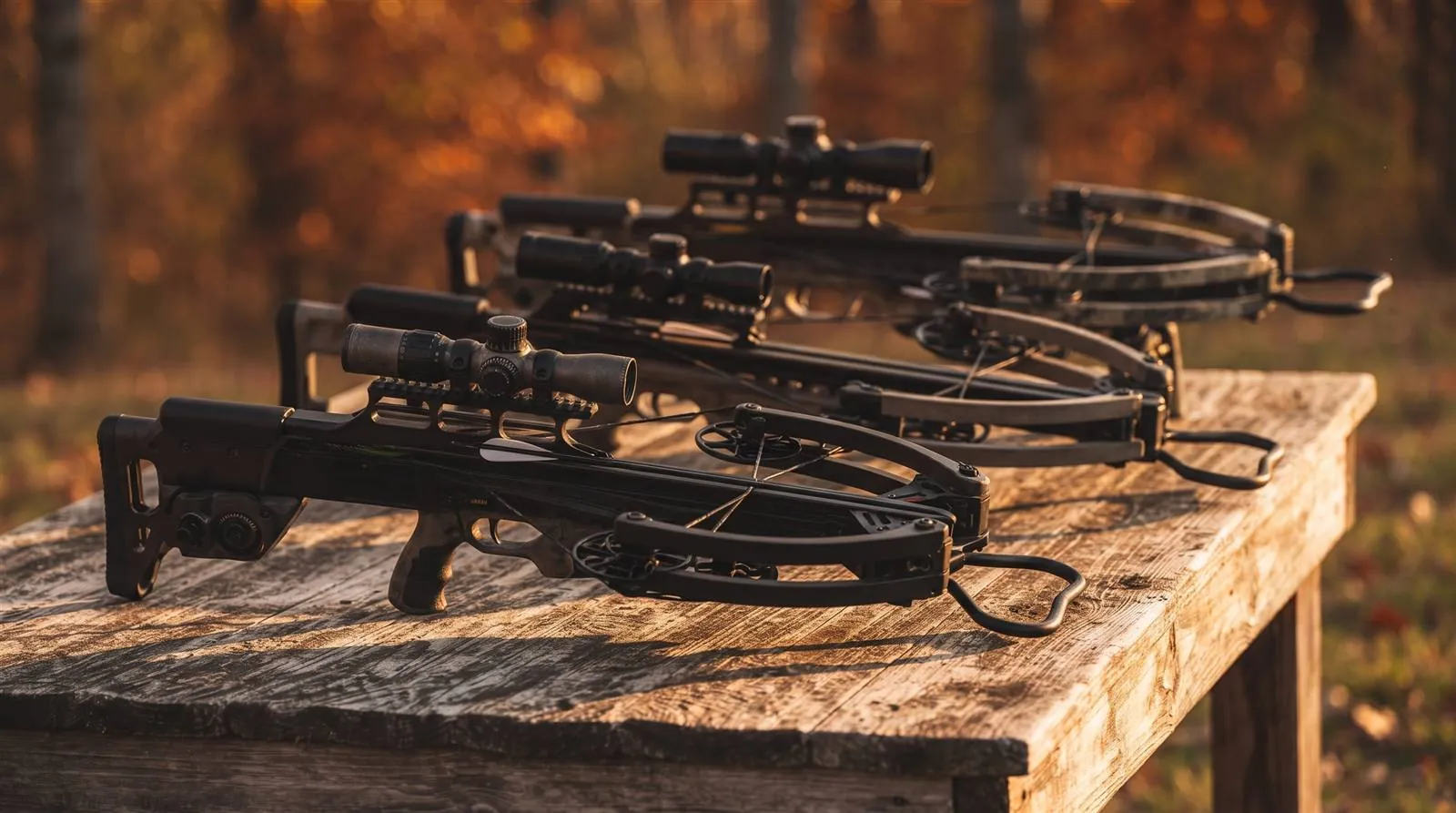 GuideBest Crossbows in 2026, TestedOur highest-rated crossbows across every price tier, from the TenPoint TRX Ultra flagship to the Barnett Hyper Whitetail 410, each chosen for a specific buyer.Read the guide
Definitions are general information. Manufacturer figures vary, so follow your crossbow's manual and verify local laws with the relevant authority.