How to Choose a Crossbow Scope: 7 Steps and a Checklist
How to choose a crossbow scope: match the reticle to your bolt speed, then compare magnification, eye relief, focal plane and illumination with our checklist.
A crossbow can be built to tight tolerances and still miss if the scope on top of it does not suit the way the bolt flies. Crossbow bolts drop faster than rifle bullets, they travel at a narrow range of speeds for a given crossbow, and the scope has to be mounted on a short, fast-recoiling platform. Those facts change what matters when you shop.
This guide walks you through seven steps for choosing a crossbow scope, shows how the scopes we have reviewed fit different budgets, and ends with a checklist you can use before you buy. It is written for new owners picking a first scope and for experienced shooters upgrading from the optic that came in the box.
Why Choosing a Crossbow Scope Is Different
Bolts drop faster than bullets
A crossbow bolt leaves the rail at a few hundred feet per second and starts falling immediately. A rifle bullet is many times faster, so a rifle scope's reticle is built around a much flatter path. A crossbow scope is calibrated to a bolt's steeper arc, which is why a rifle scope's reticle will not line up with your drop.
Speed range matters
Most multi-dot crossbow reticles are designed around a stated speed range. If your crossbow shoots outside that range, the lower dots will not land where the markings suggest. Our guide on how fast a crossbow bolt travels explains why real speed depends on bolt weight and condition, and it is worth chronographing your own setup if you can.
Recoil and mounting stress
Crossbows do not kick like a rifle, but the limbs and string create a sharp, fast jolt. Scopes meant for crossbows are built to tolerate it, and the mount has to be secure enough to hold zero through hundreds of shots.
Step 1: Decide What You Will Use the Scope For
Different jobs need different optics. Be honest about yours before comparing specifications.
Target practice and learning
Short distances and relaxed timing. A simple, affordable scope with a clear reticle is enough.
Hunting where legal
You need a scope that stays on target, is easy to read in dim light and performs in cold or wet weather. Always verify equipment rules with your wildlife agency, and read our crossbow hunting laws guide.
Mixed use
If you shoot targets in daylight and hunt at dawn, prioritize an illuminated reticle and moderate magnification.
Step 2: Choose the Reticle Type
The reticle is the aiming pattern you see through the scope. It is the most important choice because it decides how you hold for distance.
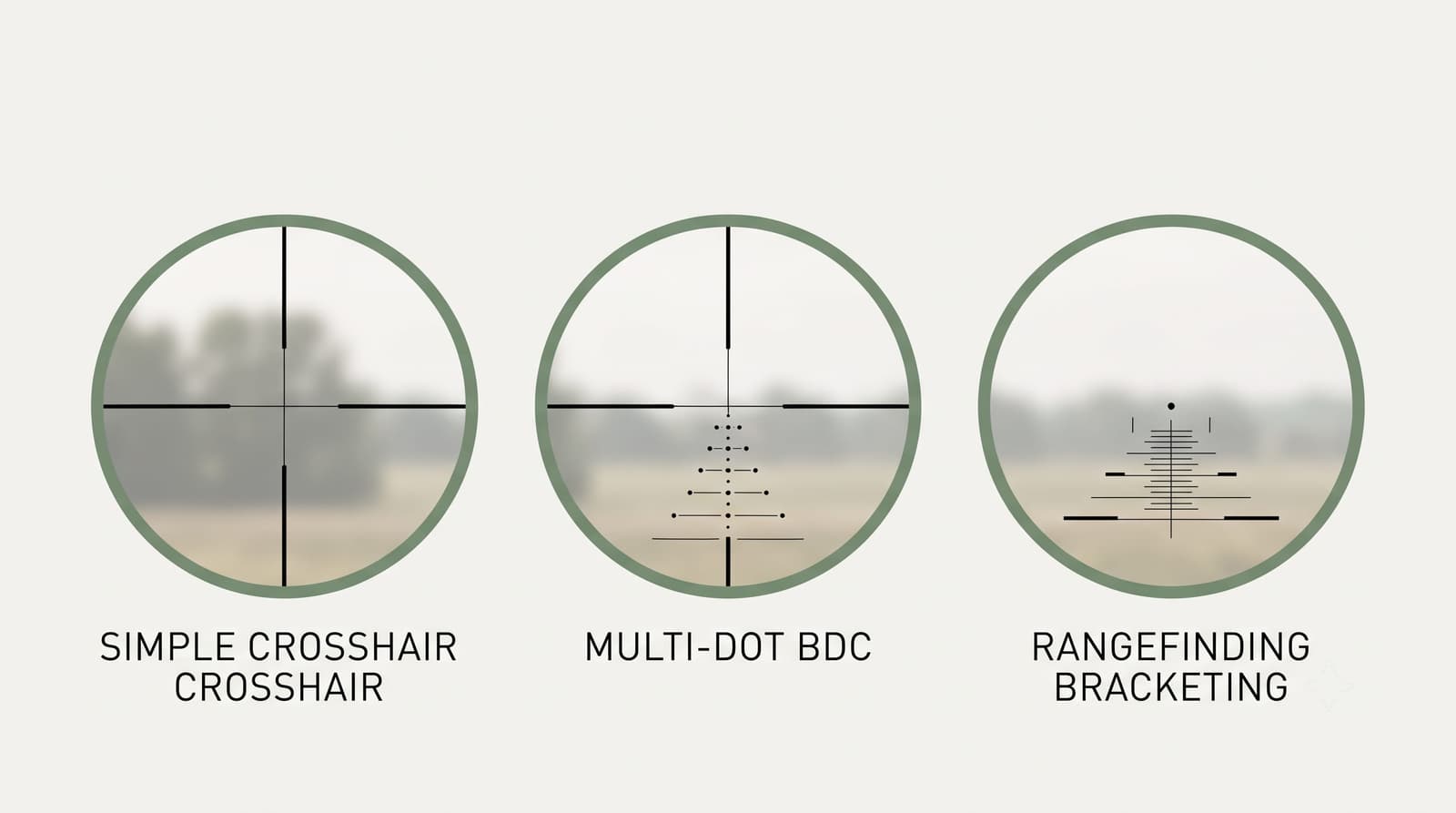
Simple crosshair
A plain crosshair is easy to learn and works at one zeroed distance. Beyond that you estimate holdover. It suits short-range shooters on a budget.
Multi-dot and BDC reticles
A bullet drop compensating reticle places extra aiming points below the main crosshair, each meant for a longer distance. They are popular because they are quick to use, but only if your bolt speed matches the design. Check the manufacturer's stated speed range and test every mark on the range. See our glossary entry for BDC reticles.
Rangefinding reticles
Some scopes include a reticle that helps estimate distance by bracketing an object. These can speed up shot decisions but require practice to read correctly.
Laser rangefinding and auto-adjusting scopes
At the top of the market, a few scopes measure distance and move the aiming point for you. The Burris Oracle X and Garmin Xero X1i are examples in our reviews. They add cost, weight and battery dependence. Read the glossary entry on rangefinding scopes for how they differ.
Step 3: Pick the Right Magnification
Magnification is how much the scope enlarges the target. More is not automatically better on a crossbow.
Fixed power
A fixed 3x or 4x is simple, light and has fewer moving parts. Many compact scopes use it. It is a good match for typical crossbow distances.
Variable power
Variable scopes, such as a 2-7x or 2-8x, let you pull back for a wide view at close range and zoom in for a longer shot. The trade-off is a reticle that may only be accurate at a specific setting, so read how your scope's markings work across the zoom range.
Why high magnification can backfire
At high power the field of view narrows, mirage and hand movement become more obvious, and finding a moving target gets harder. For most shooters, 2x to 4x is the sweet spot. If you often shoot beyond 60 yards, variable power starts to make more sense.
Step 4: Check Eye Relief and Fit
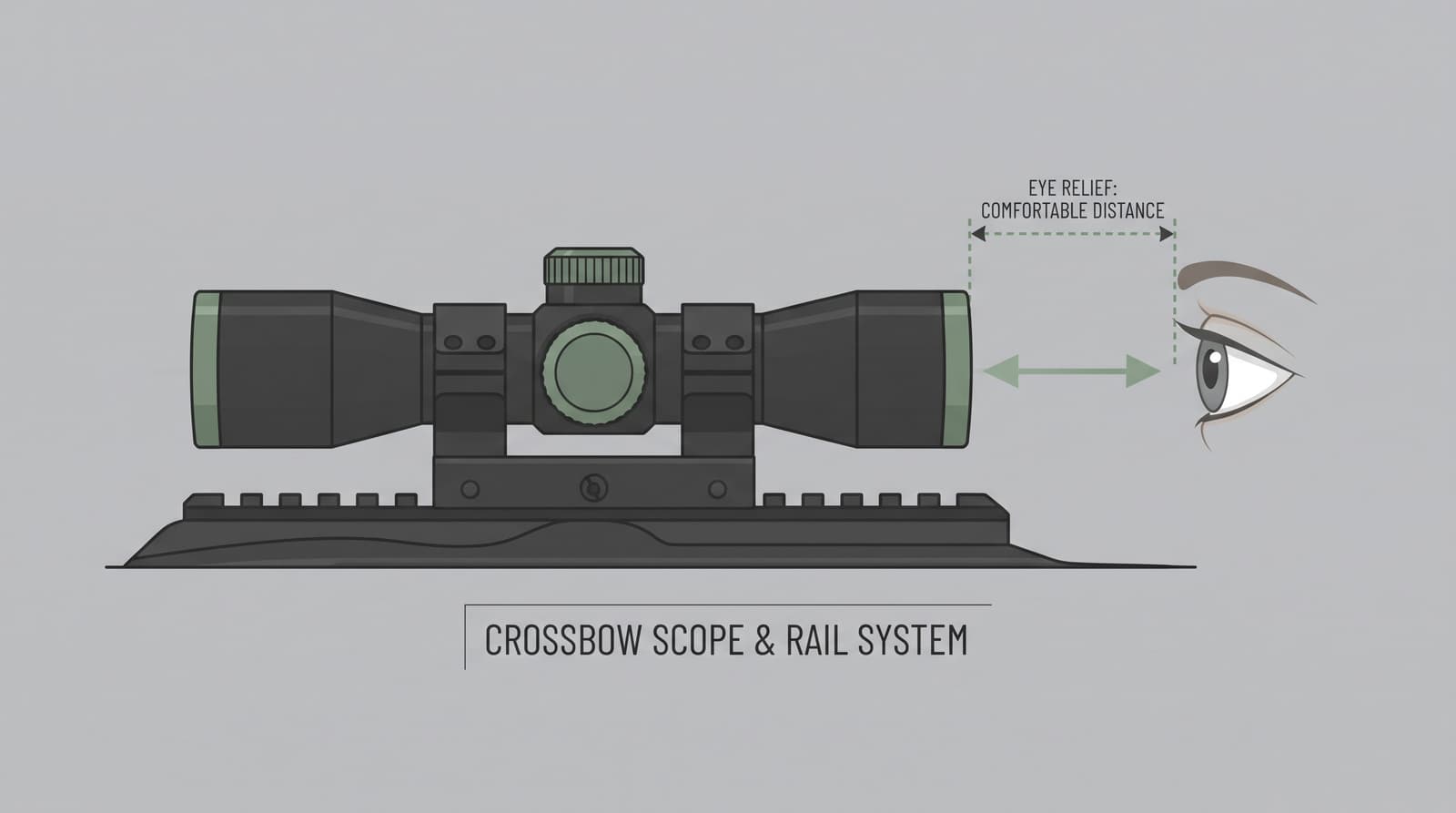
Eye relief is the distance between your eye and the rear lens that gives a full, clear sight picture. Crossbows are shot with your eye farther from the scope than a rifle, so longer eye relief is generally more comfortable and safer. Always confirm the figure for the scope you are considering and test it at your natural shooting position. Poor eye relief is a common cause of a black ring around the picture and, with the wrong setup, scope contact.
Also consider how the scope's tube diameter, length and weight suit your crossbow's rail. A heavy scope can change handling on a compact crossbow, and a long one may not clear the cocking aid or the rail.
Step 5: Understand Focal Plane and Parallax
First focal plane versus second focal plane
In a second focal plane scope, the reticle stays the same size as you zoom, so the markings are only accurate at one magnification. In a first focal plane scope, the reticle scales with the zoom, keeping its markings accurate at every setting. Most affordable crossbow scopes are second focal plane, which is fine if you use the recommended power. Our glossary entry on focal plane covers how to set up an SFP scope correctly.
Parallax
Parallax is an apparent shift of the reticle against the target when your eye is not centered. Crossbow ranges are short enough that it is rarely a major problem, but a parallax setting can help at longer distances.
Step 6: Think About Illumination and Light Conditions
An illuminated reticle glows in low light, which helps at dawn and dusk. Look for adjustable brightness so the glow does not wash out the target in daylight. Confirm battery type and how easy it is to replace, and carry a spare. Some jurisdictions restrict illumination or electronic devices on hunting equipment, so check local rules first.
Step 7: Plan the Mount and Zero
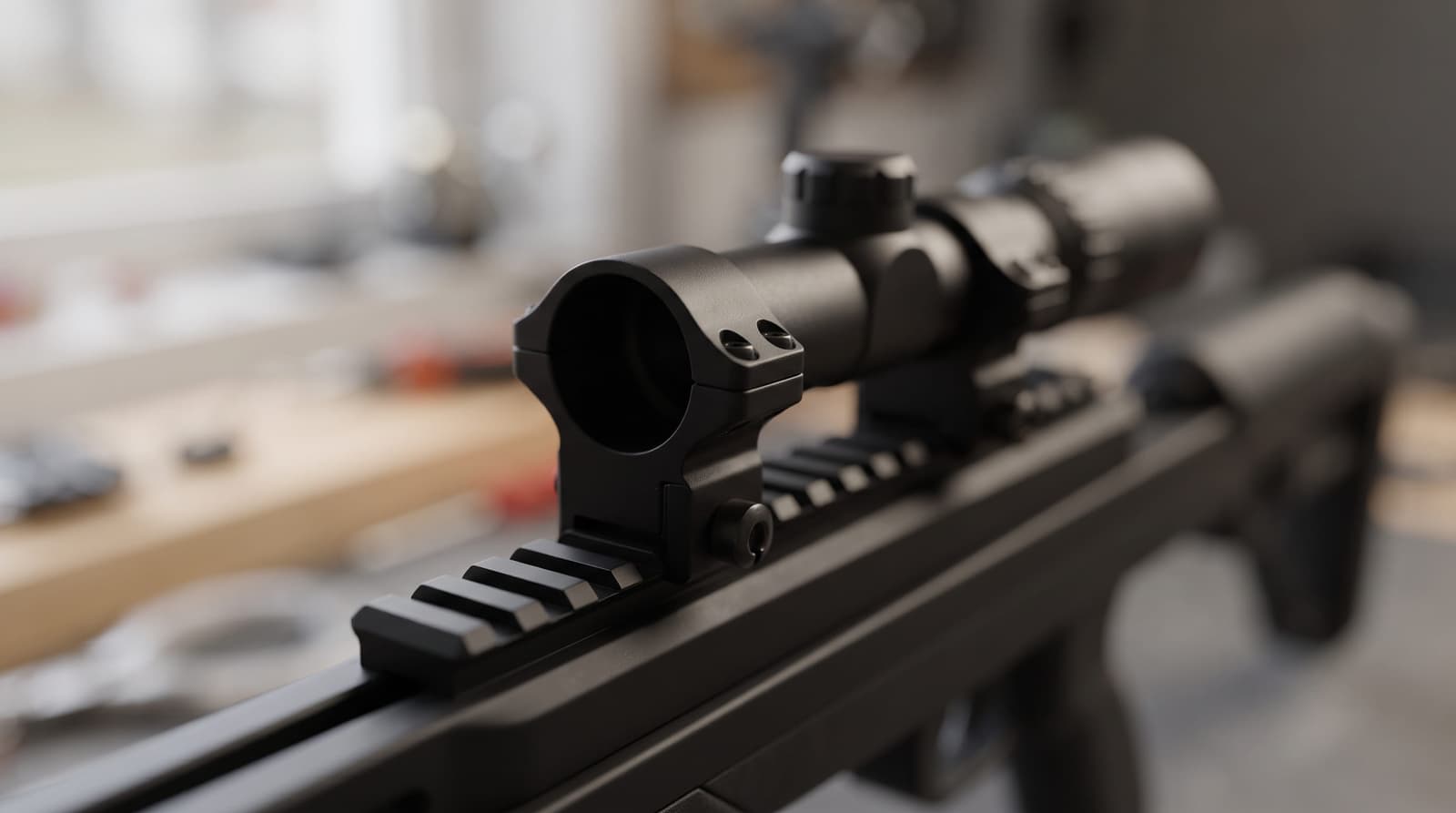
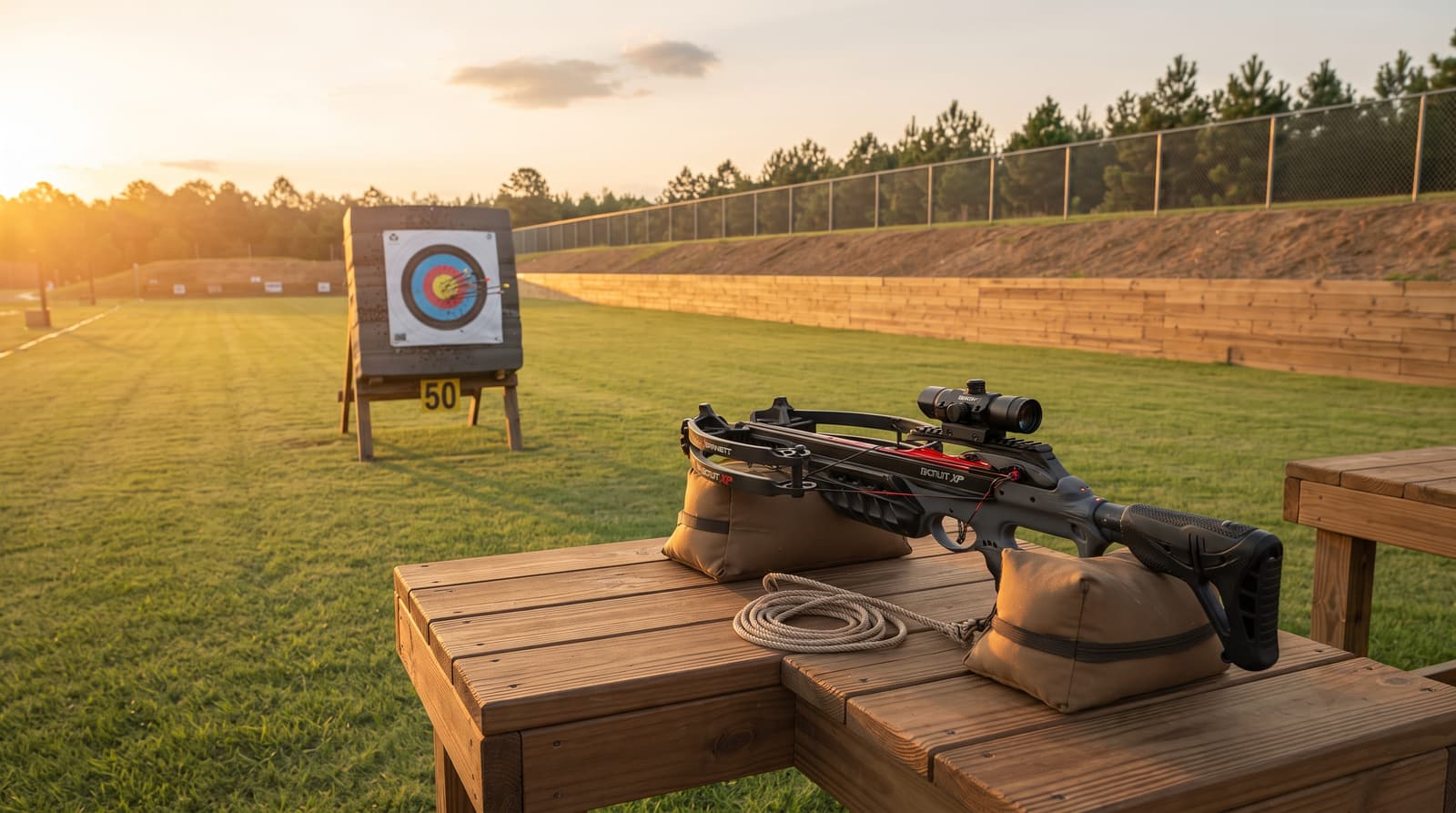
A scope is only as good as its mount. Confirm the rings or integrated mount fit your crossbow's rail, are made for crossbow forces and are tight but not overtightened. After mounting, sight in your crossbow scope at a safe distance and confirm each aiming point at the distances you plan to shoot. Re-check zero after any change of bolt, tip or mount. Our glossary explains zeroing and the click math behind windage and elevation.
Scope Price Tiers From Our Reviews
Prices and ratings below are taken from our scope reviews and may change. Use the tiers as a way to understand what each budget typically buys, then read the full review.
| Tier | Scope | Type | Price | Our rating |
|---|---|---|---|---|
| Budget | CVLIFE 3-9x40 | Variable-zoom, crosshair | $45–$55 | 4.1 |
| Budget | TruGlo 4x32 | Fixed power, BDC rangefinding reticle | $69–$99 | 4.3 |
| Mid-range | Vortex Crossfire II 2-7x32 | Illuminated, second focal plane | $195–$215 | 4.6 |
| Mid-range | TenPoint Rangemaster 100 | Illuminated 2-7x32, 9 aiming points | $295–$355 | 4.6 |
| Upper-mid | TenPoint EVO-X Marksman Elite | 2-8x, 9 aiming points | $479–$499 | 4.7 |
| Premium electronic | TenPoint Vision HD | Rangefinding with HD recorder | $889–$899 | 4.3 |
| Premium electronic | Garmin Xero X1i | Auto-ranging, fixed 3.5x | $949–$999 | 4.4 |
| Premium electronic | Burris Oracle X | Laser ranging with inclinometer | $989–$999 | 4.4 |
For a ranked shortlist, see the full best crossbow scopes roundup.
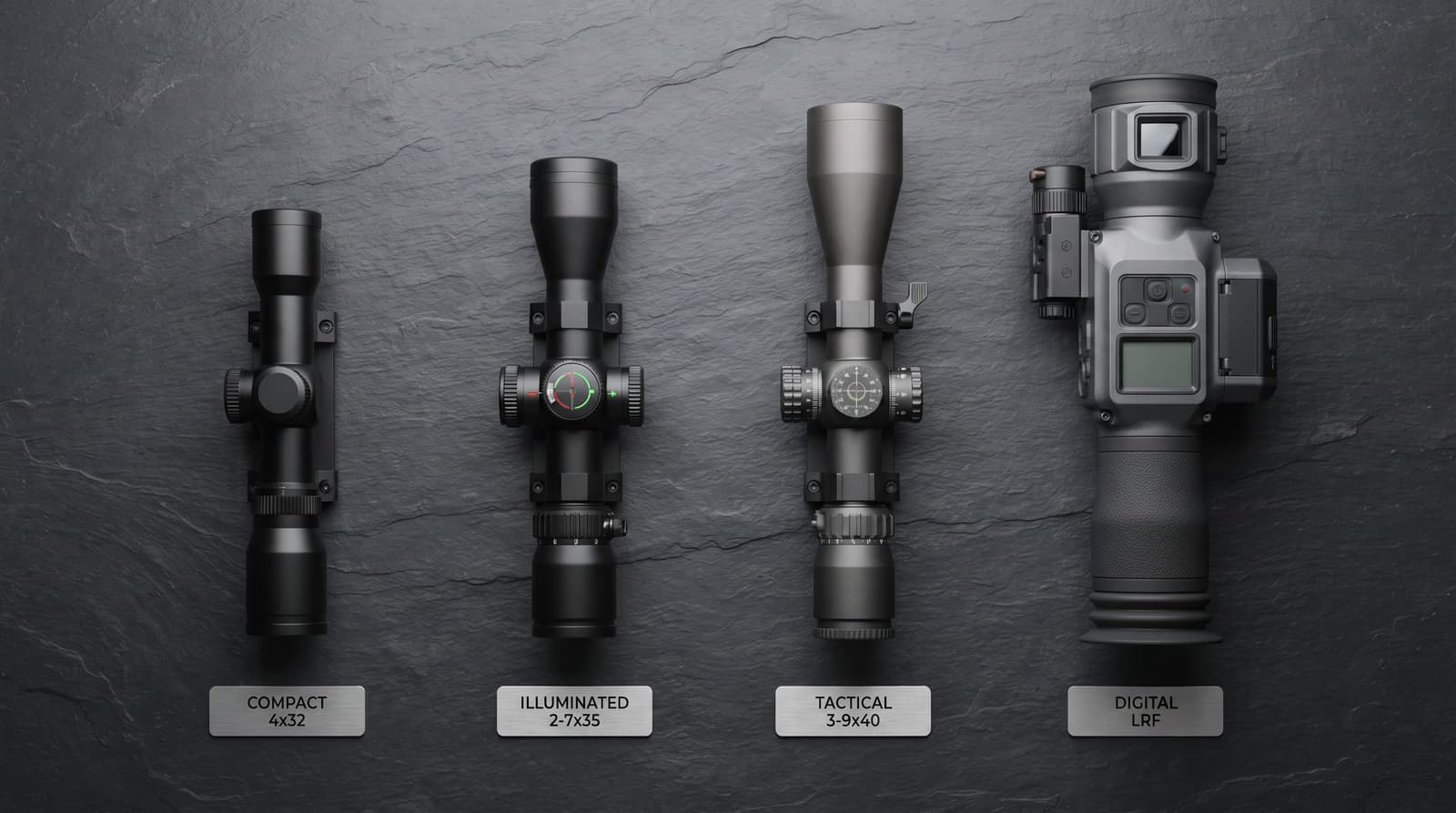
Which Scope for Which Shooter?
The new owner on a budget
A fixed or low-power scope with a clear reticle is enough. Spend the savings on practice bolts and a safe target.
The hunter who shoots inside 50 yards
A mid-range illuminated scope with a multi-dot reticle matched to your speed is the usual sweet spot. Variable power adds flexibility in a blind or stand.
The long-range target shooter
Look for a reticle with reliable markings across your speed range, adjustable focus or parallax, and repeatable turrets.
The shooter who values speed of decision
An electronic ranging scope removes distance estimation. Accept the weight, battery dependence and price, and practice with it often.
Common Mistakes When Choosing a Scope
Buying for features you will not use
A feature list is not the same as a better scope for your shooting. Choose around your distances.
Ignoring the reticle's speed range
If your crossbow shoots outside the stated range, the extra aiming points may mislead you.
Overlooking mounting and fit
A scope that does not seat securely or clear the rail causes more problems than any specification solves.
Skipping the range test
Confirm every aiming point you intend to use before the season.
Worked Example: Matching a Scope to a Crossbow and Budget
Suppose your crossbow's manual lists a speed of about 350 FPS, you mostly shoot out to 40 yards, and you want to keep the scope under $300. Start with the reticle: you need a multi-dot or BDC pattern whose stated speed range includes 350 FPS, because a reticle built for a faster crossbow will print low at the lower dots. Next, magnification: at 40 yards a 2x to 4x scope is plenty, so a 2-7x variable adds flexibility without forcing high power. That points to the mid-range tier in the table above. The Vortex Crossfire II 2-7x32 at $195–$215 and the TenPoint Rangemaster 100 at $295–$355 both fit, and the gap between their top and bottom prices is $80 to $160 ($295 minus $215, and $355 minus $195). Check each reticle's stated speed range against your crossbow before you pay the difference.
Symptoms and Likely Scope Causes
| What you notice | Likely cause | What to do |
|---|---|---|
| Lower dots hit low or high | Reticle designed for a different bolt speed | Check the stated speed range and test each mark; consider a different reticle |
| Zero shifts after a few shots | Loose rings or mount | Check ring torque against the manual and re-zero |
| Dark ring around the picture | Eye relief too short or too long | Adjust scope position within the rings and re-test your cheek weld |
| Reticle blurry | Diopter or focus not set | Set the eyepiece focus on a plain background |
| Dim or flickering illumination | Weak battery | Replace the battery and carry a spare |
For the full routine, see our guide on how to sight in a crossbow scope.
Who Should Skip Premium Electronic Scopes
- Shooters who mostly shoot inside 40 yards, where a mid-range scope is enough
- Anyone who dislikes depending on batteries in the field
- Hunters whose local rules restrict electronic devices on hunting equipment
- Buyers who would rather spend the difference on bolts and practice
Pre-Purchase Checklist
- Know your crossbow's real speed and rated bolt weight.
- Decide your normal and maximum shooting distance.
- Confirm the reticle is designed for your speed range.
- Check eye relief and test it in your shooting position.
- Confirm the mount fits your rail and the scope clears the cocking aid.
- Check battery type, cost and availability if illuminated or electronic.
- Confirm local rules on illumination and electronic devices.
- Read the warranty and return policy.
- Plan a range session to zero and verify every mark.
Frequently Asked Questions
What magnification is best for a crossbow scope?
For most shooters, 2x to 4x covers typical distances. Variable scopes like a 2-7x add flexibility for longer shots.
Can I use a rifle scope on a crossbow?
Rifle scopes are built around a much flatter bullet path, so their reticles will not match a bolt's drop. A crossbow-specific scope is the safer and more accurate choice.
What is a BDC reticle?
A reticle with extra aiming points below the crosshair, each meant for a longer distance at a specific bolt speed. Verify every mark on the range.
Do I need an illuminated reticle?
It helps in low light but is optional for daylight target shooting. Check local hunting rules, since some places restrict illumination.
How much should I spend on a crossbow scope?
Budget scopes in our reviews start under $100, strong mid-range options sit around $200 to $500, and electronic ranging scopes cost roughly $900 or more. Choose the tier that matches your distances.
What is eye relief and why does it matter?
It is the distance from your eye to the rear lens that gives a full picture. Good eye relief improves comfort and helps keep your face clear of the scope.
Are rangefinding scopes legal for hunting?
It depends on where you hunt. Some jurisdictions restrict electronics on hunting equipment, so verify current rules with your wildlife agency.
How often should I re-check my zero?
After any change of bolt, tip, scope or mount, and before each season.
Final Recommendation
Choose the scope around your crossbow's speed, your usual distance and the conditions you shoot in, then check the reticle, eye relief and mount before anything else. For most shooters, a mid-range illuminated scope with a reticle matched to their speed is the best balance of cost and capability. Whatever you choose, zero it carefully, verify every aiming point and follow local rules.
When you are ready to compare specific models, see our best crossbow scopes roundup or browse the crossbow scopes hub. Prices and ratings here are drawn from our reviews and may change, and local equipment rules vary, so verify them with your wildlife agency.
Read nextSee the tested scopes ranked side by sideOur roundup compares the same scopes by use case, with pricing and the reasons behind each pick.Gear mentioned in this guide
Reviews we link to above, highest rated first. Read the full review before you buy.
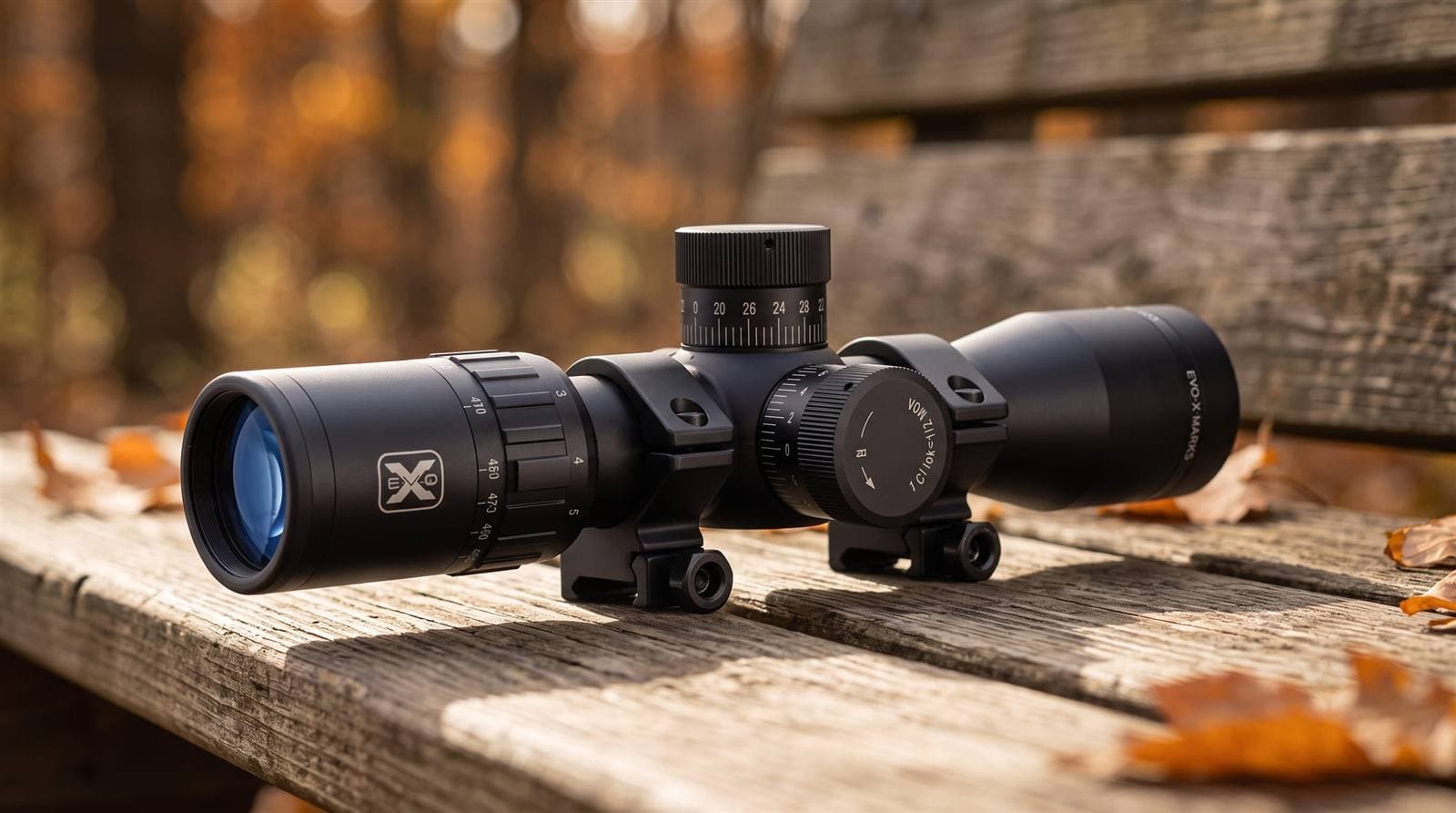
EVO-X Marksman Elite Review
A 2–8x scope whose reticle tracked accurately across 300–550 FPS and held zero through weeks of testing. Nine aiming points take practice to learn.
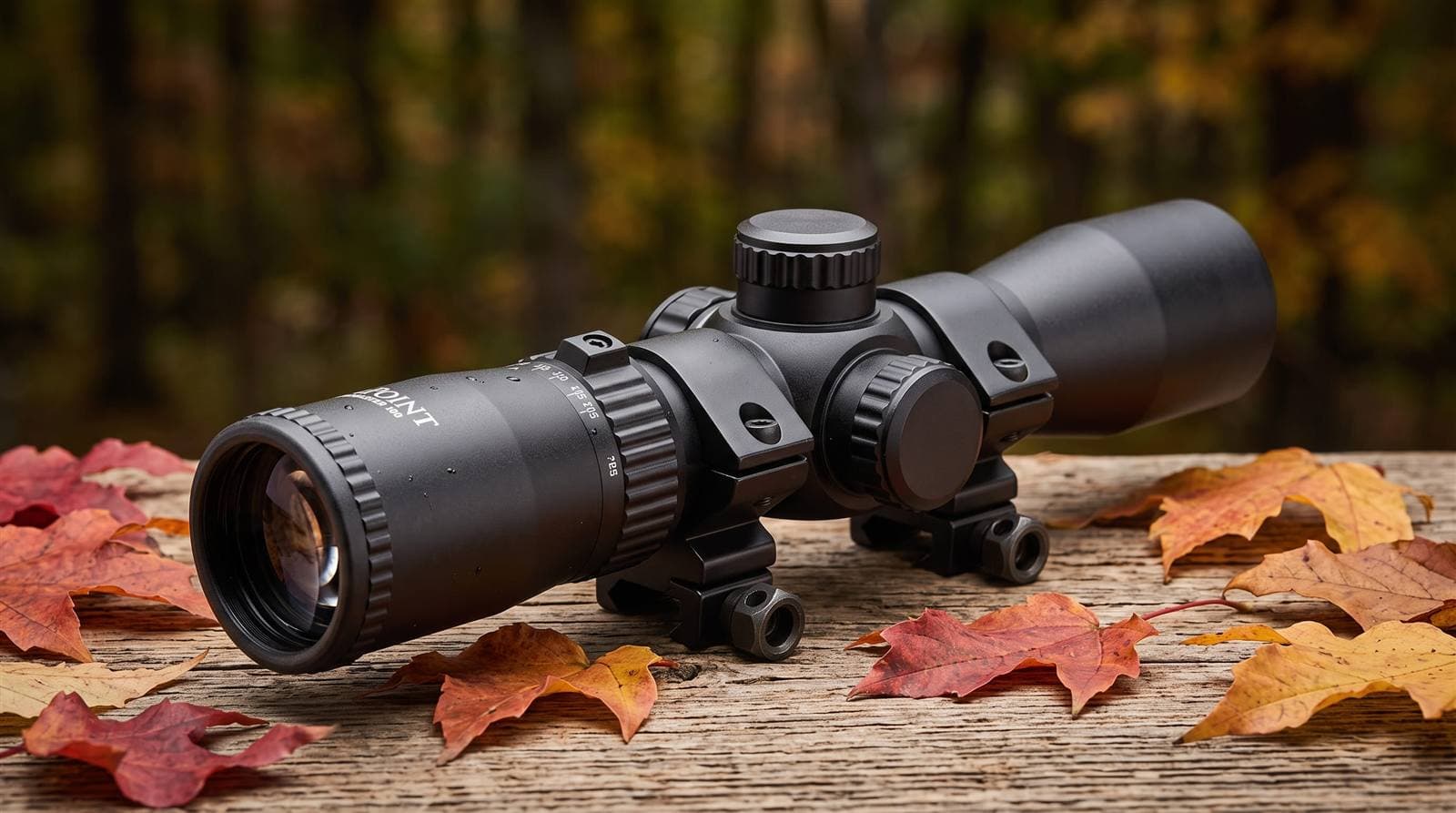
TenPoint RangeMaster 100 Review
An illuminated 2-7x32 crossbow scope with 9 aiming points, accurate out to 100 yards. Priced $295–$355 for hunters shooting varied distances.
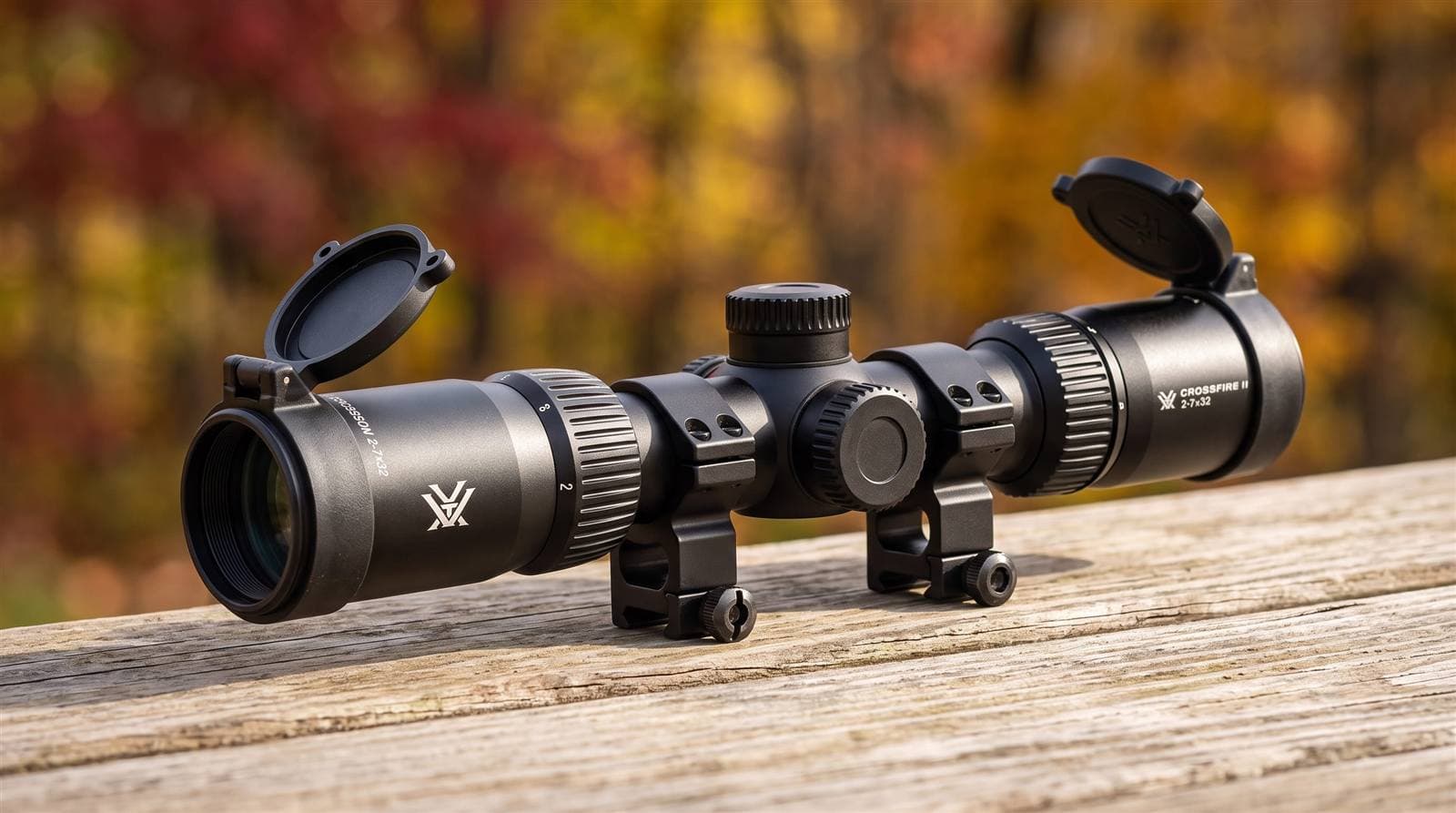
Vortex Crossfire II 2-7x32 Review
An illuminated SFP crossbow scope kit priced $195–$215. Tested for tracking, eye relief, and low-light performance.
Ready to compare models? Read our tested crossbow reviews to find your perfect match.