What the objective lens is on a crossbow scope in plain terms
What the objective lens is on a crossbow scope meaning: The objective lens is the front lens of a scope; its diameter in millimetres is the last number in a name like 2-7x32 and limits how much light enters.
Also called: objective lens diameter, objective diameter, objective size, objective bell, front lens
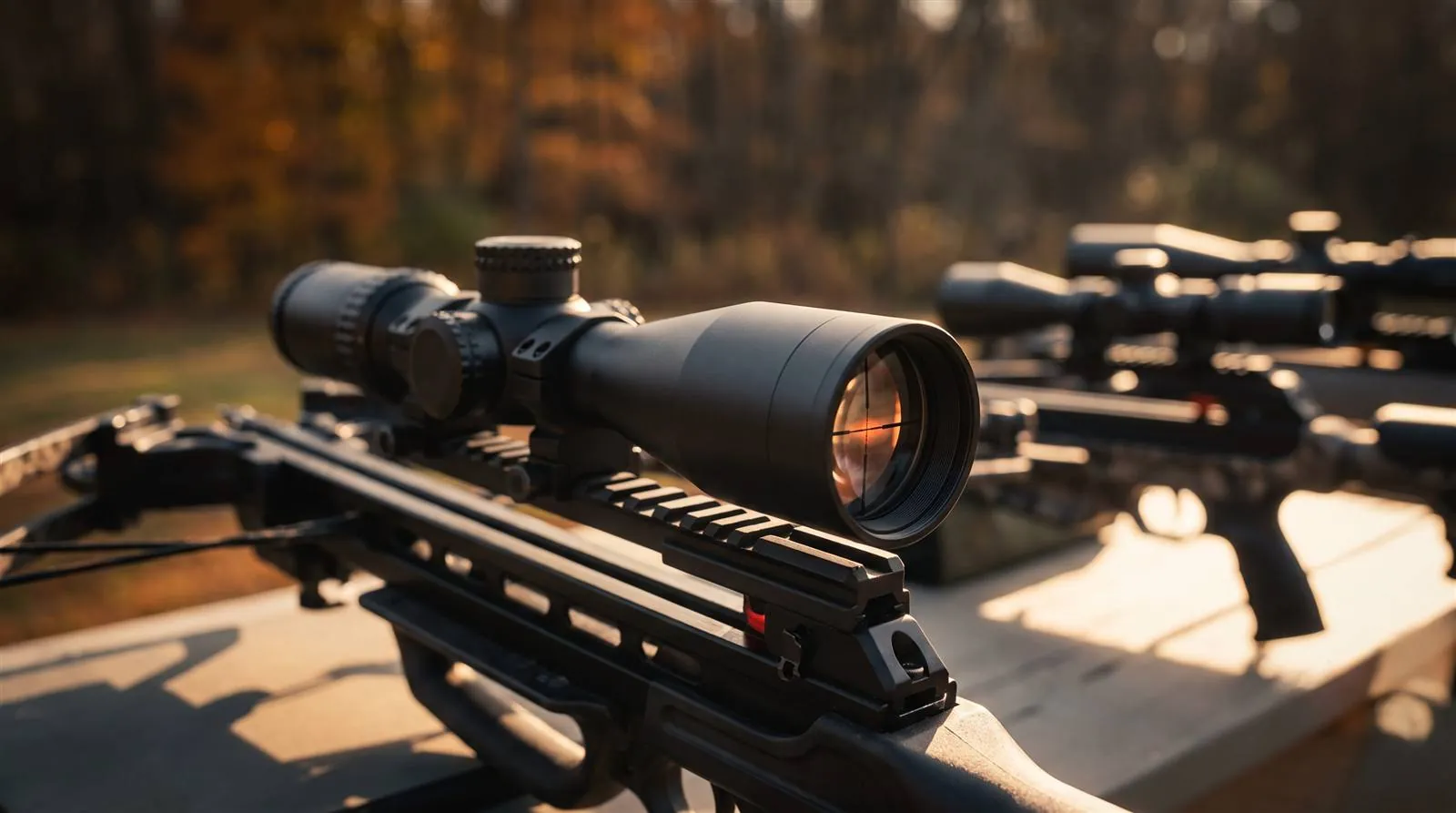
The objective lens is the large lens at the front of a scope, facing the target. It gathers the light that forms the image you see. Its diameter in millimetres is the last number in a scope name: a 2-7x32 has a 32 mm objective and a 3-9x40 has a 40 mm one. The flared housing around it is called the objective bell.
A larger objective can let more light into the scope, which helps at dawn and dusk. Dividing the objective diameter by the magnification gives the exit pupil, the width of the beam of light that reaches your eye. Vortex makes the point that size is not the whole story: optical design and the quality of lenses and coatings matter most, and a better scope with a smaller objective usually beats a lower-end one with a giant objective.
Crossbow scopes mostly use modest objectives, often 24 to 40 mm, because shots are short and a bigger bell adds weight and needs taller rings to clear the rail. The Vortex Crossfire II 2-7x32, for example, lists a 32 mm objective.
Why it matters
Many crossbow shots come in the last minutes of legal light, when a bright image helps you see the vitals and the reticle clearly.
A bigger objective also raises the scope higher above the rail, which changes your cheek position and adds weight to a crossbow you carry all day.
How to read it on a spec sheet
- Read the last number in the scope name as the objective diameter in millimetres.
- Some spec sheets list both the objective lens diameter and a larger outside bell diameter; use the lens figure for brightness.
- Divide objective by magnification to compare exit pupils at the power you will actually use.
- Read lens coating claims (fully multi-coated) alongside size, since coatings affect brightness too.
Common mistakes
- Assuming the biggest objective always gives the brightest image.
- Ignoring ring height and rail clearance when choosing a large objective.
- Confusing the objective diameter with the magnification number.
- Cleaning the objective with a shirt instead of a lens cloth or pen.
See it in our reviews
- TenPoint RangeMaster 100 — rated 4.5/5
- CVLIFE Scope — rated 4.1/5
Frequently Asked Questions
What is the objective lens on a scope?
It is the front lens, facing the target, that gathers light to form the image. Its diameter in millimetres is the last number in a scope name, such as the 32 in 2-7x32.
Is a bigger objective lens better for a crossbow?
Not automatically. A bigger lens can pass more light, but it adds weight and height on the rail. Lens quality and coatings often matter more, and crossbow ranges rarely need a large objective.
What does 4x32 mean on a crossbow scope?
It means 4 times magnification and a 32 mm objective lens. At 4x, that objective gives an exit pupil of 8 mm, which is wider than most eyes can use, so the image is bright in dim light.
What is the objective bell?
It is the flared front housing that holds the objective lens. Some makers list its outside diameter separately; Burris, for example, lists a 32 mm objective lens and a 39 mm objective diameter for its Scout 2-7x32.
Does the objective lens affect parallax?
Some scopes have an adjustable objective, a ring on the bell that focuses for distance and reduces parallax. Most crossbow scopes have a fixed objective set to a parallax-free distance instead.
Related guides
Guides where objective lens shapes a real choice.
 GuideHow to Choose a Crossbow ScopeChoose a crossbow scope in eight steps, from intended use, reticle and magnification to eye relief, illumination, glass and mounting matched to your bolt speed.Read the guide
 GuideBest Crossbow Scopes of 2026 for Every Bolt SpeedCrossbow scopes compared from a budget variable-zoom scope to laser rangefinding and digital models, with reticle, magnification and speed range for each.Read the guide
Definitions are general information. Manufacturer figures vary, so follow your crossbow's manual and verify local laws with the relevant authority.