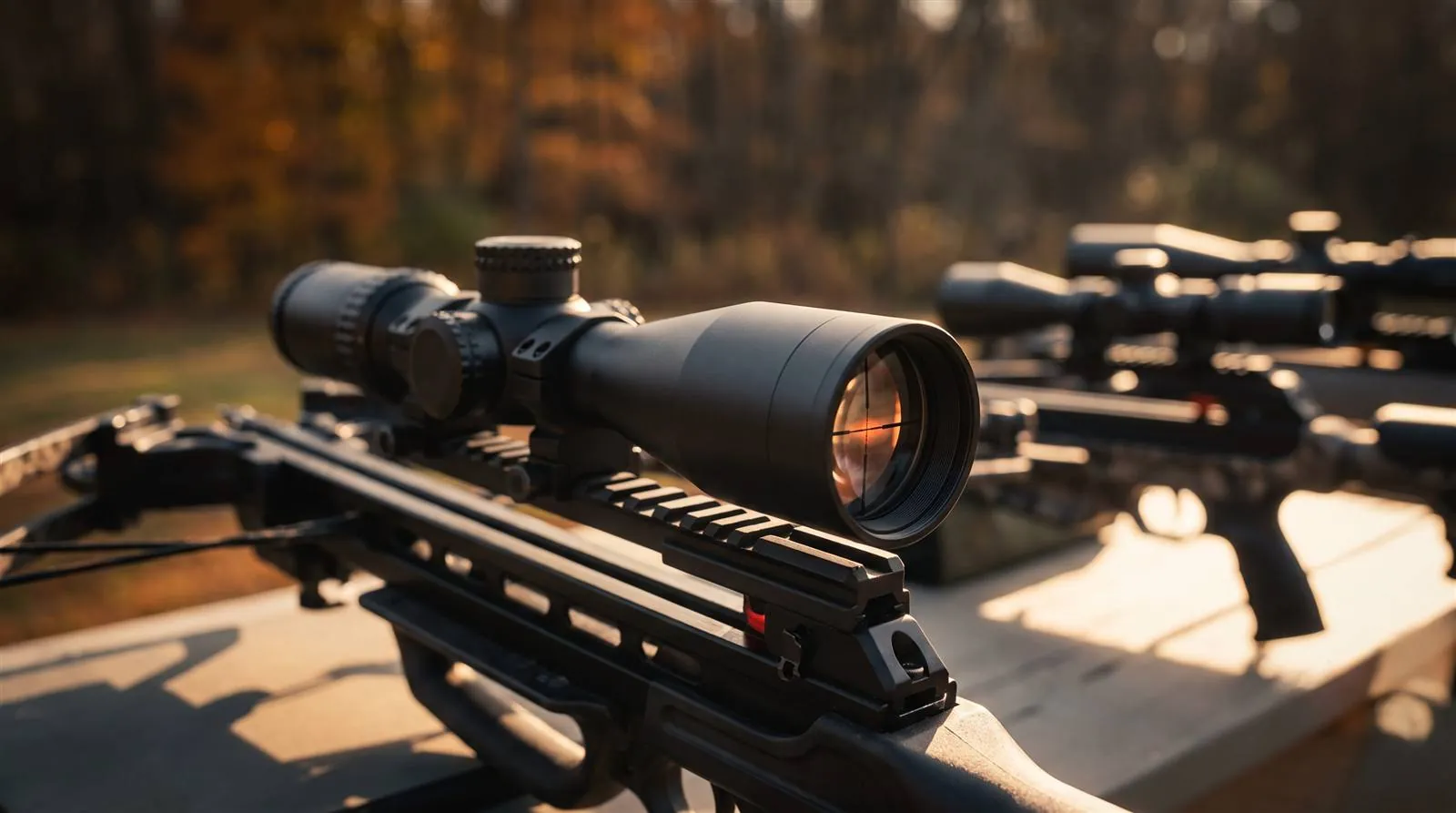
Crossbow Eye Relief in plain terms
Crossbow Eye Relief meaning: Eye relief is the distance from the scope’s rear lens to your eye at which you see the full, unclipped picture, and it affects comfort and safety.
Also called: eye box, eye relief distance, scope eye relief
Eye relief is the distance between the ocular (rear) lens of a scope and the shooter’s eye when the whole image is visible. Too close and the view is clear but there is a risk of the scope touching the face; too far and the picture shrinks into a dark-ringed tunnel. The usable window is called the eye box, and a forgiving scope has a wide one.
Crossbows do not recoil into the shoulder like a rifle, but they do move forward and vibrate on release, and the scope sits on a rail close to the face. A scope with generous eye relief lets you keep a comfortable, consistent head position and avoids contact with the eyebrow. Many bolt-action rifle scopes have around three inches, which is why some shooters want longer for crossbows.
Eye relief interacts with how you shoot. A seated or kneeling position, a shorter or longer stock, and cheek-weld habits all change where your eye sits behind the glass. Mounting position of the scope in its rings, plus the magnification setting, is the main way you tune this, which is why the rail length matters as well.
Rated eye relief of reviewed scopes
| Scope | Eye relief | Notes |
|---|---|---|
| TruGlo 4x32 Compact | 4 inches | Fixed 4x, BDC reticle |
| TenPoint Vision HD | 65mm (about 2.7 inches) | Digital rangefinding scope |
| Vortex Crossfire II 2-7x32 | 2.7 inches | Rated by Vortex |
| CVLIFE 3-9x40 | 2.7–3.3 inches | Shorter, less margin at the low end |
Why it matters
Poor eye relief produces the classic “scope bite” or eyebrow strike. It is uncomfortable, and flinching in anticipation of a strike hurts accuracy long before it hurts anything else.
It also decides how quickly you find a full sight picture on a fast shot. A scope that demands one exact head position is harder to use in a blind, from a seated position, or in cold clothing.
Variable-power scopes can change their eye relief as you zoom. Some are fixed throughout; others shorten at high power, so check the spec at the setting you actually use.
How to read it on a spec sheet
- Spec sheets give eye relief in inches or millimetres; 25.4mm is one inch, so 65mm is about 2.6 inches.
- A range such as 2.7–3.3 inches usually means it changes with magnification. Plan around the shorter end.
- Longer is not automatically better. Very long eye relief can narrow the eye box and make the picture harder to find.
- The figure is the distance for a full view, not a safe distance. Leave a margin beyond the minimum.
- Rail length and scope-ring spacing decide whether you can actually place the scope where its eye relief puts it.
Common mistakes
- Mounting the scope as far back as it will go. This puts the lens too close to the face.
- Judging eye relief at low power and then shooting at high power where it may be shorter.
- Setting it with the crossbow not in your normal shooting position. Check it as you shoot, including seated.
- Assuming a rifle scope’s eye relief suits a crossbow with a different stock length.
- Shooting with a head position that changes shot to shot. Consistent cheek placement matters more than the exact figure.
Setting eye relief at home
- Make sure the crossbow is unloaded and not cocked, following your manual.
- Loosen the ring screws just enough to slide the scope.
- Get into your normal shooting position and close your eyes, then open them and slide the scope until the full image appears with no black ring.
- Add a little margin forward, tighten the ring screws evenly, and check again at your highest magnification.
- Confirm in other positions you might use, such as seated or from a blind.
See it in our reviews
- TenPoint Vision HD — rated 4.2/5
- CVLIFE Scope — rated 4.1/5
- Vortex Crossfire II 2-7x32 — rated 4.5/5
- TruGlo 4x32 Crossbow Scope — rated 4.2/5
Frequently Asked Questions
What is good eye relief for a crossbow scope?
There is no single number, but around three inches or more is common and forgiving. The reviewed examples are rated from 2.7 to 4 inches. Pick one you can use comfortably in your actual shooting positions with a margin.
What happens if eye relief is too short?
The scope sits too close to your eye, which can cause contact with the brow when the crossbow moves on release. Even without contact, shooters tend to flinch or lean back, and that inconsistency hurts accuracy.
Does eye relief change with zoom?
On many variable scopes it does, usually shortening at the highest power. If the listing gives a range, plan for the smaller figure and test at your highest working magnification before shooting.
How do I measure eye relief?
Hold the unloaded crossbow in your shooting position and find the scope position where the full circle of the image appears. The distance from the rear lens to your eye at that point is the working eye relief.
What is the eye box?
The eye box is the zone behind the scope where your eye sees the full picture. A larger eye box tolerates movement in head position, which is useful on quick shots and from awkward angles.
Does stock length affect eye relief?
Yes. A longer or shorter stock changes where your face sits relative to the rail, so the scope may need to be moved forward or back to hit its eye relief for you.
Can I use a long eye relief rifle scope on a crossbow?
Often yes if the rail and rings allow forward mounting. Check that the scope can slide far enough forward on your rail to reach the eye relief, and confirm ring fit and height before relying on it.
Related guides
Guides where eye relief shapes a real choice.
 GuideBest Crossbow Scopes of 2026 for Every Bolt SpeedCrossbow scopes compared from a budget variable-zoom scope to laser rangefinding and digital models, with reticle, magnification and speed range for each.Read the guide
 GuideHow to Sight In a Crossbow ScopeSighting in a crossbow scope step by step: safe lane setup, first zero, confirming each aiming point, and re-checking with your hunting tip.Read the guide
Definitions are general information. Manufacturer figures vary, so follow your crossbow's manual and verify local laws with the relevant authority.