What Is Rangefinding Scope?
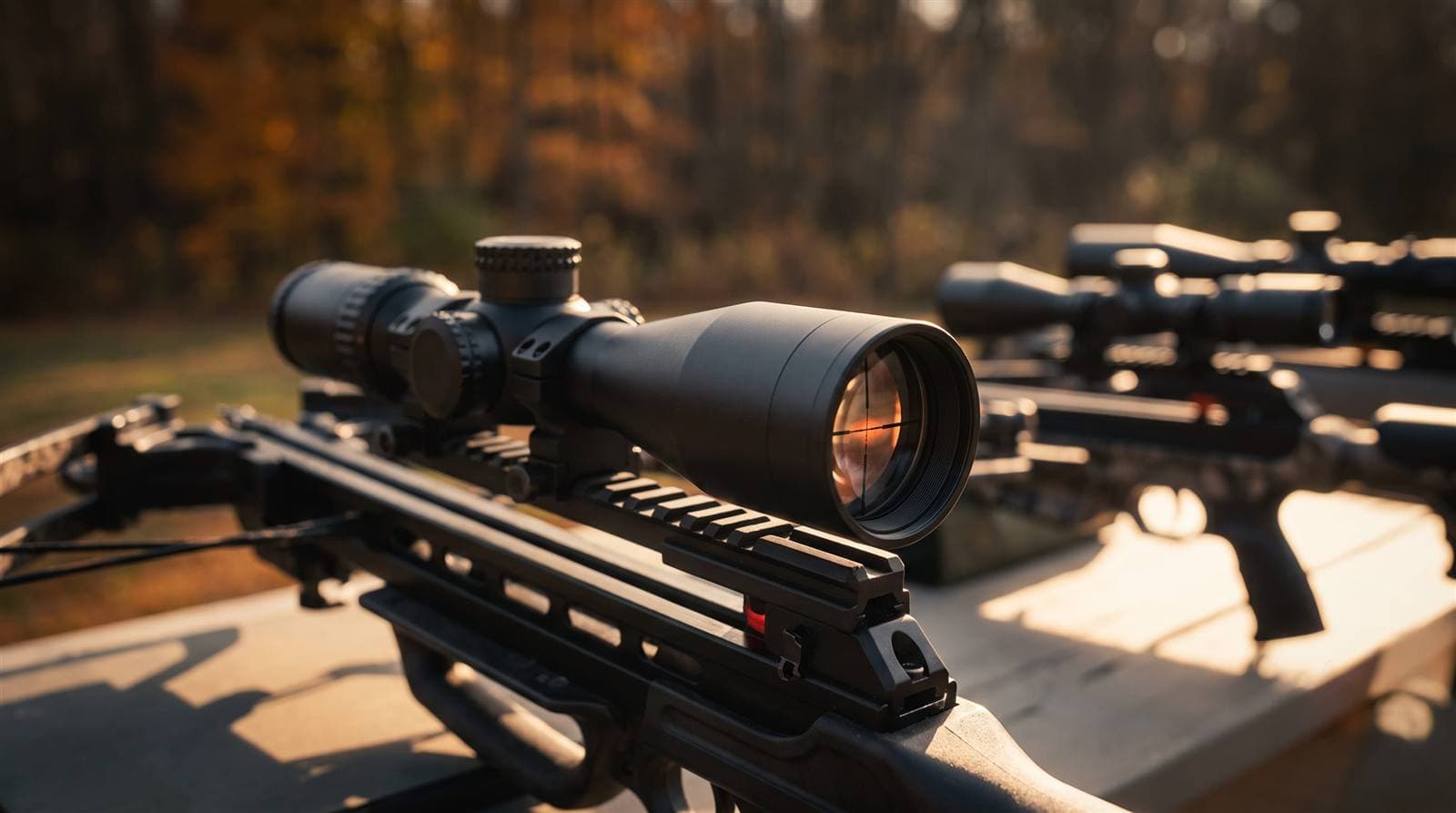
A rangefinding scope measures the distance to the target with a built-in laser and shows an aim point matched to that distance and, on some models, the shot angle.
Rangefinding Scope: definition
Also called: laser rangefinder scope, auto-ranging scope, digital crossbow scope, inclinometer scope
A rangefinding scope combines an optic with a laser rangefinder and a small ballistic computer. You point at the target, the scope measures the distance, and it moves or lights an aim point to match your bolt’s drop at that range. This removes the step of estimating distance or reading the right mark on a BDC reticle.
Models differ in how they range. The Burris Oracle X, a 2-7x scope, ranges when you press a remote or button; the Garmin Xero X1i is described as continuous auto-ranging with no button press. Some add an inclinometer to correct for shot angle from an elevated position, and some, like the TenPoint Vision HD, are fully digital with a display instead of a glass picture.
All of them depend on batteries and on correct ballistic data for your bolt. If the speed profile or bolt information does not match your setup, the displayed aim point will be wrong however good the laser is.
Rangefinding scopes from our reviews
| Scope | Ranging | Magnification | Weight | Price in review |
|---|---|---|---|---|
| Burris Oracle X | Laser with inclinometer; 500 yards on reflective target, 200 on deer-sized target | 2-7x | 30.8 oz | $989–$999 |
| Garmin Xero X1i | Continuous auto-ranging; 250 yards game, 500 reflective | 3.5x fixed | 1.9 lbs | $949–$999 |
| TenPoint Vision HD | Integrated laser, 5 to 1,100 yards, 5 ballistic profiles | 3-12x digital | 1.15 lbs | $889–$899 |
Why Rangefinding Scope matters
Misjudged distance is a major cause of missed shots, and a rangefinding scope addresses it directly. The aim point reflects measured distance rather than a guess.
Angle compensation matters from treestands and hillsides, where the straight-line distance overstates the horizontal distance the bolt must cover. The inclinometer models adjust for it.
The cost is weight, price and electronics. The reviewed scopes cost between $889 and $999 and weigh between 1.15 lbs and 1.9 lbs, so they suit buyers who value measuring over simplicity.
How to read it on a spec sheet
- Ranging distances are quoted by target type: a reflective target ranges farther than a deer-sized one. Use the game figure for hunting planning.
- Look for the ballistic profile system and whether your bolt speed is covered. The Vision HD ships with five pre-loaded profiles.
- Check the power source and battery life. The Garmin lists about a year on AAA lithium batteries; the Burris lists 3,000 range activations on a CR123 battery.
- Look for an inclinometer if you hunt from height.
- See whether there is a mechanical fallback if the battery dies.
Common mistakes
- Believing the maximum ranging distance is a recommended shooting distance. It is a measurement capability only.
- Selecting the wrong ballistic profile, then trusting the aim point.
- Skipping the zero check because the scope calibrates itself.
- Forgetting spare batteries in cold weather.
- Not confirming the aim point on a target at several distances.
Verifying a rangefinding scope
- Enter or choose your bolt data and speed profile, and follow the manufacturer’s setup.
- Zero it at the distance the manual specifies using how to sight in a crossbow scope as a general reference.
- Range known distances on a measured range and compare the readings.
- Shoot groups at several distances and confirm the displayed aim point matches impact.
- Check battery level and carry the correct spare.
In my testing
In the Burris Oracle X review I confirmed ranging to a reflective target near the 500-yard claim and consistent readings on a deer-sized target out to 200 yards. For the Garmin Xero X1i, the auto-calibrated aim points tracked my chronographed speeds out to 80 yards, and the Vision HD ranged reliably across its claimed 5–1,100 yard span. How I test.
See it in our reviews
- Burris Oracle X — rated 4.4/5
- Garmin Xero X1i — rated 4.4/5
- TenPoint Vision HD — rated 4.3/5
Frequently Asked Questions
What is a rangefinding crossbow scope?
It is a scope with a built-in laser rangefinder that measures the distance to the target and shows an aim point matched to that distance for your bolt’s drop. Some also compensate for shot angle.
Are rangefinding scopes worth the extra cost?
They suit shooters who want measured distances and angle correction in one device and accept the weight and electronics. If you shoot at known short distances, a simpler scope may serve as well.
Do rangefinding scopes need batteries?
Yes. Reviewed examples use CR123, AAA lithium or rechargeable batteries. Because the aim point depends on electronics, it is wise to know your battery life and carry a spare.
How far can a crossbow rangefinding scope measure?
Claims vary, up to 500 yards on a reflective target or more on some models. That is a measuring capability, not a recommendation for shot distance; confirm what your crossbow and skills allow.
What does an inclinometer do in a scope?
It measures the shot angle and adjusts the displayed aim point, since uphill or downhill shots need less compensation than flat shots at the same straight-line distance.
Can I use any bolt with a rangefinding scope?
You need ballistic data that matches your bolt. Pre-loaded profiles may not match a bolt exactly, so choose the closest and verify on target, as the Vision HD review notes.
What happens if the battery dies?
On fully digital scopes the display depends on power, so there may be no fallback. A glass-reticle scope with illumination still shows its etched reticle without power. Check the specification for your model.
Keep learning
Guides that use this term
- GuideBest Crossbow Scopes of 2026Best crossbow scopes of 2026: eight reviewed picks from budget optics to laser rangefinding models, plus how to choose magnification, reticle and eye relief.Read the guide
- GuideHow to Sight In a Crossbow ScopeSight in a crossbow scope in six numbered steps: safe range setup, bore-sighting, a 20-yard zero, click math, longer-range checks and fixes.Read the guide
- GuideBest Crossbows of 2026: Tested PicksBest crossbows for 2026: seven tested picks from $95 to $3,500, sorted by who each suits, with a comparison table and a decision list.Read the guide
Related terms
- ScopeAn optical sight mounted on a crossbow rail that magnifies the target and places a reticle on it so you can aim with repeatable precision.
- ReticleThe reticle is the pattern of lines, dots or marks inside a scope that you place on the target, and its design decides how you account for bolt drop.
- Illuminated ReticleAn illuminated reticle lights its aiming marks, usually in red or green with adjustable brightness, so they stay visible in low light and against dark backgrounds.
- MagnificationMagnification is how many times closer the target appears through the scope, written as a number like 4x or a range like 2-7x, and it trades zoom for field of view.
- Focal Plane (FFP vs SFP)Focal plane describes where the reticle sits in the scope: a first focal plane reticle scales with zoom, while a second focal plane reticle stays the same size.
- BDC ReticleA BDC reticle prints extra aiming marks below the centre, each matched to a distance for a stated bolt speed, so you hold the matching mark instead of guessing holdover.
Browse the gear
Definitions are general information. Manufacturer figures vary, so follow your crossbow's manual and verify local laws with the relevant authority.