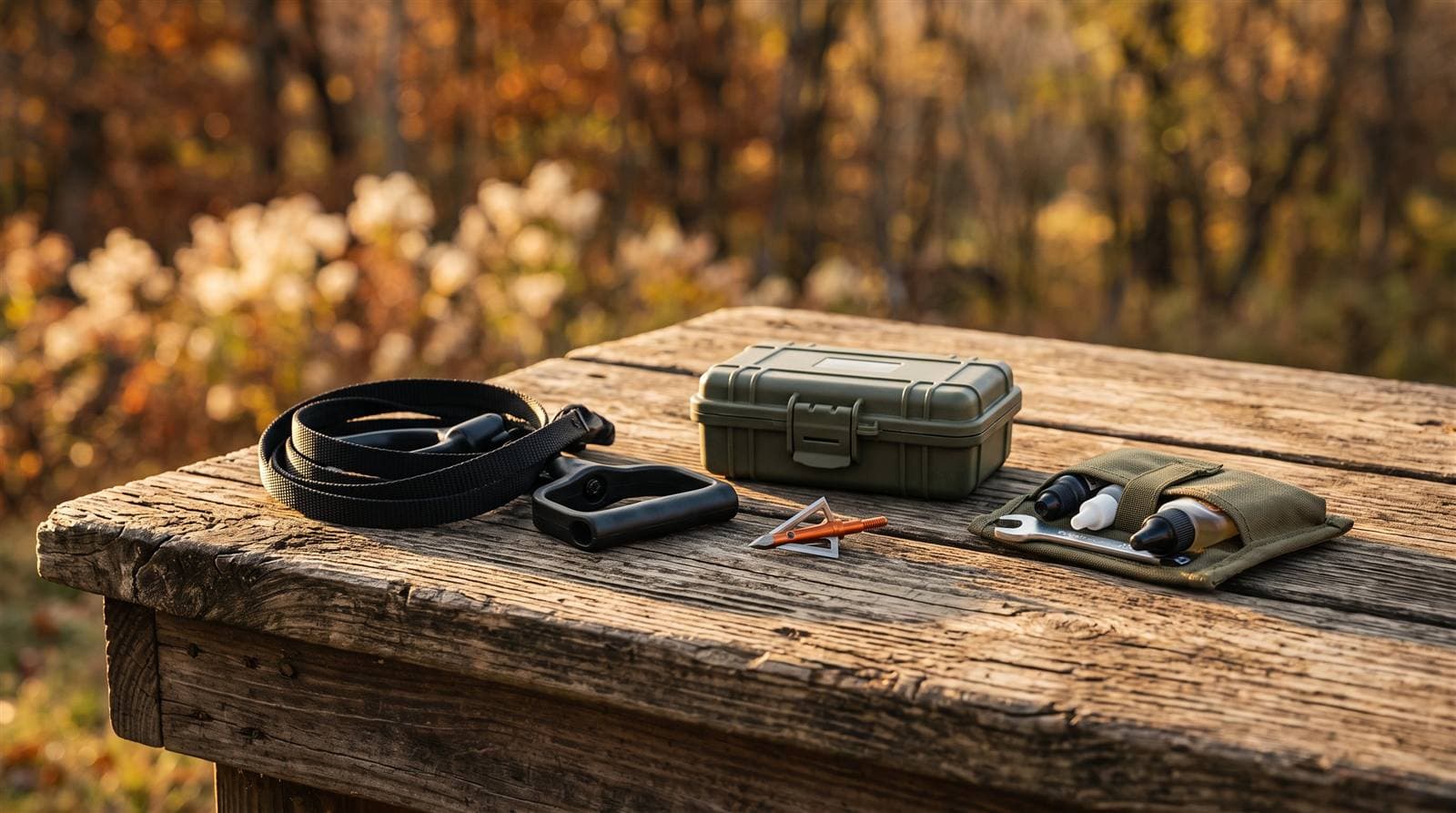
What Is Rail Lubricant?
A lubricant applied to the flight track so the string slides with less friction and wear, used sparingly and only where the manual says.
Rail Lubricant: definition
Also called: rail lube, flight track lube, rail oil, crossbow rail lubricant
Rail lubricant is a light lubricant made for the rail (also called the flight track or barrel) of a crossbow. The string slides along it on every shot, and a thin film cuts friction and wear on both the track and the underside of the string.
It is applied in very small amounts, usually along the track where the string rides. Too much attracts dust and carries onto the bolt, the string and your hands. Your manual says where and how often.
It is a separate product from string wax. Wax is for the string and cables, rail lube is for the track. Some manufacturers specify a particular lubricant or advise against certain types, so follow your manual.
Rail lube do and do not
| Do | Do not |
|---|---|
| Use the lubricant type your manual names | Use general household oil or heavy grease |
| Apply a very thin film along the track | Soak the rail or let it drip |
| Wipe off excess | Leave lube on the latch area unless told to |
| Check for wear marks on the track | Ignore burrs or gouges |
| Lubricate on schedule | Lube with a cocked crossbow |
Why Rail Lubricant matters
Friction on the track wears the string and the rail. A properly lubricated rail makes the string travel smoother and adds a margin against wear.
Too much lube makes a mess. It can pick up dirt, transfer to the bolt and affect how the bolt sits. A thin film outperforms a thick one.
Rail care is part of general maintenance, so it fits alongside inspecting the string latch and string.
How to read it on a spec sheet
- Read the manual for the recommended lubricant and where it should be applied.
- Check the product label for suitability on plastics, aluminium and synthetic fibres.
- Look at whether it is a liquid, gel or wax-like stick, since application differs.
- Note any warning about getting lubricant on the string or in the trigger area.
Common mistakes
- Using too much and letting it drip into the trigger area.
- Using it on the string instead of string wax.
- Applying lube to a cocked crossbow.
- Using an unsuitable product the manual does not allow.
- Ignoring a rail that has visible burrs or damage.
Applying rail lubricant
- Make sure the crossbow is uncocked, unloaded and the safety is on.
- Wipe the rail clean with a dry cloth.
- Apply a very small amount of the recommended lubricant along the track where the string rides.
- Spread it thin and wipe off any excess.
- Keep lubricant off the string, serving and latch unless the manual says otherwise.
- Inspect the track for burrs, scratches or wear and seek advice if you find any.
Frequently Asked Questions
What is rail lube for?
It reduces friction between the string and the flight track. That smooths string travel and limits wear on the track and the underside of the string, which helps extend equipment life.
How often should I lubricate the rail?
Follow your manual, which usually gives an interval tied to use. Many owners apply a thin film on a regular schedule and after cleaning, and inspect the track at the same time.
Can I use WD-40 or household oil?
Only if your manual allows it. Many manufacturers specify a particular product. Household oils can attract dirt or affect plastics and string fibres, so use what the manual names.
Is rail lube the same as string wax?
No. String wax protects the string and cables. Rail lube is for the flight track. Using the wrong product in the wrong place can leave the string greasy or the track dry.
How much rail lube should I use?
A very thin film is enough. If you can see drips or pooling, you have used too much. Wipe the excess off so it does not collect dirt or reach the bolt and trigger.
Does rail lube affect accuracy?
Indirectly. Smooth string travel supports consistency, but excess lube can contaminate the bolt or string. A thin, even film is the aim, and any change in point of impact deserves a check.
Should I lubricate a cocked crossbow?
No. Only work on an uncocked, unloaded crossbow with the safety on, and never place your hands near the string path of a cocked crossbow. Lubricate only after the crossbow is made safe by an approved method.
What if the rail looks worn?
Stop shooting and have it inspected. Burrs, gouges or deep wear marks can damage the string. A technician or the manufacturer can advise on repair or replacement.
Keep learning
Guides that use this term
- GuideHow to Maintain a CrossbowHow to maintain a crossbow: string waxing, rail and moving-part lubrication, bolt inspection, storage, and when to see a technician.Read the guide
- GuideCrossbow Safety Rules for BeginnersCrossbow safety rules for beginners: finger placement, never dry-firing, safe cocking and de-cocking, range etiquette and storage habits that prevent injury.Read the guide
- GuideHow to Cock a Crossbow: Rope vs CrankHow to cock a crossbow step by step with a rope or crank, why hand cocking rarely works, and the mistakes that cause uneven strings and injuries.Read the guide
Related terms
- RailThe flight deck on top of a crossbow that guides the bolt from the string to the muzzle and often carries a scope mount for accessories.
- String WaxA wax applied to the string and cables to reduce fraying, slow moisture uptake and keep the fibres lubricated.
- String LatchThe catch in the rail that holds the drawn string at full draw and releases it when the trigger is pulled, and one of the most safety-critical parts.
- ServingThread wrapped tightly around the string at high-wear points to protect the fibres from abrasion and hold the nocking area together.
- String and CablesThe bowstring that drives the bolt and the cables that link the cams on a compound crossbow, wear parts that need regular inspection, waxing and timely replacement.
- Foot StirrupThe metal or composite loop at the front of a crossbow where you place your foot to hold the crossbow steady while cocking it.
Browse the gear
Definitions are general information. Manufacturer figures vary, so follow your crossbow's manual and verify local laws with the relevant authority.