What Is Bolt Retention Spring?
A small spring or clip on the rail that holds a loaded bolt against the flight deck so it stays seated while you aim, walk or climb.
Bolt Retention Spring: definition
Also called: bolt retainer, arrow retention spring, bolt holder, bolt clip, retention clip
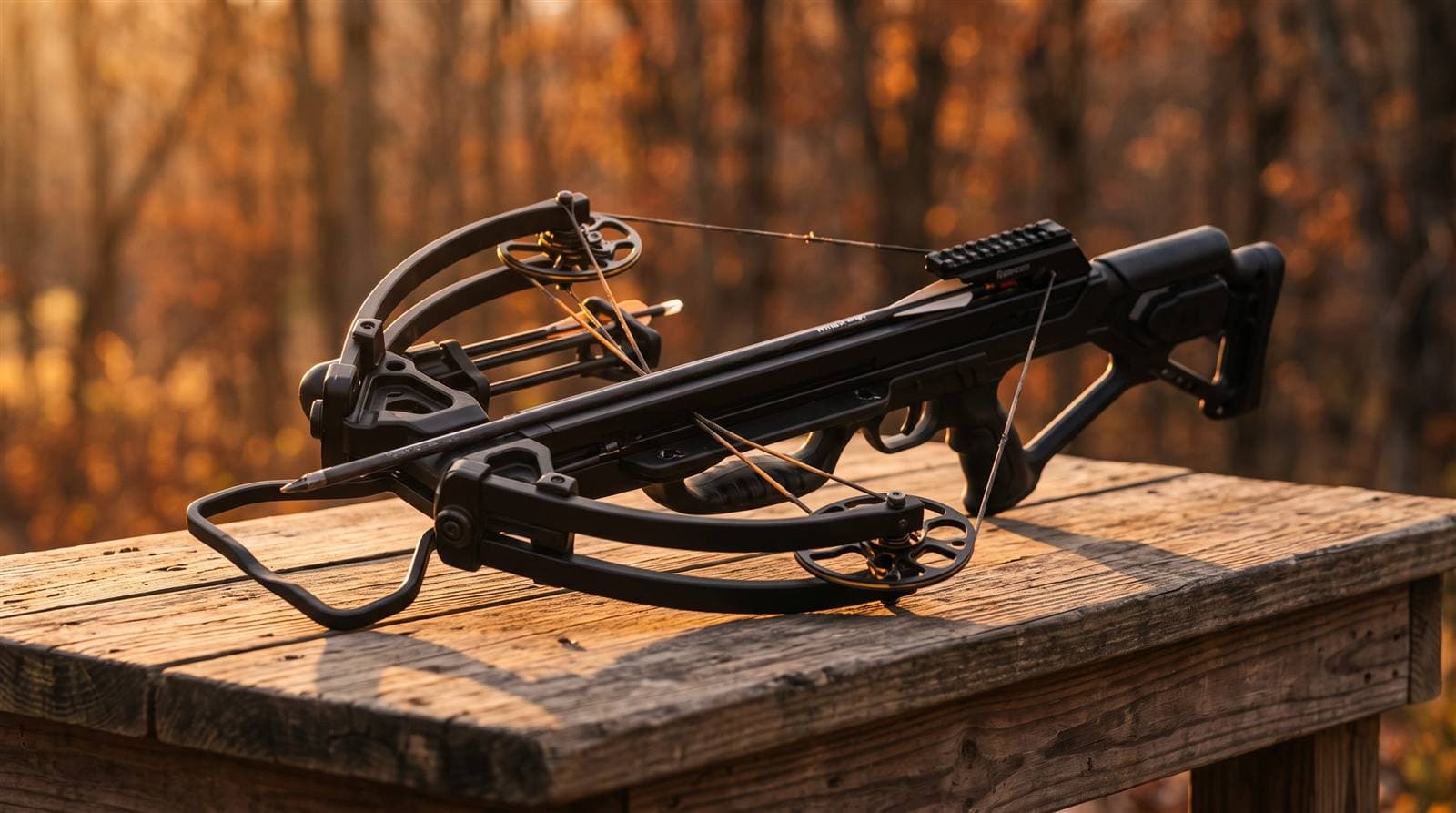
A bolt retention spring is a small spring-loaded clip, arm or rubber retainer fitted on or near the rail. It presses the bolt down onto the flight deck and keeps the nock seated against the string. Without it, a bolt could slide, tilt or fall off if the crossbow is tilted or moved.
The spring does more than hold the bolt still. Keeping the bolt in contact with the rail and string supports consistent seating, which supports consistent shots, and it is part of the setup that allows anti-dry-fire systems to detect a seated bolt on some models. The details differ by manufacturer, so check your manual.
Retention springs are consumable parts. They bend, lose tension or break, and dirt or lubricant can make them less effective. A damaged spring usually shows up as a bolt that rattles, shifts under light movement or sits at a slight angle.
Retention spring symptoms and likely causes
| Symptom | Likely cause | What to do |
|---|---|---|
| Bolt rattles on the rail | Weak or bent spring | Replace per the manual |
| Bolt slips when tilted | Low tension or contamination | Clean and check tension |
| Bolt sits at an angle | Spring misalignment or damage | Inspect, adjust or replace |
| Nock will not seat | Debris, wrong bolt diameter | Clean rail, check bolt spec |
Why Bolt Retention Spring matters
A properly held bolt is a safer and more repeatable bolt. If the bolt shifts after loading, the nock may not be fully on the string, which can cause misfires, damage or inconsistent results.
It is a small and inexpensive part that is easy to overlook, yet it affects handling in the field. Checking it takes a few seconds and prevents annoying and potentially hazardous problems.
How to read it on a spec sheet
- Look for the retention type in photos: metal spring, clip or rubber retainer.
- Check the manual for compatible bolt diameter and bolt length.
- Note whether the spring is replaceable and whether spares are sold.
- Check for any anti-dry-fire relationship to a seated bolt.
- Read cleaning and lubrication notes for the rail area.
Common mistakes
- Bending the spring to change tension.
- Using bolts of the wrong diameter or length.
- Over-lubricating the rail so the bolt slips.
- Ignoring a spring that has lost tension.
- Loading a bolt without checking the nock is fully seated.
How to check bolt retention
- Uncock and unload the crossbow first. Keep the safety on.
- Look at the spring or clip for bends, cracks or rust.
- Wipe the rail and spring area clear of debris.
- With a bolt placed per the manual, press down gently and check it is held firmly.
- Tilt the uncocked crossbow slightly and see whether the bolt stays put.
- Order replacement parts from the manufacturer if it is worn.
See it in our reviews
- Excalibur Mag Air — rated 3.4/5
- Wicked Ridge Match 400 — rated 4.4/5
Frequently Asked Questions
What does a bolt retention spring do?
It holds the loaded bolt against the rail and keeps the nock seated on the string, so the bolt does not slide or fall off when you aim, move or tilt the crossbow.
Why does my bolt rattle on the rail?
Common causes are a weak or bent retention spring, debris on the rail or a bolt that does not suit the model. Clean the rail, check the specification and replace worn parts.
Can I replace a bolt retention spring?
Often yes, since it is a small wear part, but follow the manual. Use manufacturer parts that match the model, and ask a dealer if you are unsure.
Should I lubricate the retention spring?
Only if your manual says so. Excess lubricant can attract dirt and let the bolt slip, so apply what is specified sparingly and wipe off any extra.
Does the retention spring affect accuracy?
It can influence how consistently the bolt is seated, so a worn spring may add variation. Accuracy still depends on the bolt, string, trigger, optics and shooter.
Is the retention spring part of anti-dry-fire?
On some models a seated bolt is part of how the anti-dry-fire system works, but designs differ. Check your manual and never rely on it as the only protection.
What if my bolt will not stay seated?
Do not shoot. Uncock safely, clean the rail, verify the bolt's diameter and length match the manual and inspect the spring. Contact the maker if the problem continues.
Keep learning
Guides that use this term
- GuideHow to Maintain a CrossbowHow to maintain a crossbow: string waxing, rail and moving-part lubrication, bolt inspection, storage, and when to see a technician.Read the guide
- GuideHow to Choose Crossbow BoltsChoose crossbow bolts in six steps: match rated length and minimum weight, then compare FOC, nocks, tips and tolerances using a spec table.Read the guide
- GuideCrossbow Safety Rules for BeginnersCrossbow safety rules for beginners: finger placement, never dry-firing, safe cocking and de-cocking, range etiquette and storage habits that prevent injury.Read the guide
Related terms
- RailThe flight deck on top of a crossbow that guides the bolt from the string to the muzzle and often carries a scope mount for accessories.
- BoltThe projectile a crossbow shoots: a short carbon or aluminum shaft with a nock, vanes and a tip, often called an arrow.
- NockThe rear end of a crossbow bolt that engages the string, available in flat, half-moon, capture and lighted styles.
- String LatchThe catch in the rail that holds the drawn string at full draw and releases it when the trigger is pulled, and one of the most safety-critical parts.
- Dry FireReleasing the string with no bolt on it, which sends the stored energy into the crossbow itself and can cause serious damage.
- Bolt LengthThe overall length of a crossbow bolt, set by the crossbow design and stated in the manual as a limit rather than a preference.
Browse the gear
Definitions are general information. Manufacturer figures vary, so follow your crossbow's manual and verify local laws with the relevant authority.