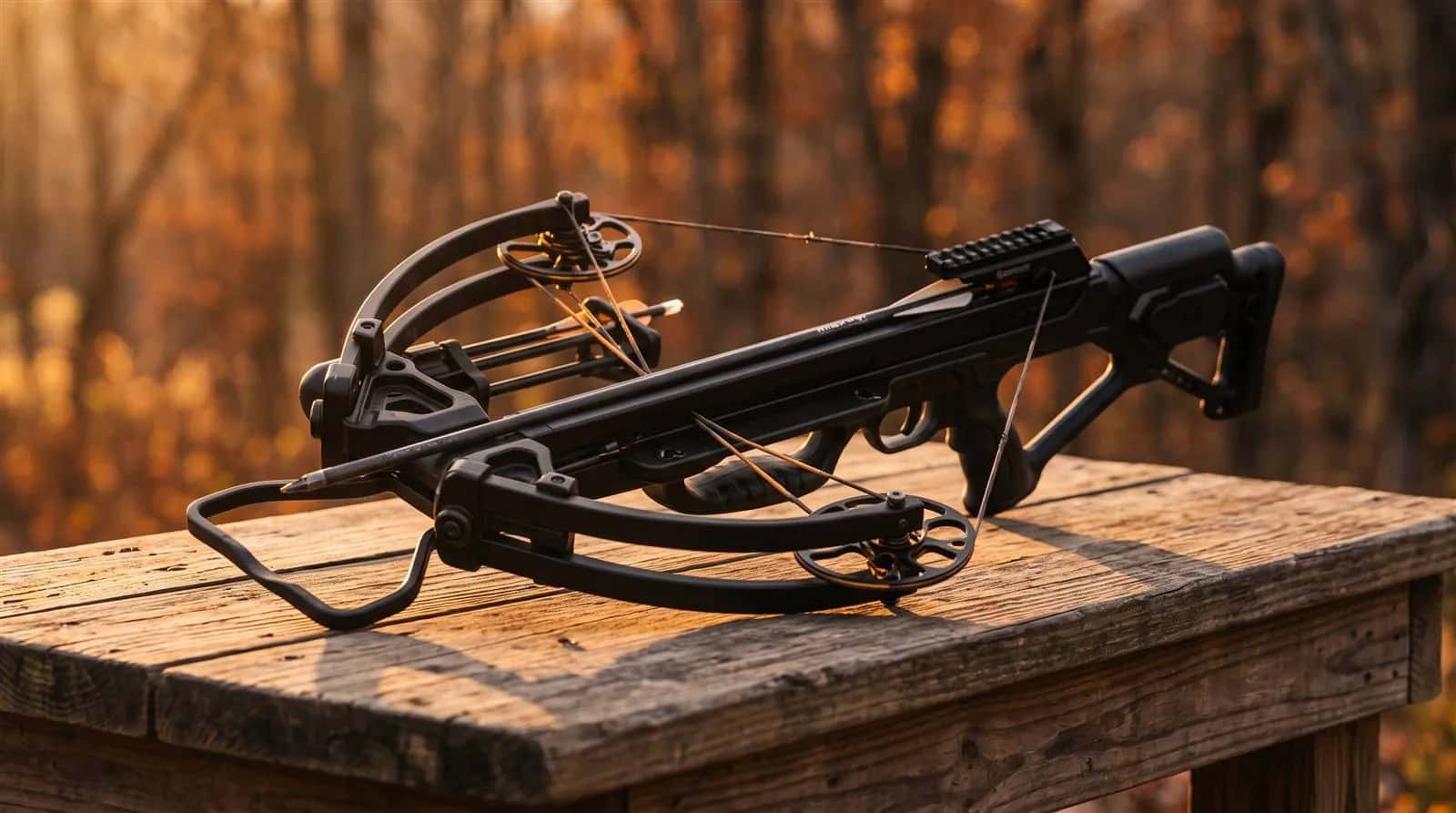
Compound Crossbow in plain terms
Compound Crossbow meaning: A compound crossbow uses cams and cables on its limbs to store and release energy, giving more speed from a shorter, more compact frame than a recurve.
Also called: cam crossbow, compound limb crossbow, compound hunting crossbow
A compound crossbow adds a pair of cams and a system of string and cables to the tips of its limbs. When the string is drawn back, the cams rotate, the cables pull the limb tips inward, and the limbs flex to store energy. When the trigger is released, that stored energy is returned to the bolt over the power stroke.
The cams are the defining feature. Because they are not round, they change how much force the limbs deliver at each point in the stroke. Designers use that to get more energy out of a given limb, and to keep the bolt accelerating for more of the stroke than a plain curved limb can. Nearly every current high-speed hunting crossbow is a compound of some kind, whether it is a forward-draw layout or a reverse-draw one.
The trade-off is complexity. Cams, cables and axles are more parts that must be kept in time and lubricated, and they usually need a press and a technician if something has to be adjusted. Most owners will never touch them, but should expect to follow the maintenance schedule in the manual.
Compound versus recurve at a glance
These are general tendencies, not rules. A well-engineered recurve can beat a poorly tuned compound on some measures.
| Feature | Compound | Recurve |
|---|---|---|
| Energy storage | Cams shape the force curve, so more energy per inch of stroke | Limbs flex directly, energy builds more linearly |
| Typical frame | Narrow when cocked, often compact overall | Wider limbs, often longer overall |
| Moving parts | Cams, cables, axles, string | String and limbs only |
| Maintenance | More points to lubricate and check; cam work is for a technician | Simpler; mostly string, rail and limb checks |
| Noise and vibration | Depends heavily on damping and cam design | Often louder per shot without damping |
| Typical price band | Mid to premium | Entry to mid |
Why it matters
The compound label tells you what kind of upkeep and what kind of performance to expect. A compound can reach high FPS from a frame that is easy to carry into a blind, which is why it dominates hunting catalogues. It also tends to need a cocking aid at higher draw weights.
Knowing the type also stops you comparing the wrong numbers. Draw weight and power stroke mean different things on a cam design than on a recurve, so a compound at a given draw weight is not directly comparable to a recurve at the same figure. The type is the first filter, the specifications come second.
Reviewed models are set side by side on the compound crossbows page, so you can compare ratings before buying, and the kinetic energy calculator puts its rated speed and a bolt weight on one scale with any recurve.
How to read it on a spec sheet
- Look for the words "cam", "dual cam", "binary cam", "hybrid cam" or "twin riser" in the product description. A listing that shows round wheels or oval cams at the limb tips is a compound.
- Check whether the width is quoted cocked or uncocked. Compound limbs move inward as the string is drawn, so axle-to-axle is much smaller cocked.
- Separate "true" or "peak" draw weight from "felt" cocking effort. Integrated cocking systems can make a very heavy draw weight feel light. The TenPoint TX Ultra 29.5 lists 350 lbs of true draw weight and about 13 lbs of felt effort through its integrated device.
- Note the bolt weight used for the speed rating. A figure rated with a light bolt will drop with a heavier hunting bolt.
- Find the warranty terms on limbs and cams, and whether cam work needs an authorised technician.
Common mistakes
- Assuming a compound is always better. A recurve can be the right answer for budget, simplicity or low maintenance.
- Adjusting cams, cables or limb bolts at home. Timing and tuning are technician jobs on most models.
- Comparing a compound's cocked width with a recurve's uncocked width.
- Buying on peak speed alone and ignoring cocking effort, weight and balance.
- Skipping lubrication and string care. Cams and cables add friction points that benefit from the routine in the manual.
How to judge one from a spec sheet
- Confirm it is a compound: find the cams, cables and a cocked axle-to-axle figure.
- Note the rated speed and the bolt weight behind it.
- Check the true draw weight and what cocking aid is included.
- Compare the power stroke and overall length with the other models on your list.
- Read the warranty on limbs, cams and trigger, and who may service them.
- Check which bolt weight the rated speed was quoted with, not just the headline number.
See it in our reviews
- TenPoint TX Ultra 29.5 — rated 4.5/5
- TenPoint TRX Ultra — rated 4.5/5
- Ravin R29X — rated 4.3/5
Frequently Asked Questions
What is a compound crossbow?
A compound crossbow uses cams and cables at the limb tips to store and release energy. This lets it deliver more speed from a compact frame than a plain recurve of similar draw weight, at the cost of more parts to maintain.
Is a compound crossbow faster than a recurve?
Usually, yes, because the cams shape the force curve and keep accelerating the bolt through the power stroke. Individual models vary, so compare rated speeds and the bolt weights behind them rather than assuming.
Are compound crossbows harder to maintain than recurves?
They have more components, so they need more attention: string and cable wax, rail lubricant, and periodic inspection. Cam timing and limb work should be handled by a qualified technician following the manufacturer's instructions.
Why does a compound crossbow need a cocking aid?
High peak draw weights are difficult to pull evenly by hand. A rope cocker, crank or integrated system reduces the effort and keeps the string drawn evenly, which supports consistent accuracy and safer handling.
What is the difference between a compound and a reverse-draw crossbow?
Reverse-draw is a layout, not a separate type. Most reverse-draw crossbows are compounds with the limbs angled back toward the shooter, which allows a long power stroke in a shorter overall length.
Can I shoot any bolt from a compound crossbow?
No. Use only bolts that meet the length, weight and nock specifications in your manual. A bolt that is too light or the wrong nock type can cause damage or unsafe behaviour.
Is a compound crossbow worth the extra cost over a recurve?
It depends on use. If you need speed, a flat trajectory and a compact frame for a blind or stand, a compound often earns the price. For casual target shooting a simpler recurve may be enough.
Related guides
Guides where compound crossbow shapes a real choice.
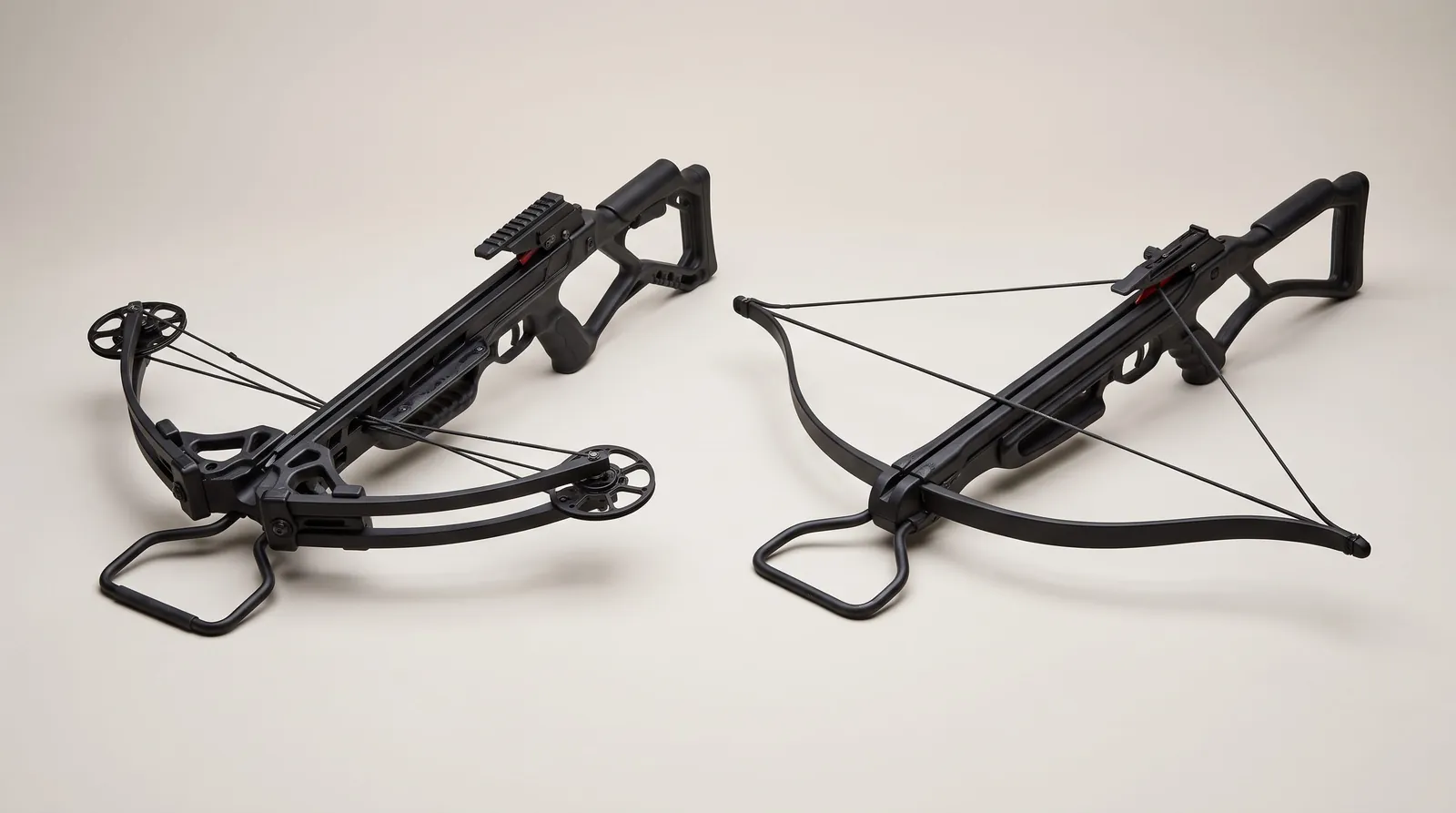 GuideCompound vs Recurve Crossbow: 2026 ComparisonChoose a compound for shots past 40 yards, easy cocking or tight spots. Choose a recurve if price, light weight and simple upkeep matter more.Read the guide
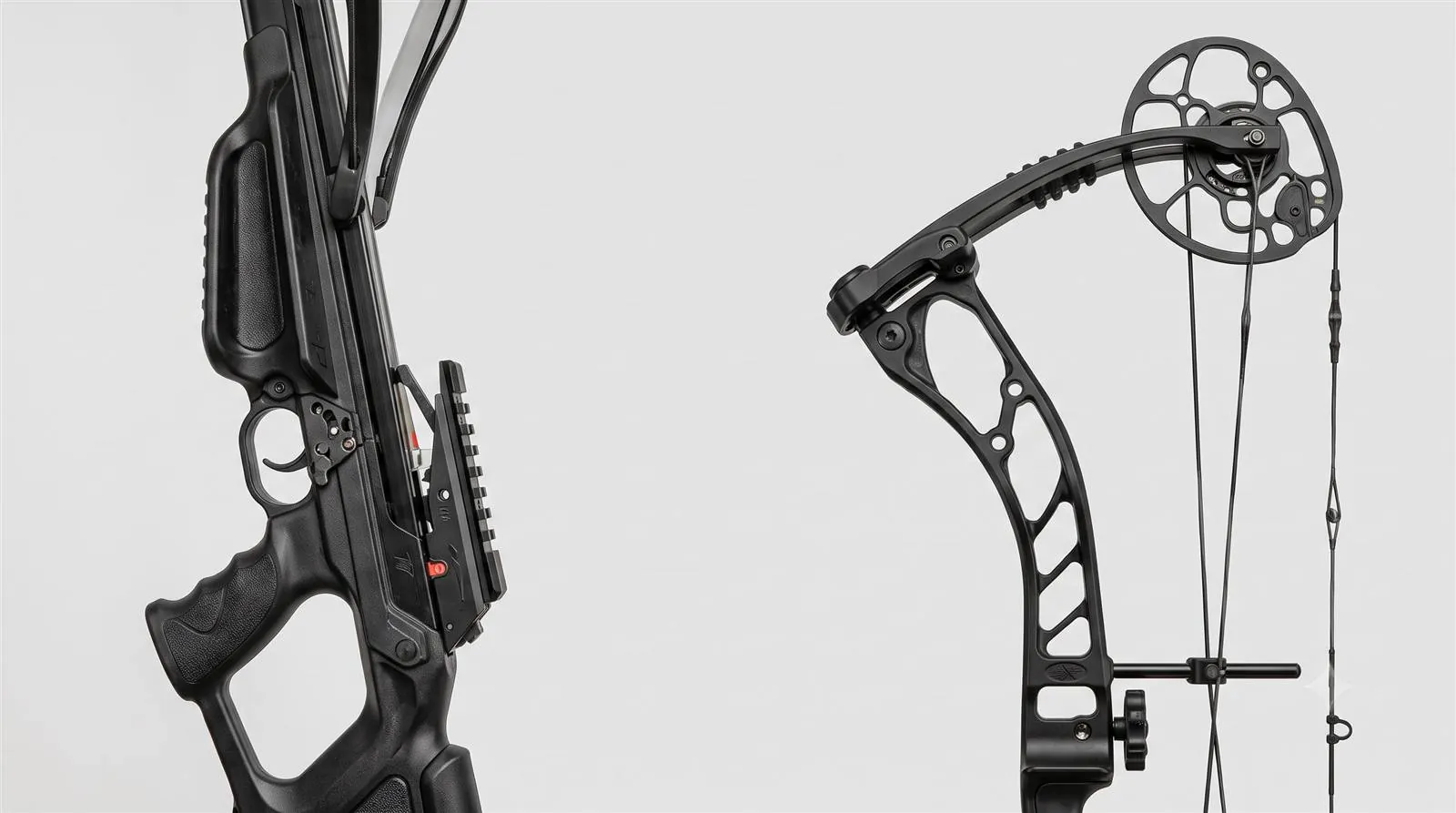 GuideCrossbow vs Compound Bow Compared (2026)Pick a crossbow for consistent shots soon with less strength needed, or a compound bow for fast follow-ups and a skill to refine. Check your season rules first.Read the guide
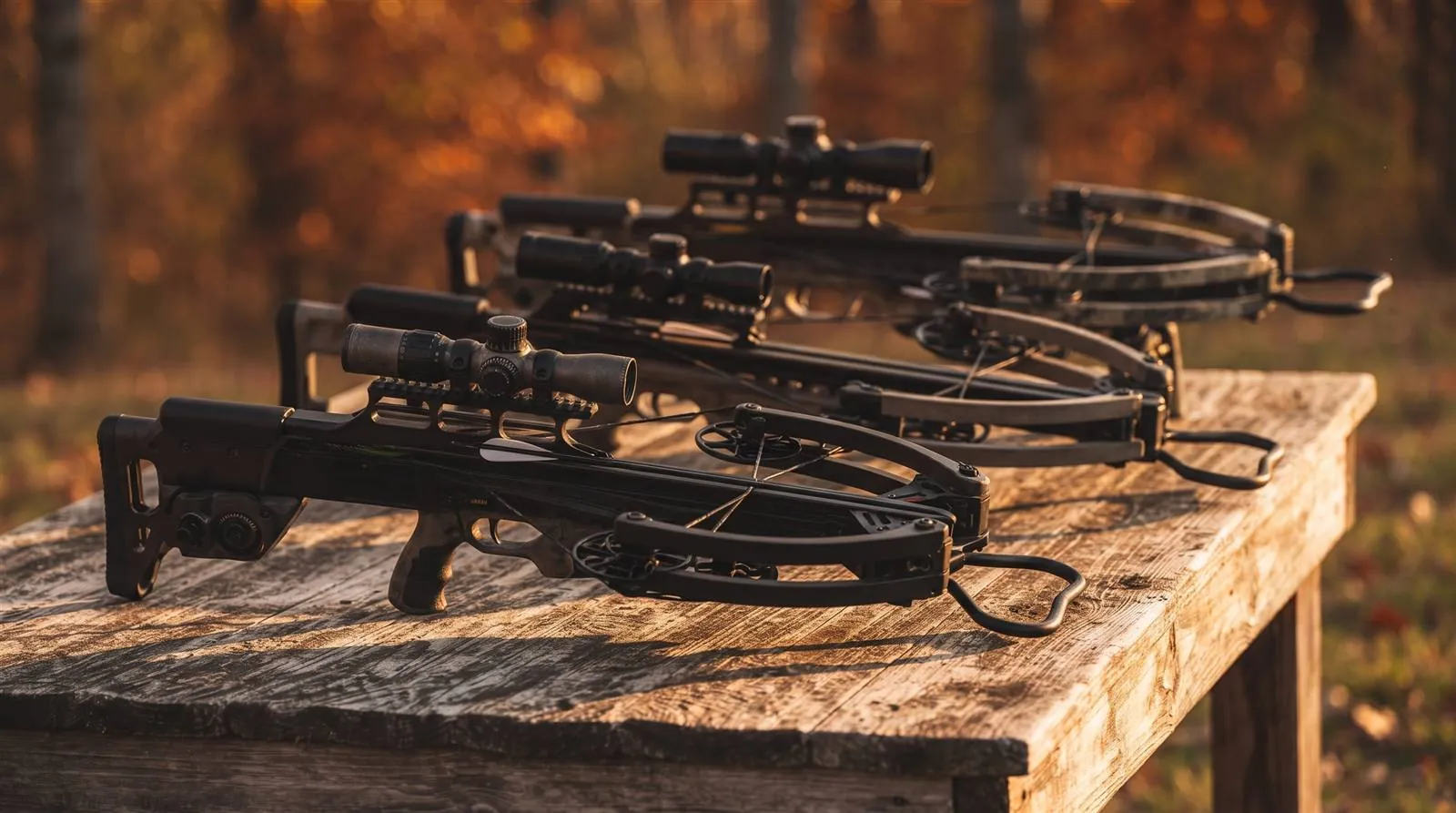 GuideBest Crossbows 2026: 7 Top Hunting Crossbows ComparedOur highest-rated crossbows across every price tier, from the TenPoint TRX Ultra flagship to the Barnett Hyper Whitetail 410, each chosen for a specific buyer.Read the guide
Definitions are general information. Manufacturer figures vary, so follow your crossbow's manual and verify local laws with the relevant authority.