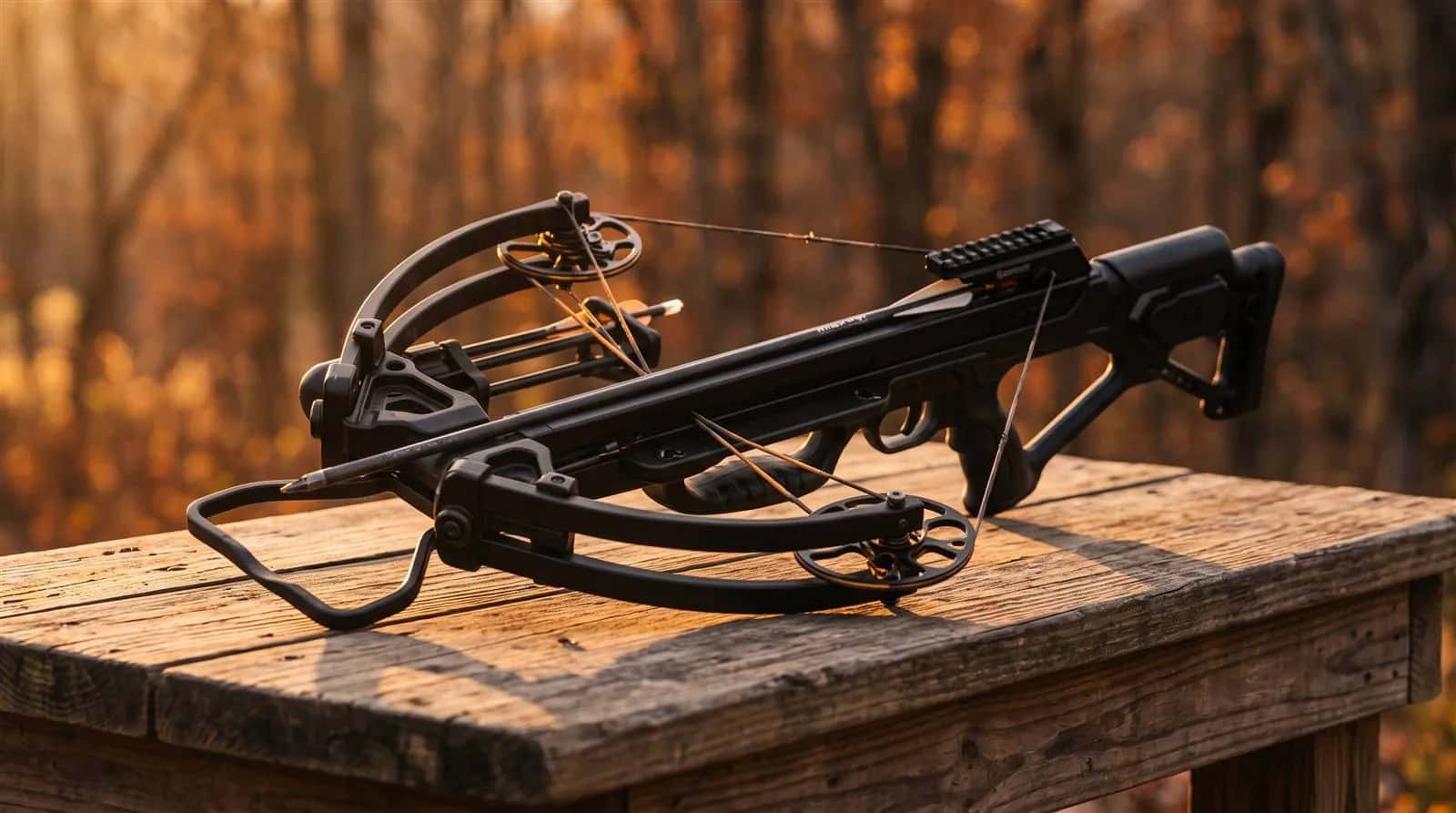
Crossbow Cam in plain terms
Crossbow Cam meaning: A crossbow cam is the shaped wheel at each limb tip of a compound crossbow that the string and cables run over, creating let-off and efficient energy release.
Also called: cams, cam system, cam timing, eccentric wheel
A cam is an oval or irregularly shaped wheel mounted on an axle at the tip of each limb on a compound crossbow. The string and cables wrap around the cams. Because the cams are not round, the force you feel and the force the bolt receives change through the draw, unlike a recurve where the string attaches directly to the limb.
The cam's shape gives a compound its characteristic force curve and its let-off, the drop in holding force near full draw. It also allows more stored energy to be delivered to the bolt in a shorter frame, which is why compounds can be fast and narrow at once. Brand names for cam systems are marketing terms, so compare rated speed and reliability rather than the name.
Cams must be synchronised, a condition called cam timing. If one cam rolls over earlier than the other, the string leaves the rail unevenly, which can affect accuracy and wear. On the TRX Ultra, TenPoint describes its 8mm Zero-Torsion axles as 175% stronger and 215% stiffer than standard axles, which is meant to keep cam timing consistent.
Cam-related terms
| Term | Meaning | Why it matters |
|---|---|---|
| Cam timing | Both cams rotating in sync | Even string travel, consistent shots |
| Let-off | Drop in holding force at full draw | Easier cocking feel on some designs |
| Axle | Shaft the cam turns on | Wear or play affects timing |
| Cam lean | Cam tilting out of line | Can twist the string path |
Why it matters
Cams largely decide how smooth and efficient the power delivery is. A well-timed cam system lets the string travel straight and the limbs release their energy evenly, which supports speed and repeatability.
Cams are also a maintenance point. They carry the strings and cables, they turn on axles that can wear, and misalignment can show up as erratic groups, a string that sits off-centre or visible fraying.
How to read it on a spec sheet
- Look for the cam name and what the maker says it does, then look for independent evidence before trusting it.
- Note any statements about cam timing, axle size or synchronisation features.
- Check whether string and cable replacement requires a press or dealer service.
- Compare listed fps and power stroke, because the cam is only one factor in speed; the kinetic energy calculator turns that speed into foot-pounds with your bolt weight.
- Read the manual's inspection interval for the cam area and the string and cables.
Common mistakes
- Adjusting cams or cables at home without the correct tools and guidance.
- Ignoring a cam that looks tilted or a string that sits off-centre.
- Using the wrong lubricant on axles or cams.
- Treating a cam brand name as proof of better performance.
- Cocking the string unevenly, which strains the cam system.
How to visually check cams
- Before you inspect, uncock and unload the crossbow and engage the safety, then look at both cams from the front. They should look matched and sit square to the rail.
- Check for string or cable fraying where it leaves the cam groove.
- Look for play at the axle by gently, safely checking for movement with the crossbow uncocked.
- Compare string position side to side at rest.
- Contact the dealer or maker if anything looks uneven.
See it in our reviews
- TenPoint TRX Ultra — rated 4.5/5
- Ravin LR — rated 4.3/5
- Ravin R29X — rated 4.3/5
Frequently Asked Questions
What does a cam do on a crossbow?
A cam is the shaped wheel at each limb tip of a compound crossbow that the string and cables run over. It shapes the force curve, gives let-off and helps deliver energy to the bolt efficiently.
Do recurve crossbows have cams?
No. A recurve has the string attached to the limb tips directly. Cams are specific to compound crossbows and add parts to maintain, which is a trade-off for greater efficiency.
What is cam timing?
Cam timing means both cams turn in sync so the string leaves the rail evenly. Out-of-sync cams can cause inconsistent shots and extra wear, and correcting them usually requires a dealer or the manufacturer.
Can I fix cam timing myself?
Usually no. Adjusting cables and strings needs correct tools and a press in many designs. Follow your manual and use an authorised dealer or the maker for any cam or cable work.
Is HeliCoil a type of cam?
Yes. HeliCoil is Ravin's name for its cam system. Ravin says the HeliCoil cams rotate 340 degrees and stay level while drawing and shooting, and the Ravin LR is rated at 6 inches axle-to-axle when cocked. It is a brand term, so compare rated speed and cocking effort rather than the name alone.
Are cams noisy?
Cams contribute to sound and vibration, but string, limbs, dampeners and bolt weight also matter. See noise and vibration for how to compare it, and treat quiet claims with some caution.
How do I know if a cam is damaged?
Signs include a visibly tilted cam, play at the axle, fraying where the string leaves the groove or a change in how the crossbow shoots. Stop using it and have it inspected.
Related guides
Guides where cam shapes a real choice.
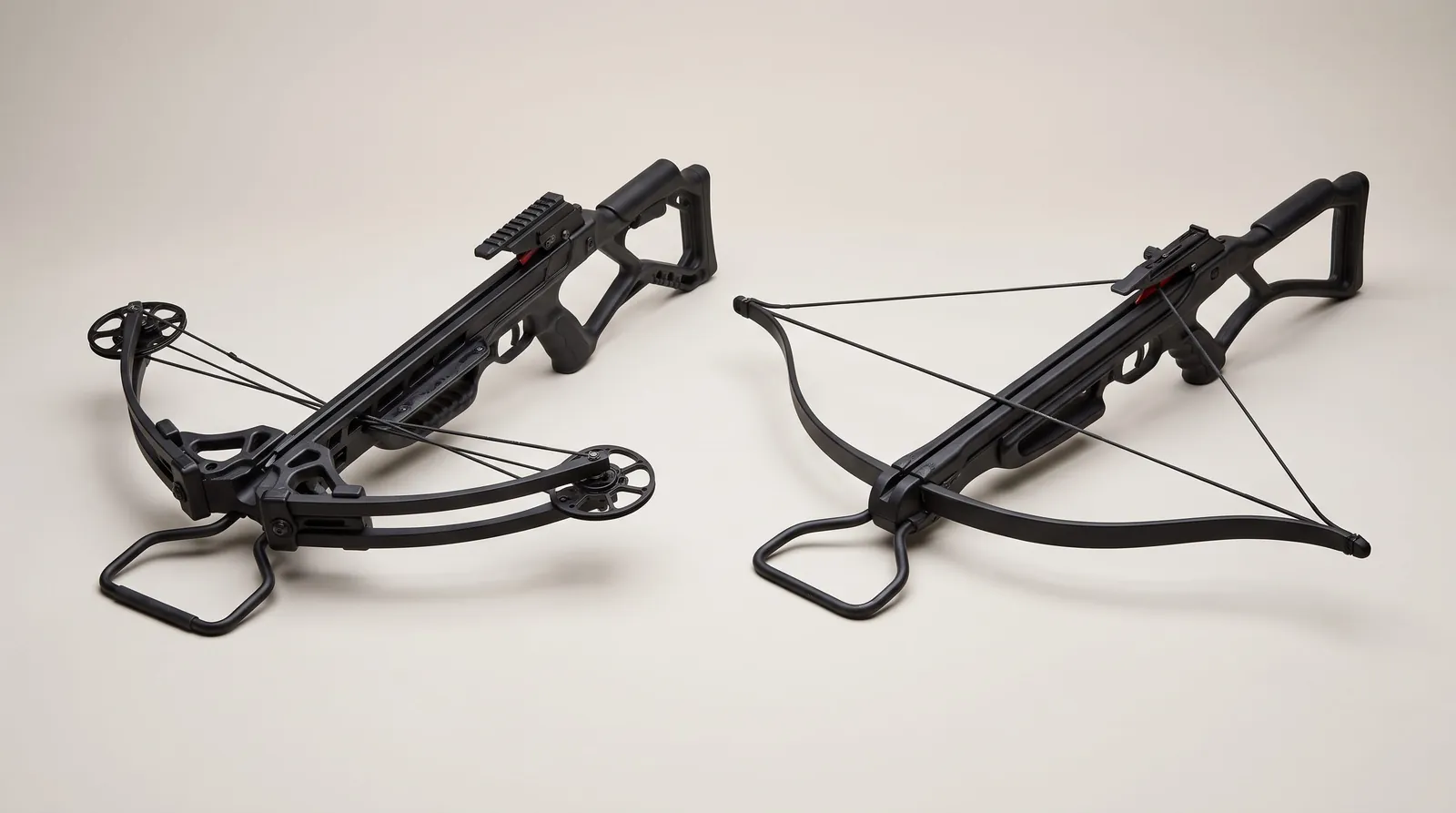 GuideCompound vs Recurve Crossbow: 2026 ComparisonChoose a compound for shots past 40 yards, easy cocking or tight spots. Choose a recurve if price, light weight and simple upkeep matter more.Read the guide
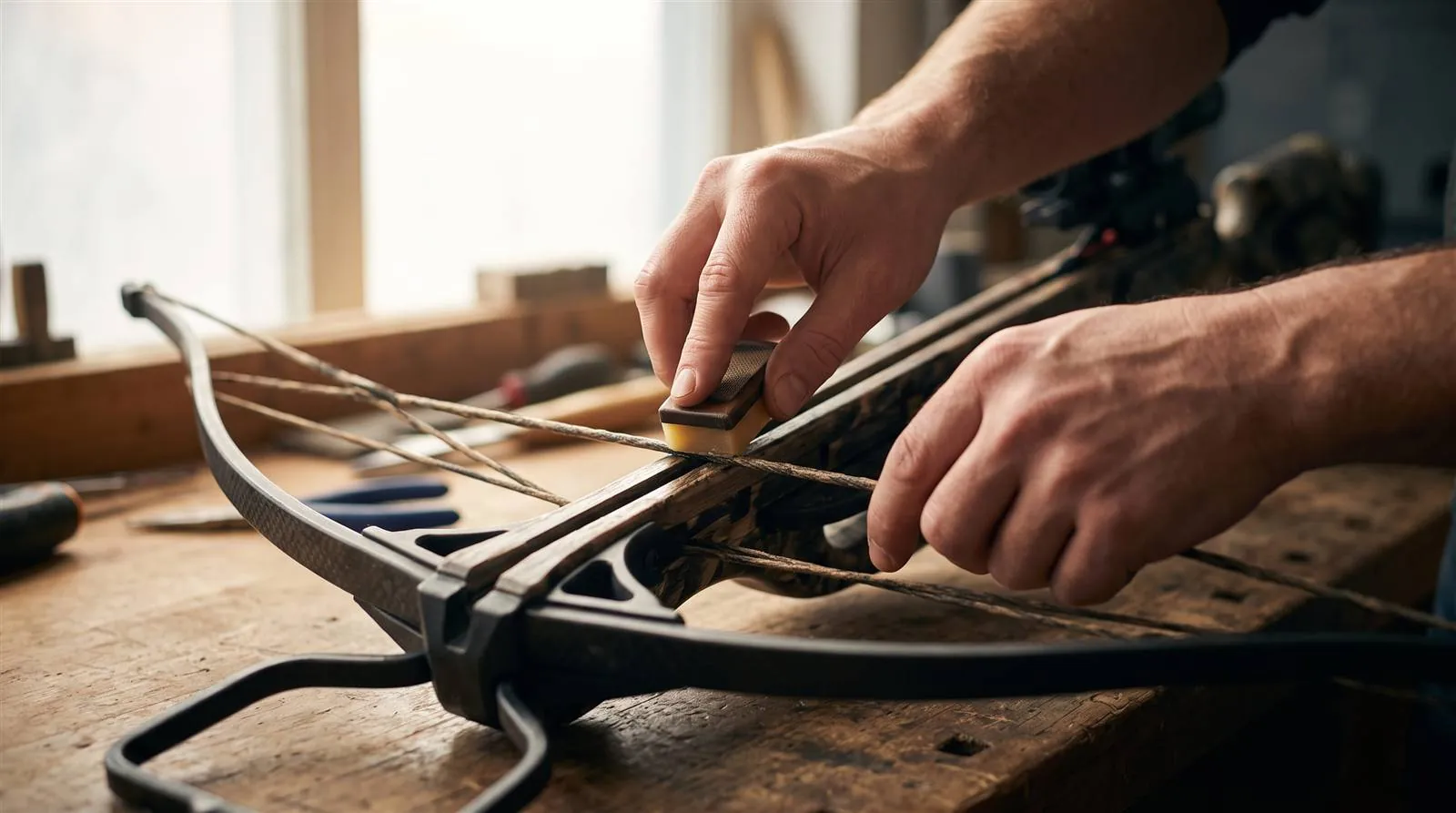 GuideCrossbow Maintenance: Wax, Lube, StoreA crossbow maintenance schedule covering the five-minute pre-shoot check, string waxing, rail lubrication, limb and cam inspection, and storage.Read the guide
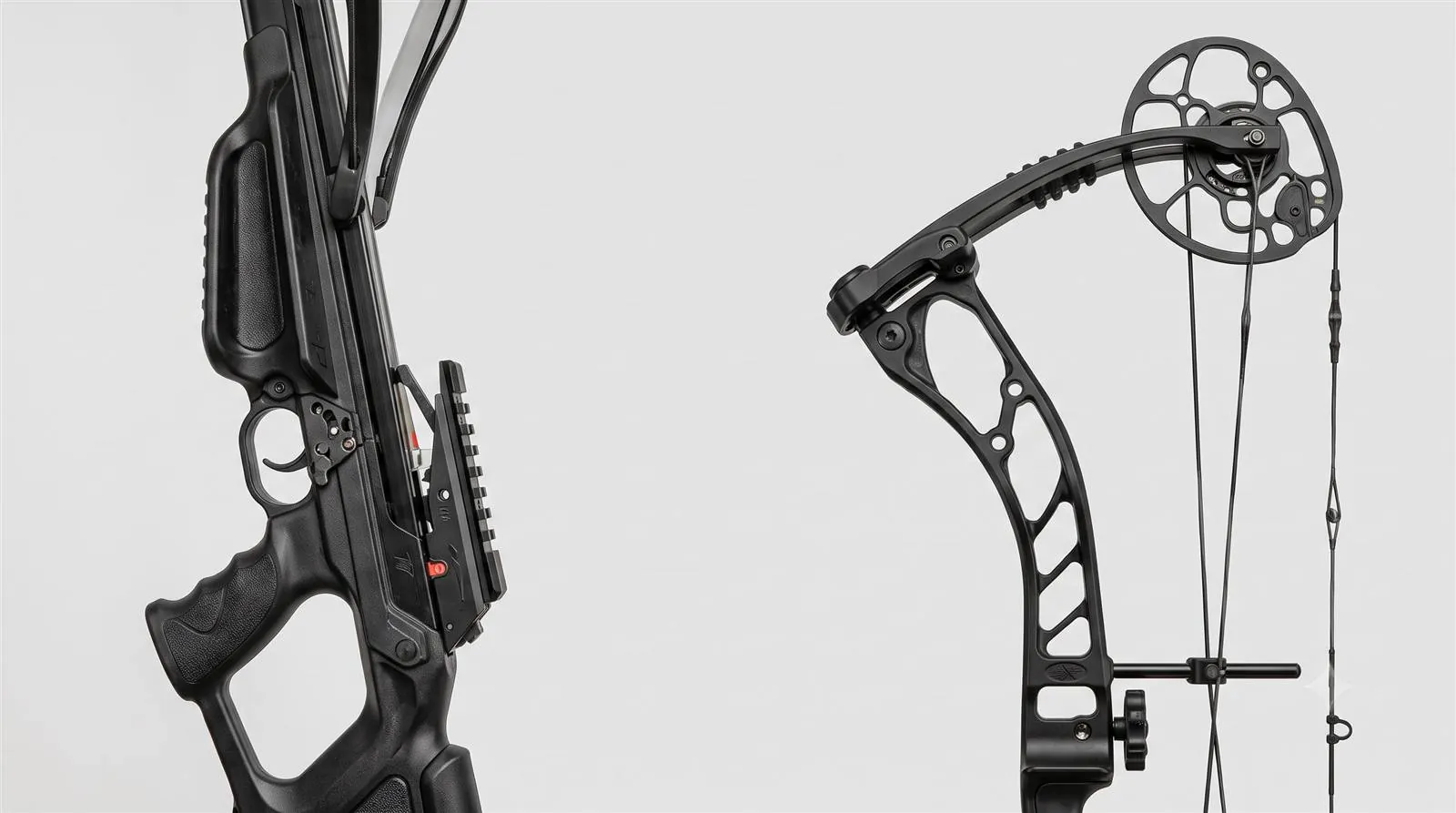 GuideCrossbow vs Compound Bow Compared (2026)Pick a crossbow for consistent shots soon with less strength needed, or a compound bow for fast follow-ups and a skill to refine. Check your season rules first.Read the guide
Definitions are general information. Manufacturer figures vary, so follow your crossbow's manual and verify local laws with the relevant authority.