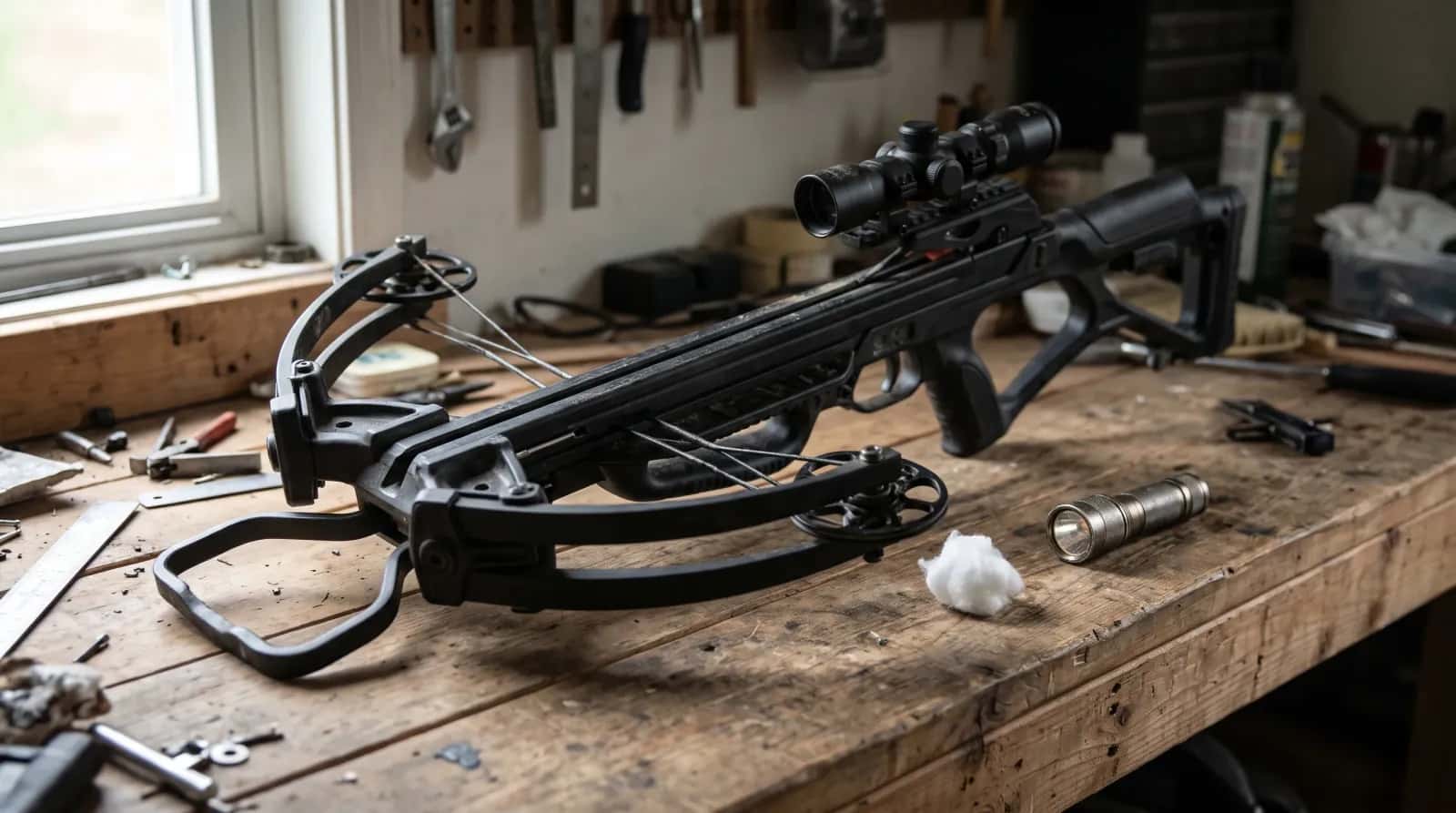
You pulled the trigger and there was no bolt on the string, or the bolt was not seated. So what happens if you dry fire a crossbow? All the energy that should have gone into a bolt goes back into the crossbow itself in a fraction of a second. Sometimes nothing visible breaks. Sometimes a limb cracks, the string jumps a cam or parts leave the crossbow at speed. Either way, the next steps matter more than how it happened.
This guide covers what a dry fire can damage, exactly what to do afterwards, what to inspect, what the main brands say about warranty cover, and how to make sure it does not happen again.
What Happens When You Dry Fire a Crossbow
When a crossbow fires normally, the bolt takes most of the stored energy with it. The term dry fire describes a release with no bolt, or one that is not seated, so there is no mass to take that energy. The string and limbs accelerate forward with nothing to slow them, then stop violently at the end of their travel.
That shock goes into every part under load:
| Part | What can happen | Why it matters |
|---|---|---|
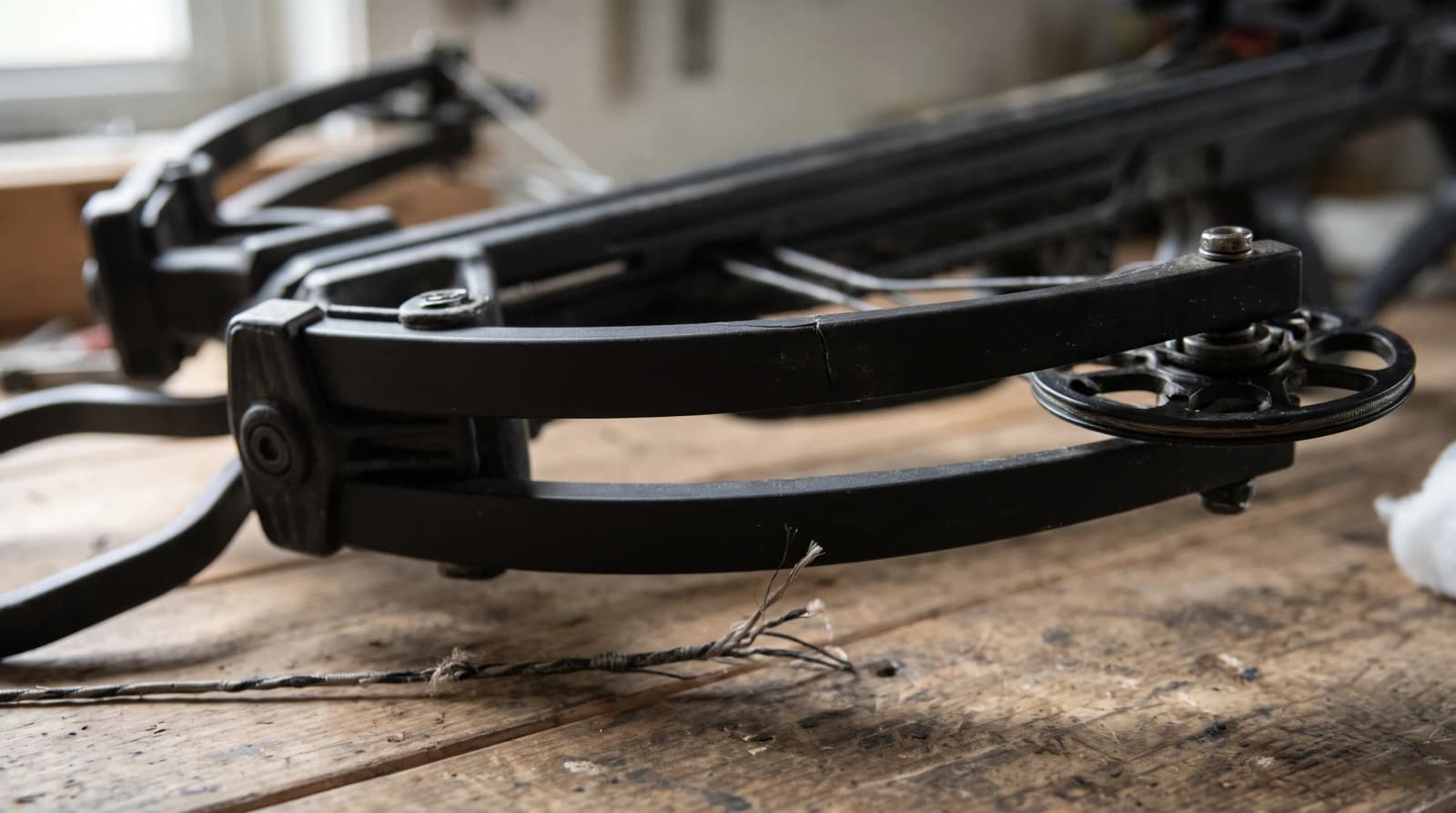
| Limbs | Cracks, splinters, delamination | A damaged limb can fail under tension |
| String and cables | Broken strands, separated serving, derailing | A frayed string can snap on the next shot |
| Cams or wheels | Bending, cracking, timing shift | Bent cams throw the string off track |
| Trigger and latch | Damaged internal parts | The crossbow may not cock or hold safely |
| Rail and riser | Cracks, loose fittings, string marks | Fractures can spread under load |
| You and bystanders | Thrown parts, string slap | Debris can cause injury |
How bad it is depends on the design, the draw weight and luck. Modern high-speed crossbows store a lot of energy in short, stiff limbs, so they have little room to absorb a shock.
Recurve crossbows carry the string straight on the limb tips, so the energy goes directly into them.
Partial dry fires count too
A full dry fire is not the only way to do this damage. These near-misses act the same way:
- Bolt not seated against the string. The string hits the nock at speed instead of pushing it from rest.
- Cracked or loose nock. The bolt can slip off the string at release.
- Bolt below the minimum weight. There is too little mass to absorb the energy. Our guide on how to choose crossbow bolts explains manufacturer minimums in grains.
- Wrong nock type. On some designs the string can pass over or under it.
If the bolt barely left the rail, or flew noticeably weaker than usual, treat it as a dry fire.
What to Do After Dry Firing a Crossbow
Work through these steps in order. Do not skip to re-cocking to "see if it still works".
- Stop and set it down. Keep the muzzle pointed in a safe direction and keep your hands away from the string's path. Check yourself and anyone nearby for injuries from thrown parts.
- Do not cock it again. Cocking a damaged crossbow puts the full load back onto any cracked limb or frayed string. This is the step most likely to turn a repair into an injury.
- Collect anything that came off. Pieces of serving, string strands, screws or limb fragments help a technician work out what failed.
- Inspect it in good light. Use the checklist in the next section. Look, but do not try to tighten, adjust or disassemble anything.
- Write down what happened. Note the date, whether a bolt was loaded, and what you saw. A manufacturer will ask.
- Contact a pro shop or the manufacturer. Take it to an authorized dealer or service center, or call the manufacturer's support line. Many brands want any dry-fired crossbow inspected before it is used again.
- Check your warranty terms. Read the warranty section of your manual before you ship anything, and be honest about what happened.
If the string is still held back
Sometimes the string stops on the anti-dry-fire catch rather than fully releasing. The crossbow is then still partly loaded. On many designs this catch is part of the trigger system and grabs the string if it moves forward without a bolt.
TenPoint calls its version the Dry-Fire Inhibitor (DFI) and frees a string caught on it by re-cocking so the string seats in the string latch, with model-specific steps in its DFI FAQ.
TenPoint then says to inspect the center serving after the next shot and replace the string and cables if any strands are broken. Our guide to TenPoint crossbow problems covers the DFI in more detail.
On other brands, follow your manual exactly. If you are not sure how to clear it, keep it pointed safely and contact the manufacturer. Never try to ease the string forward by hand.
What to Inspect After a Dry Fire
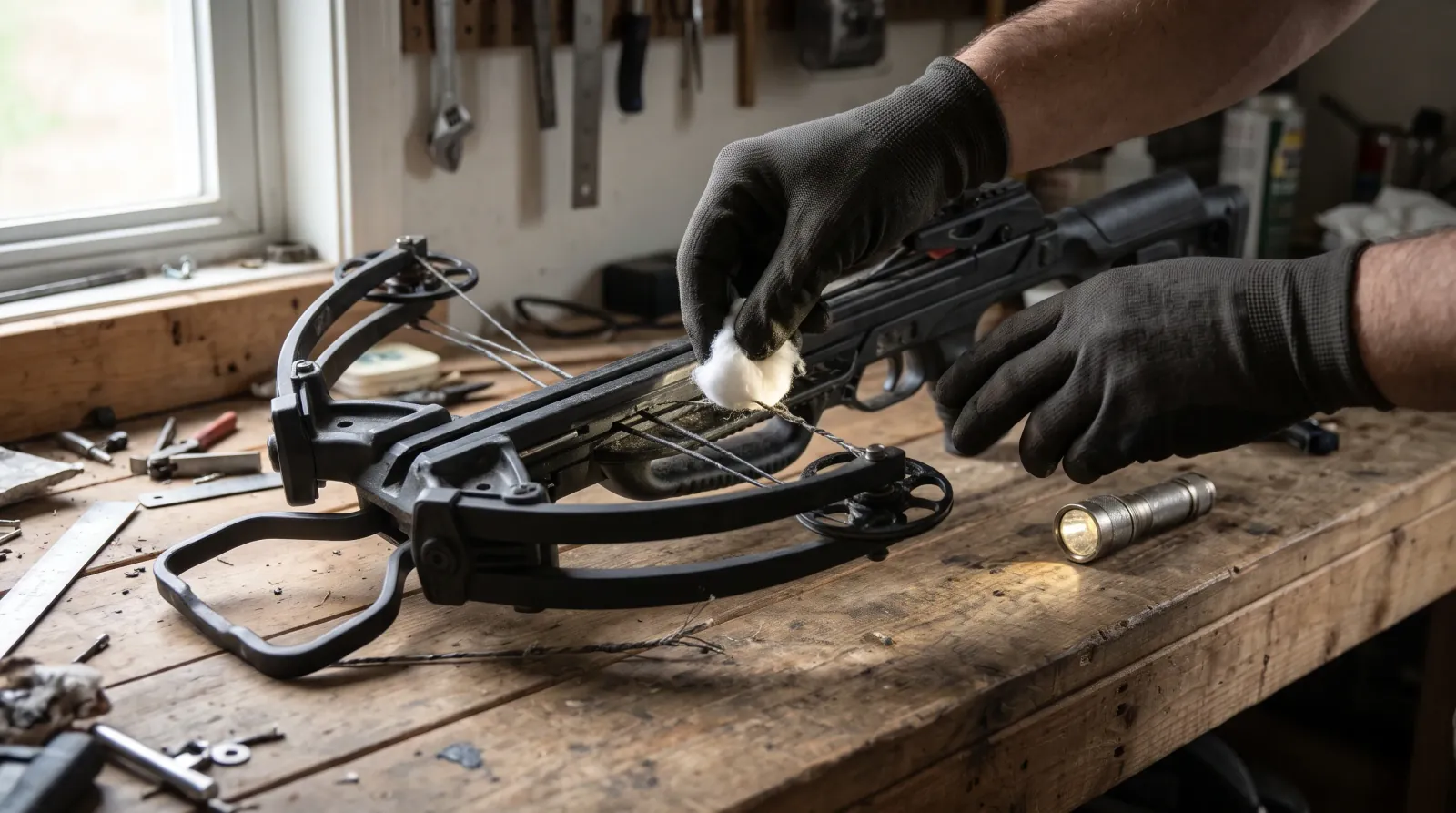
Inspect with the crossbow uncocked and unloaded. Bright, raking light and a cotton ball make small damage easier to see.
| Check | What to look for | If you find it |
|---|---|---|
| Limbs | Cracks, splinters, lifting layers, white stress lines | Stop; manufacturer or pro shop only |
| Limb pockets and bolts | Movement, gaps, loose fittings | Stop; do not tighten yourself |
| String | Broken or fuzzy strands, kinks, flat spots | Replace before shooting |
| Center serving | Separation, gaps, broken wraps | Replace string and cables |
| Cables | Fraying, stretched or off-track | Replace before shooting |
| Cams or wheels | Bends, cracks, wobble, string out of track | Stop; pro shop with a press |
| Rail and barrel | Fresh string marks, cracks near the front | Stop; manufacturer inspection |
| Trigger | Will not cock, gritty, safety will not engage | Do not use; contact manufacturer |
Run the cotton ball along the serving and the full length of the string and cables: it snags on broken strands before you can see them.
Our guide to crossbow string, serving and cable damage shows what each type of wear looks like.
Check the cams from above and behind. Both should sit straight and in line, with the string and cables in their tracks.
Then look along the rail and the riser for new marks or hairline cracks.
"It looks fine" is not the same as "it is fine"
A clean visual check is good news, but it does not prove the limbs are sound. Fiberglass and composite limbs can crack inside before anything shows on the surface. That is why manufacturers and pro shops want to inspect a crossbow after a dry fire rather than leave it to the owner. Our crossbow safety rules for beginners make the same point: any dry fire means an inspection before the next shot.
Will a Dry Fire Void the Warranty?
Often, yes. Manufacturers treat a dry fire as misuse, not a defect. What the main brands say:
| Brand | What the manufacturer states |
|---|---|
| Barnett | Dry firing voids the warranty; a dry-fired Barnett must be inspected by a qualified Barnett service representative before further use |
| Ravin | The limited warranty does not cover damage caused by dry firing |
| TenPoint | After a shot into the Dry-Fire Inhibitor (DFI), inspect the center serving and replace the string and cables if strands are broken |
| Excalibur and others | Check the warranty section of your own manual |
Barnett's safety page is the most direct: it says a dry fire will void the warranty and can cause catastrophic damage. Ravin's FAQ lists dry firing among the exclusions from its limited warranty.
Our guides to Barnett crossbow problems and Ravin crossbow problems cover each brand's wider warranty rules.
Even where damage is not covered, contact the manufacturer first. It can tell you which parts to inspect, which dealers are authorized, and what a repair involves. Replacement strings and cables are wear parts on most crossbows anyway.
How to Prevent a Dry Fire
Most dry fires happen in three situations: trying to empty a crossbow at the end of a hunt, pulling the trigger without checking the bolt, or shooting a bolt that does not meet spec.
Never dry fire to unload
The most common accidental dry fire is deliberate: someone pulls the trigger to empty the crossbow. Use the method your manual approves instead.
- Integrated de-cock systems let the string down under control with a crank. The TenPoint Titan X with ACUdraw De-Cock is one example.
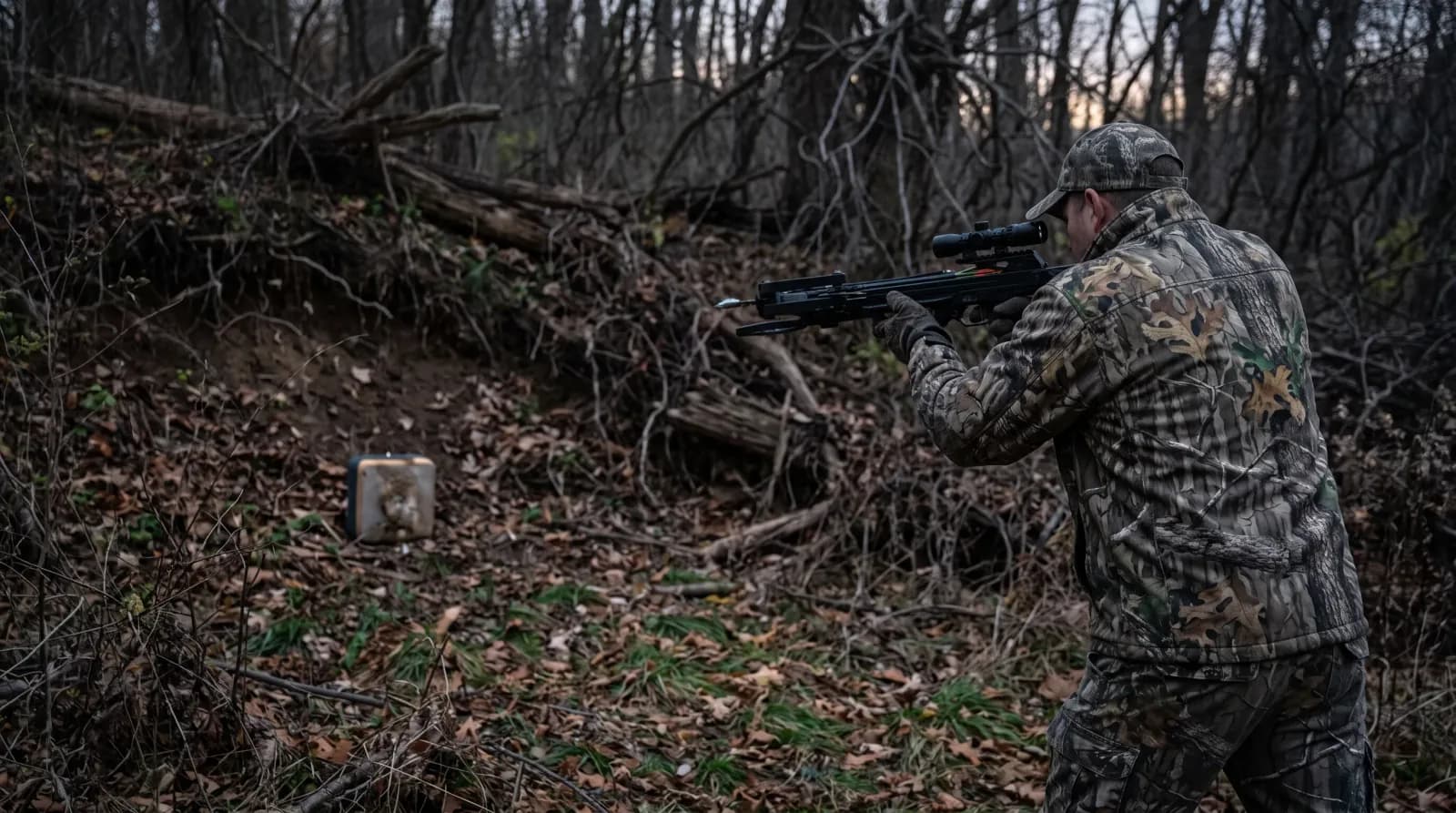
- A de-cocking bolt fired into a discharge target is the approved route on many crossbows without one. Use a bolt with a field point, never a broadhead, and a target rated for crossbows.
- Barnett states that shooting into a safe target is the only way to de-cock its crossbows, and never by hand or with a rope cocker.
Our guide on how to de-cock a crossbow safely covers each method of de-cocking step by step.
Load the bolt correctly every time
- Inspect the nock and shaft before loading; discard any bolt with a crack.
- Slide the bolt back until the nock is firmly against the string.
- Make sure it sits under the bolt retention spring, with the odd vane where your manual shows.
- Only then move the safety switch to FIRE, aimed at a safe backstop.
Understand what anti-dry-fire systems do
Most modern crossbows have an anti-dry-fire mechanism that blocks the trigger, or catches the string, unless a bolt is seated. Treat it as a backstop. It can wear, and a damaged or wrong nock can defeat it. If the trigger will not release with a bolt loaded, the system may be working correctly; our guide to why a crossbow won't fire walks through that diagnosis.
Keep up with maintenance
A string that is waxed and inspected on schedule is less likely to fail, and you will notice wear before it becomes a problem. Our guide on how to maintain a crossbow sets out the routine.
When to Get Professional Help
Take the crossbow to an authorized dealer, pro shop or the manufacturer if:
- It has been dry fired, even once, and even if nothing looks damaged
- You can see any crack, splinter or lifting layer on a limb or the riser
- A cam is bent, wobbles, or the string or cables have left their track
- The string or serving has broken strands
- It will not cock, will not hold, or the safety will not engage
- The crossbow stopped latching properly; our guide to a crossbow not cocking explains why
Cam and string work on a compound crossbow usually needs a crossbow press. Do not attempt it without one.
Frequently Asked Questions
Can you dry fire a crossbow even once without damage?
Sometimes a crossbow survives a single dry fire with no visible damage, but there is no way to know without an inspection. Hidden limb cracks are possible, so have it checked before you cock it again.
What happens if you dry fire a crossbow with the anti-dry-fire system?
On many designs the catch grabs the string before it travels fully forward. That limits the damage, but the string and serving can still be hurt by hitting the catch. Follow your manual to clear it and inspect the serving afterwards.
Is it safe to shoot my crossbow after a dry fire if it looks fine?
No. Have a pro shop or the manufacturer inspect it first. Barnett, for example, requires a dry-fired crossbow to be inspected by a qualified Barnett service representative before further use.
Does dry firing void the crossbow warranty?
Often. Barnett states that dry firing voids its warranty, and Ravin excludes dry-fire damage from its limited warranty. Check the warranty section of your own manual.
Can I dry fire a crossbow to de-cock it?
No. Use an integrated de-cock system or fire a de-cocking bolt into a discharge target, as your manual describes.
Is a recurve crossbow less likely to be damaged by a dry fire?
No design is safe to dry fire. On a recurve, the string runs straight to the limb tips, so the release energy goes directly into the limbs.
How much does it cost to fix a dry-fired crossbow?
It depends entirely on what failed. A new string and cables is a routine wear-part job, while cracked limbs or bent cams are larger repairs. Ask the manufacturer or a pro shop for an assessment.
Final Recommendation
If you have just dry fired your crossbow, stop, do not cock it again, inspect it in good light and take it to a pro shop or the manufacturer before the next shot. Then remove the cause: unload with an approved de-cocking method, check every bolt is seated before the safety comes off, and shoot only bolts that meet your manual's specification.
Read nextUnload without a dry fireMost dry fires happen while emptying a crossbow. Learn the approved de-cocking methods next.Ready to compare models? Read our crossbow reviews to see how each one compares.
More in Maintenance & Troubleshooting
Crossbow Won't Fire? Problems & Fixes
A diagnosis table for a crossbow that won't fire: safety on, unseated bolt, wrong nock, bolt specs, retention spring and trigger problems, and when to stop.
Read guide
Barnett Crossbow Problems: Causes & Fixes
A symptom-to-fix guide for Barnett crossbows: ADF trigger lockouts, arrow weight rules, off-center cocking, string wear, de-cocking and warranty voids.
Read guide
Ravin Crossbow Problems: Causes & Fixes
A symptom-to-fix guide for Ravin crossbows: clip-on nock lockouts, arrow rules, Versa Draw cocking, cold-weather trigger delay, cam timing and warranty voids.
Read guide