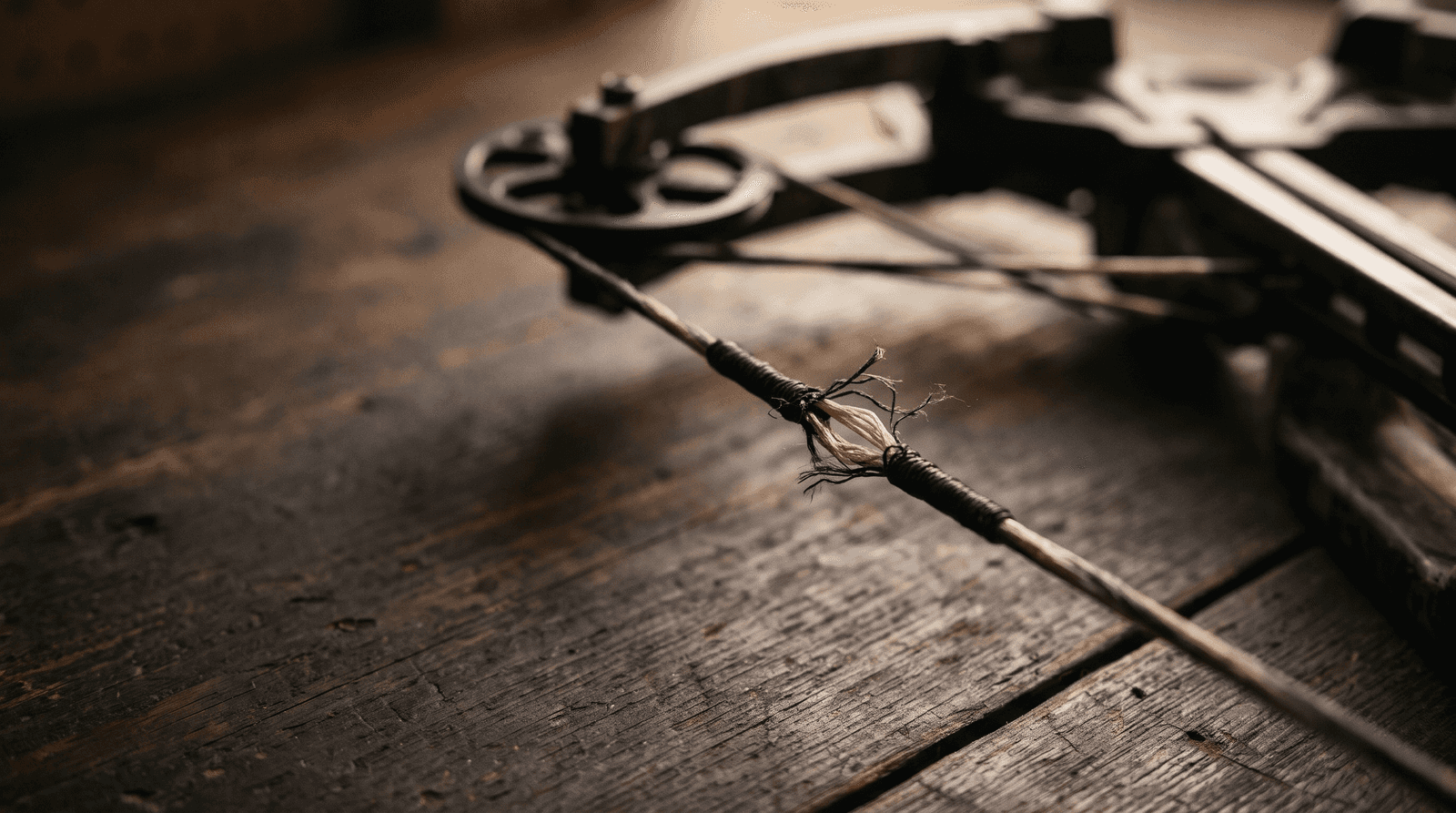
Run your thumbnail along the middle of a crossbow string and you will feel the hard, tightly wound section where the latch grips it. When that wrap starts to open up, unwind or leave a gap, you have crossbow serving separation, and it is one of the most common string problems owners spot during a pre-season check. It is also one of the easiest to misjudge, because a string with a separating serving can still look perfectly usable from arm's length.
This guide shows you how to read every kind of string, serving and cable damage, what usually causes it, and which of three answers it calls for: wax it and keep shooting, have it re-served, or stop and replace the string and cables. It applies to compound and recurve crossbows. For routine waxing and rail lube, our crossbow maintenance guide covers the schedule; this page is for when something already looks wrong.
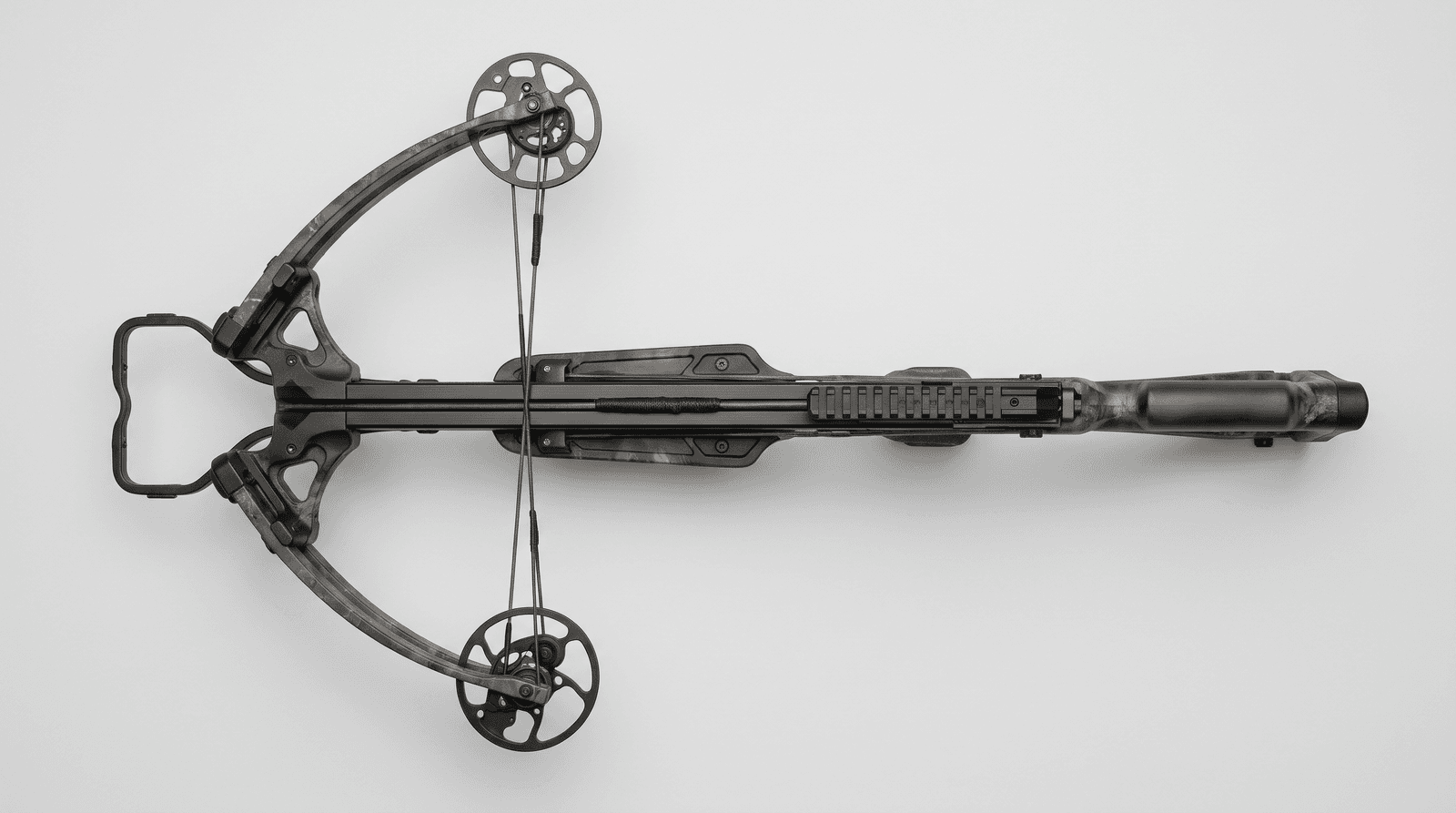
Know the Parts: String, Serving and Cables
You need the right names to describe the problem accurately and to order the right part.
- String (bowstring): the long loop that pushes the bolt down the rail. On a compound crossbow it runs around the cams; on a recurve crossbow it hooks onto the limb tips.
- Serving: a tight outer wrap of thread wound over the string where it takes the most abrasion. The center serving is the section that rides the rail, sits in the string latch and contacts the bolt's nock. End servings protect the loops at each end.
- Cables: on compound and reverse-draw crossbows, the cables connect the cams and control how they rotate. They often have their own servings where they wrap the cams or cross each other. Recurve crossbows have no cables.
- String and cables are usually sold, and replaced, as a matched set because they stretch and wear together.
Crossbow String Damage at a Glance
Use this table to match what you see with how serious it is.
| What you see | What it means | Severity | Action |
|---|---|---|---|
| Light fuzz or white "hair" on string or cables | Dry fibres | Low | Wax now, shorten the interval |
| Center serving looks flat, shiny or grooved | Rail and latch wear | Medium | Plan to replace; inspect every session |
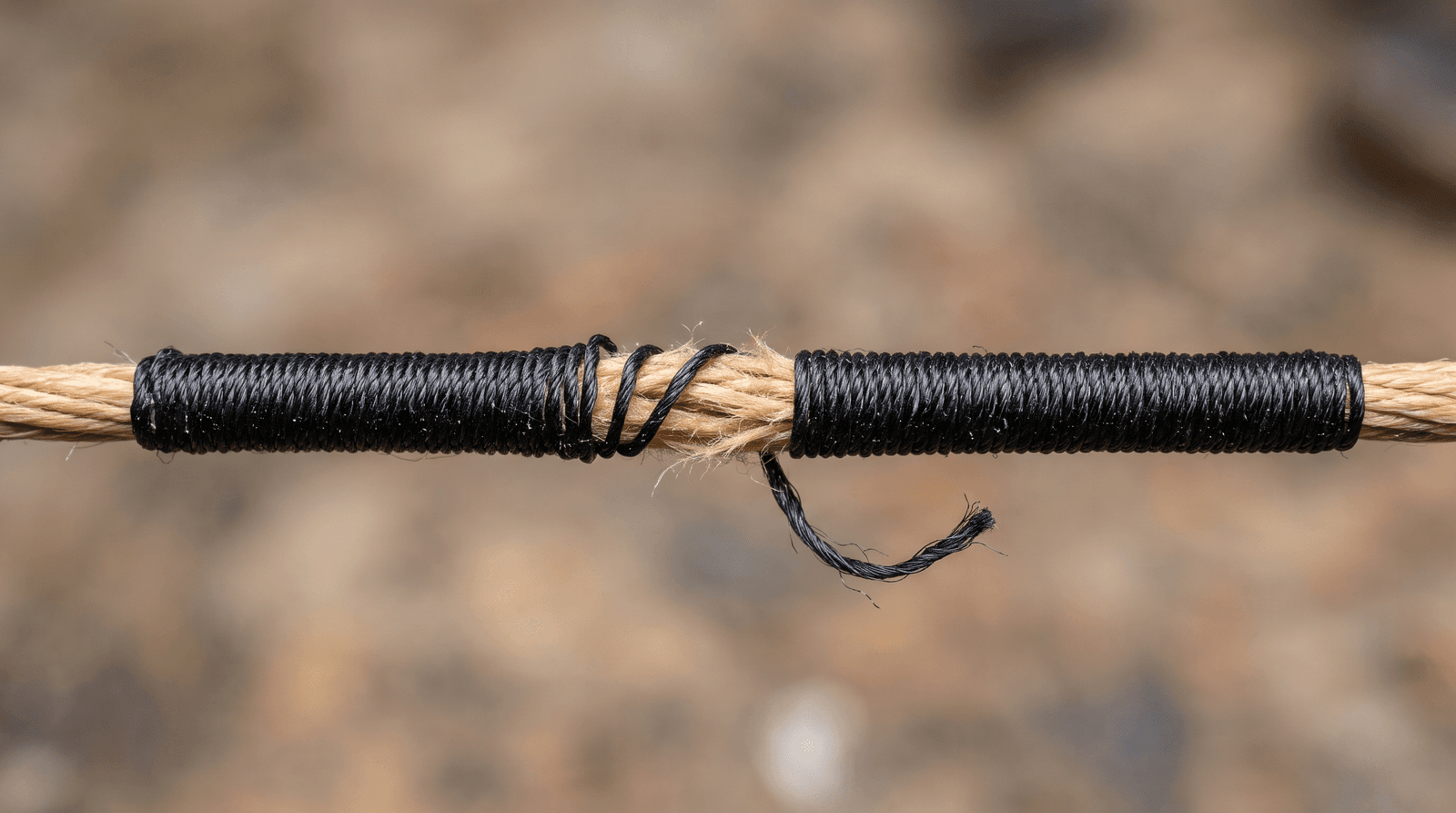
| Gap, loose turns or unwinding in the center serving | Serving separation | High | Stop shooting; re-serve or replace |
| End serving lifting near a loop or cam | End serving failure | High | Stop shooting; pro shop inspection |
| One or more cut or broken strands | Structural damage | High | Stop shooting; replace string and cables |
| Cable worn where it slides on the cable guard or slide | Abrasion at a contact point | Medium–High | Lube or wax per manual; replace if strands are cut |
| String or cable off the cam track | Derailment | High | Do not cock; pro shop repair |
| Kinks, flattened spots or burn marks | Impact or heat damage, often after a dry-fire | High | Stop shooting; inspect limbs and cams too |
Crossbow Serving Separation: What It Is and Why It Matters
Serving separation is when the wraps of the center serving open up, slide apart or start to unwind, leaving a gap where you can see the bare string strands underneath. It usually starts at one end of the center serving, often near where the latch or the front of the trigger housing sits.
It matters on a crossbow more than on a vertical bow for three reasons:
- The latch grips the serving. If the serving shifts or thins at that spot, the string no longer sits in the latch the way it was designed to.
- The rail rubs it on every shot. Once the protective wrap is gone, the bare strands take that friction directly and wear through fast.
- The nock contact point moves. A loose serving can let the string ride differently against the nock, which can lead to inconsistent flight or the string jumping over the bolt.
Separation can appear with little warning, and it has a habit of showing up during the last check before a hunt, so make the center serving part of every pre-season and pre-hunt inspection.
Can you fix serving separation yourself?
On a vertical bow, many archers re-serve their own strings. On a crossbow, the center serving has to fit the latch precisely and sit at the correct position on a string carrying a very high draw weight, so most manufacturers steer owners to professional service. TenPoint, for example, recommends against non-factory strings and cables on its crossbows and warns that they may void the warranty. Treat a separated serving as a shop job, not a kitchen-table repair, and never try to glue, tape or tie off a serving and keep shooting.
Worn or Flattened Center Serving
Before a serving separates, it usually wears. You will see the round wraps turn flat and shiny along the underside, sometimes with a visible groove where the rail or latch contacts it.
Common causes:
- A dry rail, so the string drags instead of gliding. TenPoint's maintenance instructions say to lubricate the rail any time it looks or feels dry (except on rail-less models).
- Grit on the rail from a dusty case, truck bed or field.
- High shot counts. The serving is a wear part, and heavy practice seasons use it up.
What to do: clean and lubricate the rail as your manual directs and check the serving every session. A flattened serving is a warning, not an emergency, but it is the right time to order a replacement string set so you are not stuck without one in season.
Fraying, Fuzz and Broken Strands
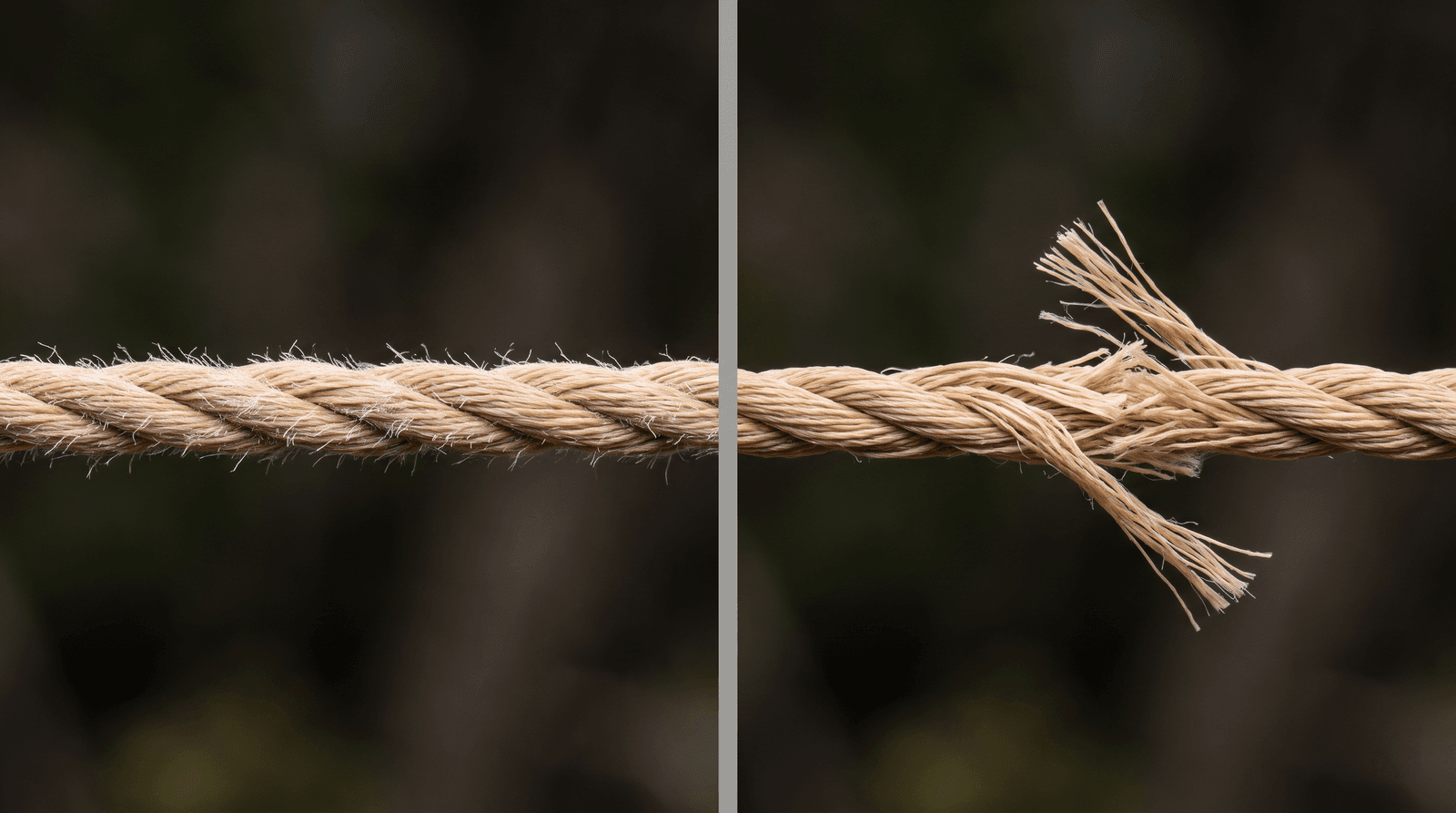
Not all fuzz is equal. The line to watch is between dry fibres and cut fibres.
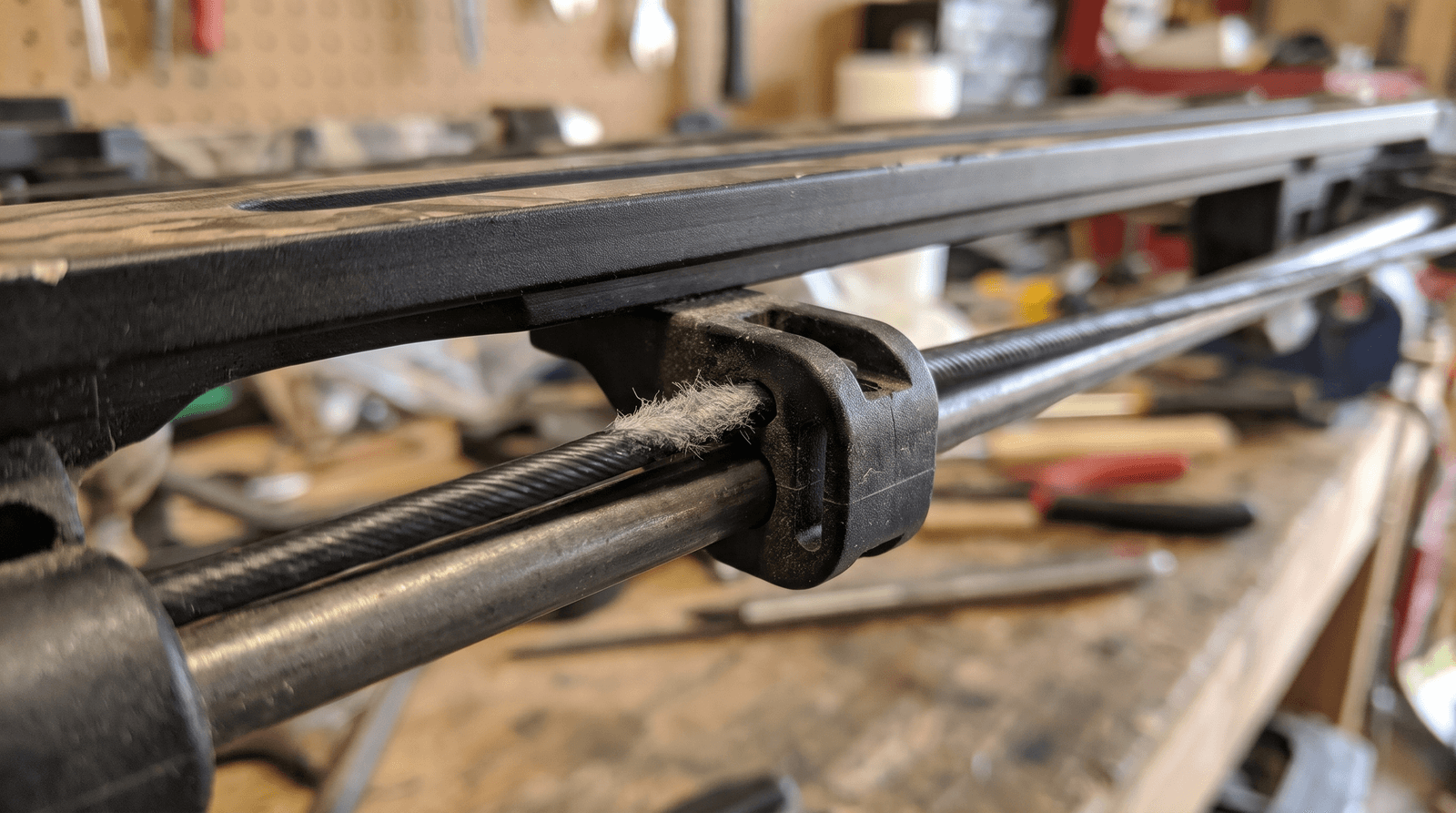
- Light fuzz is the string drying out. A short, light fuzz along the unserved string or cables usually means it is due for string wax. Wax it, work it in, and wax sooner next time. The maintenance guide linked above walks through waxing step by step.
- Heavy fuzz in one spot points to something rubbing there: a cable guard, a cocking rope hook, a burr on a cam or the edge of the stock.
- Cut or broken strands are structural damage. The load is now spread across fewer strands, and wax will not put them back. Stop shooting and replace the string and cables.
A good rule: if you can count individual separated strands, or one strand sticks out like a hair you could pull, it is broken, not fuzzy.
Cable Damage on Compound and Reverse-Draw Crossbows
Cables are easy to overlook because they sit out of the bolt's path, but they carry heavy load and they rub against parts on every shot.
Where to look:
- The cable guard or cable slide, where the cables are held away from the rail. Wear here shows as fuzzing or a shiny flat on one side of the cable.
- Where the cables cross each other.
- The served ends near each cam, where the cables wrap and anchor.
- Cable end loops on their posts.
TenPoint's maintenance procedures ask owners to keep lube and wax on all cable wear points, wax the unserved areas including where cables cross, and lubricate the served areas from the cam attachment point out about three inches. Its manual also warns that dry servings and end loops wear prematurely.
When to stop: a cut strand, a serving that has lifted near the cam, or a cable that looks thinner or flattened at a contact point. Cable damage also tends to show up as accuracy problems before it looks dramatic, so if your groups have started to drift, it is worth checking alongside our guide to crossbow shooting high, low, left or right.
What Causes String, Serving and Cable Damage
Fix the cause, or the new string will wear out the same way.
| Cause | What it damages | Prevention |
|---|---|---|
| Dry rail | Center serving | Lubricate the rail per the manual |
| Dry string and cables | Unserved string, cables | Wax on the manual's schedule, sooner if fuzzy |
| Grit and dirt | Serving, rail contact | Wipe the rail and string; case the crossbow |
| Dry-fire or shot into the dry-fire catch | Center serving, strands, limbs, cams | Never fire without a seated bolt; inspect after any incident |
| Uneven cocking or rope hooks on the serving | Center serving, string alignment | Hook evenly; check centering every cock |
| Wrong nock or damaged bolts | Center serving at nock point | Use the nock type and bolts your manual specifies |
| Burrs on cams, cable guard or limb tips | Strands and cables at that point | Inspect contact points; pro shop to fix |
| Sun, heat and age | Whole string set | Store indoors, out of direct sun |
| Leaving the crossbow cocked | Strings, cables, limbs | Cock only when ready to shoot |
After a dry-fire or a shot into the dry-fire catch
This deserves its own warning. TenPoint states that if the string is shot into the dry-fire inhibitor, owners should closely inspect the center serving for breaks or wear, and it highly recommends replacing the string on all its high-performance crossbows after that happens. A full dry-fire with no bolt is worse, because the limbs, cams and cables can be damaged too. If either has happened, inspect the whole crossbow and, when in doubt, have a qualified pro shop check it before you cock it again. If your crossbow stopped latching properly afterwards, our guide to a crossbow not cocking covers the string-on-the-catch problem.
When to Replace Crossbow String and Cables
Replace the string and cables when any of these is true:
- The center or end serving has separated, unwound or lifted
- Any strand is cut or broken
- A cable shows a cut strand, a flat spot or a lifted serving
- The string has been shot into the dry-fire catch on a crossbow whose maker recommends replacement after that, or the crossbow has been dry-fired
- It has reached your manufacturer's replacement interval
On timing, TenPoint's FAQ recommends changing the string and cables every two years, and its seasonal maintenance checklist gives two to three years depending on model. Other brands set their own intervals, so check your manual. Heavy shooters may need to replace sooner, because wear is driven by shots and care, not just the calendar.
TenPoint also says to always replace the string and cables together. A new string on stretched old cables can upset cam timing and the string's position on the rail.
Who Should Replace the String?
Compound and reverse-draw crossbows: replacing the string and cables means relaxing the limbs with a crossbow press so the cams can be unloaded. That is pro shop work. Doing it without the right press is dangerous, and on many brands it can affect the warranty.
Recurve crossbows: many recurve models are designed to be restrung by the owner with a stringing aid, and some manufacturers publish their own restringing instructions. Follow the manual's method and use the stringing aid it specifies. Our step-by-step guide to how to string a recurve crossbow covers the process and the checks afterwards. If you are still choosing a crossbow, how easy it is to service is one difference covered in our compound vs recurve crossbow comparison.
Either type: if the string has separated or broken while the crossbow is cocked, do not try to fix it at home. Point it at a safe backstop and take it to a qualified pro shop.
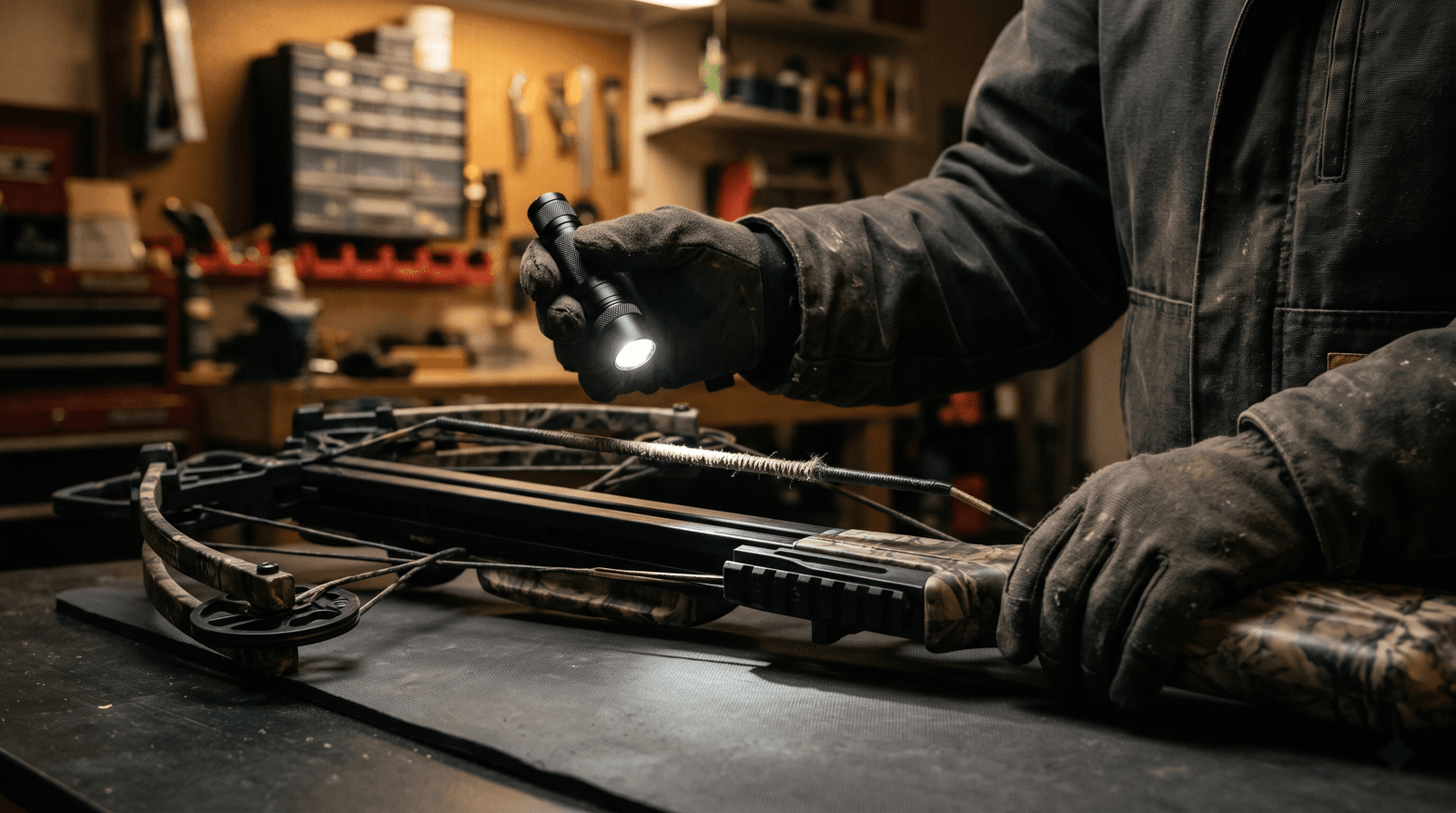
How to Inspect a Crossbow String: A Five-Minute Routine
Do this de-cocked, in good light, before every session.
- Center serving: look at it from above, below and both sides. Check for gaps, loose wraps, flat or shiny wear and any movement when you press it gently with a fingertip.
- Nock point: check the area of the serving that contacts the nock for cuts or a groove.
- End servings and loops: look where the string meets each cam or limb tip.
- Unserved string: look and feel for fuzz, stiffness or cut strands along its full length.
- Cables: follow each cable from cam to cam, paying attention to the cable slide, crossing points and cam ends.
- Rail: check for grit, dry spots or burrs that would damage the serving.
- Write it down: a short note of date, shots and what you saw makes it easy to spot change.
How to Make Strings and Servings Last Longer
- Wax the string and cables on your manual's schedule, and sooner whenever they look dry. Keep wax off the latch and trigger.
- Lubricate the rail whenever it looks or feels dry, using the product your manufacturer specifies.
- Cock evenly with the hooks placed where the manual shows, so the serving is not pulled off-center.
- Use the right bolts and nocks. Our guide on how to choose crossbow bolts covers the specs that matter.
- Never dry-fire, and never leave the crossbow cocked longer than needed.
- Store it indoors, cased and out of the sun.
- Check before season, not the night before opening day, so a replacement string set has time to arrive.
Our crossbow accessories hub covers the cocking aids and other kit that touches the string.
Common Mistakes
- Waxing over broken strands. Wax slows wear; it doesn't repair damage.
- Putting rail lube on the string or wax on the rail when the manual says otherwise. Use each product where it belongs.
- Replacing only the string on a compound when the maker says to replace string and cables together.
- Shooting "a few more" before the hunt with a separating serving. That is when it fails.
- Buying an aftermarket string without checking warranty terms.
- Ignoring the cause. A burr on the rail or a cam will chew through the new string too.
Frequently Asked Questions
Is it safe to shoot a crossbow with serving separation?
No. A separated center serving exposes the string to rail and latch wear and can change how the latch holds the string. Stop shooting, de-cock safely if possible, and have it re-served or replaced by a qualified pro shop.
What causes crossbow center serving to separate?
Usually friction and age: a dry or gritty rail, high shot counts, and contact with the latch and nock. A shot into the dry-fire catch, a dry-fire, uneven cocking or the wrong nock can speed it up. Fix the cause before fitting a new string.
How often should I replace my crossbow string and cables?
Follow your manual. TenPoint recommends every two years, and its maintenance checklist gives two to three years depending on model. Replace sooner after any separation, broken strands, a dry-fire or a shot into the dry-fire catch.
Can I replace just the string and not the cables?
On compound crossbows, it is generally not recommended. TenPoint says to always replace the string and cables together, because they stretch and wear as a set and mismatched parts can affect cam timing and string alignment.
Is some fuzz on a crossbow string normal?
Light fuzz along the unserved string or cables usually means it needs waxing and is not a reason to stop. Heavy fuzz in one spot, or individual strands that stand out on their own, means damage, and the string should be inspected and likely replaced.
Can I re-serve a crossbow string myself?
It is possible for experienced string builders, but most crossbow makers direct owners to professional service because the center serving must fit the latch precisely on a very high-load string. Check your warranty terms before attempting it.
Are crossbow strings covered by warranty?
Often not, because they are wear parts. Coverage varies by brand and model, so read your warranty. Some makers, including TenPoint, warn that using non-factory strings and cables may void the warranty.
Do I need a bow press to change a crossbow string?
On compound and reverse-draw crossbows, yes: the limbs must be relaxed safely with a crossbow press, which is why it is usually a pro shop job. Many recurve crossbows can be restrung by the owner with the stringing aid the manufacturer specifies.
Bottom Line
Crossbow serving separation, cut strands, lifted end servings and damaged cables all have the same answer: stop shooting and get the string set replaced or re-served by someone with the right tools. Light fuzz is the exception, and wax handles it. Build a five-minute string check into every session, keep the rail lubricated, and replace the string and cables together on your manufacturer's schedule, and most of these problems are caught long before they reach the field.
Before your next session, run through our crossbow safety rules for beginners, especially the sections on dry-firing and de-cocking.
Read nextHow to Maintain a CrossbowSet up the waxing, rail lube and inspection schedule that stops most string damage before it starts.Ready to compare models? Read our tested crossbow reviews to see how each one measured up in testing.
More in Maintenance & Troubleshooting
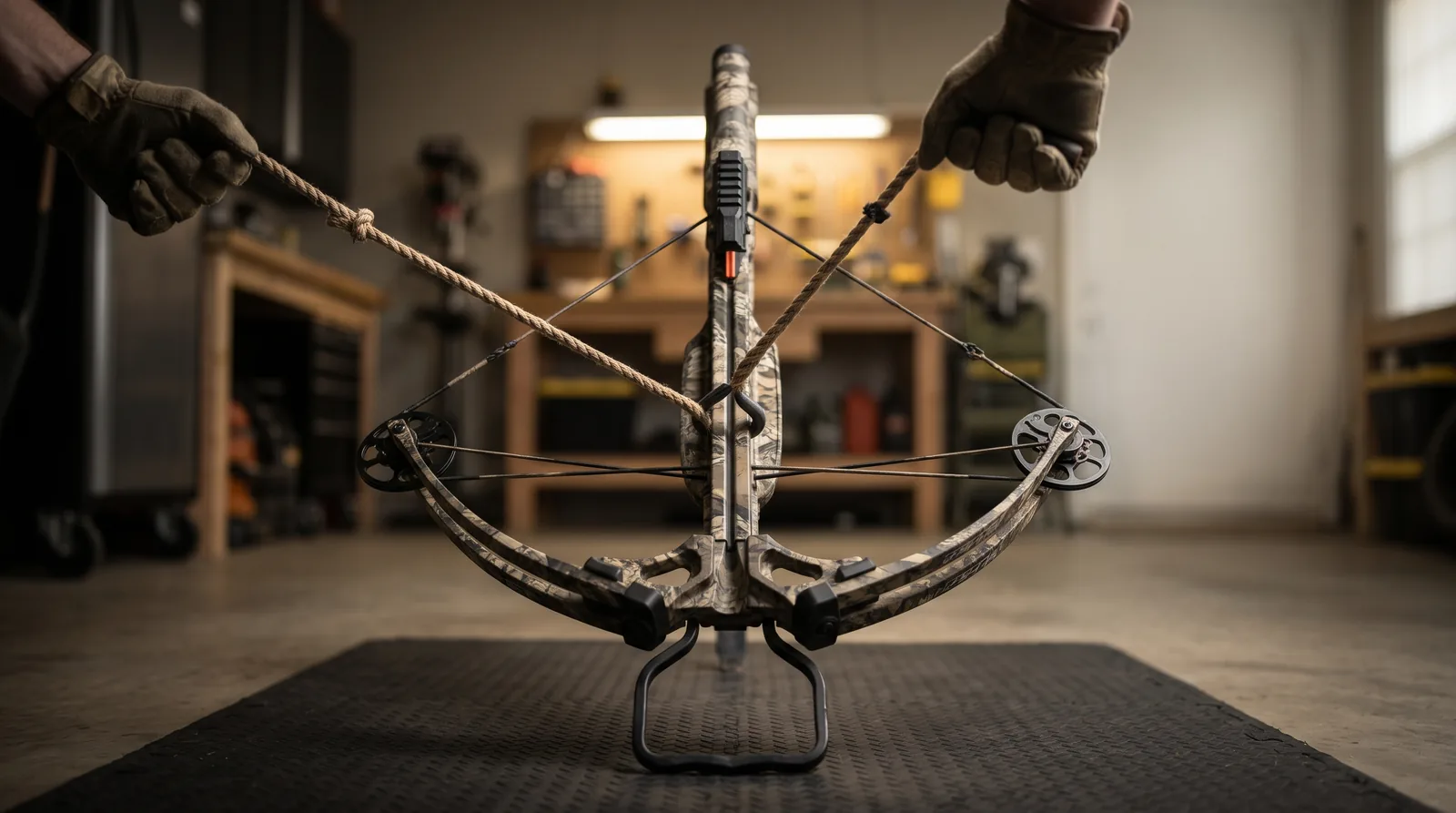
Crossbow Not Cocking? Causes and Safe Fixes
A symptom-first fix guide for a crossbow that won't cock: no click, safety won't set, string stuck on the dry-fire catch, crank or rope trouble, and when to stop.
Read guide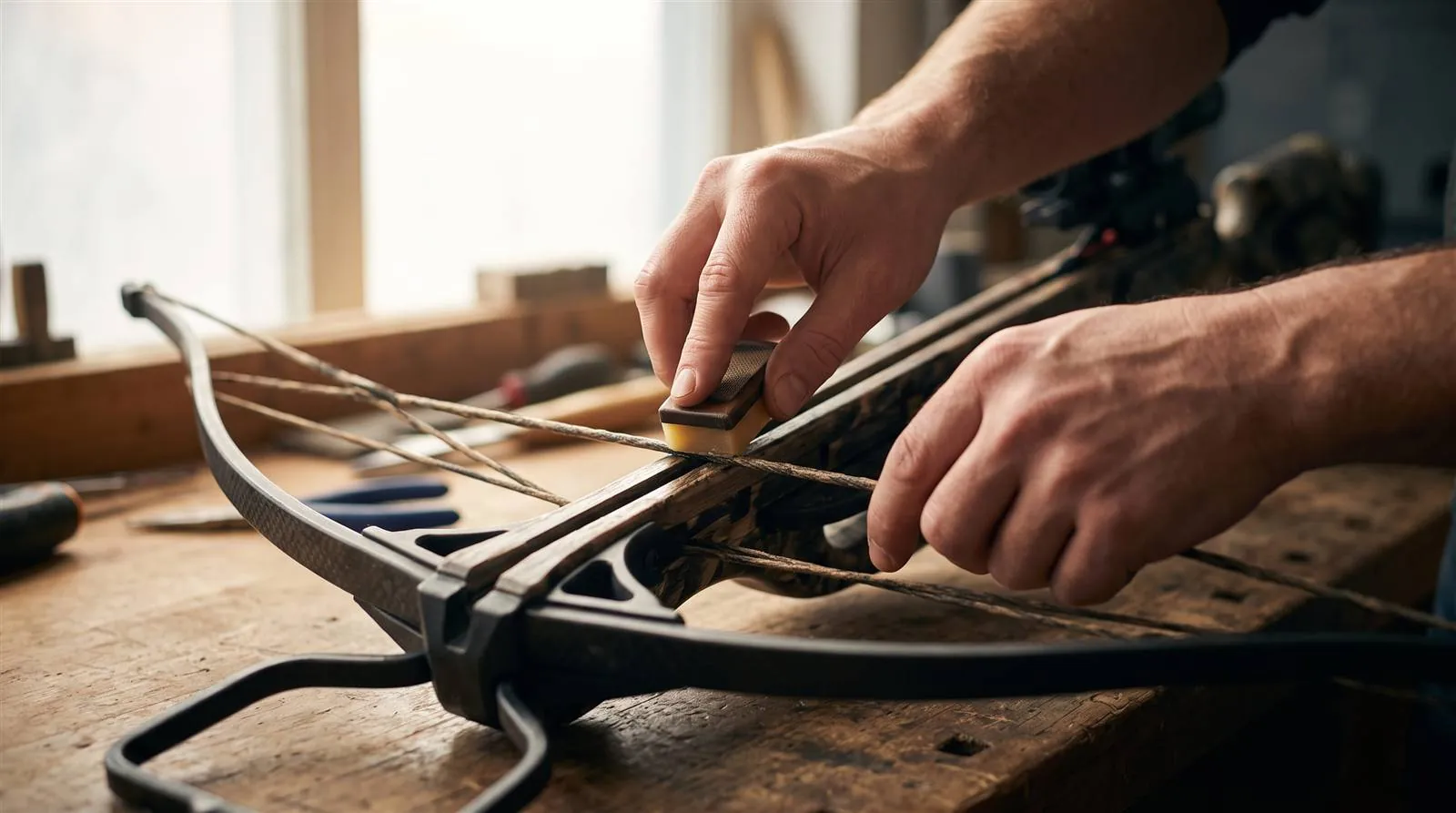
Crossbow Maintenance: Wax, Lube, Store
A crossbow maintenance schedule covering the five-minute pre-shoot check, string waxing, rail lubrication, limb and cam inspection, and storage.
Read guide
Barnett Crossbow Problems: Causes & Fixes
A symptom-to-fix guide for Barnett crossbows: ADF trigger lockouts, arrow weight rules, off-center cocking, string wear, de-cocking and warranty voids.
Read guide