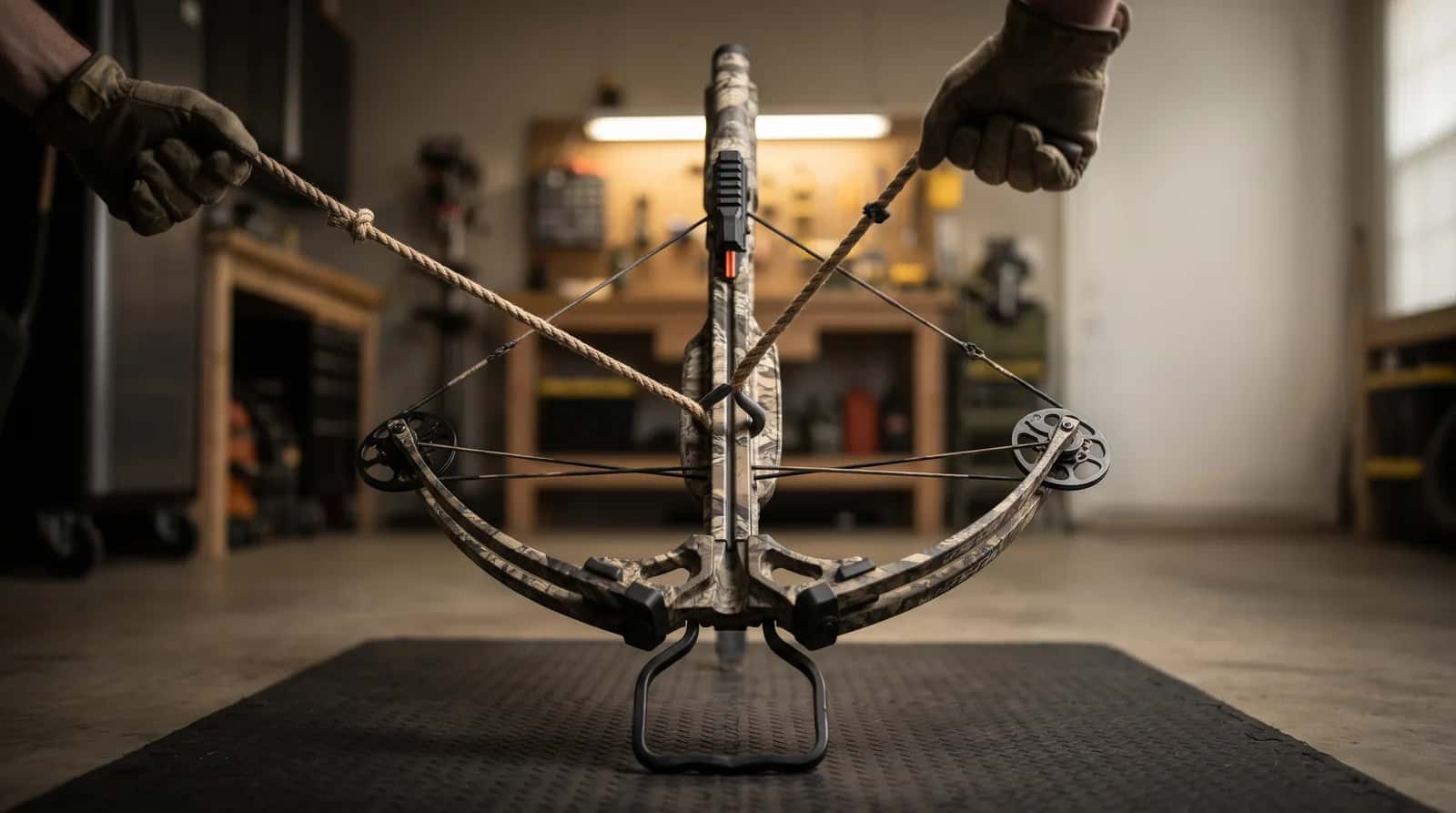
You pull the string back, feel it reach the trigger housing, and nothing happens: no click, no safety snapping across, and the string creeps forward again the moment you ease off. A crossbow not cocking is frustrating, but it is rarely a broken crossbow. In most cases the string stopped a fraction short of the latch, the safety was in the wrong position before you started, or the string has settled on the dry-fire catch instead of the latch.
This guide sorts the problem by what you actually see, explains the cause behind each symptom, and gives the fix in the order to try it. It covers compound and recurve designs, rope and crank aids, and integrated systems. If your crossbow cocks fine but the trigger will not release, that is a different problem, covered in crossbow won't fire: common problems and fixes.
Crossbow Not Cocking: Quick Diagnosis Table
Start here. Match what you see to the likely cause, then jump to the section that covers it.
| What you see | Most likely cause | First thing to try |
|---|---|---|
| String reaches the housing but no click | Draw stopped short of the string latch | Finish the pull smoothly until the latch clicks |
| Click, but the safety stays on FIRE | String caught on the dry-fire catch, not the latch | Unload, then follow the manual's DFI reset |
| String won't go back far enough at all | Safety in the wrong pre-cock position, or debris in the housing | Check the safety position your manual requires |
| String latches but sits off-center | Uneven rope hooks or an uneven pull | Reset with the safety on, re-cock evenly |
| Rope or crank feels like it slips | Hooks off the string, worn rope, crank clutch or pawl issue | Re-seat hooks; inspect the device |
| Crank turns but the string doesn't move | Strap or cord not attached, or clutch slipping at full draw | Check attachment; some clutches slip by design at full draw |
| Too hard to pull | Draw weight beyond what you can lift evenly | Use a cocking aid or a lower draw weight |
| String slips forward after latching | Worn or damaged latch or trigger | Stop; pro shop repair |
| Worked yesterday, not after a cold night | Ice, grit or thickened lube in the trigger | Warm and dry it uncocked; clean only what the manual allows |
How a Crossbow Actually Latches
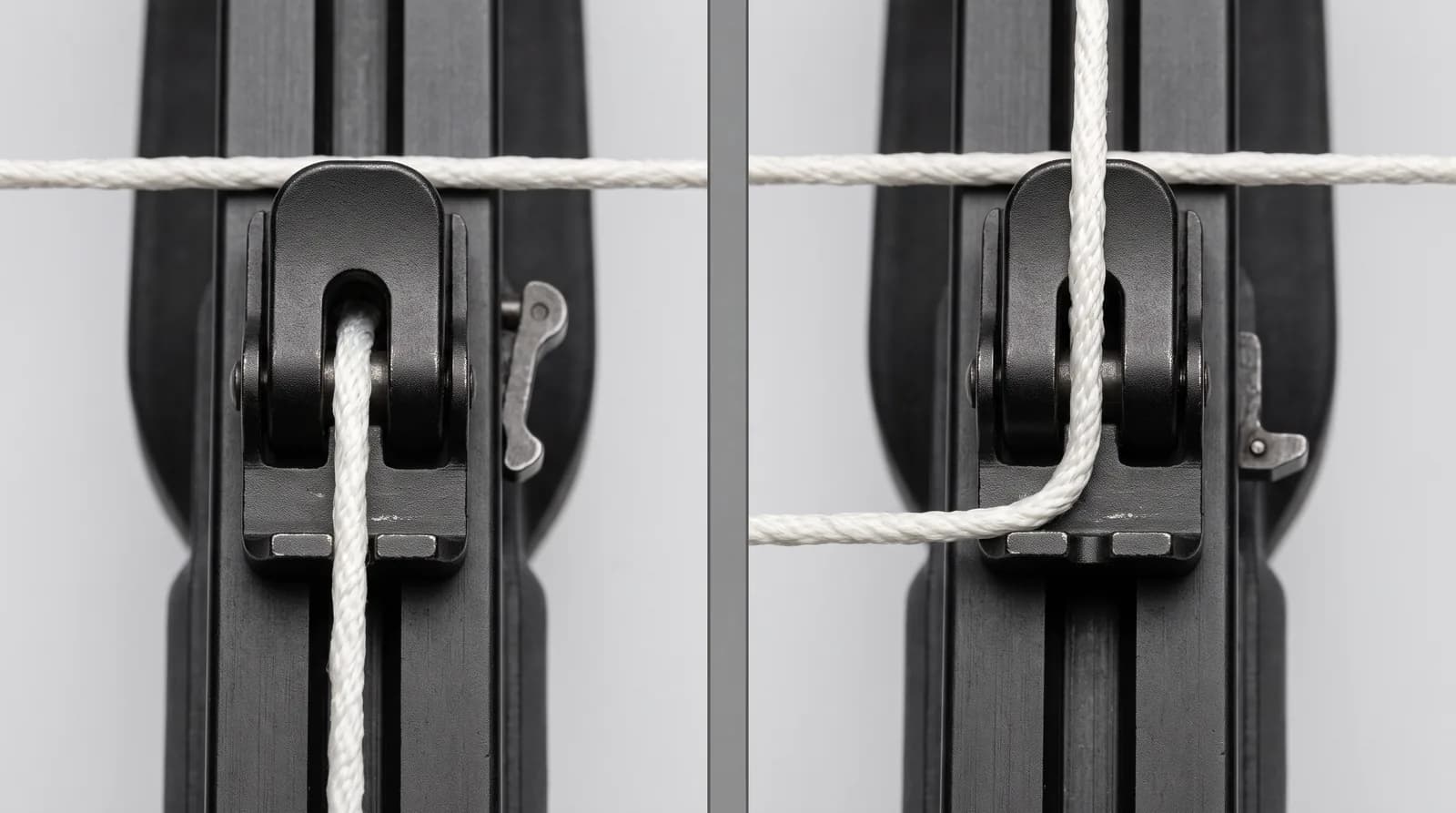
Knowing the three parts involved makes every symptom below easier to read.
- The string latch (sometimes called the sear or jaws) is the hook inside the trigger housing that holds the string at full draw. When the string passes over it, the latch closes with a click.
- The safety on most modern triggers moves to SAFE automatically when the latch closes. That movement is your confirmation that the string is truly held. No automatic safety movement usually means no latch.
- The dry-fire inhibitor (DFI, or anti-dry-fire catch) sits just in front of the latch. It is there to catch the string if the trigger is pulled with no bolt seated. If the string comes to rest on it during cocking, it can feel cocked while the latch is still open.
The trigger system is designed to fail safe. A crossbow that refuses to latch is usually the trigger refusing a bad cock, which is exactly what you want it to do.
1. The String Isn't Reaching the Latch
This is the most common reason a crossbow won't cock. The string stops a few millimetres short, so the latch never closes.
Signs: the string reaches the housing, but there is no click and the safety switch does not move.
Why it happens:
- You eased off at the end of the pull, which is when the draw feels heaviest on many compound designs.
- The rope or crank hooks sat too far forward on the string, so they ran out of travel.
- One side was pulled ahead of the other, so one end of the string reached the latch and the other didn't.
Fix: with no bolt on the rail, cock again in one smooth motion and carry the pull all the way through until you hear the latch and see the safety set. With a rope, keep both handles moving together and your back straight. With a crank, keep turning until the latch engages, then follow your manual's instructions for taking up slack. Our how to cock a crossbow guide covers rope and crank technique step by step.
2. The Safety Was in the Wrong Position Before You Cocked
This one catches out a lot of new owners because it is model specific and counter-intuitive.
On some trigger designs the latch cannot close properly if the safety is on SAFE before you start cocking. TenPoint's own support pages describe exactly this: when the safety is on safe before cocking, the string can come to rest on the dry-fire catch instead of the latch. Other manufacturers' manuals give their own pre-cock instructions, and some designs reset the safety automatically whatever position it starts in.
Signs: the string seems to go back fully, yet the safety will not move to SAFE, or it feels "cocked" but the trigger won't release later.
Fix: with the crossbow uncocked, check the manual for the safety position it wants before cocking, set it there, and cock again. If the crossbow is already partly drawn and stuck, go to the next section and do not pull the trigger.
3. The String Is Stuck on the Dry-Fire Inhibitor
When the string lands on the DFI instead of the latch, the crossbow is in an awkward middle state: the string is held back, but not by the part designed to fire it. It will not shoot, and pulling the trigger does nothing.
Signs: a click that sounds different from normal, the safety still on FIRE, and the trigger dead when you try it.
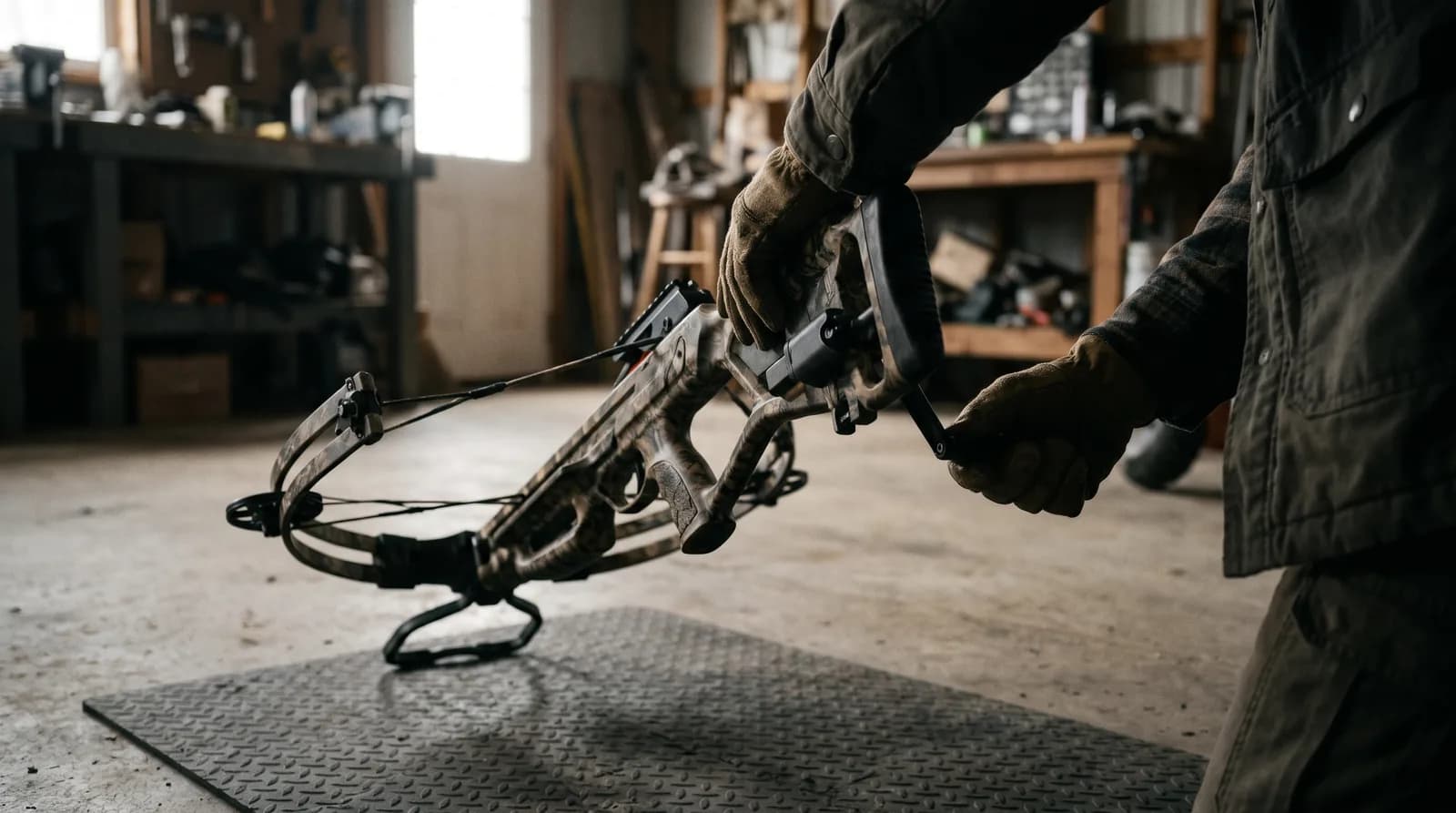
Fix: this is a re-cock, not a shot. TenPoint's published remedy is to re-cock the crossbow so the string is lifted off the DFI and onto the latch, with separate procedures for hand cocking, ACUdraw cranks and the ACUslide. For the ACUslide, the outline is: unload the bolt, rest the front of the crossbow on the ground, wind the crank forward two to three turns to take tension off the trigger lock-latch, release it, lower the trigger box, then push the charging handle down until the safety clicks to SAFE.
Other brands have their own sequence, so follow your manual rather than improvising. Never pull the trigger or try to push the DFI aside by hand to clear it.
After you have cleared it and shot again, inspect the center serving on the string. TenPoint advises replacing the string and cables before shooting again if any strands are broken.
4. The String Latched, but Off-Center
Technically the crossbow is cocked, but it is cocked badly. A string held crooked loads one limb more than the other, and the bolts drift.
Signs: the string sits visibly angled against the center mark on the rail, or one side of the rope finished ahead of the other.
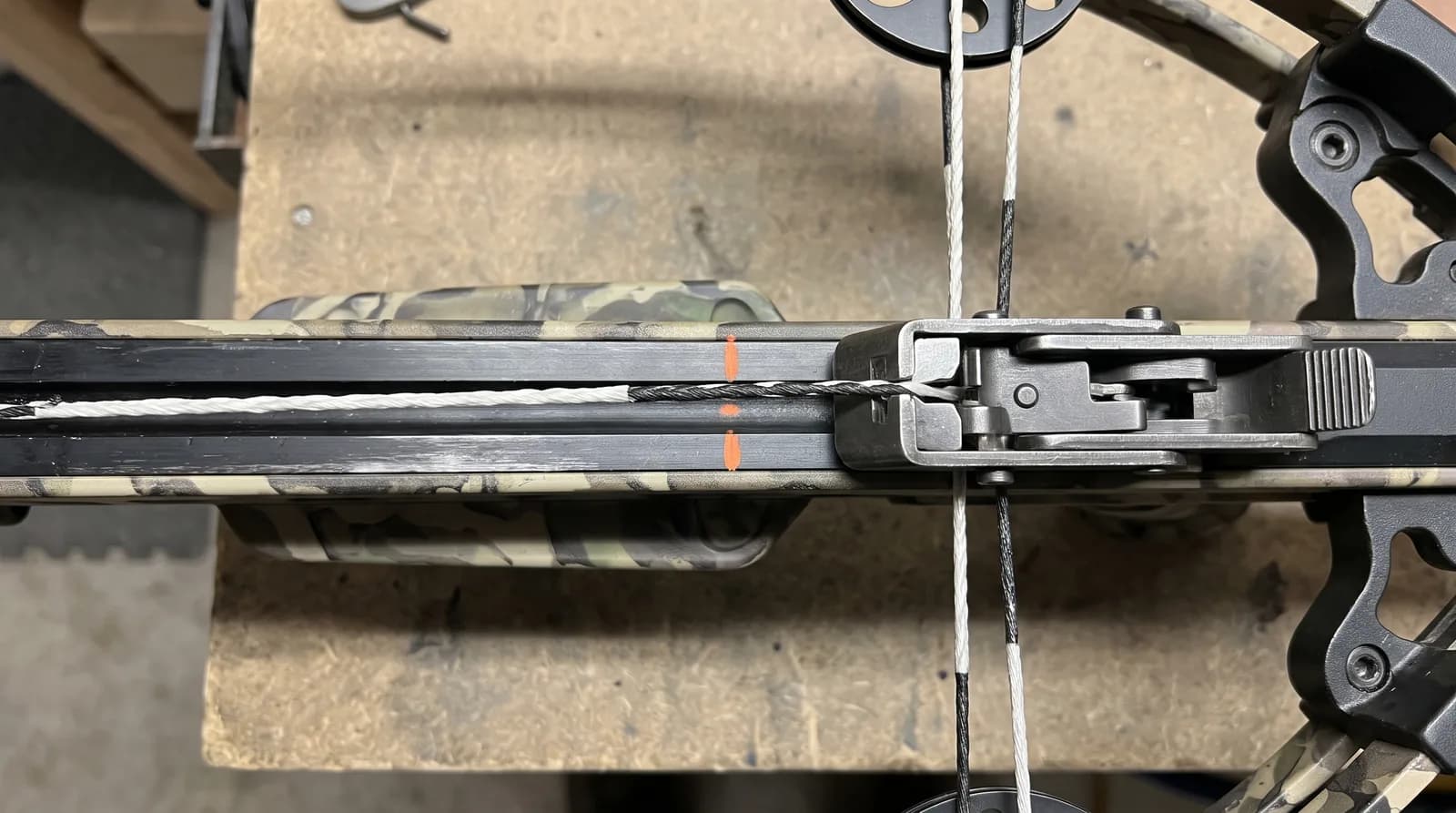
Fix: with the safety on and no bolt loaded, some manufacturers allow you to nudge the string to center in the latch. Barnett's FAQ describes this for its crossbows. If your manual does not allow it, de-cock and re-cock. Prevent it next time by hooking the rope evenly on both sides of the rail and pulling both handles together. If you have already been shooting like this and the bolts are going left or right, our guide to diagnosing a crossbow shooting left or right covers the accuracy side.
5. The Cocking Device Is the Problem
Sometimes the crossbow is fine and the device in your hands is not doing its job.
Rope cocking aids
- Hooks slipping off the string: the hooks were not fully over the string, or they were placed on the serving at an angle. Re-seat both before you pull.
- Rope looks stretched, frayed or flattened: replace it. A rope that gives under load can let the string snap forward.
- Wrong rope length: a rope that is too long runs out of reach before the latch, especially on short-stocked or compact crossbows. Some manufacturers sell shorter cords or published shortening instructions.
Crank cocking devices
- Crank turns, nothing moves: the strap, cord or hooks are not attached to the string, or the crank is not engaged with the device. Check the attachment before adding force.
- Crank clicks or "slips" at full draw: on some systems this is normal. Ravin's FAQ, for example, tells owners to cock until the cocking handle clutch slips and says the crossbow cannot be overcocked. Read the manual before treating a clutch as a fault.
- Cords no longer retract, or the crank binds or grinds: stop. That is a spring, cord or pawl issue for a qualified pro shop or a crank cocking device service.
- Device not approved for your model: cranks are not universal. A mismatched device may not pull the string to the latch at all.
The TenPoint ACUdraw is the crank system I have reviewed. It brought effective effort down to roughly 5 lbs in my testing, but only on crossbows it is designed to fit.
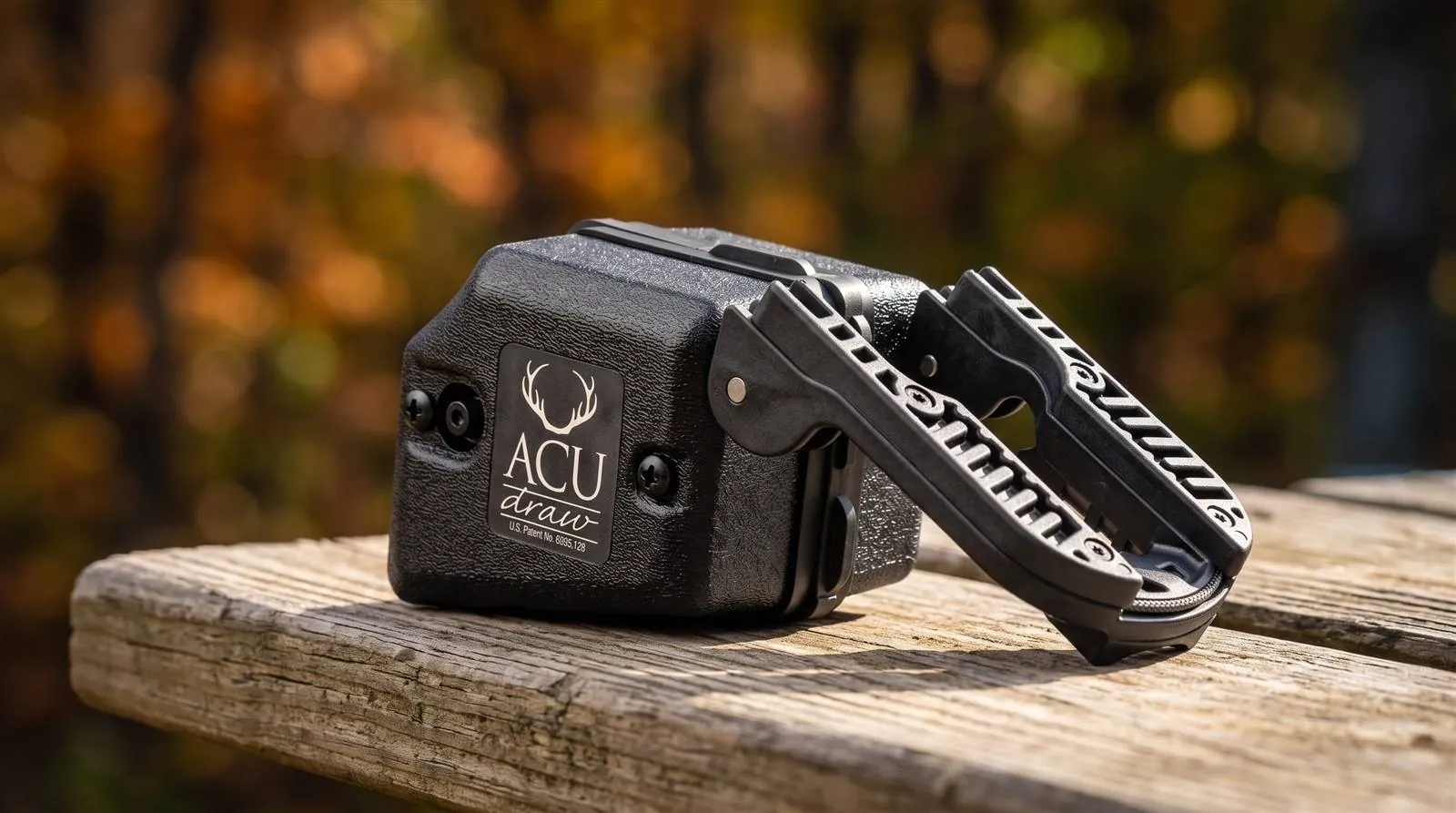
Tested for this topic
TenPoint ACUdrawIf the problem is pulling a heavy string all the way to the latch, a supported crank brought effort to about 5 lbs in my testing.
6. You Can't Pull It Back Far Enough
Sometimes "my crossbow won't cock" means "I can't physically cock it." That is not a fault, and it is common.
Hunting crossbows have a high draw weight. Our reviews list true draw weights around 175 to 190 lbs on many mid-tier compounds and roughly 300 to 350 lbs on high-speed models with integrated cranks. Even with a rope halving the load, you are still lifting about half that weight, and it is heaviest right before the latch on many designs, which is exactly where people stall.
Fixes, in order:
- Use a cocking rope rather than cocking by hand. A rope cut felt effort by roughly half in our testing.
- Use the leg-drive technique from the manual: back straight, lift with the legs, foot in the foot stirrup.
- Move to a crank or an integrated system if a rope is still too much.
- If you are buying, match the crossbow to your body. Our guide to crossbow draw weight by body size and the cocking effort estimator help you check before you spend money.
7. Dirt, Ice or Old Lube in the Trigger Housing
A latch that worked last weekend can stop closing cleanly after a wet sit, a cold night or a dusty truck bed.
Signs: the latch sounds sluggish or muffled, the safety moves slowly, or the crossbow cocks fine indoors but not in the field.
Fix: with the crossbow uncocked, let a cold or wet crossbow warm up and dry naturally. Blow visible debris out of the housing opening with compressed air, and apply lubricant only where your manual tells you to. Many trigger housings are not meant to be oiled, and grease can trap grit. Never take the trigger housing apart. On most crossbows that voids the warranty and can leave the safety unreliable. Our crossbow maintenance guide covers what to clean and what to leave alone.
8. It Won't Stay Cocked
This is the one symptom that is never a technique problem.
Signs: the string latches, then creeps forward or releases without the trigger being pulled, or the safety will not hold.
Fix: stop using the crossbow. Point it at a safe backstop, keep hands clear of the string path and the rail, and use the manufacturer's approved de-cocking method if the string is still held. If it isn't held safely, leave it as it is and take it to a qualified pro shop. A latch that won't hold is a worn or damaged trigger component, and it has to be inspected before the crossbow is shot again.
Our guide on how to de-cock a crossbow safely explains each approved unloading route.
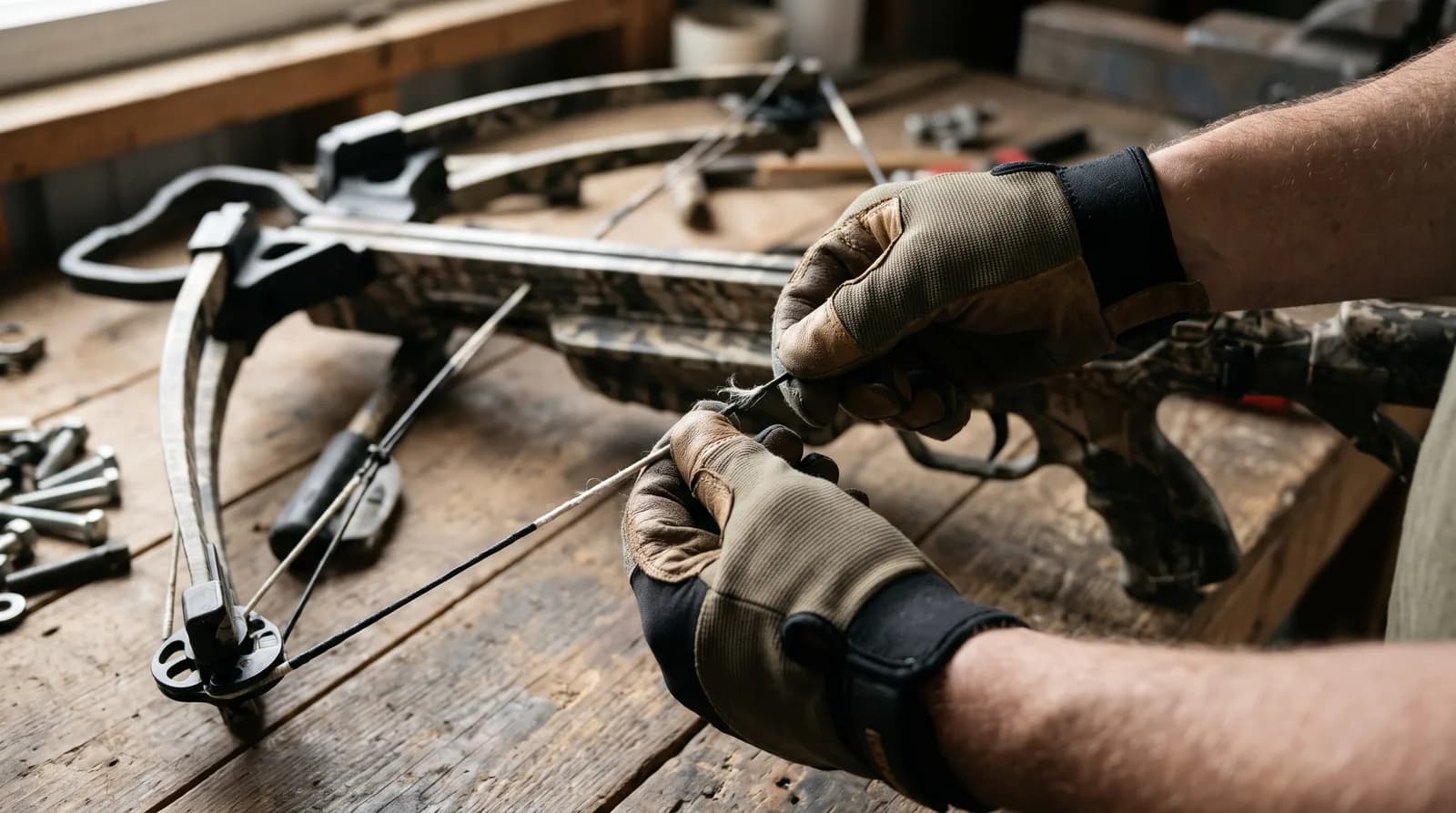
9. After a Dry-Fire, Don't Just Re-Cock
If your crossbow stopped cocking properly after it was fired without a bolt, treat that as the cause until proven otherwise. Barnett's support FAQ warns that dry firing can crack limbs or bend cams.
Look for cracked limbs, a string or cable that has jumped a cam track, frayed serving and a bent or damaged latch. If you find any of them, do not cock it again. Have a qualified pro shop inspect it.
Fix It in This Order
When you are not sure which cause it is, work through the checks from cheapest and safest to most serious.
- Unload. No bolt on the rail while you troubleshoot.
- Check the safety's pre-cock position against your manual.
- Re-cock smoothly and fully, listening for the latch and watching the safety.
- Check where the string came to rest: latch, or dry-fire catch.
- Inspect the cocking device: hooks, rope, strap, crank attachment and model approval.
- Check the string is centered on the rail mark.
- Clean and dry the housing area the manual allows, with the crossbow uncocked.
- Inspect for dry-fire damage if there is any chance it was fired empty.
- Stop and take it to a pro shop if it still won't latch or won't hold.
Common Mistakes That Make It Worse
- Pulling the trigger to "reset" a stuck string. If the string is on the dry-fire catch with no bolt, you risk a dry-fire.
- Forcing the safety switch. A safety that won't move is information. Forcing it can damage the trigger.
- Pressing the latch or DFI with a finger or tool. Fingers do not belong in the string path, ever.
- Spraying lubricant into the trigger housing. Use only what the manual specifies and only where it says.
- Swapping in a cocking device that "should fit". Check the approved model list first.
- Leaving it cocked overnight to "try again tomorrow". Ravin's FAQ, for one, says not to keep its crossbows cocked for more than about 8 hours. De-cock with the approved method.
When to Stop and See a Technician
Take the crossbow to a qualified crossbow pro shop if:
- It will not latch after two careful, full, even attempts with the correct safety position
- The safety will not engage after the latch clicks, or will not hold
- The string releases or creeps without the trigger being pulled
- The crank grinds, binds, skips or its cords no longer retract
- You see cracked limbs, a derailed string or cable, or frayed serving
- It was dry-fired
| Situation | Fix it yourself? | Who to call |
|---|---|---|
| Short pull, wrong safety position, uneven hooks | Yes, following the manual | No one, if it latches cleanly on the next careful attempt |
| String stuck on the dry-fire inhibitor | Only with the manual's reset procedure | Manufacturer support if the reset does not work |
| Crank slips, grinds or will not retract | Check attachment only | Manufacturer or pro shop for the clutch or pawl |
| String creeps or releases without the trigger | No | Pro shop; stop using the crossbow |
| Cracked limb, derailed cable, frayed serving | No | Pro shop; inspect the string and serving before any further use |
| Any dry-fire | No | Pro shop inspection before cocking again |
Most manufacturers ask owners not to open the trigger housing themselves. A professional repair helps keep the warranty intact and gets the safety checked properly.
Frequently Asked Questions
Why won't my crossbow click when I cock it?
The string is almost always stopping just short of the latch. Pull smoothly and evenly all the way until you hear the click and see the safety move. If it still won't click, check the safety's pre-cock position in your manual and look for debris in the housing.
Should the safety be on or off when cocking a crossbow?
It depends on the trigger. On some designs the string can rest on the dry-fire catch if the safety is on SAFE before cocking, while others reset automatically. Your owner's manual states the correct starting position, so follow it rather than a general rule.
Why does my crossbow safety not engage after cocking?
Usually the string has not been caught by the latch, either because the draw stopped short or because it is resting on the dry-fire inhibitor. Do not shoot. Unload the bolt and follow the manufacturer's procedure for re-cocking onto the latch.
How do I get my crossbow string off the dry-fire inhibitor?
Re-cock the crossbow using the manufacturer's specific remedy for your cocking method, which lifts the string off the catch and onto the latch. Never pull the trigger or push the catch by hand. Check the serving for broken strands afterwards.
Can you overcock a crossbow?
On some systems, no. Ravin's FAQ, for example, says to cock until the cocking handle clutch slips and states the crossbow cannot be overcocked. Crank systems vary, so check your manual, and stop if the crank binds, grinds or the cords stop retracting.
Why is my crossbow so hard to cock?
Usually because the draw weight is high for the method you are using. A rope roughly halved felt effort in our testing and cranks reduced it much further. A dry rail or string adds friction too, so wax and lubricate as the manual specifies.
Is it safe to keep trying if my crossbow won't latch?
Two careful, full and even attempts with the right safety position are reasonable. After that, stop. Repeated forcing risks a slipped string, a dry-fire or damaged trigger parts, so take it to a qualified pro shop.
Can cold weather stop a crossbow from cocking?
Yes. Ice, frozen moisture or lube that has thickened in the cold can stop the latch from closing fully. Bring the crossbow somewhere warm while it is uncocked, let it dry, wipe away moisture and only clean the parts your manual allows before trying again.
Bottom Line
A crossbow not cocking is usually telling you one of three things: the string stopped short, the safety started in the wrong position, or the string came to rest on the dry-fire catch instead of the latch. Fix those with a full, even pull and your manual's reset procedure. If you simply can't pull it, that's a draw weight problem, and a better cocking aid solves it. And if the string won't stay latched, or the crossbow has been dry-fired, stop and let a qualified pro shop look at it.
Once it latches cleanly every time, run through our crossbow safety rules for beginners before the next range session.
Read nextHow to Cock a CrossbowGet the rope, crank and integrated-system technique right so it latches cleanly every time.Ready to compare models? Read our tested crossbow reviews to see how each one measured up in testing.
More in Maintenance & Troubleshooting
Crossbow Won't Fire? Problems & Fixes
A diagnosis table for a crossbow that won't fire: safety on, unseated bolt, wrong nock, bolt specs, retention spring and trigger problems, and when to stop.
Read guide
Barnett Crossbow Problems: Causes & Fixes
A symptom-to-fix guide for Barnett crossbows: ADF trigger lockouts, arrow weight rules, off-center cocking, string wear, de-cocking and warranty voids.
Read guide
Crossbow Serving Separation & String Damage
A damage-by-damage guide to crossbow strings, servings and cables: what separation, fraying and broken strands mean, the causes, and when to stop shooting.
Read guide